
Understanding how does sleep affect metabolism and weight management is the missing link for many fitness clients. You can eat a clean diet and hit the gym five days a week, but if you are only getting five hours of sleep, your body will actively fight your weight loss goals. As a strength and conditioning coach, I see this frustrating pattern constantly. Sleep is not just passive rest. It is an active, highly regulated physiological state that dictates your hormonal balance, energy expenditure, and physical recovery.
When you prioritize sleep, you set the foundation for sustainable fat loss and muscle growth. This comprehensive guide breaks down the exact science behind sleep and metabolism, provides actionable, step-by-step protocols to improve your sleep quality, and explains how to align your training and nutrition with your natural circadian rhythm for optimal results.
Quick Answer
Sleep directly regulates hunger hormones like leptin and ghrelin, maintains insulin sensitivity, and supports a healthy resting metabolic rate. Getting 7 to 9 hours of quality sleep per night helps control appetite, reduces cravings, and optimizes your body’s ability to burn fat and build muscle effectively for sustainable weight management.
The Science: How Does Sleep Affect Metabolism and Weight Management?
To truly understand weight management, we must look beyond the simplistic “calories in versus calories out” model. Your body is a complex biological machine, and sleep is the essential maintenance cycle that keeps the machine running efficiently. When you sleep, your body undergoes critical neurological and metabolic processes that directly influence your long-term health.
Resting Metabolic Rate (RMR) and Sleep Duration
Your resting metabolic rate (RMR) is the number of calories your body burns at complete rest to maintain basic life functions like breathing, circulation, and cellular repair. Research published in the American Journal of Clinical Nutrition shows that sleep deprivation can significantly alter your RMR. While one night of poor sleep might not drastically drop your baseline metabolism, chronic sleep restriction forces your body into a state of metabolic stress and conservation.
A landmark study from the University of Chicago found that adults who slept only 5.5 hours per night lost 55% less body fat and 60% more fat-free mass (muscle) compared to those who slept 8.5 hours per night, even when both groups consumed the exact same number of calories. This proves that sleep duration directly dictates whether your body burns stored fat or breaks down valuable muscle tissue during a calorie deficit.
Non-Exercise Activity Thermogenesis (NEAT)
NEAT refers to the calories you burn through daily movements that are not formal exercise, such as walking 1 to 2 miles (1.6 to 3.2 km) to your car, fidgeting, standing, or doing household chores. When you are sleep-deprived, your brain perceives a state of low energy and potential threat. To conserve resources, it subconsciously reduces your NEAT. You might choose to take the elevator instead of the stairs, sit on the couch instead of going for an evening walk, or simply move less while sitting at your desk. Over a week, this subtle reduction in daily movement can amount to hundreds of wasted calories, completely stalling your weight management progress.
Fat Oxidation and Insulin Sensitivity
Fat oxidation is the metabolic process by which your body breaks down stored fat to use as energy. Sleep is absolutely crucial for maintaining insulin sensitivity, which allows your muscle cells to efficiently absorb and use glucose for energy rather than storing it as adipose tissue. According to the National Institutes of Health (NIH), even partial sleep deprivation (getting only 4 to 5 hours of sleep for a few consecutive nights) can reduce whole-body insulin sensitivity by 20% to 25%.
When your cells become resistant to insulin, your pancreas is forced to produce more insulin to keep blood sugar stable. Chronically high insulin levels actively block fat breakdown (lipolysis) and promote fat storage, particularly dangerous visceral fat around the abdominal organs.
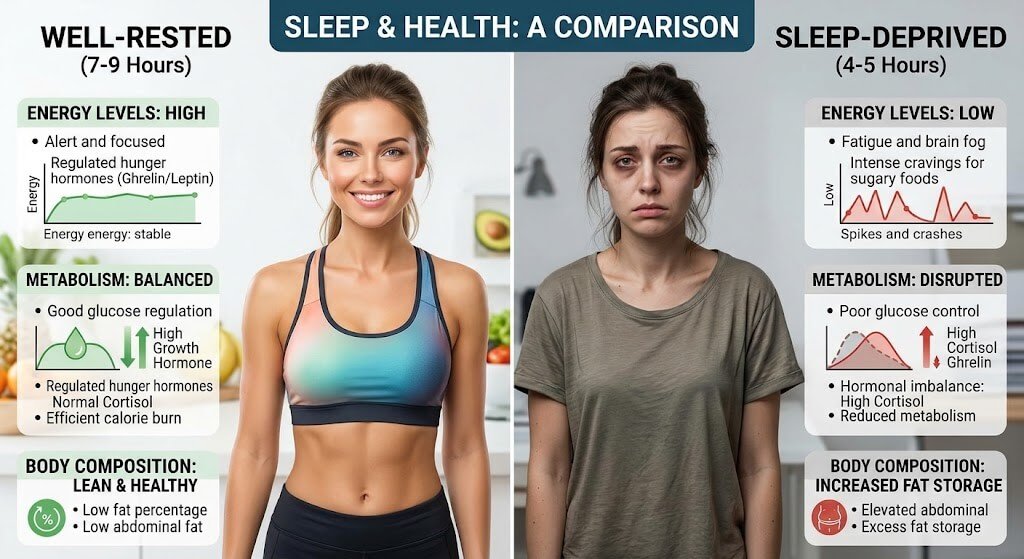
The Hormonal Connection: Leptin, Ghrelin, and Cortisol
The most immediate way you feel the impact of poor sleep is through your appetite and cravings. Sleep deprivation throws your primary hunger hormones completely out of balance, creating a biological environment that promotes weight gain.
Leptin: The Satiety Hormone
Leptin is a peptide hormone produced primarily by your adipose (fat) cells. Its main job is to signal to your hypothalamus in the brain that you have sufficient energy stores and are feeling full. When you get adequate, restorative sleep, leptin levels remain stable, helping you feel naturally satisfied after meals. However, a study in the Journal of Clinical Endocrinology & Metabolism demonstrated that restricting sleep to just 4 hours per night for two consecutive days decreased circulating leptin levels by 18%. This means your brain does not receive the “stop eating” signal, leading to passive overconsumption.
Ghrelin: The Hunger Hormone
Ghrelin is produced mainly in the stomach and acts as a powerful stimulant for appetite. The same study mentioned above found that sleep restriction increased ghrelin levels by 28%. The dangerous combination of low leptin and high ghrelin creates a powerful, primal biological drive to eat, especially calorie-dense, high-carbohydrate, and highly palatable foods.
Cortisol: The Stress Hormone
Cortisol follows a natural circadian rhythm, typically peaking in the early morning to help wake you up and gradually declining throughout the day to prepare you for sleep. Poor sleep disrupts this natural rhythm, keeping cortisol levels abnormally elevated at night. Chronically high cortisol promotes muscle protein breakdown and encourages the body to store visceral fat. For women over 40, this hormonal shift is particularly noticeable due to natural declines in estrogen, making it even more critical to prioritize rest to support metabolic health and prevent abdominal weight gain.
| Hormone | Primary Function | Effect of Sleep Deprivation | Effect of Adequate Sleep (7-9 hrs) |
| Leptin | Signals fullness to the brain | Decreases by up to 18%, increasing hunger and portion sizes | Remains stable, promoting natural satiety after meals |
| Ghrelin | Stimulates appetite and food intake | Increases by up to 28%, causing intense sugar and carb cravings | Remains balanced, reducing unnecessary snacking urges |
| Cortisol | Regulates stress response and energy | Stays elevated at night, promoting muscle breakdown and fat storage | Follows a healthy rhythm, aiding morning energy and nighttime rest |
| Insulin | Regulates blood sugar and nutrient uptake | Reduces sensitivity by 20-25%, promoting fat storage over muscle fuel | Maintains high sensitivity, supporting efficient energy use and recovery |

How to Apply This: A Coach’s Sleep Optimization Routine
Knowing the science is only half the battle. As a coach, I provide my clients with actionable, step-by-step protocols to improve their sleep hygiene. Implementing these specific habits can dramatically improve your metabolic health and weight management outcomes within just a few weeks.
Step 1: Set a Consistent Sleep-Wake Schedule
Your circadian rhythm thrives on predictability. Go to bed and wake up at the exact same time every day, even on weekends. This consistency regulates your internal biological clock, making it easier to fall asleep quickly and wake up naturally without an alarm. Aim for a strict 7 to 9-hour window. If you need to wake up at 6:00 AM for work, you should be fully asleep by 10:00 PM, meaning you are in bed by 9:30 PM.
Step 2: Manage Light Exposure Strategically
Light is the primary environmental cue for your brain’s melatonin production. Melatonin is the hormone that induces drowsiness and regulates your sleep-wake cycle.
- Morning: Get 10 to 15 minutes of direct sunlight in your eyes within an hour of waking. This halts melatonin production, boosts cortisol naturally, and sets your circadian clock for the entire day.
- Evening: Dim the overhead lights in your home 2 hours before bed. Avoid screens (phones, tablets, TVs) or use certified blue-light-blocking glasses. Blue light suppresses melatonin production, tricking your brain into thinking it is still daytime and delaying sleep onset.
Step 3: Optimize Your Sleep Environment
Your bedroom should be designed like a cave: cool, dark, and quiet.
- Temperature: Keep the room between 60°F and 67°F (15°C to 19°C). A natural drop in core body temperature is a biological signal required for deep sleep initiation.
- Darkness: Use heavy blackout curtains or a high-quality, contoured sleep mask. Even a small amount of ambient light from a streetlamp or electronic device can disrupt deep sleep cycles.
- Noise: Use a white noise machine, a fan, or high-fidelity earplugs if you live in a noisy area to mask disruptive sounds.
Step 4: Time Your Nutrition and Caffeine Intake
What you consume directly impacts your nervous system and sleep quality.
- Caffeine: Caffeine has a half-life of about 5 to 6 hours. If you drink a 16 oz (473 ml) coffee at 4:00 PM, a quarter of that caffeine is still actively in your system at 10:00 PM. Stop all caffeine intake at least 8 to 10 hours before your target bedtime.
- Alcohol: While alcohol might make you feel initially drowsy, it severely fragments your sleep architecture, drastically reducing both REM and deep slow-wave sleep. Avoid alcohol within 3 hours of bed.
- Evening Meals: Finish your last large meal 2 to 3 hours before sleep. A heavy meal forces your digestive system to work overtime, raising your core body temperature and disrupting rest. If you need a pre-bed snack, opt for a small portion of protein and complex carbs, like a half-cup of cottage cheese with a few almonds, to support overnight muscle repair.
Sample Evening Wind-Down Timeline
- 2 Hours Before Bed: Dim lights, stop screen time, and finish any heavy mental work.
- 1 Hour Before Bed: Take a warm shower (the subsequent drop in body temperature aids sleep), do 10 minutes of light stretching, and prepare your clothes for the next day.
- 30 Minutes Before Bed: Read a physical book, practice deep breathing, and get into bed.
Coach’s Tip: If you struggle to wind down due to a racing mind, try a “brain dump.” Keep a physical notebook by your bed and write down your to-do list for the next day or any lingering anxious thoughts. This physically removes the mental burden from your brain, signaling to your nervous system that it is safe to relax and let go.
Common Mistake: Many people try to “catch up” on sleep by sleeping in until 10:00 AM on weekends. This creates “social jetlag,” confusing your circadian rhythm and making it significantly harder to fall asleep on Sunday night, which ruins your Monday metabolism and energy levels. Stick to your schedule within a 30-minute window.

Synergizing Sleep with Nutrition and Exercise
Sleep does not exist in a vacuum. It works in tandem with your diet and training program to maximize weight management and body composition changes.
Protein Intake and Muscle Recovery
During deep, slow-wave sleep, your pituitary gland releases the majority of your daily growth hormone, which is essential for muscle repair, tissue growth, and fat metabolism. If you are not sleeping enough, your body cannot fully utilize the protein you consume throughout the day. Ensuring adequate protein intake supports satiety and muscle preservation, but it requires sufficient sleep to be biologically effective. Learn more about how protein intake and metabolism work together to support your body composition goals.
Exercise Timing and Sleep Quality
While any exercise is vastly better than none, the timing of your workouts can influence your sleep architecture. Vigorous exercise raises your core body temperature and stimulates the sympathetic nervous system. For most people, finishing intense workouts at least 2 to 3 hours before bedtime allows the body to cool down and transition into a parasympathetic (rest and digest) state. However, light activities like a 15-minute walk or gentle yoga in the evening can actually promote better sleep by reducing physical tension.
Natural Metabolic Support
If you are doing everything right with your sleep and training but still feel stuck, it may be helpful to explore other ways to support metabolism naturally. Small dietary adjustments, like increasing soluble fiber intake or staying consistently hydrated, can complement your sleep efforts. For those wondering what else affects metabolism and body weight, daily stress management and consistent non-exercise movement are equally vital components of the puzzle.
Special Considerations: Age, Gender, and Shift Work
Metabolic and sleep needs change as we age, and certain populations face unique challenges that require tailored approaches.
Women Over 40 and Menopause
Women over 40 often experience significant shifts in estrogen and progesterone levels, which can directly impact sleep quality and fat distribution. During perimenopause and menopause, night sweats, hot flashes, and insomnia become common. These disruptions elevate cortisol and slow metabolic rate, making weight management feel like an uphill battle. If you are in this demographic, prioritizing sleep is not a luxury; it is a metabolic necessity. Strategies like keeping the bedroom exceptionally cool, avoiding spicy foods before bed, and focusing on resistance training can mitigate these effects. Discover targeted strategies in our guide on how to increase metabolism naturally after 40.
Shift Workers
Individuals who work night shifts or rotating schedules are at a significantly higher risk for metabolic syndrome, obesity, and type 2 diabetes. Working against your natural circadian rhythm severely disrupts melatonin production and glucose tolerance. If you are a shift worker, invest heavily in blackout curtains for daytime sleep, maintain a strict meal schedule relative to your wake time (not the clock time), and consider discussing melatonin supplementation with your healthcare provider to help reset your internal clock.
Safety Notes and When to Seek Professional Help
While improving sleep hygiene is safe and beneficial for everyone, chronic sleep issues may indicate an underlying medical condition that requires professional intervention.
- Sleep Apnea: If you snore loudly, gasp for air during sleep, or wake up feeling completely unrefreshed despite spending 8 hours in bed, you may have obstructive sleep apnea. This condition severely disrupts oxygen flow and metabolism, and requires formal evaluation and treatment (like a CPAP machine) by a medical professional.
- Chronic Insomnia: If you consistently struggle to fall or stay asleep for more than a few weeks, consult a doctor or a board-certified sleep specialist. Cognitive Behavioral Therapy for Insomnia (CBT-I) is a highly effective, evidence-based first-line treatment.
- Medications: Some medications, including certain antidepressants, beta-blockers, and blood pressure drugs, can interfere with sleep architecture. Never stop taking prescribed medication without consulting your physician.
This article is for general information and is not a substitute for advice from a doctor or physical therapist.
Related Tips for Better Metabolic Health
- Get Moving Daily: Regular physical activity increases the time you spend in deep, slow-wave sleep. Aim for at least 150 minutes of moderate-intensity exercise per week, as recommended by the CDC physical activity guidelines.
- Manage Stress Proactively: Chronic psychological stress keeps cortisol high, which ruins sleep quality. Incorporate 10 minutes of daily deep breathing, box breathing, or meditation to lower your baseline nervous system arousal.
- Evaluate Your Supplements Wisely: Some people turn to supplements to aid sleep or metabolism. Always research thoroughly. For instance, understanding how does protein intake affect hunger and fullness hormones can help you choose the right evening snack to promote satiety. Similarly, while some explore options like green tea extract to boost metabolism, sleep remains the undisputed, non-negotiable foundation of metabolic health.

Frequently Asked Questions (FAQ)
Does lack of sleep slow down metabolism?
Yes, chronic sleep deprivation can significantly and negatively impact your metabolic rate. It reduces insulin sensitivity, increases cortisol, and lowers your non-exercise activity thermogenesis (NEAT). This makes your body less efficient at burning calories and much more prone to storing fat, especially around the midsection.
How many hours of sleep do I need to lose weight?
Most adults need 7 to 9 hours of quality sleep per night for optimal metabolic function and weight management. Consistently getting less than 7 hours is scientifically linked to increased appetite, higher body mass index (BMI), and greater difficulty losing stubborn body fat.
Can sleeping more help you burn more calories?
Sleeping itself does not burn a significant number of extra calories compared to being awake. However, adequate sleep regulates hunger hormones, preventing overeating, and ensures you have the energy to maintain a high NEAT and perform effective, intense workouts, indirectly supporting a sustainable calorie deficit.
What hormones are affected by poor sleep and weight gain?
Poor sleep primarily disrupts leptin (the fullness hormone), ghrelin (the hunger hormone), cortisol (the stress hormone), and insulin. This specific combination increases cravings, promotes fat storage, and makes you feel significantly hungrier throughout the day.
Does napping help with metabolism and weight loss?
Short naps (20 to 30 minutes) can help reduce stress and improve afternoon alertness without disrupting nighttime sleep. However, long naps or napping late in the day can interfere with your circadian rhythm, making it harder to fall asleep at night and potentially worsening long-term metabolic health.
Why do I crave junk food when I am tired?
When you are sleep-deprived, your brain’s reward center becomes hyperactive in response to high-calorie, sugary, and fatty foods. Simultaneously, low leptin and high ghrelin levels create a strong biological drive to seek out quick energy sources, leading to intense, hard-to-resist junk food cravings.
Can poor sleep cause weight gain even if I eat healthy?
Yes. Even with a perfect diet, chronic sleep deprivation elevates cortisol and reduces insulin sensitivity. This hormonal environment promotes fat storage, particularly visceral fat, and can lower your daily energy expenditure, leading to gradual weight gain over time.
How long does it take to fix metabolism after poor sleep?
Research suggests that insulin sensitivity and hormone levels can begin to normalize after just a few nights of adequate, high-quality sleep. However, reversing chronic metabolic adaptations may take several weeks of consistent, prioritized rest and healthy habits.
Conclusion
Understanding how does sleep affect metabolism and weight management is essential for anyone serious about their long-term health and fitness. Sleep is not a passive state of doing nothing; it is the active foundation upon which your hormonal balance, appetite regulation, and daily energy expenditure are built. Without 7 to 9 hours of quality rest, your body will actively fight your weight loss efforts through increased hunger, reduced calorie burn, and accelerated muscle loss.
By implementing a consistent sleep schedule, managing light exposure strategically, and optimizing your evening routine, you can harness the powerful, natural effects of sleep to accelerate your fitness goals. Remember, you cannot out-train or out-diet a bad night’s sleep. Prioritize your rest, and your metabolism will thank you.