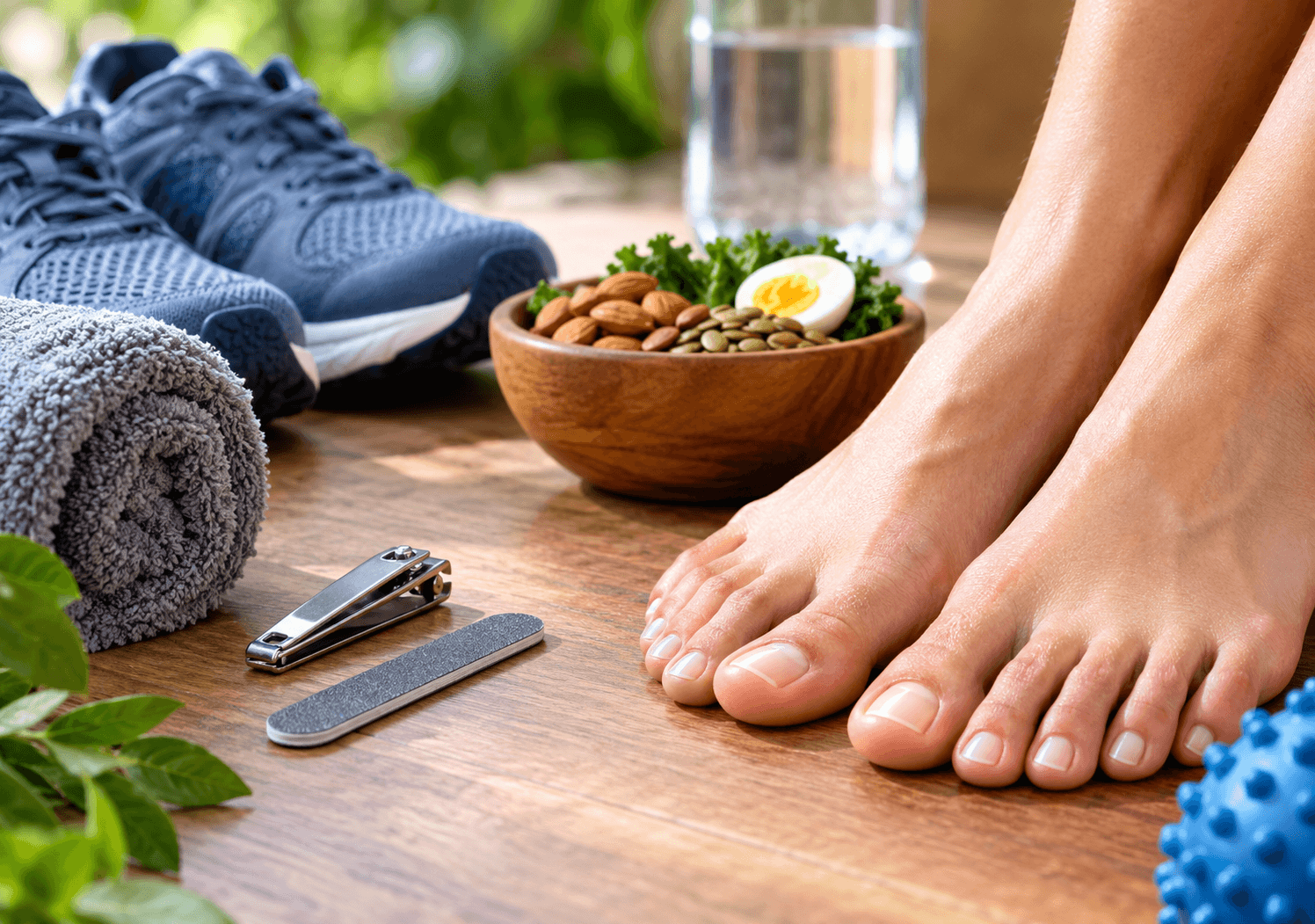
Strong, healthy toenails are a foundational yet often overlooked component of overall athletic performance and daily comfort. Whether you are a gym beginner, a dedicated pickleball player, or an active senior, your feet absorb massive amounts of force. Poor foot mechanics, ill-fitting shoes, and nutritional gaps can quickly lead to brittle nails, fungal infections, or painful subungual hematomas (black toenails). Learning how to improve toenail health naturally is a critical step in maintaining your mobility, preventing downtime, and supporting your overall training consistency.
This guide provides practical, evidence-based strategies to protect and strengthen your toenails. We will cover proper footwear selection, targeted foot strengthening exercises, nutritional support, and hygiene protocols. By treating your foot care with the same discipline as your workout programming, you can build resilient toenails that support an active lifestyle.
Quick Answer
How to improve toenail health naturally: Focus on four core areas. First, wear shoes with a wide toe box (at least 0.5 inches or 1.27 cm of space). Second, trim nails straight across to prevent ingrowns. Third, perform daily foot strengthening exercises like “toe yoga” to improve circulation. Finally, support keratin production with adequate protein, biotin, and zinc while keeping feet dry to prevent fungal growth.
The Connection Between Foot Mechanics and Toenail Health
Many people treat toenail issues as purely cosmetic or dermatological problems. However, as a strength and conditioning coach, I see firsthand how biomechanics and systemic health directly dictate nail integrity. Your toenails are made of keratin, a tough protein that relies on consistent blood flow for nutrient delivery and growth.
When you engage in high-impact activities like running, weightlifting, or pickleball, repetitive micro-trauma can occur if your foot slides forward inside your shoe. This constant pressure damages the nail bed, leading to thickening, discoloration, or detachment. Furthermore, weak intrinsic foot muscles can alter your gait, placing uneven pressure on specific toes.
Improving circulation through targeted movement and ensuring proper mechanical alignment are the first lines of defense. When you combine smart biomechanical habits with targeted nutrition, you create an environment where toenails can thrive without relying on harsh chemical treatments.
7 Evidence-Based Strategies on How to Improve Toenail Health Naturally
To build resilient toenails, you must address the problem from multiple angles. Below are seven proven strategies, complete with actionable steps, to integrate into your daily routine.
1. Optimize Your Footwear Fit and Toe Box Width
The most common cause of toenail trauma in athletes is improper footwear. Shoes that are too narrow or too short force the toes into a cramped position, causing the nail to repeatedly strike the front of the shoe.
Action Steps:
- Measure your feet at the end of the day, as feet naturally swell by up to half a size during daily activity.
- Ensure there is at least 0.5 inches (1.27 cm) of space between your longest toe and the end of the shoe.
- Look for a “wide toe box” that allows your toes to splay naturally without touching the sides of the shoe.
- For weightlifting, choose shoes with a firm, non-compressible sole to prevent toe cramping under heavy loads. For running or pickleball, prioritize shoes with adequate cushioning and a secure heel lock to prevent forward foot slide.
The American College of Sports Medicine (ACSM) emphasizes that proper footwear selection is critical for preventing lower-extremity injuries, including nail trauma, in active populations.
2. Master Proper Trimming Techniques
How you cut your nails dictates whether they grow inward or outward. Incorrect trimming is the primary driver of painful ingrown toenails (onychocryptosis).
Action Steps:
- Trim after a shower when the nails are softer and less prone to splitting.
- Use dedicated, sanitized toenail clippers. Do not use fingernail clippers, as they are too small and can crush the nail edge.
- Cut straight across, never rounding the corners. Rounding the edges encourages the nail to grow into the surrounding skin.
- File the edges gently with an emery board to remove sharp corners, but do not file deeply into the sides.
- Leave a small margin of white nail (about 1-2 millimeters). Cutting too short exposes the sensitive nail bed to friction and infection.
Harvard Health Publishing notes that proper trimming techniques are the most effective preventive measure against ingrown toenails and subsequent bacterial infections.
3. Boost Circulation with Foot Strengthening Exercises
Strong intrinsic foot muscles improve arch support, stabilize your gait, and enhance blood circulation to the extremities. Better circulation means more oxygen and nutrients reach the nail matrix, promoting healthier, faster growth.
Exercise 1: The Short Foot Exercise (Arch Doming)
- How to do it: Sit barefoot with your foot flat on the floor. Keep your toes completely relaxed and straight. Without curling your toes, slide the ball of your foot toward your heel, shortening the foot and raising the arch. Hold, then release.
- Sets/Reps: 3 sets of 10–15 repetitions per foot.
- Tempo: 2-second hold at the peak contraction.
- Regression: Perform seated with your heel against a wall for stability.
- Progression: Perform while standing on one leg, or while doing a bodyweight squat.
Exercise 2: Toe Yoga
- How to do it: Sit or stand barefoot. Lift only your big toe off the ground while keeping the four smaller toes pressed firmly into the floor. Hold for 2 seconds. Then, reverse the movement: press the big toe down and lift the four smaller toes.
- Sets/Reps: 2 sets of 10 repetitions per foot (5 cycles of big toe up, small toes up).
Coach’s Tip: Focus on the mind-muscle connection. If you cannot isolate the toes initially, use your hand to physically hold the toes you want to keep down while you practice lifting the others. This builds the neural pathways required for independent toe control.
Common Mistake: Clawing the toes. Many people curl all their toes under to “grip” the floor. This creates tension in the plantar fascia and does not activate the intrinsic arch muscles. Keep the toes long and flat.
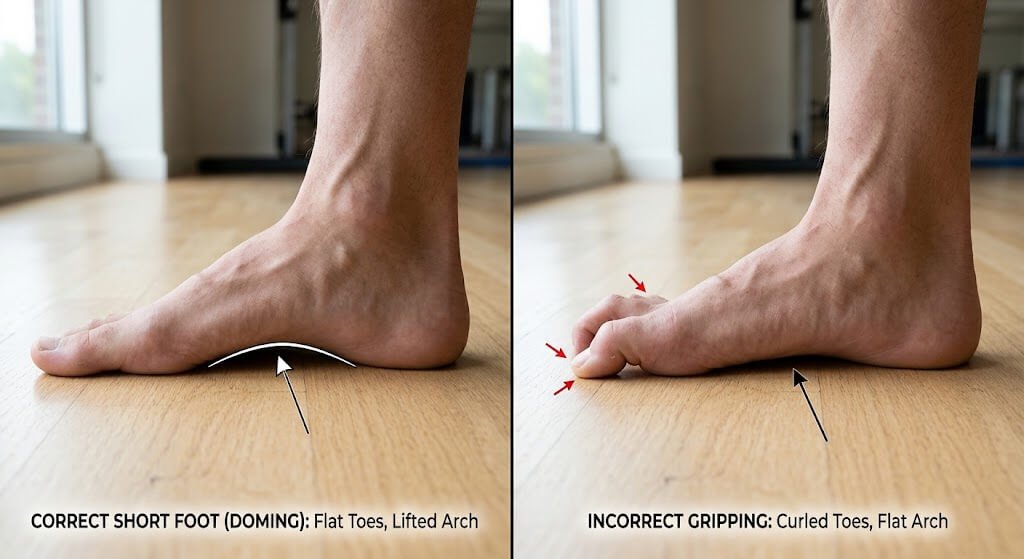
Research in the Journal of Strength and Conditioning Research demonstrates that intrinsic foot muscle training significantly improves foot posture and function, which indirectly supports healthier distal extremities by optimizing load distribution.
4. Support Keratin Production with Targeted Nutrition
Your toenails are made of keratin, a structural protein. If your diet lacks the building blocks for protein synthesis, your nails will become brittle, thin, or prone to peeling.
Action Steps:
- Prioritize Protein: Ensure you are consuming adequate protein throughout the day. Adequate protein intake is essential not just for muscle repair, but for synthesizing the keratin that forms strong nails.
- Biotin (Vitamin B7): Biotin is widely studied for its role in nail health. A review by the National Institutes of Health (NIH) indicates that biotin supplementation may improve the thickness and reduce the splitting of brittle nails.
- Zinc and Iron: Deficiencies in these minerals are directly linked to Beau’s lines (horizontal ridges) and pale, brittle nails. Incorporate lean meats, legumes, nuts, and seeds into your diet.
- Hydration: Dehydration affects all tissues, including nails. Drink at least half your body weight in pounds (lb) in ounces of water daily (e.g., a 160 lb / 72.5 kg person should aim for 80 oz / 2.3 liters).
Understanding which nutrients support normal energy metabolism can also help you optimize your overall cellular repair processes, ensuring your body has the resources it needs to maintain healthy nail beds.
5. Manage Moisture and Prevent Fungal Exposure
Onychomycosis, or toenail fungus, thrives in warm, dark, and moist environments. Gym locker rooms, shared showers, and sweaty workout shoes are prime breeding grounds. Fungal infections cause nails to become thick, yellow, and crumbly, making them highly susceptible to breaking.
Action Steps:
- Dry thoroughly: After showering, dry your feet completely, especially between the toes, using a dedicated towel.
- Rotate footwear: Do not wear the same pair of workout shoes two days in a row. Allow them 24 hours to air out and dry completely.
- Use natural antifungals: Tea tree oil has documented antifungal properties. Applying a diluted drop (mixed with a carrier oil like coconut oil) to the nail bed and cuticle can help create a hostile environment for fungal spores.
- Protect in public spaces: Always wear flip-flops or shower shoes in gym locker rooms and public pools.
The Centers for Disease Control and Prevention (CDC) emphasizes that keeping feet clean and dry is the most effective behavioral strategy for preventing fungal infections of the nails and skin.

6. Protect Against Trauma During High-Impact Activities
If you play pickleball, run, or perform heavy lower-body lifts, your toenails are at risk of subungual hematoma (bleeding under the nail). Preventing this requires proactive taping and lacing strategies.
Action Steps:
- Runner’s Loop (Heel Lock) Lacing: Use the extra eyelet at the top of your running shoes to lock your heel in place. This prevents your foot from sliding forward and jamming your toes into the front of the shoe during downhill runs or sudden stops in pickleball.
- Toe Taping: For long hikes or intense court sports, apply a small piece of kinesiology tape or medical tape over the top of your longest toe. This reduces friction between the nail and the shoe.
- Trim before long events: Always trim your toenails 2–3 days before a marathon, long hike, or tournament. Freshly trimmed nails are less likely to catch and tear.
7. Prioritize Recovery and Sleep for Tissue Repair
Nail growth occurs primarily during periods of rest. Chronic stress and poor sleep elevate cortisol levels, which can divert resources away from non-essential tissue repair, including hair and nail growth.
Action Steps:
- Aim for 7–9 hours of quality sleep per night.
- Understand how sleep affects metabolism and tissue recovery, as hormonal balance during deep sleep is when the body allocates amino acids to rebuild keratin structures.
- Consider practices that support your metabolism naturally, such as evening stretching or light walking, to improve peripheral circulation before bed.
Building a Weekly Foot and Toenail Care Routine
Consistency is key. You do not need to spend hours on foot care, but integrating these micro-habits into your weekly schedule will yield compounding benefits.
| Day | Action Item | Time Required |
| Daily | Wash and thoroughly dry feet. Apply moisturizer to heels (avoiding between toes). | 2 minutes |
| Daily | Perform Toe Yoga and Short Foot Exercises (e.g., while brushing teeth or watching TV). | 3 minutes |
| Post-Workout | Remove shoes and socks immediately. Air out feet and shoes. | 1 minute |
| Weekly | Inspect toenails for discoloration, thickening, or signs of ingrown edges. | 2 minutes |
| Bi-Weekly | Trim toenails straight across and file edges gently. Sanitize clippers with rubbing alcohol. | 5 minutes |
| Monthly | Deep clean workout shoes. Evaluate shoe fit and replace if the toe box has collapsed or mileage exceeds 300–500 miles (480–800 km). | 10 minutes |
Safety Tips and When to See a Professional
While natural care resolves most minor toenail issues, certain symptoms require professional evaluation. Do not attempt to perform “bathroom surgery” on an ingrown nail or aggressively file down a thickened fungal nail, as this can introduce severe bacterial infections.
Consult a podiatrist or doctor if you experience:
- Signs of infection: Redness, swelling, warmth, or pus around the nail bed.
- Persistent pain that alters your gait or walking mechanics.
- A black toenail that does not grow out or is accompanied by severe throbbing pain (may require professional drainage).
- Underlying conditions like diabetes or peripheral neuropathy, which reduce sensation and healing capacity in the feet. Any foot care for diabetics should be supervised by a medical professional.
Various factors that affect metabolism and circulation, such as diabetes or thyroid disorders, can also manifest in changes to nail health. If you notice sudden, unexplained changes in nail color or texture, a medical evaluation is warranted.
FAQ: How to Improve Toenail Health Naturally
1. How long does it take to see improvements in toenail health naturally? Toenails grow slowly, at an average rate of 1–2 millimeters per month. Because a full toenail replacement takes 12 to 18 months, you must be patient. You will typically see healthier growth at the base of the nail within 2 to 3 months of consistent care, but full replacement requires long-term dedication.
2. Can foot exercises really improve toenail health? Yes. Exercises like the short foot exercise and toe yoga strengthen the intrinsic muscles of the foot. This improves arch support and optimizes blood circulation to the extremities. Better circulation delivers more oxygen and nutrients to the nail matrix, promoting stronger, healthier nail growth.
3. What is the best natural remedy for thick toenails? Thick toenails are often caused by fungal infections or repetitive trauma. For fungal issues, applying diluted tea tree oil daily may help due to its natural antifungal properties. However, if the thickening is severe, consult a podiatrist, as over-the-counter natural remedies may not penetrate a heavily thickened nail plate.
4. Should I push back my cuticles for better nail health? No. You should avoid cutting or aggressively pushing back your toenail cuticles. The cuticle acts as a vital seal that protects the nail matrix from bacteria and fungi. Disrupting this barrier significantly increases the risk of painful paronychia (infection of the skin around the nail).
5. Does poor circulation affect toenail growth? Absolutely. The nail matrix requires a steady supply of blood to produce keratin. Conditions that impair peripheral circulation, such as smoking, sedentary behavior, or cardiovascular issues, can lead to slow-growing, brittle, or ridged toenails. Improving cardiovascular health and foot mobility directly supports nail vitality.
6. Are there specific supplements that help without harsh stimulants? Yes. Biotin, collagen peptides, zinc, and iron are foundational for nail health. If you are exploring broader metabolic support, you can look into supplements that support metabolism without stimulants, which often include foundational vitamins and minerals that aid overall tissue repair and cellular energy without causing jitters or crashes.
Conclusion
Learning how to improve toenail health naturally is not about expensive salon treatments or harsh chemicals. It is about applying the same disciplined, evidence-based approach to your feet as you do to your workouts. By optimizing your footwear fit, mastering proper trimming techniques, strengthening your intrinsic foot muscles, and supporting your body with targeted nutrition, you can build resilient toenails.
Remember that consistency is your greatest asset. Implement these strategies gradually, monitor your progress, and do not hesitate to seek professional podiatric care when needed. Your feet carry you through every mile, lift, and lateral shuffle; investing in their health is an investment in your long-term athletic performance and daily quality of life.