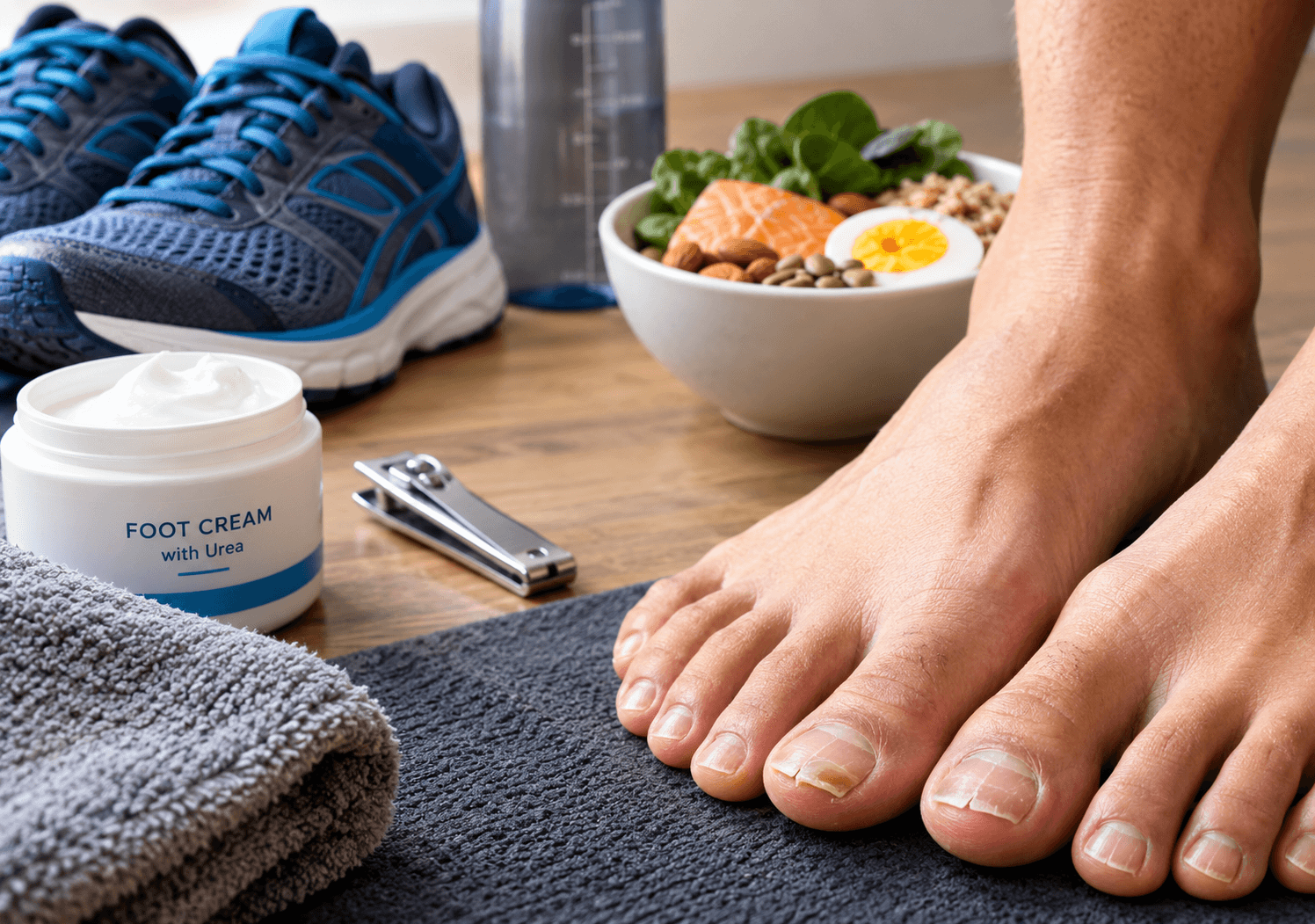
If you are asking, “Why are my toenails brittle, dry, and splitting?” you are not alone. Many active adults, runners, and gym-goers experience this frustrating issue. As a strength and conditioning coach, I see athletes push their limits daily, but they often neglect the foundation of their movement: their feet. Your toenails endure massive stress from footwear, sweat, and repetitive impact. When they become dry or start to split, it is usually a signal from your body that something in your training, footwear, or nutrition needs adjustment.
This guide breaks down the exact causes of brittle toenails, backed by dermatological research. You will learn practical, step-by-step routines to fix the problem, how to choose the right footwear, and which nutritional habits support strong keratin production. Let us get your foot health back on track so you can train without pain or distraction.
Quick Answer
Toenails become brittle, dry, and splitting primarily due to repetitive microtrauma from footwear, fungal infections, natural aging, or nutritional deficiencies like low protein or biotin. Fix it by wearing properly fitted shoes with a wide toe box, keeping feet dry, moisturizing with urea-based creams, and ensuring adequate hydration and nutrient intake.
What the Research Says: Common Causes of Brittle Toenails
To fix a problem, we must first identify the root cause. Brittle, splitting toenails (medically known as onychoschizia) rarely happen for just one reason. According to the American Academy of Dermatology, repeated wetting and drying of the nails is a leading cause of brittleness. For active individuals, several specific factors are usually at play.
1. Repetitive Microtrauma and “Runner’s Toe”
Every time your foot strikes the ground, your toes press against the front of your shoe. Over miles of running or heavy lifting sessions, this repetitive stress causes microtrauma to the nail bed. The nail thickens as a defense mechanism, but it also becomes dry and prone to horizontal splitting. If your shoes are even a half-inch (1.25 cm) too short, this damage accelerates rapidly.
2. Fungal Infections (Onychomycosis)
Gym floors, communal showers, and sweaty shoes create a perfect environment for fungus. The Centers for Disease Control and Prevention (CDC) notes that fungal infections thrive in warm, moist environments. A fungal infection does not just discolor the nail; it feeds on the keratin, making the nail thick, crumbly, dry, and highly susceptible to splitting.
3. Nutritional Deficiencies
Your nails are made of keratin, a structural protein. If your diet lacks the building blocks for protein synthesis, your body will prioritize vital organs over nail health. Research published in the Journal of Clinical and Aesthetic Dermatology highlights that deficiencies in biotin (Vitamin B7), iron, and overall protein can directly lead to brittle, splitting nails. Ensuring adequate protein intake is critical for maintaining the structural integrity of your nails, hair, and skin.
4. Natural Aging and Dehydration
As we age, our bodies produce less natural oil and moisture. The Mayo Clinic states that aging naturally reduces the nail plate’s ability to retain water, leading to dry, brittle nails. Furthermore, systemic dehydration from intense workouts without proper fluid replacement exacerbates this dryness.
5. Harsh Chemicals and Poor Foot Hygiene
Frequently using harsh nail polish removers containing acetone, or failing to dry your feet properly after a workout, strips the nail of its natural lipids. This leaves the nail plate porous, dry, and ready to split under minimal pressure.
Common Causes vs. Symptoms vs. Solutions
| Root Cause | Key Symptoms | Actionable Solution |
| Microtrauma | Horizontal ridges, splitting at the tip, dark bruising under the nail. | Upsize shoes by 0.5 inches (1.25 cm); trim nails straight across. |
| Fungal Infection | Yellow/brown discoloration, thickening, crumbly texture, foul odor. | Apply OTC antifungal cream; keep feet dry; see a podiatrist if persistent. |
| Nutritional Deficit | Brittle nails on both hands and feet, slow growth, general fatigue. | Increase dietary protein, biotin-rich foods, and consider a basic multivitamin. |
| Dehydration / Aging | Vertical ridges, overall dryness, peeling layers at the nail tip. | Drink 0.5 to 1 ounce (15–30 ml) of water per pound of body weight daily; use urea cream. |
| Chemical Damage | White, chalky nail surface, peeling immediately after polish removal. | Switch to acetone-free removers; apply jojoba oil daily. |
How to Apply It: A Practical Toenail Care Routine for Active Adults
Fixing dry, splitting toenails requires consistency. You cannot moisturize once and expect a miracle. Treat your foot care like your workout program: follow the steps, track your progress, and be patient. Here is a proven, four-step routine to restore nail health.
Step 1: Soak and Clean (2–3 Times Per Week)
Fill a basin with warm water and add a quarter-cup (60 ml) of Epsom salt. Soak your feet for 10 to 15 minutes. This softens the nail plate and surrounding cuticles, making them less likely to tear. Wash your feet with a gentle, pH-balanced cleanser. Avoid harsh antibacterial soaps daily, as they strip natural oils.
Step 2: Trim Correctly (Once Per Week)
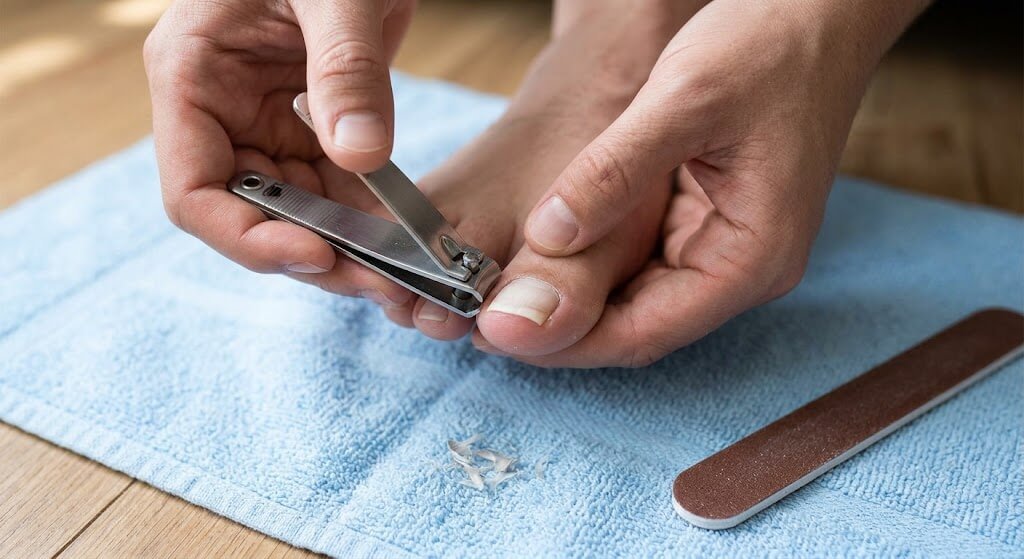
Never cut your toenails in a curved shape like your fingernails. This encourages the nail to grow into the skin, causing ingrown toenails. Use a sturdy toenail clipper and cut straight across. File the edges gently with an emery board to remove sharp corners. Leave about 1 to 2 millimeters of white nail at the tip to protect the nail bed.
Step 3: Moisturize Strategically (Daily)
Regular body lotion is not thick enough for toenails. Look for a foot cream containing 10% to 20% urea or lactic acid. These ingredients are keratolytics, meaning they gently break down dry, dead skin and drive moisture deep into the nail plate. Apply the cream immediately after showering while your skin is still damp to lock in hydration. For an intensive treatment, apply a thick layer of cream or pure jojoba oil, put on cotton socks, and sleep in them.
Step 4: Protect During Activity
Before putting on your training shoes, ensure your feet are completely dry. Apply a light dusting of foot powder to absorb sweat. If you are going for a long run or a heavy leg day, consider using silicone toe sleeves or athletic tape over the most vulnerable toes to prevent friction.

Footwear and Training Adjustments
Your shoes are either your best tool or your worst enemy when it comes to toenail health. A shoe that fits perfectly in the store might become a torture device after 3 miles (4.8 km) of running, as your feet naturally swell during exercise.
The Thumb Width Rule: When standing in your athletic shoes, you should have about a thumb’s width of space (roughly 0.5 inches or 1.25 cm) between your longest toe and the end of the shoe. Your toes should also be able to wiggle freely side to side.
Coach’s Tip:
Always try on athletic shoes at the end of the day. Your feet expand throughout the day and during workouts. A shoe that feels snug at 10:00 AM will cause microtrauma and splitting by 6:00 PM after a long training session.
Common Mistake:
Ignoring the “Toe Box” Width. Many athletes focus only on the length of the shoe and ignore the width. A narrow toe box squeezes the toes together, creating friction between adjacent nails. This constant rubbing is a primary cause of vertical splitting. If you have wider feet, actively seek out brands that offer “wide” (2E or 4E) sizing options.
Regression and Progression for Foot Care
- Easier Version (Regression): If bending down to trim and moisturize your feet is difficult due to mobility issues, use a long-handled toenail clipper and apply moisturizer with a foot applicator wand.
- Harder Version (Progression): For severe, chronic splitting, incorporate a weekly pumice stone routine to gently debride thickened nail edges, followed by an overnight occlusive therapy using petroleum jelly and tight cotton socks.
Supporting Nail Health from the Inside Out
Topical treatments only go so far. Strong toenails are built from the inside out through proper nutrition and lifestyle habits. Just as you focus on how to increase metabolism naturally for overall fitness, your body requires specific resources to synthesize keratin efficiently.
First, prioritize high-quality protein sources. Keratin is a protein, and without adequate amino acids, your body cannot repair nail damage. Incorporating lean meats, eggs, or legumes into your daily meals provides the foundational blocks for nail strength.
Second, ensure you are getting essential nutrients for metabolism, particularly B-vitamins like biotin, zinc, and iron. Biotin is widely studied for its role in improving nail thickness and reducing splitting. Foods like almonds, sweet potatoes, and eggs are excellent natural sources.
Hydration is equally critical. If you are chronically dehydrated, your nail plates will reflect that lack of moisture. Furthermore, poor sleep disrupts the body’s natural repair cycles. Understanding how sleep affects metabolism and cellular repair can highlight why resting 7–9 hours a night is non-negotiable for tissue recovery, including your toenails.
Finally, be cautious with quick fixes. If you consider taking supplements, take the time to evaluate ingredients in supplements to ensure you are getting bioavailable forms of vitamins without unnecessary fillers. A holistic approach that includes dietary fiber for overall health and balanced meals will always outperform isolated, poorly researched pills.
Safety Notes and When to See a Doctor
While most brittle toenails can be managed at home, certain symptoms require professional medical evaluation. Do not attempt to self-treat if you notice the following:
- Signs of infection: Redness, swelling, warmth, or pus around the nail bed.
- Diabetes or poor circulation: If you have diabetes, peripheral neuropathy, or poor blood flow, any foot issue can quickly escalate into a severe ulcer or infection.
- No improvement: If you follow a strict care routine for 6 to 8 weeks and see no improvement, the cause may be a deep fungal infection or psoriasis requiring prescription medication.
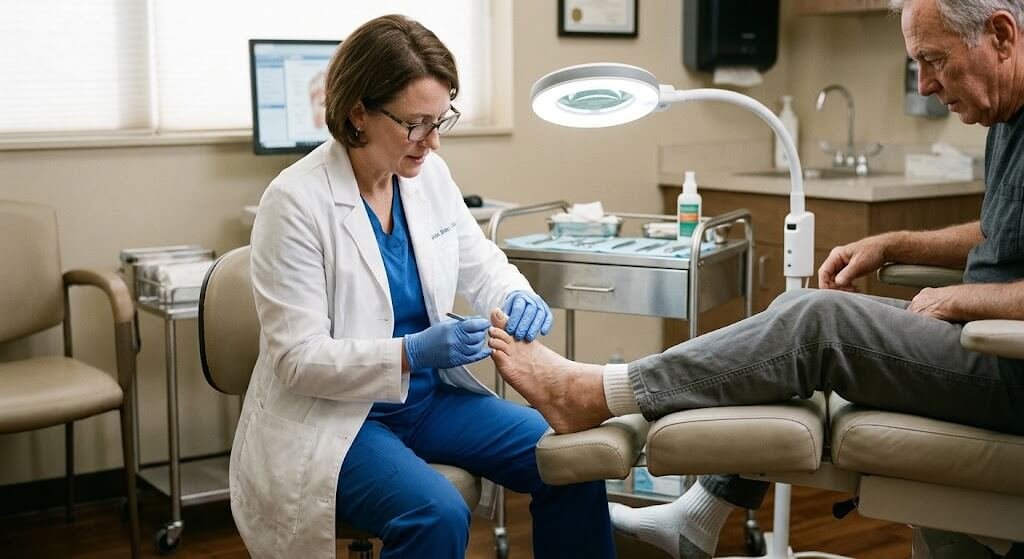
Always consult a podiatrist or dermatologist for an accurate diagnosis. They can perform a nail clipping test to confirm if fungus is present and prescribe topical or oral antifungal medications that are far more effective than over-the-counter options.
Medical Disclaimer: This article is for general information and is not a substitute for advice from a doctor or physical therapist.
Frequently Asked Questions (FAQ)
1. What vitamin deficiency causes brittle toenails?
Deficiencies in biotin (Vitamin B7), iron, and zinc are most commonly linked to brittle, splitting nails. Biotin plays a direct role in keratin infrastructure. Ensuring adequate protein and a balanced diet rich in these micronutrients supports stronger nail growth over time.
2. Can running cause toenails to split and crack?
Yes. Repetitive microtrauma from your toes hitting the front of your running shoe is a leading cause of splitting. This is often called “runner’s toe.” Ensuring your shoes have a wide toe box and are a half-inch (1.25 cm) larger than your regular shoes can prevent this damage.
3. How do I fix dry, brittle toenails fast?
While nails grow slowly, you can improve their condition quickly by soaking them in warm water, trimming them straight across, and applying a 10% to 20% urea-based foot cream daily. Wearing cotton socks overnight after applying the cream locks in moisture for faster results.
4. Is a splitting toenail a sign of fungus?
It can be. Fungal infections (onychomycosis) feed on keratin, making nails thick, yellow, crumbly, and prone to splitting. However, splitting can also be caused by trauma or dryness. If the nail is also discolored or foul-smelling, see a doctor for a fungal test.
5. Can dehydration cause toenails to split?
Yes. Systemic dehydration reduces the moisture content in your nail plates, making them less flexible and more prone to cracking and peeling. Drinking adequate water daily and moisturizing your feet topically helps counteract this effect.
6. How to prevent toenail damage in tight shoes?
Avoid tight shoes entirely for athletic activities. Always choose footwear with a wide toe box that allows your toes to splay naturally. If you must wear restrictive shoes for work, change into roomy, supportive shoes immediately after your shift ends to relieve pressure.
Conclusion
Understanding why are my toenails brittle, dry, and splitting? is the first step toward resolving the issue. For active individuals, the culprit is usually a combination of repetitive microtrauma from footwear, environmental dryness, or minor nutritional gaps. By implementing a consistent foot care routine, choosing properly fitted athletic shoes with adequate toe room, and supporting your body with proper hydration and nutrients, you can restore your toenail health.