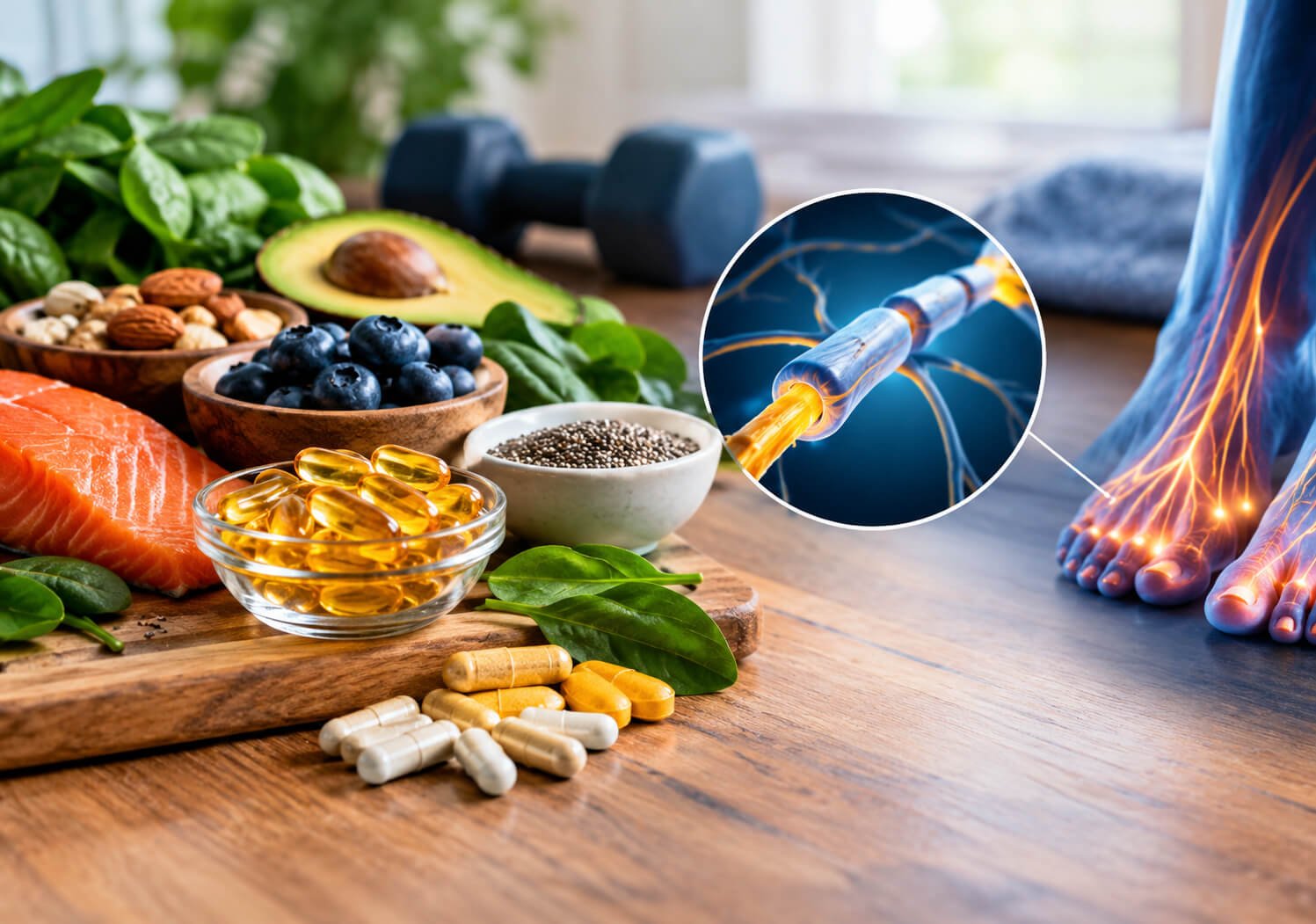
If you are dealing with a constant burning, tingling, or “pins and needles” sensation in your hands or feet, you are likely experiencing peripheral neuropathy.158 As a strength and conditioning coach, I work with many clients—especially seniors, diabetics, and those recovering from metabolic conditions—who struggle to grip a dumbbell or balance on one leg because their nerve endings are misfiring. Peripheral neuropathy can turn a simple walk into a painful ordeal and make exercise feel impossible.
While medications are often prescribed to mask nerve pain, many of my clients ask what they can do nutritionally to actually support nerve healing. The right supplements for peripheral neuropathy relief can help reduce oxidative stress, improve blood flow to the nerves, and provide the raw materials your body needs to repair damaged myelin sheaths.
In this comprehensive guide, we will break down the exact vitamins, minerals, and antioxidants that the latest research supports for nerve health. I will show you how they work, how to dose them, and how to combine them with targeted physical training to get your body moving comfortably again.
Quick Answer: What are the best supplements for peripheral neuropathy relief?
The most research-backed supplements for peripheral neuropathy relief include Alpha-Lipoic Acid (ALA) to reduce oxidative stress, Benfotiamine (fat-soluble Vitamin B1) to block nerve-damaging sugar pathways, Acetyl-L-Carnitine (ALC) for nerve regeneration, and Methylcobalamin (Vitamin B12) to repair the myelin sheath. A comprehensive approach often combines these with Magnesium and Omega-3 fatty acids to lower inflammation and calm hyperactive pain signals.
Understanding Peripheral Neuropathy: A Coach’s Breakdown
Before we look at the specific supplements, you need to understand what you are trying to fix. Your nervous system is like the electrical wiring in a commercial gym. The brain and spinal cord are the main power breakers (the central nervous system), and the peripheral nerves are the cables running out to power the treadmills and lights (your arms, hands, legs, and feet).
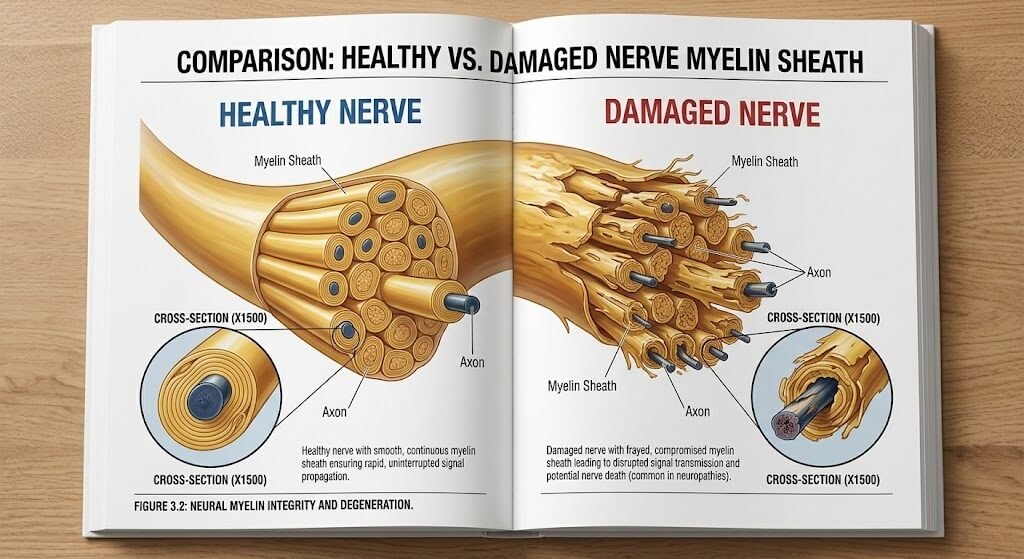
Every nerve is covered by a protective coating called the myelin sheath. Think of this like the thick rubber casing on a cable machine. When blood sugar is chronically high, or when you lack specific nutrients, oxidative stress attacks this casing. The “rubber coating” wears away, exposing the raw wire underneath. When that wire touches something, it sparks. That “spark” is the sharp, burning, or tingling pain you feel in your extremities.
Peripheral neuropathy is most commonly caused by:
- Diabetes and Insulin Resistance: High blood glucose produces advanced glycation end-products (AGEs) that damage the tiny blood vessels supplying the nerves.
- Vitamin Deficiencies: Particularly B-vitamins, which are crucial for maintaining the myelin sheath.11
- Chemotherapy or Medications: Certain toxins can directly damage peripheral nerves.
- Metabolic Syndrome: Poor metabolic health and obesity increase systemic inflammation, which attacks nerve tissue.
Because nerve damage is often tied to your body’s metabolic rate and cellular energy, understanding what affects metabolism and body weight is a critical first step. Improving your overall metabolic health creates an environment where nerves can actually heal.
Let’s dive into the evidence-based natural remedies for peripheral neuropathy.
1. Alpha-Lipoic Acid (ALA): The Master Antioxidant
When it comes to neuropathy support formulas, Alpha-Lipoic Acid (ALA) is often considered the gold standard. ALA is a naturally occurring fatty acid that functions as a highly potent antioxidant. Unlike many other antioxidants, ALA is both water- and fat-soluble, meaning it can enter all parts of the nerve cell to neutralize damage.
How It Works for Nerve Pain
Oxidative stress is like rust forming on a barbell; over time, it degrades the structure. ALA scavenges the free radicals that cause this “rust” on your nerve cells. Furthermore, it helps regenerate other crucial antioxidants in the body, such as Vitamin C, Vitamin E, and glutathione. By reducing oxidative stress, ALA improves the microcirculation (blood flow) to the peripheral nerves, delivering the oxygen they desperately need to survive.
What the Research Says
ALA is one of the most heavily researched vitamins for neuropathy. The landmark ALADIN (Alpha-Lipoic Acid in Diabetic Neuropathy) study found that administering ALA significantly reduced neuropathic deficits in diabetic patients.6 According to a systematic review on alpha-lipoic acid and diabetic neuropathy, oral doses of 600 mg to 1,200 mg per day successfully reduced symptoms of pain, burning, and numbness after three to five weeks of use.
How to Take It
- Dosage: The clinical dose is generally 600 mg taken once or twice daily.1
- Timing: Take ALA on an empty stomach (30 minutes before food or 2 hours after) because food significantly reduces its absorption.
Coach’s Tip: Look for the “R-ALA” form (R-Lipoic Acid) rather than the synthetic “S-ALA” form. R-ALA is the biologically active form found in nature and is absorbed much more efficiently by your body.
Common Mistake: Taking ALA alongside a large meal. I have seen clients complain that their ALA isn’t working, only to find out they are taking it with their morning oatmeal, which blocks it from getting into their bloodstream.
2. Benfotiamine (Fat-Soluble Vitamin B1)2
You have likely heard of Vitamin B1 (thiamine), but benfotiamine is its highly bioavailable, fat-soluble cousin.2 Standard thiamine is water-soluble, meaning your body flushes out what it doesn’t immediately use. Benfotiamine, however, passes easily through cell membranes and can build up in nerve tissues, making it one of the most effective supplements for peripheral neuropathy relief.
How It Works for Nerve Pain
Benfotiamine works by boosting the activity of an enzyme called transketolase.2 This enzyme effectively blocks three of the major biochemical pathways that cause vascular damage when blood sugar is high. By stopping the formation of advanced glycation end-products (AGEs), benfotiamine prevents the metabolic “sludge” from clogging the tiny blood vessels that feed your nerves.
What the Research Says
Clinical trials demonstrate that benfotiamine can dramatically lower nerve pain.2 According to a randomized controlled trial on benfotiamine and diabetic polyneuropathy, patients taking 600 mg of benfotiamine daily for six weeks saw significant improvements in their neuropathy symptom scores, particularly in reducing sharp pains and numbness, compared to those on a placebo.
How to Take It
- Dosage: 300 mg to 600 mg daily.2 Many protocols use a “loading dose” of 300 mg twice a day for the first month, followed by a maintenance dose of 300 mg daily.
- Timing: Because it is fat-soluble, take benfotiamine with a meal containing healthy fats (like eggs, avocado, or nuts) to maximize absorption.
3. Acetyl-L-Carnitine (ALC): The Nerve Regenerator34
Acetyl-L-Carnitine is an amino acid derivative that your body naturally produces to generate cellular energy.3 It carries fatty acids into the mitochondria (the powerhouses of your cells) to be burned for fuel. However, in the context of nerve damage, ALC acts as a powerful neuroprotective agent.
How It Works for Nerve Pain
ALC does more than just boost energy; it actively promotes nerve regeneration.34 It does this by stimulating the production of Nerve Growth Factor (NGF), a protein crucial for the survival and maintenance of nerve cells. It also improves mitochondrial function within the nerve cells themselves, helping them heal from the inside out.

What the Research Says
Studies on ALC are highly promising for reversing nerve damage over time.14 A major 52-week clinical trial published in Diabetes Care by the American Diabetes Association evaluated patients with chronic diabetic neuropathy. The researchers found that taking 1,000 mg of Acetyl-L-Carnitine not only significantly reduced pain but actually increased sural nerve fiber numbers and regenerating nerve fiber clusters.10 In simple terms: it helped grow new, healthy nerve endings.
How to Take It
- Dosage: 500 mg to 1,000 mg taken two to three times per day (totaling 1,500 mg to 3,000 mg daily).
- Timing: Can be taken with or without food.1 However, because it can have a mild stimulating effect on your cellular energy, avoid taking your last dose too close to bedtime.
Coach’s Tip: ALC is highly synergistic with Alpha-Lipoic Acid. Many of the best neuropathy support formulas combine ALC and ALA because they work together to protect the mitochondria inside your nerve cells. When deciding how to evaluate ingredients in weight management supplements or nerve formulas, looking for the ALA/ALC combination is a sign of a high-quality product.

4. Methylcobalamin (Active Vitamin B12)8
Vitamin B12 deficiency is one of the leading non-diabetic causes of peripheral neuropathy. If you are lacking B12, your body physically cannot maintain the myelin sheath around your nerves.5 Over time, the sheath degrades, leading to severe numbness and tingling in the hands and feet.
How It Works for Nerve Pain
Vitamin B12 acts as the fundamental building block for myelin.511 It also plays a critical role in DNA synthesis and the metabolic processes of nerve fibers.5 Restoring B12 levels stops the progression of nerve degeneration and facilitates the repair of the protective coating.
What the Research Says
Not all B12 is created equal. Methylcobalamin is the naturally active form of B12, whereas cyanocobalamin is a cheaper, synthetic version that your body has to convert before it can use.8 A one-year clinical study on Vitamin B12 and diabetic neuropathy found that patients taking 1,000 mcg of methylcobalamin daily showed significant improvements in nerve conduction velocity, pain scores, and overall quality of life.
How to Take It
- Dosage: 1,000 mcg to 5,000 mcg daily for those with a known deficiency or active neuropathy.
- Timing: Best taken in the morning, as high doses of B-vitamins can increase energy and potentially interfere with sleep if taken at night.
Common Mistake: Swallowing standard B12 pills. Because B12 absorption relies on “intrinsic factor” in the stomach, many people with neuropathy (especially older adults) cannot absorb it well through digestion. Choose a sublingual (under the tongue) methylcobalamin liquid or lozenge, which absorbs directly into the bloodstream through the mucous membranes.
5. Magnesium (The Nervous System Calmer)
Magnesium is an essential mineral involved in over 300 enzymatic reactions in the body, yet a massive percentage of the population is deficient. For those with nerve pain, magnesium is a critical piece of the puzzle because it directly regulates nerve transmission and muscle contraction.
How It Works for Nerve Pain
Magnesium acts as a natural antagonist to the NMDA (N-methyl-D-aspartate) receptor in the brain and nervous system. When the NMDA receptor is overstimulated, it causes a massive influx of pain signals (central sensitization), making your nerves hyper-reactive to even light touches. Magnesium blocks this receptor, effectively turning down the “volume knob” on your nerve pain. Furthermore, which nutrients support normal energy metabolism? Magnesium is at the top of the list, helping your cells generate ATP (cellular energy) needed for nerve repair.
How to Take It
- Dosage: 300 mg to 500 mg daily.
- Form: Avoid magnesium oxide, which is poorly absorbed and causes diarrhea. Opt for Magnesium Glycinate or Magnesium Threonate. Glycinate is highly absorbable and has a calming effect, making it ideal for nerve pain.
- Timing: Take 300 mg about an hour before bed. It will help calm the nervous system and improve your sleep quality. Remember, how sleep affects metabolism and tissue repair cannot be overstated; poor sleep drastically increases pain sensitivity.
6. Vitamin D3 (The Neuro-Modulator)
Vitamin D is technically a hormone, not just a vitamin, and it plays a massive role in regulating the immune system and modulating pain. Low levels of Vitamin D are strongly correlated with increased severity of diabetic peripheral neuropathy.
How It Works for Nerve Pain
Vitamin D receptors are present throughout the central and peripheral nervous systems. Adequate Vitamin D levels stimulate the production of neurotrophins (proteins that induce the survival, development, and function of neurons). It also suppresses inflammatory cytokines, reducing the swelling that can compress peripheral nerves.
How to Take It
- Dosage: 2,000 IU to 5,000 IU daily (though a blood test is required to know your exact needs).
- Timing: Take it in the morning with a fat-containing meal (Vitamin D is fat-soluble).
- Synergy: Always pair Vitamin D3 with Vitamin K2. Vitamin K2 ensures that the calcium absorbed by the Vitamin D is directed into your bones, rather than calcifying in your arteries or soft tissues.
7. Curcumin (The Natural Anti-Inflammatory)
Curcumin is the active compound found in the bright yellow spice turmeric. As a strength coach, I recommend curcumin to almost all of my athletes for joint pain, but its potent anti-inflammatory properties make it highly effective for nerve pain as well.
How It Works for Nerve Pain
Peripheral neuropathy often involves severe localized inflammation. Curcumin acts as a natural COX-2 and LOX inhibitor, effectively blocking the enzymes that cause inflammation and pain in the body. By reducing the inflammatory response around the peripheral nerves, curcumin takes the pressure off the nerve endings, relieving the stabbing and burning sensations.
How to Take It
- Dosage: 500 mg to 1,500 mg of standardized curcumin extract daily.
- The Golden Rule of Curcumin: Curcumin by itself has terrible bioavailability; your liver filters it out immediately. You must take a curcumin supplement that contains piperine (black pepper extract) or uses liposomal delivery. Piperine increases the absorption of curcumin by up to 2,000%.
8. Omega-3 Fatty Acids (EPA and DHA)
Your nerves are largely composed of fats. The myelin sheath itself is a lipid-rich (fat-rich) membrane. Providing your body with high-quality Omega-3 fatty acids gives it the raw construction materials it needs to rebuild that damaged membrane.
How It Works for Nerve Pain
The two most important Omega-3s are EPA (eicosapentaenoic acid) and DHA (docosahexaenoic acid). EPA is highly anti-inflammatory, helping to cool down the systemic inflammation attacking the nerves. DHA is a structural component of cellular membranes. Together, they improve the fluidity of cell membranes and support the repair of the myelin sheath.
How to Take It
- Dosage: Aim for 2,000 mg to 3,000 mg of combined EPA and DHA daily.
- Timing: Take with meals to avoid the “fish burps” and improve absorption.
- Quality Check: Buy a high-quality, third-party tested fish oil or algae oil to ensure it is free of heavy metals and oxidation.
Exercise and Neuropathy: A Coach’s Strategy
Supplements are only half the battle. If you want to force blood flow into your damaged nerves, you have to move. As a certified strength and conditioning coach, I cannot stress this enough: inactivity is the enemy of nerve health.
When you strength train or do cardiovascular work, your body engages in angiogenesis—the creation of new, tiny blood vessels (capillaries). These new blood vessels bypass the damaged ones and deliver oxygen and nutrients directly to your starving nerves. Furthermore, building muscle helps you increase metabolism naturally, which improves insulin sensitivity and prevents the blood sugar spikes that cause nerve damage in the first place.
Here is how I program exercise for clients with peripheral neuropathy:
1. Aerobic Conditioning (Blood Flow)
Cardio forces oxygen-rich blood into your extremities. However, high-impact activities like running can be dangerous if your feet are numb, as you may not feel a blister or a sprain.
- The Go-To: The recumbent stationary bike or swimming.
- The Protocol: 20 to 30 minutes at a moderate pace (where you can still hold a conversation).
- Coach’s Benchmark: Try to cover 3 to 5 miles (4.8 to 8 km) on a stationary bike, 3 days a week.
2. Strength Training (Nerve Signaling)
Lifting weights forces your brain to send strong, clear electrical signals down your peripheral nerves to contract your muscles. This “wakes up” the neural pathways.
- The Go-To: Seated, machine-based, or dumbbell exercises where balance is not a primary risk.
- Sample Lower Body Circuit:
- Seated Leg Press: 3 sets of 12-15 reps. Start light, around 40-50 lb (18-22 kg). Focus on pushing evenly through the whole foot.
- Seated Calf Raises: 3 sets of 15 reps. Place a 20 lb (9 kg) dumbbell on your knees and lift your heels. This pumps blood directly into the lower legs and feet.
- Seated Leg Extensions: 3 sets of 12 reps.
3. Balance and Proprioception (Fall Prevention)
Neuropathy destroys your proprioception (your body’s ability to know where it is in space). We must train the brain to rely on the signals it is getting.
- The Go-To: Single-leg balancing.
- Progression: Stand next to a wall or squat rack for safety. Lift one foot 2 inches (5 cm) off the ground. Try to hold it for 15 seconds. Once you can do 30 seconds easily, try doing it while slowly moving your head side to side.
- Regression (Easier): If single-leg standing is too hard, stand with your feet in a “tandem” stance (one foot directly in front of the other, like walking on a tightrope) and hold for 30 seconds.
Coach’s Tip: Always check your feet after a workout. Because neuropathy causes numbness, you might develop a friction blister inside your shoe during a workout and not feel it. Catching these early is crucial to prevent infections.
Can Metabolism Supplements Help?
Many clients ask me if they should take fat burners or metabolism boosters to help lose the weight that is exacerbating their diabetes and neuropathy. The question of whether metabolism supplements help with long-term weight management is complex.
While losing body fat will absolutely improve your insulin sensitivity and reduce the oxidative stress on your nerves, you must be careful with stimulant-based supplements. High doses of caffeine or harsh stimulants can constrict blood vessels (vasoconstriction), which is the exact opposite of what you want when trying to heal peripheral nerves.
Instead of harsh stimulants, focus on natural ways to support your metabolic rate. How to support metabolism naturally for weight management involves prioritizing protein intake, lifting weights to build metabolically active muscle tissue, and getting 7-9 hours of quality sleep. If you do use a supplement, look for non-stimulant ingredients that support cellular energy, like the Acetyl-L-Carnitine and Alpha-Lipoic Acid we discussed above.
Safety, Medication Interactions, and When to See a Doctor
While the supplements for peripheral neuropathy relief listed in this guide are natural and generally safe, they are powerful compounds that can interact with prescription medications.1
- Blood Sugar Medications: Alpha-Lipoic Acid and Benfotiamine can improve insulin sensitivity. If you are taking insulin or medications like Metformin, your blood sugar could drop too low (hypoglycemia) if your medication dosage isn’t adjusted.
- Thyroid Medications: ALA can sometimes interfere with the absorption of thyroid medications (like Levothyroxine). Separate their intake by at least 3 to 4 hours.
- Blood Thinners: High doses of Omega-3 fatty acids and Curcumin have a mild blood-thinning effect. If you are on Warfarin or Plavix, consult your doctor before taking high doses.
Frequently Asked Questions (FAQ)
What is the best supplement to repair nerve damage? There is no single “magic pill,” but Alpha-Lipoic Acid (ALA) and Acetyl-L-Carnitine (ALC) are the most heavily researched for nerve repair. ALA reduces the oxidative stress damaging the nerve, while ALC promotes the production of Nerve Growth Factor (NGF) to help regenerate nerve fibers.
Can vitamins reverse peripheral neuropathy? Vitamins cannot “cure” neuropathy overnight, but correcting deficiencies can stop the progression and allow the body to heal. For example, if your neuropathy is caused by a Vitamin B12 deficiency, supplementing with high-dose methylcobalamin can reverse the symptoms over several months by rebuilding the myelin sheath.
How to relieve nerve pain in feet naturally? To relieve nerve pain naturally, combine 600 mg of Alpha-Lipoic Acid daily with 300 mg of Benfotiamine. Pair this supplementation with daily low-impact aerobic exercise (like a stationary bike) to force oxygen-rich blood into the feet, and wear wide-toe-box shoes to prevent nerve compression.
Does magnesium help with neuropathy? Yes, magnesium helps with neuropathy by acting as a natural antagonist to the NMDA receptor in the nervous system. By blocking this receptor, magnesium helps calm hyperactive nerve signals and reduces the severity of burning and tingling pain. Magnesium glycinate is the best form to take.
What vitamins help with tingling in hands and feet? Tingling in the hands and feet is often a sign of B-vitamin deficiency or poor blood flow. Methylcobalamin (Active B12) and Benfotiamine (Fat-soluble B1) are the best vitamins to target this tingling. They provide the raw materials needed to repair the protective myelin coating around your peripheral nerves.
How long does it take for neuropathy supplements to work? Nerve tissue heals very slowly compared to muscle or skin. Most clinical trials, such as those studying Alpha-Lipoic Acid or Acetyl-L-Carnitine, track patients for 4 to 12 weeks before seeing significant reductions in pain. Commit to a daily supplement and exercise routine for at least 3 months to accurately assess the benefits.
Conclusion
Living with nerve pain can feel isolating, but you do not have to settle for a life of masking symptoms with heavy medications. By utilizing evidence-based supplements for peripheral neuropathy relief, you can actively support your body’s healing process.
Start by addressing the foundation: manage your blood sugar, evaluate your metabolic health, and move your body daily to drive blood flow to your extremities. From there, targeted supplementation with Alpha-Lipoic Acid (ALA), Benfotiamine, Acetyl-L-Carnitine (ALC), and Methylcobalamin (B12) can provide the antioxidants and raw materials your nerves need to repair their myelin sheaths and regenerate healthy fibers.
As a coach, I tell my clients that nerve healing is a marathon, not a sprint. Be patient, stay consistent with your nutrition and movement, and work closely with your healthcare provider to reclaim your strength, your balance, and your quality of life.