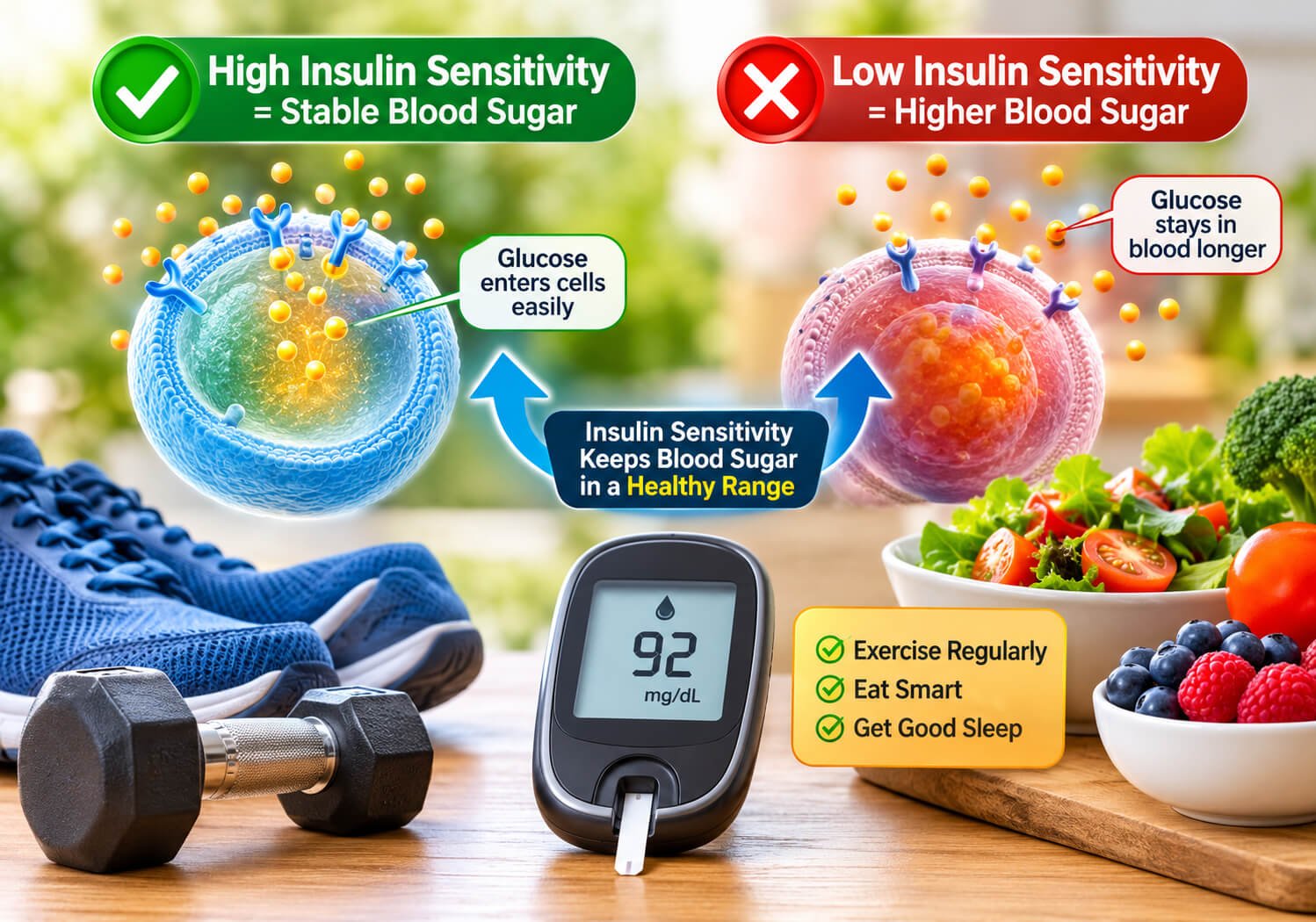
Your pancreas releases insulin every time you eat, and that hormone is the key that unlocks your cells so glucose can move from your bloodstream into your muscles. When your cells respond well to that signal—when your insulin sensitivity is high—blood sugar stays in a tight, healthy range. When sensitivity drops, glucose lingers in the blood, and your pancreas has to work harder and harder to compensate. Understanding how does insulin sensitivity affect blood sugar levels is not just a biology lesson; it is the foundation for building a training and lifestyle plan that keeps your metabolic engine running smoothly.
As a strength and conditioning coach, I talk to clients about this every week. You do not need a medical degree to grasp the basics, and you do not need a continuous glucose monitor to start making changes. You need to understand the mechanism, then you need to move your body in the right ways. This guide breaks down the science in plain language and gives you a practical, week-by-week plan you can start Monday morning.
Quick Answer: Insulin sensitivity determines how efficiently your cells absorb glucose from the blood. High sensitivity means a small amount of insulin moves sugar into muscle and fat cells quickly, keeping blood glucose steady. Low sensitivity (insulin resistance) forces the pancreas to pump out more insulin, causing blood sugar to spike and stay elevated longer after meals. Regular aerobic exercise, resistance training, and a 10-minute post-meal walk are the most evidence-backed ways to boost sensitivity and improve glycemic control.
What Is Insulin Sensitivity and Why It Matters for Blood Sugar
Think of insulin as a delivery driver and your cells as warehouses. After you eat, glucose enters your bloodstream. Insulin tells your cells, “Open the doors; here is your fuel.” Insulin sensitivity is how responsive those warehouse doors are to the delivery driver’s signal.
- High sensitivity: A few taps on the door and the cells open wide. Glucose floods in. Blood sugar drops within 60–90 minutes.
- Low sensitivity (insulin resistance): The doors are jammed. The driver has to bang harder and harder. The pancreas releases more and more insulin. Glucose sits in the blood longer, and blood sugar stays elevated.
The National Institute of Diabetes and Digestive and Kidney Diseases (NIDDK) explains that insulin resistance is a major step toward type 2 diabetes, but it is also a reversible condition when caught early. The good news for anyone in a gym or on a trail: your skeletal muscles are the largest “warehouse” in the body, and they are the tissue you can directly influence with training.
How Insulin Works in the Body
Your pancreas contains beta cells that manufacture and release insulin. When you eat carbohydrates, blood glucose rises. Within minutes, beta cells detect the rise and secrete insulin into the bloodstream. Insulin then binds to insulin receptors on the surface of muscle, liver, and fat cells. This binding triggers a signaling cascade that moves GLUT4 transporters to the cell membrane, opening a channel for glucose to enter.
In well-trained muscle tissue, this process is fast and efficient. In sedentary or aging muscle, the signaling pathway slows down, fewer GLUT4 transporters reach the surface, and glucose uptake drops.
What Happens When Sensitivity Drops
When cells become resistant, a cascade of problems follows:
- The pancreas compensates by releasing more insulin (hyperinsulinemia).
- Blood glucose stays elevated longer after meals (postprandial spikes).
- Fasting blood sugar gradually creeps up.
- Excess glucose is converted to fat and stored, particularly around the abdomen.
- Chronic high insulin and high glucose promote inflammation and increase the risk of metabolic syndrome, which clusters high blood pressure, elevated triglycerides, low HDL cholesterol, and excess waist circumference.
The American College of Sports Medicine (ACSM) notes that even moderate improvements in insulin sensitivity can meaningfully reduce the risk of progressing from prediabetes to type 2 diabetes.
The Science: How Insulin Sensitivity Controls Blood Glucose
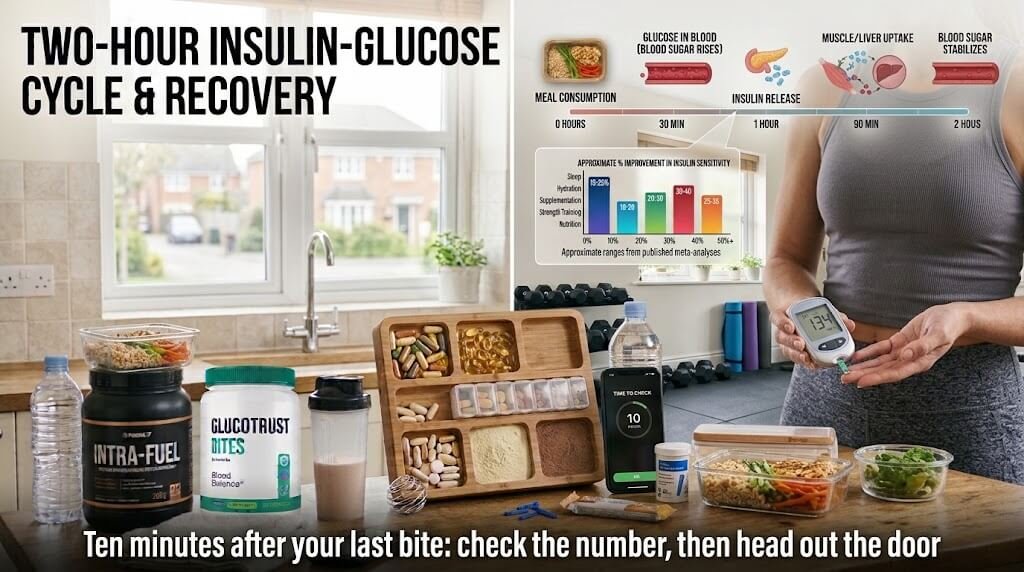
The Insulin-Glucose Cycle After a Meal
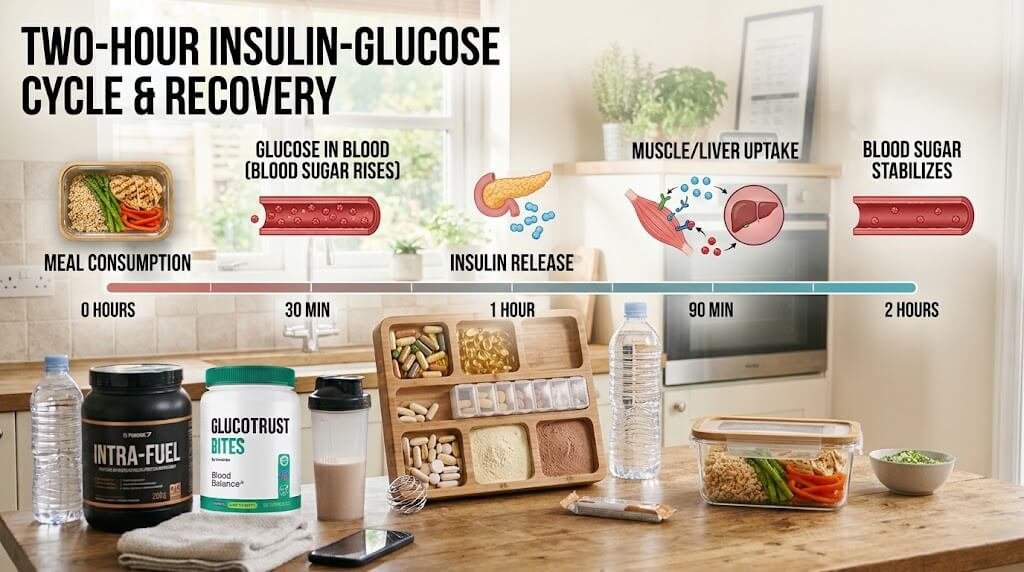
Here is what happens in the first two hours after a mixed meal (carbs, protein, fat):
| Time After Meal | What Happens | Blood Glucose Trend |
| 0–15 min | Glucose enters the bloodstream from the gut | Rising |
| 15–45 min | Pancreas releases insulin; muscle and liver begin taking up glucose | Peaking |
| 45–90 min | Insulin sensitivity determines how fast glucose clears | Falling (fast if sensitivity is high) |
| 90–120 min | Liver adjusts its own glucose output to prevent a drop | Stabilizing |
If your insulin sensitivity is high, the “falling” phase is steep and quick. If it is low, the curve is shallow, and you may still be above 140 mg/dL (7.8 mmol/L) two hours after eating—a threshold the CDC uses to flag impaired glucose tolerance.
Muscle’s Role in Glucose Uptake
Skeletal muscle accounts for roughly 70–80% of post-meal glucose disposal in healthy adults, according to research summarized in the Journal of Applied Physiology. That means the more functional muscle mass you have, and the more you use it, the bigger your “glucose sink” becomes.
When you contract a muscle—whether you are squatting, walking, or pedaling a bike—muscle fibers can pull glucose in through an insulin-independent pathway as well. This is why even a short walk after a meal lowers blood sugar, even before insulin peaks.
The Liver’s Job in Blood Sugar Regulation
The liver acts as a buffer. After a meal, it stores excess glucose as glycogen. Between meals, it releases stored glucose to keep blood sugar from dropping too low. In insulin-resistant individuals, the liver becomes less responsive to insulin’s “stop releasing glucose” signal, so it keeps pumping glucose into the blood even when levels are already high. This is a major contributor to elevated fasting blood sugar.
What Research Shows About Insulin Sensitivity and Blood Sugar
Multiple lines of evidence confirm the link:
- Aerobic exercise: The HHS Physical Activity Guidelines for Americans recommend at least 150 minutes of moderate-intensity aerobic activity per week. Research published in the British Journal of Sports Medicine shows that even 30 minutes of brisk walking five days a week improves insulin sensitivity within two to four weeks.
- Resistance training: A meta-analysis in the Journal of Strength and Conditioning Research found that two to three sessions of resistance training per week increased muscle GLUT4 expression and improved postprandial glucose handling.
- Combined training: Programs that blend both aerobic and resistance work produce the largest gains in insulin sensitivity, according to guidelines from the ACSM.
- Post-meal walking: A 2022 study in Diabetes Care reported that a 10-minute walk after a meal reduced postprandial glucose peaks by roughly 30% compared with sitting.
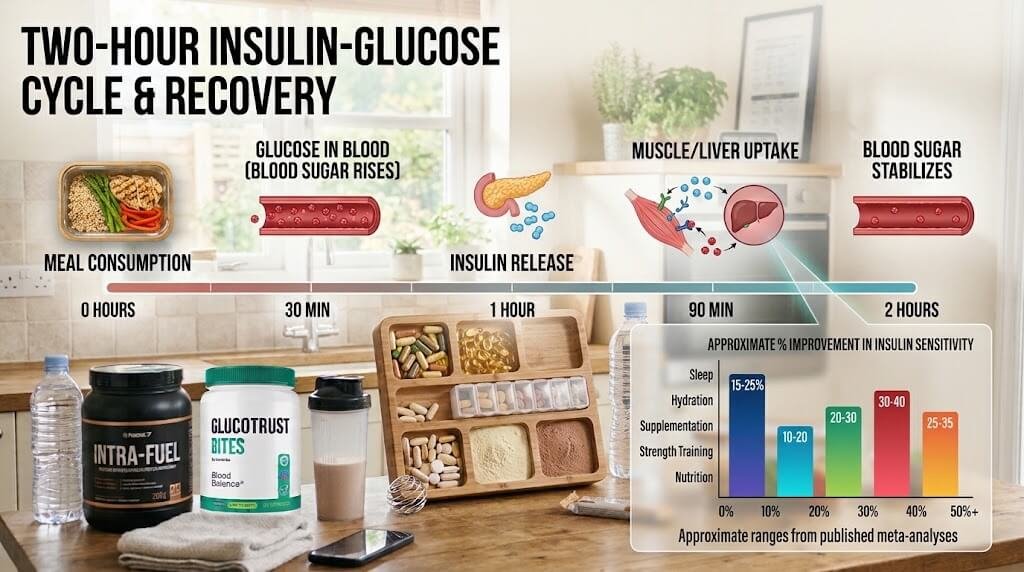
The table below summarizes the main lifestyle levers and their approximate impact on insulin sensitivity. These figures are drawn from published meta-analyses and guideline documents; individual results vary.
| Factor | Typical Improvement in Insulin Sensitivity | Timeframe to See Change |
| 150 min/week moderate cardio | 10–25% | 2–4 weeks |
| 2–3×/week resistance training | 15–30% | 4–8 weeks |
| 10-min post-meal walk | 20–30% (postprandial peak) | Immediate, per meal |
| 7+ hours quality sleep/night | 5–15% | 1–2 weeks |
| Reducing added sugar / refined carbs | 10–20% | 2–6 weeks |
| Losing 5–10% body weight (if overweight) | 20–40% | 8–12 weeks |
How Exercise Improves Insulin Sensitivity and Lowers Blood Sugar
This is where I get to do what I do best: put you in motion. The following are the three highest-impact training strategies I prescribe for clients who want better glycemic control.
Aerobic Exercise (Zone 2 and Brisk Walking)
Why it works: Sustained moderate-intensity cardio increases the number of mitochondria in muscle cells and upregulates GLUT4 transporters. It also improves the liver’s ability to respond to insulin.
Prescription:
- Frequency: 5 days/week
- Duration: 30–45 minutes per session
- Intensity: Zone 2 (you can hold a conversation but feel slightly breathless; roughly 60–70% of max heart rate)
- Options: Brisk walking (3.0–3.5 mph / 4.8–5.6 km/h), cycling, swimming, or rowing
- Rest: Not needed between sessions; alternate days with resistance work
Easier version (regression): Start with 15 minutes of walking at 2.5 mph (4.0 km/h) on flat ground. Add 5 minutes every week until you hit 30.
Harder version (progression): Add 4×2-minute intervals at 75–85% max HR (brisk jog or fast cycling) within a 30-minute zone 2 session. Keep 3 minutes of easy recovery between intervals.

Resistance Training
Why it works: Building and activating skeletal muscle increases your total glucose-disposal capacity. Contractions also trigger the insulin-independent glucose uptake pathway, so even the act of lifting lowers blood sugar in real time.
Prescription:
- Frequency: 2–3 days/week (non-consecutive)
- Exercises: Compound movements—back squats, Romanian deadlifts, bench press, overhead press, bent-over rows, pull-ups
- Sets/Reps: 3 sets × 8–12 reps for hypertrophy; 4 sets × 5–6 reps for strength
- Rest: 60–90 seconds between sets (hypertrophy); 2–3 minutes (strength)
- Tempo: 2 seconds concentric, 1-second pause, 3 seconds eccentric
- Weight guidance: Choose a load where the last 2 reps feel challenging but form is clean. For a beginner, start with the barbell only (45 lb / 20.4 kg) for squats and 35 lb (16 kg) dumbbells for rows.
Easier version: Use resistance bands or bodyweight (goblet squat with a 25-lb / 11-kg kettlebell, push-ups on knees, seated rows with a band).
Harder version: Add a 5×5 back squat and deadlift block, or include loaded carries (farmer’s walk with 70–100 lb / 32–45 kg dumbbells) for 40 meters (43 yards) × 4 rounds.
Coach’s Tip: You do not need to train to failure to get the metabolic benefit. Aim for a “2-in-reserve” feel—two clean reps left in the tank. This keeps cortisol manageable and lets you hit the volume needed to stimulate GLUT4 expression without overtaxing your recovery.
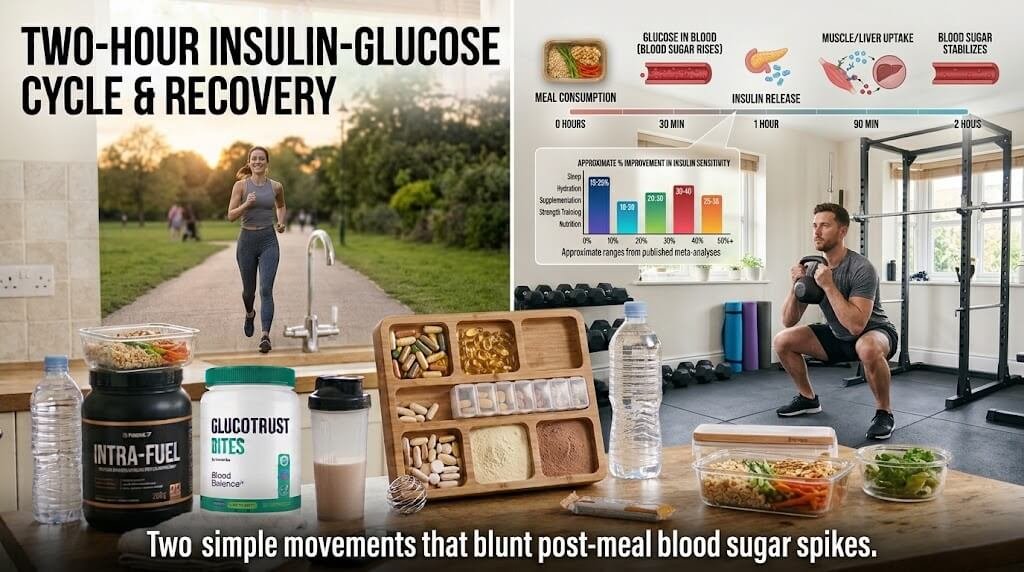
Walking After Meals
Why it works: A short walk activates large muscle groups (quadriceps, hamstrings, glutes, gastrocnemius) and pulls glucose into muscle fibers through the contraction-mediated pathway, independent of insulin. It blunts the postprandial spike before it fully develops.
Prescription:
- When: Within 15 minutes of finishing a meal
- Duration: 10 minutes
- Intensity: Conversational pace, 2.5–3.0 mph (4.0–4.8 km/h)
- Frequency: After every main meal (3×/day)
- Terrain: Flat or gently rolling; avoid steep hills if you are new to this
Common Mistake: People skip the post-meal walk because they feel “full” or “lazy.” In my experience, the walk actually helps digestion and reduces the 3 p.m. energy crash. Set a phone alarm for 15 minutes after you put down your fork. Make it automatic.
Sample Weekly Routine for Better Insulin Sensitivity
| Day | Session | Details |
| Monday | Resistance (upper + lower) | 3×10 goblet squats, 3×10 bench press, 3×10 bent-over rows, 3×12 overhead press. 90 s rest. |
| Tuesday | Zone 2 cardio | 35-min brisk walk or easy cycling. |
| Wednesday | Resistance (full body) | 4×8 Romanian deadlifts, 4×8 pull-ups (or band-assisted), 3×12 push-ups, 3×15 farmer’s carry. 2 min rest. |
| Thursday | Zone 2 cardio | 35-min swim or bike. |
| Friday | Resistance (upper + lower) | Same structure as Monday, swap one exercise. |
| Saturday | Active recovery / sport | 30–45 min recreational activity: hiking, pickleball, yoga. |
| Sunday | Rest or 20-min easy walk | Full rest or gentle movement. |
Post-meal walk: Add 10 minutes after breakfast, lunch, and dinner every day. This adds 30 minutes of low-intensity activity without feeling like a “workout.”
Progression plan:
- Weeks 1–4: Focus on consistency. Hit all sessions. Keep weights moderate.
- Weeks 5–8: Add 1–2 lb (0.5–1 kg) to compound lifts. Extend cardio by 5 minutes.
- Weeks 9–12: Introduce 1–2 interval sessions per week. Increase resistance training volume to 4 sets on primary lifts.
Nutrition, Sleep, and Lifestyle Factors
Exercise is the biggest lever, but it works in concert with everything else you do.
Diet and Blood Sugar
You do not need a restrictive diet, but the type and timing of carbohydrates matter.
- Prioritize fiber and protein at each meal. A plate with 4–6 oz (113–170 g) of lean protein, a fistful of vegetables, and a moderate portion of complex carbs (oats, quinoa, sweet potato) produces a gentler glucose curve than the same calories from white bread and juice.
- Limit liquid sugar and refined carbs. Sodas, fruit juices, and pastries cause the steepest spikes and demand the most insulin.
- Consider meal order. Eating protein and vegetables before carbohydrates at a meal has been shown to reduce the postprandial glucose peak by 10–15% in small clinical trials.
- Keep portions consistent. Large, irregular meals force the pancreas to handle bigger glucose loads, which is harder on a system that is already struggling with sensitivity.
For a deeper look at how to support metabolism naturally through food choices, that guide covers macro targets, meal timing, and practical plate-building tips.
Sleep and the Hormonal Connection
Poor sleep is one of the most underappreciated drivers of insulin resistance. A single night of 4 hours of sleep can reduce insulin sensitivity by 25–30% the next day, according to research from the National Institutes of Health. Chronic short sleep (<6 hours) is linked to higher fasting insulin, elevated HbA1c, and increased type 2 diabetes risk.
Aim for 7–9 hours in a dark, cool room. Keep a consistent schedule, even on weekends. If you struggle with sleep, the hormonal cascade involving cortisol, growth hormone, and insulin is disrupted, and your blood sugar management suffers regardless of how much you train. For a full breakdown, see how sleep affects metabolism and weight management.
Stress and Cortisol
Chronic psychological stress keeps cortisol elevated. Cortisol directly antagonizes insulin’s action in muscle and fat tissue and stimulates the liver to release glucose. If your job, family, or training load is keeping your stress hormone high, your insulin has to work twice as hard.
Practical stress-reduction tools that fit into a training week:
- 5 minutes of box breathing (4 in, 4 hold, 4 out, 4 hold) before bed
- One 20-minute “unplugged” walk per week with no phone
- A dedicated 10-minute cool-down with slow hip circles and diaphragmatic breathing after every session
What Affects Metabolism and Blood Sugar Beyond Exercise
Insulin sensitivity does not exist in a vacuum. Body composition, age, hormonal shifts, and overall activity level all interact. If you want a broader picture of the variables at play, the article on what affects metabolism and body weight walks through each factor with practical takeaways.
Signs Your Insulin Sensitivity May Be Declining
You do not need a blood test to notice early warning signs. As a coach, I watch for these in my clients:
- Frequent energy crashes 2–3 hours after a carb-heavy meal
- Strong cravings for sugar or refined carbs in the mid-afternoon
- Increasing waist circumference while the scale weight stays the same
- Difficulty losing weight despite consistent training and caloric awareness
- Elevated resting heart rate or feeling “wired but tired” in the evening
- Slow recovery between workouts (muscle soreness lasting 4+ days)
If you notice two or more of these, it is worth asking your primary-care provider for a fasting insulin, fasting glucose, and HbA1c panel. These are simple, inexpensive blood tests that give a clear snapshot of where your insulin sensitivity stands.
If you are over 40 and noticing these changes, the metabolic shifts that come with aging make consistency even more important. A practical guide for increasing metabolism naturally after 40 covers how to adjust your training and nutrition as your hormonal landscape changes.
Safety Notes and When to See a Doctor
- If you have been diagnosed with prediabetes, type 2 diabetes, or metabolic syndrome, get clearance from your doctor before starting a new exercise program, especially if you are on insulin or sulfonylureas (medications that can cause hypoglycemia during or after exercise).
- Do not stop or adjust any medication based on this article. Exercise and lifestyle changes are additions to medical management, not replacements.
- Hypoglycemia risk: If you take glucose-lowering medication, carry a fast-acting sugar (glucose tabs, juice) during workouts. Check your blood sugar before and after exercise until you understand your personal response.
- Joint or cardiac concerns: If you have knee, hip, or back issues, or a history of heart disease, work with a physical therapist or sports-medicine doctor to modify exercises. Swap high-impact moves for swimming, cycling, or seated resistance work.
- This article is for general information and is not a substitute for advice from a doctor or physical therapist.
Related Tips for Better Metabolic Health
A few additional strategies that complement the training and nutrition work above:
- Track your post-meal glucose for one week. If you have a continuous glucose monitor (CGM) or a basic glucometer, check your blood sugar 1 hour and 2 hours after a standard lunch for seven days. You will see which foods spike you the most and which meals keep you in a tight range. This data is far more motivating than guessing.
- Add resistance-band “snacks” between sets. During your rest periods in the gym, do 15 band pull-aparts or 10 standing calf raises. It sounds small, but it keeps muscle fibers contracting and pulling in glucose.
- Be consistent with your post-meal walk. The 10-minute walk is the single easiest habit in this entire article. It takes zero equipment, zero planning, and works whether you are at home, at the office, or traveling.
- Explore supplements with evidence. Some compounds, such as berberine, have shown modest benefits for insulin sensitivity in small trials. If you are curious, a thorough look at whether berberine can support metabolic health covers the current evidence, dosing, and safety considerations. Always talk to your doctor before adding a supplement, especially if you take medication.
- Build metabolic flexibility over time. The goal is not to restrict carbs forever; it is to train your body to switch between glucose and fat as fuel efficiently. A practical framework for boosting metabolic flexibility without crash dieting walks through how to cycle carb timing with your training days.
FAQ
How long does it take to improve insulin sensitivity with exercise?
Most people see measurable improvements in postprandial glucose handling within 2–4 weeks of consistent aerobic exercise and 4–8 weeks of regular resistance training. The ACSM notes that benefits begin with the very first session but compound over time. Consistency matters more than intensity in the early weeks.
Can you reverse insulin resistance naturally?
Yes, in many cases. Weight loss of 5–10%, regular physical activity, improved sleep, and dietary changes can restore near-normal insulin sensitivity, particularly in the early stages. The NIDDK highlights lifestyle intervention as the first-line treatment for prediabetes. Advanced or long-standing insulin resistance may require medical management alongside lifestyle changes.
Does walking after meals really lower blood sugar?
Yes. A 10-minute walk at a conversational pace after a meal reduces the postprandial glucose peak by activating muscle glucose uptake through contraction, independent of insulin. Studies in Diabetes Care have shown reductions of roughly 25–30% in peak glucose compared with remaining seated. It is one of the simplest, lowest-risk interventions available.
What is a normal insulin sensitivity level?
There is no single “normal” number for insulin sensitivity in a standard blood panel. Doctors typically assess it indirectly through fasting insulin (<12 µIU/mL is often cited as a healthy range), fasting glucose (<100 mg/dL), and HbA1c (<5.7%). A more precise measure is the HOMA-IR index (fasting insulin × fasting glucose / 405), where a value under 2.0 is generally considered insulin-sensitive.
Can strength training alone improve blood sugar control?
Yes. Resistance training increases muscle mass and GLUT4 transporter density, which improves the body’s capacity to dispose of glucose. The HHS Physical Activity Guidelines recommend muscle-strengthening activity at least two days per week. For the best results, combine it with aerobic work, but strength training by itself produces meaningful gains in insulin sensitivity.
How does sleep affect insulin sensitivity and blood sugar?
Short or fragmented sleep raises cortisol and reduces the sensitivity of muscle and fat cells to insulin. Research from NIH-funded studies shows that one night of 4-hour sleep can cut insulin sensitivity by about 25%. Over weeks, chronic sleep debt is linked to higher fasting glucose and elevated HbA1c. Protecting 7–9 hours of quality sleep is as important as any workout for glycemic control.
Conclusion: Your Blood Sugar Is a Training Response
How does insulin sensitivity affect blood sugar levels? It is the single most important variable. High sensitivity means a small insulin signal clears glucose quickly, and your blood sugar rides a smooth, narrow curve through the day. Low sensitivity means the same meal produces a tall, lingering spike, your pancreas overworks, and over time the system fatigues.
The encouraging part: insulin sensitivity is not a fixed trait. It is a skill your body practices every time you move, every time you sleep well, and every time you choose a meal that does not demand a massive insulin surge. You do not need to overhaul your entire life overnight. Start with the 10-minute post-meal walk. Add two resistance sessions a week. Protect your sleep. In four to eight weeks, you will likely feel the difference in your energy, your cravings, and—if you check—your numbers.
Your muscles are the biggest glucose warehouse in the body. Train them, use them, feed them well, and let them do what they evolved to do: pull sugar out of your blood and turn it into the fuel that powers everything you do.