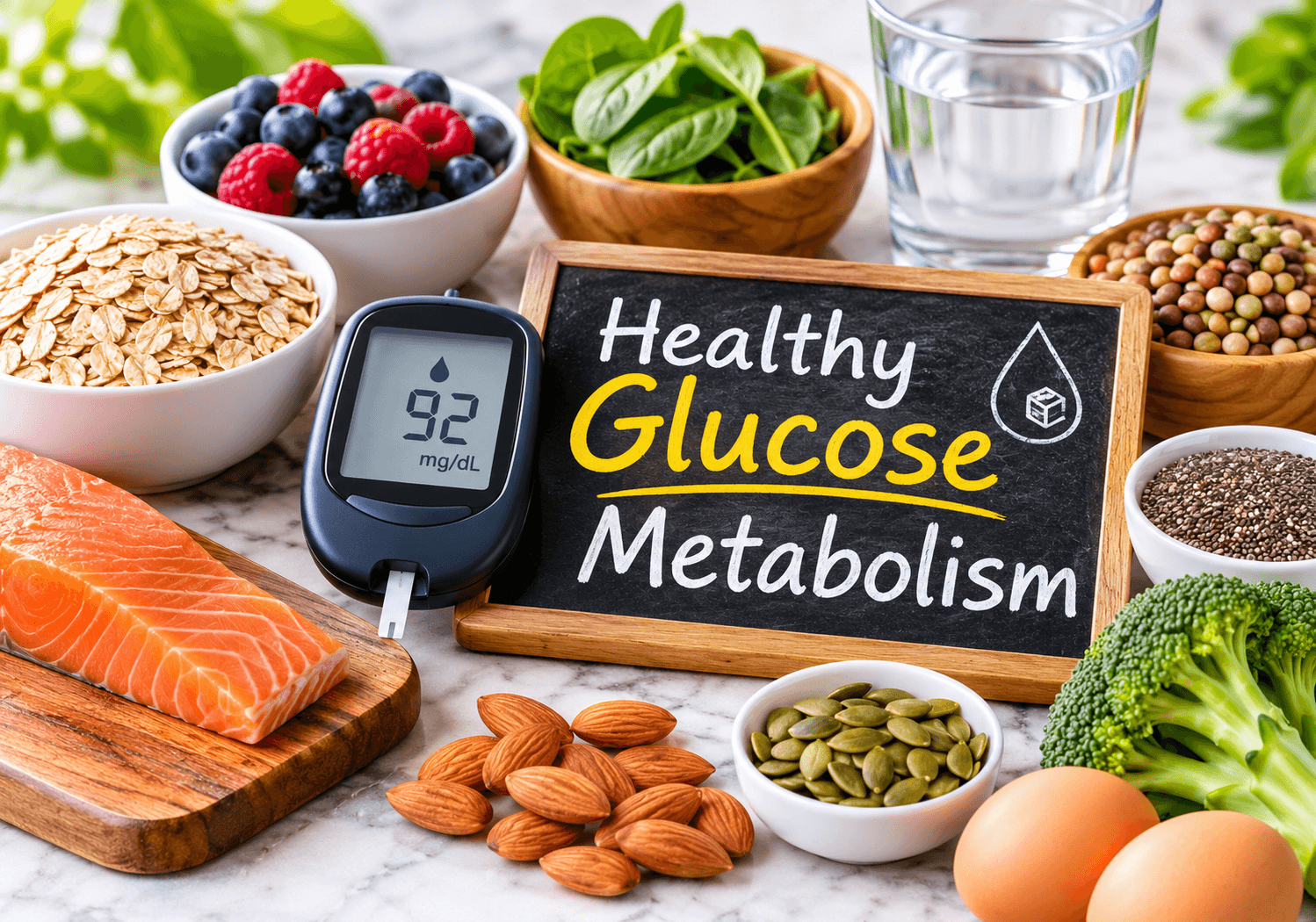
Blood sugar trouble rarely arrives with a warning bell. It builds quietly over years, and many people only find out after a routine lab test. Your daily food and training habits give you real influence, and a short list of nutrients has the strongest research behind it. This guide ranks the best nutrients for healthy glucose metabolism, explains what each one does, and shows you how to get them from food first.
The stakes are not small. About 98 million U.S. adults, or 1 in 3, have prediabetes, and more than 8 in 10 of them don’t know it, according to the CDC. Without action, many could develop type 2 diabetes within five years.
I’ll walk through this the way I would with a client: simple steps, honest limits, and no miracle promises. Some nutrients here have solid trial data. Others have small studies or mixed results, and I’ll say so plainly. If you have prediabetes, diabetes, kidney disease, or take any medicine, check with your doctor before adding a supplement.
Quick Answer: The best nutrients for healthy glucose metabolism, ranked by evidence, are dietary fiber, magnesium, vitamin D (best studied in prediabetes), zinc, and protein. Vitamin B12 matters for metformin users, and chromium has the weakest case. Choose food first, and check with your doctor before taking supplements.
What Glucose Metabolism Means (and Why Nutrients Matter)
Glucose is the main sugar in your blood, and it comes mostly from the carbohydrates you eat. After a meal, your body uses insulin to help move glucose out of the blood and into cells for energy. “Glucose metabolism” is the whole process of absorbing, moving, using, and storing that sugar.
Things go sideways when cells respond poorly to insulin, a state called insulin resistance, or low insulin sensitivity. Blood sugar then stays higher than it should. Doctors track this with fasting glucose and HbA1c, a longer-term marker.
Nutrients are one piece of a bigger picture. The CDC says a lifestyle change program that helps people lose weight and become more active is one of the most effective ways to prevent type 2 diabetes. No nutrient replaces that foundation. Think of the nutrients below as the supporting cast, not the lead actor.
How I Ranked These Nutrients
I ranked each nutrient on five points:
- Human trial evidence: meta-analyses and randomized trials count most.
- Consistency: do different studies point the same way?
- Safety margin: what can go wrong, and for whom?
- Practicality: can a regular person act on it this week?
- Food-first potential: can you get it from groceries instead of pills?
One caution applies to everything below. Many supplement trials enrolled people with type 2 diabetes or prediabetes, so the results may not carry over to healthy adults. For the wider picture of how food fuels your body, see our guide to nutrients that support energy metabolism.
The Best Nutrients for Healthy Glucose Metabolism, Ranked by Evidence
1. Dietary Fiber (Beans, Oats, and Whole Grains)
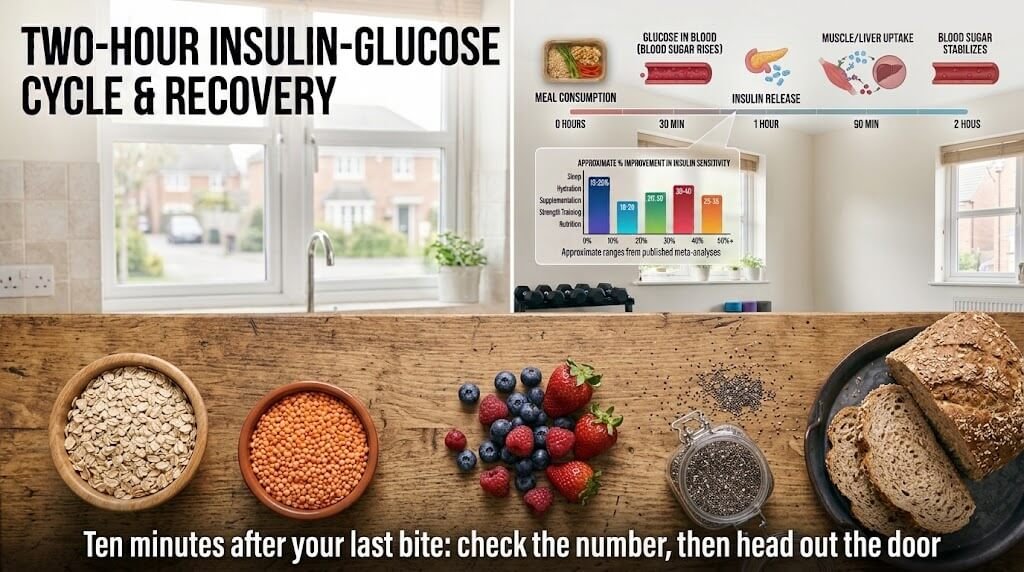
Fiber takes the top spot because it has the broadest support and the lowest risk. A 2020 PLOS Medicine systematic review and meta-analysis of trials lasting at least six weeks concluded that high dietary fiber is an important part of diabetes management. It examined both fiber and whole grains, so you don’t need a special product to benefit.
Fiber is thought to slow digestion, which can soften the blood sugar rise after a meal [VERIFY: add a mechanism citation if you want this sourced]. Soluble fibers, like those in oats, beans, and psyllium, get the most attention. If you want the details, read how soluble fiber works.
How to add it:
- Swap a refined grain for a whole grain at one meal today.
- Add beans or lentils to soups, salads, or tacos a few times per week.
- Top yogurt or oatmeal with berries and chia.
- Raise your intake over two to three weeks and drink water along the way.
Coach’s Tip: Build fiber one meal at a time. Start with breakfast, and move to lunch once it feels routine. Slow changes tend to cause less gas and bloating, and you’re far more likely to keep them.
2. Magnesium
Magnesium is a mineral involved in hundreds of body processes, and the NIH sets a Daily Value of 420 mg for adults. Good food sources include legumes, nuts, seeds, and whole grains. Many of those foods also deliver fiber, so one fiber-rich plate often helps with both.
A meta-analysis of double-blind randomized trials in people with or at risk of diabetes found that magnesium supplementation may improve insulin-sensitivity measures in people at high risk. The word “may” is doing real work in that sentence. For a deeper look at this category, see our guide on supplements and insulin sensitivity.
If you do supplement, the form matters. The NIH notes that forms that dissolve well in liquid are absorbed more completely, and that labels list the elemental magnesium amount, not the weight of the whole compound. High doses from supplements often cause diarrhea with nausea and cramping. Healthy kidneys clear extra magnesium from food, which is one more reason to start there.
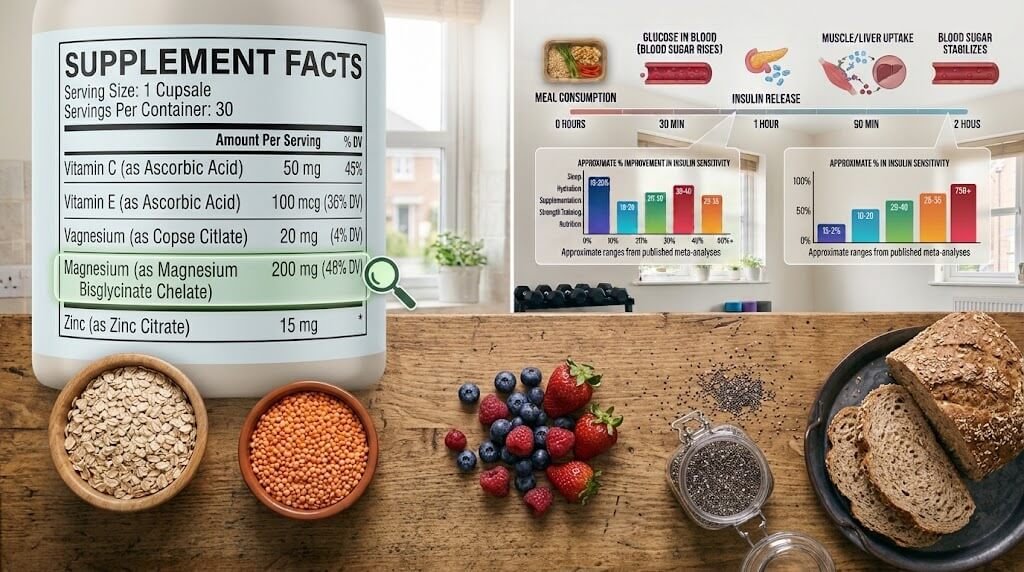
Common Mistake: Grabbing the biggest bottle on the shelf. More is not better, and large doses often just mean loose stools. Read the elemental amount on the label, and check with a doctor or pharmacist first, especially if you take regular medicine.
3. Vitamin D
Vitamin D has some of the most interesting data, but it comes with limits. A 2023 Annals of Internal Medicine meta-analysis pooled individual data from three randomized trials in adults with prediabetes. Vitamin D reduced the risk of developing diabetes by 15% in adjusted analyses, with a 3-year absolute risk reduction of 3.3%. It also raised the chance of returning to normal glucose regulation by 30%.
Now the limits. The authors note that the results apply to people with prediabetes, not the general population. The trials tested high doses, either 4,000 IU (100 mcg) daily or 20,000 IU (500 mcg) weekly, so please don’t copy those on your own. They also note the absolute benefit was smaller than what lifestyle change and metformin achieved in earlier research [VERIFY: confirm this comparison in the full paper]. Adverse event rates did not differ in the pooled data, but the trials may not have been powered to detect safety problems.
Within the trials, people whose blood levels stayed higher did better. That kind of comparison can’t prove cause and effect, though. The practical move is simple: ask your doctor whether a 25-hydroxyvitamin D blood test makes sense for you. Our guide to vitamins and metabolism when deficient explains why testing beats guessing.
4. Zinc
Zinc works closely with insulin in the body, and the trial data are intriguing. A meta-analysis of 14 trials found that zinc taken alone, without other supplements, lowered fasting glucose by about 26.5 mg/dL, HbA1c by about 0.5 percentage points, and HOMA-IR by 1.65 compared with controls. HOMA-IR is a marker of insulin resistance.
Those numbers look big, so read the fine print. The participants had type 2 diabetes, and the authors say the findings are limited by the small number of studies. This is promising evidence, not a settled answer.
Zinc also has a catch. The NIH reports that very high zinc doses from supplements (142 mg per day in one study) can interfere with magnesium absorption. If you take both minerals, stay within the label amounts and ask a clinician to review your plan.
5. Protein (Especially Before a Carb-Heavy Meal)
Protein is the odd one out, because the research is about timing, not deficiency. A 2022 meta-analysis in Nutrition Research pooled five trials with 134 people with type 2 diabetes. Whey protein taken before a meal lowered blood glucose by about 2.7 mmol/L (roughly 48 mg/dL) at 60 minutes and 1.6 mmol/L (roughly 29 mg/dL) at 120 minutes compared with placebo.
Those are acute, short-term results in people with mild or well-controlled diabetes. The authors say the certainty of the evidence is not high and that larger trials are needed. Also, the trials used whey drinks, so we can’t assume a chicken breast or yogurt bowl works the same way.
Still, a protein-rich starter is an easy experiment, and protein helps with fullness too. Our article on protein and fullness hormones covers that side.

6. Vitamin B12 (If You Take Metformin)
This one protects you from a side effect more than it boosts glucose control. A systematic review and meta-analysis examined metformin treatment and vitamin B12, and found an association with lower B12 levels. It also notes that earlier studies had disagreed, which is why it set out to pool the data.
If you take metformin, ask your doctor whether your B12 should be checked now and then. Don’t start high-dose B12 on your own. A blood test tells you whether you need it, and your clinician can pick the right fix.
7. Chromium
Chromium is the most hyped and the least proven on this list. The NIH says scientists do not currently think chromium is necessary for good health, and deficiency has not been reported in healthy people. It describes supplement research as ongoing. [VERIFY: confirm exactly what the NIH page says about glucose results before adding any claim.]
The safety note matters more than the benefit. The NIH warns that chromium taken with insulin or antidiabetes medicines might cause low blood sugar. Chromium is found in meats and grain products, so a normal diet already provides some.
We cover the craving angle in chromium picolinate and cravings. My coaching view: put your effort and budget into the first five nutrients, and skip chromium unless your doctor suggests it.
Quick Comparison
This table is my summary of the research cited above, not a separate source.
| Nutrient | Evidence snapshot | Best studied in | Be careful if |
| Fiber | Strongest and broadest | General adults and people with diabetes | You add it too fast |
| Magnesium | Promising (“may help”) | People at high risk of diabetes | You take high supplement doses |
| Vitamin D | Meaningful but modest | Prediabetes | You take high doses without testing |
| Zinc | Promising, few studies | Type 2 diabetes | You take very high doses |
| Protein | Short-term, mostly whey | Type 2 diabetes | You treat a shake as a meal |
| Vitamin B12 | Protective, not a booster | Metformin users | You self-dose without a test |
| Chromium | Weakest case | Still being studied | You use insulin or diabetes drugs |
How to Build a Plate Around the Best Nutrients for Healthy Glucose Metabolism
Food first is not a slogan here. Fiber, magnesium, and protein all show up in everyday groceries, so one smart plate covers a lot of ground. Start with a fiber-rich base, add a protein, and choose whole-grain carbs when you can.
| Meal | Sample plate | Nutrients it covers |
| Breakfast | Oatmeal with chia, berries, and Greek yogurt | Fiber, protein |
| Lunch | Lentil soup, side salad, whole-grain bread | Fiber, magnesium |
| Snack | Apple with a handful of almonds | Fiber, magnesium |
| Dinner | Grilled chicken, brown rice, roasted vegetables | Protein, fiber |
If cravings derail your plan, our guide on how to stop sugar cravings naturally can help. Remember, this is a pattern, not a rulebook. A few good meals each day beat one perfect meal and a messy rest of the day.
Pair Your Nutrition With Smart Movement
Nutrients work best alongside training. The CDC says adults need 150 minutes of moderate aerobic activity per week plus muscle-strengthening on 2 or more days, working all major muscle groups. It also notes that a 30-minute walk, five days a week, meets the aerobic goal.
Here’s a beginner strength session you can do with a pair of dumbbells and a bench. Do it twice per week on non-consecutive days.
| Exercise | Sets × reps | Rest | Starting weight |
| Goblet squat | 3 × 8–10 | 60–90 sec | 15–25 lb (7–11 kg) |
| Dumbbell Romanian deadlift | 3 × 10 | 60–90 sec | 15–20 lb (7–9 kg) per hand |
| One-arm dumbbell row | 3 × 10 per side | 60 sec | 15–25 lb (7–11 kg) |
| Incline push-up (hands on a 18–24 in / 45–60 cm surface) | 3 × 8–12 | 60 sec | Bodyweight |
| Farmer carry | 3 × 30–40 sec | 60 sec | 20–30 lb (9–14 kg) per hand |
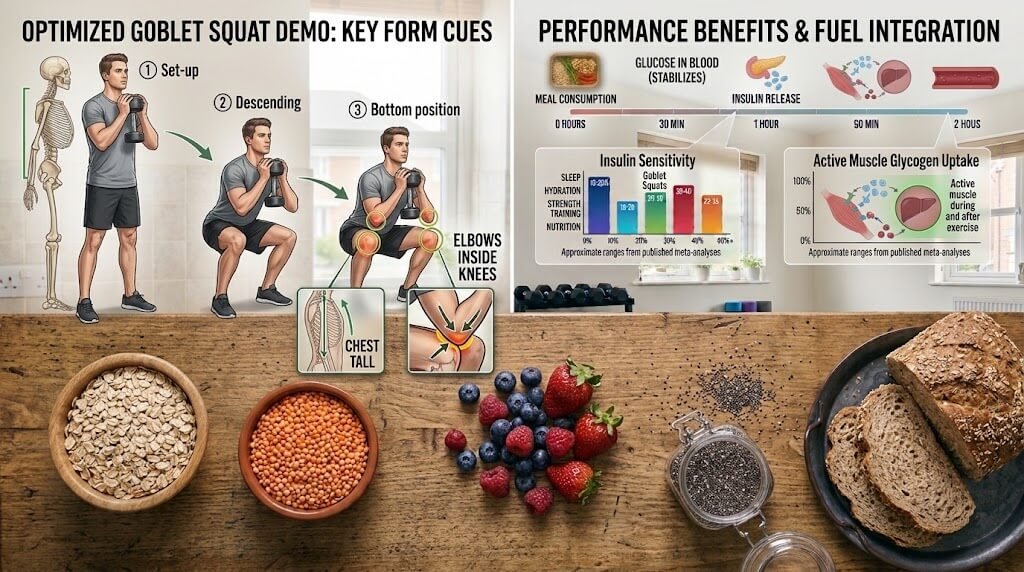
Form cues:
- Goblet squat: hold the weight at your chest, sit between your hips, and keep your heels down.
- Romanian deadlift: push your hips back with soft knees, and feel the stretch in your hamstrings.
- Row: pull your elbow toward your hip and keep your back flat.
- Push-up: hold a straight line from head to heels.
- Farmer carry: stand tall and walk with short, steady steps.
Easier version: Squat to a chair, use 8–10 lb (4–5 kg), and do push-ups against a wall or counter.
Harder version: Add weight in 5 lb (2 kg) steps once all sets feel clean, slow the lowering phase to three seconds, and progress to floor push-ups.
On non-lifting days, add brisk 30-minute walks to reach the CDC’s aerobic target. If you want the bigger picture on training and fuel use, read about metabolic flexibility without crash dieting.
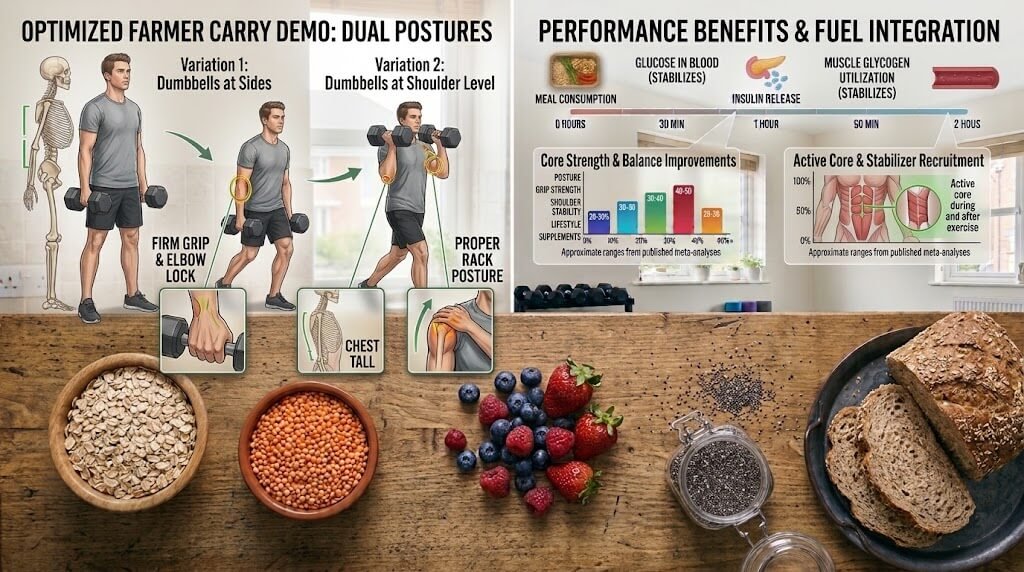
Coach’s Tip: Stop each set with one or two reps still in the tank. Clean reps build strength more safely than grinding through shaky ones, and you’ll recover well enough to train again.
Safety Notes: Who Should Check With a Doctor First
Please talk to a doctor, pharmacist, or dietitian before supplementing if any of these apply to you:
- You take insulin, metformin, or any diabetes medicine.
- You have kidney disease or any chronic condition.
- You are pregnant, postpartum, or going through menopause.
- You take several medicines or supplements already.
Supplements are not regulated like drugs, so ingredient quality varies. Our guide on how to evaluate supplement ingredients shows what to check on a label. For the best nutrients for healthy glucose metabolism, this order works: food, then testing, then a targeted supplement only if your clinician agrees.
Berberine often comes up in these conversations. It is a plant compound, not a nutrient, so we cover it separately in berberine and metabolic health.
Frequently Asked Questions
What nutrients help regulate blood sugar?
Dietary fiber has the broadest support, followed by magnesium, vitamin D for people with prediabetes, and zinc in people with type 2 diabetes. Whey protein before a meal lowered post-meal glucose in short trials. Food should come first. Ask your doctor about supplements.
Does magnesium help with blood sugar?
A meta-analysis of double-blind trials suggests magnesium may improve insulin sensitivity in people at high risk of diabetes. The word “may” matters, because the evidence is still developing. Eat magnesium-rich foods first, and ask a doctor before supplementing, since high supplement doses often cause diarrhea.
Can vitamin D lower the risk of type 2 diabetes?
In a 2023 meta-analysis of three trials, vitamin D lowered the risk of progressing from prediabetes to diabetes by 15% in adjusted analyses. The result applies to people with prediabetes, not the general public. Ask your doctor about a blood test before taking high doses.
Is chromium good for blood sugar?
The NIH says scientists do not currently think chromium is necessary for good health, and deficiency has not been reported in healthy people. Supplements are still being studied. If you take insulin or diabetes medicine, chromium might cause low blood sugar, so talk to your doctor first.
Does eating protein or fiber first help blood sugar?
Short trials found that whey protein before a meal lowered post-meal blood sugar in people with type 2 diabetes. Those studies used whey drinks, so food versions are less proven. Fiber-rich foods are an easy everyday habit, and the evidence for fiber is broader.
Can I take supplements with metformin?
Talk to your doctor or pharmacist first. A systematic review linked metformin to lower vitamin B12 levels, so your doctor may want to check yours. Chromium might also affect blood sugar when combined with diabetes medicine, so do not add supplements on your own.
Conclusion: Your Plan for the Best Nutrients for Healthy Glucose Metabolism
The best nutrients for healthy glucose metabolism are the ones with the strongest evidence and the lowest risk: fiber first, then magnesium, vitamin D when it’s needed, zinc, and protein at the right moments. B12 protects metformin users, and chromium sits at the bottom of the list.
Your next step is small. Add one fiber-rich food to your next meal, schedule two strength sessions this week, and ask your doctor which tests make sense for you. Steady habits beat any single nutrient.