If you’ve seen chromium picolinate on a supplement shelf and wondered whether it actually does anything for your blood sugar, you’re not alone. I’ve had clients ask me this exact question while we’re walking through the supplement aisle at the gym. The short version: chromium is a trace mineral that plays a small but real role in how your body handles glucose after you eat. It doesn’t replace medication, and it won’t fix a poor diet. But understanding how chromium supports normal blood sugar metabolism can help you make a smart decision about whether it fits into your nutrition plan.
This guide breaks down the mechanism, the research, the dosing, and the safety considerations so you can talk to your doctor with confidence. No hype, no miracle claims—just what the evidence actually shows.
Quick Answer
Chromium is a trace mineral that acts as a co-factor for insulin. It helps insulin bind to cell receptors so glucose can move from your blood into your muscles and organs. Research suggests chromium picolinate may modestly improve fasting blood sugar and HbA1c in people with type 2 diabetes or insulin resistance, but effects are small and not consistent across all studies. It is not a treatment for diabetes.
What Chromium Actually Does in Your Body
The Role of Insulin and Glucose
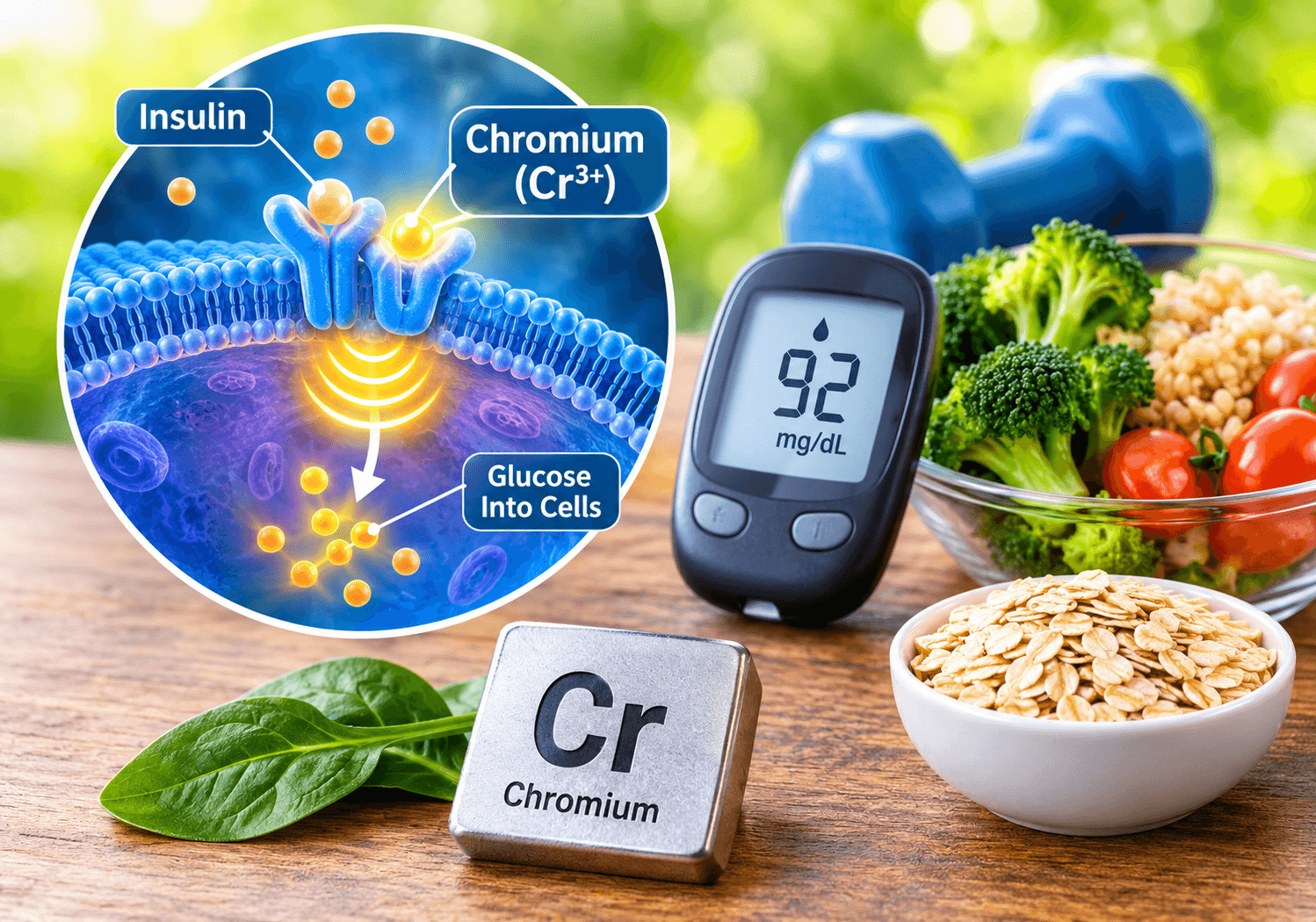
Every time you eat carbohydrates, your digestive system breaks them down into glucose, which enters your bloodstream. Your pancreas responds by releasing insulin, a hormone that acts like a key. Insulin unlocks cells—especially muscle cells and fat cells—so glucose can enter and be used for energy or stored.
Chromium sits in the middle of that process. It is a component of a molecule called chromodulin, which is part of the insulin receptor signaling pathway. When insulin attaches to a cell’s receptor, chromium helps amplify that signal. Think of it this way: insulin is the key, and chromium is the mechanism inside the lock that makes the door swing open more easily. Without enough chromium, the “lock” doesn’t turn as smoothly, and glucose uptake into cells may slow down.
Where Chromium Works
Chromium concentrates in a few key areas:
- Pancreatic beta cells – the cells that produce and release insulin
- Skeletal muscle – the largest consumer of glucose during and after exercise
- Adipose (fat) tissue – where excess glucose is stored as triglycerides
- Liver – which regulates glucose output into the bloodstream

Trivalent vs. Hexavalent Chromium
This distinction matters, and it’s one I always explain to clients because the names sound similar but the effects are opposite.
- Trivalent chromium (Cr³⁺) is the form your body uses. It’s found in foods and in supplements like chromium picolinate, chromium chloride, and chromium yeast. This is the form that supports insulin signaling.
- Hexavalent chromium (Cr⁶⁺) is an industrial chemical found in some paints, dyes, and manufacturing processes. It is toxic and has no nutritional role. You will not find it in a legitimate dietary supplement, but it’s worth knowing the difference if you read labels or research articles.
When you see “chromium” on a supplement label, it should always be the trivalent form. The most common commercial form is chromium picolinate, where chromium is bound to picolinic acid to improve absorption.

What the Research Says
I want to be straightforward here: the chromium and blood sugar research is not as clean-cut as people hope. Let me walk you through what the evidence actually shows.
The Good
The NIH Office of Dietary Supplements notes that chromium is an essential trace element and that the body requires only tiny amounts—about 25 to 35 micrograms per day for adults. Their fact sheet also acknowledges that some studies have found modest improvements in fasting blood glucose and HbA1c levels in people with type 2 diabetes who supplemented with chromium picolinate.
A body of research indexed in PubMed includes randomized controlled trials where participants with type 2 diabetes took chromium picolinate (typically 200–1,000 micrograms per day) for 8 to 24 weeks. Several of these trials reported small reductions in fasting glucose (often in the range of 5–15 mg/dL) and slight improvements in HbA1c (around 0.1–0.3 percentage points). These are real numbers, but they are modest.
The American Diabetes Association has referenced chromium as a supplement that “may have some benefit” for glycemic control in type 2 diabetes but does not recommend it as a standard treatment. Their position reflects the mixed quality and small effect sizes across the literature.
The Caveats
- Effect size is small. A 0.2% drop in HbA1c is not the same as what metformin or GLP-1 receptor agonists can achieve. Chromium is a minor player, not a primary therapy.
- Results are inconsistent. Some well-designed trials found no statistically significant difference between chromium and placebo. The overall picture is “possibly helpful, but not guaranteed.”
- Most studies use people with existing insulin resistance or type 2 diabetes. If your blood sugar is already in a healthy range, the added benefit of chromium is likely negligible.
- Study quality varies. Many trials are small (fewer than 100 participants), short (under 12 weeks), or funded by supplement companies. Larger, longer, independently funded studies are still needed.
What Chromium Does NOT Do
- It does not cure type 2 diabetes or prediabetes.
- It does not replace insulin, metformin, or other prescribed medications.
- It does not “detox” your body or “balance hormones” in the way some marketing copy suggests.
- It does not cause rapid weight loss.
If a product label promises dramatic blood sugar drops or weight loss from chromium alone, that is a red flag.

Chromium Forms, Doses, and Food Sources
Understanding the options helps you choose wisely. Here’s a practical comparison:
| Form | Typical Supplement Dose | Bioavailability | Notes |
| Chromium picolinate | 200–1,000 µg/day | Highest of the three | Most studied form; bound to picolinic acid |
| Chromium chloride | 200–1,000 µg/day | Moderate | Less studied; can cause stomach upset at higher doses |
| Chromium yeast | 200–2,000 µg/day | Variable | Chromium is naturally bound in yeast cells; harder to standardize |
| Chromium polynicotinate | 200–500 µg/day | Moderate | Bound to nicotinic acid (B3); limited research |
Food sources of trivalent chromium include broccoli, whole grains, egg yolks, lean meat, brewer’s yeast, and potatoes. However, the actual chromium content in food varies widely depending on soil and preparation. The NIH ODS fact sheet notes that there is no established RDA for chromium, but an Adequate Intake (AI) of 25 µg/day for women and 35 µg/day for men has been set. Most people in the U.S. get well above that from a mixed diet, which is why a supplement is rarely necessary for healthy individuals.
Practical dosing guidance from the research literature:
- For general metabolic support (no diagnosed condition): 200–400 µg/day of chromium picolinate
- For type 2 diabetes or insulin resistance (under medical supervision): 400–1,000 µg/day
- Do not exceed 1,000 µg/day without a doctor’s guidance. The FDA has not set a Tolerable Upper Intake Level (UL) for chromium, but most researchers and clinicians advise staying under 1,000 µg to avoid potential kidney or liver stress.
How to Apply This: A Practical Plan
You don’t need a complicated protocol. Here’s what I walk clients through when they ask, “Should I add chromium to my routine?”
Step 1: Get Baseline Bloodwork
Before adding any supplement, ask your primary care doctor or endocrinologist for a fasting glucose, HbA1c, and fasting insulin panel. This gives you a starting point. If your numbers are already in a healthy range (fasting glucose under 100 mg/dL, HbA1c under 5.7%), chromium is unlikely to move the needle meaningfully.
Step 2: Focus on the Big Levers First
Before reaching for a supplement bottle, make sure the fundamentals are solid:
- Movement. Aim for at least 150 minutes of moderate aerobic activity per week plus two days of resistance training, per the CDC’s physical activity guidelines. Muscle contraction pulls glucose out of the blood independently of insulin, which is one of the most effective “blood sugar tools” you have.
- Protein and fiber at meals. Pairing carbs with protein and fiber slows glucose absorption and blunts postprandial spikes. If you want a deeper look at how protein supports fullness and metabolic health, see our guide on protein intake and metabolism.
- Sleep. Poor sleep raises cortisol and worsens insulin sensitivity. Our article on how sleep affects metabolism covers the hormonal chain in detail.
- Stress management. Chronic stress elevates cortisol, which promotes glucose production in the liver.
Step 3: If You Decide to Supplement
- Choose a chromium picolinate product from a reputable brand that has been third-party tested (look for NSF, USP, or Informed Sport certification on the label).
- Start at 200 µg per day, taken with a meal (usually breakfast or lunch) to reduce any mild stomach discomfort.
- Give it 8 to 12 weeks before re-testing bloodwork to see if there’s any measurable change.
- Track how you feel: energy levels, afternoon energy crashes, sugar cravings. Some clients report fewer cravings, though this may be partly placebo.
Step 4: Reassess
If your follow-up labs show no change, the supplement isn’t doing much for you, and you can stop. If you see a small improvement, you and your doctor can decide whether to continue. There is no need to take chromium for life if it’s not providing a measurable benefit.
Coach’s Tip: I always tell clients to treat chromium like a “seasoning,” not a “main course.” It can add a small edge to your metabolic health, but the main course is consistent movement, a balanced plate, and good sleep. If you’re skipping workouts and eating mostly processed food, no amount of chromium will fix that.
Safety Notes and Who Should Be Cautious
Chromium picolinate is generally well-tolerated at doses up to 1,000 µg/day in healthy adults. However, there are important cautions:
- Kidney or liver disease. Chromium is processed by the kidneys. If you have impaired kidney or liver function, do not take chromium supplements without explicit medical clearance.
- Pregnancy and breastfeeding. There is not enough safety data on high-dose chromium in pregnant or nursing individuals. Stick to food sources and check with your OB-GYN or midwife before supplementing.
- Medication interactions. Chromium may enhance the blood-sugar-lowering effect of diabetes medications like metformin, sulfonylureas, or insulin. If you are on any of these, adding chromium could theoretically push your glucose too low (hypoglycemia). Talk to your prescribing doctor before combining them.
- Allergies. Chromium yeast products may trigger reactions in people with yeast or B-vitamin sensitivities. Chromium picolinate does not contain yeast.
- Long-term high-dose use. Most studies run 8 to 24 weeks. There is limited data on taking 1,000 µg or more every day for years. Periodic breaks and periodic bloodwork are sensible.
Common Mistake: Taking chromium on an empty stomach at high doses (800–1,000 µg). This is the most common reason clients report nausea or an upset stomach. Always take it with food. If you still feel queasy, drop the dose to 200 µg and see if that resolves it.
If you have a diagnosed metabolic condition, are on prescription medication, are pregnant, or have kidney or liver issues, check with your doctor or a registered dietitian before starting chromium or any other supplement.
Related Tips for Supporting Blood Sugar Metabolism
Chromium is one small piece of a much larger picture. Here are a few evidence-based strategies that work alongside (or instead of) a chromium supplement:
- Resistance training. Lifting weights or doing bodyweight exercises (squats, push-ups, rows) builds muscle mass, and more muscle means more glucose storage capacity. Even two 30-minute sessions per week make a measurable difference in insulin sensitivity. If you’re just starting out, our guide on how to support metabolism naturally has a simple starter plan.
- Walking after meals. A 10-to-15-minute walk after your largest meal can reduce postprandial glucose spikes by 20–30% in some studies. It’s free, requires no equipment, and fits into any schedule.
- Fiber intake. Soluble fiber slows carbohydrate digestion. Our article on whether soluble fiber helps with appetite and weight management breaks down the mechanism and practical food choices.
- Other evidence-based supplements. If you’re exploring the supplement route for metabolic health, chromium is not the only option. Berberine, for example, has a larger body of research for glucose management. You can read our evidence-based guide on whether berberine affects appetite and weight management for a comparison. Also, if you’re curious about which nutrients broadly support energy metabolism, our piece on which nutrients support normal energy metabolism is a useful overview.
- Understanding the bigger metabolic picture. Blood sugar is one axis of metabolic health. Factors like thyroid function, sleep quality, stress hormones, and body composition all interact. Our guide on what affects metabolism and body weight maps out those interactions.
Does Chromium Work for Type 2 Diabetes?
This is the question I get most often, and the honest answer is: maybe a little, but don’t count on it as a primary tool.
The American Diabetes Association does not list chromium as a recommended treatment for type 2 diabetes. Their standard-of-care recommendations center on lifestyle changes (diet, exercise, weight management) and, when needed, pharmacotherapy (metformin, GLP-1 agonists, SGLT2 inhibitors, insulin).
Some meta-analyses of randomized trials have found that chromium picolinate at 400–1,000 µg/day produces a small but statistically significant reduction in fasting glucose and HbA1c in people with type 2 diabetes. The effect is roughly equivalent to a very modest dietary change. It is not comparable to the HbA1c reductions you see with metformin (typically 0.5–1.5%) or GLP-1 receptor agonists (1–2% or more).
If you have type 2 diabetes and are considering chromium, the right approach is:
- Keep taking your prescribed medications.
- Discuss chromium with your endocrinologist or primary care provider.
- If they agree, add 400–600 µg of chromium picolinate daily with food.
- Recheck fasting glucose and HbA1c in 8–12 weeks.
- Adjust or discontinue based on the results and your doctor’s guidance.
Never stop or reduce a prescribed diabetes medication because you started a supplement.
FAQ
How much chromium should I take for blood sugar support?
For general metabolic support, 200–400 µg of chromium picolinate per day with a meal is the range most commonly studied. If you have type 2 diabetes or insulin resistance and your doctor approves, doses up to 1,000 µg/day have been used in research. Do not exceed 1,000 µg/day without medical supervision.
Does chromium picolinate actually lower blood sugar?
Research suggests it may produce a small reduction in fasting glucose and HbA1c, particularly in people with type 2 diabetes or insulin resistance. The effect is modest—often a few points on fasting glucose or a fraction of a point on HbA1c—and not all studies show a significant benefit. It is not a substitute for prescribed diabetes medication.
What is the best form of chromium for blood sugar?
Chromium picolinate is the most studied and most bioavailable form. It is the form used in the majority of clinical trials on glucose metabolism. Chromium yeast and chromium chloride are alternatives, but they have less research behind them and may be less consistent in dosing.
How long does chromium take to affect blood sugar?
Most clinical trials run 8 to 24 weeks before measuring blood sugar changes. You should not expect to notice a difference in a few days. Give it at least 8 weeks, then recheck your fasting glucose or HbA1c with your doctor to see if there’s a measurable change.
Can I take chromium with metformin or other diabetes medication?
Chromium may enhance the glucose-lowering effect of diabetes medications, which could increase the risk of hypoglycemia (low blood sugar). If you take metformin, sulfonylureas, insulin, or any other diabetes drug, talk to your prescribing doctor before adding a chromium supplement. They may want to monitor your glucose more frequently in the first few weeks.
Is chromium safe to take every day long-term?
At doses up to 1,000 µg/day, chromium picolinate is generally well-tolerated in short- to medium-term studies (up to about 24 weeks). Long-term safety data beyond one year is limited. If you plan to take it daily for many months, periodic check-ins with your doctor and basic bloodwork (kidney and liver panels) are a sensible precaution.
Conclusion
Understanding how chromium supports normal blood sugar metabolism comes down to one key mechanism: chromium is a co-factor that helps insulin do its job of moving glucose from your blood into your cells. The research shows a small, consistent signal that chromium picolinate can modestly improve fasting glucose and HbA1c, especially in people with insulin resistance or type 2 diabetes. But the effect is modest, the evidence is not uniform, and chromium is not a treatment for diabetes or a weight-loss shortcut.
If your blood sugar is already in a healthy range and you eat a balanced diet, you’re probably getting enough chromium from food and don’t need a supplement. If you have a diagnosed metabolic condition, chromium can be a reasonable, low-risk addition to your routine—but only with your doctor’s green light and alongside the fundamentals: regular movement, a balanced plate, quality sleep, and stress management.
Talk to your healthcare provider before starting any new supplement, especially if you take prescription medications or have a chronic condition. Small, consistent changes in how you move, eat, and rest will always outperform a single trace mineral on a shelf.