
Managing your glucose levels is one of the most powerful ways to protect your long-term health and daily energy. If you have been wondering how to maintain steady blood sugar throughout the day, the answer lies in a strategic blend of targeted movement, smart nutrition, and consistent lifestyle habits. As a certified strength and conditioning coach, I see clients transform their energy levels simply by tweaking when and how they move. You do not need extreme diets or hours of exhausting cardio. Instead, small, evidence-based actions create massive compounding benefits for your metabolic health.
Quick Answer
To maintain steady blood sugar throughout the day, combine 10–15 minutes of light walking after meals with 2–3 days of weekly resistance training. Prioritize protein and fiber at every meal, stay hydrated, and manage stress. This approach maximizes muscle glucose uptake and prevents post-meal spikes, keeping your energy stable from morning to night.
The Science Behind How to Maintain Steady Blood Sugar Throughout the Day
Understanding glucose metabolism is the first step to mastering it. When you eat carbohydrates, your body breaks them down into glucose, which enters your bloodstream. In response, your pancreas releases insulin, a hormone that acts like a key, unlocking your cells to allow glucose to enter and be used for energy.
When you are sedentary, your skeletal muscles become less sensitive to insulin. This means glucose stays in your bloodstream longer, leading to postprandial glucose spikes and eventual crashes. According to the American College of Sports Medicine (ACSM), regular physical activity dramatically increases insulin sensitivity, allowing your muscles to absorb glucose more efficiently, even without insulin.
Furthermore, building lean muscle mass creates a larger “sink” for glucose disposal. Research published in the Journal of Strength and Conditioning Research demonstrates that individuals with higher muscle mass exhibit better glycemic control and lower HbA1c levels. By combining aerobic movement with resistance training, you address blood sugar management from two angles: immediate glucose clearance and long-term metabolic flexibility.

Proven Exercises for How to Maintain Steady Blood Sugar Throughout the Day
Movement is your most potent tool for glucose regulation. You do not need a fancy gym membership to see results. Here are three highly effective, evidence-backed exercises to integrate into your daily routine.
1. Post-Meal Brisk Walking
Walking after eating is one of the simplest and most effective ways to blunt post-meal blood sugar spikes. A study highlighted by the National Institutes of Health (NIH) found that just 10 to 15 minutes of light walking after a meal significantly reduces postprandial glucose levels compared to remaining sedentary.
- Muscles Worked: Calves, quadriceps, hamstrings, glutes, and core stabilizers.
- How to Do It: Within 30 minutes of finishing a meal, put on your shoes and walk at a brisk, conversational pace. Aim for a distance of 0.5 to 1 mile (0.8 to 1.6 km).
- Sets/Reps/Duration: 10–15 minutes per session, ideally after your largest meals (lunch and dinner).
- Regression: If 15 minutes is too much, start with 5 minutes of slow, deliberate pacing around your home or office.
- Progression: Increase the incline on a treadmill or walk on a hilly outdoor route to engage more lower-body muscle fibers, which demand more glucose.
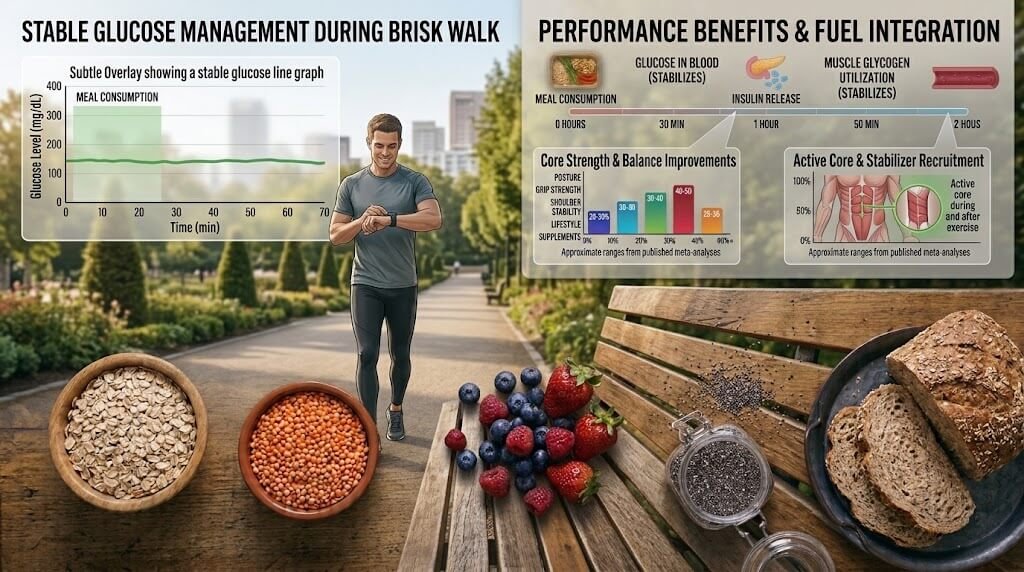
Coach’s Tip: Timing is everything. The window of opportunity is within 30 to 60 minutes after eating. This is when glucose is actively entering your bloodstream, and muscle contraction will pull that glucose directly into the cells without requiring a massive insulin response.
2. Dumbbell Goblet Squats
Resistance training is non-negotiable for long-term metabolic health. The goblet squat is a foundational movement that targets the largest muscle groups in the body, making it a powerhouse for glucose disposal.
- Muscles Worked: Quadriceps, glutes, hamstrings, core, and upper back.
- How to Do It: Hold a single dumbbell vertically against your chest with both hands cupping the top end. Stand with feet shoulder-width apart. Brace your core, push your hips back, and bend your knees to lower your body until your thighs are parallel to the floor. Keep your chest up and drive through your heels to return to the starting position.
- Sets/Reps/Rest: 3 sets of 10–12 repetitions, resting 60–90 seconds between sets. Use a weight of 15–25 lb (6.8–11.3 kg) for beginners.
- Regression: Perform bodyweight box squats, sitting back onto a chair or bench to ensure proper depth and build confidence.
- Progression: Increase the dumbbell weight to 35–45 lb (15.8–20.4 kg) or transition to a barbell back squat for a greater systemic metabolic demand.
Common Mistake: Letting the knees cave inward (valgus collapse) during the ascent. This reduces glute activation and strains the knee joint. Fix: Place a light resistance band just above your knees and actively push your knees outward against the band throughout the entire movement.
3. Seated Resistance Band Rows
Upper body pulling movements are excellent for balancing posture and building metabolic demand without overtaxing the central nervous system.
- Muscles Worked: Latissimus dorsi, rhomboids, rear deltoids, and biceps.
- How to Do It: Sit on the floor with your legs extended, or sit on a bench with feet planted. Loop a resistance band around a sturdy anchor point at chest height. Hold the ends with a neutral grip. Pull the band toward your lower ribcage, squeezing your shoulder blades together. Slowly return to the start with a 2-second eccentric (lowering) tempo.
- Sets/Reps/Rest: 3 sets of 12–15 repetitions, resting 60 seconds between sets. Use a medium-resistance band (typically 15–30 lb / 6.8–13.6 kg of tension).
- Regression: Use a lighter resistance band or perform the movement standing with the band anchored higher to reduce the range of motion.
- Progression: Use a heavy resistance band or transition to a cable machine row, adding a 1-second pause at the peak contraction to maximize muscle fiber recruitment.

Sample Daily Routine for Blood Sugar Control
Consistency beats intensity. Here is a practical, realistic daily schedule designed to help you maintain steady blood sugar throughout the day without overwhelming your routine.
| Time of Day | Activity / Habit | Metabolic Benefit |
| 7:00 AM | Wake up, drink 16 oz (473 ml) of water. | Rehydrates the body, supporting optimal cellular function and kidney filtration of excess glucose. |
| 7:30 AM | Breakfast: 30g protein, 10g fiber (e.g., eggs, spinach, 1/2 cup oats). | Protein and fiber slow gastric emptying, preventing a rapid glucose spike. Learn more about how protein intake and metabolism work together for satiety. |
| 8:00 AM | 10-minute brisk walk or light mobility routine. | Activates skeletal muscle glucose uptake early in the day. |
| 12:30 PM | Lunch: Lean protein, complex carbs, healthy fats. | Balanced macronutrients provide sustained energy. Discover how dietary fiber helps with appetite and glucose regulation. |
| 1:00 PM | 15-minute post-meal walk. | Blunts the postprandial glucose spike significantly. |
| 3:30 PM | Afternoon snack (if needed): Greek yogurt or a handful of almonds. | Prevents late-afternoon cortisol spikes that can trigger sugar cravings. |
| 5:30 PM | Resistance Training (3x per week): Squats, rows, push-ups. | Builds muscle mass, your body’s primary glucose disposal site. |
| 7:00 PM | Dinner: Similar macro balance to lunch, slightly lower carbs if sedentary in the evening. | Supports overnight recovery without overloading the system before sleep. |
| 7:30 PM | 10-minute evening stroll or light stretching on a 68 x 24 inch (172 x 61 cm) yoga mat. | Aids digestion and promotes parasympathetic nervous system activation. |
| 10:00 PM | Sleep in a cool, dark room. | Quality rest is vital. Understand how sleep affects metabolism and hormonal balance. |
Nutrition and Lifestyle Synergies
Exercise alone cannot outwork a poor lifestyle. To truly stabilize glucose levels naturally, you must align your nutrition and daily habits with your movement.
Prioritize Protein and Fiber
Every meal should contain a high-quality protein source and a fibrous vegetable or whole grain. Protein triggers the release of glucagon-like peptide-1 (GLP-1), a hormone that slows digestion and promotes satiety. Meanwhile, soluble fiber helps control appetite and forms a gel-like substance in the gut that physically slows the absorption of carbohydrates into the bloodstream.
Manage Stress and Cortisol
Chronic stress elevates cortisol, a hormone that signals the liver to release stored glucose into the bloodstream, even if you have not eaten. This is a primary reason non-diabetics experience high blood sugar. Incorporating 5 minutes of deep, diaphragmatic breathing or meditation daily can downregulate this stress response.
Optimize Your Circadian Rhythm
Your body’s ability to process glucose follows a circadian rhythm. Insulin sensitivity is naturally higher in the morning and decreases at night. Eating your largest meals earlier in the day and avoiding heavy, carbohydrate-dense snacks within two hours of bedtime supports this natural rhythm. If you are looking to boost metabolic flexibility, aligning your eating window with daylight hours is a proven strategy.
Stay Hydrated
Water is essential for kidney function. When blood sugar is high, the kidneys work overtime to filter and excrete the excess glucose through urine. Dehydration concentrates the blood, making glucose levels appear higher and forcing the body to work harder. Aim for at least half your body weight in ounces of water daily.

Safety Notes and Who Should Be Careful
While exercise is highly beneficial, certain populations must take precautions. If you are currently taking insulin or insulin-secretagogue medications (like sulfonylureas), exercise can increase the risk of hypoglycemia (low blood sugar). Always carry a fast-acting carbohydrate, such as glucose tablets or a small juice box, during your workouts.
Individuals with peripheral neuropathy should avoid high-impact activities or barefoot walking, opting instead for seated resistance exercises or cycling to protect the feet. Pregnant women, seniors with pre-existing cardiovascular conditions, or anyone with a recent injury should consult their physician or a physical therapist before starting a new exercise regimen.
It is also worth noting that some individuals explore nutritional support alongside lifestyle changes. If you are curious about natural aids, research on how certain compounds may improve insulin sensitivity can be a helpful starting point, though they should never replace foundational diet and exercise habits.
Frequently Asked Questions
What is the best exercise to lower blood sugar immediately?
A brisk 10- to 15-minute walk immediately after a meal is the most effective and accessible way to lower post-meal blood sugar quickly. Muscle contraction during walking pulls glucose from the bloodstream into the cells without requiring a large insulin response, blunting the spike effectively.
How long should I walk after eating to prevent blood sugar spikes?
Research suggests that just 10 to 15 minutes of light to moderate walking after eating is sufficient to see a significant reduction in postprandial glucose levels. If you are short on time, even 2 to 5 minutes of movement, like squats or pacing, is better than remaining completely sedentary.
Does lifting weights help stabilize blood sugar levels?
Yes, absolutely. Resistance training builds skeletal muscle mass, which acts as the body’s primary storage site for glucose. The more muscle you have, the greater your capacity to store and utilize glucose, leading to improved long-term insulin sensitivity and more stable fasting blood sugar levels.
Can stress cause high blood sugar in non-diabetics?
Yes. Chronic psychological or physical stress triggers the release of cortisol and adrenaline. These hormones signal the liver to release stored glucose into the bloodstream to provide “fight or flight” energy. Over time, chronic stress can contribute to insulin resistance, even in individuals without diabetes.
How does sleep affect blood sugar levels?
Poor sleep or sleep deprivation disrupts the hormones that regulate hunger and glucose metabolism. It increases cortisol and decreases insulin sensitivity, meaning your body struggles to clear glucose from the blood effectively. Aim for 7–9 hours of quality sleep per night to support metabolic health.
How much protein do I need to prevent blood sugar crashes?
Aim for 20 to 30 grams of high-quality protein per meal. This amount is generally sufficient to stimulate muscle protein synthesis and slow the digestion of carbohydrates, providing a steady release of energy and preventing the sharp drops in blood sugar that lead to cravings and fatigue.
Conclusion
Learning how to maintain steady blood sugar throughout the day does not require drastic measures or unsustainable routines. It is about making consistent, evidence-based choices. By incorporating short post-meal walks, engaging in regular resistance training, and prioritizing protein, fiber, and quality sleep, you create a metabolic environment that thrives. Your muscles are your greatest asset in glucose management. Treat them well, move them often, and your energy levels will reflect that investment. Start with one small change today, like a 10-minute walk after dinner, and build from there.