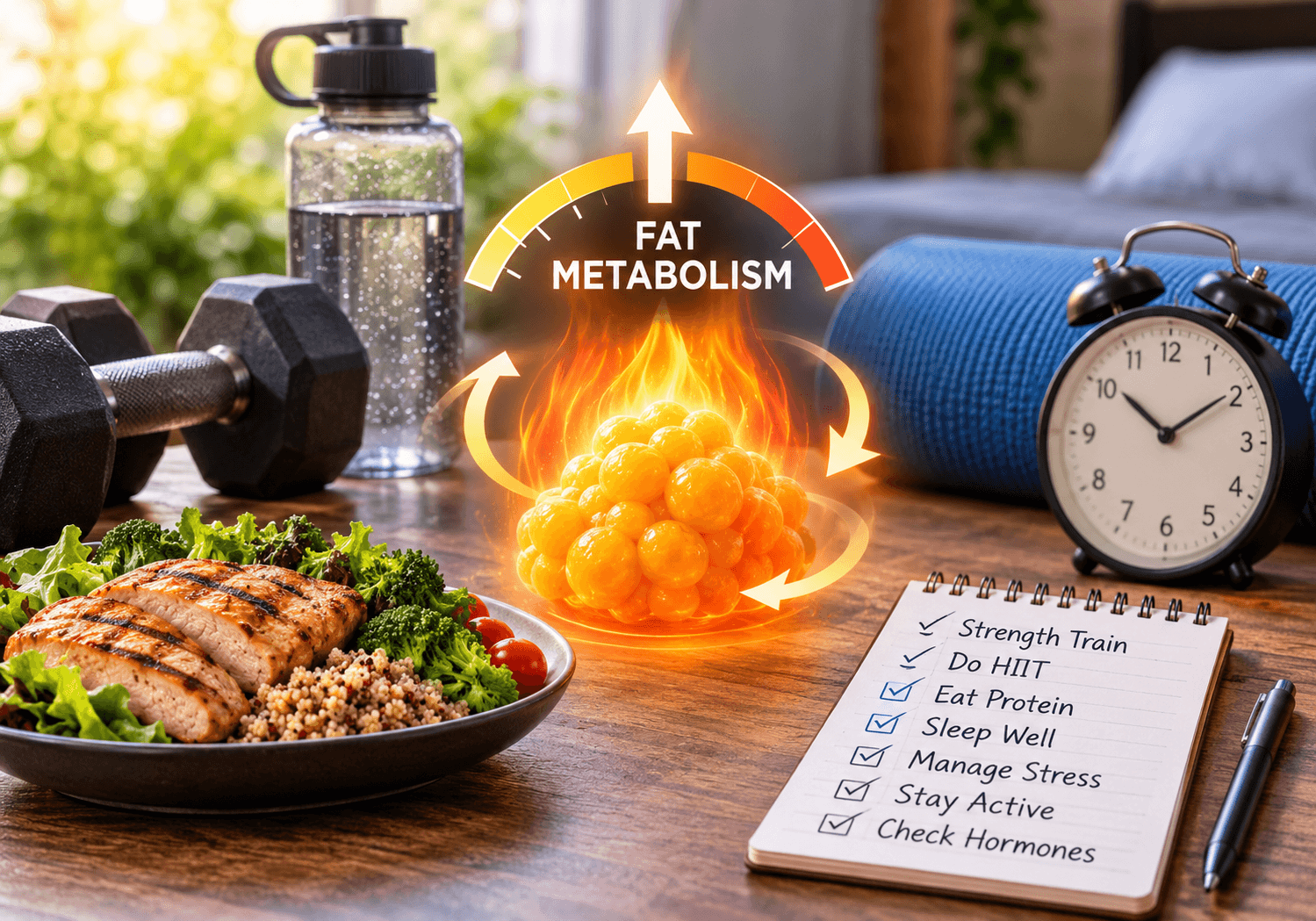
Your body burns fat all day long, even while you sit at a desk or sleep. But the rate at which it does so varies from person to person, and it shifts based on muscle mass, training history, sleep quality, and a handful of hormonal signals. Learning how to increase fat metabolism naturally means stacking small, evidence-based habits that nudge your body toward using stored fat as fuel more efficiently. No pills, no extreme diets—just the levers that actually move the needle.
I’ve spent years programming resistance training and conditioning for clients who want to shed body fat without crashing their energy or losing the muscle they worked hard to build.
What I’ve learned is that the people who see the most consistent results aren’t doing anything exotic. They’re training with intent, eating enough protein, sleeping seven to eight hours, and giving their bodies a few weeks to adapt. That’s the foundation this guide builds on.
Quick Answer: You can increase fat metabolism naturally by (1) building lean muscle through resistance training, (2) adding high-intensity interval work two to three times per week, (3) eating 0.7–1 g of protein per pound of body weight daily, (4) sleeping 7–9 hours, (5) managing chronic stress, and (6) staying active outside the gym. These changes improve resting metabolic rate, fat oxidation, and metabolic flexibility over 6–12 weeks.
What “Fat Metabolism” Actually Means
Before you can speed something up, you need to know what it is. Fat metabolism—also called fat oxidation—is the process your cells use to break down stored triglycerides (the form fat is stored in) into energy. Here’s the simplified chain:
- Hormones like epinephrine and norepinephrine signal fat cells to release fatty acids into the bloodstream.
- Fatty acids travel to muscle and liver cells.
- Inside the cell’s mitochondria, fatty acids are “burned” through a series of reactions (beta-oxidation) to produce ATP, the energy currency your body uses.
Your resting metabolic rate (RMR)—the calories you burn at complete rest—is driven mostly by your lean body mass. The more muscle you carry, the higher your RMR, because muscle tissue is metabolically active even when you’re not moving it. Research published in the Journal of Applied Physiology and summarized by the National Institutes of Health confirms that skeletal muscle accounts for a disproportionate share of daily energy expenditure compared to fat tissue.
Metabolic flexibility is the other key concept. A metabolically flexible body can switch smoothly between burning carbohydrates and burning fat depending on what fuel is available. When that switching gets sluggish—often from years of high-carb, low-activity living or chronic overtraining—your body holds onto fat longer. The good news: flexibility is trainable, and the methods below target it directly.
What the Research Says About Increasing Fat Metabolism
A few well-replicated findings shape everything in this guide:
- Muscle mass raises RMR. Each pound of lean tissue adds roughly 6–10 calories to your daily burn at rest, according to data reviewed by the Academy of Nutrition and Dietetics. Over 20–30 pounds of muscle gained through a structured resistance program, that’s a meaningful shift in your baseline.
- High-intensity intervals boost post-exercise oxygen consumption (EPOC). A meta-analysis in the British Journal of Sports Medicine found that HIIT sessions of 20–30 minutes elevated energy expenditure for 24–48 hours after the workout, well beyond what a steady-state cardio session of the same duration produced [VERIFY specific BJSM citation].
- Protein has the highest thermic effect of any macronutrient. Your body uses 20–30% of the calories in protein just to digest, absorb, and process it, compared to 5–10% for carbs and 0–3% for fat, as noted in Harvard Health Publishing’s metabolism overview.
- Sleep loss disrupts fat-burning hormones. Studies indexed on PubMed show that cutting sleep to five hours or fewer increases ghrelin (hunger hormone), blunts leptin (satiety hormone), and reduces the body’s ability to oxidize fat the following day.
- Chronic cortisol elevation promotes abdominal fat storage. The Mayo Clinic notes that prolonged stress keeps cortisol elevated, which shifts the body toward storing fat around the midsection and away from burning it.
None of these findings promise a magic number of pounds lost in a week. They describe directional changes that compound over months. That’s the honest picture, and it’s the one I work with in the gym.
Methods at a Glance
| Method | What It Does | Time to Notice Change | Effort Level |
| Resistance training (3×/week) | Builds muscle → raises RMR | 6–12 weeks | Moderate–High |
| HIIT / interval work (2×/week) | Spikes EPOC, improves fat oxidation | 4–8 weeks | High |
| Protein target (0.7–1 g/lb) | Raises TEF, preserves lean mass | 2–4 weeks | Low |
| 7–9 hr sleep | Restores leptin, lowers cortisol, improves insulin sensitivity | 2–4 weeks | Moderate |
| Stress management | Lowers chronic cortisol, reduces visceral fat storage | 4–8 weeks | Low–Moderate |
| Daily NEAT (walking, stairs) | Adds 200–400 kcal/day burn | Immediate (daily) | Low |
| Thyroid / hormone check (if symptoms) | Rules out medical causes of slow metabolism | Varies | Medical |
How to Increase Fat Metabolism Naturally: 7 Practical Steps
1. Build and Maintain Muscle Mass
This is the single biggest lever. More muscle = more calories burned at rest = more fat available for oxidation throughout the day.
What to do:
- Train each major muscle group at least twice per week using compound movements: squats, deadlifts, bench press, overhead press, rows, and pull-ups.
- Use a progressive overload scheme: add 2.5–5 lb (1–2.5 kg) to the bar or 1–2 reps per set every 1–2 weeks.
- Aim for 3–4 sets of 6–12 reps per exercise, resting 90–120 seconds between sets.
- Tempo: 2 seconds down, 1 second pause at the bottom, 1 second up. This keeps tension on the muscle and stimulates growth.
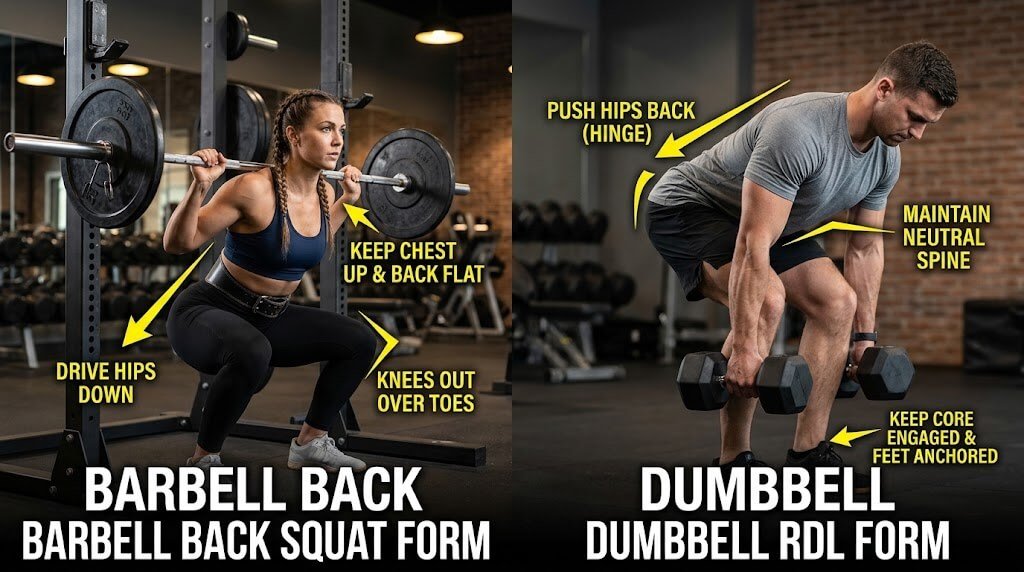
Easier version (regression): If a full barbell squat feels unstable, swap it for a goblet squat with a 25–40 lb (11–18 kg) dumbbell held at chest height. For rows, use a resistance band anchored at knee height instead of a barbell.
Harder version (progression): Add a pause at the bottom of the squat (3-second hold), use a deficit (stand on 2-inch / 5-cm plates), or swap the bench press for a weighted dip.
Coach’s Tip: You don’t need to train like a bodybuilder. Three solid 45-minute sessions per week, hitting all major lifts, is enough to keep building or maintaining muscle. Consistency beats intensity. If you skip a week, don’t double up the next one—just resume where you left off.
2. Train with High-Intensity Intervals
Steady-state cardio is fine for cardiovascular health, but if your goal is specifically to raise the rate of fat oxidation and the post-workout calorie burn, intervals hit harder.
What to do:
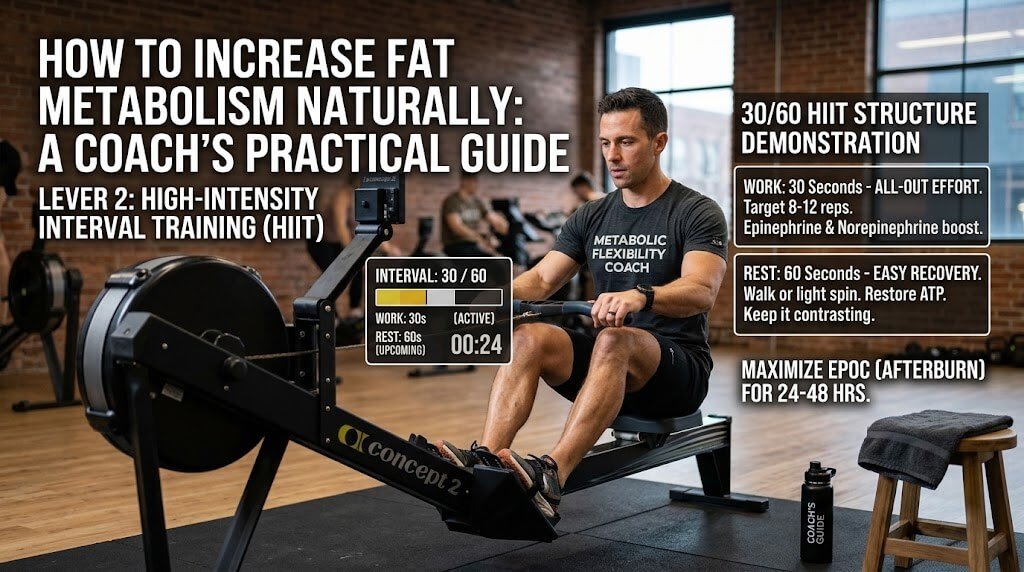
- Pick a modality you can sustain: rowing ergometer, assault bike, treadmill sprints, or a circuit of bodyweight moves.
- Structure: 30 seconds all-out effort, 60–90 seconds easy recovery. Repeat 8–12 rounds. Total session: 15–25 minutes including warm-up and cool-down.
- Frequency: 2 sessions per week, on non-consecutive days.
- Keep the “easy” phase truly easy—walking, spinning at low resistance—so you can hit the hard intervals at full effort.
EPOC effect: After a proper HIIT session, your body keeps consuming extra oxygen (and burning extra calories) for up to 48 hours as it replenishes oxygen stores, clears lactate, and repairs micro-damage in muscle fibers. This is the “afterburn” that makes intervals so efficient.
Easier version: 20 seconds hard / 40 seconds easy, 6–8 rounds. Focus on form and breathing before you chase speed.
Harder version: 40 seconds hard / 20 seconds easy, 10–14 rounds. Or add a 5 lb (2.3 kg) weighted vest to a bodyweight circuit.
Common Mistake: Going too hard on the easy intervals. If you’re still gasping during the recovery phase, your next hard interval will suffer and the total work drops. Walk or spin at a conversational pace between rounds. The contrast is what makes the hard intervals effective.
3. Prioritize Protein at Every Meal
Protein does three things that directly support fat metabolism:
- Raises thermic effect of food (TEF). Digesting protein costs your body 20–30% of those calories in processing, versus 5–10% for carbs. That’s free metabolic work.
- Preserves lean mass during a calorie deficit. When you’re eating fewer calories, protein intake of 0.7–1 g per pound of body weight (1.5–2.2 g/kg) helps prevent the muscle loss that would otherwise drag your RMR down.
- Supports satiety. Higher-protein meals reduce the hunger hormone ghrelin and increase peptide YY, so you’re less likely to overeat later in the day.
Practical targets:
- Breakfast: 25–35 g protein (e.g., 3 eggs + Greek yogurt, or a protein shake + nuts)
- Lunch: 30–40 g (e.g., grilled chicken, lentils, or a can of tuna with vegetables)
- Dinner: 35–50 g (e.g., 6–8 oz / 170–225 g lean beef, salmon, or tofu)
- Snack (if needed): 15–20 g (cottage cheese, edamame, or a small protein bar)
For a deeper look at the numbers, see our guide on protein intake and metabolism.
4. Protect Your Sleep
I can program the best workout in the world, but if a client is sleeping five hours a night, their fat-burning chemistry is working against them.
- Aim for 7–9 hours of quality sleep. The CDC recommends at least seven hours for adults.
- Keep a consistent schedule: same bedtime and wake time ±30 minutes, even on weekends.
- Cool the room (65–68 °F / 18–20 °C), dim lights an hour before bed, and skip screens or use a blue-light filter.
- Avoid caffeine after 2 p.m. and heavy meals within two hours of bedtime.
Sleep deprivation of even one night has been shown in PubMed-indexed research to reduce next-day fat oxidation by roughly 20% and increase carbohydrate utilization, meaning your body reaches for sugar for fuel instead of stored fat. Chronic poor sleep also elevates cortisol and insulin resistance, both of which blunt the hormonal signals that trigger fat breakdown.
For a deeper dive into the hormonal side, read our article on how sleep affects metabolism.
5. Manage Stress and Cortisol
Acute stress (a tough workout, a deadline at work) is normal and even useful. Chronic stress—where cortisol stays elevated for days or weeks—is where fat metabolism gets stuck.
High cortisol:
- Promotes lipogenesis (fat storage), especially around the abdomen.
- Increases cravings for high-sugar, high-fat “comfort” foods.
- Interferes with deep sleep, creating a vicious cycle.
What actually helps:
- Breathing work: 5 minutes of box breathing (inhale 4 sec, hold 4, exhale 4, hold 4) before bed or after a stressful meeting.
- Daily movement that isn’t intense: A 20-minute walk outside, gentle yoga, or a swim. You don’t need to push your heart rate to manage stress; you need to move.
- Boundaries: Turning off work notifications after a set hour, saying no to one extra commitment per week.
- Social connection: Talking through a hard day with a friend or partner measurably lowers cortisol more than sitting alone.
If stress is a persistent, overwhelming factor—especially if you notice weight gain around the midsection, trouble sleeping, or low energy that doesn’t resolve with rest—talk to your primary care provider. They can check thyroid function, fasting glucose, and cortisol levels to rule out an underlying issue.

6. Stay Consistent with Daily Movement (NEAT)
NEAT stands for Non-Exercise Activity Thermogenesis—all the movement that isn’t a structured workout. Fidgeting, walking to the mailbox, taking the stairs, standing while on the phone. It sounds trivial, but it adds up to 200–400 extra calories burned per day, and it keeps your metabolic rate elevated throughout the day rather than spiking only during a 45-minute gym session.
Practical targets:
- 7,000–10,000 steps per day (about 3–5 miles / 5–8 km).
- Stand for 5 minutes every hour if you have a desk job.
- Park farther away. Take the stairs. Walk during lunch.
- On rest days, do a 20–30 minute easy walk or a gentle bike ride.
The HHS Physical Activity Guidelines recommend 150–300 minutes of moderate aerobic activity per week plus two days of muscle-strengthening work. Hitting those numbers covers both your structured training and your daily movement.
7. Support Thyroid and Hormonal Health
Most people who think their metabolism is “broken” actually have a perfectly normal one that’s being held back by the factors above. But a small percentage do have an underlying medical cause—hypothyroidism, insulin resistance, or a hormonal imbalance—that no amount of squats will fix on its own.
See a doctor if you notice:
- Unexplained weight gain or inability to lose weight despite consistent effort
- Persistent fatigue, cold intolerance, dry skin, or constipation (possible hypothyroidism)
- Increased thirst, frequent urination, or blurred vision (possible insulin resistance or diabetes)
- In women: irregular or absent periods
A simple blood panel (TSH, free T3/T4, fasting insulin, fasting glucose, and a full metabolic panel) can rule these out. If everything checks out, the lifestyle levers in this guide are your best tools. For a broader look at the factors that influence your metabolic rate, see our article on what affects metabolism and body weight.
Sample Weekly Routine
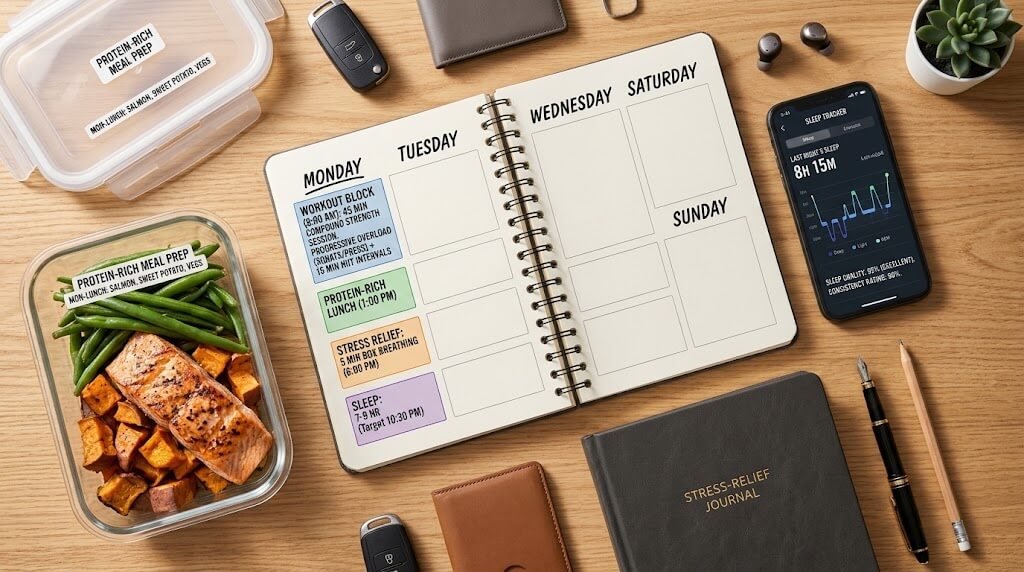
Here’s a practical 5-day structure that hits all seven levers without overtraining:
| Day | Focus | Details |
| Monday | Upper-body strength | Bench press 4×8, rows 4×10, overhead press 3×10, bicep curls + tricep dips 2×12 each. Rest 90–120 s. |
| Tuesday | HIIT + core | 20-min interval session (30 s hard / 60 s easy × 10 rounds) on rowing bike or treadmill. 3×12 plank, 3×15 dead bugs. |
| Wednesday | Lower-body strength | Back squats 4×8, Romanian deadlifts 4×10, walking lunges 3×12/leg, calf raises 3×15. Rest 90–120 s. |
| Thursday | Active recovery | 30-min easy walk or swim. 10-min stretching or foam rolling. Focus on sleep hygiene tonight. |
| Friday | Full-body + intervals | Deadlifts 4×6, push-ups 3×15, kettlebell swings 4×20, 15-min circuit (burpees, mountain climbers, jump squats – 40 s on / 20 s off × 5 rounds). |
| Saturday | Movement / sport | Hike, bike ride, basketball, swimming—anything you enjoy. 45–60 min. |
| Sunday | Rest | Light walk, meal prep for the week, early bedtime. |
Progression plan (weeks 1–12):
- Weeks 1–4: Focus on form. Use weights that let you finish every rep with 2 reps “in the tank.”
- Weeks 5–8: Add 2.5–5 lb (1–2.5 kg) to compound lifts. Add 1–2 rounds to HIIT sessions.
- Weeks 9–12: Add a set to one exercise per session. Shorten HIIT rest by 10 seconds. Introduce a harder variation (pause reps, deficit squats, weighted vest).
For a more detailed progression framework, check our guide on how to boost metabolic flexibility without crash dieting.
Safety Notes and When to See a Doctor
- Start where you are. If you’ve been sedentary, begin with 20-minute walks and bodyweight exercises before jumping into barbell squats or sprint intervals. Build up over 4–6 weeks.
- Warm up. Five to ten minutes of light cardio (brisk walk, easy cycling) plus dynamic stretches (leg swings, arm circles, bodyweight squats) before any strength or interval session.
- Listen to joint pain. Muscle soreness (DOMS) is normal 24–72 hours after a new or harder workout. Sharp, localized joint pain is not. Stop the movement and have a physical therapist or doctor evaluate it.
- Medical conditions. If you have heart disease, uncontrolled hypertension, diabetes, a joint replacement, or are pregnant or postpartum, get clearance from your doctor before starting a new exercise program. This article is for general information and is not a substitute for advice from a doctor or physical therapist.
- Supplements are optional, not required. Everything in this guide works without a single supplement. If you do use a supplement, choose one with third-party testing (NSF, Informed Sport) and talk to your doctor first, especially if you take prescription medications.
Related Tips for Long-Term Results
- Track your training, not just the scale. Keep a simple log: exercise, sets, reps, weight. If your numbers go up over four weeks, you’re progressing. The scale can fluctuate 2–4 lb (1–2 kg) day to day from water, sodium, and digestion.
- Don’t fear carbohydrates. Your body uses carbs for fuel during intense training. Cutting them to an extreme can lower training performance, increase fatigue, and paradoxically slow your metabolic rate. Focus on whole-food sources: oats, rice, potatoes, fruit, legumes.
- Stay hydrated. Even mild dehydration (1–2% body weight loss) reduces exercise performance and can make you feel fatigued, which leads to less daily movement. Aim for 64–96 oz (2–3 L) of water per day, more on training days.
- Be patient with the “after 40” shift. Metabolic rate naturally declines about 2–5% per decade after age 30, largely due to gradual muscle loss (sarcopenia) and hormonal changes. The strategies in this guide—especially resistance training and protein intake—directly counteract that decline. Our guide on increasing metabolism naturally after 40 walks through age-specific adjustments.
- Build the habit stack, not the perfect plan. You don’t need to nail all seven levers on day one. Pick two (for example, three strength sessions and a protein target) and do them for four weeks. Then add a third. The compounding effect is what changes your body composition over six to twelve months.
- Review our broader guide on increasing metabolism naturally for weight loss for additional strategies, including how thermogenesis and daily habits fit into the bigger picture.
How long does it take to increase fat metabolism naturally?
You’ll notice improved energy and training performance within 2–4 weeks of consistent resistance training and interval work. Measurable changes in resting metabolic rate and body composition typically show up at 8–12 weeks, depending on starting fitness level, nutrition, and sleep quality.
Can you increase fat metabolism without going to the gym?
Yes. Bodyweight resistance training (push-ups, squats, lunges, planks), brisk walking, cycling, swimming, and HIIT done in a living room all raise metabolic rate and fat oxidation. The key is progressive overload—making the movements harder over time with more reps, more rounds, or slower tempo.
Do metabolism-boosting supplements replace exercise and diet?
No. No supplement compensates for a sedentary lifestyle, poor sleep, or inadequate protein intake. Research on common “metabolism boosters” (green tea extract, capsaicin, L-carnitine) shows small, statistically modest effects that are not meaningful without the foundational habits. See our evidence-based guides on what affects metabolism and body weight and how to support metabolism naturally for more context.
Is it normal for my metabolism to slow down as I age?
Yes. After about age 30, resting metabolic rate declines roughly 2–5% per decade, driven mainly by gradual loss of muscle mass and shifts in hormones like growth hormone and thyroid hormones. Regular resistance training, adequate protein, and consistent daily movement can slow or partially reverse that decline at any age.
What’s the best single exercise to increase fat metabolism?
There isn’t one. Compound, multi-joint movements (squats, deadlifts, rows, press) recruit the most muscle mass and create the largest metabolic demand. Pairing them with 20–30 minutes of interval work two to three times per week gives you the best combination of RMR increase and post-exercise calorie burn.
Does fasting or intermittent eating boost fat metabolism?
Research on intermittent fasting is still evolving. Some studies suggest time-restricted eating may improve insulin sensitivity and shift substrate utilization toward fat in the short term, but the total daily calorie and protein intake matters more than the timing window. If you choose to try it, make sure you still hit your protein target and don’t under-eat to the point where your training performance and recovery suffer.
Conclusion
Learning how to increase fat metabolism naturally isn’t about finding one magic exercise, one superfood, or one supplement. It’s about stacking seven practical, evidence-based habits—build muscle, train with intervals, eat enough protein, protect your sleep, manage stress, move more during the day, and get your hormones checked if something feels off. Each one works independently. Together, they compound.
You don’t need to overhaul your life on Monday. Pick the one lever you’ve been neglecting the most. Do it consistently for four weeks. Then add the next one. Six months from now, your resting metabolic rate, your fat-oxidation capacity, and your daily energy will look very different from where they are today. And you’ll have built the habits that keep those gains in place long after the initial motivation fades.