Your metabolism isn’t a fixed number locked in at birth. It shifts daily based on how much you move, how you train, what you eat, and how well you sleep. The good news: you can nudge it higher and steady your energy throughout the day without reaching for a pill or a pre-workout shake.
As a strength and conditioning coach, I’ve watched hundreds of clients go from “I’m tired by 2 p.m.” to finishing their workday with energy to spare. They were consistent, practical, and built on the same 12 levers I’ll walk you through below. Whether you’re a gym beginner, a home-gym owner, or someone over 40 who’s noticed their afternoon slump getting worse, these strategies will give you a clear path to a faster metabolic rate and more reliable energy.
Quick Answer
To boost metabolism and energy naturally, combine resistance training (3×/week) with short HIIT sessions (2×/week), walk 7,000–10,000 steps daily, prioritize protein at every meal, protect 7–9 hours of sleep, and manage stress with breathing or light activity. These habits raise your resting metabolic rate, increase caloric expenditure, and stabilize blood sugar for sustained energy.
1. Build Lean Muscle with Resistance Training
Muscle is metabolically expensive tissue. Every pound of lean mass you carry burns more calories at rest than the same pound of fat, which means a higher resting metabolic rate even when you’re sitting on the couch. Research published in the Journal of Applied Physiology confirms that resistance training increases RMR for 24–48 hours after a session, and the effect compounds as muscle mass grows over weeks.
How to do it (beginner circuit – 3×/week):
| Exercise | Sets | Reps | Rest | Tempo |
| Goblet squat (dumbbell) | 3 | 10–12 | 60 s | 2-1-2-0 |
| Dumbbell Romanian deadlift | 3 | 10–12 | 60 s | 2-1-2-0 |
| Push-up (knees if needed) | 3 | 8–12 | 60 s | 2-0-2-0 |
| Bent-over dumbbell row | 3 | 10–12/side | 60 s | 2-1-2-0 |
| Plank | 3 | 30–45 s | 45 s | Hold |
Start with 10-lb (4.5-kg) dumbbells if you’re new. You should finish the last rep feeling challenged but able to maintain form.
Progression: Add 5-lb (2.3-kg) increments every 2–3 weeks, or swap to barbell back squats and conventional deadlifts once you’re comfortable with 40-lb (18-kg) dumbbells.
Regression: Replace goblet squats with chair sit-to-stands and push-ups with an incline (hands on a bench or countertop).
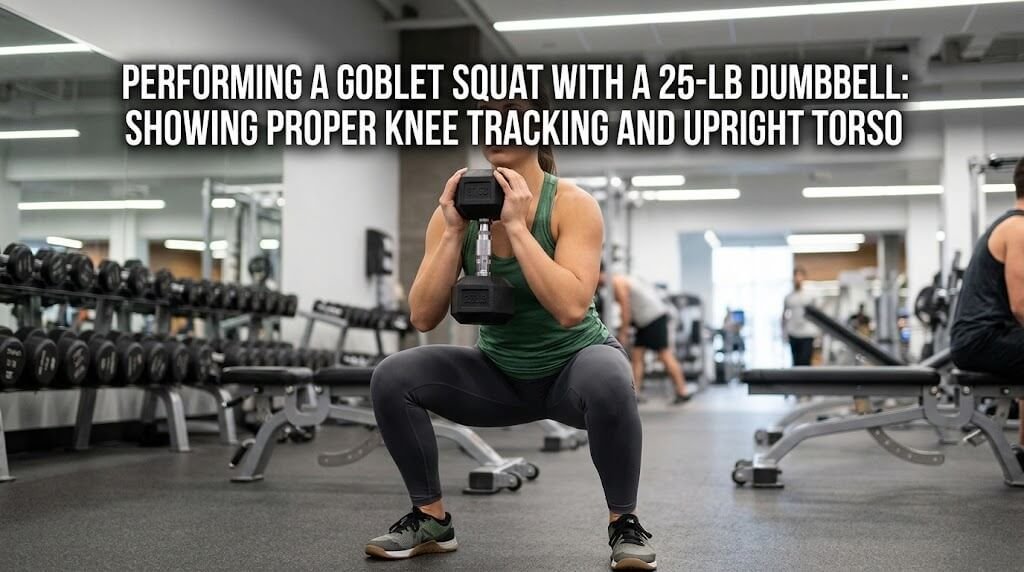
Coach’s Tip: Aim to hit the mid-to-upper range of your rep range with good form. If you can easily hit 15 clean reps, the weight is too light. The last 2–3 reps should feel like a genuine effort.
2. Add High-Intensity Interval Training (HIIT)
HIIT sessions spike your heart rate into the 85–95% zone for short bursts, creating a significant afterburn effect known as excess post-exercise oxygen consumption (EPOC). Your body keeps burning extra calories for up to 24 hours post-workout as it restores oxygen, clears lactate, and repairs muscle tissue.
Sample 20-minute HIIT session (2×/week):
- 5 min: brisk walk or easy bike (warm-up)
- 8 rounds: 30 s all-out effort (sprint, rowing, or bike) / 60 s easy recovery
- 5 min: slow walk (cool-down)
Progression: Shorten rest to 45 s or add a 9th round.
Regression: Use 20 s work / 90 s rest, or swap sprints for fast walking on an incline treadmill.

3. Walk More – Seriously, Just Walk
You don’t need a gym membership to move your metabolism. Non-exercise activity thermogenesis (NEAT) – the calories you burn from fidgeting, walking to the mailbox, taking the stairs – can account for 15–50% of your total daily caloric expenditure, according to research summarized by the CDC’s physical activity guidelines.
Aim for 7,000–10,000 steps per day. If you sit at a desk, set a timer to stand and walk for 3–5 minutes every hour. A 30-minute brisk walk (about 1.5 miles / 2.4 km) at 3.5 mph burns roughly 120–180 calories depending on your body weight.
Make it stick:
- Walk during phone calls.
- Park farther from the entrance.
- Take a 10-minute walk after lunch to aid digestion and steady blood sugar.
4. Prioritize Protein at Every Meal
Protein has the highest thermic effect of any macronutrient – your body uses 20–30% of the calories in protein just to digest and process it, compared to 5–10% for carbs and 0–3% for fat. It also preserves lean muscle during a calorie deficit, keeping your metabolic rate from dropping.
The HHS 2018 Physical Activity Guidelines recommend combining regular physical activity with adequate nutrition for long-term health. For most adults, that means 0.7–1 g of protein per pound of body weight (1.6–2.2 g/kg) spread across 3–4 meals.
Practical targets:
- Breakfast: 2–3 eggs + Greek yogurt (~25 g protein)
- Lunch: grilled chicken or lentil salad (~30 g)
- Dinner: salmon, tofu, or lean beef (~35 g)
- Snack: cottage cheese or a protein-rich smoothie (~15 g)
For a deeper look at how protein timing and quantity affect your metabolic rate, see our guide on protein intake and metabolism.
5. Protect Your Sleep (7–9 Hours)
This one is non-negotiable. Poor sleep disrupts leptin and ghrelin (your hunger hormones), raises cortisol, and blunts insulin sensitivity – all of which slow your metabolic rate and make you feel sluggish the next day. A review in the Journal of Clinical Sleep Medicine links chronic sleep restriction (<6 h/night) to a 5–10% reduction in RMR over several weeks.
Sleep hygiene checklist:
- Keep a consistent bed/wake time (±30 min), even on weekends.
- Dim screens 60 min before bed.
- Keep your bedroom below 68 °F (20 °C).
- Avoid caffeine after 2 p.m.
- Do a 5-minute box-breathing exercise (4 s in, 4 s hold, 4 s out, 4 s hold) before lights-out.
The hormonal connection between sleep and metabolism is well documented. If you want the full breakdown, read our article on how sleep affects metabolism and weight management.
6. Manage Stress with Breathing and Light Movement
Chronic stress keeps cortisol elevated, which promotes abdominal fat storage, increases muscle breakdown, and drains your energy reserves. You don’t need a meditation app – you need 5 minutes of intentional breathing.
Try this (2×/day, morning and mid-afternoon):
- Sit or stand tall. Place one hand on your belly.
- Inhale through your nose for 4 counts.
- Hold for 4 counts.
- Exhale slowly through your mouth for 6 counts.
- Repeat for 8–10 cycles.
On high-stress days, swap a long sit for a 10-minute walk outside. The combination of fresh air, movement, and a change of scenery lowers cortisol faster than sitting still.
7. Do Compound Movements, Not Just Isolation
A barbell squat, deadlift, or kettlebell swing recruits multiple large muscle groups at once – quads, glutes, hamstrings, back, core, and shoulders. More muscles working = more calories burned per rep and a bigger EPOC response.
Top 5 compound movements to master:
- Barbell back squat
- Conventional or trap-bar deadlift
- Kettlebell swing
- Push-up / bench press
- Pull-up / barbell row
If you’re a beginner, start with the goblet squat, dumbbell RDL, and push-up from the resistance-training circuit in Strategy #1. Once you’re comfortable, progress to barbell work.
Common Mistake: Chasing a “burn” with 15+ reps of bicep curls while skipping heavy squats. Small-muscle isolation work has a minimal metabolic impact. Lead your workout with 2–3 compound lifts before any accessory work.
8. Stay Hydrated and Watch Caffeine Timing
Dehydration of even 2% body weight can reduce your energy and concentration noticeably. Aim for roughly half your body weight in ounces of water per day (e.g., 150-lb person → ~75 oz / 2.2 L).
Caffeine can give a short-term metabolic boost of 3–11%, according to a meta-analysis indexed on PubMed. But timing matters. One or two cups of coffee (100–200 mg caffeine) before your morning workout can enhance fat oxidation and focus. More than that, or caffeine after 2 p.m., disrupts sleep quality – which, as we covered, tanks your next-day metabolism.
If you’re using caffeine strategically, our guide on why caffeine pills cause energy crashes walks through pacing and tolerance.
9. Eat for Thermic Effect and Blood-Sugar Stability
Beyond protein, the type of food you eat affects how much energy your body spends digesting it and how steady your energy feels.
- Fiber-rich carbs (oats, sweet potatoes, legumes, vegetables) slow glucose absorption, preventing the 2–3 p.m. crash.
- Healthy fats (avocado, nuts, olive oil) support hormonal function and satiety.
- Minerals and B-vitamins (magnesium, iron, B12, thiamine) are co-factors in cellular energy production. A deficiency in any of these can make you feel fatigued even if you’re eating enough calories.
For a list of the specific nutrients your body needs to keep energy metabolism running smoothly, check out our breakdown of which nutrients support normal energy metabolism.
10. Use the “2-Minute Rule” for Daily Movement
On days when a full workout isn’t happening, your metabolism still gets a boost from small movement breaks. The Mayo Clinic notes that even brief bouts of activity interrupt sedentary time and improve insulin sensitivity.
The 2-Minute Rule: Every 45–60 minutes of sitting, stand up and do 2 minutes of movement.
- 15 bodyweight squats
- 10 jumping jacks
- 20 seconds of shadow boxing
- A 200-foot (60-m) walk to the end of the hallway and back
Over an 8-hour workday, that’s 8–10 mini-sessions – roughly 15–20 extra minutes of movement you’d otherwise miss.

11. Train at a Slight Calorie Surplus or Maintenance (Don’t Crash-Diet)
Aggressively cutting calories below your maintenance level tells your body to conserve energy. Your metabolic rate adapts downward, your thyroid output may dip, and you feel sluggish within a week or two.
If your goal is body recomposition (building muscle while losing a little fat), train at maintenance or a very small deficit (200–300 kcal). Keep protein high (Strategy #4), progress your lifts, and let the muscle gain do the metabolic work over 8–12 weeks.
The concept of metabolic flexibility – your body’s ability to switch between burning carbs and fats efficiently – is a key piece here. Our article on how to boost metabolic flexibility without crash dieting explains the science and gives a practical 4-week plan.
12. Get Outside for “Green Exercise”
A 20-minute walk in a park or along a trail lowers perceived stress more than the same walk on a treadmill, and the natural light exposure helps regulate your circadian rhythm, which in turn supports sleep quality and hormonal balance.
You don’t need a trail. A 10-minute walk around your neighborhood at midday, with phone in your pocket, counts. The combination of daylight, mild movement, and a change of scenery is one of the simplest, most underrated ways to boost energy naturally.

How to Put It All Together: A Sample Weekly Schedule
You don’t need to do all 12 strategies at once. Here’s a realistic week for a beginner or intermediate trainee:
| Day | Focus | Details |
| Mon | Resistance (upper + lower) | 3×/week circuit (Strategy #1), 45 min |
| Tue | HIIT + walk | 20-min HIIT (Strategy #2) + 10,000 steps |
| Wed | Active recovery | 30-min walk outside (Strategy #12), stretching, breathing work |
| Thu | Resistance (full body) | Compound focus: squat, row, push-up, RDL |
| Fri | HIIT + walk | 20-min bike or row intervals + 8,000 steps |
| Sat | Fun activity | Hike, swim, bike ride, or sport (60–90 min) |
| Sun | Rest + prep | Light walk, meal prep, sleep hygiene routine |
Progression plan (8 weeks):
- Weeks 1–2: Learn the movements. Use lighter weights. Focus on form.
- Weeks 3–4: Add 5-lb (2.3-kg) to compound lifts. Add 1 HIIT round.
- Weeks 5–6: Introduce supersets (e.g., squat → push-up with no rest). Bump HIIT to 9 rounds.
- Weeks 7–8: Add a 4th resistance day or a 3rd HIIT session. Aim for 10,000 steps daily.
Safety Tips and Who Should Check with a Doctor First
- Start slow. If you’ve been sedentary, begin with 2 resistance days and 1 HIIT day, then add the third.
- Pain is a stop signal. Joint pain (not muscle burn) means adjust your form, reduce load, or see a physical therapist.
- Medical conditions. If you have a heart condition, uncontrolled hypertension, diabetes, a joint replacement, or are pregnant/postpartum, talk to your doctor or physical therapist before starting a new training program.
- Medications. Some blood-pressure and thyroid medications affect heart-rate response and energy levels. Your provider can help you set safe training zones.
- Age considerations. If you’re over 40, joint health and recovery time become more important. Our guide on how to increase metabolism naturally after 40 covers modifications for knees, shoulders, and lower back.
This article is for general information and is not a substitute for advice from a doctor or physical therapist.
FAQ
How long does it take to see a metabolic boost from exercise?
You’ll feel the energy lift within 2–3 weeks of consistent training as your cardiovascular fitness and mitochondrial efficiency improve. Measurable changes in resting metabolic rate from new muscle tissue typically show up after 8–12 weeks of progressive resistance training.
Can I boost my metabolism with just walking?
Walking raises your daily caloric expenditure and supports NEAT, but it won’t build the muscle mass that drives a long-term RMR increase. Pair 8,000–10,000 daily steps with two or three resistance-training sessions for the best metabolic effect.
Does resistance training boost metabolism longer than cardio?
Yes, generally. Resistance training creates a larger EPOC response and, over time, increases lean mass – both of which elevate your metabolic rate for longer. A 30-minute weight session can keep your metabolism elevated for 24–48 hours, while steady-state cardio’s afterburn is shorter.
What’s the fastest way to increase my metabolic rate?
There’s no overnight switch. The fastest sustainable path is combining resistance training, HIIT, adequate protein, and good sleep. You’ll notice more energy within 10–14 days. Structural metabolic changes (more muscle, better insulin sensitivity) take 8–12 weeks.
Do I need supplements to boost metabolism and energy naturally?
No. The 12 strategies above cover the fundamentals. If you suspect a vitamin or mineral deficiency (iron, B12, magnesium, vitamin D), get bloodwork done and talk to your doctor before adding supplements. Our guide on what affects metabolism and body weight covers the full picture.
Will these strategies help with weight loss?
They support a healthy, sustainable approach. By raising your metabolic rate, preserving muscle, and stabilizing energy, you make it easier to maintain a modest calorie deficit without feeling starved. For a broader framework, see our guide on how to support metabolism naturally for weight management.
Conclusion
Boosting your metabolism and energy naturally isn’t about finding a magic exercise or a secret food. It’s about stacking small, consistent habits: lifting weights three times a week, doing short HIIT sessions, walking more than you sit, eating enough protein, sleeping well, and managing stress. None of these are hard individually. Together, they compound.
Start with two or three strategies this week – maybe the resistance circuit, a daily 8,000-step walk, and a consistent bedtime. Add one more the following week. In 8–12 weeks, you’ll notice your afternoon slump fading, your workouts feeling easier, and your resting energy level climbing. That’s not a supplement. That’s your body doing what it’s designed to do when you give it the right inputs.
You don’t need to overhaul everything tomorrow. Pick one strategy, make it a habit, and build from there. Your future self – the one who walks up stairs without catching their breath – will thank you.