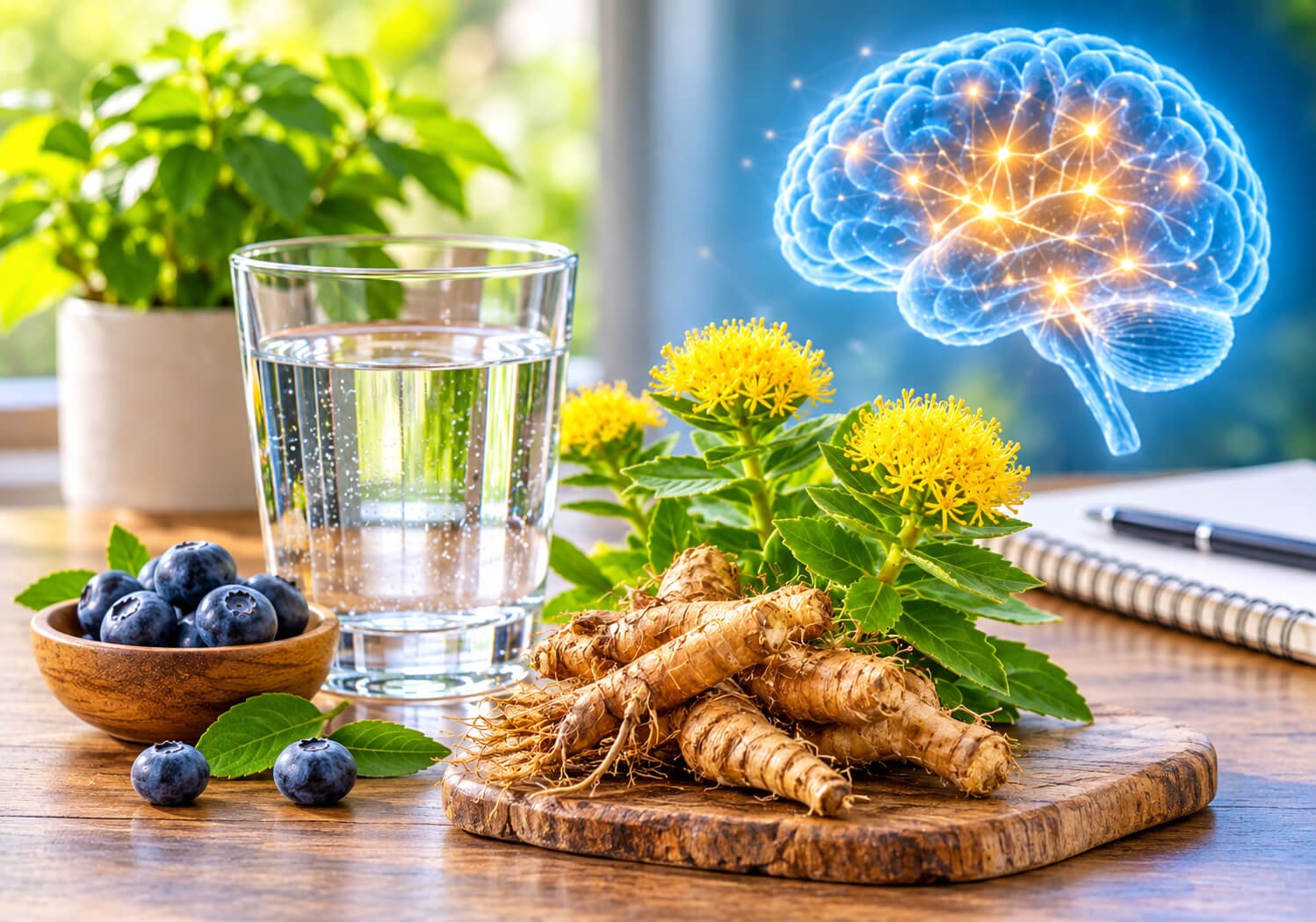
You sit down at your desk at 2 p.m., and your brain feels like it’s running through wet sand. You read the same paragraph three times. Your workout plan goes unread. That grinding, low-grade mental fog that creeps in after a long day of decisions, screens, and stress is what people call mental fatigue—and it’s not just “being tired.”
Rhodiola rosea supplements for mental fatigue and concentration have gained serious attention in both the supplement aisle and the peer-reviewed literature. This hardy arctic herb, used for centuries in Scandinavian and Russian folk medicine, is now classified as an adaptogen—a substance that may help the body adapt to physical and psychological stress. But does the science back up the hype?
After reviewing the available clinical trials, systematic reviews, and pharmacology data, the short answer is: the evidence is promising but still maturing. A handful of small-to-moderate randomized controlled trials point to measurable improvements in attention, working memory, and stress resilience. The research is not yet large enough to make sweeping claims, but the signal is consistent enough to take seriously if you’re dealing with chronic mental exhaustion.
Quick Answer: Rhodiola rosea is an adaptogenic herb that may help reduce mental fatigue and support concentration by modulating the HPA stress axis and supporting neurotransmitter balance. Small RCTs show modest improvements in attention and cognitive performance, especially under stress. Typical studied doses range from 200–600 mg of a standardized extract daily. Talk to your doctor before starting, especially if you take medications.
What Is Rhodiola Rosea and How Does It Work?
The Herb in a Nutshell
Rhodiola rosea is a perennial plant that grows in cold, high-altitude regions of northern Europe, Asia, and North America. The root and rhizome (the underground stem) are the parts used in supplements. In traditional medicine, it was taken to combat “asthenia”—a general term for weakness and exhaustion—dating back to at least the 15th century in Russian and Scandinavian texts.
The Active Compounds You Should Look For
Two groups of molecules carry most of the pharmacological activity:
- Rosavins (a type of cinnamyl alcohol glycoside) – typically standardized at 3% or higher in quality extracts.
- Salidroside (also called rhodiolose) – typically standardized at 1% or higher.
The two most-studied commercial extracts are SH-R5 (3% rosavins / 1% salidroside) and Rosaron (2.88% rosavins / 3% salidroside). When you see a supplement label, check for these standardization percentages. An extract that simply says “Rhodiola root 300 mg” without specifying rosavin or salidroside content is a red flag.
The Mechanism: HPA Axis and Neurotransmitters
The primary pathway researchers investigate is the hypothalamic-pituitary-adrenal (HPA) axis—the body’s central stress-response system. Chronic stress keeps cortisol (the “stress hormone”) elevated, which over time impairs prefrontal cortex function, shrinks hippocampal volume, and drains mental stamina.
Rhodiola rosea appears to act as a mild neuroadaptogen: it doesn’t blunt the stress response entirely (which would be counterproductive) but helps normalize it. In laboratory models, salidroside has shown antioxidant and anti-inflammatory effects in neural tissue, and it may influence the availability of dopamine, serotonin, and norepinephrine—the three neurotransmitters most tied to alertness, mood, and focus.
A 2011 double-blind, placebo-controlled trial by Olsson, von Schacky, and Pappas found that 285 mg of SH-R5 extract taken daily for 28 days improved cognitive performance in healthy medical students during a high-stress examination period, compared with placebo, as reported in the Journal of Alternative and Complementary Medicine. The effect was modest but statistically significant on measures of attention and mental fatigue.
What the Research Shows on Mental Fatigue
Defining “Mental Fatigue” in a Lab
Before we look at results, it helps to know what researchers actually measured. In the rhodiola literature, mental fatigue is typically assessed through:
- Subjective scales (e.g., the Visual Analog Scale for tiredness, the Profile of Mood States)
- Objective cognitive tests (reaction time, digit-symbol substitution, Stroop test)
- Physiological markers (cortisol levels, heart-rate variability)
This matters because a supplement might reduce how tired you feel without actually improving your processing speed, or vice versa.
Key Findings
- A 2012 randomized, double-blind study (Brown et al.) examined 105 healthy adults who received 288 mg of a standardized rhodiola extract (Rosaron) or placebo for 4 weeks. Participants completed cognitive tasks both in a rested state and after a simulated stressor (a public speaking task). The rhodiola group showed significantly less decline in attention and working memory under stress compared to placebo.
- A 2019 systematic review and meta-analysis in the Journal of Ethnopharmacology summarized multiple RCTs and concluded that rhodiola rosea “may have beneficial effects on stress-related fatigue and cognitive performance,” while noting that sample sizes were generally small (n < 200) and study durations short (4–12 weeks).
- The National Center for Complementary and Integrative Health (NCCIH), part of the NIH, lists rhodiola among herbal products with “some evidence” for reducing fatigue and improving mental performance, while cautioning that “more research is needed.” You can read their summary at NCCIH’s Rhodiola page.
What the Research Does Not Show Yet
No large-scale trial (n > 500) has been completed. There are no head-to-head comparisons of rhodiola against prescription stimulants or against other adaptogens like ashwagandha or panax ginseng in the same study. The existing data come mostly from healthy young adults (20–40 years old), so we cannot extrapolate confidently to older populations, clinical depression, or ADHD.

What the Research Shows on Concentration and Cognitive Performance
Attention and Focus
The most replicated finding across studies is a small but measurable improvement in sustained attention—the ability to keep your eyes and mind on a task without drifting. In the Olsson 2011 study, the rhodiola group scored higher on a continuous performance task (a computerized version of “spot the target”) during exam weeks. The effect size was small (Cohen’s d ≈ 0.3), which in practical terms means a slight edge, not a dramatic transformation.
Working Memory
Working memory is the “mental scratchpad” you use to hold a phone number in mind while dialing, or to track multiple instructions at the gym. The Brown 2012 study measured working memory with a digit-span task and found that the rhodiola group maintained performance better after a stress induction than the placebo group. This suggests the herb’s benefit may be most noticeable when you are already under pressure, not when you’re well-rested.
Performance Under Stress vs. Rest
This is a critical distinction. Most studies show that rhodiola rosea’s cognitive benefits are stress-dependent. If you’re well-slept, well-fed, and low-stress, you may notice little difference. The herb seems to help most when the HPA axis is already activated—during exam periods, high-workload weeks, or after poor sleep.
Coach’s Tip: Think of rhodiola rosea as a “stress buffer,” not a stimulant. It won’t give you the sharp, immediate lift of a cup of coffee. The best use case I see in practice is the client who’s been grinding through a 10-hour workday, a heavy training block, or a family crisis and feels their mental sharpness slipping. Pair it with the fundamentals—sleep, protein, hydration—and the herb may help you hold your concentration a few more hours without the crash.
Dosage, Form, and Timing
Standardized Extract vs. Raw Root Powder
- Standardized extract (capsule or tablet): This is what the clinical trials used. Look for a label that states the percentage of rosavins and salidroside. The SH-R5 and Rosaron extracts are the most studied.
- Raw root powder or tincture: Less studied, less consistent in active compound levels. You can’t verify potency from the label. I generally steer clients toward standardized extracts for reproducibility.
Dosage Ranges Used in Research
| Goal (as studied) | Dose | Duration | Notes |
| Mental fatigue / stress resilience | 200–680 mg SH-R5 (3% rosavins / 1% salidroside) | 4–12 weeks | Split into 1–2 doses |
| Cognitive performance under stress | 288–600 mg Rosaron (2.88% rosavins / 3% salidroside) | 4 weeks | Taken in the morning |
| General adaptogenic support | 200–300 mg standardized extract | 8+ weeks | Lowest studied dose |
A common practical starting point is 200 mg of a standardized extract in the morning, with an optional second 100–200 mg dose early afternoon if you need a midday focus boost. Avoid taking it within 4–6 hours of bedtime, as some users report mild restlessness.
When to Take It
- Morning (with or without food): Best for daytime focus and cognitive tasks.
- Early afternoon (before 2 p.m.): Useful if your fatigue peaks mid-afternoon.
- Avoid late evening: May interfere with sleep in sensitive individuals.
You can also learn more about layering adaptogens into a daily routine in our guide on adaptogens and cortisol management.
How to Choose a Quality Rhodiola Rosea Supplement
Buyer’s Checklist
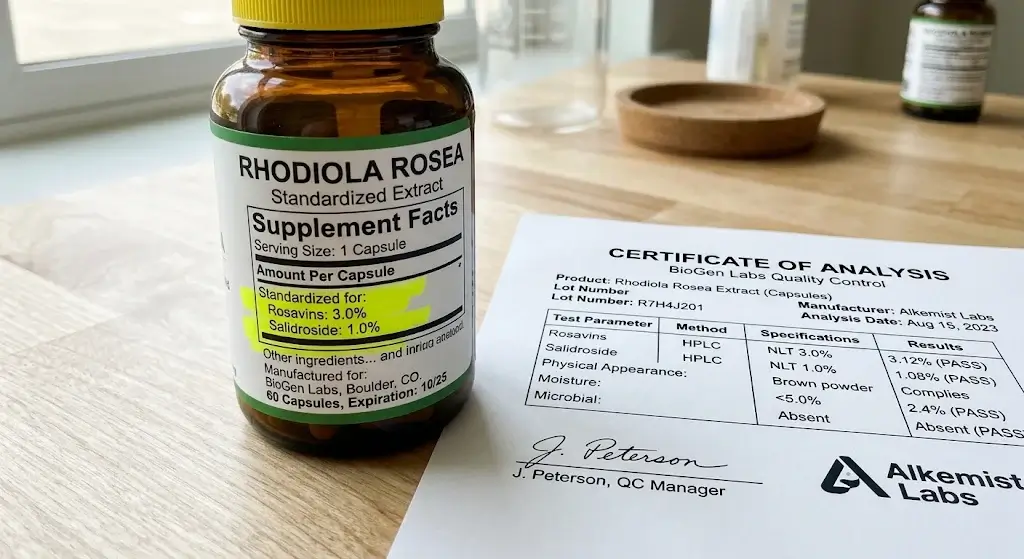
- Standardization stated on the label. Look for “3% rosavins / 1% salidroside” (SH-R5 profile) or “2.88% rosavins / 3% salidroside” (Rosaron profile). If it just says “Rhodiola rosea root extract 300 mg,” put it back.
- Third-party testing. A reputable brand will publish a Certificate of Analysis (CoA) from an independent lab (e.g., USP, NSF, or a university lab) confirming heavy-metal and microbe levels.
- No unnecessary fillers. Avoid products loaded with proprietary blends where you can’t see individual ingredient amounts.
- Capsule or tablet form. Easier to dose accurately than powders.
- Root and rhizome only. The active compounds are concentrated in the underground parts. Extracts from the aerial (above-ground) parts are weaker.
Red Flags
- “100% natural” with no standardization data
- Doses below 100 mg of extract (unlikely to reach the studied range)
- No manufacturer contact info or CoA available
- Claims like “cures ADHD” or “replaces Adderall”
If you’re new to evaluating supplement labels, our guide on how to evaluate ingredients in supplements walks through the same label-reading framework.
Safety, Side Effects, and Interactions
Rhodiola rosea is generally well-tolerated in the studied dose range. The most commonly reported side effects in clinical trials are mild:
- Dry mouth
- Mild headache
- Light dizziness
- Occasional stomach upset
- Rare reports of insomnia (usually when taken in the evening)
Who Should Be Cautious
- Pregnant or breastfeeding women: Not enough safety data. Avoid until more research exists.
- People on SSRIs, MAOIs, or other psychiatric medications: Rhodiola may influence serotonin and dopamine pathways. The interaction risk is theoretical but unquantified. Check with your prescribing doctor before combining.
- People with bipolar disorder: Theoretical risk of triggering a manic episode due to mild dopaminergic effects.
- People on blood thinners (warfarin, apixaban): Theoretical interaction; no robust data.
- Surgical patients: Stop rhodiola at least two weeks before any scheduled surgery, as with most herbal supplements.
Common Mistake: Stacking rhodiola with high-dose caffeine (400+ mg) and a pre-workout stimulant, then wondering why you feel jittery and can’t sleep. The herb is an adaptogen, not a stimulant. If you’re already running on 3–4 cups of coffee, adding rhodiola on top can push your sympathetic nervous system too far. Start with the herb alone for 1–2 weeks before layering in other compounds.
The NCCIH advises that “the safety of rhodiola in long-term use is not well established,” and recommends consulting a healthcare provider before starting, particularly if you have a chronic condition or take regular medications.
How to Pair Rhodiola with Other Strategies for Mental Performance
No supplement fixes a 5-hour sleep night or a diet of fast food. If your mental fatigue is chronic, rhodiola is a support, not a solution. Here’s how I think about layering it:
- Sleep first. Aim for 7–9 hours. Poor sleep is the single biggest driver of the kind of brain fog people hope a pill will fix. Our article on how sleep affects metabolism and weight management covers the hormonal cascade that starts with a bad night’s rest.
- Protein and hydration at every meal. A 20-gram (70-g) protein serving and 16–20 oz (470–590 ml) of water per hour during active work or training support stable blood glucose and reduce the “3 p.m. crash.” You can read more about nutrients that support normal energy metabolism for a deeper dive.
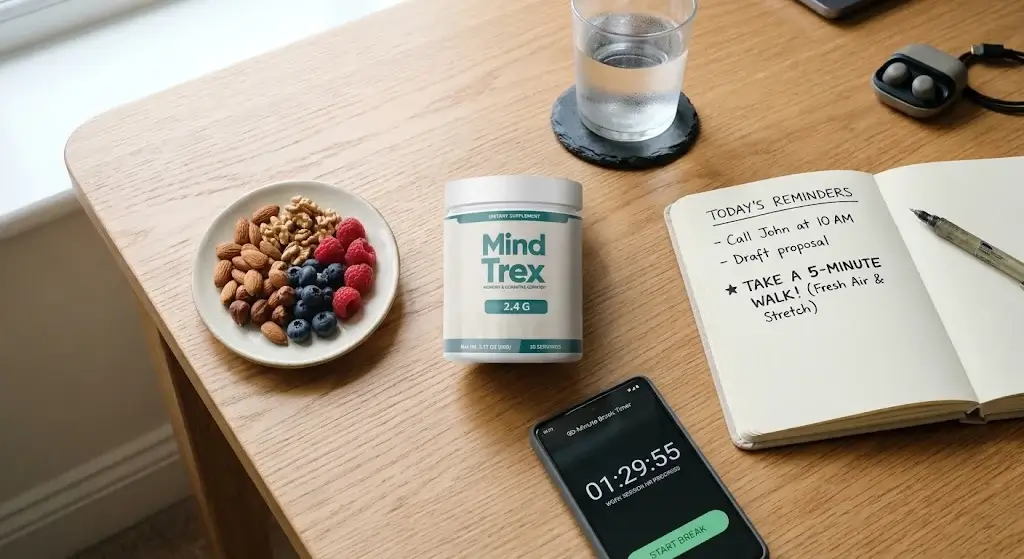
- Movement breaks. A 5-minute walk every 90 minutes at a desk resets attention better than a third coffee. If you’re building a routine, our guide on how to improve daily energy without caffeine has practical, low-barbell-free ideas.
- Consider complementary compounds. Some clients do well pairing rhodiola with L-theanine (100–200 mg) for smoother focus, or L-tyrosine (500–2,000 mg) during high-demand periods. Our breakdown of how L-tyrosine supports energy explains the dopamine precursor pathway.
- Cycle, don’t run forever. There’s no strong evidence you must cycle rhodiola, but many practitioners suggest 6–8 weeks on, 1–2 weeks off, to maintain sensitivity and give your HPA axis a baseline reset.
For a broader look at natural strategies to build mental stamina, see our article on how to increase energy and stamina naturally.
FAQ
Does rhodiola rosea actually help with focus and concentration?
Research from small RCTs suggests a modest improvement in sustained attention and working memory, particularly under stress. The effect is real but subtle—think “slightly sharper,” not “laser-focused.” It works best when paired with adequate sleep, nutrition, and regular movement.
How much rhodiola rosea should I take for mental fatigue?
Clinical trials most commonly used 200–680 mg of a standardized extract (SH-R5 or Rosaron) per day, split into one or two doses. A practical starting point is 200 mg in the morning. Do not exceed 600–700 mg without medical guidance.
What time of day should I take rhodiola rosea?
Take it in the morning or early afternoon (before 2 p.m.) with or without food. Avoid taking it within 4–6 hours of bedtime, as some users report mild restlessness or difficulty falling asleep.
How long does rhodiola rosea take to work for concentration?
Most studies measured effects after 2–4 weeks of daily use. You may notice a subtle difference in 10–14 days, but the full adaptogenic effect on the HPA axis likely builds over 4–8 weeks. It is not an acute “take-and-feel-it-in-20-minutes” supplement.
Is rhodiola rosea safe to take daily?
In the studied dose range (200–680 mg of standardized extract), it is generally well-tolerated for up to 12 weeks. Long-term safety data beyond 12 weeks are limited. If you take psychiatric medications, blood thinners, or have bipolar disorder, talk to your doctor first.
Can rhodiola rosea help with brain fog after a long workday?
It may help prevent the afternoon dip if taken in the morning, but it is unlikely to reverse severe brain fog caused by poor sleep, dehydration, or low blood sugar. Address those fundamentals first; the herb is a support layer, not a fix.
Conclusion: A Cautiously Optimistic Tool in Your Mental-Performance Kit
Rhodiola rosea supplements for mental fatigue and concentration are not a magic pill, and anyone selling them as one is overselling. But the clinical evidence—while still limited in scale—points in a consistent direction: a standardized extract, taken at the right dose and at the right time, may help you hold your focus a little longer on the days when stress, workload, or poor sleep are pulling your cognitive performance down.
The herb works best as part of a broader strategy: protect your sleep, eat enough protein, move your body, manage your stress load, and then let the adaptogen do its modest, HPA-axis-buffering job. If you decide to try it, start at 200 mg of a well-standardized extract, give it 4 weeks, and track how you feel with a simple journal. And if you have any medical condition or take regular medications, run it by your doctor before you add another capsule to the routine.