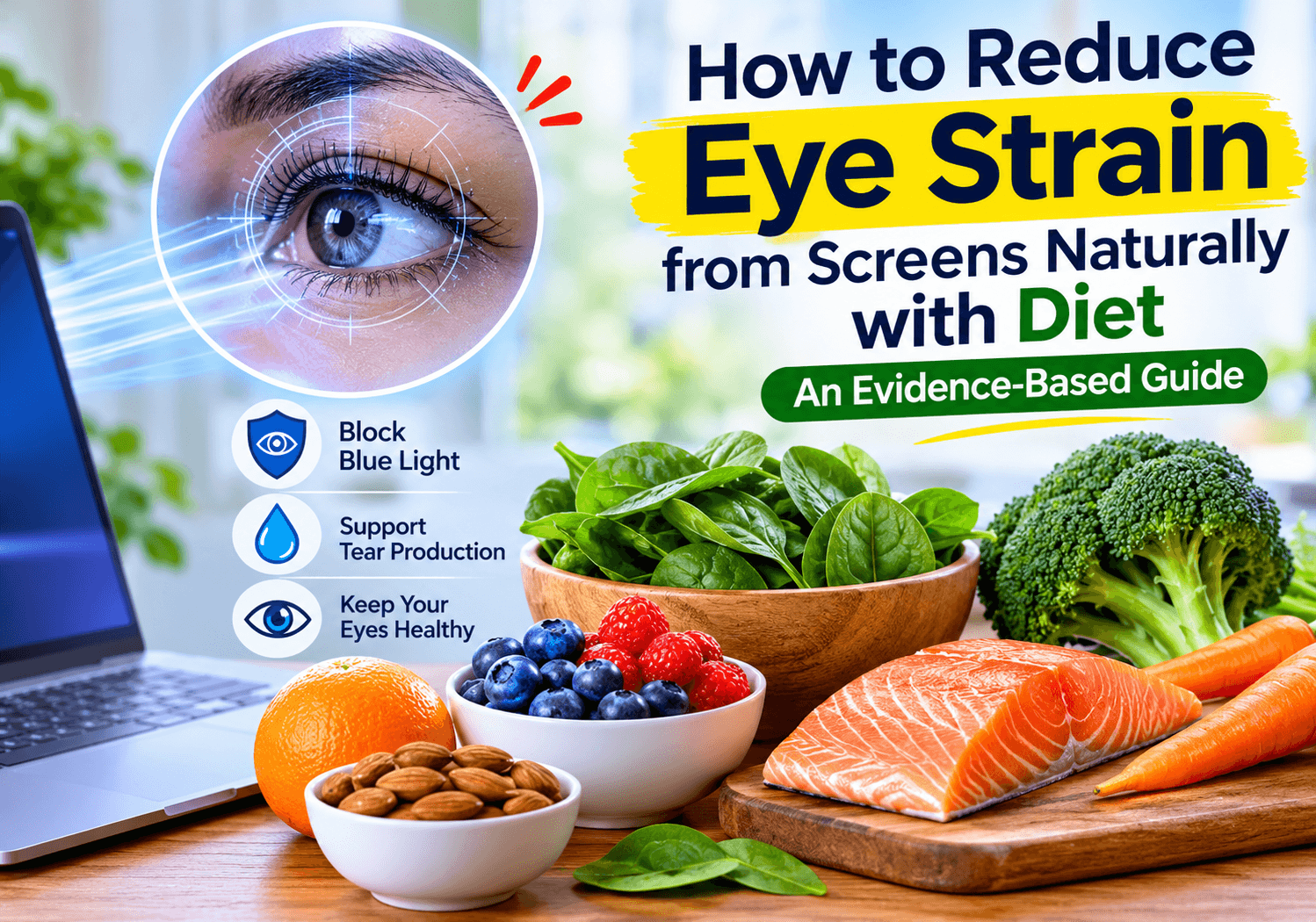
Staring at a monitor all day leaves your eyes feeling dry, tired, and irritated. If you are wondering how to reduce eye strain from screens naturally with diet, you are not alone. Computer vision syndrome affects millions of remote workers, gamers, and students globally. While adjusting your monitor and taking screen breaks are essential, what you put on your plate plays a massive role in protecting your vision. Specific nutrients combat oxidative stress, support tear film stability, and filter harmful blue light. This guide breaks down the exact foods, portions, and habits you need to keep your eyes sharp and comfortable.
Quick Answer
To reduce eye strain from screens naturally with diet, prioritize foods rich in lutein, zeaxanthin, and omega-3 fatty acids. Eat 1 to 2 cups (240–480 ml) of leafy greens daily, consume fatty fish like salmon twice a week, and stay consistently hydrated. These nutrients filter blue light, reduce ocular inflammation, and support tear production, directly combating digital eye fatigue.
Understanding Digital Eye Strain and the Role of Nutrition
Digital eye strain, also known as computer vision syndrome, is a group of eye and vision-related problems that result from prolonged computer, tablet, e-reader, and cell phone use. The American Academy of Ophthalmology notes that symptoms include dry eyes, blurred vision, headaches, and neck pain. When you stare at a screen, your blink rate drops by up to 66%, leading to rapid tear evaporation.
Simultaneously, screens emit high-energy visible (HEV) blue light. While blue light is not proven to cause permanent retinal damage in typical doses, it contributes to visual fatigue and disrupts circadian rhythms. Nutrition steps in as a foundational defense mechanism. The eyes have a high metabolic rate and are constantly exposed to light-induced oxidative stress. Antioxidants and specific fatty acids accumulate in the macula and tear glands, acting as internal sunglasses and lubricants. Learning how to reduce eye strain from screens naturally with diet means feeding these protective structures exactly what they need to function under heavy digital loads.

Top Nutrients and Foods to Reduce Screen Fatigue
To build a resilient visual system, you must target specific biological pathways. Below are the eight most evidence-backed nutrients and the exact foods that deliver them.
1. Lutein and Zeaxanthin (Leafy Green Vegetables)
Lutein and zeaxanthin are carotenoids that concentrate in the macula, the central part of the retina. They act as a natural blue light filter, absorbing high-energy wavelengths before they can cause oxidative damage. The National Eye Institute highlights these compounds as critical for maintaining macular pigment density.
Best Food Sources:
- Spinach: 1 cup (240 ml) raw provides roughly 3.6 mg of lutein and zeaxanthin.
- Kale: 1 cup (240 ml) cooked delivers over 20 mg.
- Collard greens and Swiss chard are also exceptional sources.
Coach’s Application: Aim for at least 1 to 2 cups (240–480 ml) of dark leafy greens daily. Toss a handful of raw spinach into a morning smoothie; you will not taste it, but your eyes will get the protective pigments they need.
2. Omega-3 Fatty Acids (Fatty Fish)
Omega-3 fatty acids, specifically EPA and DHA, are vital structural components of the retina. They also regulate inflammation in the meibomian glands, which produce the oily layer of your tear film. A stable tear film prevents the rapid evaporation that causes dry, gritty eyes during long screen sessions. Clinical trials suggest that omega-3 fatty acids can improve tear production and reduce dry eye symptoms, though results can vary based on the severity of the condition.
Best Food Sources:
- Wild-caught salmon: A 3-ounce (85-gram) serving provides about 1.5 to 2 grams of EPA and DHA.
- Sardines and mackerel: Excellent, low-mercury alternatives.
- Chia seeds and walnuts: Plant-based ALA sources, though conversion to EPA/DHA is limited.
Coach’s Application: Consume fatty fish at least twice a week. If you are looking into broader health benefits, you might also explore how omega-3 fatty acids support overall hydration and inflammation control.
3. Vitamin A and Beta-Carotene (Orange Vegetables)
Vitamin A is essential for the formation of rhodopsin, a pigment in the retina that allows you to see in low-light conditions. A deficiency leads to xerophthalmia, a severe form of dry eye. Beta-carotene is a provitamin that your body safely converts into vitamin A as needed, preventing toxicity.
Best Food Sources:
- Sweet potatoes: One medium baked sweet potato (about 5 inches or 12.7 cm long) contains over 1,400 mcg of vitamin A.
- Carrots: One large carrot provides roughly 500 mcg.
- Butternut squash and cantaloupe.
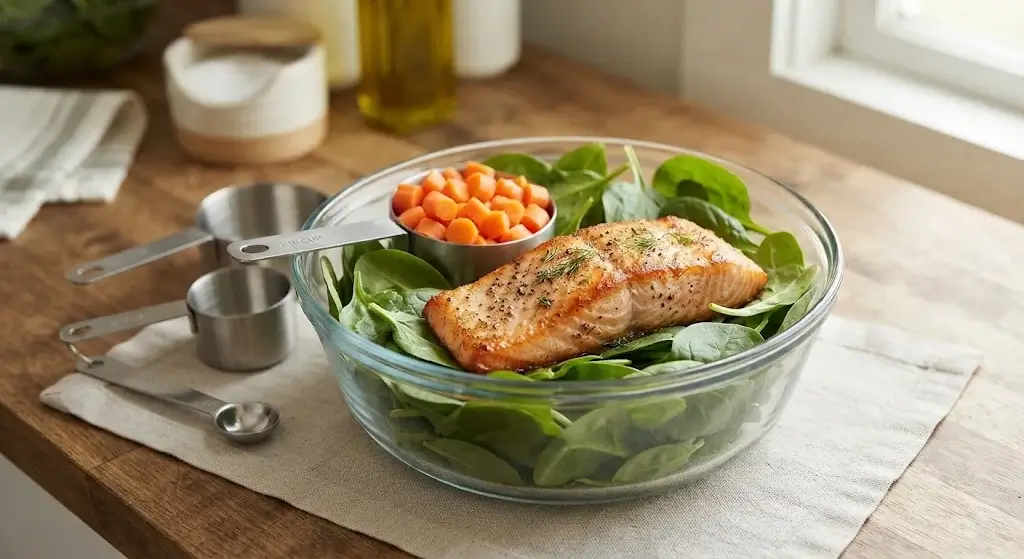
Coach’s Application: Roast a batch of sweet potato cubes (about 1 cup or 240 ml per serving) at the start of the week. Add them to salads or eat them as a snack to maintain steady vitamin A levels.
4. Vitamin C (Citrus and Berries)
The aqueous humor (the fluid in the front of the eye) has a higher concentration of vitamin C than almost any other fluid in the body. This potent antioxidant neutralizes free radicals generated by UV and blue light exposure. Research indicates that adequate vitamin C intake is linked to a lower risk of cataract formation and supports the health of ocular blood vessels.
Best Food Sources:
- Red bell peppers: 1 cup (240 ml) chopped contains about 190 mg of vitamin C.
- Oranges and grapefruit: One medium orange provides roughly 70 mg.
- Strawberries and broccoli.
Coach’s Application: Swap your mid-afternoon processed snack for a cup of sliced strawberries or a whole orange. This provides a hydration and antioxidant boost without the sugar crash.
5. Vitamin E (Nuts and Seeds)
Vitamin E protects the fatty acids in the retina from oxidation. Because the retina is rich in polyunsaturated fats, it is highly susceptible to oxidative damage. Vitamin E works synergistically with vitamin C and selenium to maintain cellular integrity in the eye.
Best Food Sources:
- Almonds: 1 ounce (28 grams), or about 23 almonds, provides 7.3 mg of vitamin E (roughly 50% of the daily value).
- Sunflower seeds: 1 ounce (28 grams) contains about 7.4 mg.
- Avocado and hazelnuts.
Coach’s Application: Keep a 1-ounce (28-gram) portion of mixed almonds and sunflower seeds at your desk. This serves as a crunchy, eye-protective snack that also helps you stop sugar cravings naturally during long work hours.
6. Zinc (Legumes and Meat)
Zinc is a trace mineral that transports vitamin A from the liver to the retina to produce melanin, a protective pigment in the eyes. The macula contains a high concentration of zinc, and deficiency is strongly linked to poor night vision and increased risk of age-related macular degeneration (AMD).
Best Food Sources:
- Oysters: The highest natural source, with just 3 ounces (85 grams) providing over 70 mg.
- Beef and pumpkin seeds: A 3-ounce (85-gram) serving of lean beef provides about 5 mg.
- Lentils and chickpeas: Excellent plant-based options, providing about 2.5 mg per cooked cup (240 ml).
Coach’s Application: Add a quarter-cup (60 ml) of pumpkin seeds to your morning oatmeal or yogurt. This is an easy, plant-forward way to boost your daily zinc intake.
7. Astaxanthin (Microalgae and Seafood)
Astaxanthin is a powerful keto-carotenoid that gives salmon and shrimp their pink color. It is unique because it can span the entire cell membrane, providing protection from both inside and outside the cell. Studies suggest astaxanthin reduces eye fatigue and improves the eye’s ability to focus, particularly after prolonged screen use.
Best Food Sources:
- Wild sockeye salmon: Contains significantly higher levels than farmed salmon.
- Trout and krill.
- Microalgae (Haematococcus pluvialis), often used in supplements.
Coach’s Application: If you struggle to get enough from food alone, an astaxanthin supplement may be considered, though whole food sources should always be your primary target for nutrient synergy.
8. Hydration and Water Intake
Dehydration directly reduces tear production, making digital eye strain feel significantly worse. Even mild dehydration (a 2% loss of body water) can impair cognitive function and exacerbate dry eye symptoms.
Best Sources:
- Plain water: Aim for at least half your body weight in pounds (kg) in ounces (ml) daily. For a 160 lb (72.5 kg) person, this is roughly 80 ounces (2.4 liters).
- Water-rich foods: Cucumbers, watermelon, and celery.
Coach’s Application: Keep a 32-ounce (950 ml) water bottle on your desk. Finish one by lunch and one by the end of the workday. If you need help managing hunger while increasing fluid intake, protein and fiber supplements can be paired with water for sustained fullness.

How to Build an Eye-Healthy Daily Meal Plan
Knowing the nutrients is only half the battle. You need a practical system to consume them daily. Below is a sample one-day meal plan designed to show you exactly how to reduce eye strain from screens naturally with diet.
| Meal | Food Items | Portion Size | Key Eye Nutrients |
| Breakfast | Spinach and mushroom omelet with 1 slice of whole-grain toast | 2 eggs, 1 cup (240 ml) spinach, 1 slice toast | Lutein, Zeaxanthin, Vitamin A, Zinc |
| Mid-Morning Snack | Orange and a small handful of almonds | 1 medium orange, 1 oz (28 g) almonds | Vitamin C, Vitamin E |
| Lunch | Mixed green salad with grilled chicken, avocado, and pumpkin seeds | 2 cups (480 ml) greens, 3 oz (85 g) chicken, 1/4 avocado, 1/4 cup (60 ml) seeds | Lutein, Vitamin E, Zinc, Omega-3 (ALA) |
| Afternoon Snack | Carrot sticks with hummus | 1 cup (240 ml) carrots, 2 tbsp (30 ml) hummus | Beta-Carotene, Vitamin E |
| Dinner | Baked wild salmon with roasted sweet potato and steamed broccoli | 4 oz (113 g) salmon, 1 medium sweet potato, 1 cup (240 ml) broccoli | Omega-3 (EPA/DHA), Vitamin A, Vitamin C |
This plan provides well over 20 mg of lutein/zeaxanthin, adequate omega-3s, and a full spectrum of ocular vitamins. It also aligns with broader health goals; for instance, maintaining stable blood sugar helps you increase energy and stamina naturally throughout your workday, preventing the afternoon slump that often leads to poor dietary choices.
Coach’s Tip: Maximizing Nutrient Absorption
Lutein, zeaxanthin, vitamin A, and vitamin E are all fat-soluble nutrients. This means your body cannot absorb them efficiently without dietary fat. Always pair your leafy greens or carrots with a healthy fat source, such as 1 tablespoon (15 ml) of olive oil, a quarter of an avocado, or a handful of nuts. A plain spinach salad will not deliver the same ocular benefits as one dressed with olive oil.
Common Mistake: Relying Solely on Supplements
Many people try to fix digital eye strain by buying a multivitamin and ignoring their actual meals. While supplements may support weight management safely or fill minor gaps, they cannot replicate the complex synergy of phytonutrients, fiber, and water found in whole foods. Supplements should be an addition to a solid diet, not a replacement for one. Furthermore, if you are trying to get the best vitamins for energy and eye health, whole foods provide co-factors that isolated pills lack.
Lifestyle Synergies: Beyond Diet
Diet provides the biological building blocks, but you must also manage the physical environment. Nutrition cannot fully compensate for terrible screen habits. Implement these three rules alongside your new eating plan:
- The 20-20-20 Rule: Every 20 minutes, look at an object at least 20 feet (6 meters) away for 20 seconds. This relaxes the ciliary muscle in the eye, which locks up when focusing on a near object for too long.
- Optimize Screen Distance and Height: Position your monitor about 20 to 28 inches (50 to 70 cm) away from your face. The top of the screen should be at or slightly below eye level so you are looking slightly downward, which reduces the exposed surface area of your eye and slows tear evaporation.
- Manage Ambient Lighting: Avoid glare on your screen. Do not work in a pitch-black room with a bright monitor; ensure your room lighting is roughly half as bright as typical office lighting to reduce contrast strain.
Safety Notes and When to See a Professional
While adjusting your diet is highly safe, be mindful of a few caveats.
- Vitamin A Toxicity: Do not exceed 3,000 mcg (10,000 IU) of preformed vitamin A (retinol) daily from supplements, as it can be toxic to the liver and bones. Beta-carotene from food does not carry this risk.
- Blood Thinners: If you take blood-thinning medication, consult your doctor before drastically increasing vitamin K-rich foods (like kale) or high-dose omega-3 supplements, as they can affect clotting.
- Persistent Symptoms: If you experience chronic pain, severe light sensitivity, or sudden vision changes, see an optometrist or ophthalmologist immediately. Diet is a preventive and supportive tool, not a cure for underlying ocular disease.
FAQ
What foods help with eye strain from screens?
Foods rich in lutein, zeaxanthin, and omega-3 fatty acids are best. Focus on dark leafy greens like spinach and kale, fatty fish like salmon, eggs, and colorful vegetables like carrots and bell peppers to filter blue light and support tear production.
Can diet improve computer vision syndrome?
Yes, diet can significantly improve the symptoms of computer vision syndrome. While it does not change the physical act of staring at a screen, nutrients like omega-3s and vitamin A improve tear film stability and reduce ocular inflammation, directly lessening dryness and fatigue.
How much lutein do I need for eye health daily?
Research, including data from the National Eye Institute, suggests that 10 mg of lutein and 2 mg of zeaxanthin daily are optimal for supporting macular pigment density and protecting against light-induced oxidative stres.
Does drinking water help with digital eye strain?
Absolutely. Systemic hydration is required for the lacrimal glands to produce adequate tears. Even mild dehydration reduces tear volume, making the eyes feel dry, gritty, and irritated during prolonged screen use.
Can omega-3 reduce screen fatigue?
Yes. Omega-3 fatty acids, particularly EPA and DHA, help regulate inflammation in the meibomian glands. This improves the quality of the oily layer of your tears, preventing rapid evaporation and reducing the dry, fatigued feeling associated with screen use.
What is the best diet for eye health in 2026?
The best diet for eye health is a whole-food, Mediterranean-style diet. It emphasizes daily leafy greens, weekly fatty fish, abundant colorful fruits and vegetables, nuts, seeds, and consistent water intake, providing a complete spectrum of ocular-protective nutrients.
Conclusion
Learning how to reduce eye strain from screens naturally with diet is one of the most empowering steps you can take for your long-term visual health. By consistently consuming lutein, zeaxanthin, omega-3 fatty acids, and essential vitamins, you provide your eyes with the internal armor they need to withstand hours of digital exposure. Pair this nutrient-dense eating pattern with the 20-20-20 rule, proper monitor placement, and adequate hydration. Start by adding one extra serving of leafy greens and one serving of fatty fish to your weekly routine. Your eyes will feel the difference, and your overall health will thrive alongside them.