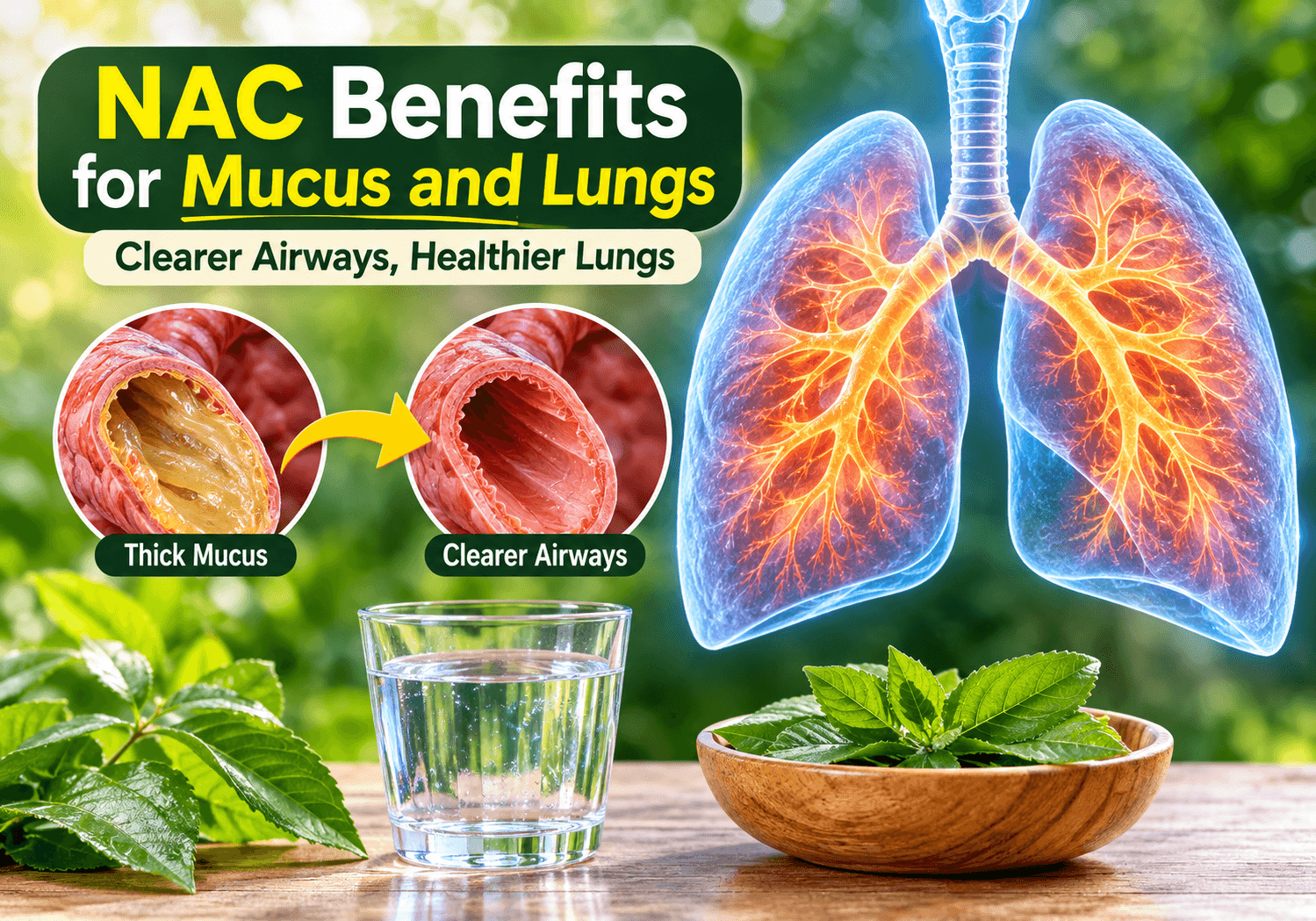
Thick, stubborn mucus slows down everything from morning breathing to heavy conditioning sessions. Understanding nac benefits for mucus and lungs gives active adults and health-conscious individuals a practical, science-backed tool for supporting clearer airways and resilient respiratory tissue.
N-acetylcysteine (NAC) is a stable, supplemental form of the amino acid L-cysteine that works directly inside the respiratory tract. Unlike standard over-the-counter decongestants that merely dry out nasal passages, NAC alters the physical structure of mucus while replenishing your body’s primary cellular antioxidant.
Whether you deal with seasonal airway congestion, lingering phlegm after winter respiratory bugs, or simply want to protect your lungs during outdoor cardio, knowing how to evaluate and dose NAC properly makes all the difference. Always check with your doctor or a qualified healthcare provider before starting any new supplement, especially if you have an existing lung condition or take prescription medications.
Quick Answer: What Are the Main NAC Benefits for Mucus and Lungs?
Research indicates that nac benefits for mucus and lungs center on two distinct mechanisms. First, NAC acts as a direct mucolytic by breaking chemical bonds in thick phlegm, making it thinner and easier to cough up. Second, it serves as a building block for glutathione, your lungs’ primary antioxidant that defends delicate airway tissue against inflammation and oxidative stress.
What Is N-Acetylcysteine (NAC) and How Does It Work in the Body?
To understand why N-acetylcysteine is so widely studied for pulmonary support, you have to look at its chemistry. NAC is the acetylated form of L-cysteine, a semi-essential amino acid found in high-protein foods like poultry, eggs, and legumes.
Attaching an acetyl group to cysteine makes the molecule stable enough to survive digestion and enter your bloodstream intact. Once absorbed, NAC travels to your liver, kidneys, and respiratory tract, where it performs two critical jobs.
First, NAC acts directly on respiratory secretions in the airways. Second, it enters cells and converts into L-cysteine, which is the rate-limiting ingredient required to synthesize glutathione (GSH).
Glutathione is often called the body’s master antioxidant. Your lungs are constantly exposed to oxygen, airborne pollutants, allergens, and exercise-induced free radicals, meaning respiratory tissues burn through glutathione faster than almost any other organ.
Detailed Explanation: How NAC Clears Mucus and Protects Lung Tissue
Clinical research published over the past four decades highlights two primary pathways behind nac benefits for mucus and lungs. Rather than masking symptoms, this compound addresses both the mechanical thickness of phlegm and the underlying cellular stress inside bronchial tubes.
1. Direct Mucolytic Action: Breaking Down Thick Phlegm
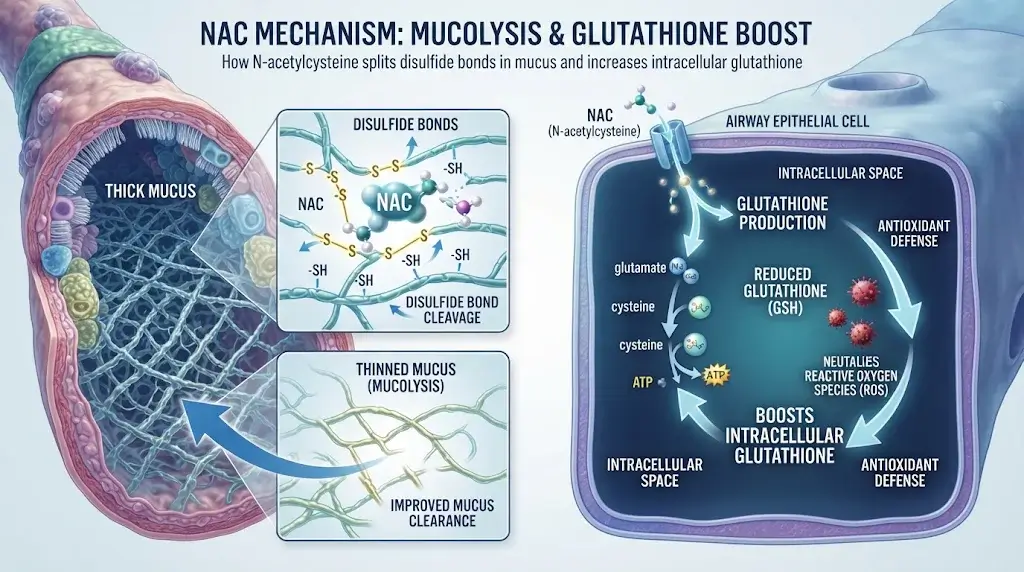
Healthy airways rely on a thin, slippery layer of mucus to trap dust, pollen, and microbes so microscopic hair-like structures called cilia can sweep them upward and out of the throat. When airways become irritated or inflamed, goblet cells produce excess mucin proteins that cross-link together via sulfur-to-sulfur connections known as disulfide bonds.
Those disulfide bonds turn normal, watery secretions into thick, glue-like phlegm that cilia cannot move. According to pharmacological reviews indexed by the National Center for Biotechnology Information (NCBI), NAC contains a free sulfhydryl group that directly cleaves those disulfide bonds in mucin.
When those chemical bridges break apart, the long protein chains fragment into smaller pieces. As a result:
- Sputum viscosity drops: Thick, sticky phlegm becomes noticeably thinner and more fluid.
- Mucociliary clearance improves: Your cilia can effectively sweep thinned secretions out of the bronchial tubes.
- Coughs become more productive: Instead of exhausting, dry hacking fits, coughing clears trapped mucus with less physical strain on your ribcage and diaphragm.
2. Replenishing Glutathione for Cellular Lung Defense
Thinning mucus solves the immediate mechanical problem, but oxidative stress drives ongoing airway irritation. Every breath brings oxygen and environmental particles into contact with delicate alveolar membranes, generating unstable molecules called reactive oxygen species (ROS).
In a healthy respiratory system, intracellular glutathione neutralizes those free radicals before they damage lung cells. However, chronic airway irritation, pollution exposure, smoking history, and intense endurance training can deplete local glutathione stores.
Research published in the European Respiratory Journal demonstrates that oral N-acetylcysteine reliably raises intracellular cysteine and glutathione levels in bronchial tissue. By restoring antioxidant capacity, NAC helps calm localized oxidative stress and supports healthier airway lining over time.
3. Modulating Inflammatory Pathways in the Bronchi
Thick mucus and oxidative stress feed into each other in a frustrating cycle. Irritated airways produce more mucus, and stagnant mucus traps irritants that trigger further localized inflammation.
Clinical studies hosted on PubMed Central (PMC) suggest that NAC helps downregulate certain pro-inflammatory signaling molecules, including nuclear factor-kappa B (NF-κB), inside airway epithelial cells. While NAC is not an anti-inflammatory drug like a corticosteroid inhaler, this secondary calming effect supports smoother airflow and less bronchial reactivity during recovery.
4. Supporting Respiratory Endurance and Recovery for Active Adults
From a strength and conditioning perspective, your aerobic engine is only as strong as your ability to exchange oxygen and clear carbon dioxide. When your airways are bogged down by seasonal congestion or mild bronchial irritation, breathing mechanics suffer.
Athletes with congested upper or lower airways often default to shallow chest breathing, which fatigues the accessory respiratory muscles in the neck and shoulders. Additionally, heavy endurance blocks—such as running 5 miles (8 km) in cold air or high-pollen environments—increase airway oxidative stress.
By supporting clearer bronchial passages and maintaining glutathione reserves, NAC may help active individuals maintain cleaner breathing mechanics and recover faster from high-ventilation training sessions. For more on how targeted nutrients support cellular energy and recovery, explore our guide on evaluating supplement ingredients.
Coach’s Tip: Think of NAC as a helper for your respiratory plumbing, not a magic switch. Even the best mucolytic cannot thin mucus effectively if you are dehydrated. Whenever you take NAC, pair each capsule with at least 8 to 12 ounces (240 to 350 ml) of plain water so your body has the fluid volume needed to turn sticky secretions into clear, movable mucus.
NAC Delivery Forms and Clinical Dosage Comparison
Not all N-acetylcysteine products work the same way or deliver the same bioavailability. Depending on whether you are using an over-the-counter dietary supplement or a clinician-prescribed medical preparation, dosing and absorption vary significantly.
| Form of N-Acetylcysteine | Typical Dosage Range | Primary Use Case | Absorption & Speed of Action | Key Practical Notes |
| Oral Capsules / Tablets | 600 mg once or twice daily (600–1,200 mg total) | Daily antioxidant support, mild-to-moderate mucus clearance | Absorbed via GI tract; peak blood levels in 1–2 hours; systemic glutathione boost takes days | Most accessible form; look for third-party tested brands to prevent oxidation |
| Effervescent Tablets | 600 mg dissolved in water, 1–2 times daily | Acute phlegm thinning and upper/lower airway hydration | Slightly faster gastric emptying than standard capsules; combined with water intake | Forces immediate hydration; often contains flavorings or mild sweeteners |
| Sustained-Release Tablets | 600–1,000 mg once or twice daily | Steady, all-day antioxidant and respiratory maintenance | Slower, gradual release over 6–8 hours to maintain stable plasma cysteine | Good option for sensitive stomachs; avoid splitting unless scored |
| Nebulized / Inhaled Solution | Prescribed medical dosing only (typically 10% or 20% solution) | Hospital or clinical management of severe, thick airway secretions | Acts directly on airway mucus within minutes; minimal systemic glutathione effect | Prescription only. Can trigger bronchospasm in asthma; smells strongly of sulfur |
How to Apply NAC Safely: A Practical Protocol for Lung and Mucus Support
Taking a supplement randomly rarely yields consistent results. In coaching practice, structured, trackable routines always outperform guesswork. If your doctor clears you to use N-acetylcysteine for respiratory support, follow these step-by-step guidelines to maximize nac benefits for mucus and lungs while minimizing stomach upset.
Step 1: Start With a Conservative Baseline Dose
Begin with 600 mg once daily for the first three to four days. Most clinical trials examining N-acetylcysteine dosage for lungs use between 600 mg and 1,200 mg per day, divided into one or two doses.
Starting at 600 mg lets you gauge how your digestive system responds before increasing the amount. Some people notice mild stomach rumbling or warmth if they jump straight to 1,200 mg on day one.
Step 2: Time Your Doses Around Meals and Breathing Demands
For general antioxidant and glutathione support, taking NAC on an empty stomach—about 30 minutes before breakfast—minimizes competition with other dietary amino acids for absorption. However, if you have a sensitive stomach, taking NAC alongside a light snack works well without noticeably blunting its mucolytic benefits.
If you are using NAC to manage daytime phlegm or prepare for outdoor cardio, take your first 600 mg dose in the morning. If your doctor recommends a second 600 mg dose, take it in the early afternoon rather than right before bed.
Because NAC loosens trapped mucus and encourages productive coughing, taking a dose right before lying flat can trigger annoying nighttime throat clearing as secretions mobilize.

Step 3: Pair NAC With Targeted Hydration and Airway Care
Supplements work best when paired with smart daily habits that support mucociliary clearance:
- Prioritize water intake: Aim for roughly half your body weight in pounds in ounces of water daily (for example, a 160 lb [72.5 kg] adult should target around 80 ounces [2.4 liters] of fluid, adjusting upward during heavy sweat sessions).
- Use nasal breathing during warm-ups: Breathing through your nose during the first 10 minutes of a workout warms, humidifies, and filters incoming air before it hits your bronchi.
- Add steam or a bedroom humidifier: Dry indoor air thickens respiratory secretions overnight. Keeping bedroom humidity between 40% and 50% helps NAC keep morning phlegm thin.
- Practice controlled diaphragmatic breathing: Spend 5 minutes post-workout doing slow nasal inhales (4 seconds) and long exhales (6 to 8 seconds) to fully ventilate the lower lobes of your lungs.
Step 4: Choose High-Quality, Properly Packaged Supplements
N-acetylcysteine contains sulfur, which gives raw NAC powder a distinct, slightly pungent “rotten egg” aroma. A mild sulfur smell when you open a bottle is completely normal and actually confirms the presence of active sulfhydryl groups.
However, NAC oxidizes easily when exposed to moisture and air. Follow these quality checks when shopping:
- Look for blister packs or tightly sealed opaque bottles: Individual foil blister packs protect capsules from humidity better than large tubs opened repeatedly in steamy bathrooms.
- Check for third-party verification: Select brands certified by independent organizations like USP, NSF International, or ConsumerLab to verify purity and accurate milligram potency.
- Inspect the capsules: Discard any capsules that appear discolored, speckled, or clumped together from moisture exposure.
Common Mistake: Taking an cough suppressant (antitussive) like dextromethorphan at the exact same time as NAC. NAC works by thinning mucus so you can clear it out of your lungs; a cough suppressant blocks the cough reflex needed to expel that loosened fluid. Combining them can leave thinned secretions pooling in your lower airways. Always check with a pharmacist or doctor before pairing NAC with over-the-counter cold or cough medicines.
NAC vs. Other Popular Respiratory and Mucus Supplements
When shopping for respiratory support, you will often see NAC sold alongside or compared against other natural compounds. Each ingredient targets a different mechanism in the respiratory tract.
| Supplement / Ingredient | Primary Mechanism | Best For | Key Limitations |
| N-Acetylcysteine (NAC) | Breaks disulfide bonds in mucin; boosts intracellular glutathione | Thick, stubborn phlegm and cellular antioxidant defense in the lungs | Mild sulfur odor; can cause mild GI upset in sensitive individuals |
| Guaifenesin (OTC Expectorant) | Increases water volume in respiratory secretions to thin mucus | Short-term acute chest congestion from colds | Offers zero antioxidant or glutathione support; short half-life (requires frequent dosing) |
| Direct Glutathione (GSH) | Provides preformed tripeptide antioxidant directly | General antioxidant support (especially liposomal forms) | Standard oral GSH breaks down heavily in the gut; does not directly cleave mucus disulfide bonds like NAC |
| Quercetin + Bromelain | Stabilizes mast cells (histamine response) and reduces sinus swelling | Seasonal allergy congestion and upper-airway histamine irritation | Does not directly thin thick bronchial mucus or raise lung glutathione |
| Mullein Leaf Extract | Traditional herbal demulcent that soothes irritated mucous membranes | Scratchy throat and dry bronchial irritation | Far less clinical trial data on sputum viscosity compared to NAC |
If you are comparing how different foundational nutrients support overall vitality and recovery, you can also read our breakdown of nutrients that support normal energy metabolism and how sleep impacts physical recovery.
Safety Notes, Side Effects, and Who Should Be Careful
While clinical trials generally show a strong safety profile for oral N-acetylcysteine at standard doses of 600 mg to 1,200 mg per day, no biologically active compound is right for everyone. According to the National Institutes of Health (NIH) Office of Dietary Supplements and clinical safety monographs on MedlinePlus, certain groups need extra caution.
Common Mild Side Effects
Most side effects are mild, dose-dependent, and resolve when reducing the dose or taking capsules with food:
- Nausea, mild stomach cramping, or heartburn
- Loose stools or mild diarrhea (more common above 1,800 mg daily)
- Mild headache or fatigue during the first few days
- Unpleasant sulfur taste or odor when burping
Who Should Consult a Doctor or Avoid NAC
Speak with your physician before taking NAC if any of the following apply to you:
- People with asthma: Although rare with oral supplements, inhaled NAC can trigger airway constriction (bronchospasm) in sensitive asthmatics. Even with oral NAC, individuals with moderate-to-severe asthma should introduce it only under medical supervision.
- Individuals taking nitroglycerin or blood pressure medications: NAC can enhance the blood-vessel-widening (vasodilatory) effects of nitroglycerin, potentially causing a sharp drop in blood pressure and severe headaches.
- Anyone on blood thinners or with bleeding disorders: Some evidence suggests NAC may slow blood clotting slightly. Stop taking NAC at least two weeks before any scheduled surgery.
- People with active stomach ulcers: Because NAC breaks down disulfide bonds in mucus, high oral doses could theoretically thin the protective mucus barrier lining your stomach wall.
- Pregnant or breastfeeding individuals: Clinical safety data for supplemental NAC during pregnancy and lactation is limited; use only if explicitly recommended by your OB-GYN.

Related Tips for Keeping Your Lungs Clear and Strong
Supplements work best when they reinforce strong daily habits. In addition to evidence-based nac benefits for mucus and lungs, consider integrating these practical respiratory habits into your weekly routine:
- Train your aerobic base consistently: Zone 2 cardio—such as brisk walking, cycling, or easy jogging for 30 to 45 minutes three times per week—improves capillary density around your alveoli and trains your diaphragm to work efficiently.
- Prioritize quality sleep for tissue repair: Overnight is when your body clears cellular debris and restores antioxidant enzymes. If poor rest is dragging down your recovery, review how sleep affects systemic recovery and hormone balance.
- Eat sulfur-rich whole foods alongside supplements: Broccoli, Brussels sprouts, garlic, onions, eggs, and lean poultry provide natural sulfur and amino acids that complement NAC’s glutathione-building pathway.
- Watch indoor air quality: Simple upgrades like running a HEPA air purifier in your bedroom and replacing HVAC filters every 60 to 90 days dramatically reduce the daily particulate load your lungs must trap and clear.
- Support metabolic and cellular resilience: Chronic systemic inflammation makes airway irritation worse. Building habits around natural energy and stamina support and improving daily energy without excess stimulants helps keep your immune and respiratory systems balanced.
Frequently Asked Questions (FAQ)
How does NAC clear mucus from the lungs?
N-acetylcysteine acts as a direct mucolytic agent. Its free sulfhydryl group breaks the chemical disulfide bonds that hold thick mucin proteins together in phlegm. By splitting these long protein chains into smaller fragments, NAC lowers mucus viscosity, making secretions thinner and much easier for your airways to sweep out.
What is the best NAC dosage for mucus and lung support?
Most clinical studies evaluating nac benefits for mucus and lungs use between 600 mg and 1,200 mg per day, typically taken as one 600 mg capsule once or twice daily. Starting with 600 mg in the morning with a full glass of water allows you to assess tolerance before adding a second dose.
How long does it take for NAC to thin mucus?
NAC begins interacting with respiratory secretions within 1 to 2 hours after oral ingestion as blood levels peak. However, noticeable relief from thick phlegm usually takes 2 to 5 days of consistent daily dosing combined with adequate water intake, while full intracellular glutathione replenishment builds over 1 to 2 weeks.
Can you take NAC every day for respiratory health?
Clinical trials lasting from 3 months up to 1 year indicate that daily oral doses of 600 mg to 1,200 mg are generally well tolerated by healthy adults. Still, you should review long-term daily supplement use with your doctor, especially if you take prescription medications or have underlying respiratory or digestive conditions.
What is the difference between NAC and glutathione for lungs?
Glutathione is the finished antioxidant inside your cells, whereas NAC is its stable amino acid precursor. Standard oral glutathione breaks down rapidly in the digestive tract and cannot directly thin phlegm. NAC survives digestion, raises internal lung glutathione levels efficiently, and directly breaks down thick mucus bonds in the airways.
When is the best time of day to take NAC for congestion?
Morning is usually the best time to take NAC for congestion, ideally 30 minutes before breakfast with 8 to 12 ounces (240 to 350 ml) of water. Taking it early supports daytime mucus clearance during normal upright activity. Avoid taking NAC right before bedtime, as loosened phlegm can trigger coughing when lying flat.
Conclusion
Understanding nac benefits for mucus and lungs gives you a clear, practical framework for supporting your respiratory system without relying on harsh stimulants or guesswork. By simultaneously breaking down stubborn disulfide bonds in thick phlegm and replenishing intracellular glutathione, N-acetylcysteine addresses both airway clearance and cellular antioxidant defense.
If you decide to add NAC to your routine, keep the fundamentals simple: start at 600 mg once daily, pair every dose with plenty of water, choose third-party tested capsules protected from moisture, and give the protocol several consistent days to work. Combined with steady aerobic conditioning, clean indoor air, and restorative sleep, smart nutritional support helps keep your breathing clear and resilient year-round.