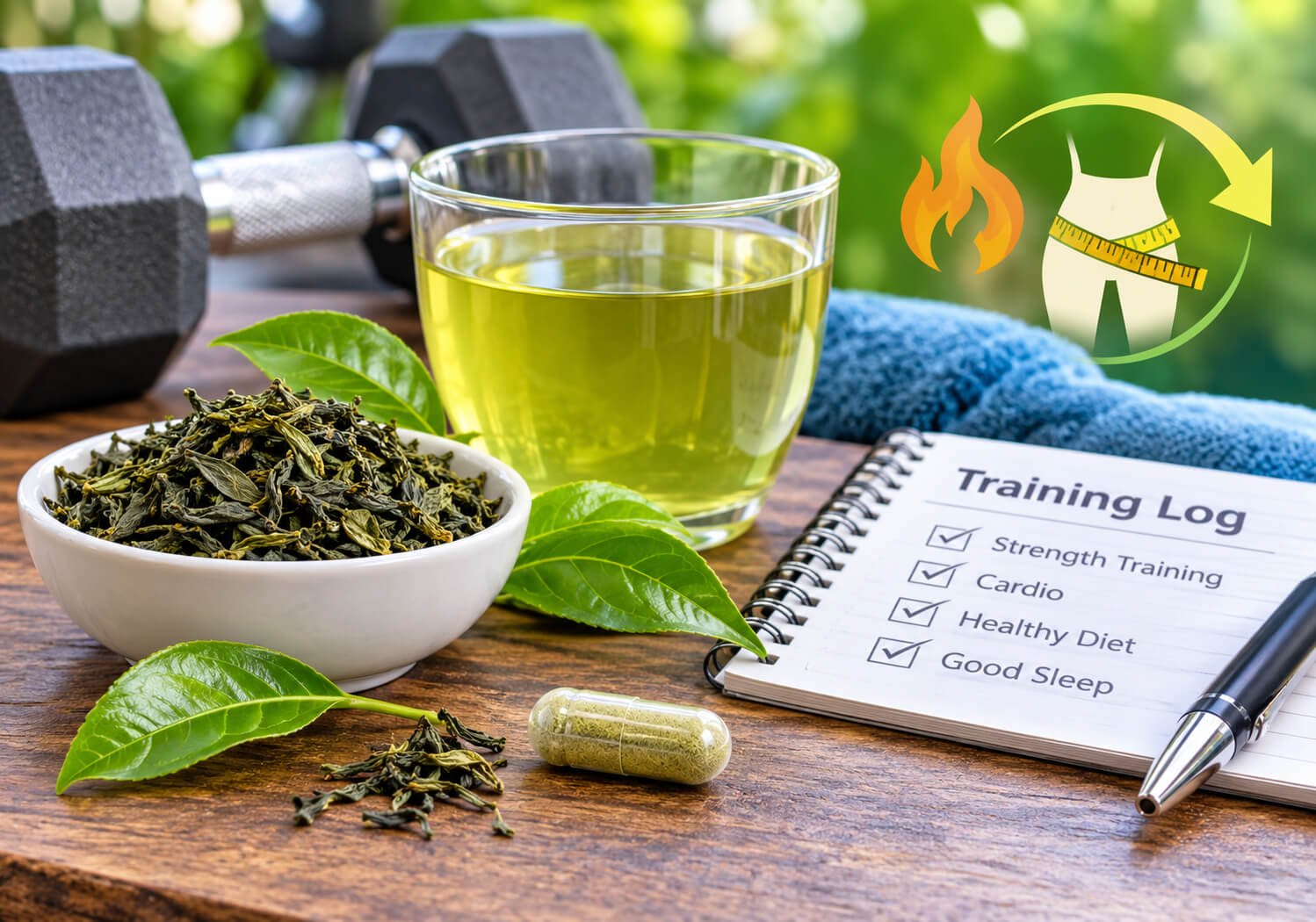
How Does Green Tea Extract Boost Metabolism and Fat Oxidation? A Coach’s Evidence-Based Guide
When clients hit a fat-loss plateau, they often ask if a concentrated supplement can reignite their progress. Understanding how does green tea extract boost metabolism and fat oxidation starts with looking past marketing hype and examining basic human biochemistry. Rather than acting like a magic fat melter, green tea extract works through specific enzymatic pathways that slightly increase daily calorie burn and shift your body toward using stored fat for fuel.
In my years coaching lifters and everyday fitness clients, I have seen supplements help only when training, protein intake, and sleep are already dialed in. If you take a capsule while eating in a calorie surplus and skipping workouts, nothing happens on the scale. However, when paired with structured resistance training and steady cardio, green tea extract can provide a modest, measurable nudge to your metabolic machinery.
Quick Answer: Green tea extract boosts metabolism and fat oxidation through two main compounds: epigallocatechin gallate (EGCG) and caffeine. EGCG slows the breakdown of norepinephrine, a hormone that signals fat cells to release stored energy, while caffeine amplifies this signal. Together, they modestly increase 24-hour energy expenditure and shift fuel usage toward fat.
Detailed Explanation: What the Research Says About Green Tea Extract
To grasp how does green tea extract boost metabolism and fat oxidation, you have to look at the concentrated bioactive compounds pulled from the leaves of the Camellia sinensis plant. Brewed green tea contains water, amino acids like L-theanine, and modest amounts of polyphenols. Green tea extract strips away the water and concentrates the polyphenols—specifically a group of antioxidants called catechins—into a standardized powder or capsule.
The most abundant and metabolically active catechin in this extract is epigallocatechin gallate, commonly shortened to EGCG. According to the NIH Office of Dietary Supplements, green tea extracts typically contain concentrated levels of both catechins and caffeine, which interact with your nervous system and cellular energy pathways.
The COMT and Norepinephrine Mechanism
Your body regulates fat breakdown largely through the sympathetic nervous system. When you exercise, fast, or experience mild cold, your nerve endings release a chemical messenger called norepinephrine (noradrenaline). Norepinephrine binds to receptors on fat cells (adipocytes), triggering a cascade called lipolysis that breaks stored triglycerides into free fatty acids so your muscles can burn them.
Normally, an enzyme called catechol-O-methyltransferase (COMT) rapidly degrades norepinephrine so your nervous system does not stay overstimulated. EGCG directly inhibits the COMT enzyme. By slowing down COMT, EGCG allows norepinephrine to linger longer in the synaptic cleft, extending the chemical signal that tells your fat cells to release stored energy.
The Synergy Between EGCG and Caffeine
While EGCG protects norepinephrine from being broken down, caffeine works upstream to increase the initial release of norepinephrine and block adenosine receptors that make you feel tired. Caffeine also inhibits enzymes called phosphodiesterases, which otherwise break down cyclic adenosine monophosphate (cAMP)—a crucial secondary messenger inside fat cells that keeps lipolysis running.
A foundational human study published in the American Journal of Clinical Nutrition via PubMed demonstrated that combining green tea extract with caffeine increased 24-hour energy expenditure by roughly 4% compared to a placebo, whereas an equivalent dose of caffeine alone did not produce the same thermogenic effect. Furthermore, the researchers observed a significant drop in the subjects’ 24-hour respiratory quotient (RQ), proving that their bodies were oxidizing a higher proportion of fat relative to carbohydrates.
Cellular AMPK Activation and Fat Oxidation
Beyond the nervous system, green tea catechins also influence cellular energy sensors inside skeletal muscle and liver tissue. Research indexed on PubMed Central (PMC) indicates that EGCG helps activate AMP-activated protein kinase (AMPK), an enzyme often described as the body’s metabolic master switch.
When AMPK turns on, it signals cells that energy is low. In response, the cell downregulates fat storage (lipogenesis) and upregulates beta-oxidation—the process where mitochondria transport fatty acids across their membranes and burn them to generate adenosine triphosphate (ATP). Understanding what is thermogenesis and how it affects metabolism makes it easier to see how these cellular shifts add up over weeks of consistent training.
How Much Does It Actually Increase Calorie Burn?
Honesty matters when setting expectations for fat loss. A meta-analysis in the International Journal of Obesity via PubMed found that catechin-caffeine mixtures produce a small, positive effect on weight loss and weight maintenance—averaging roughly 1.3 kg (about 2.9 lb) over a 12-week period compared to placebo groups.
In practical terms, a daily dose of green tea extract increases total daily energy expenditure by approximately 70 to 100 calories per day. You will not out-supplement a high-calorie diet with a 100-calorie bump. However, when you already maintain a disciplined 300- to 500-calorie daily deficit, that extra 10% to 15% increase in fat oxidation helps preserve training energy and nudges stubborn progress forward.
Comparison Table: Brewed Green Tea vs. Standardized Green Tea Extract
Many clients ask whether they should simply drink three mugs of tea a day instead of taking a capsule. While brewed tea offers great hydration and antioxidants, the concentration of active compounds differs substantially.
| Factor | Brewed Green Tea (1 Cup / 8 oz) | Standardized Green Tea Extract (1 Capsule) | Decaffeinated Green Tea Extract |
| Typical EGCG Content | 50 to 100 mg | 250 to 400 mg | 250 to 400 mg |
| Typical Caffeine Content | 25 to 45 mg | 0 to 50 mg (varies by brand) | Less than 2 to 5 mg |
| Thermogenic Effect | Minimal unless drinking 5+ cups daily | Modest, measurable increase in 24-hr burn | Lower than caffeinated versions |
| Fat Oxidation Impact | Mild support during fasted cardio | Noticeable shift in substrate oxidation | Subtle support via COMT inhibition alone |
| GI Tolerance | Very gentle on the stomach | Can cause nausea if taken completely fasted | Generally well tolerated with food |
| Best Use Case | Daily hydration and afternoon focus | Pre-workout fat oxidation and plateau breaking | Evening workouts or caffeine-sensitive lifters |
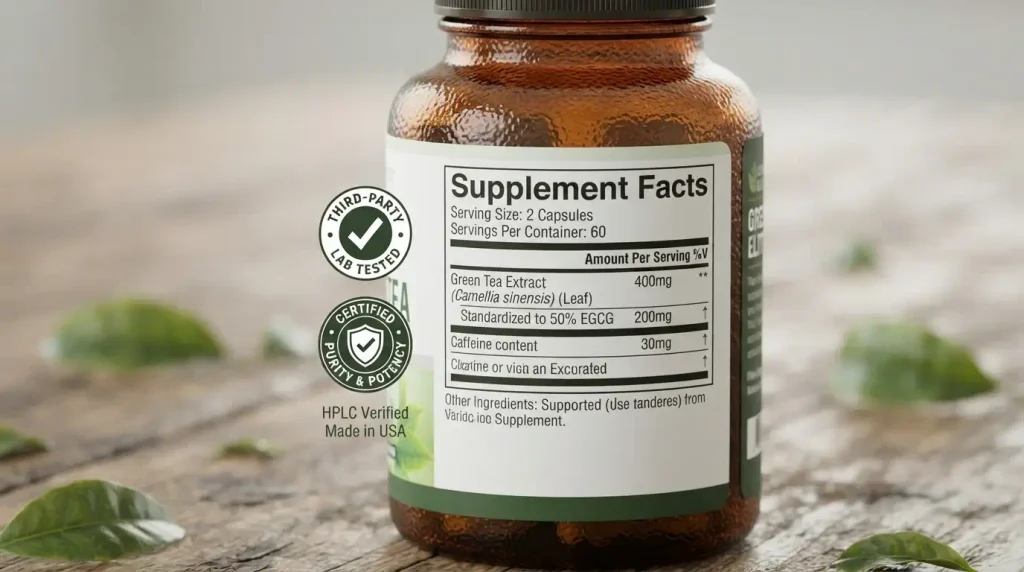
When shopping for a capsule, learning how to evaluate ingredients in weight management supplements protects you from underdosed proprietary blends. Look for a label that clearly states the exact milligram amount of EGCG (ideally standardized to 45% or 50% EGCG) rather than just listing “green tea leaf powder.”
How to Apply It: Practical Steps for Lifters and Active Adults
Taking green tea extract randomly throughout the day wastes much of its potential. To maximize fat oxidation without disrupting your sleep or upsetting your stomach, align your dosing with your daily nutrition and workout schedule.
Step 1: Dial In Your Effective Daily Dosage
Clinical trials showing measurable increases in fat oxidation typically use between 400 mg and 500 mg of EGCG per day, often split into two doses of 200 mg to 250 mg.
- Start conservative: Begin with a single 200 mg EGCG dose per day for the first week to assess your stomach tolerance and caffeine sensitivity.
- Check total caffeine: Verify how much caffeine is included in your extract. If your capsule contains 50 mg of caffeine and you also drink a 200 mg pre-workout, account for the combined 250 mg load.
- Respect the upper limit: Avoid exceeding 800 mg of EGCG per day from supplements, as higher intakes raise the risk of liver stress without providing better fat-loss results.
Step 2: Time Your Dose Around Exercise
Fat oxidation peaks when circulating free fatty acids meet active muscle demand. Taking green tea extract 30 to 45 minutes before aerobic or resistance training places peak blood levels of EGCG and caffeine right at the start of your session.
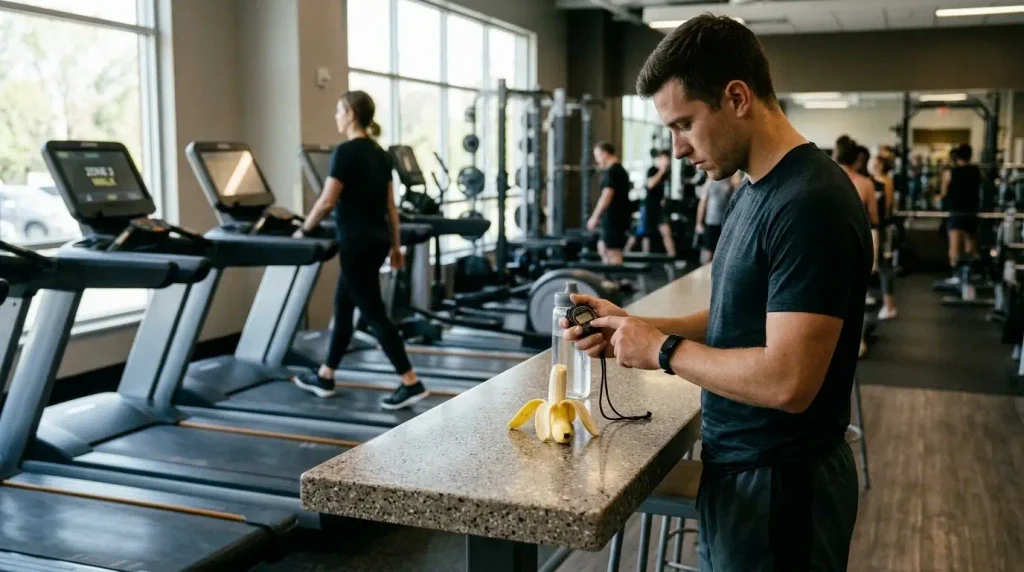
Research published in the American Journal of Clinical Nutrition via PubMed showed that healthy men who took green tea extract before a 30-minute cycling session at 60% of their maximal oxygen uptake (VO2max) increased their fat oxidation rates by 17% compared to taking a placebo. If you train early in the morning, pair your capsule with a light, easily digestible snack—such as half a banana or 15 grams of whey isolate—to prevent nausea while keeping insulin spikes low.
Coach’s Tip: Pair your morning green tea extract dose with 30 to 40 minutes of brisk incline walking on a treadmill at 3.2 to 3.6 mph (5.1 to 5.8 km/h) and a 6% to 8% grade. Keeping your heart rate in Zone 2 (roughly 60% to 70% of your maximum heart rate) maximizes mitochondrial fat oxidation while sparing your joints from high-impact stress so you recover faster for heavy lifting days.
Supplements only amplify the demand created by your muscles. To get the most out of an elevated metabolic rate, combine heavy compound lifting with moderate-intensity aerobic conditioning. Here is a practical 4-day training split I use with clients focused on body recomposition:
- Day 1 — Lower Body Strength (45–60 minutes):
- Barbell Back Squat or Goblet Squat: 4 sets of 6–8 reps, resting 2 to 3 minutes between sets. Use a controlled 3-second lowering tempo.
- Romanian Deadlift (RDL): 3 sets of 8–10 reps, resting 2 minutes. Start with a moderate load such as 95 to 135 lb (43 to 61 kg) for intermediates or 40 to 60 lb (18 to 27 kg) dumbbells for beginners.
- Walking Lunges: 3 sets of 10 steps per leg, resting 90 seconds.
- Standing Calf Raises: 3 sets of 12–15 reps, resting 60 seconds.
- Day 2 — Upper Body Strength + Zone 2 Finisher (55 minutes):
- Dumbbell Bench Press: 4 sets of 8–10 reps, resting 2 minutes.
- Chest-Supported Row: 4 sets of 8–10 reps, resting 90 seconds.
- Seated Dumbbell Overhead Press: 3 sets of 10–12 reps, resting 90 seconds.
- Incline Treadmill Walk: 25 minutes at a steady pace where you can still speak in short sentences.
- Day 3 — Active Recovery & Mobility (30 minutes):
- Walk outdoors for 2 to 3 miles (3.2 to 4.8 km) at a relaxed pace, followed by 10 minutes of thoracic spine and hip flexor mobility work.
- Day 4 — Full-Body Metabolic Conditioning (45 minutes):
- Kettlebell Swings: 4 sets of 15 reps, resting 60 seconds. Use a 25 to 35 lb (11 to 16 kg) bell for beginners or 44 to 53 lb (20 to 24 kg) for experienced lifters.
- Lat Pulldowns: 3 sets of 10–12 reps, resting 75 seconds.
- Push-Ups (or Incline Push-Ups): 3 sets of 10–15 reps, resting 60 seconds.
- Rowing Machine Intervals: 6 rounds of 30 seconds at a hard effort followed by 90 seconds of easy paddling.
- Easier Version (Regression): If you are new to structured training, cut the strength exercises to 2 sets per movement, stick to bodyweight or light 10 to 15 lb (4.5 to 6.8 kg) dumbbells, and replace the rowing intervals with a flat 20-minute stationary bike ride.
- Harder Version (Progression): Advanced lifters can add a fifth day dedicated to 45 minutes of uninterrupted Zone 2 cycling or rucking with a 20 to 30 lb (9 to 13.6 kg) backpack, and increase main compound lifts by 5 lb (2.3 kg) every two weeks when all target reps feel solid.
Safety Notes and Potential Side Effects
Because green tea extract concentrates plant polyphenols far beyond what you would normally drink in a cup of tea, taking too much—or taking it incorrectly—can cause unwanted side effects. Always check with your doctor or a qualified healthcare provider before starting any concentrated herbal extract, especially if you take prescription medications or have underlying liver or cardiovascular conditions.
Liver Stress and High-Dose Warnings
While brewed green tea is overwhelmingly safe, high-dose green tea extract supplements have been linked to rare cases of drug-induced liver injury. According to the National Center for Complementary and Integrative Health (NCCIH), liver problems typically occur when people consume large amounts of concentrated extracts—often exceeding 800 mg of EGCG per day—especially on an empty stomach.
Watch for early warning signs such as unusual fatigue, dark urine, abdominal pain in the upper right quadrant, or yellowing of the skin or eyes. If any of these appear, stop taking the supplement immediately and consult a physician.
Stomach Nausea and Iron Absorption
Tannins and catechins in green tea bind to proteins and minerals in the digestive tract. Swallowing a concentrated EGCG capsule on a completely empty stomach frequently triggers acute nausea, acid reflux, or stomach cramping within 20 minutes.
Additionally, green tea polyphenols inhibit the absorption of non-heme iron (the form of iron found in plant foods and supplements). If you struggle with low ferritin or iron-deficiency anemia, take your green tea extract at least two hours away from iron-rich meals or iron supplements.
Common Mistake: Many lifters take high-dose green tea extract first thing in the morning before fasted cardio with zero food in their stomach, chasing an extra 2% fat-burn edge. This often leads to severe nausea, heartburn, and elevated liver stress. Taking your capsule with a small protein-rich snack or a light meal protects your stomach lining and improves overall tolerance without blunting fat oxidation.
Medication Interactions and Caffeine Sensitivity
Green tea extract can interact with several common medications:
- Blood thinners (e.g., warfarin): Green tea leaves naturally contain small amounts of vitamin K, and concentrated extracts may alter how blood-thinning drugs work.
- Blood pressure medications (e.g., nadolol): Large doses of green tea catechins can reduce the absorption and effectiveness of certain beta-blockers.
- Stimulants: Combining caffeinated green tea extract with ADHD medications, decongestants, or multiple cups of coffee can spike heart rate, blood pressure, and anxiety.
Related Tips to Support Your Metabolic Rate
Understanding how does green tea extract boost metabolism and fat oxidation works best when you view supplements as the final 5% of your plan. The other 95% comes from daily habits that keep your resting metabolic rate high and protect lean muscle tissue while you lose body fat.
- Prioritize Daily Protein Intake: Digesting protein requires significantly more energy than digesting carbs or fats—a phenomenon known as the thermic effect of food (TEF). Eating 0.7 to 1.0 grams of protein per pound (1.6 to 2.2 grams per kg) of target body weight preserves muscle mass and keeps your metabolism humming, which we break down in our guide on how protein intake affects metabolism and weight loss.
- Protect Your Sleep Schedule: Even two nights of restricted sleep can alter hunger hormones and reduce your body’s ability to oxidize fat during exercise. Reviewing how sleep affects metabolism and weight management shows why getting 7 to 8 hours of quality rest outperforms any fat-burning pill on the market.
- Increase Non-Exercise Activity (NEAT): Formal workouts only account for about 5% to 10% of your daily calorie burn. Pacing during phone calls, parking farther from store entrances, and hitting 8,000 to 10,000 daily steps can burn an extra 250 to 400 calories per day without taxing your recovery.
- Avoid Crash Dieting: Dropping your calories too aggressively forces your body to downregulate thyroid hormones and slow down resting energy expenditure. If you want to learn how to boost metabolic flexibility without crash dieting, aim for a steady, sustainable rate of fat loss around 0.5% to 1% of your body weight per week.
- Build More Lean Muscle: Muscle tissue is metabolically active around the clock. Progressive resistance training three to four times per week ensures that the weight you lose comes from stored body fat rather than hard-earned muscle, which is essential if you want to increase metabolism naturally for weight loss.
- Consider Non-Stimulant Options When Needed: If caffeine disrupts your sleep or raises your blood pressure, explore which supplements support metabolism without stimulants so you can support energy production safely at any hour of the day.
Frequently Asked Questions (FAQ)
Does green tea extract actually increase fat burning during exercise?
Yes, clinical studies show that taking standardized green tea extract before moderate aerobic exercise can increase fat oxidation by roughly 10% to 17%. EGCG and caffeine elevate circulating free fatty acids, allowing your working muscles to rely slightly more on stored fat rather than muscle glycogen during steady-state sessions.
How much EGCG do you need per day to boost metabolism?
Research generally supports a daily intake of 400 mg to 500 mg of standardized EGCG, split into two 200 mg to 250 mg doses. Staying within this range provides measurable thermogenic support while remaining safely below the 800 mg daily threshold linked to potential liver enzyme elevations.
Is decaffeinated green tea extract effective for fat oxidation?
Decaffeinated green tea extract still inhibits the COMT enzyme and prolongs norepinephrine signaling, offering mild support for fat oxidation. However, studies consistently show that caffeinated versions produce stronger increases in 24-hour energy expenditure because caffeine and EGCG work synergistically on cellular fat-release pathways.
What is the best time to take green tea extract for weight loss?
The most effective time is 30 to 45 minutes before a workout alongside a small, protein-rich snack or light meal. Taking it with food prevents stomach nausea from tannins, while pre-exercise timing ensures peak blood catechin levels align with increased muscular demand for fatty acids.
How long does it take for green tea extract to work on metabolism?
Acute increases in thermogenesis and fat oxidation occur within 60 to 90 minutes of taking a single dose. However, noticeable changes in body composition typically require 8 to 12 weeks of consistent daily use paired with a modest calorie deficit and regular strength and cardio training.
Does green tea extract work without diet and exercise?
No, green tea extract will not cause meaningful weight loss without a calorie deficit and regular physical activity. While it increases daily energy expenditure by roughly 70 to 100 calories, overeating easily erases that small metabolic advantage, making nutrition and training the primary drivers of fat loss.
Conclusion
Understanding how does green tea extract boost metabolism and fat oxidation removes the mystery from one of the most heavily researched plant supplements in sports nutrition. By inhibiting the COMT enzyme and working alongside natural caffeine, concentrated EGCG prolongs norepinephrine activity, encourages lipolysis, and helps your mitochondria burn a slightly higher percentage of fat at rest and during exercise.
To get real value from green tea extract, treat it as a targeted tool rather than a shortcut. Choose a third-party-tested product standardized for 200 mg to 250 mg of EGCG per serving, take it with a light meal 30 to 45 minutes before training, and keep your focus squarely on progressive strength workouts, daily step counts, and adequate protein. If you want to compare how this ingredient stacks up against other evidence-based options, read our breakdown on whether green tea extract increases resting metabolic rate before building your supplement stack.