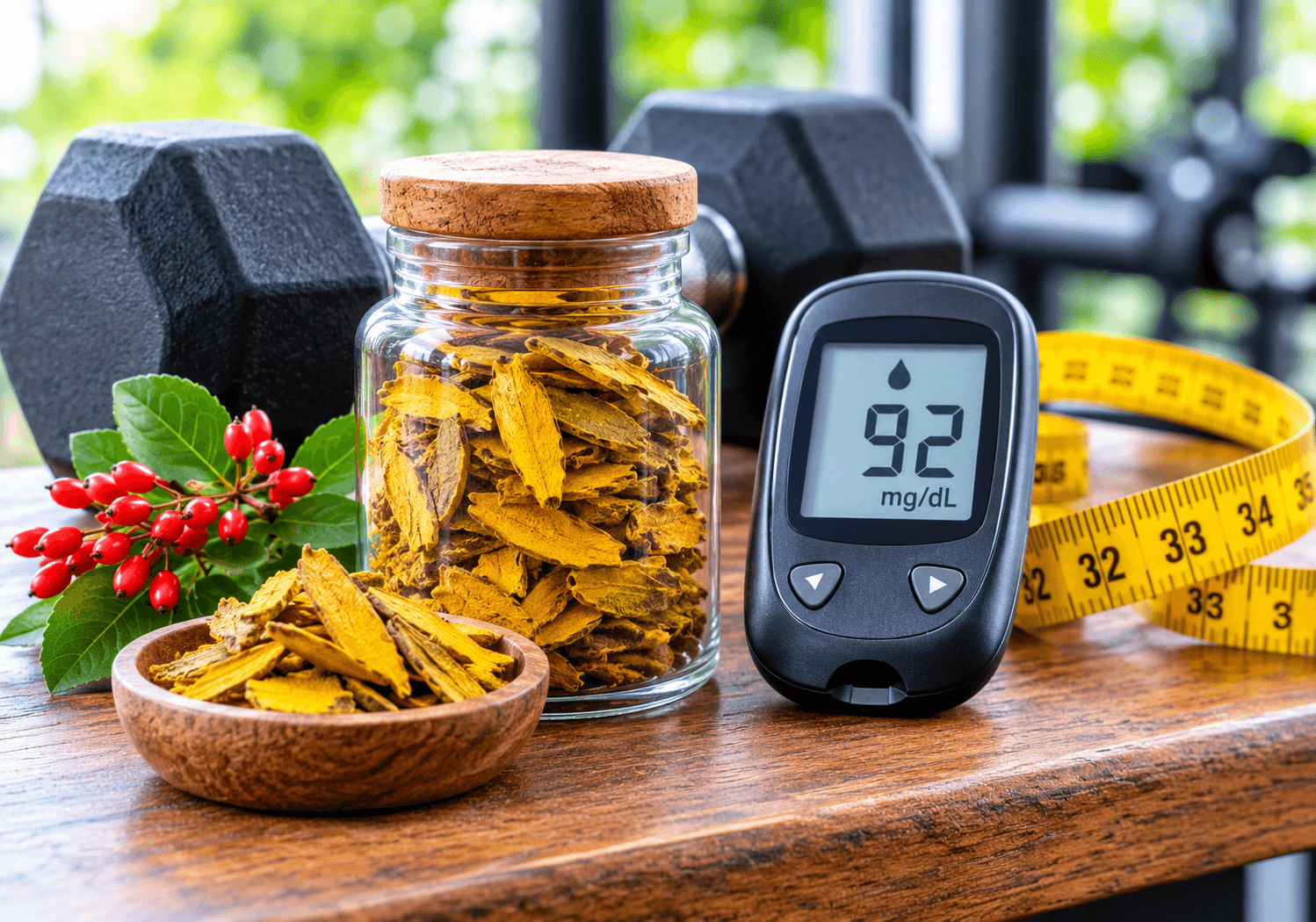
Berberine is a yellow plant alkaloid found in barberry, goldenseal, Oregon grape, and tree turmeric, and it has been used in Chinese and Ayurvedic medicine for centuries. Lately it has gone viral as “nature’s Ozempic,” which is a claim it does not earn. So how does berberine affect insulin sensitivity and metabolic rate in real people? The honest answer from the research: berberine shows moderate, fairly consistent effects on blood sugar control and insulin resistance in people with elevated glucose, and early work suggests it may raise energy expenditure through brown fat and cellular energy pathways. It is not a magic pill, and the strongest improvements in glucose handling still come from training your muscles and losing fat mass. This guide walks through what the studies actually measured, how the effects happen, how to stack berberine with a training plan that moves the needle, and who should be careful with it.
Quick Answer: Berberine may modestly improve insulin sensitivity and blood sugar control, mainly by activating the AMPK energy-sensing pathway in muscle and liver cells and by supporting gut bacteria linked to glucose handling. Early research suggests it may also raise metabolic rate slightly through brown fat thermogenesis. Effects are modest and depend on dose, duration, and your baseline health.
What the Research Says About Berberine and Insulin Sensitivity
Insulin sensitivity describes how well your cells, mostly in muscle, respond to insulin and pull glucose out of the blood. When that response weakens, blood sugar stays elevated, and over time this develops into insulin resistance and often type 2 diabetes. Most berberine research comes from people with type 2 diabetes, prediabetes, or metabolic syndrome, so keep that context in mind.
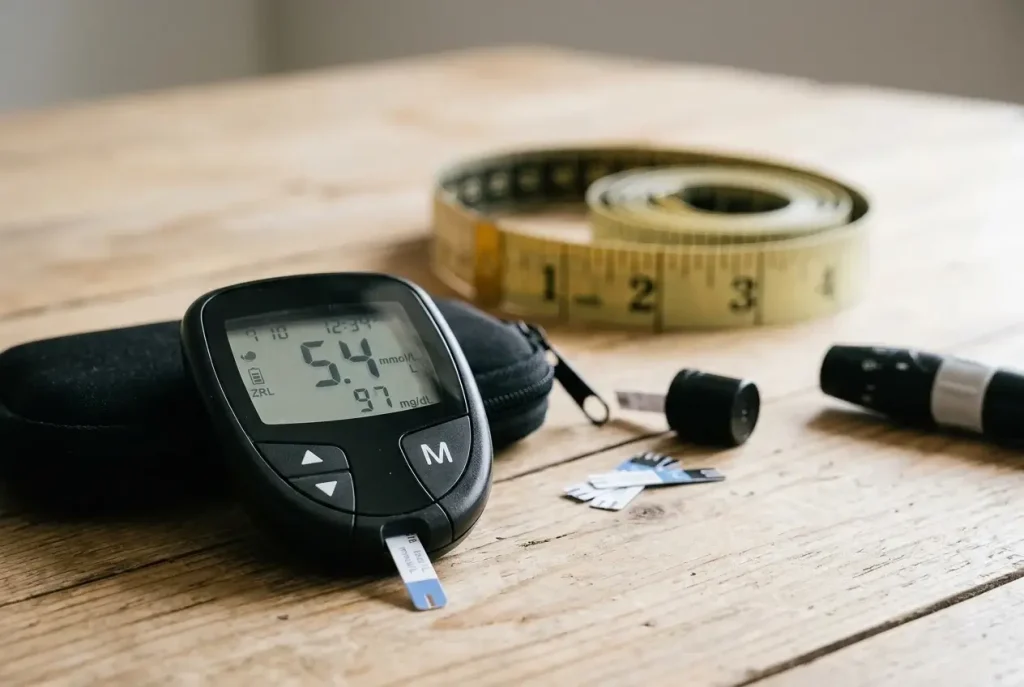
The best-known trial gave 116 patients with type 2 diabetes and dyslipidemia 1.0 g of berberine daily for 3 months. Fasting glucose dropped from 7.0 to 5.6 mmol/L, HbA1c fell from 7.5% to 6.6%, and the glucose disposal rate measured by insulin clamp increased within the berberine group, although the change versus placebo fell just short of statistical significance (Zhang et al., Journal of Clinical Endocrinology & Metabolism, 2008). In a smaller randomized, double-blind trial of 24 patients with metabolic syndrome, 500 mg of berberine three times daily for 3 months improved the Matsuda insulin sensitivity index from 2.1 to 3.1, lowered triglycerides and waist circumference in women, and produced remission of metabolic syndrome in 36% of participants (Pérez-Rubio et al., PubMed, 2013).
Meta-analyses pull the picture together. A 2021 review of 46 randomized trials in type 2 diabetes found berberine lowered HbA1c by about 0.73 percentage points, fasting glucose by 0.86 mmol/L, fasting insulin, HOMA-IR (a standard insulin-resistance score), and BMI, with effects strongest when berberine was added to standard diabetes care (Guo et al., Oxidative Medicine and Cellular Longevity, 2021). A 2023 meta-analysis of 20 randomized trials in 1,761 adults reported berberine lowered fasting glucose by 0.52 mmol/L, fasting insulin by 2.36 mU/L, and HOMA-IR by 0.85, and noted possibly larger effects in women and in people with diabetes (The Journal of Nutrition, 2023). An umbrella meta-analysis of pooled trial data in 2023 reached the same overall verdict: improved glycemic parameters and inflammatory markers, with the usual caveat that many underlying trials were small and unevenly conducted (Clinical Therapeutics umbrella meta-analysis, 2023).
The National Center for Complementary and Integrative Health summarizes it well: there is “some evidence” berberine might help with blood sugar control, especially as an add-on therapy, but the studies have limitations in size, formulation, and quality, so no clear conclusions can be drawn yet (NCCIH, Diabetes and Dietary Supplements).
Coach’s Tip: Read any berberine claim as “measured in people with elevated glucose.” If your fasting glucose and HOMA-IR are already normal, the demonstrated headroom is small. The trial populations did not look like healthy gym-goers, so do not assume the numbers transfer.
How berberine works at the cellular level
The proposed mechanism matters because it explains why berberine is grouped with metabolic compounds rather than stimulants.
Berberine inhibits mitochondrial respiratory chain complex I, which slightly lowers the cell’s ATP energy charge, and that triggers activation of AMP-activated protein kinase, or AMPK, the master fuel sensor. AMPK activation pushes cells to burn fuel and take up glucose rather than store it. In cell studies, berberine increased glucose uptake in muscle cells, enhanced glycolysis, and increased GLUT4 glucose transporter activity, with phosphorylation of AMPK lasting at least 16 hours after exposure (Yin et al., American Journal of Physiology-Endocrinology and Metabolism, 2008). In diabetic and insulin-resistant animal models, berberine increased AMPK activity, improved glucose tolerance, reduced body weight without changing food intake, and shifted gene expression toward energy expenditure and away from fat storage (Lee et al., Diabetes, 2006).
A second, newer mechanism runs through the gut. In the 20-center PREMOTE trial with 409 patients, berberine lowered HbA1c by about one full percentage point, and metagenomic analysis suggested the effect was partly mediated by changes in gut bacteria that alter bile acid metabolism (Zhang et al., Nature Communications, 2020). This is also why gastrointestinal side effects are the most common complaint, and why our guide to berberine and metabolic health treats berberine partly as a gut-acting compound.

What the Research Says About Berberine and Metabolic Rate
Metabolic rate, or total daily energy expenditure, has three main parts: resting metabolic rate, the thermic effect of food, and activity energy expenditure. The berberine question usually means: does it raise resting energy burn?
The most interesting line of evidence involves brown adipose tissue, the heat-generating fat that burns calories to produce warmth. In a human trial of mildly overweight patients with fatty liver disease, one month of berberine increased brown fat mass and activity as measured on PET-CT, reduced body weight, and improved insulin sensitivity, and follow-up work traced the pathway to AMPK-driven activation of the PRDM16 gene that builds brown fat (Wu et al., Cell Death & Disease, 2019). In mice, berberine activated thermogenesis in both white and brown fat through AMPK and PGC-1α signaling, increasing whole-body energy expenditure and limiting weight gain (Zhang et al., Nature Communications, 2014). Reviews of dietary compounds that promote brown fat list berberine among the phytochemicals with credible preclinical thermogenic evidence (Advances in Nutrition, 2017).
Now the honest limits. In controlled laboratory conditions, berberine’s thermogenic effect in mice disappeared at thermoneutral temperatures, meaning the heat-burning effect depends on cold-type signaling rather than a constant metabolic speed-up (International Journal of Molecular Sciences, 2024). No study has demonstrated that berberine meaningfully raises resting metabolic rate in healthy humans on a treadmill-tested or metabolic-chamber basis. Berberine is not a stimulant fat burner, it does not acutely raise heart rate, and you should not expect it to replace a calorie deficit or training.
Table
| Marker | Typical finding in trials | Strength of evidence |
| Fasting glucose | About 0.5 to 0.9 mmol/L (9 to 16 mg/dL) lower | Moderate, consistent |
| HbA1c | About 0.6 to 0.7 percentage points lower | Moderate, mostly type 2 diabetes populations |
| HOMA-IR (insulin resistance) | About 0.7 to 1.0 lower | Moderate |
| Fasting insulin | About 2 mU/L lower | Moderate |
| Brown fat activity / energy expenditure | Increased in one small human study and rodent work | Weak, early stage |
| Resting metabolic rate in healthy adults | No reliable human demonstration | Very weak, unproven |
How to Apply It: A Practical Plan That Supports Both
If berberine’s effects are modest, your daily habits are not, because muscle is the biggest glucose sink in the body. Here is how a coach would stack the habits.

Resistance training improves glucose disposal because contracting muscle pulls in glucose through pathways that do not even require much insulin. The general target is muscle-strengthening work at least two days per week plus regular aerobic activity, per the HHS Physical Activity Guidelines. Here is the two-day-per-week minimum plan I would run alongside a berberine trial.
Full-body session A (about 45 minutes)
Table
| Exercise | Sets | Reps | Rest | Weight guidance |
| Goblet squat | 3 | 8 to 12 | 90 sec | Start 15 to 25 lb (7 to 11 kg) |
| Dumbbell Romanian deadlift | 3 | 6 to 10 | 90 sec | Start 15 to 20 lb (7 to 9 kg) per hand |
| One-arm dumbbell row | 3 | 8 to 12 | 60 sec | Start 10 to 20 lb (4.5 to 9 kg) |
| Incline push-up | 3 | 8 to 15 | 60 sec | Bodyweight |
| Farmer carry | 3 | 40 yd (37 m) | 60 sec | 20 to 35 lb (9 to 16 kg) per hand |
Perform the lowering phase in about 2 seconds and drive up in 1 second. The last two reps of every set should feel hard but clean. If you finish a set and could have doubled the reps, the load is too light.
Full-body session B (about 45 minutes): same structure, different lifts. Leg press or rear-foot-elevated split squat, dumbbell bench press or floor press, lat pulldown or band pulldown, hip thrust, and a core plank series of 3 rounds at 20 to 40 seconds.
Easier version (regression): do two sets of each lift, use a chair for squats, and take 2 to 3 minutes of rest between sets.
Harder version (progression): add a third weekly session, add one set per exercise every 2 weeks until you reach 4 sets, and slow the lowering phase to 3 seconds on the final set.
Common Mistake: Taking berberine while sitting still all day, then attributing any glucose improvement to the supplement. Post-meal movement is the fastest lever you own. A 10 to 15 minute walk after your largest meal, most days of the week, uses muscle contraction to clear glucose when it matters most. People skip this because it is boring. It is also the habit with the most immediate payoff.
Step 2: Use evidence-consistent berberine habits, not extremes
Doses in successful trials generally ran 500 mg taken two to three times daily, typically 30 to 60 minutes before meals, for 8 to 12 weeks before outcomes were measured. NCCIH considers berberine reasonably safe in the range of 200 to 1,000 mg two to three times daily for adults, with mild to moderate nausea, diarrhea, bloating, or constipation the most common complaints (NCCIH). Expect at least 8 to 12 weeks of consistent use before judging whether it is doing anything. Because absorption is poor and products vary, the supplement you buy may not match what the trials used, and NCCIH notes most studies were conducted in Asian populations with particular formulations (NCCIH, Berberine and Weight Loss).
Step 3: Support the mechanisms with diet and sleep
Berberine works on the same pathways your lifestyle already touches, so feed those pathways. Aim for roughly 0.7 to 1.0 g of protein per pound (1.6 to 2.2 g per kilogram) of goal body weight, because protein preserves the muscle that does the glucose clearing; read more in protein intake and metabolism for weight loss. Keep fiber high, since fermentable fiber feeds the same gut bacteria berberine appears to modulate; see what the research shows on dietary fiber. Sleep 7 to 9 hours, because short sleep raises insulin resistance within days; the mechanism is covered in how sleep affects metabolism and weight management. And remember that the biggest single driver of metabolic health is still total body composition, covered in what affects metabolism and body weight.
Safety Notes
This section matters more than any dose table.
- Berberine may interact with medications, including cyclosporine, and can affect how the liver processes many drugs. If you take any prescription medication, especially for blood sugar or blood pressure, talk with your doctor or pharmacist first (NCCIH).
- Berberine is considered likely unsafe during pregnancy and breastfeeding and should not be given to infants, because exposure has been linked to harmful bilirubin buildup (NCCIH).
- If you already take glucose-lowering medication, adding berberine could stack onto your medication’s effect. Monitor with your medical provider rather than adjusting anything yourself.
- Mild digestive upset is common and often improves when taken with food; if it persists, stop.
- Supplement quality control is weaker than for prescription drugs, so choose third-party tested products and be skeptical of any “natural diabetes cure” marketing, which the FDA has warned about (NCCIH).
Common Mistake: Buying “berberine plus” blends marketed for fat loss at unknown doses, then stacking them with other glucose-active supplements without telling your doctor. Keep the stack simple and disclosed.
Related Tips
Berberine sits inside a larger system. If you want to read deeper on adjacent topics, our evidence-based guide to whether supplements can improve insulin sensitivity compares berberine with other glucose-support nutrients, berberine and appetite covers the hunger side of the compound, and what thermogenesis is and how it affects metabolism explains the brown fat science in plain language. For age-specific programming, our metabolism guide after 40 covers the training and protein changes that matter most as insulin sensitivity declines with age.
FAQ
Does berberine improve insulin sensitivity?
Yes, with conditions. Randomized trials in people with type 2 diabetes or metabolic syndrome show reduced HOMA-IR and improved clamp-measured glucose disposal, and meta-analyses of about 20 trials support modest insulin-resistance improvements. Effects were mostly studied in people with elevated glucose, not healthy adults.
Does berberine boost metabolic rate?
Early evidence suggests it can raise energy expenditure by activating brown fat thermogenesis, shown in one small human study and several animal trials. No study has demonstrated a meaningful resting metabolic rate increase in healthy humans, so treat this as promising but unproven.
How long does berberine take to work?
Most trials measured outcomes at 8 to 12 weeks, with 500 mg taken two to three times daily. Some glucose effects appear within a month. Judge any product by a 12-week window, not by how you feel in week one.
Is berberine like metformin?
They share AMPK activation and mitochondrial effects, which is why researchers compare them. Berberine is a supplement, not an approved medication, has lower absorption, and has never matched metformin’s clinical evidence base. It is not a substitute for prescribed treatment.
What dose of berberine did the studies use?
Commonly 500 mg two to three times daily before meals, totaling 1,000 to 1,500 mg per day. NCCIH considers 200 to 1,000 mg two to three times daily the range used in clinical situations. Higher doses mainly increase digestive side effects.
Can exercise work better than berberine?
Yes. A single workout improves insulin sensitivity for hours afterward, and regular training plus modest fat loss produces larger, proven glucose improvements than any supplement trial has shown. Berberine, if you use it, should sit on top of training, not instead of it.
Conclusion
So, how does berberine affect insulin sensitivity and metabolic rate? The research supports a modest, real effect on glucose control and insulin resistance in people with elevated blood sugar, likely through AMPK activation in muscle and liver plus gut microbiome changes, with early and incomplete evidence for a small thermogenic contribution through brown fat. Berberine is not a stimulant, not a shortcut, and not a replacement for the two levers with the biggest proven effect on glucose: resistance training and body composition. If you use it, use 500 mg before meals two to three times daily, give it 12 weeks, tell your doctor, and let your training do the heavy lifting.
Check with your doctor before taking berberine, especially if you take glucose, blood pressure, or other prescription medications, or if you are pregnant or breastfeeding. This article is for general information and is not a substitute for advice from a doctor or physical therapist.