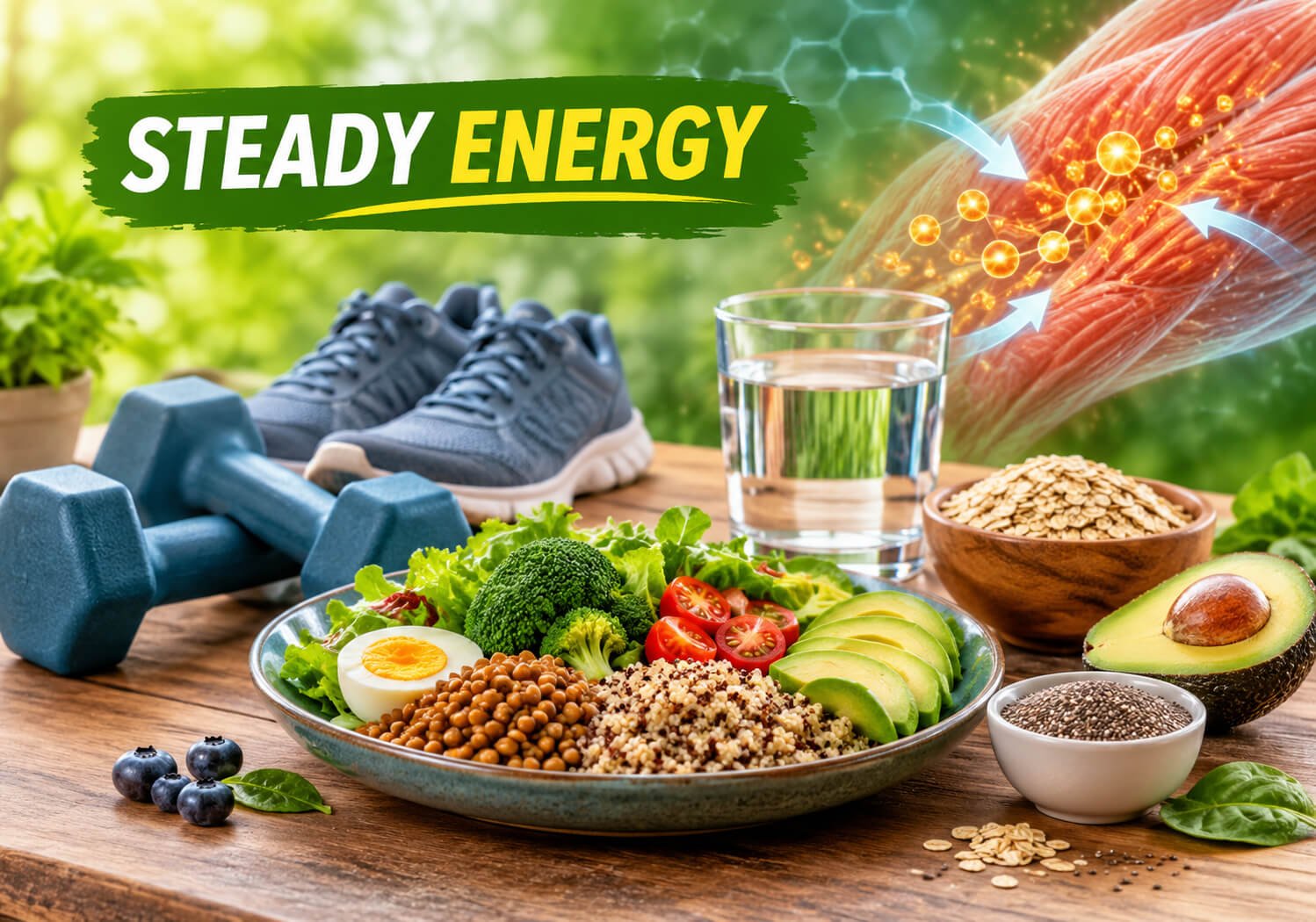
If you hit a heavy wall of exhaustion every afternoon around 2:00 PM, your body might not be lacking caffeine—it might be struggling to move fuel into your cells. Discovering natural ways to improve insulin sensitivity for better all-day energy helps your muscles soak up blood sugar efficiently instead of leaving you trapped on a rollercoaster of spikes and crashes.
As a strength and conditioning coach, I see active, hardworking adults deal with sluggish afternoon fatigue all the time. Often, they assume they just need another cup of coffee or a sugary snack to push through the workday.
In reality, poor cellular fuel delivery is usually the culprit. When you train your muscles and adjust a few daily habits, your body becomes far better at converting food into steady, reliable energy from morning until bedtime.
Quick Answer: The most effective natural ways to improve insulin sensitivity for better all-day energy include lifting weights 2 to 3 times per week, taking a 10-to-15-minute brisk walk after meals, eating protein and soluble fiber before starches, sleeping 7 to 9 hours nightly, and managing daily stress. These habits help skeletal muscles absorb glucose efficiently without big insulin spikes.
How Insulin Sensitivity Controls Your Daily Energy Levels
Think of insulin as a delivery driver and your muscle cells as locked warehouses. When you eat carbohydrates, your digestive system breaks them down into glucose, which enters your bloodstream.
Your pancreas releases insulin to knock on your muscle cell doors and tell them to open up and take in that glucose for fuel. When you have high insulin sensitivity, your cells respond quickly to a small knock, clearing sugar from your blood smoothly and turning it into steady energy.
When insulin sensitivity drops—a state known as insulin resistance—your muscle cells ignore the knock. Your pancreas has to pump out huge amounts of insulin just to force the doors open.
This traffic jam causes two major energy problems:
- Cellular Starvation: Even though plenty of sugar is floating in your bloodstream, your muscles and brain cannot access it quickly enough, leaving you feeling heavy and lethargic.
- Reactive Energy Crashes: Once that massive surge of insulin finally forces the sugar out of your blood, your blood glucose levels drop rapidly, triggering brain fog, irritability, and intense sugar cravings.
Understanding how metabolic flexibility works makes it clear why fixing this delivery system changes your entire day. When your cells respond easily to insulin, your energy stays flat, predictable, and strong.
Why Skeletal Muscle Is Your Best Energy Sponge
Skeletal muscle is the single largest storage depot for glucose in the human body. According to research published via the National Institutes of Health (NIH), skeletal muscle accounts for roughly 80% of insulin-stimulated glucose uptake after a meal.
Inside your muscle fibers sit specialized transport proteins called GLUT4. Normally, these transporters stay tucked away inside the cell until insulin signals them to move to the surface.
However, muscle contraction acts as a completely separate master key. When you lift weights, climb stairs, or go for a brisk walk, the physical contraction forces GLUT4 transporters to the cell surface without needing insulin at all.
This means regular movement clears blood sugar immediately during your workout and keeps your muscle doors unlocked for up to 24 to 48 hours afterward.

Top Natural Ways to Improve Insulin Sensitivity for Better All-Day Energy
You do not need extreme diets or grueling two-hour workouts to upgrade how your body handles fuel. Stacking a few simple, repeatable habits creates massive improvements in how energized you feel.
1. Prioritize Progressive Resistance Training
Lifting weights is the closest thing we have to a magic switch for glucose metabolism. Building and maintaining lean muscle tissue increases the total storage capacity of your body’s “glucose sponge.”
Focus on big, multi-joint compound exercises that recruit large muscle groups like your quadriceps, glutes, hamstrings, back, and chest. The more muscle fibers you challenge, the more glycogen you deplete, and the hungrier your muscles become for incoming carbohydrates.
Aim for 2 to 4 strength sessions per week, resting 60 to 90 seconds between sets so you can lift with good effort and clean technique.
2. Take a 10-to-15-Minute Walk After Meals
One of the easiest habits I give busy clients is a short post-meal walk. Even light muscle contractions in your calves, quads, and glutes immediately pull glucose out of your bloodstream.
A meta-analysis in Sports Medicine found that light-intensity walking for just 2 to 5 minutes after eating significantly blunted post-meal blood sugar and insulin spikes compared to sitting. Stretching that walk to 10 or 15 minutes after lunch or dinner works even better.
You do not need to sweat or change into gym clothes. A brisk lap around your office building, neighborhood block, or even marching in place at home gets the job done.
3. Sequence Your Meals: Fiber and Protein First
What you eat matters, but the order in which you eat your food also changes your blood sugar curve. Starting a meal with fibrous vegetables and lean protein creates a physical mesh in your stomach that slows down how fast starches turn into blood sugar.
Research from Weill Cornell Medicine showed that eating vegetables and protein before carbohydrates led to significantly lower post-meal glucose and insulin levels than eating the exact same meal in reverse order.
Try this simple plate order at lunch and dinner:
- Eat your non-starchy vegetables (broccoli, salad greens, peppers) first.
- Eat your protein source (chicken, fish, eggs, tofu, lean beef) second.
- Eat your starchy carbs or fruit (rice, potatoes, bread, pasta) last.
Learning how dietary fiber supports steady digestion and pairing it with adequate daily protein intake prevents the sharp afternoon slump that follows a carb-heavy lunch.
4. Protect Your Sleep Architecture (7 to 9 Hours)
Even a single night of poor sleep makes healthy people temporarily insulin resistant the next morning. When you cut sleep short, your body pumps out more cortisol and growth hormone at the wrong times, blocking insulin from doing its job.
According to the Centers for Disease Control and Prevention (CDC), getting less than 7 hours of sleep regularly makes insulin resistance significantly harder to manage and increases cravings for quick-energy sugary foods.
Keep your bedroom cool, dark, and quiet, and try to wake up at the same time every morning to anchor your circadian rhythm. Exploring how sleep affects hormonal balance reveals why prioritizing rest is just as important as hitting the gym.
5. Break Up Long Sitting Blocks With “Movement Snacks”
You can work out hard for 45 minutes at 6:00 AM, sit at a desk for 9 straight hours, and still experience sluggish glucose clearance by late afternoon. Prolonged sitting turns off the electrical activity in your largest leg muscles.
Set a timer on your phone or smartwatch every 45 to 60 minutes. Stand up and perform 2 minutes of easy movement:
- 15 bodyweight air squats
- 10 wall or desk push-ups
- 20 alternating reverse lunges
- 30 seconds of brisk stair climbing
These brief bursts keep your GLUT4 transporters active throughout the workday without breaking your focus.
6. Manage Daily Stress to Lower Cortisol Spikes
Chronic mental stress triggers your fight-or-flight response, dumping cortisol and adrenaline into your bloodstream. Evolutionarily, these hormones release stored sugar into your blood so you have fuel to sprint away from danger.
When you are sitting at a computer answering stressful emails, that extra blood sugar has nowhere to go. Your pancreas has to release extra insulin to mop it up, leaving you drained once the stress passes.
Incorporating 5 minutes of slow nasal breathing (inhaling for 4 seconds, exhaling for 6 seconds) between meetings helps shift your nervous system back into recovery mode.
Coach’s Action Plan: Daily Habits & Exercise Comparison
Different habits target blood sugar control through unique pathways. Combining strength training with daily low-level movement gives you both immediate and long-term benefits.
| Strategy | Primary Mechanism | Recommended Dose | Best Time to Do It | Expected Energy Impact |
| Resistance Training | Builds muscle mass; depletes glycogen; activates GLUT4 | 30–45 mins, 3x/week | Late morning or late afternoon | Sustained all-day stamina over 2–4 weeks |
| Post-Meal Walking | Immediate muscle contraction clears blood glucose | 10–15 mins brisk pace | Within 15–30 mins after eating | Eliminates post-lunch brain fog immediately |
| Zone 2 Cardio | Increases mitochondrial density and fat oxidation | 30–45 mins, 2x/week | Morning or non-lifting days | Improves baseline endurance and recovery |
| Meal Sequencing | Slows gastric emptying and blunts glucose absorption | At lunch and dinner | First 5–10 mins of every meal | Prevents rapid afternoon energy crashes |
| Movement Snacks | Prevents lower-body muscle inactivity during desk work | 2 mins every 60 mins | Throughout the workday | Keeps alertness steady between meals |

Coach’s 3-Day Strength & Movement Routine for Insulin Sensitivity
If you want a practical starting point, use this full-body strength template three non-consecutive days per week (such as Monday, Wednesday, and Friday). Each workout takes about 35 to 40 minutes and targets your biggest glucose-consuming muscles.
Warm-Up (5 Minutes)
- Brisk Walk or Light Row: 2 minutes to raise body temperature.
- World’s Greatest Stretch: 5 reps per side to open hips and thoracic spine.
- Glute Bridges: 2 sets of 12 reps with a 2-second squeeze at the top.
- Bodyweight Squats: 2 sets of 10 slow reps.
Main Workout Table
| Exercise | Sets | Reps | Tempo | Rest | Target Muscles |
| 1. Dumbbell Goblet Squat | 3 | 8–10 | 3-1-1-0 | 90 sec | Quadriceps, glutes, core |
| 2. Dumbbell Romanian Deadlift | 3 | 10–12 | 3-1-1-0 | 90 sec | Hamstrings, glutes, lower back |
| 3. Incline Push-Up or Dumbbell Bench Press | 3 | 8–12 | 2-1-1-0 | 75 sec | Pectorals, front deltoids, triceps |
| 4. Single-Arm Dumbbell Row | 3 | 10–12 / side | 2-1-1-1 | 60 sec | Latissimus dorsi, rhomboids, biceps |
| 5. Farmer’s Carry | 3 | 40 yards (36 m) | Steady | 60 sec | Full body, grip, core, traps |

- Dumbbell Goblet Squat: Hold one dumbbell vertically against your chest with both hands. Stand with feet shoulder-width apart, brace your abs, and sit your hips back and down until your thighs are parallel to the floor. Drive through your whole foot to stand tall. Start with a 15 to 25 lb (7 to 11 kg) dumbbell.
- Easier (Regression): Box squat to a 16zzzzzzz-to-18-inch (41 to 46 cm) sturdy chair or bench.
- Harder (Progression): Increase weight to 35 to 50 lb (16 to 23 kg) or add a 3-second pause at the bottom.
- Dumbbell Romanian Deadlift: Hold a pair of dumbbells in front of your thighs with soft, slightly bent knees. Push your hips straight back toward the wall behind you while keeping your spine completely flat. Lower the weights to mid-shin until you feel a deep stretch in your hamstrings, then squeeze your glutes to stand back up. Start with 15 to 25 lb (7 to 11 kg) dumbbells in each hand.
- Easier (Regression): Perform bodyweight hip hinges with hands behind your head to master the hip-back pattern.
- Harder (Progression): Use 30 to 45 lb (14 to 20 kg) dumbbells or perform single-leg kickstand Romanian deadlifts.
- Incline Push-Up or Dumbbell Bench Press: For incline push-ups, place your hands slightly wider than shoulder-width on a sturdy bench or countertop about 24 to 30 inches (61 to 76 cm) high. Keep your body in a rigid plank from head to heels, lower your chest to the edge, and press away.
- Easier (Regression): Use a higher wall or countertop surface to reduce body weight load.
- Harder (Progression): Move to floor push-ups or flat dumbbell bench presses with 20 to 35 lb (9 to 16 kg) dumbbells.
- Single-Arm Dumbbell Row: Place your left knee and left hand on a flat bench, keeping your back flat like a tabletop. Hold a 15 to 30 lb (7 to 14 kg) dumbbell in your right hand and pull it toward your hip pocket, squeezing your shoulder blade back. Lower with control.
- Easier (Regression): Use a lighter 10 to 15 lb (4.5 to 7 kg) weight and focus on keeping shoulders level.
- Harder (Progression): Use a 35 to 50 lb (16 to 23 kg) dumbbell with a 2-second hold at the top of each rep.
- Farmer’s Carry: Pick up two moderately heavy dumbbells—around 20 to 35 lb (9 to 16 kg) per hand—stand tall with your shoulders pulled down away from your ears, and walk briskly for 40 yards (36 m). Keep your ribs stacked over your pelvis without leaning side to side.
- Easier (Regression): Walk 25 yards (23 m) with 12 to 15 lb (5.5 to 7 kg) dumbbells.
- Harder (Progression): Carry 40 to 55 lb (18 to 25 kg) dumbbells for 50 yards (46 m).
Coach’s Tip: Leave 2 to 3 good reps “in the tank” at the end of every set. You do not need to train to total muscular failure to trigger GLUT4 glucose uptake—consistent, controlled effort across the whole week beats one exhausting workout that leaves you too sore to walk.
Common Mistakes That Sabotage Blood Sugar and Energy
Even well-intentioned fitness routines can backfire if you fall into a few common traps.
Common Mistake: Skipping breakfast and relying solely on black coffee until noon. While intermittent fasting works for some people, dumping caffeine onto an empty stomach when morning cortisol is already at its peak can spike blood sugar in stress-sensitive individuals, setting you up for a massive mid-afternoon crash.
Here are three other pitfalls to watch out for:
- Doing Only Fasted, High-Intensity Cardio: Pushing through daily max-effort HIIT sessions without adequate recovery elevates stress hormones. Balance hard sessions with strength training and easy walking.
- Drinking “Healthy” Liquid Sugars: Fruit smoothies, oat milk lattes, and sports drinks bypass chewing and fiber barriers, flooding your bloodstream with glucose in minutes. Stick to whole foods whenever possible, and check out why caffeine pills and sugary boosters cause energy crashes.
- Cutting Carbohydrates to Zero Forever: Extreme long-term carb restriction can sometimes reduce your body’s acute carbohydrate tolerance when you do eat starches. Instead, earn your carbs by eating moderate portions of whole-food starches (oats, quinoa, sweet potatoes, fruit) right after strength training when your muscles are primed to absorb them.

Nutrition & Lifestyle Tweaks to Support Steady Glucose
Beyond lifting weights and walking, small daily choices reinforce healthy insulin signaling:
- Add Soluble Fiber Daily: Foods like oats, chia seeds, lentils, black beans, and avocados form a gentle gel in your digestive tract that slows sugar absorption. You can also explore how soluble fiber supports fullness and steady energy if your diet lacks veggies and legumes.
- Stay Hydrated With Electrolytes: Mild dehydration concentrates blood sugar and makes you feel sluggish. Aim for pale yellow urine throughout the day, adding a pinch of sea salt or sugar-free electrolytes after sweaty workouts.
- Front-Load Your Calories: Human insulin sensitivity is naturally higher in the morning and early afternoon than late at night due to our circadian clock. Eating a protein-rich breakfast and solid lunch while keeping dinner lighter helps you wake up energized.
- Audit Your Evening Routine: Dimming overhead lights 60 minutes before bed protects melatonin production, which indirectly supports healthy overnight glucose regulation. If you are curious about targeted nutritional support, read our guide on whether supplements can improve insulin sensitivity alongside whole-food habits, or review how to improve daily energy without caffeine.
Safety Notes: Who Should Be Careful
While strength training, post-meal walking, and balanced eating are safe for most healthy adults, certain individuals need tailored guidance.
If you have been diagnosed with Type 1 or Type 2 diabetes, prediabetes, gestational diabetes, or take blood-sugar-lowering medications (such as insulin or sulfonylureas), check with your doctor or physical therapist before starting a new exercise or nutrition routine. Combining new workouts with glucose-lowering medications can occasionally cause hypoglycemia (low blood sugar), so your healthcare provider may need to monitor your levels or adjust dosages safely.
Frequently Asked Questions (FAQ)
How long does it take to improve insulin sensitivity naturally?
Acute improvements happen immediately—a single 30-minute strength workout or 15-minute post-meal walk increases muscle glucose uptake for 24 to 48 hours. Meaningful, lasting improvements in baseline fasting insulin and all-day energy typically become noticeable within 2 to 4 weeks of consistent resistance training, post-meal walking, and better sleep.
What is the best exercise to increase insulin sensitivity?
A combination of progressive resistance training and aerobic walking works best. Lifting weights builds lean muscle tissue that acts as a permanent glucose storage reservoir, while brisk walking activates muscle contractions that pull sugar out of the bloodstream immediately without requiring high insulin levels.
Why do I feel so tired and sleepy after eating carbs?
Post-meal fatigue often happens when a low-fiber, high-carbohydrate meal causes a rapid spike in blood sugar. Your pancreas responds by releasing a large surge of insulin, which clears the glucose quickly and causes a sharp drop in blood sugar levels, triggering brain fog, yawning, and heavy lethargy.
Does walking after meals really lower blood sugar and boost energy?
Yes. Research shows that walking for just 10 to 15 minutes within 30 minutes of finishing a meal activates GLUT4 glucose transporters in your leg muscles. This clears circulating glucose smoothly, prevents steep insulin surges, and eliminates the heavy afternoon energy slump.
How does poor sleep affect insulin sensitivity?
Sleeping fewer than 7 hours elevates evening and morning cortisol levels while disrupting growth hormone release. These stress hormones interfere with insulin signaling at the cellular level, making your muscles temporarily insulin resistant the next day and increasing cravings for high-sugar snacks.
Can lifting weights improve glucose metabolism even if I don’t lose weight?
Yes. Resistance training increases mitochondrial density, capillary blood flow, and GLUT4 transporter concentration inside your existing muscle fibers. Even without changes on the scale, building stronger, metabolically active muscle tissue dramatically improves how efficiently your body clears glucose and produces steady daily energy.
Conclusion
Building steady, reliable stamina comes down to helping your cells access the fuel you already eat. Practicing these natural ways to improve insulin sensitivity for better all-day energy—lifting weights three days a week, taking short walks after meals, eating protein and fiber before starches, and protecting your sleep—turns your muscles into an efficient energy engine. Start with just one habit today, such as a 10-minute walk after lunch, and build momentum week by week.