A blood sugar levels chart by age can help you understand a fasting glucose result, A1C test, or reading taken after a meal. The important point is that diagnostic cutoffs do not automatically increase as you get older. A fasting result that indicates diabetes at age 40 does not become “normal” at age 70.
Age still matters. Children with diabetes, working-age adults, and older adults with multiple health conditions may receive different treatment targets. This guide explains the difference between normal diagnostic ranges and personalized glucose-management goals.
Quick Answer: Normal diagnostic cutoffs do not automatically rise with age. For nonpregnant people, fasting glucose is generally normal below 100 mg/dL, prediabetes is 100–125 mg/dL, and diabetes is 126 mg/dL or higher. Personal treatment targets differ for children, adults, and older adults, so use this chart as a reference—not a diagnosis.
Why Age Matters—but Does Not Redefine “Normal”
Blood sugar is the amount of glucose circulating in your blood. Glucose changes throughout the day based on meals, activity, illness, stress, medication, and insulin action.
The standard laboratory cutoffs used to identify normal glucose, prediabetes, and diabetes are generally not raised just because a person gets older. The 1 use the same fasting, A1C, and oral glucose tolerance categories across nonpregnant age groups. 1
What changes with age is the treatment plan after diabetes has been diagnosed. A healthy 68-year-old may have targets similar to a younger adult. A frail 85-year-old with cognitive impairment, frequent low blood sugar, or several chronic conditions may receive broader targets to prioritize safety.
That is why a useful blood sugar levels chart by age must separate:
- Diagnostic ranges: Used to screen for or diagnose diabetes.
- Management targets: Used by people who already have diabetes.
- Emergency thresholds: Numbers requiring immediate action.
Blood Sugar Levels Chart by Age for People Without Diagnosed Diabetes
The following chart applies to nonpregnant people who are reviewing laboratory screening results. The ranges do not change at age 40, 50, 60, or 70.
| Age group | Normal fasting glucose | Normal 2-hour OGTT | Normal A1C | Key point |
| Children and teens | About 70–99 mg/dL | 139 mg/dL or below | Below 5.7% | Pediatric symptoms or abnormal results require clinical evaluation |
| Adults 18–39 | About 70–99 mg/dL | 139 mg/dL or below | Below 5.7% | Risk can still be present with a family history or other factors |
| Adults 40–59 | About 70–99 mg/dL | 139 mg/dL or below | Below 5.7% | Age increases risk, but not the diagnostic cutoff |
| Adults 60–69 | About 70–99 mg/dL | 139 mg/dL or below | Below 5.7% | Higher readings should not be dismissed as “normal aging” |
| Adults 70 and older | About 70–99 mg/dL | 139 mg/dL or below | Below 5.7% | Diagnosis uses standard cutoffs; treatment targets may be individualized |
OGTT means oral glucose tolerance test. This is a controlled laboratory test using a glucose drink. It is not the same as checking your glucose after an ordinary meal.
According to the 2, diabetes should be diagnosed with clinical blood tests rather than an over-the-counter home meter. In people without clear symptoms, an abnormal result will normally need confirmation. 2
Diagnostic ranges by test
| Test | Normal | Prediabetes | Diabetes |
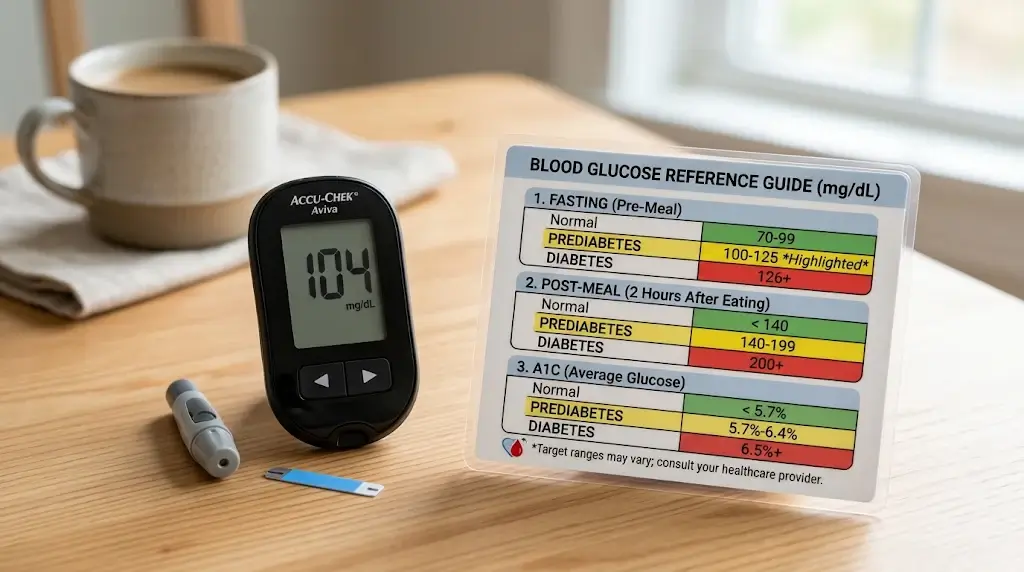
| Fasting plasma glucose | 99 mg/dL or below | 100–125 mg/dL | 126 mg/dL or higher |
| 2-hour oral glucose tolerance test | 139 mg/dL or below | 140–199 mg/dL | 200 mg/dL or higher |
| A1C | Below 5.7% | 5.7%–6.4% | 6.5% or higher |
| Random plasma glucose | No single diagnostic “normal” cutoff | Not normally used for prediabetes | 200 mg/dL or higher with symptoms |
These categories come from the 1 and apply to nonpregnant testing. Pregnancy uses different procedures and cutoffs. 1
To convert mg/dL to mmol/L, divide by 18. For example:
- 70 mg/dL is about 3.9 mmol/L.
- 100 mg/dL is about 5.6 mmol/L.
- 126 mg/dL is 7.0 mmol/L.
- 180 mg/dL is 10.0 mmol/L.
- 200 mg/dL is about 11.1 mmol/L.
Blood Sugar Levels Chart by Age for People With Diagnosed Diabetes
Management targets are not the same as diagnostic ranges. Once someone has diabetes, the goal is to balance glucose control, daily function, quality of life, and the risk of hypoglycemia.
Children and adolescents with diabetes
The 2024 3 provide the following general self-monitoring targets for children and adolescents. A pediatric diabetes team may adjust them based on insulin use, technology, activity, development, and hypoglycemia risk. 3
| Measurement | General pediatric target |
| Before meals | 70–144 mg/dL |
| After meals | 70–180 mg/dL |
| CGM time in range | More than 70% of time at 70–180 mg/dL |
| CGM time below 70 mg/dL | Less than 4% |
| A1C | Usually 7% or lower; 6.5% or lower may be considered when safely achievable with appropriate support |
Children taking insulin may require checks before meals, before activity, after activity, at bedtime, or whenever symptoms appear. Parents should use the child’s written diabetes plan rather than applying an adult chart.
Adults ages 18–64 with diabetes
The 4 for most nonpregnant adults with diabetes are:
| Testing time | Typical target |
| Before a meal | 80–130 mg/dL |
| Two hours after the start of a meal | Below 180 mg/dL |
These are general targets, not rigid rules. Your clinician may change them based on your medication, pregnancy status, duration of diabetes, kidney health, activity level, and history of low blood sugar. 4
Adults 65 and older with diabetes
For older adults, health status is often more useful than chronological age. The updated 5 gives examples of how goals may be broadened when medical complexity and hypoglycemia risk increase. 5
| Older adult health status | Example A1C goal | Premeal glucose | Bedtime glucose |
| Generally healthy, independent, few chronic conditions | Below 7%–7.5% | 80–130 mg/dL | 80–150 mg/dL |
| Multiple chronic conditions or mild cognitive/functional limitations | Below 8% | 90–150 mg/dL | 100–180 mg/dL |
| Very complex health, long-term care, or severe impairment | Avoid relying only on A1C | 100–180 mg/dL | 110–200 mg/dL |
These ranges are examples for clinical planning. They do not mean that high glucose becomes harmless in old age. They reflect the need to prevent both severe hyperglycemia and dangerous medication-related lows.
What the Different Glucose Numbers Mean
A blood sugar levels chart by age is only useful if you know when and how the reading was taken. A fasting result cannot be compared directly with a post-meal or random reading.
Fasting blood sugar
Fasting plasma glucose is measured after at least eight hours without food. Water is generally allowed. A morning laboratory test is usually used because it provides a controlled measurement.
A fasting result of 110 mg/dL falls in the prediabetes range. A result of 130 mg/dL reaches the diabetes threshold, although confirmation may be needed when there are no obvious symptoms.
Premeal glucose
Premeal glucose is checked shortly before eating. People with diabetes use it to understand their baseline and follow their medication or insulin plan.
For many adults with diabetes, 80–130 mg/dL is a common target. A child, pregnant person, athlete using insulin, or older adult with frequent lows may have a different target.
Postprandial glucose
Postprandial means after eating. The CDC’s typical adult target is below 180 mg/dL two hours after the start of a meal, not two hours after finishing it. 4
A normal two-hour OGTT cutoff of 139 mg/dL or below should not be confused with the under-180 treatment target used by many people who already have diabetes.
A1C
A1C estimates average glucose exposure over roughly three months. It does not show every meal-related spike or episode of hypoglycemia.
A1C can also be less reliable during pregnancy or in people with certain forms of anemia, blood disorders, kidney problems, recent blood loss, or hemoglobin variants. The 2 recommends interpreting it alongside medical history and other tests. 2
Continuous glucose monitoring
A continuous glucose monitor, or CGM, measures glucose through a sensor placed under the skin. Instead of providing one snapshot, it shows patterns, trends, and the percentage of time spent inside or outside a target range.
CGM readings and finger-stick readings may not always match exactly because they measure glucose from different body fluids. Follow the device instructions and your clinician’s guidance when symptoms do not match the displayed number.
When Blood Sugar Is Too Low or Dangerously High
Low blood sugar
Blood sugar below 70 mg/dL is considered low for many people with diabetes, especially those taking insulin or medicines that can cause hypoglycemia.
The 6 recommends taking 15 grams of fast-acting carbohydrate, waiting 15 minutes, and checking again. Repeat if the reading remains below 70 mg/dL. Children may need a different amount set by their clinician. 6
Examples of approximately 15 grams of fast carbohydrate include:
- 4 oz (118 mL) of juice or regular soda
- Three or four glucose tablets, depending on the label
- One tablespoon of sugar, honey, or syrup
- One measured serving of glucose gel
A reading below 55 mg/dL is considered severely low by the CDC. Confusion, seizures, loss of consciousness, or an inability to swallow requires emergency assistance. Do not give food or liquid to an unconscious person.
Very high blood sugar
A single elevated reading does not always constitute an emergency, but persistent high glucose needs attention. Illness, stress, missed medicine, insufficient insulin, and larger-than-usual meals can all increase glucose. 4
The 7 advises people with diabetes to check ketones when sick or when glucose reaches 250 mg/dL or higher. Persistent glucose at 300 mg/dL or higher, high ketones, fruity-smelling breath, vomiting, or breathing difficulty requires emergency care. 7

How to Use the Blood Sugar Levels Chart by Age at Home
Follow these steps before deciding what a number means.
1. Identify the type of reading
Write down whether the reading was:
- Immediately after waking
- Before a meal
- One or two hours after starting a meal
- Before or after exercise
- At bedtime
- Random
- Taken during illness
Without timing, a number such as 150 mg/dL has limited context.
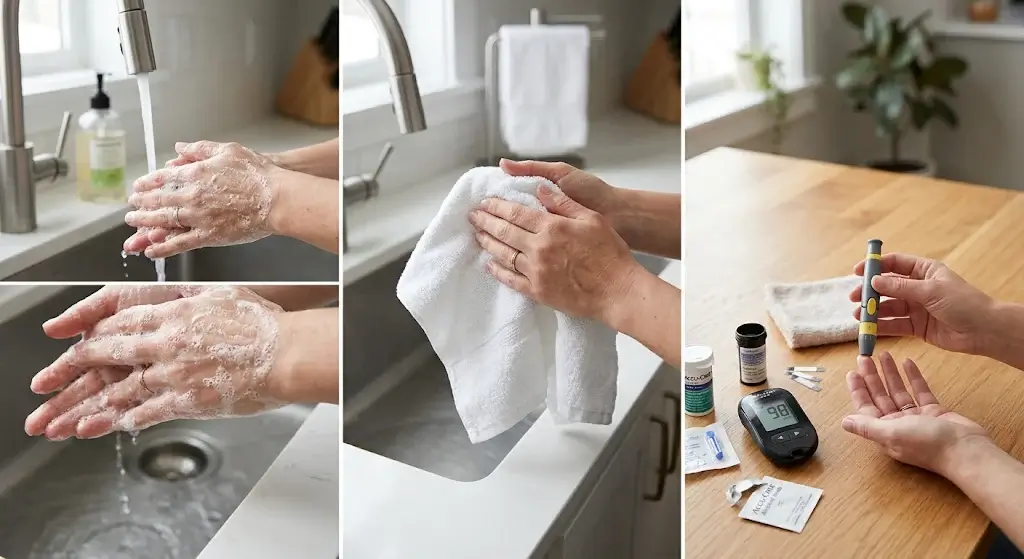
2. Use clean, dry hands
Food residue on your fingers can affect a finger-stick sample. Wash with soap and water, dry completely, and follow the meter’s instructions.
3. Record meals, activity, and medication
Log the reading with the meal, approximate carbohydrate amount, physical activity, sleep, stress, and medication timing. One reading is less informative than a repeated pattern.
4. Compare the reading with the correct range
Use diagnostic ranges only for understanding laboratory results. If you have diagnosed diabetes, compare home readings with the personalized targets provided by your health care team.
5. Repeat unexpected readings
If a result seems inconsistent with how you feel, wash and dry your hands and test again with a fresh strip. Check the strip’s expiration date and storage instructions.
6. Look for patterns rather than chasing one number
A repeated fasting result above your target, frequent after-meal spikes, or recurring lows deserves a conversation with your clinician. Do not change insulin or prescription medicine based only on a general online chart.
Common Mistake: Comparing a home reading taken after pizza, dessert, or a hard workout with a fasting laboratory range. Always match the number to the timing and test type.
What Affects Blood Sugar Besides Age?
Carbohydrate amount and meal size
Carbohydrates generally raise glucose more directly than protein or fat. That does not mean carbohydrates must be eliminated. Portion size, carbohydrate type, medication, and activity all affect the response. 4
Meals that include a measured carbohydrate serving, protein, and fiber may be easier to track than meals made mostly from refined carbohydrates. For related planning ideas, see the guides to 8 and 9.
Stress, illness, and sleep habits
Illness and stress can push glucose higher. Poor routines can also make medication timing, activity, and meal planning less consistent. The related guide to 10 explains why a stable sleep schedule belongs in a broader health plan.
Medication
Insulin and some glucose-lowering medicines can increase the risk of low blood sugar, especially if meals are missed or activity suddenly increases. Other medicines may affect glucose in different ways.
Never stop, reduce, or increase a prescription without speaking with the prescriber. Be equally cautious with products marketed for glucose or weight control. The guide to 11 provides additional questions to discuss with a clinician.
Cravings and irregular eating
Skipping meals and then overeating later can make glucose patterns harder to interpret. If snack urges regularly disrupt your plan, start with practical methods to 12 rather than relying on unproven quick fixes.
Exercise and Blood Sugar: A Practical Coaching Plan
Skeletal muscles use glucose to produce energy. Regular aerobic and resistance exercise may therefore support glucose management, although the response can vary with exercise intensity, medication, meals, and diabetes type.
The 13 supports aerobic activity, resistance training, balance work, and less sitting for people with type 2 diabetes. The federal 14 recommend 150–300 minutes of moderate aerobic activity per week plus muscle-strengthening exercise on at least two days. 15
You do not have to begin with 150 minutes. A beginner can start with five or 10 minutes at a time and build gradually.
The 10-minute post-meal walk
A systematic review found that exercise performed after eating generally had a better immediate effect on post-meal glucose than exercise performed before eating. Walking was one of the most practical options studied. 16
Try this basic plan:
- Start within a comfortable period after a meal, based on your medical plan.
- Walk for 10 minutes at an easy-to-moderate pace.
- Use the talk test: you should be able to speak in complete sentences.
- Keep your posture tall and take relaxed, even steps.
- Over several weeks, progress toward 15–20 minutes or approximately 0.5–1 mile (0.8–1.6 km).

Coach’s Tip: Consistency beats intensity. A repeatable 10-minute walk after one or two meals may be more useful than one exhausting workout that leaves you too sore to move the next day.
Two-day beginner resistance routine
Perform this routine on two nonconsecutive days each week. Warm up with three to five minutes of easy walking or marching.
| Exercise | Sets and reps | Rest | Main muscles |
| Chair squat | 2 × 8–12 | 60–90 seconds | Quadriceps, glutes |
| Wall push-up | 2 × 8–12 | 60 seconds | Chest, shoulders, triceps |
| Resistance-band row | 2 × 10–15 | 60 seconds | Upper back, biceps |
| Supported hip hinge | 2 × 8–12 | 60–90 seconds | Glutes, hamstrings |
| Standing calf raise | 2 × 12–15 | 45–60 seconds | Calf muscles |
Use a controlled 2-1-2 tempo: lower for two seconds, pause for one second, and return for two seconds. Finish each set feeling that you could complete two or three more good repetitions.
Form cues
- Chair squat: Reach your hips toward the chair, keep your whole foot down, and stand by pushing the floor away.
- Wall push-up: Keep your body in a straight line and bring your chest toward the wall without lifting your shoulders.
- Band row: Pull your elbows toward your ribs and avoid shrugging.
- Hip hinge: Push your hips backward while keeping your spine long.
- Calf raise: Rise onto the balls of your feet slowly and lower under control.

Easier version
Complete one set of each exercise and walk for five minutes. Use a higher chair, perform push-ups against a wall, and hold a counter during calf raises.
Harder version
Complete three sets and walk for 15–20 minutes. Progress chair squats to bodyweight squats or hold a 5–15 lb (2–7 kg) dumbbell. Move wall push-ups to a sturdy counter and use a stronger resistance band for rows.
Do not add weight until every repetition looks controlled. Resistance should make the final few repetitions challenging without forcing you to hold your breath.
Exercise safety with diabetes
Check with a doctor or physical therapist before changing your program if you have diabetes, frequent hypoglycemia, neuropathy, foot wounds, kidney disease, cardiovascular disease, pregnancy, significant balance problems, or vision complications.
If you take insulin or medicine that can cause lows, your care team may ask you to monitor before and after activity. Carry fast-acting carbohydrate and identification. Do not exercise through hypoglycemia, confusion, dizziness, chest discomfort, unusual shortness of breath, or severe weakness.
Avoid exercise when glucose is very high and ketones are present. High-intensity intervals and heavy lifting can also temporarily raise glucose in some people, so beginners should start with moderate, predictable sessions.
For a wider lifestyle approach, review how to 17 while keeping medical treatment at the center of your plan.
Who Should Be Screened?
Age increases the chance of developing type 2 diabetes, but younger adults and children can also be affected.
The 2 advise routine testing from age 35 and earlier testing when risk factors are present. Children ages 10–18 who have overweight or obesity plus another risk factor may also need screening. 18
Ask about testing sooner if you have symptoms such as unusual thirst, frequent urination, unexplained weight loss, blurry vision, or marked fatigue. Rapid symptoms in a child or young adult can indicate type 1 diabetes and require prompt medical evaluation.
When This Chart Is Not Enough
A general blood sugar levels chart by age cannot account for every medical situation.
Pregnancy
Gestational diabetes uses different screening steps and cutoffs. Testing usually occurs between weeks 24 and 28, although people at higher risk may be screened earlier. Do not use the nonpregnant chart to interpret pregnancy results. 1
A1C and blood conditions
Anemia, altered red blood cell turnover, hemoglobin variants, pregnancy, recent blood loss, and certain medical conditions can make A1C less reliable. Your clinician may rely more heavily on plasma glucose testing in those situations.
Type 1 diabetes symptoms
A glucose chart cannot determine whether diabetes is type 1 or type 2. Autoantibody testing, ketone testing, symptoms, and clinical history may be required.
Older adults with complex health needs
An older person’s ideal target depends on cognitive function, fall risk, ability to recognize lows, medicine burden, life expectancy, and available support. Avoid changing an older relative’s medicine simply because the reading differs from an online chart.
Frequently Asked Questions
What is normal blood sugar by age?
For nonpregnant people, the diagnostic ranges generally do not rise with age. Normal fasting glucose is usually below 100 mg/dL, while an A1C below 5.7% is considered normal. Children, adults, and seniors with diagnosed diabetes may receive different treatment targets. 1
What should blood sugar be at age 50?
A 50-year-old without diagnosed diabetes generally uses the standard laboratory ranges: fasting glucose below 100 mg/dL, two-hour OGTT glucose below 140 mg/dL, and A1C below 5.7%. A person with diabetes may have a premeal target of 80–130 mg/dL. 1
The diagnostic definition remains below 100 mg/dL. Seniors with diagnosed diabetes may have personalized management targets. A generally healthy older adult might target 80–130 mg/dL before meals, while broader targets may be appropriate with frailty or complex medical conditions. 5
Is 150 blood sugar high?
It depends on timing. A fasting glucose of 150 mg/dL is in the diabetes range. Two hours after a meal, 150 mg/dL may fall within the typical under-180 target for many adults with diabetes. An ordinary post-meal home reading cannot diagnose diabetes by itself.
What should blood sugar be two hours after eating?
For many nonpregnant adults with diagnosed diabetes, the typical goal is below 180 mg/dL two hours after the meal starts. This differs from a two-hour oral glucose tolerance test, where 140–199 mg/dL indicates prediabetes and 200 mg/dL or higher indicates diabetes. 1
When is blood sugar dangerously high?
People with diabetes should check ketones when sick or when glucose reaches 250 mg/dL or higher. Persistent glucose of 300 mg/dL or higher, high ketones, vomiting, fruity breath, or breathing difficulty requires emergency care because these can signal diabetic ketoacidosis. 7
Conclusion
The most important lesson from this blood sugar levels chart by age is that normal diagnostic cutoffs do not simply rise as you get older. Fasting glucose below 100 mg/dL and A1C below 5.7% remain the standard normal categories for nonpregnant people.
Personal targets are different. Children, adults taking insulin, pregnant people, and older adults with complex medical needs require individualized plans. Use your numbers to spot patterns, then review those patterns with a qualified health professional.