
High blood sugar responds to daily habits faster than most people expect. If you want to know how to lower blood sugar naturally without medication, the answer comes down to five levers you control: movement (especially after meals), muscle, food quality, weight, and sleep. None of them involve a pill, and research supports every one of them.
I say this as a coach, not a doctor: exercise and eating changes can lower blood sugar meaningfully, but this article does not replace medical care. If you take glucose-lowering medication, never change or stop it without talking to your doctor, because your doses may need adjusting as your habits improve. Let’s look at what the science actually shows, then turn it into a plan you can start this week.
Quick Answer: The most evidence-backed ways to lower blood sugar naturally are walking 10-15 minutes after meals, strength training 2-3 days per week, eating more soluble fiber, cutting refined carbohydrates, losing 5-7% of body weight if you carry extra weight, and sleeping 7-8 hours per night. Together these improve insulin sensitivity and reduce glucose spikes, often within weeks.
What the Research Says About Lowering Blood Sugar Without Medication
Your muscles are your biggest glucose sink
Skeletal muscle handles roughly 80% of the glucose your body clears after you eat, which is why exercise is considered a first-line therapy for type 2 diabetes [1]. When you move, your muscles pull sugar out of the blood for fuel, and they keep doing it for hours afterward. Even light activity like housework or gardening improves blood sugar, though harder workouts have a longer-lasting effect [2].
The headline numbers are strong. A meta-analysis of more than 8,500 people with type 2 diabetes found structured resistance training lowered HbA1c by an average of 0.57% compared with non-exercising controls [1]. Regular aerobic training lowers daily glucose excursions and reduces A1C by about 0.5-0.7%. Combine the two and you get more improvement than either one alone [3]. In older adults with type 2 diabetes, resistance training improved strength, blood pressure, blood lipids, and insulin sensitivity by 10-15% [3].
Timing matters: walk after you eat

This is the single easiest habit on this list. A meta-analysis of randomized trials found that walking after a meal reduced post-meal glucose spikes compared with walking before eating or doing nothing, and the effect was strongest when people started walking soon after finishing the meal [4]. Roughly 20 minutes is enough to see the benefit [4].
The American Diabetes Association position statement recommends interrupting long sitting periods with 15 minutes of post-meal walking, or 3 minutes of light walking and simple bodyweight resistance work every 30 minutes, to improve glucose control [5]. The ACSM consensus adds that post-meal exercise blunts glucose spikes regardless of intensity, with sessions of 45 minutes or more giving the most consistent benefit [3]. Practical translation: a walk after dinner beats a walk before breakfast for glucose control.
Weight: small losses, big results
You do not need to transform your body. In the landmark Diabetes Prevention Program, participants who lost 5-7% of body weight through calorie reduction and 150 minutes per week of moderate activity cut their risk of developing type 2 diabetes by 58%, and by 71% for people over 60 [6]. For a 200 lb (about 91 kg) person, that is only 10-14 lb (4.5-6.4 kg) [6]. Weight loss was the single most important factor in preventing diabetes in that study.
Fiber and food quality slow the sugar spike
Soluble fiber forms a gel in your gut that slows glucose absorption. In an 8-week randomized trial, people with type 2 diabetes who added about 10.5 g of psyllium soluble fiber daily saw fasting blood sugar fall from 163 to 119 mg/dL and HbA1c drop from 8.5% to 7.5% [7]. Meta-analyses of dozens of trials agree: soluble fiber supplementation reliably lowers HbA1c, fasting glucose, fasting insulin, and insulin resistance markers [8]. Mayo Clinic recommends emphasizing high-fiber foods such as vegetables, whole grains, and legumes while limiting refined carbs and sugary drinks [2].
Sleep is a hidden blood sugar lever
Short sleep quietly works against you. Under controlled sleep restriction, glucose clearance during testing dropped 40% and the acute insulin response fell 30% compared with well-rested conditions [9]. Habitual sleep under 7 hours per night induces insulin resistance in muscle and fat tissue and may contribute to type 2 diabetes development [9]. The CDC notes that good sleep helps keep blood sugar and blood pressure more consistent and keeps hormones like insulin and cortisol balanced [10].
The Numbers at a Glance
Table
| Habit | What the evidence shows | How to start | Time cost |
| Post-meal walking | Blunts glucose spikes; strongest when done soon after eating [4] | 10-15 min walk after your largest meal | 15 min/day |
| Aerobic exercise | Lowers A1C by about 0.5-0.7% [3] | 150 min/week of brisk activity [3] | 30 min x 5 days |
| Strength training | Cuts HbA1c by about 0.57%; boosts insulin sensitivity [1] | 2-3 sessions/week on non-consecutive days [5] | 30-40 min x 2-3 days |
| Weight loss of 5-7% | Cut diabetes risk by 58% in the DPP [6] | Small calorie deficit + daily movement | Ongoing |
| Soluble fiber | Trial: fasting glucose 163 to 119 mg/dL in 8 weeks [7] | Add vegetables, legumes, whole grains at each meal [8] | Zero extra time |
| 7-8 hours sleep | Sleep restriction cut glucose clearance 40% [9] | Fixed bedtime, no screens in the last 30 min | Zero |

How to Apply It: Your 30-Day Action Plan
Here is the exact progression I give clients who ask how to lower blood sugar naturally without medication. It builds in four two-week blocks so each habit sticks before the next one starts.
Weeks 1-2: Win the post-meal walk
Walk at an easy-to-brisk pace for 10-15 minutes after your biggest meal, ideally dinner. That is about 0.5-0.75 miles (0.8-1.2 km) for most walkers. You should be able to talk in full sentences but feel your breathing pick up. If you work at a desk, stand and move for 3 minutes every 30 minutes as well [5].
- Easier version: March in place during TV commercials, or do laps inside your home for 5 minutes after eating.
- Harder version: Extend to 20-45 minutes post-meal, or add 3 x 30-second faster bursts during the walk [3].
Coach’s Tip: Attach the walk to something you already do every day, like the phone call to your sister or the podcast you save for after dinner. In my experience the clients who “stack” the walk onto an existing routine are still doing it six months later; the ones who rely on motivation stop by week three.
Weeks 3-4: Add strength training
Muscle is the tissue that clears most of your blood sugar, so building and challenging it pays off directly. Two to three sessions per week on non-consecutive days is the evidence-backed target [5]. Use this simple full-body template:
Table
| Exercise | Sets | Reps | Rest |
| Goblet squat (dumbbell or bodyweight) | 3 | 10-12 | 60-90 sec |
| Push-up (incline if needed) | 3 | 8-12 | 60-90 sec |
| Dumbbell row (each side) | 3 | 10-12 | 60 sec |
| Glute bridge | 3 | 12-15 | 60 sec |
| Plank | 3 | 20-40 sec | 45 sec |
Form cues: on the goblet squat, keep your chest tall and heels flat, and stop the set when your form slows, not when your legs burn out. Rows should feel like pulling your elbow into your back pocket. Choose a weight where the last two reps are challenging but clean; for most beginners that is a 10-20 lb (4.5-9 kg) dumbbell for squats and rows. Resistance bands work well too if you train at home.
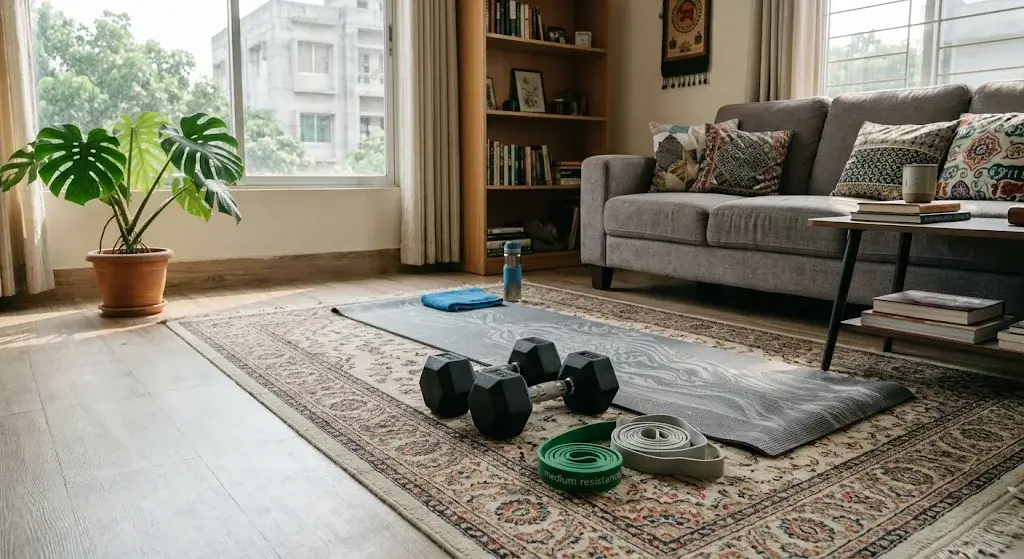
- Easier version: Do 2 sets of each exercise and use a chair for squat depth and push-up incline.
- Harder version: Slow the lowering phase to 3 seconds per rep, or move to 3 sets with heavier dumbbells once you can do all sets at the top of the rep range.
Common Mistake: Skipping strength work because “cardio burns more sugar.” In practice the opposite shows up in the data: resistance training drives meaningful HbA1c improvements [1], and combined aerobic plus resistance training beats either alone [3]. The other classic mistake is doing all weekly activity on the weekend; insulin sensitivity benefits work best when no more than two days pass between sessions [5].
Weeks 5-6: Fix the plate, not the whole diet
Rather than overhauling everything, rebuild one meal at a time using the plate method: half the plate non-starchy vegetables, a quarter lean protein, a quarter whole grains or starchy vegetables, which is the approach Mayo Clinic recommends for blood sugar management [11]. Swap one refined carb per day (white bread, white rice, sugary drinks) for a fiber-rich option. If cravings make this hard, there are evidence-based ways to manage food cravings without supplements that pair well with this plan.
Because soluble fiber shows the strongest glucose effects [8], make vegetables and legumes the default rather than an occasional side. If hunger makes the calorie deficit hard to hold, protein and fiber choices matter; research on how protein intake affects hunger and fullness hormones and on how soluble fiber helps you feel full longer explains why those two nutrients keep you satisfied while you eat less.
Weeks 7-8 and beyond: Sleep, stress, and stacking
Set a consistent bedtime that gets you 7-8 hours in bed. The CDC lists screens before bed, evening snacking, and stress among the main sleep disruptors, and notes that good sleep keeps blood sugar more consistent [10]. If you are over 40 and feel your metabolism working against you, the same habits overlap heavily with natural ways to boost metabolism after 40.
For stress, add a 10-minute walk, breathing drill, or stretching session on high-stress days. Stress-eating patterns have a real physiological side, which is covered in more depth in this guide to stress eating and cortisol.
Sample Week for Blood Sugar Control
Table
| Day | Activity | Duration | Intensity |
| Monday | Full-body strength (table above) | 35 min | Moderate-hard |
| Tuesday | Brisk walk after dinner | 30 min | Moderate |
| Wednesday | Full-body strength | 35 min | Moderate-hard |
| Thursday | Walk or easy bike ride | 30 min | Easy-moderate |
| Friday | Full-body strength | 35 min | Moderate-hard |
| Saturday | Longer walk, hike, or swim | 45-60 min | Moderate |
| Sunday | Rest or gentle stretch | 20 min | Easy |
| Every day | 10-15 min walk after your largest meal | 15 min | Easy |
This lands you above the 150-minute weekly minimum and hits the 2-3 strength sessions the ADA recommends [5]. If you miss a day, just do not let two days in a row pass without movement [5].
Safety Notes
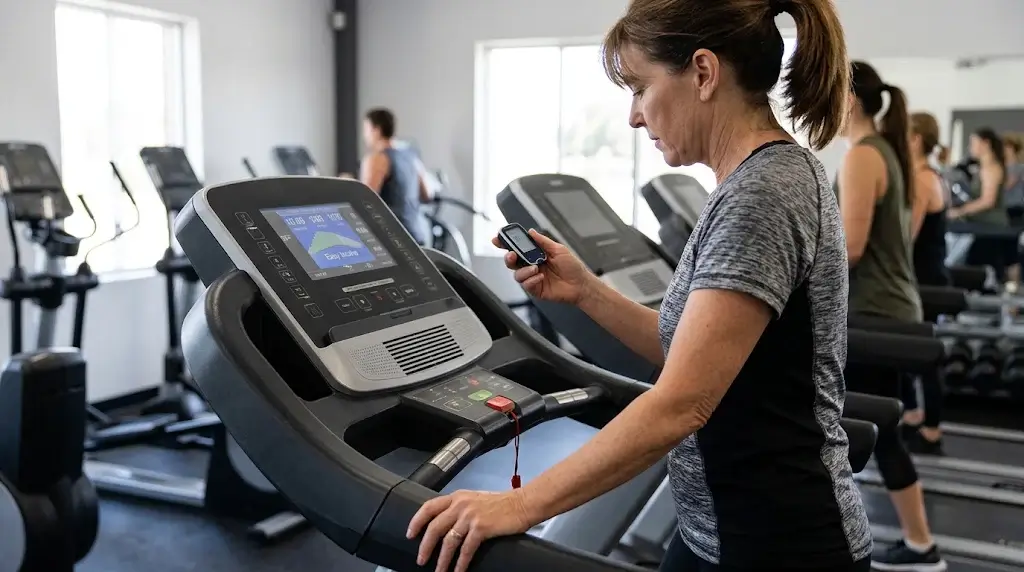
Blood sugar work is generally safe, but a few situations need care. Check with your doctor before starting this plan if you have diabetes, take insulin or other glucose-lowering medication, have heart disease, or have been inactive for a long time.
- If you use insulin or sulfonylureas, exercise can cause lows. Blood sugar below 70 mg/dL is considered hypoglycemia [12]. Know the signs: shakiness, sweating, fast heartbeat, confusion, and hunger [12]. Carry fast carbs (4 oz of juice or 3-4 glucose tablets) and use the 15-15 rule: 15 g of carbs, wait 15 minutes, recheck [12].
- Do not exercise into a dangerous high. If you feel unwell with very high readings, confusion, or extreme thirst, seek medical care; blood sugar above 600 mg/dL with confusion can signal hyperosmolar hyperglycemic state, which is an emergency [13].
- Expect normal exercise responses. Some people see glucose rise briefly during intense intervals; that is a normal liver glucose release, not harm. If you use a continuous glucose monitor, judge the trend, not one reading.
Related Tips That Multiply Your Results
- Fiber first at every meal. Eating vegetables and protein before the starch on your plate is a free tactic that supports the fiber mechanisms described above [8].
- Cut liquid sugar completely. Sugary drinks raise blood sugar quickly and offer little nutrition; Mayo Clinic flags them as the top item to limit [2]. If sweet cravings are your weak spot, see this guide on how to stop sugar cravings naturally.
- Track something. A step count, a walk log, or glucose readings. Monitoring makes habits stick and shows you which meals spike you.
- Be skeptical of shortcuts. Supplements get marketed hard for blood sugar. If you are curious about them, read this evidence review on supplements and insulin sensitivity before spending money, and discuss anything you take with your doctor.
- Aim for consistency, not perfection. Research on exercise and glucose control shows benefits come from repeated, habitual activity, not one heroic week [1].
FAQ
1. How long does it take to lower blood sugar with exercise?
A single 20-minute post-meal walk can blunt that day’s glucose spike within hours [4]. Training adaptations that improve insulin sensitivity build over weeks, and measurable A1C changes typically show up over about three months, since A1C reflects roughly that window of average glucose.
2. Does walking after meals really lower blood sugar?
Yes, and timing matters. Trials show walking soon after eating reduces post-meal glucose excursions more than walking before a meal, with about 20 minutes being enough [4]. The ADA specifically recommends 15 minutes of post-meal walking to interrupt sitting time [5].
3. Can strength training lower blood sugar as well as cardio?
It contributes strongly. A meta-analysis of over 8,500 people with type 2 diabetes found resistance training lowered HbA1c by 0.57% on average [1]. The best results come from doing both, since combined aerobic and resistance training outperforms either alone [3].
4. Can I reverse prediabetes without medication?
Many people can delay or prevent type 2 diabetes through lifestyle change. In the Diabetes Prevention Program, losing 5-7% of body weight plus 150 minutes of weekly activity cut diabetes risk by 58% [6]. Work with your doctor and consider a CDC-recognized prevention program for structure and support.
5. What time of day is best to exercise for blood sugar?
Post-meal exercise gives the most consistent glucose control, and sessions of 45 minutes or longer provide the strongest benefit [3]. Some research also suggests afternoon sessions may manage glucose better than morning sessions for people with type 2 diabetes [3]. The best time is still the one you will repeat daily.
6. What should blood sugar be 2 hours after eating?
Most guidelines consider under 140 mg/dL (7.8 mmol/L) a typical 2-hour post-meal level for people without diabetes, though targets differ if you have diabetes and should be set with your healthcare team. If your readings run consistently higher, bring your log to your doctor rather than self-treating. A post-meal walk is the simplest natural tool for flattening that spike [4].
Conclusion
Learning how to lower blood sugar naturally without medication is less about a secret food or supplement and more about stacking six proven habits: walk after meals, strength train 2-3 days a week, hit 150 minutes of aerobic activity, build your plates around fiber, lose a modest 5-7% if you carry extra weight, and protect your sleep. Start with one 10-minute walk after dinner tonight. Small, repeatable actions are what actually move your numbers, and your future self will thank you for starting.
If you have diabetes, prediabetes, or any medical condition, review this plan with your doctor or a certified diabetes educator before making changes, especially if you take glucose-lowering medication.