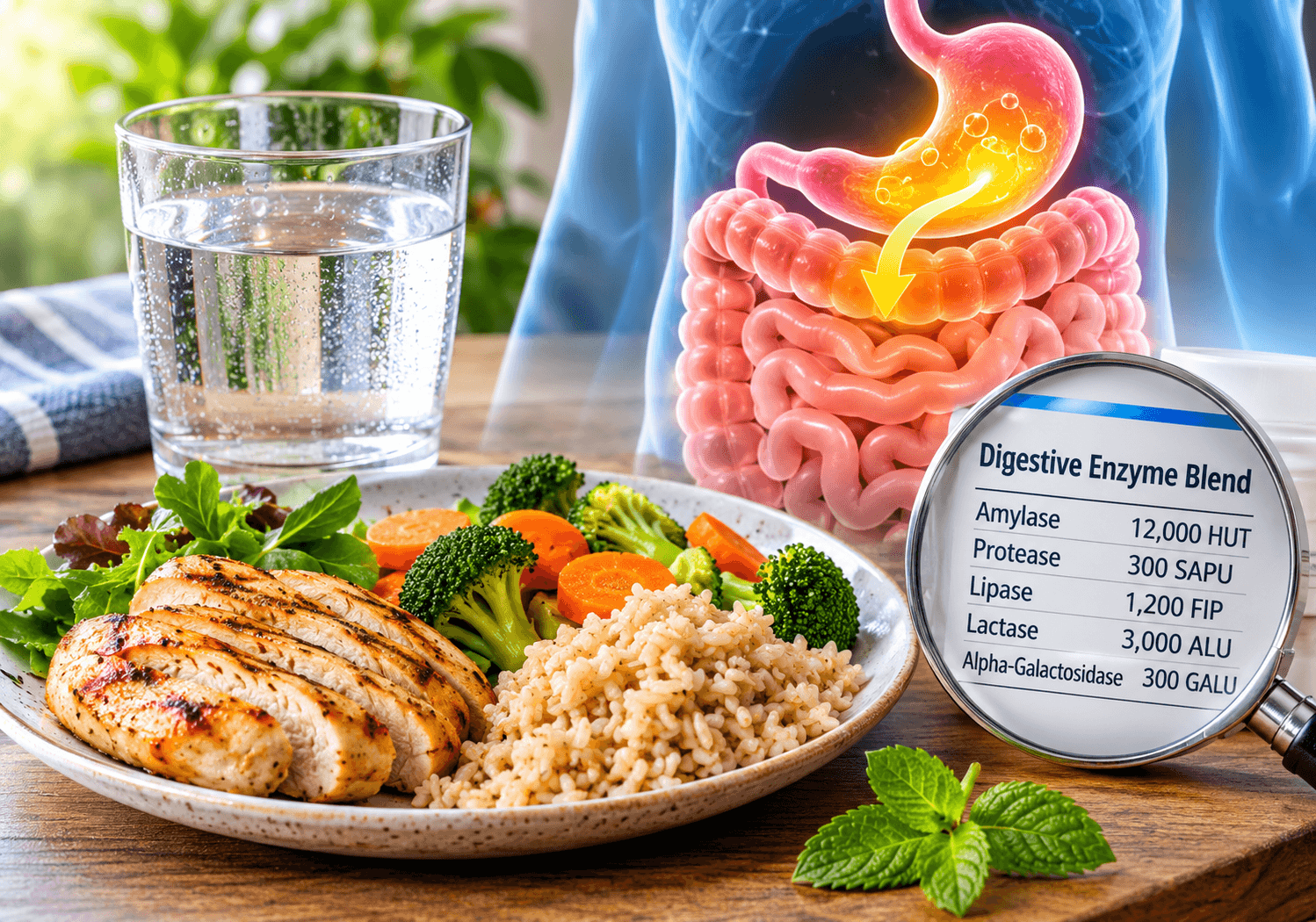
Do Digestive Enzyme Supplements Actually Help with Slow Digestion?
Feeling like a meal sits in your stomach like a brick for hours can derail your workouts, zap your afternoon energy, and make hitting daily nutrition goals miserable. Whether you are eating high-protein meals to build muscle or simply dealing with heavy post-meal fullness, you have probably wondered: do digestive enzyme supplements actually help with slow digestion?
As a strength and conditioning coach, I frequently see athletes and active adults reach for enzyme capsules whenever bloating or sluggishness strikes. While these supplements are marketed as a universal fix for gut discomfort, the scientific reality is much more specific. Understanding what enzymes actually do inside your gastrointestinal tract will save you money and help you solve the real root cause of slow digestion.
Quick Answer: Digestive enzyme supplements do not speed up stomach emptying or gut motility. Instead, they help break down specific macronutrients—like lactose, complex carbs, fats, or proteins—into smaller molecules. They primarily help if your slow, heavy digestion stems from a specific enzyme deficiency or food intolerance, rather than slow gut movement itself.
What Does “Slow Digestion” Actually Mean?
Before deciding if a supplement works, we need to clarify what people mean when they say their digestion feels slow. In clinical nutrition and gastroenterology, a sluggish gut usually points to one of two completely different biological processes: mechanical motility or chemical breakdown.
Mechanical motility is the physical movement of food through your digestive tract. Muscles in your stomach and intestines contract in rhythmic waves (called peristalsis) to push food forward. When stomach emptying is physically delayed—a condition known in severe cases as gastroparesis—food stays in the upper stomach too long, causing early fullness, nausea, or reflux.
Chemical breakdown, on the other hand, is how your body dismantles large food molecules into tiny, absorbable nutrients. Your saliva, stomach acid, bile, and pancreatic juices work together like microscopic scissors to snip proteins into amino acids, fats into fatty acids, and carbohydrates into simple sugars.
When chemical breakdown stalls due to low enzyme output, undigested food lingers in the small intestine and travels into the colon. There, gut bacteria ferment those leftover food particles, creating gas, pressure, bloating, and that unmistakable “brick-in-the-stomach” sensation.
What the Research Says: Do Digestive Enzyme Supplements Actually Help with Slow Digestion?
When we look at clinical evidence, the answer to do digestive enzyme supplements actually help with slow digestion depends entirely on whether your problem is mechanical or chemical.
1. They Do Not Speed Up Stomach Motility
Over-the-counter (OTC) digestive enzymes are chemical catalysts, not motility drugs (prokinetics). According to the National Institute of Diabetes and Digestive and Kidney Diseases (NIDDK), delayed gastric emptying involves nerve or muscle dysfunction in the stomach wall. Swallowing a capsule of amylase or protease will not make your stomach muscles contract faster or push food into your small intestine ahead of schedule.
2. They Excel at Specific Enzyme Deficiencies
Where digestive enzymes shine is replacing missing chemical tools. The most well-documented example is lactose intolerance. Research reviewed by the National Institutes of Health (NIH) confirms that supplemental lactase breaks down milk sugar before it reaches the colon, preventing gas, cramping, and sluggish bloating.
Similarly, alpha-galactosidase helps break down galacto-oligosaccharides—complex fermentable carbohydrates found in beans, lentils, broccoli, and whole grains. Clinical trials indexed on PubMed Central (PMC) show that taking alpha-galactosidase before high-FODMAP meals significantly reduces post-meal gas and abdominal distension in sensitive individuals.
3. Prescription Enzymes Treat True Pancreatic Insufficiency
For individuals with Exocrine Pancreatic Insufficiency (EPI)—caused by conditions like chronic pancreatitis, cystic fibrosis, or pancreatic surgery—the pancreas fails to produce enough digestive enzymes. In these cases, FDA-approved Pancreatic Enzyme Replacement Therapy (PERT) is medically necessary to prevent malnutrition and severe digestive distress, as outlined by the Cleveland Clinic.
4. Evidence for General Post-Meal Heaviness Is Mixed
What if you are a healthy person who simply feels overly full after a large steak dinner or a big post-workout meal? Clinical research on broad-spectrum OTC enzyme blends in healthy adults is limited. A few small randomized controlled trials suggest multi-enzyme blends may mildly reduce post-meal fullness and bloating after heavy, high-fat meals, while other studies show no difference compared to a placebo.
Coach’s Tip: Think of digestive enzymes like specialized keys rather than a turbocharger. If your sluggishness happens because you lack the specific key to unlock dairy (lactase) or beans (alpha-galactosidase), taking that enzyme works wonders. If you simply ate a 1,200-calorie meal in ten minutes without chewing, an enzyme pill won’t outwork rushed eating habits.
Common Digestive Enzymes and What They Actually Target
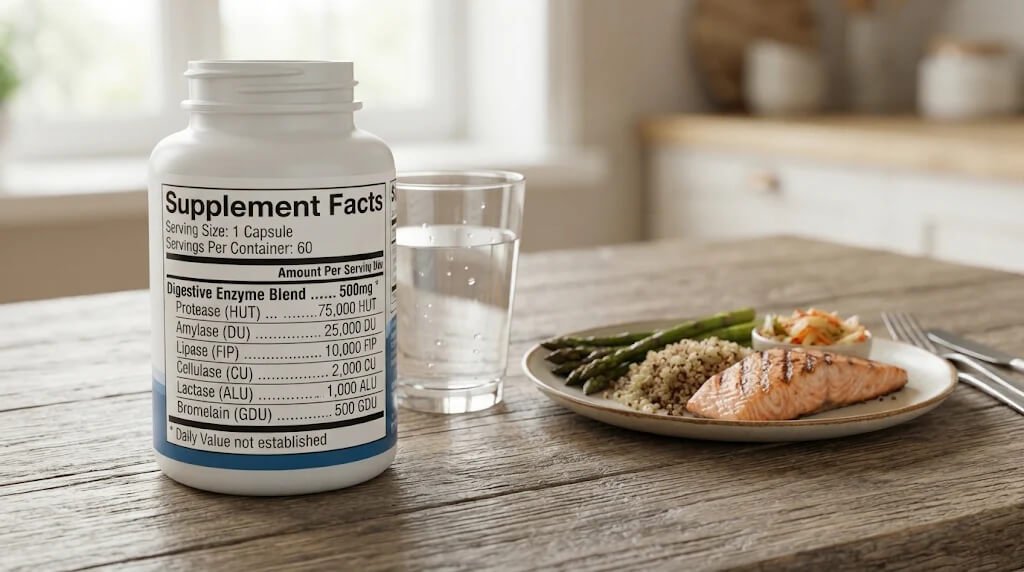
Not all enzyme supplements do the same job. Supplement labels often list a dozen different ingredients measured in confusing activity units (like HUT, FIP, or ALU) rather than milligrams. Here is how the primary enzymes break down specific foods:
| Enzyme Name | Macronutrient Target | Common Food Sources | Strength of Clinical Evidence |
| Lactase | Lactose (milk sugar) | Milk, whey concentrate, ice cream, soft cheeses | Strong — Well-proven to reduce dairy-related gas and bloating. |
| Alpha-Galactosidase | Complex oligosaccharides | Beans, lentils, chickpeas, cruciferous vegetables | Strong — Proven to cut fermentation and gas from high-FODMAP plants. |
| Protease (Bromelain, Papain) | Proteins & peptides | Chicken, beef, eggs, whey/casein protein powders | Moderate to Low — Helps cleave protein bonds in lab settings; human motility benefits remain mixed. |
| Lipase | Triglycerides (fats) | Oils, butter, fatty fish, nuts, avocado, cheese | Strong for EPI / Low for general use — Essential in prescription PERT; limited data in healthy adults. |
| Amylase | Starches & glycogen | Rice, oats, potatoes, bread, pasta | Low — Healthy humans already produce abundant salivary and pancreatic amylase. |
| Cellulase | Cellulose (plant fiber) | Raw vegetables, leafy greens, bran, seeds | Low — Humans lack endogenous cellulase, though gut bacteria naturally ferment fiber. |
Why Active People and Lifters Often Experience Slow Digestion
In my coaching practice, sluggish digestion rarely comes out of nowhere. When active clients complain that food sits in their stomach all afternoon, one of four training or nutrition habits is usually behind it:
- Aggressive Calorie Surpluses: When trying to gain lean mass, increasing food volume by 500 to 800 calories per day places an immediate mechanical load on the stomach. Gastric emptying naturally slows down as total meal volume and fat density increase.
- Massive Single-Meal Protein Boluses: Eating 60 to 80 grams of dense animal protein in one sitting slows gastric emptying because protein triggers satiety hormones like cholecystokinin (CCK) and peptide YY (PYY). If you want to understand how protein interacts with fullness signals, see our guide on how protein intake affects hunger and fullness hormones.
- Training Immediately After Eating: Intense resistance training or high-intensity cardio diverts blood flow away from your gastrointestinal tract and toward your working skeletal muscles. If you eat a heavy meal 45 minutes before heavy squats, digestion essentially hits pause until your heart rate recovers.
- Chronic Stress and Sympathetic Dominance: Your gut only digests efficiently in a parasympathetic (“rest and digest”) state. High work stress, poor sleep, and overtraining keep your nervous system locked in “fight or flight,” slowing stomach contractions and reducing natural stomach acid secretion.
How to Apply This: A Practical Step-by-Step Protocol for Slow Digestion
Before spending $40 a month on a broad-spectrum enzyme bottle, use this structured, coach-tested protocol to pinpoint and fix sluggish digestion.
Step 1: Audit Meal Size, Fat Density, and Eating Speed (Days 1–7)
For one week, keep your daily calories the same, but split large meals into smaller portions spaced 3 to 4 hours apart. Cap dietary fat at 15 to 20 grams in the meal right before training, and spend at least 15 to 20 minutes eating each meal so salivary amylase can start carbohydrate breakdown in your mouth.
Step 2: Check Your Fiber and Hydration Balance (Days 8–14)
Jumping from 15 grams of fiber to 45 grams overnight slows transit time and causes heavy bloating if fluid intake lags behind. Gradually adjust fiber intake and drink 12 to 16 oz (350 to 475 ml) of water with meals. You can also explore how dietary fiber supports appetite and digestion without overwhelming your gut.
Step 3: Run a Targeted 14-Day Enzyme Trial (Days 15–28)
If post-meal heaviness persists after adjusting meal timing and chewing, test a targeted supplement rather than a random kitchen-sink formula:
- If dairy triggers heaviness: Take 3,000 to 9,000 FCC units of lactase with your first bite of dairy.
- If beans, oats, or veggies cause bloat: Take 300 to 1,200 GalU of alpha-galactosidase right before eating.
- If heavy mixed meals feel sluggish: Choose a third-party tested broad-spectrum enzyme blend containing protease, lipase, and amylase, and take 1 capsule immediately before your two largest meals of the day.
Step 4: Pair Post-Meal Movement with Your Routine
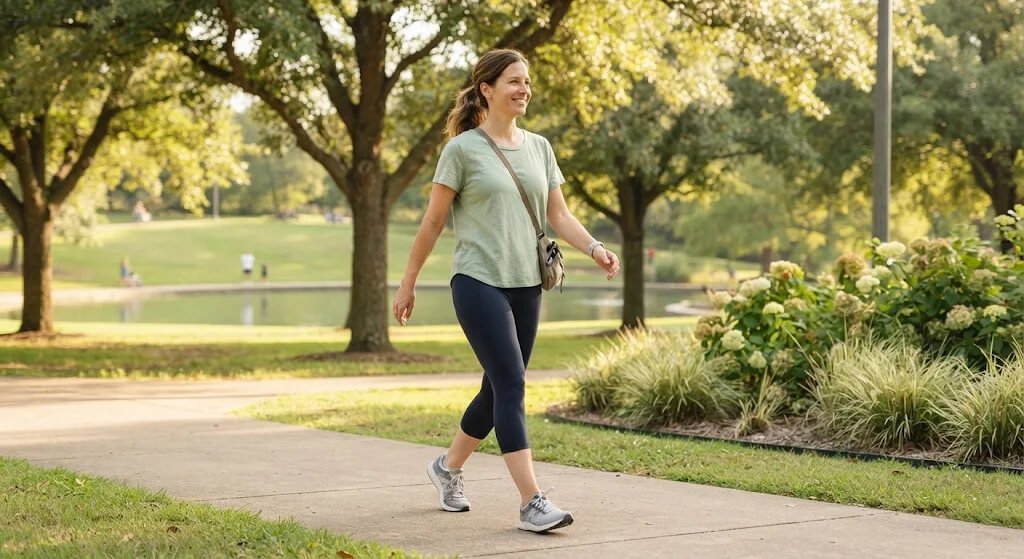
A simple 10- to 15-minute brisk walk at 2.5 to 3.5 mph (4.0 to 5.6 km/h) after your largest meal physically stimulates gastric motility and blood glucose uptake far more reliably than any capsule.
Common Mistake: Taking digestive enzymes 30 minutes after finishing a meal—or on an empty stomach between meals—drastically reduces their effectiveness. Enzymes must mix directly with food in the upper stomach as you eat to break down macronutrients before they reach the small intestine.
OTC Supplements vs. Prescription Enzymes: Key Differences
Many consumers assume over-the-counter digestive enzymes are simply milder versions of prescription treatments. In reality, regulatory oversight, dosing accuracy, and clinical validation differ dramatically between the two categories.
| Feature | Over-the-Counter (OTC) Digestive Enzymes | Prescription Pancreatic Enzymes (PERT) |
| FDA Regulation | Regulated as dietary supplements; not evaluated for efficacy before sale. | FDA-approved medications tested for safety, purity, and clinical effectiveness. |
| Enzyme Source | Usually derived from fungi (Aspergillus), yeast, or plants (pineapple, papaya). | Derived from porcine (pig) pancreas glands (pancrelipase). |
| Enteric Coating | Rarely enteric-coated; strong stomach acid can deactivate sensitive lipase. | Microspheres have an acid-resistant enteric coating that opens in the small intestine. |
| Dosing Potency | Typically low to moderate activity units; potency can vary between batches. | High, standardized doses of lipase, protease, and amylase prescribed by body weight. |
| Primary Use Case | Mild food intolerances (lactose, FODMAPs) or occasional post-meal fullness. | Diagnosed medical conditions like EPI, chronic pancreatitis, or cystic fibrosis. |
According to the Harvard Health Publishing guide on digestive enzymes, because OTC supplements do not require pre-market FDA approval, choosing products verified by independent organizations like USP, NSF International, or ConsumerLab is essential to ensure the bottle actually contains active enzymes.
Safety Notes, Side Effects, and Who Should Be Careful
While OTC digestive enzymes are generally well tolerated by healthy adults, they are biologically active proteins that can cause unwanted effects—especially at high doses or when used for the wrong condition.
Potential Side Effects:
- Abdominal cramping, nausea, or stomach burning (especially with high-dose proteases like bromelain or papain on an empty stomach)
- Loose stools, diarrhea, or urgent bowel movements
- Allergic reactions in people sensitive to pineapple (bromelain), papaya (papain), molds/fungi (Aspergillus), or pork products
Who Should Avoid or Use Caution:
- People with active stomach ulcers or severe gastritis: High-potency protease enzymes can irritate inflamed stomach lining.
- Individuals taking blood thinners or certain antibiotics: Bromelain and papain may interact with anticoagulant medications (such as warfarin) and increase bleeding risk, as noted by the National Center for Complementary and Integrative Health (NCCIH).
- Anyone experiencing “red flag” digestive symptoms: Unexplained weight loss, persistent vomiting, difficulty swallowing, black or bloody stools, or severe abdominal pain require immediate medical evaluation—not self-treatment with supplements.
If you are managing chronic digestive conditions, taking prescription medications, or considering supplements during pregnancy or breastfeeding, check with a doctor or registered dietitian first.
Related Habits That Improve Gut Motility Naturally
If your goal is keeping digestion moving smoothly so you feel light, energized, and ready to train, pairing smart nutrition habits with overall metabolic health makes the biggest difference:
- Prioritize Consistent Sleep: Disrupted circadian rhythms directly slow colonic transit time and alter gut hormone signaling. Learn more in our breakdown of how sleep affects metabolism and weight management.
- Support Your Gut Microbiome: While enzymes break down food chemically, beneficial gut bacteria ferment fibers into short-chain fatty acids that nourish the intestinal lining. You can read how probiotics influence digestion and weight management to see if a probiotic fits your routine.
- Evaluate Supplement Labels Critically: Just like metabolism boosters, digestive blends often hide behind proprietary formulas. Use our framework on how to evaluate ingredients in supplements before buying any multi-ingredient gut product.
- Stay Hydrated Around Workouts: Even mild dehydration slows intestinal transit as your colon pulls extra water back into the bloodstream. Aim for pale-yellow urine throughout the day and replenish fluids after sweating.
- Keep Meals Balanced When Dieting: Extreme calorie cuts can slow gut motility simply because less food volume moves through the tract. Check out our guide on how to support metabolism naturally to keep both energy and digestion steady.
Frequently Asked Questions
Do digestive enzymes help food digest faster?
Digestive enzymes do not make your stomach empty faster or speed up intestinal muscle contractions. Instead, they help break down specific nutrients—like lactose or complex plant sugars—more efficiently so food does not sit undigested and ferment in your gut.
When should I take digestive enzyme supplements?
Take digestive enzyme supplements right before your first bite of food, or alongside the first few bites of a meal. Taking them too early on an empty stomach or 30 minutes after eating prevents the enzymes from mixing properly with your food.
Can digestive enzymes cause stomach pain or diarrhea?
Yes, taking high doses of digestive enzymes—especially strong proteases like bromelain or papain—can cause stomach cramping, nausea, heartburn, or loose stools. Starting with a single low-dose capsule with a full meal helps minimize gastrointestinal irritation.
Do digestive enzymes help with high-protein diets?
Small studies suggest protease enzymes may help break down dense protein meals and mildly reduce post-meal heaviness, though evidence in healthy lifters is mixed. Splitting protein into 30- to 45-gram meals every few hours usually relieves slow protein digestion more reliably.
How long do digestive enzymes take to work?
Because digestive enzymes act directly on food inside your stomach and small intestine, they work immediately during that specific meal. You should notice reduced post-meal gas or heaviness within 1 to 3 hours of eating if an enzyme deficiency caused your symptoms.
Who should not take digestive enzyme supplements?
People with active stomach ulcers, severe acid reflux, bleeding disorders, or allergies to pineapple, papaya, mold, or pork should avoid OTC digestive enzymes unless cleared by a physician. Anyone with unexplained weight loss or severe abdominal pain should see a doctor first.
Conclusion
So, do digestive enzyme supplements actually help with slow digestion? If your post-meal heaviness comes from a specific chemical bottleneck—such as lactose intolerance or trouble breaking down fermentable carbohydrates in beans and vegetables—targeted enzymes like lactase or alpha-galactosidase can provide clear, reliable relief. However, if your digestion feels sluggish because of oversized meals, rushed eating, high stress, or slow stomach motility, enzyme pills will not act as a magic speed button.
Start with the fundamentals first: chew your food thoroughly, split massive meals into manageable portions, take a 10-minute walk after eating, and stay hydrated. If you decide to test an over-the-counter enzyme, pick a third-party tested product matched to the exact foods that bother you, take it with your first bite, and track how your body responds over two weeks.