How Do B-Complex Vitamins Support Energy Production and Healthy Weight?
If you have ever felt flat during a workout or hit a wall halfway through a fat-loss phase, you might have wondered about the nutrients behind your stamina. Understanding how do B-complex vitamins support energy production and healthy weight starts with looking at how your body actually turns food into fuel. Unlike caffeine or pre-workout stimulants, B vitamins contain zero calories and do not force a temporary spike in your heart rate. Instead, they act as essential spark plugs inside your cells that unlock the energy stored in the proteins, carbohydrates, and fats you eat every day.
Before starting any new dietary supplement—especially if you are managing a medical condition, taking prescription medications, or navigating a strict weight-loss plan—check with a doctor or qualified healthcare professional first.
Quick Answer: B-complex vitamins support energy production and healthy weight by acting as essential coenzymes that help your cells convert carbohydrates, fats, and proteins into usable fuel (ATP). While they do not directly burn body fat or replace a calorie deficit, maintaining adequate B-vitamin levels prevents fatigue, supports workout performance, and keeps your metabolism running efficiently.
What Are B-Complex Vitamins?
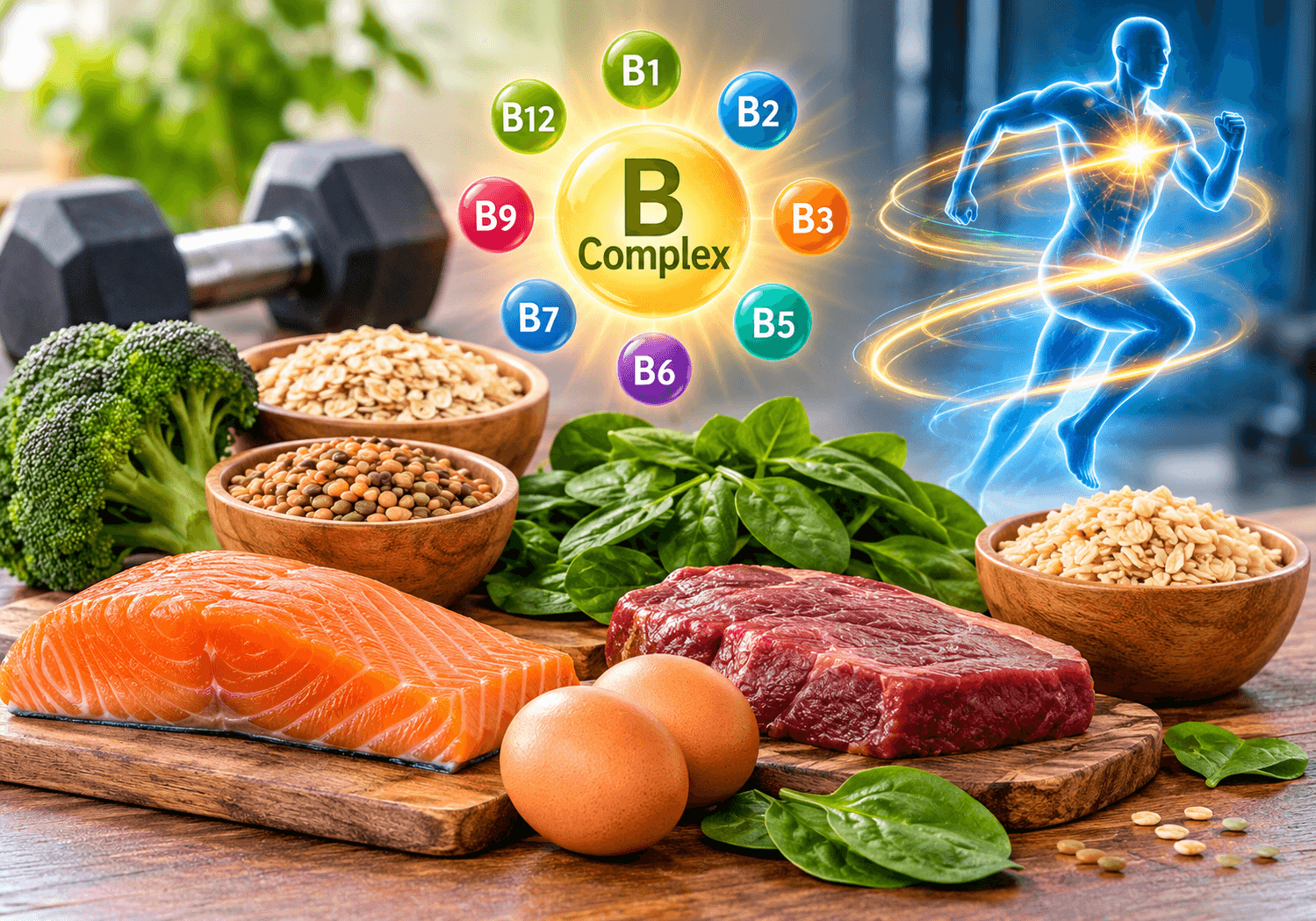
The B-complex family consists of eight distinct, water-soluble vitamins that work together to keep your cellular machinery running smoothly. Because they are water-soluble, your body does not store large reserves of most B vitamins in fat tissue, meaning you need a steady daily supply through food or supplements. Any excess your body cannot use right away is typically excreted through your urine.
Each of the eight B vitamins has a specific job in human physiology, yet they overlap closely during energy metabolism:
- Vitamin B1 (Thiamine): Helps convert glucose from carbohydrates into usable cellular energy and supports nerve signaling to working muscles.
- Vitamin B2 (Riboflavin): Plays a central role in mitochondrial energy production and helps break down fats and proteins.
- Vitamin B3 (Niacin): Forms critical coenzymes (NAD and NADP) required for hundreds of metabolic reactions, including glycolysis and fatty acid oxidation.
- Vitamin B5 (Pantothenic Acid): Essential for synthesizing coenzyme A (CoA), a molecule needed to metabolize fatty acids and build energy inside the mitochondria.
- Vitamin B6 (Pyridoxine): Assists in over 100 enzyme reactions, primarily focused on amino acid (protein) metabolism and glycogen breakdown during exercise.
- Vitamin B7 (Biotin): Supports enzymes involved in gluconeogenesis (creating glucose from non-carb sources) and fatty acid synthesis.
- Vitamin B9 (Folate): Works alongside vitamin B12 to build DNA, repair tissue, and produce healthy red blood cells.
- Vitamin B12 (Cobalamin): Required for red blood cell formation, neurological function, and the metabolism of both fatty acids and amino acids.
According to the National Institutes of Health Office of Dietary Supplements, these eight micronutrients must be present in adequate amounts for your body to extract energy from macronutrients efficiently. When even one B vitamin runs low, the entire assembly line of cellular energy slows down.
How Do B-Complex Vitamins Support Energy Production at the Cellular Level?
To understand how do B-complex vitamins support energy production and healthy weight, it helps to look inside the mitochondria—the microscopic power plants within your muscle cells. Every time you lift a barbell, climb stairs, or walk a brisk 2 miles (3.2 km), your muscles contract using a molecule called adenosine triphosphate (ATP). Food provides the raw materials for ATP, but B vitamins act as the tools that assemble it.
Converting Macronutrients Into ATP
When you eat a meal containing oats, chicken, and olive oil, your digestive system breaks those foods down into glucose, amino acids, and fatty acids. However, those molecules cannot power a muscle contraction on their own. They must enter a series of biochemical pathways—most notably glycolysis and the citric acid cycle (also known as the Krebs cycle)—to generate ATP.
Research published in the journal Nutrients via PubMed Central highlights that thiamine (B1), riboflavin (B2), niacin (B3), and pantothenic acid (B5) are directly required at multiple steps of the citric acid cycle and the electron transport chain. Riboflavin forms the coenzymes FAD and FMN, while niacin forms NAD and NADH. These coenzymes shuttle electrons through your mitochondria, driving the chemical reactions that produce up to 90% of your body’s cellular energy.
Oxygen Delivery and Red Blood Cell Production
Energy production also depends heavily on oxygen delivery. During aerobic exercise—such as cycling, rowing, or jogging—your muscles demand a steady stream of oxygen to keep producing ATP without building up excessive fatigue. Vitamins B6, B9 (folate), and B12 are indispensable for manufacturing healthy red blood cells that carry hemoglobin from your lungs to your working muscles.
If your intake of folate or vitamin B12 drops too low, your body can develop megaloblastic anemia, a condition where red blood cells become abnormally large and inefficient at transporting oxygen. In the gym, this shows up as early breathlessness, heavy legs during warm-ups, and an inability to recover between sets.
Coach’s Tip: Do not confuse a B-complex vitamin with a stimulant like caffeine. If you take a B-complex supplement 20 minutes before lifting weights expecting a sudden rush of adrenaline, you will be disappointed. B vitamins work behind the scenes over days and weeks to ensure your baseline energy pathways are firing on all cylinders.

The Connection Between B Vitamins and Healthy Weight Management
Many people search for shortcuts to fat loss, leading to confusion about whether B vitamins directly melt body fat. Let us be clear: B-complex vitamins do not act as thermogenic fat burners, nor do they override basic energy balance. You still need a consistent calorie deficit—consuming slightly fewer calories than your body burns—to lose body fat.
However, B vitamins play three vital supporting roles that make managing your weight far more sustainable:
- Supporting Macronutrient Metabolism: Vitamins B1, B2, B3, B5, B6, and B7 directly govern how efficiently your body processes carbohydrates, dietary fats, and proteins. When your metabolic coenzymes are fully stocked, your body can switch smoothly between burning glucose during high-intensity training and oxidizing stored fatty acids at rest.
- Protecting Training Output During a Calorie Deficit: Dieting naturally reduces your available energy, which often causes people to move less throughout the day and lift lighter weights in the gym. Maintaining strong B-vitamin status helps prevent micronutrient-driven fatigue, allowing you to keep your workout intensity high and preserve lean muscle tissue while losing fat.
- Aiding Muscle Repair and Protein Utilization: Preserving skeletal muscle is one of the best ways to keep your resting metabolic rate healthy during weight loss. Vitamin B6 is directly involved in amino acid metabolism and protein synthesis, helping your body put the protein you eat toward repairing muscle fibers after resistance training.
A review in Nutrients on B vitamins and energy metabolism notes that marginal deficiencies in B vitamins can impair physical performance and reduce the body’s capacity to sustain moderate-to-vigorous exercise. When your workouts suffer, your total daily energy expenditure drops, making weight maintenance much harder.
Complete Breakdown of the 8 B-Complex Vitamins
To see how each nutrient contributes to your training and body composition goals, review the breakdown below. All Recommended Dietary Allowances (RDAs) reflect standard adult guidelines from the National Institutes of Health.
| Vitamin | Primary Metabolic Role | Key Whole-Food Sources | Adult RDA (Men / Women) |
| B1 (Thiamine) | Converts carbohydrates into glucose energy; supports nerve-to-muscle signaling | Pork, whole grains, black beans, sunflower seeds, fortified cereals | 1.2 mg / 1.1 mg |
| B2 (Riboflavin) | Powers mitochondrial electron transport (FAD/FMN); metabolizes fats and proteins | Eggs, lean beef, dairy milk, almonds, spinach | 1.3 mg / 1.1 mg |
| B3 (Niacin) | Forms NAD/NADP coenzymes for glycolysis and fatty acid oxidation | Chicken breast, tuna, turkey, brown rice, peanuts | 16 mg NE / 14 mg NE |
| B5 (Pantothenic Acid) | Builds coenzyme A (CoA) to break down fatty acids and synthesize hormones | Shiitake mushrooms, salmon, avocado, chicken, sweet potatoes | 5 mg / 5 mg (AI) |
| B6 (Pyridoxine) | Metabolizes amino acids; releases stored muscle glycogen during exercise | Chickpeas, tuna, salmon, poultry, bananas, potatoes | 1.3–1.7 mg / 1.3–1.5 mg |
| B7 (Biotin) | Supports enzymes for fatty acid synthesis and gluconeogenesis | Eggs (cooked), salmon, pork chops, sunflower seeds, sweet potatoes | 30 mcg / 30 mcg (AI) |
| B9 (Folate) | Synthesizes DNA and RNA; supports red blood cell formation and tissue repair | Lentils, dark leafy greens, asparagus, black-eyed peas, avocado | 400 mcg DFE / 400 mcg DFE |
| B12 (Cobalamin) | Produces red blood cells; maintains nerve myelin sheaths and fat/protein metabolism | Clams, beef liver, salmon, dairy, eggs, fortified nutritional yeast | 2.4 mcg / 2.4 mcg |
Note: AI indicates Adequate Intake where an RDA has not been established. NE stands for Niacin Equivalents, and DFE stands for Dietary Folate Equivalents.
Who Is Most at Risk for Low B-Vitamin Levels?
Even if you eat a reasonably balanced diet, certain training habits, dietary choices, and life stages can increase your risk of running low on one or more B vitamins. In my experience coaching everyday lifters and recreational athletes, energy dips during a diet frequently trace back to restricted food variety rather than a lack of willpower.
People Following Calorie-Restricted Diets
When you cut your daily intake by 400 to 600 calories to lose weight, you automatically reduce the total volume of micronutrients coming through your food. Cutting out entire food groups—such as eliminating grains on a low-carb plan or avoiding animal products without careful planning—narrows your B-vitamin intake even further.
Vegetarians, Vegans, and Adults Over 50
Vitamin B12 is found almost exclusively in animal-derived foods like meat, fish, eggs, and dairy. According to the NIH Vitamin B12 Fact Sheet, individuals who follow strict vegan or vegetarian diets must rely on fortified foods or B12 supplements to avoid deficiency. Additionally, adults over age 50 often produce less stomach acid, which makes it harder to absorb naturally occurring vitamin B12 bound to food proteins.
Highly Active Individuals and Strength Athletes
Regular exercise increases the turnover of metabolic enzymes and red blood cells. Research published in the International Journal of Sport Nutrition and Exercise Metabolism suggests that physically active individuals may have slightly higher requirements for riboflavin (B2) and vitamin B6 due to increased energy expenditure and protein turnover. While a balanced diet usually covers this gap, hard-training athletes who restrict calories face a higher risk of marginal deficiencies.
Common Mistake: Assuming that megadosing a high-potency B-complex pill will double your workout energy. Once your cellular enzymes are saturated, taking 5,000% of your daily value does not create extra ATP—it mostly creates bright yellow urine (from excess riboflavin) and can occasionally cause mild stomach upset or nerve irritation if vitamin B6 is overconsumed long-term.
How to Apply This: Practical Nutrition and Training Steps
Knowing how do B-complex vitamins support energy production and healthy weight only matters if you put it into practice. Rather than relying solely on pills, build a foundation of nutrient-dense whole foods paired with smart training habits.

Step 1: Anchor Every Meal With a B-Vitamin-Rich Protein
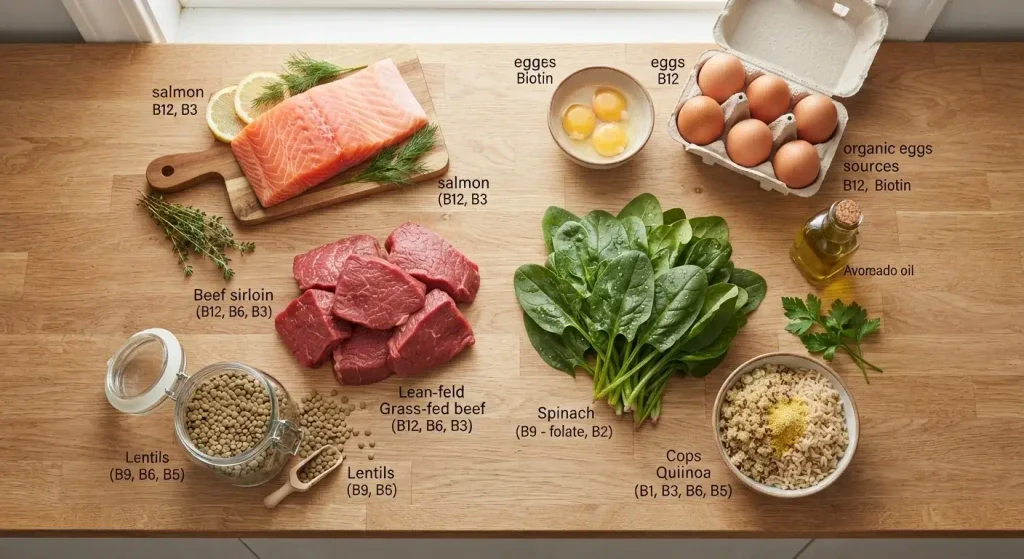
Protein-rich whole foods naturally deliver the broadest spectrum of B vitamins—especially B3, B6, and B12—while keeping hunger under control during a calorie deficit. Aim to include a palm-sized serving (about 4 to 6 oz, or 115 to 170 g) of lean protein at each main meal. Great choices include wild salmon, chicken breast, lean ground turkey, eggs, Greek yogurt, or tempeh paired with nutritional yeast.
Step 2: Keep Unrefined Carbohydrates and Legumes in Your Rotation
If you perform resistance training or high-intensity cardio, your muscles rely heavily on glycogen, which requires thiamine (B1) and pyridoxine (B6) for efficient breakdown. Instead of cutting carbs completely, include measured portions of whole grains and legumes such as oats, brown rice, lentils, black beans, and chickpeas. One cup of cooked lentils provides nearly 90% of your daily folate needs alongside steady-release carbohydrates and fiber.
Step 3: Pair Your Nutrition With Progressive Resistance Training
B vitamins help your cells produce energy, but strength training gives your body a reason to use that energy to build and preserve lean muscle. Aim for three full-body resistance workouts per week, resting 60 to 90 seconds between sets.
Here is a practical, coach-tested full-body training template designed to maximize metabolic demand while managing fatigue during a weight-management phase:
| Exercise | Sets | Reps | Rest | Coaching Focus & Load Guidance |
| Goblet Squat | 3 | 8–10 | 90 sec | Hold a 25–45 lb (11–20 kg) dumbbell at chest height; lower for 3 seconds, drive up smoothly. |
| Dumbbell Bench Press | 3 | 8–10 | 90 sec | Use 20–40 lb (9–18 kg) dumbbells; keep shoulder blades tucked and press without locking elbows hard. |
| Chest-Supported Row | 3 | 10–12 | 75 sec | Pull 20–35 lb (9–16 kg) dumbbells toward your hips; pause 1 second at the top to engage the upper back. |
| Romanian Deadlift | 3 | 10–12 | 90 sec | Use a 45–95 lb (20–43 kg) barbell or pair of dumbbells; hinge hips back until you feel a deep hamstring stretch. |
| Brisk Incline Walk | 1 | 15–20 min | — | Set treadmill incline to 5–8% at 3.0–3.5 mph (4.8–5.6 km/h) for steady aerobic fat oxidation. |
Easier Regression: Perform bodyweight box squats to a 16-inch (41 cm) bench, incline push-ups with hands on a barbell set at waist height, and a 10-minute flat walk at 2.5 mph (4.0 km/h).- Harder Progression: Progress to barbell back squats, add a 2-second pause at the bottom of each Romanian deadlift, and finish with 6 rounds of 30-second stationary bike sprints followed by 60 seconds of easy pedaling.

Step 4: Know When and How to Use a B-Complex Supplement
If blood work from your doctor shows a deficiency, or if you follow a plant-based diet or strict calorie deficit, a daily B-complex supplement can serve as a reliable nutritional safety net. Look for a product that provides around 100% to 300% of the Daily Value rather than extreme megadoses, and check for third-party testing seals (such as USP, NSF, or Informed-Choice) to verify purity.
Take your B-complex supplement in the morning with breakfast and a full glass of water. Taking B vitamins with food reduces the chance of mild nausea, and morning dosing ensures any subtle lift in alertness will not interfere with your evening wind-down routine. If you want to explore related strategies, you can read more about which vitamins support metabolism when you’re deficient or learn how to support metabolism naturally for weight management.
Safety Notes and Potential Side Effects
Because B vitamins are water-soluble, most healthy adults tolerate standard dietary and supplemental intakes well. Still, “water-soluble” does not mean completely risk-free at excessive doses. The National Institutes of Health establishes Tolerable Upper Intake Levels (ULs) for certain B vitamins to prevent adverse effects:
- Vitamin B3 (Niacin): High supplemental doses of nicotinic acid (above 35 mg/day from supplements) can cause “niacin flush”—a temporary redness, warmth, and tingling sensation in the skin—and very high doses may stress the liver.
- Vitamin B6 (Pyridoxine): Long-term intake exceeding 100 mg per day from supplements can lead to sensory neuropathy, causing numbness or tingling in the hands and feet.
- Folate (Folic Acid): Consuming more than 1,000 mcg per day from fortified foods and supplements can mask the blood-cell signs of a vitamin B12 deficiency while allowing underlying nerve damage to progress unnoticed.
- Medication Interactions: Certain prescription drugs—including metformin (used for blood sugar management) and proton pump inhibitors (used for acid reflux)—can reduce vitamin B12 absorption over time, according to the Mayo Clinic.
Always review your supplement labels so you do not accidentally double-dose by combining a multivitamin, a B-complex capsule, and fortified energy drinks on the same day. For a deeper look at non-stimulant options, check our guide on which supplements support metabolism without stimulants.
Practical Tips to Maximize Your Energy and Weight Management
Supplements only account for a small fraction of your overall results. To get the most out of your nutrition and training, pair adequate B-vitamin intake with these daily habits:
- Prioritize 7 to 9 Hours of Quality Sleep: Even optimal B-vitamin levels cannot compensate for chronic sleep debt, which disrupts hunger hormones (ghrelin and leptin) and blunts workout recovery. Learn more about how sleep affects metabolism and weight management.
- Stay Consistently Hydrated: Water is required for the enzymatic reactions that break down glycogen and fat. Aim for roughly 0.5 oz of water per pound of body weight (about 30 to 35 ml per kg) daily, adding extra fluids during sweaty workouts.
- Build Meals Around Protein and Fiber: Combining B-vitamin-rich proteins with high-fiber vegetables slows digestion, stabilizes blood sugar, and reduces evening snacking. Explore how protein intake affects metabolism and weight loss for practical daily targets.
- Avoid Relying on Sugary “Energy” Drinks: Many commercial energy drinks pack massive doses of synthetic B vitamins alongside 200 to 300 mg of caffeine and heavy added sugars, leading to sharp energy crashes later in the day. Review why caffeine pills cause energy crashes if you want steadier all-day focus.

Frequently Asked Questions (FAQ)
Do B-complex vitamins help you lose weight directly?
No, B-complex vitamins do not directly burn body fat or cause weight loss on their own. They support weight management indirectly by helping your cells convert carbohydrates, fats, and proteins into usable energy, which prevents deficiency-related fatigue and helps you maintain strong workout performance during a calorie deficit.
Which B vitamin gives you the most energy?
No single B vitamin works alone to create energy; all eight work together as a team. Vitamins B1, B2, B3, and B5 directly drive cellular ATP production in the mitochondria, while B6, B9, and B12 support oxygen-carrying red blood cells. Fixing whichever specific B vitamin you are low in produces the biggest noticeable boost.
Does taking vitamin B complex cause weight gain?
Vitamin B-complex supplements contain virtually zero calories and do not cause fat gain. In rare cases, correcting a severe B1 or B12 deficiency can restore a suppressed appetite back to normal levels, which might lead to eating more if you are not tracking portions.
What is the best time to take B-complex vitamins for energy?
The best time to take a B-complex supplement is in the morning with breakfast and a glass of water. Taking it alongside food improves comfort and reduces stomach upset, while morning timing aligns with your body’s natural daytime metabolic demand and prevents potential sleep disruption in sensitive individuals.
Can you get enough B-complex vitamins from food without supplements?
Yes, most healthy adults who eat a varied diet containing lean meats, fish, eggs, dairy, legumes, leafy greens, and whole grains easily meet their daily B-vitamin needs. However, vegans, vegetarians, older adults, and people on strict calorie-restricted diets often benefit from fortified foods or a targeted supplement.
Conclusion
Understanding how do B-complex vitamins support energy production and healthy weight takes the guesswork out of micronutrient nutrition. Rather than acting as quick-fix fat burners, these eight water-soluble vitamins serve as the essential coenzymes that unlock ATP energy from your food, build oxygen-carrying red blood cells, and keep your muscles firing during strength and cardio workouts. By anchoring your meals with B-vitamin-rich whole foods, training consistently, and using a verified supplement only when dietary gaps exist, you give your metabolism the steady support it needs for long-term health and sustainable weight management.