
How Does L-Theanine Improve Sleep Quality? A Coach’s Evidence-Based Guide
If you train hard in the gym, you already know that muscle growth and nervous system recovery happen while you sleep, not while you lift. Yet many active adults lie in bed with a tired body and a racing mind, staring at the ceiling long after their evening workout ends. Understanding how does L-theanine improve sleep quality offers a practical, non-sedating tool to quiet mental chatter and support deeper rest without morning grogginess.
Unlike prescription sleep aids or high-dose hormones that force sedation, L-theanine works by gently shifting your brain chemistry toward calm alertness. Found naturally in green tea leaves, this unique amino acid helps dial down evening stress signals so your body can transition smoothly into restorative sleep cycles.
Quick Answer: L-theanine improves sleep quality by crossing the blood-brain barrier to boost calming neurotransmitters like GABA, serotonin, and dopamine while blocking excitatory glutamate receptors. It also increases relaxing alpha brain waves and lowers stress-related cortisol, helping you fall asleep faster and stay asleep longer without acting as a heavy sedative.
Medical Disclaimer: Please check with a doctor, pharmacist, or qualified healthcare provider before adding L-theanine or any new dietary supplement to your evening routine, especially if you take blood pressure medications, sedatives, or antidepressants.
What Is L-Theanine and How Does It Work in the Brain?
L-theanine is a non-proteinogenic amino acid discovered in 1949 by Japanese scientists studying green tea (Camellia sinensis). While your body uses standard amino acids like leucine to repair muscle fibers after resistance training, L-theanine serves a very different purpose: it acts directly on your central nervous system.
When you swallow an L-theanine capsule or drink decaffeinated matcha, your small intestine absorbs the amino acid rapidly. According to pharmacological research indexed on PubMed Central, L-theanine crosses the blood-brain barrier within 30 to 60 minutes of ingestion, reaching peak brain concentrations shortly thereafter.
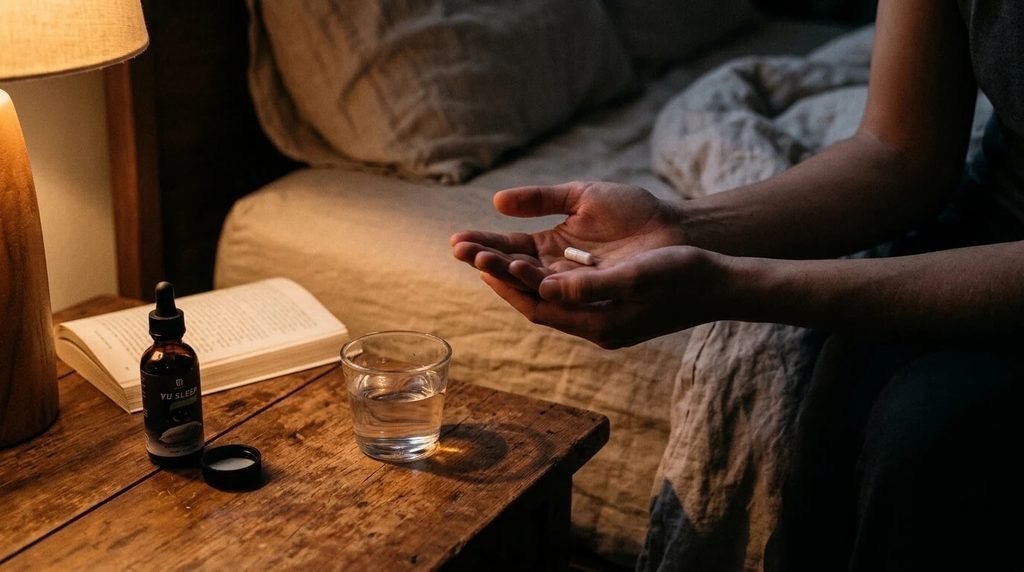
Once inside the brain, L-theanine alters neural signaling through three distinct pathways:
- Modulating Neurotransmitters: L-theanine structurally resembles glutamate, the brain’s primary excitatory neurotransmitter. By binding to glutamate receptors, it blocks overstimulation while simultaneously increasing levels of gamma-aminobutyric acid (GABA), serotonin, and dopamine.
- Promoting Alpha Brain Waves: Electroencephalogram (EEG) studies show that L-theanine stimulates alpha-wave electrical activity in the brain. Alpha waves are associated with “wakeful relaxation”—the exact mental state you experience during quiet meditation or right before drifting off to sleep.
- Blunting the Stress Response: High evening stress keeps your sympathetic nervous system (“fight or flight”) locked in gear. Clinical trials indicate that L-theanine helps reduce physiological stress markers, including salivary cortisol and elevated resting heart rate.
How Does L-Theanine Improve Sleep Quality? (What the Research Says)
To understand why lifters, runners, and busy professionals reach for this supplement, we need to look closely at clinical sleep metrics. Sleep quality is not just about total hours in bed; it depends on how fast you fall asleep, how often you wake up, and how smoothly you cycle through non-REM and REM stages.
1. Shortens Sleep Latency (Falling Asleep Faster)
Sleep latency is the time it takes to transition from full wakefulness to light sleep. When your mind replays tomorrow’s to-do list or remains wired from late-afternoon training, sleep latency stretches from 15 minutes to well over an hour.
A randomized, double-blind, placebo-controlled trial published in Nutrients via PubMed Central found that adults taking 200 mg of L-theanine daily for four weeks experienced significant improvements in sleep latency scores compared to the placebo group. Rather than knocking you out, L-theanine removes the cognitive friction—racing thoughts and restlessness—that keeps you awake.
2. Reduces Nighttime Awakenings and Sleep Disturbances
Waking up multiple times during the night fragments your sleep architecture and leaves you feeling drained the next day. In the same four-week clinical trial, participants supplementing with L-theanine reported significantly fewer sleep disturbances and lower reliance on traditional sleep medications.
By maintaining higher GABA activity during the first half of the night, L-theanine helps stabilize neural excitability. Your brain becomes less reactive to minor environmental noises or subtle shifts in body temperature.
3. Supports Natural Sleep Architecture Without Sedation
Traditional sleep aids, including antihistamines and prescription sedatives, often alter normal sleep cycles by suppressing REM sleep or deep slow-wave sleep. This is why you can sleep for eight hours on a sleeping pill and still wake up feeling heavy-headed.
Research reviewed by the Sleep Foundation and clinical EEG trials demonstrates that L-theanine enhances sleep efficiency without disrupting natural sleep stages. Because it is not a central nervous system depressant, it allows your brain to cycle naturally through restorative non-REM and REM phases.
4. Aids Post-Training Nervous System Recovery
Heavy compound workouts—like barbell squats, deadlifts, and high-intensity conditioning—elevate catecholamines (adrenaline and noradrenaline) and cortisol. When you train after 5:00 PM, those stress hormones can linger well past bedtime.
Just as poor rest impairs metabolic health—a connection we explore in our guide on how sleep affects metabolism and weight management—chronic sleep loss blunts muscle recovery and daytime strength output. L-theanine helps shift your autonomic nervous system back toward parasympathetic (“rest and digest”) dominance so your body can prioritize tissue repair.
L-Theanine vs. Common Sleep Supplements: A Side-by-Side Comparison
Many people assume all sleep supplements work the same way. In reality, L-theanine, melatonin, magnesium, and valerian root target completely different biological systems. Understanding these differences helps you avoid stacking redundant ingredients or taking a hormone when you only need mild relaxation.
| Feature | L-Theanine | Melatonin | Magnesium Glycinate | Valerian Root |
| Primary Mechanism | Boosts GABA & alpha brain waves; blocks glutamate | Regulates circadian rhythm & biological clock | Supports GABA receptors & muscle relaxation | Inhibits GABA breakdown in the brain |
| Classification | Non-protein amino acid | Endogenous hormone | Essential dietary mineral | Herbal root extract |
| Typical Dose | 100 mg – 400 mg | 0.5 mg – 5 mg | 200 mg – 400 mg (elemental) | 300 mg – 600 mg |
| Onset Time | 30 – 60 minutes | 30 – 90 minutes | 60 – 120 minutes | 60 – 120 minutes |
| Morning Grogginess Risk | Very low (non-sedating) | Moderate (especially above 3 mg) | Very low | Low to moderate |
| Best Use Case | Racing thoughts, evening stress, post-workout wind-down | Jet lag, shift work, delayed sleep phase | Muscle tension, physical restlessness, dietary deficiency | Mild insomnia, general nervous tension |
Coach’s Tip: If your body feels physically exhausted after a hard workout, yet your brain refuses to shut off, start with L-theanine rather than melatonin. Melatonin tells your brain what time it is; L-theanine tells your nervous system it is safe to relax.

How to Apply L-Theanine for Better Sleep: Dosage, Timing, and Protocol
Getting the best results from L-theanine comes down to dialing in the right dose, timing it around your evening routine, and choosing a clean product without hidden stimulants.
Step 1: Choose an Evidence-Based Dosage
Clinical studies on stress reduction and sleep quality typically use doses between 100 mg and 400 mg.
- Beginner / Sensitive Individuals: Start with 100 mg for the first three to four nights to assess how your body responds.
- Standard Effective Dose: Move to 200 mg, which is the most common dose validated in human clinical trials for improving sleep latency and reducing nighttime awakenings.
- High-Stress Nights: Up to 400 mg may be used on nights following intense late-evening competition or high mental stress, though higher doses do not necessarily produce stronger effects for everyone.
Step 2: Time Your Dose 30 to 60 Minutes Before Bed
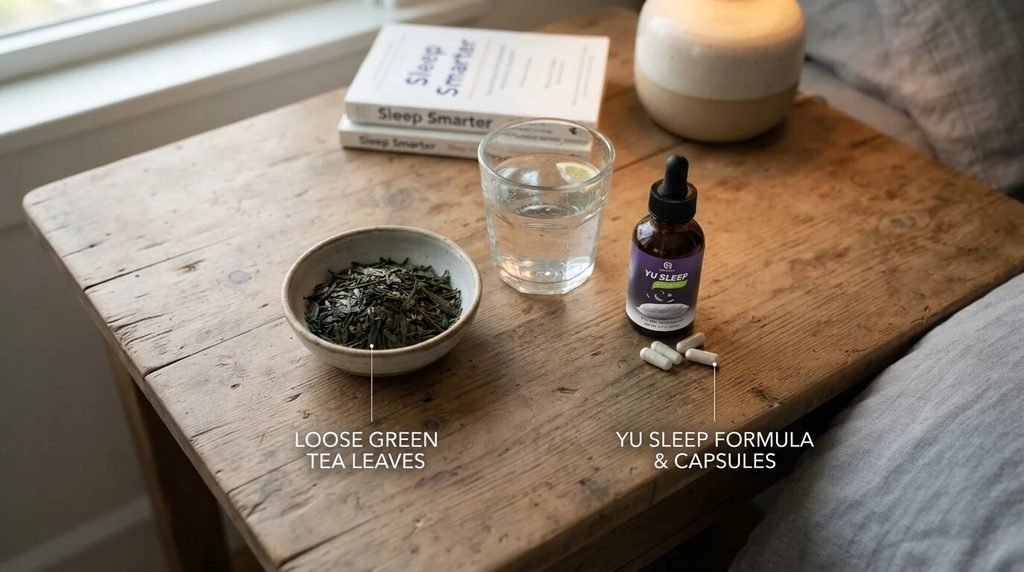
Because L-theanine reaches peak blood and brain levels within 30 to 60 minutes, taking it too early means its calming peak may pass before your head hits the pillow. Take your capsule with a small glass of water roughly 45 minutes before your target bedtime.
Avoid drinking large volumes of liquid right before bed—especially green tea itself. A standard 8-ounce (240 ml) cup of brewed green tea contains only about 8 mg to 25 mg of L-theanine alongside 30 mg to 50 mg of caffeine, which will actively work against your sleep goals.
Step 3: Build a 3-Step Evening Wind-Down Routine
Supplements work best when paired with behavioral cues that signal your nervous system to downshift. Follow this simple nightly sequence:
- T-Minus 60 Minutes: Dim overhead lights, set your bedroom thermostat between 60°F and 67°F (15.5°C to 19.4°C), and finish any heavy meals or protein shakes.
- T-Minus 45 Minutes: Take 200 mg of pure L-theanine. Put your phone on “Do Not Disturb” mode and step away from bright blue-light screens.
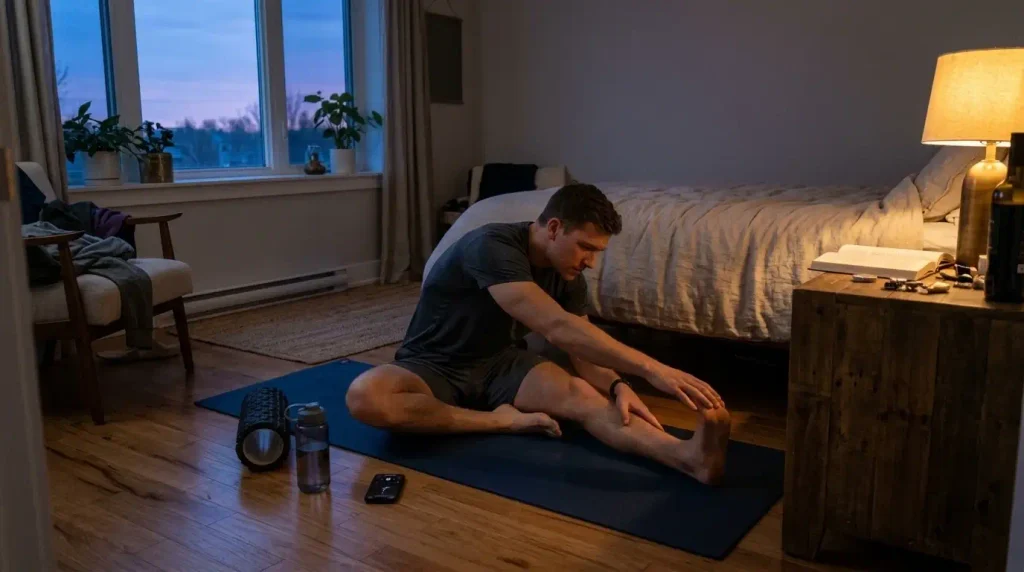
- T-Minus 20 Minutes: Spend 10 to 15 minutes doing light mobility work, nasal breathing, or reading a physical book while alpha brain wave activity builds.
Common Mistake: Relying on matcha or green tea extract capsules at night to get your L-theanine. Unless the label explicitly states “decaffeinated” or “pure L-theanine,” tea-based supplements often pack hidden caffeine that delays sleep onset. If you are sensitive to stimulants, read our breakdown on why caffeine causes energy crashes and how to time your cutoff window.
Smart Supplement Pairings (And What to Avoid)
Many active adults look for ways to combine L-theanine with other natural compounds to support recovery without relying on heavy sleep aids. While simple, single-ingredient products are easiest to dose accurately, certain pairings complement L-theanine’s mechanism well.
Effective Evening Pairings
- Magnesium Glycinate (200 mg to 300 mg): While L-theanine calms overactive brain signaling, magnesium bound to glycine supports physical muscle relaxation and healthy neurotransmitter synthesis. Together, they address both mental restlessness and post-training muscle tightness.
- Glycine (3 grams): Glycine is another amino acid shown in clinical research to help lower core body temperature slightly before sleep, facilitating faster entry into deep slow-wave sleep alongside L-theanine.
- Adaptogenic Herbs: On periods of high life or training stress, some individuals pair evening relaxation habits with targeted daytime stress support, similar to the mechanisms discussed in our guide on adaptogens for stress and cortisol management.
Combinations to Avoid
- Evening Caffeine (Even Small Amounts): Although L-theanine is famously paired with caffeine in the morning to smooth out jitters and improve focus, taking that combination within 8 to 10 hours of bedtime will still block adenosine receptors and fragment your deep sleep.
- Prescription Sedatives or CNS Depressants: Combining L-theanine with benzodiazepines, prescription sleep medications, or alcohol can unpredictably amplify sedation.
What to Look for on an L-Theanine Supplement Label
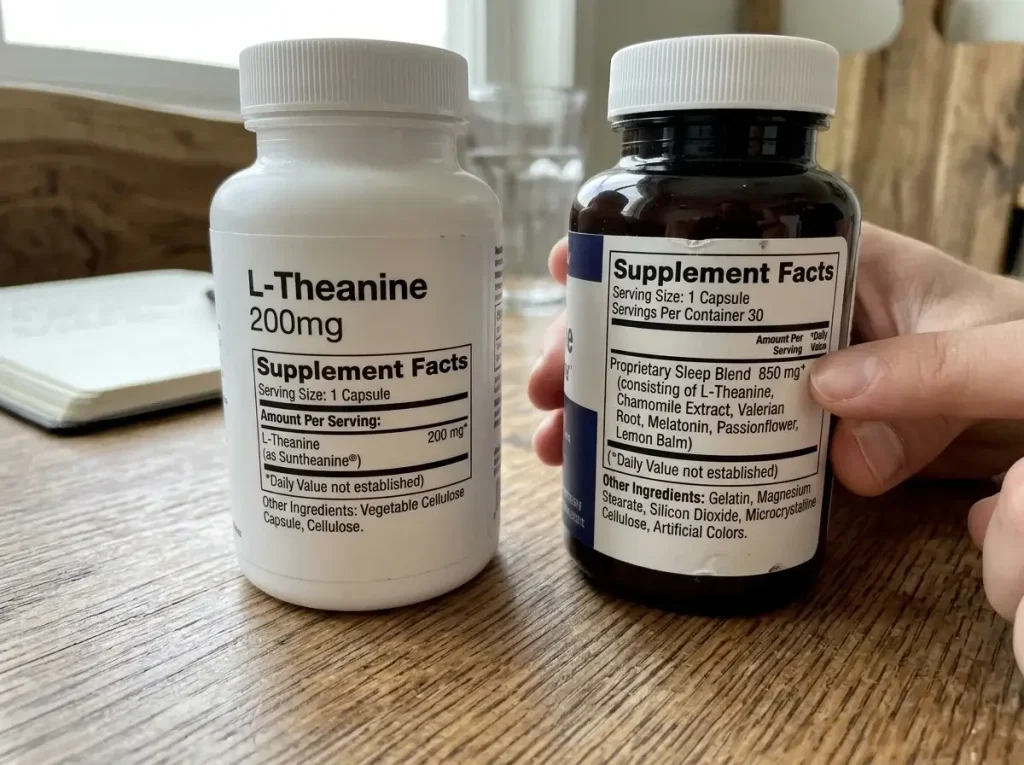
Because dietary supplements are not pre-approved by the FDA before hitting store shelves, quality control varies widely across brands. When shopping for an L-theanine product, inspect the Supplement Facts panel using these four checkpoints:
- Verify the Isomer Form: Look for L-theanine (or patented, clinically studied forms like Suntheanine), not “D-theanine” or racemic “DL-theanine.” The L-isomer is the biologically active form found naturally in tea leaves that crosses the blood-brain barrier efficiently.
- Check for Third-Party Testing: Choose brands certified by independent organizations such as USP, NSF International, or Informed-Choice. Third-party seals confirm that the bottle actually contains 200 mg of L-theanine per serving and is free from heavy metals or unlisted stimulants.
- Avoid Proprietary Blends: Many nighttime formulas hide tiny, under-dosed amounts of L-theanine inside a “500 mg Relaxation Blend.” Always buy products that list the exact milligram amount of L-theanine clearly.
- Watch Out for Added Melatonin: If you specifically want a non-hormonal sleep aid, double-check the label to ensure the manufacturer has not added 3 mg to 10 mg of melatonin alongside the L-theanine.
For more tips on reading supplement labels and spotting under-dosed formulas, review our framework on how to evaluate ingredients in supplements.
Safety, Side Effects, and Who Should Be Careful
According to safety evaluations compiled by the National Center for Complementary and Integrative Health (NCCIH) and toxicology studies reviewed on PubMed, pure L-theanine is generally well-tolerated in healthy adults at standard doses of 100 mg to 400 mg per day. Unlike many over-the-counter sleep remedies, it does not cause physical dependence, rebound insomnia when stopped, or next-day psychomotor impairment.
However, mild side effects can occasionally occur, including:
- Mild headache or lightheadedness
- Temporary digestive upset or nausea when taken on an empty stomach
- Vivid dreams during the first few nights as REM sleep stabilizes
Who Should Consult a Doctor First?
Certain groups should exercise caution and speak with a physician before using L-theanine:
- People Taking Blood Pressure Medications: Because L-theanine promotes vascular relaxation and can mildly lower blood pressure, combining it with antihypertensive drugs may cause blood pressure to drop too low.
- Individuals on Stimulant or Psychiatric Medications: Because it interacts with dopamine, serotonin, and glutamate pathways, consult your prescribing doctor if you take medications for ADHD, anxiety, or depression.
- Pregnant or Breastfeeding Women: There is insufficient clinical safety data on isolated, high-dose L-theanine supplements during pregnancy and lactation.
- Children and Adolescents: Dosing protocols for minors should always be guided by a pediatrician.
Related Recovery Habits That Multiply L-Theanine’s Effects
No capsule can outwork poor daily habits. If you want consistent, deep sleep that fuels strength gains, body composition, and daytime focus, pair L-theanine with these foundational recovery practices:
- Anchor Your Wake-Up Time: Waking up within the same 30-minute window every morning—even on weekends—sets your circadian clock so natural sleep pressure builds reliably by bedtime.
- Get Morning Sunlight: Exposing your eyes to outdoor daylight within 30 to 60 minutes of waking triggers a healthy morning cortisol pulse and sets a timer for evening melatonin release roughly 14 to 16 hours later.
- Respect the Caffeine Cutoff: Caffeine has a half-life of roughly 5 to 7 hours. Cut off all coffee, pre-workout powders, and energy drinks at least 8 to 10 hours before bed. If you struggle with afternoon fatigue, learn how to improve daily energy without caffeine.
- Keep Evening Meals Balanced: Going to bed starving spikes cortisol and adrenaline, while eating a massive high-fat meal 30 minutes before sleep elevates core body temperature and disrupts slow-wave rest. Aim to finish dinner 2 to 3 hours before lights out, or keep late snacks light and protein-focused.
- Protect Your Hormonal Recovery: Chronic sleep restriction undermines both physical stamina and hormone balance, as detailed in our guide on how stress and poor sleep affect male hormones and overall recovery.
Frequently Asked Questions (FAQ)
How much L-theanine should I take for sleep?
Most clinical studies show effective results with 200 mg of L-theanine taken before bed. Beginners or individuals sensitive to supplements should start with 100 mg for several nights to assess tolerance, while doses up to 400 mg may be used safely during periods of high evening stress.
Does L-theanine make you feel groggy in the morning?
No, L-theanine rarely causes morning grogginess because it is not a central nervous system sedative. Instead of forcing drowsiness like antihistamines or high-dose melatonin, it promotes relaxing alpha brain waves and calms mental tension, allowing you to wake up feeling alert and clear-headed.
How long before bed should you take L-theanine?
Take L-theanine 30 to 60 minutes before bedtime with a small glass of water. Because it crosses the blood-brain barrier quickly, taking it roughly 45 minutes before lights out aligns its peak calming effects with the exact window when you are trying to fall asleep.
Can you take L-theanine with magnesium for sleep?
Yes, combining L-theanine (200 mg) with magnesium glycinate (200 mg to 300 mg) is a popular, non-hormonal evening stack. L-theanine quiets racing thoughts by supporting GABA and alpha brain waves, while magnesium helps relax tight muscles and supports physical nervous system recovery.
Does L-theanine increase deep sleep?
L-theanine does not artificially force deep slow-wave sleep like prescription drugs, but research suggests it improves overall sleep efficiency and reduces nighttime awakenings. By lowering evening cortisol and calming neural excitability, it helps your brain move uninterrupted through natural deep non-REM and REM cycles.
Is L-theanine safe to take every night for sleep?
Human clinical trials lasting four to eight weeks show that daily L-theanine intake (200 mg to 400 mg) is well-tolerated with no signs of dependency or withdrawal. However, always check with your doctor before long-term daily use, especially if you take blood pressure or mood medications.
Conclusion
Understanding how does L-theanine improve sleep quality comes down to one simple distinction: it calms an overactive mind rather than sedating your body. By crossing the blood-brain barrier to increase GABA, serotonin, and alpha brain waves while dialing down stress-related glutamate and cortisol, L-theanine helps you fall asleep faster and stay asleep without next-day brain fog.
For active adults, lifters, and busy professionals who struggle to switch off after long days or late workouts, a 200 mg dose taken 45 minutes before bed—paired with a cool, dark bedroom and a strict caffeine cutoff—provides a reliable, evidence-backed foundation for deeper nightly recovery.