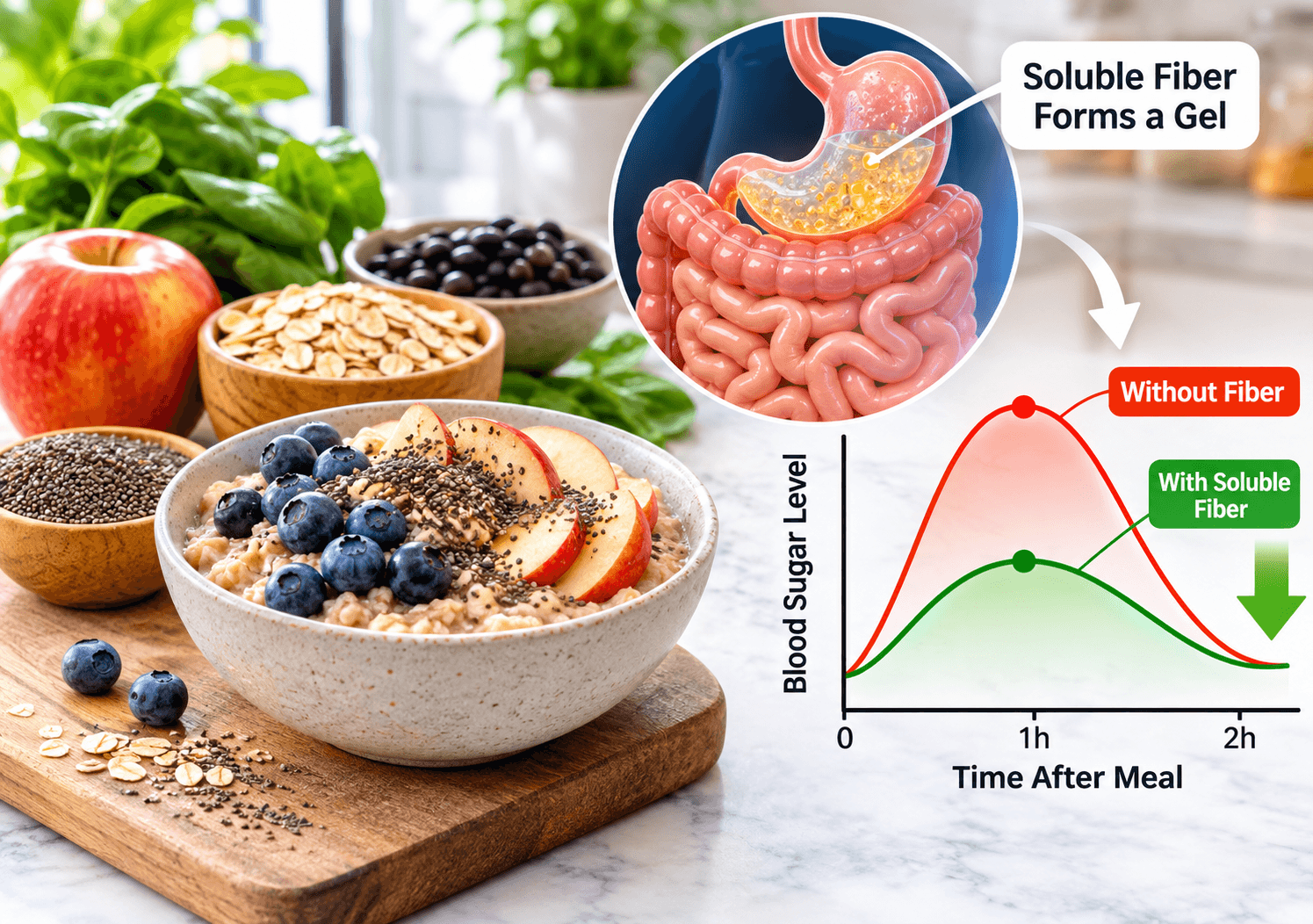
Managing post-meal blood glucose is a cornerstone of metabolic health, athletic performance, and long-term disease prevention. If you have ever felt sluggish, irritable, or overly hungry shortly after eating a carbohydrate-heavy meal, you have likely experienced a blood sugar spike. Understanding how can soluble fiber help reduce blood sugar spikes after meals? is one of the most practical, evidence-based steps you can take to stabilize your energy and support your fitness goals.
As a strength and conditioning coach, I frequently work with clients over 40, seniors, and fitness enthusiasts who want to optimize their metabolic health without relying on restrictive diets. The answer lies in the biomechanics of digestion. Soluble fiber acts as a natural regulator in your gastrointestinal tract, directly influencing how quickly glucose enters your bloodstream. This article breaks down the exact physiological mechanisms, provides actionable meal-planning strategies, and explains how to pair fiber intake with targeted movement for maximum metabolic benefit.
Quick Answer
Soluble fiber dissolves in water to form a viscous gel in the digestive tract. This gel slows gastric emptying and delays carbohydrate absorption, which directly blunts the rapid rise in blood glucose and insulin after eating. Aim for 10 to 15 grams of soluble fiber daily from whole foods like oats, legumes, and chia seeds to support stable blood sugar levels.
The Physiology: How Soluble Fiber Regulates Blood Glucose
To understand how this works, we must look at the digestive process. When you consume carbohydrates, your body breaks them down into simple sugars, primarily glucose. This glucose enters the bloodstream, prompting the pancreas to release insulin. Insulin acts as a key, unlocking cells so they can absorb glucose for energy.
However, a rapid influx of glucose causes a sharp insulin spike. Over time, frequent spikes can lead to insulin resistance, a precursor to type 2 diabetes and metabolic syndrome. Soluble fiber interrupts this rapid cascade through three distinct, research-backed mechanisms.
1. Slowing Gastric Emptying Rate
Soluble fiber is highly viscous. When it mixes with water in your stomach and small intestine, it forms a thick, gel-like substance. According to research published by the National Institutes of Health (NIH), this viscous gel physically increases the thickness of the stomach contents. This increased viscosity slows down the rate at which food empties from the stomach into the small intestine. A slower gastric emptying rate means glucose is released into the bloodstream gradually, preventing a sudden postprandial (post-meal) glucose spike.
2. Impeding Carbohydrate Absorption
The gel matrix formed by soluble fiber also creates a physical barrier along the intestinal wall. This barrier reduces the contact between digestive enzymes (like amylase) and the carbohydrates you have eaten. Consequently, the breakdown of complex carbohydrates into simple sugars is delayed. The American Diabetes Association notes that this malabsorption effect directly lowers the glycemic response of a meal, making high-fiber foods inherently lower on the glycemic index than their refined counterparts.
3. Enhancing Insulin Sensitivity via Short-Chain Fatty Acids
Not all soluble fiber is just a physical barrier; some of it is fermented by the beneficial bacteria in your large intestine. This fermentation process produces short-chain fatty acids (SCFAs), such as acetate, propionate, and butyrate. Studies indexed in PubMed demonstrate that SCFAs play a crucial role in metabolic health. They stimulate the release of gut hormones like GLP-1 and PYY, which further slow digestion, promote satiety, and improve the body’s overall sensitivity to insulin.

Soluble vs. Insoluble Fiber: Knowing the Difference
It is critical to distinguish between the two main types of dietary fiber, as they serve different functions in the body. While both are essential for health, only one is primarily responsible for modulating blood sugar spikes.
- Soluble Fiber: Dissolves in water to form a gel. It is the primary driver of blood sugar regulation and cholesterol reduction. Found in oats, beans, lentils, apples, citrus fruits, carrots, and psyllium husk.
- Insoluble Fiber: Does not dissolve in water. It adds bulk to the stool and helps food pass more quickly through the stomach and intestines, promoting regularity. Found in whole wheat flour, wheat bran, nuts, beans, and vegetables like cauliflower and green beans.
For the specific goal of blunting post-meal glucose spikes, prioritizing soluble fiber is the most effective dietary strategy. However, a balanced intake of both types is recommended for comprehensive gut health.
Top Soluble Fiber Sources and Their Glycemic Impact
Incorporating soluble fiber into your diet does not require complicated supplements. Whole foods provide a matrix of nutrients, including vitamins, minerals, and antioxidants, that work synergistically with fiber. Below is a practical guide to the best soluble fiber sources.
| Food Source | Primary Soluble Fiber Type | Approx. Soluble Fiber per Serving | Glycemic Impact |
| Oats (rolled or steel-cut) | Beta-glucan | 2.0 g per 1/2 cup (dry) | Lowers post-meal glucose significantly |
| Black Beans | Pectin, Gums | 2.5 g per 1/2 cup (cooked) | Blunts spike when paired with rice |
| Chia Seeds | Mucilage | 5.0 g per 1 oz (28 g) | Forms thick gel, highly effective |
| Flaxseeds (ground) | Mucilage, Gums | 1.5 g per 1 tbsp | Supports steady glucose release |
| Apples (with skin) | Pectin | 1.0 g per medium apple | Moderate, best paired with protein |
| Psyllium Husk | Hemicellulose | 5.0 g per 1 tbsp | Highly viscous, rapid glucose blunting |
| Brussels Sprouts | Pectin | 2.0 g per 1 cup (cooked) | Low glycemic load, high nutrient density |
Note: Values are approximate and can vary based on crop and preparation. Total daily fiber recommendations are 25 grams for women and 38 grams for men, with at least 10–15 grams coming from soluble sources.
How to Apply It: Practical Steps for Blood Sugar Control
Knowing the science is only half the battle. As a coach, I teach my clients to implement this knowledge through structured, repeatable daily habits. Here is a step-by-step guide to using soluble fiber to manage your post-meal blood sugar.
Step 1: Establish Your Baseline and Goal
Most adults fall short of the recommended daily fiber intake. Track your current intake for three days using a nutrition app. Your goal is to gradually increase your total fiber to 25–38 grams per day, ensuring that at least 10 to 15 grams of that total is soluble fiber.
Step 2: Strategic Meal Pairing (The “Fiber First” Rule)
The order in which you eat your food matters. Research suggests that consuming fiber and protein before carbohydrates can significantly reduce the post-meal glucose spike.
- Action: Start your meal with a soluble fiber source. For example, eat a small side salad with chia seeds or a few slices of apple before consuming your pasta or rice.
- Coach’s Tip: Aim to pair every carbohydrate serving with at least 5 grams of soluble fiber. If you are having a banana (low in soluble fiber), add a tablespoon of ground flaxseed or a small handful of almonds to the meal to create a viscous buffer in your gut.
Step 3: Optimize Pre- and Post-Workout Nutrition
Athletes and gym-goers need carbohydrates for performance, but they also want to avoid energy crashes.
- Pre-Workout: Consume a meal rich in complex carbohydrates and soluble fiber 2 to 3 hours before training. Oatmeal with berries is a classic, effective choice. The beta-glucan in oats ensures a slow, steady release of glucose, providing sustained energy without a mid-workout crash.
- Post-Workout: After intense training, your muscles are primed to absorb glucose. While you want some insulin response to shuttle nutrients into muscle cells, you still want to avoid a massive spike. A post-workout shake containing whey protein, a moderate amount of fruit, and a teaspoon of psyllium husk can provide a balanced, steady recovery nutrient profile.

Step 4: Hydrate Aggressively
Soluble fiber requires water to form its beneficial gel matrix. If you increase your fiber intake without increasing your water intake, the fiber can become compacted, leading to constipation, bloating, and abdominal discomfort.
- Action: Drink a minimum of 80 to 100 ounces (2.4 to 3 liters) of water daily. When you consume a high-fiber meal or a fiber supplement, follow it immediately with at least 16 ounces (473 ml) of water.
Common Mistake: Increasing fiber intake too rapidly. Adding 20 grams of fiber to your diet overnight will almost certainly cause gastrointestinal distress, gas, and bloating. Always increase your fiber intake gradually, adding just 3 to 5 grams per week, to allow your gut microbiome to adapt.

Safety Notes and Medication Interactions
While soluble fiber is overwhelmingly safe and beneficial, there are important safety considerations, particularly for individuals managing chronic health conditions.
- Medication Interference: The same viscous gel that slows carbohydrate absorption can also slow the absorption of certain oral medications. This is particularly relevant for medications like levothyroxine (thyroid hormone), metformin, and certain cardiovascular drugs. The Mayo Clinic recommends taking fiber supplements or high-fiber meals at least 2 hours before or 2 hours after taking prescription medications. Always consult your pharmacist or physician.
- Gastrointestinal Conditions: Individuals with active inflammatory bowel disease (IBD), strictures, or severe irritable bowel syndrome (IBS) may find that certain high-FODMAP soluble fibers (like inulin or large amounts of beans) trigger symptoms. In these cases, low-FODMAP soluble fiber sources like oats or psyllium husk are generally better tolerated.
- Choking Hazard: Dry fiber supplements, particularly psyllium husk powder, must always be mixed thoroughly with at least 8 ounces (237 ml) of water and consumed immediately. Consuming dry powder can cause it to expand in the esophagus, posing a serious choking risk.
The Synergy Between Soluble Fiber and Exercise
Diet and movement are not isolated variables; they are powerful, compounding forces. While soluble fiber manages the entry of glucose into the bloodstream, exercise manages the exit of glucose from the bloodstream. Combining the two creates a highly effective strategy for metabolic health.
Post-Meal Walking Protocol
One of the most effective, evidence-based interventions for reducing postprandial glucose is light physical activity after eating. When you walk, your skeletal muscles contract and absorb glucose from the blood for energy, independent of insulin.
- The Protocol: Within 30 minutes of finishing a meal, engage in 10 to 15 minutes of light to moderate walking.
- The Metrics: A pace of 2.5 to 3.0 miles per hour (4.0 to 4.8 km/h) is ideal. For a 150 lb (68 kg) individual, this equates to roughly a 1-mile (1.6 km) walk. This simple habit has been shown in clinical trials to significantly flatten the post-meal glucose curve compared to remaining sedentary.
Resistance Training for Long-Term Insulin Sensitivity
Building muscle mass increases your body’s overall “glucose sink” capacity. Muscle tissue is the primary storage site for glycogen. The more lean muscle mass you have, the more glucose your body can store without it spilling over into the bloodstream as elevated blood sugar.
- The Protocol: Engage in full-body resistance training 2 to 3 times per week.
- Sample Beginner Routine:
- Bodyweight Squats: 2 sets of 10–15 reps (Tempo: 2 seconds down, 1 second pause, 2 seconds up). Rest 60 seconds.
- Incline Push-Ups (hands on a bench or wall): 2 sets of 8–12 reps. Rest 60 seconds.
- Dumbbell Romanian Deadlifts: 2 sets of 10–12 reps using 15–20 lb (6.8–9 kg) dumbbells. Rest 60 seconds.
- The Synergy: Consuming a meal rich in soluble fiber 2 to 3 hours before this workout ensures steady energy. Performing the workout then depletes muscle glycogen, making your body highly receptive to the nutrients in your next post-workout meal, further stabilizing your metabolic baseline.

For those looking to deepen their understanding of metabolic optimization, exploring how to support metabolism naturally can provide additional context on how lifestyle factors compound over time. Furthermore, if you struggle with dietary adherence, learning how to manage food cravings naturally can help you stick to your high-fiber, whole-food meal plans without feeling deprived.
1. How much soluble fiber should I eat per day to control blood sugar?
Aim for 10 to 15 grams of soluble fiber daily, as part of a total daily fiber intake of 25 to 38 grams. This amount is consistently shown in clinical research to produce a meaningful blunting effect on postprandial glucose spikes without causing excessive gastrointestinal distress.
2. Can soluble fiber supplements replace whole foods for blood sugar control?
Supplements like psyllium husk or glucomannan can be effective tools, especially for controlling appetite and adding targeted viscosity to meals. However, they should not entirely replace whole foods. Whole foods provide a complex matrix of vitamins, minerals, and phytonutrients that supplements lack. Always prioritize food first, using supplements to fill gaps.
3. Does soluble fiber lower A1C levels over time?
Yes, research suggests that consistent, high intake of dietary fiber, particularly soluble fiber, is associated with modest but significant reductions in HbA1c (a marker of average blood sugar over 2–3 months) in individuals with type 2 diabetes and prediabetes. It works by consistently lowering daily post-meal glucose excursions.
4. How long after eating does soluble fiber start working to lower blood sugar?
The viscous gel formation begins immediately upon contact with water in the stomach. However, the measurable blunting effect on blood glucose occurs during the digestion and absorption phase, typically peaking between 30 to 90 minutes after the start of a meal, which is exactly when post-meal glucose spikes normally occur.
5. Are there any negative side effects of eating too much soluble fiber?
Consuming excessive amounts, especially too quickly, can cause bloating, gas, abdominal cramping, and constipation. It can also bind to certain minerals (like iron, zinc, and calcium) and medications, reducing their absorption. Gradual introduction and adequate hydration are the best preventive measures.
6. Can soluble fiber help me stop sugar cravings?
Indirectly, yes. By stabilizing blood sugar levels, soluble fiber prevents the rapid spike and subsequent crash that often triggers intense sugar cravings. Additionally, the delayed gastric emptying promotes prolonged satiety. You can learn more about how to stop sugar cravings naturally through combined dietary and lifestyle strategies.
Conclusion
Understanding how can soluble fiber help reduce blood sugar spikes after meals? empowers you to take direct control of your metabolic health. By forming a viscous gel in the digestive tract, soluble fiber slows gastric emptying, delays carbohydrate absorption, and promotes the production of beneficial short-chain fatty acids. This simple, natural mechanism protects you from the energy crashes, hunger pangs, and long-term health risks associated with frequent glucose spikes.
As a coach, my advice is to start small. Add a tablespoon of chia seeds to your morning routine, swap refined grains for oats or legumes, and commit to a 10-minute walk after your largest meal. Pair these dietary adjustments with consistent resistance training, and you will build a resilient, metabolically flexible body. Remember that sustainable health is built on consistent, evidence-based habits, not quick fixes.