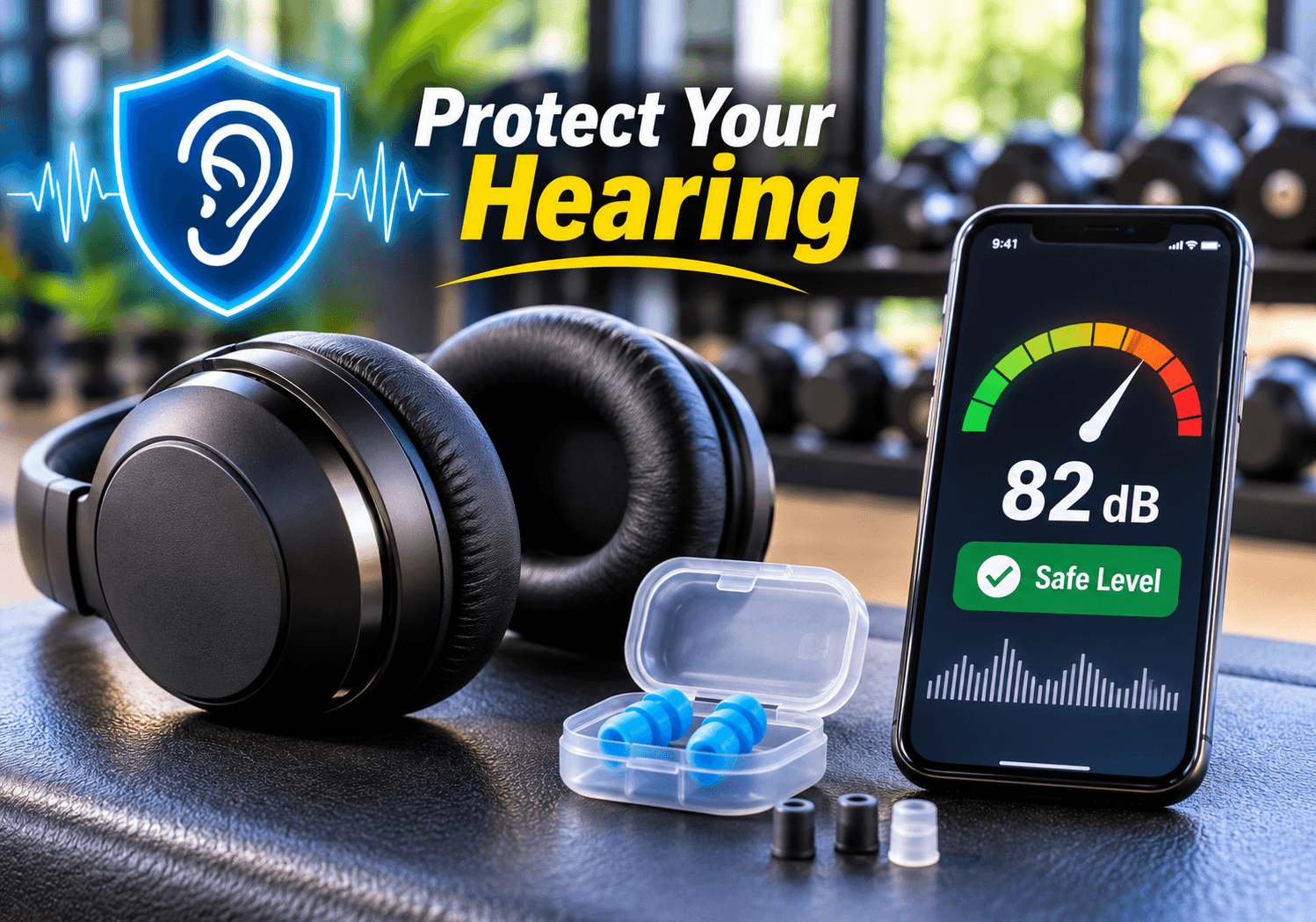
Music is a powerful tool in the gym. It drives tempo, boosts motivation, and helps you push through that final rep. However, constantly blasting your playlist can quietly damage your auditory system. Learning how to protect hearing from loud music and headphones is just as important as learning proper lifting form. As a strength and conditioning coach, I see athletes prioritize their muscles while neglecting their ears. Hearing damage is cumulative and irreversible, but it is entirely preventable with the right strategies. This guide provides practical, evidence-based steps to keep your hearing sharp while you crush your fitness goals.
Quick Answer
To protect your hearing from loud music and headphones, follow the 60/60 rule: listen at no more than 60% volume for a maximum of 60 minutes at a time. Use noise-canceling headphones to block ambient gym noise, wear high-fidelity earplugs at concerts, and enable built-in volume limiters on your smartphone. Regular auditory breaks allow your inner ear hair cells to recover from sound stress.
Understanding the Risk: How Loud Music Damages Your Ears
Before we dive into the solutions, you need to understand the mechanics of hearing damage. Sound travels into your ear canal and vibrates the eardrum. These vibrations move tiny bones in the middle ear, which then transfer the energy to the cochlea in the inner ear. Inside the cochlea are thousands of microscopic sensory cells called hair cells.
When you expose your ears to high decibel (dB) levels, these hair cells bend excessively. Occasional loud noise allows them to recover. However, chronic exposure to loud music causes permanent structural damage to these cells. Unlike liver or skin cells, human hair cells do not regenerate. Once they are destroyed, the hearing loss is permanent.
The Science of Sound and Safe Exposure Times
Sound is measured in decibels (dB). The risk of noise-induced hearing loss (NIHL) depends on both the volume (intensity) and the duration of exposure. The National Institute for Occupational Safety and Health (NIOSH) recommends a maximum exposure limit of 85 dB for 8 hours. For every 3 dB increase in volume, the safe exposure time is cut in half.
| Sound Source | Approximate Decibel (dB) Level | Maximum Safe Daily Exposure |
| Normal conversation | 60 dB | Unlimited |
| Vacuum cleaner | 70 dB | Unlimited |
| City traffic / Gym music | 85 dB | 8 hours |
| Heavy city traffic / Loud gym | 90 dB | 2.5 hours |
| Maximum smartphone volume | 105–110 dB | Less than 5 minutes |
| Live concert / Nightclub | 110–120 dB | Less than 2 minutes |
Data adapted from NIOSH noise exposure guidelines and WHO safe listening standards.
10 Evidence-Based Strategies on How to Protect Hearing from Loud Music and Headphones
Implementing these ten strategies will help you maintain your auditory health without sacrificing your workout intensity or musical enjoyment.
1. Follow the 60/60 Rule
The 60/60 rule is the gold standard recommended by audiologists and the World Health Organization (WHO) for safe personal audio use. This means listening to your music at no more than 60% of your device’s maximum volume for no longer than 60 minutes at a stretch.
How to apply it: Set a timer on your smartwatch or phone for 60 minutes. When it goes off, take your headphones off for at least 5 to 10 minutes. This brief auditory rest period allows the metabolic stress on your inner ear hair cells to normalize. If you are doing a 90-minute workout, split it into two distinct listening blocks with a quiet rest period in between.
2. Use Volume Limiters on Your Devices
Most modern smartphones have built-in features designed to cap maximum output. Learning how to protect hearing from loud music and headphones starts with software safeguards.
How to apply it:
- iOS (Apple): Go to Settings > Sounds & Haptics > Headphone Safety. Turn on “Reduce Loud Sounds” and set the maximum decibel level to 80 dB or 85 dB.
- Android: Go to Settings > Sounds and Vibration > Volume. Look for “Media Volume Limit” or “Safe Volume” and cap it at a safe threshold. This prevents accidental volume spikes when you connect to a new pair of headphones or when a quiet song suddenly transitions to a loud one.
3. Choose Noise-Canceling Headphones Over Cranking the Volume
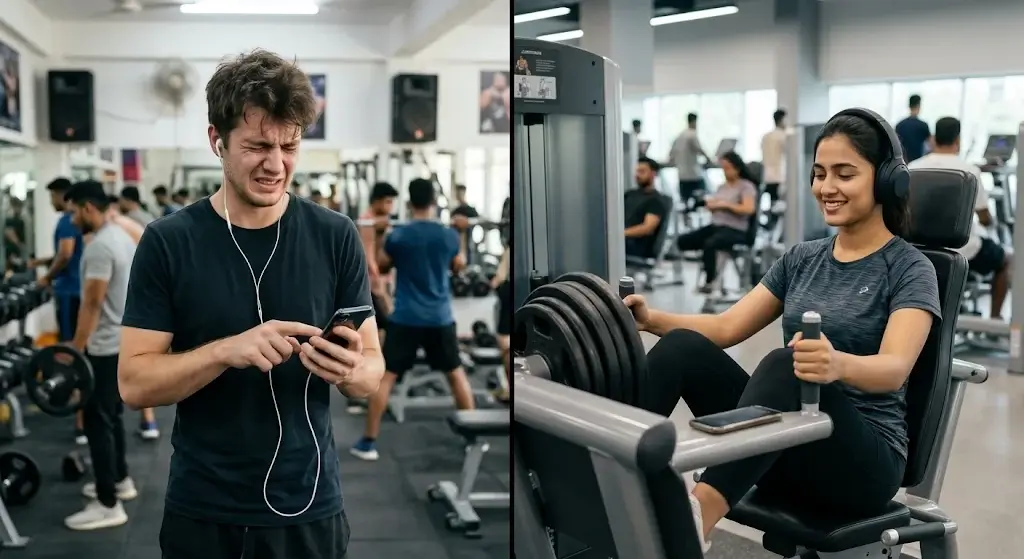
In a noisy gym environment, the natural instinct is to turn up the volume to drown out clanking weights and loud conversations. This is a primary cause of acoustic trauma. Active noise-canceling (ANC) headphones use microphones to detect ambient noise and generate inverse sound waves to cancel it out.
Why it works: By eliminating background noise, you can hear your music clearly at a much lower, safer volume. Studies show that ANC technology can reduce the need to increase volume by up to 10–15 dB in noisy environments, significantly lowering your daily sound exposure dose.
4. Wear High-Fidelity Earplugs at Concerts and Gyms
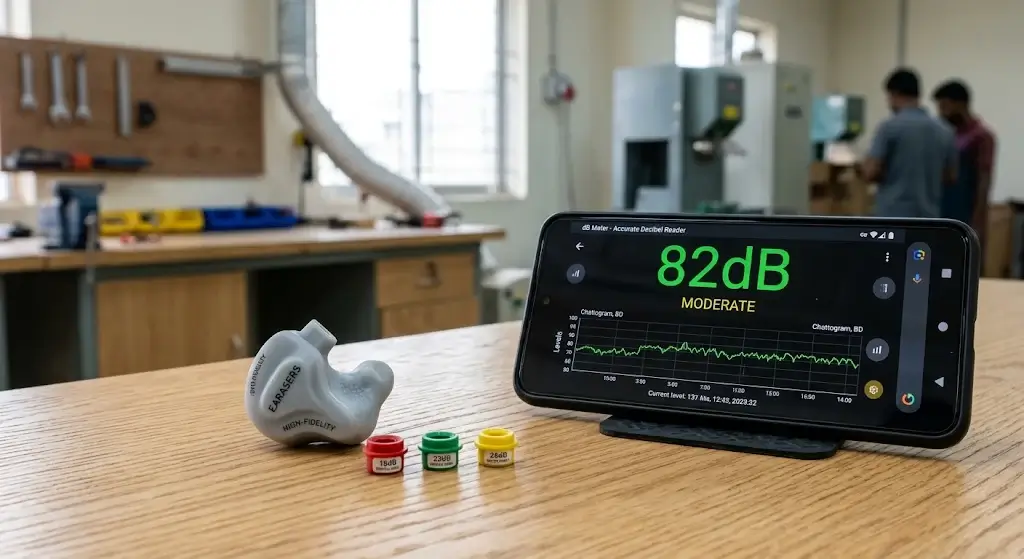
If you attend live music events or train in a notoriously loud fitness studio, standard foam earplugs are not ideal. They muffle the sound, making music sound muddy and ruining the experience. High-fidelity earplugs, however, use acoustic filters to reduce volume evenly across all frequencies.
How to apply it: Invest in a pair of reusable high-fidelity earplugs (which typically reduce sound by 15 to 22 dB). They preserve the clarity of the music while bringing the overall decibel level down to a safe range. Keep a pair in your gym bag at all times.
5. Take Regular Auditory Breaks
Just as your muscles need rest between sets to replenish ATP and clear metabolic waste, your auditory system needs breaks to recover from sound pressure. Continuous noise exposure leads to auditory fatigue, which is often a precursor to temporary threshold shift (a temporary dulling of hearing).
Coach’s Tip: Treat your ears like a muscle group. If you are doing a high-volume leg day that takes two hours, do not wear headphones for the entire session. Remove them during your longer rest periods (2–3 minutes) to give your cochlea a micro-recovery window.
6. Monitor Your Environment with a Decibel Meter App
You cannot manage what you do not measure. Many free or low-cost smartphone apps can measure ambient sound pressure levels in real time.
How to apply it: Download a reputable sound meter app (such as NIOSH SLM, developed by the National Institute for Occupational Safety and Health). Open it during your workout or at a concert. If the app consistently reads above 85 dB, you are in the danger zone and need to either move further from the speakers, insert earplugs, or lower your headphone volume immediately.
7. Opt for Over-Ear Headphones Instead of In-Ear Buds
The physical design of your audio gear matters. In-ear monitors (IEMs) and standard earbuds sit directly inside the ear canal, mere millimeters from the eardrum. This proximity traps sound pressure and delivers it directly to the most vulnerable parts of the auditory system.
Why it works: Over-ear headphones sit outside the ear canal. They distribute sound pressure over a larger area and naturally block some external noise due to their physical padding. Additionally, lighter over-ear models (around 8–10 oz or 225–280 g) prevent neck strain during long training sessions, making them a better overall choice for athletes.
8. Keep a Safe Distance from Speakers
At live events, fitness classes, or even in your home gym, proximity to the sound source drastically increases your exposure. Sound pressure follows the inverse-square law: every time you double your distance from the speaker, the sound intensity drops by 6 dB.
How to apply it: Maintain a minimum distance of 6 feet (1.8 meters) from large speakers at concerts or in group fitness studios. If you are setting up a home gym, do not place Bluetooth speakers directly next to your head on a bench press. Mount them on a wall at least 3 to 4 feet (0.9 to 1.2 meters) away.
9. Get Regular Hearing Screenings
Many people do not realize they have hearing loss until it significantly impacts their daily life. Noise-induced hearing loss often begins at high frequencies, which are not immediately noticeable in normal conversation.
How to apply it: Include a basic hearing test in your annual health checkup. Audiologists can perform an audiogram to establish a baseline of your hearing health. If you notice any changes, early detection allows you to adjust your habits before permanent, severe damage occurs.
10. Recognize the Early Warning Signs of Tinnitus
Tinnitus is the perception of noise or ringing in the ears when no external sound is present. It is one of the earliest warning signs of acoustic trauma and hair cell damage.
How to apply it: If you leave the gym or a concert and experience a ringing, buzzing, or muffled sensation (often called “concert ear”), your ears are telling you they have been overworked. Do not ignore this signal. Give your ears at least 16 to 24 hours of complete quiet to recover, and reassess your listening habits moving forward.
Common Mistake: The “Just One More Song” Trap
A frequent error I see is athletes pushing through auditory fatigue. They feel their ears ringing but decide to finish their playlist or complete their two-hour workout with headphones still on. This compounds the damage. When your ears ring, that is your body’s equivalent of muscle failure. Stop the set, remove the headphones, and rest.
Progression and Regression: Tailoring Your Listening Habits
Not everyone is starting from the same place. Depending on your current habits and environment, you can scale your hearing protection strategies.
Regression (Easier Version for Beginners)
If you are new to hearing conservation, start with foundational, low-friction habits:
- Enable the built-in volume limiter on your smartphone today.
- Switch from cheap, in-ear earbuds to basic over-ear headphones.
- Commit to taking your headphones off for 5 minutes every hour.
- Use free, basic foam earplugs at loud events, even if the sound is slightly muffled.
Progression (Advanced Version for Audiophiles and Frequent Concert-Goers)
If you have mastered the basics and want maximum protection without compromising audio quality:
- Invest in custom-molded, high-fidelity earplugs with interchangeable acoustic filters (e.g., 9 dB, 15 dB, or 25 dB attenuation).
- Use premium active noise-canceling over-ear headphones to eliminate the need for volume increases in noisy environments.
- Routinely monitor gym and venue noise levels using a calibrated NIOSH sound level meter app.
- Schedule an annual baseline audiogram with a licensed audiologist to track long-term auditory health.
How to Apply This: A Sample “Safe Listening” Gym Routine
Integrating hearing protection into your workout does not require a complete overhaul of your routine. Here is a practical template for a 75-minute strength training session that prioritizes both performance and ear health.
- Warm-up (10 minutes): Headphones off. Focus on dynamic stretching and breathing. This allows you to tune into your body’s natural cues without auditory distraction.
- Working Sets 1–3 (30 minutes): Headphones on. Use noise-canceling over-ear headphones. Volume set to 60%. Play high-tempo music to drive movement velocity.
- Mid-Workout Break (5 minutes): Headphones off. Hydrate and let your auditory system rest in the ambient gym noise.
- Working Sets 4–6 (25 minutes): Headphones on. Volume remains at 60%. If the gym gets louder, rely on the noise-canceling feature rather than turning the volume up.
- Cool-down and Stretching (5 minutes): Headphones off. Transition to a calm state, lowering your heart rate and giving your ears a final recovery window before you leave.
If you find yourself relying on maxed-out volume and heavy stimulants to get through a workout, you might be masking underlying fatigue. Learning how to improve daily energy without caffeine can help you train effectively without needing to max out your volume or your stimulant intake. Sustainable gym energy doesn’t require max volume.
Safety Notes and When to See a Doctor
Protecting your hearing is a proactive health measure. However, if you are already experiencing symptoms, you must take them seriously.
Consult an audiologist or an ear, nose, and throat (ENT) specialist if you experience:
- Persistent ringing, buzzing, or hissing in one or both ears (tinnitus).
- A feeling of fullness or pressure in the ear that does not resolve after 24 hours.
- Difficulty understanding speech, especially in noisy environments.
- Sudden hearing loss in one or both ears (this is a medical emergency and requires immediate evaluation).
Furthermore, managing overall bodily stress is crucial. Loud noise exposure triggers a physiological stress response, elevating cortisol levels. Pairing loud noise with poor recovery habits compounds this stress. Exploring adaptogens for stress eating and cortisol management what the research shows can provide a holistic approach to lowering your body’s overall stress burden, complementing your auditory recovery.
Just as you would not ignore sharp joint pain during a squat, do not ignore ear pain or ringing. Early intervention is the only way to preserve your remaining hearing.
FAQ
What is the safest volume percentage for headphones?
The safest volume is generally considered to be 60% or lower of your device’s maximum output. This typically keeps the sound pressure level below the 85 dB threshold recommended by health organizations for extended listening, significantly reducing the risk of noise-induced hearing loss over time.
Can you reverse hearing damage from loud music?
No, you cannot reverse hearing damage caused by loud music. The sensory hair cells in the inner ear do not regenerate once they are destroyed. However, you can prevent further damage by immediately adopting safe listening habits, using volume limiters, and giving your ears regular auditory breaks.
Do noise-canceling headphones actually protect your hearing?
Yes, indirectly. Active noise-canceling (ANC) headphones block out ambient background noise, such as gym equipment or traffic. This allows you to hear your music clearly at a much lower, safer volume, preventing the urge to crank up the decibels to dangerous levels to drown out the environment.
How long can you safely listen to music at 85 decibels?
According to the National Institute for Occupational Safety and Health (NIOSH), the maximum safe daily exposure time at 85 decibels is 8 hours. For every 3-decibel increase in volume, this safe exposure time is cut in half (e.g., 88 dB is safe for only 4 hours).
What are the first signs of hearing loss from headphones?
The earliest signs include temporary tinnitus (ringing or buzzing in the ears after listening), a muffled or “full” sensation in the ears, and needing to ask people to repeat themselves. If you experience these symptoms, your ears are signaling acoustic fatigue and need immediate rest.
Is it safe to wear headphones while running outdoors?
It can be safe if you manage the volume and maintain situational awareness. However, standard earbuds block environmental sounds like traffic or cyclists. If you run outdoors, use bone-conduction headphones or open-ear headphones, which keep your ear canal open, allowing you to hear your music and stay aware of your surroundings simultaneously.
Conclusion
Learning how to protect hearing from loud music and headphones is a critical component of long-term health and wellness. As a coach, I want you to enjoy the motivational power of music for decades to come, not just for a few years before irreversible damage sets in. By following the 60/60 rule, investing in noise-canceling or high-fidelity gear, and respecting your body’s warning signs like tinnitus, you can safeguard your auditory system.
Building healthy habits, whether for your diet or your hearing, requires consistent, natural adjustments. If you are working on other health goals, remember that discipline in one area often supports discipline in another, much like learning how to stop sugar cravings naturally while losing weight a coachs complete guide. Treat your ears with the same respect you treat your muscles. Turn down the volume, take your breaks, and keep training smart.