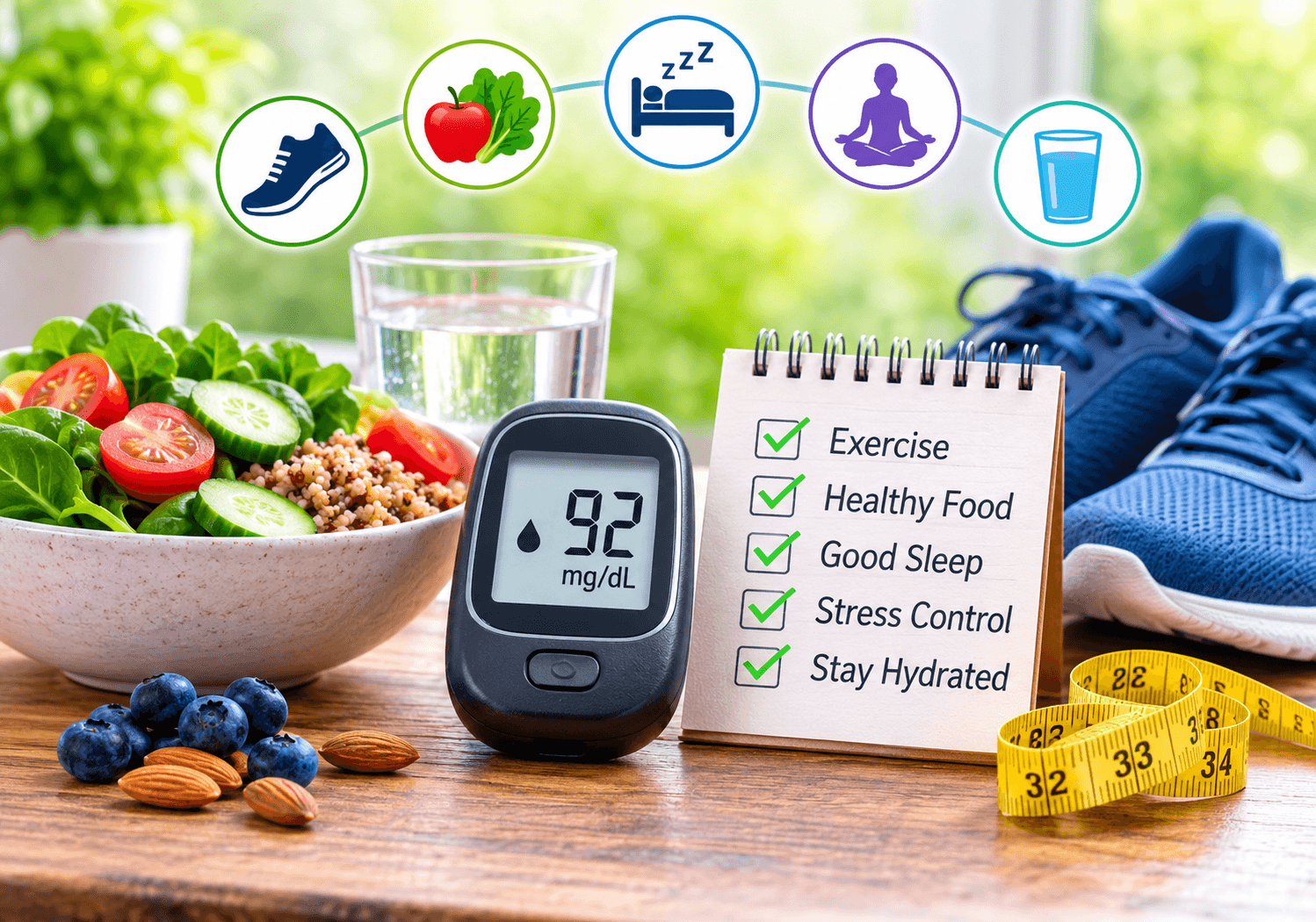
Blood sugar swings can leave you foggy, irritable, and running on empty by mid-afternoon. The good news is that you don’t need a prescription to make a real difference. How to support healthy blood sugar levels naturally comes down to a handful of daily habits—movement, food choices, sleep, and stress management—that work together to keep your glucose steady instead of spiking and crashing. As a strength and conditioning coach, I see this in the gym every week: clients who add 20 minutes of brisk walking after dinner or who swap white rice for quinoa report feeling noticeably steadier within two to three weeks.
This guide breaks down the evidence behind each strategy, gives you a concrete weekly routine, and flags the safety lines you should never cross. No miracle supplements, no crash diets—just practical, repeatable actions you can start this week.
Quick Answer
To support healthy blood sugar levels naturally, combine 150 minutes of mixed aerobic and resistance exercise per week, eat fiber-rich and protein-forward meals, walk 10–15 minutes after eating, sleep 7–9 hours, and manage chronic stress. These habits improve insulin sensitivity and blunt post-meal glucose spikes without medication.
What “Healthy Blood Sugar” Actually Means
Your body converts the carbohydrates you eat into glucose, which cells use for energy. The hormone insulin, produced by the pancreas, acts as a key that lets glucose enter your cells. When that process runs smoothly, your blood glucose stays in a narrow, predictable range.
Here are the ranges most clinicians reference:
| Measurement | Healthy Range | Prediabetes Range |
| Fasting blood glucose | 70–99 mg/dL | 100–125 mg/dL |
| 2-hour post-meal (or 2-hour OGTT) | < 140 mg/dL | 140–199 mg/dL |
| HbA1c (3-month average) | < 5.7 % | 5.7 – 6.4 % |
The CDC’s diabetes overview notes that roughly 96 million U.S. adults have prediabetes, and most don’t know it. The window to intervene—before full-blown type 2 diabetes sets in—is wide, and lifestyle changes are the first-line recommendation from every major health body.
Key point: “Supporting” blood sugar doesn’t mean driving it as low as possible. You want stability: smaller spikes after meals, a lower overnight baseline, and a body that responds efficiently to insulin.
The Science: How Movement, Food, and Lifestyle Shift Glucose
Research is consistent on three levers:
- Muscle contraction pulls glucose into cells independently of insulin. When you contract large muscle groups—quads, glutes, hamstrings, back—your muscles activate GLUT-4 transporters that shuttle glucose in without waiting for insulin to unlock the door. This is why a 10-minute walk after a meal can lower postprandial glucose by 10–30%, according to findings summarized in the Journal of the American College of Cardiology and supported by the American College of Sports Medicine position stands on exercise and diabetes.
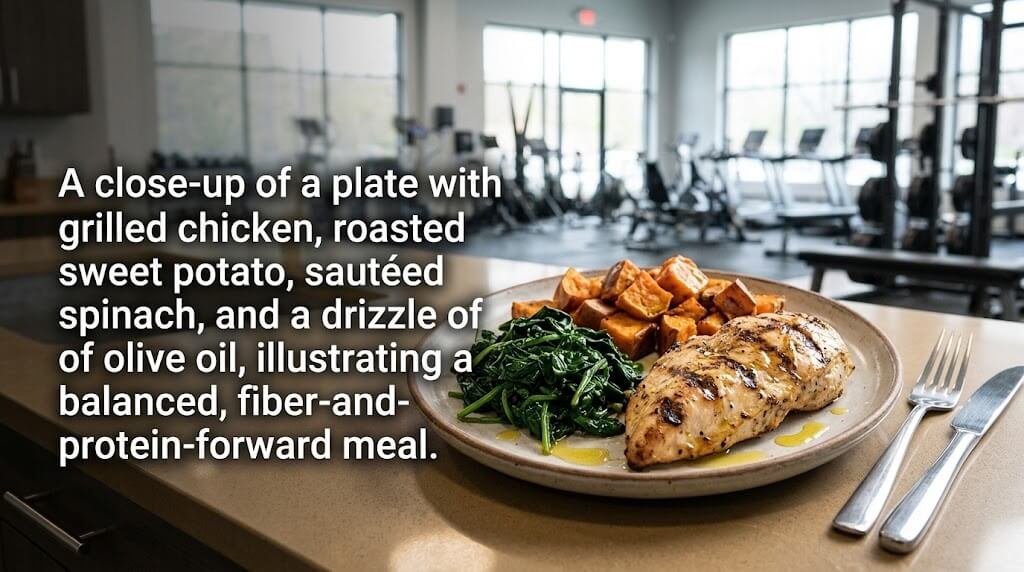
- Fiber and protein slow gastric emptying. Soluble fiber forms a gel in the gut that slows the rate at which glucose hits your bloodstream. Pairing carbs with 20–30 g of protein and a handful of healthy fats flattens the post-meal curve. The Harvard T.H. Chan School of Public Health explains this “glycemic load” concept in detail.
- Sleep and cortisol. Poor sleep (under 6 hours) raises overnight cortisol, which signals the liver to release stored glucose. Even one night of sleep restriction has been shown to worsen insulin sensitivity by roughly 25% in healthy young adults, per studies indexed in PubMed / NCBI. Chronic stress does the same thing through sustained cortisol elevation.
None of these levers works in isolation. The strategy below stacks them so they reinforce each other.
7 Natural Strategies to Support Stable Blood Sugar
1. Move Your Body: The Exercise Prescription
The HHS Physical Activity Guidelines recommend at least 150 minutes of moderate aerobic activity plus two days of muscle-strengthening work per week for adults. For blood sugar specifically, the mix matters.
Aerobic (Zone 2) work – 120–150 min/week
- Brisk walking (3.0–4.0 mph / 4.8–6.4 km/h), cycling, swimming, or hiking
- Keep your heart rate in the “conversational” zone (you can speak in short sentences)
- Split it: 20–30 min on most days, or two 50-min sessions
Resistance training – 2 sessions/week
- Hit all major muscle groups: squats or leg press, rows or pull-ups, chest press, overhead press, hip hinge (deadlift or Romanian deadlift), core work
- 3 sets × 8–12 reps, 60–90 s rest between sets
- Progressive overload: add 2.5–5 lb (1–2.5 kg) or one extra rep each week
Post-meal walking – 10–15 min after each main meal
- This is the single highest-ROI habit for blunting glucose spikes
- No special pace needed; a comfortable 3.0 mph (4.8 km/h) is enough

Coach’s Tip: If you’re new to lifting, start with bodyweight squats, push-ups (knees if needed), and resistance-band rows for two weeks. Build to dumbbell work once your form is solid. The muscle you build becomes a larger “glucose sink” at rest, so even on non-training days your cells are more efficient at clearing sugar from the blood.
Common Mistake: Doing 60 minutes of steady-state cardio and skipping resistance training. Cardio burns glucose during the session, but the muscle mass you build with weights keeps pulling glucose in for hours afterward. Don’t skip the iron (or the bands).
Easier version (regression): 20-minute brisk walk + 2 sets of 10 bodyweight squats, 10 push-ups (knees), and 30-s plank, three days a week.
Harder version (progression): Add a 4×4 tempo row (3 s up, 1 s pause, 3 s down) on your main lifts, and incorporate one 15-min HIIT interval session (30 s hard / 90 s easy) once per week.
2. Rethink Your Plate: Fiber, Protein, and Fat First
You don’t need to eliminate carbs. You need to sequence and pair them.
- Start meals with vegetables or protein. A 2021 study in the American Journal of Clinical Nutrition found that eating vegetables and protein before carbohydrates reduced post-meal glucose by up to 43% compared to eating carbs first.
- Aim for 25–35 g of fiber per day. Oats, lentils, chia seeds, berries, and leafy greens are easy sources. Soluble fiber in particular slows glucose absorption.
- Pair every carb with protein and fat. A slice of whole-grain bread with 2 tbsp peanut butter and a boiled egg creates a much flatter glucose curve than the bread alone.
- Watch the glycemic index of your staple carbs. Swap white rice for brown rice or quinoa; swap white bread for 100% whole-grain or sourdough. This isn’t about “good vs. bad” carbs—it’s about rate of absorption.
- Limit liquid sugar. Sodas, sweetened coffees, and fruit juices deliver glucose with zero fiber to slow it down.
For a deeper look at how protein timing affects fullness and metabolic markers, see our guide on protein intake and metabolism.
3. Prioritize Sleep: The Underrated Blood Sugar Lever
Getting 7–9 hours of quality sleep is non-negotiable for glucose regulation. As noted above, even a single short night impairs insulin sensitivity. Over weeks, chronic sleep debt raises fasting glucose and HbA1c.
Practical steps:
- Set a consistent bedtime and wake time (±30 min), even on weekends
- Cool the room to 65–68 °F (18–20 °C); dim lights 60 min before bed
- Avoid screens or blue-light exposure in the last hour
- If you train, finish vigorous work at least 3 hours before bedtime so cortisol and core temperature have time to drop
Our article on how sleep affects metabolism and weight management covers the hormonal cascade in more depth.

4. Manage Chronic Stress
Cortisol and adrenaline (epinephrine) both raise blood glucose by signaling the liver to release stored glycogen. Acute stress from a tough workout is fine—it’s chronic stress (work, relationships, financial worry) that keeps cortisol elevated for hours or days.
- Box breathing: 4 s in, 4 s hold, 4 s out, 4 s hold. Four rounds takes 60 seconds. Do it before meals if you tend to eat under stress.
- Daily 10-min walk in nature. Green-space exposure has been linked to lower cortisol in multiple studies indexed on PubMed.
- Yoga or mobility work. A 20–30 min session of gentle yoga (surya namaskar, cat-cow, child’s pose) activates the parasympathetic nervous system and can lower fasting glucose modestly.
- Limit caffeine after 2 p.m. Caffeine acutely raises cortisol and can worsen afternoon glucose spikes in sensitive individuals.
5. Stay Hydrated
Dehydration concentrates the blood, which can nudge glucose readings higher and make insulin work less efficiently. Aim for roughly 0.5 oz (15 ml) of water per pound of body weight daily, adjusted upward on hot days or after exercise. Herbal teas and water-rich foods (cucumber, watermelon, soup) count.
6. Build and Maintain Muscle Mass
More lean muscle = more GLUT-4 receptors = more glucose cleared at rest. This is why resistance training is not optional in a blood-sugar plan; it’s central.
- Train each major muscle group at least twice per week
- Use a rep range of 8–12 for hypertrophy; go heavier (4–6 reps) if your goal is strength
- Don’t fear protein: 0.7–1.0 g per lb of body weight (1.6–2.2 g/kg) spread across 3–4 meals supports muscle repair without spiking glucose
- After 40, muscle loss accelerates (sarcopenia), making this even more critical. Our guide on increasing metabolism naturally after 40 has age-specific programming tips.

7. Walk After Meals (Yes, Really)
This is the habit I assign to every client who tells me they “get the 3 p.m. crash.” A 10–15 minute walk at a comfortable pace after breakfast, lunch, and dinner has been shown to reduce postprandial glucose peaks by 10–30% in both healthy adults and those with prediabetes, per meta-analyses in Sports Medicine and the British Journal of Sports Medicine.
You don’t need to “work up a sweat.” Stroll around the block, pace the kitchen, or walk to the mailbox. The mechanical contraction of your leg muscles is what matters, not the cardio intensity.
Sample Weekly Routine
Here’s a realistic week that stacks all seven strategies. Adjust to your schedule.
| Day | Aerobic / Walking | Resistance | Post-Meal Walk | Other |
| Mon | 25-min brisk walk (Zone 2) | Upper body: push-ups, rows, OHP (3×10) | 10 min after lunch & dinner | Box breathing 2×/day |
| Tue | 20-min cycling or swim | Lower body: goblet squats, RDLs, lunges (3×10) | 10 min after lunch & dinner | 7–9 hr sleep target |
| Wed | 30-min easy walk (nature) | Rest / 15-min mobility or yoga | 10 min after dinner | Herbal tea instead of afternoon coffee |
| Thu | 25-min brisk walk (Zone 2) | Full body: deadlifts, chest press, planks (3×10) | 10 min after lunch & dinner | Box breathing before meals |
| Fri | 20-min cycling or swim | Upper + lower circuit (2×12 each) | 10 min after dinner | 7–9 hr sleep target |
| Sat | 45-min hike or recreational sport | Rest | 10 min after lunch | Social walk or family activity |
| Sun | Rest or 20-min gentle walk | Rest | 10 min after dinner | Meal-prep: batch-cook fiber-rich meals |
Total weekly volume: ~150 min aerobic + 2–3 resistance sessions + daily post-meal walks.

Safety Notes and When to See a Doctor
- If your fasting glucose is consistently above 126 mg/dL (7.0 mmol/L) or your HbA1c is 6.5% or higher, see a physician. Those numbers suggest diabetes, and lifestyle changes alone may not be enough.
- If you are already on metformin, insulin, or sulfonylureas, do NOT change your medication or drastically alter your exercise or diet without talking to your doctor first. Exercise can lower glucose further and increase the risk of hypoglycemia on medication.
- If you experience dizziness, shakiness, confusion, or sweating (signs of hypoglycemia), stop activity, consume 15 g of fast-acting carbohydrate (4 oz / 120 ml of juice or 3–4 glucose tablets), and recheck in 15 minutes.
- Pregnant, postpartum, or managing a chronic condition? Get clearance from your OB or primary-care provider before starting a new resistance or HIIT program.
- This article is for general information and is not a substitute for advice from a doctor or physical therapist.
Related Tips for Long-Term Blood Sugar Health
- Track, don’t obsess. A continuous glucose monitor (CGM) or even a simple finger-stick kit used a few times a week can show you your patterns. You’ll discover which meals spike you and which don’t. The Mayo Clinic’s prediabetes page has a good overview of how to interpret home readings.
- Don’t skip meals. Prolonged gaps (8+ hours) can cause reactive hypoglycemia followed by a bigger spike at the next meal. Three balanced meals plus one or two small snacks keeps the curve smooth.
- Mind your alcohol. Alcohol impairs the liver’s ability to release glucose and can cause delayed hypoglycemia, especially on an empty stomach. If you drink, pair it with food and keep it to 1–2 standard drinks.
- Be consistent, not perfect. One “off” meal or a skipped workout won’t undo weeks of good habits. The Cleveland Clinic’s diabetes resources emphasize that small, sustained changes outperform short-term overhauls.
- Consider a 10–15 min “movement snack” between sitting blocks. Standing, doing 15 calf raises, or a quick set of wall push-ups every 45–60 minutes of sitting reduces the glucose blip associated with prolonged inactivity.
- For those exploring whether certain supplements (chromium, berberine, cinnamon) add measurable benefit on top of lifestyle, our evidence-based guide on whether supplements can improve insulin sensitivity walks through what the data actually shows.
FAQ
How long does it take to see blood sugar improvements from natural changes?
Most people notice steadier energy within 1–2 weeks of adding post-meal walks and adjusting meal composition. Fasting glucose and HbA1c typically shift over 6–12 weeks of consistent exercise and diet changes. The CDC’s prediabetes program data shows measurable HbA1c drops at the 6-month mark in lifestyle-intervention participants.
Can walking alone lower blood sugar enough?
Walking 10–15 minutes after meals can reduce postprandial glucose spikes by 10–30%, which is meaningful. However, walking alone won’t build the muscle mass that keeps glucose clearance elevated at rest. For the best results, pair daily walks with two weekly resistance sessions.
What should I eat to avoid blood sugar spikes?
Prioritize fiber (25–35 g/day), lean protein, and healthy fats at every meal. Eat vegetables and protein before starchy carbohydrates. Choose low-glycemic carbs like quinoa, oats, and legumes over refined grains and white potatoes. Limit sugary drinks entirely.
Does resistance training really help blood sugar, or is cardio better?
Both help, but in different ways. Cardio burns glucose during the session; resistance training builds muscle that acts as a larger glucose sink for hours afterward. The ACSM guidelines recommend both aerobic and resistance training for diabetes prevention and management.
Absolutely. Insulin sensitivity and glucose stability matter for everyone, regardless of body size. “Skinny fat” or metabolically unhealthy individuals can have elevated fasting glucose and impaired insulin response. The habits in this guide support metabolic health at any weight.
Should I stop eating carbohydrates to control blood sugar?
No. Carbohydrates are a primary fuel source, and eliminating them is neither necessary nor sustainable for most people. The goal is to choose which carbs, how much, and what you pair them with. Whole grains, legumes, and vegetables provide fiber and micronutrients that refined carbs do not.
Conclusion
Learning how to support healthy blood sugar levels naturally isn’t about following a rigid protocol or buying a special supplement. It’s about stacking a few evidence-backed habits—moving your body daily, eating fiber and protein first, walking after meals, sleeping well, and keeping stress in check—so they compound over weeks and months. Start with one or two changes this week. Add the post-meal walk. Swap one refined carb for a whole grain. Pick up a pair of light dumbbells. Small, consistent actions build the metabolic foundation that keeps your glucose steady, your energy even, and your long-term risk low. Your future self will thank you at 5 p.m. on a Tuesday when the crash just… doesn’t come.