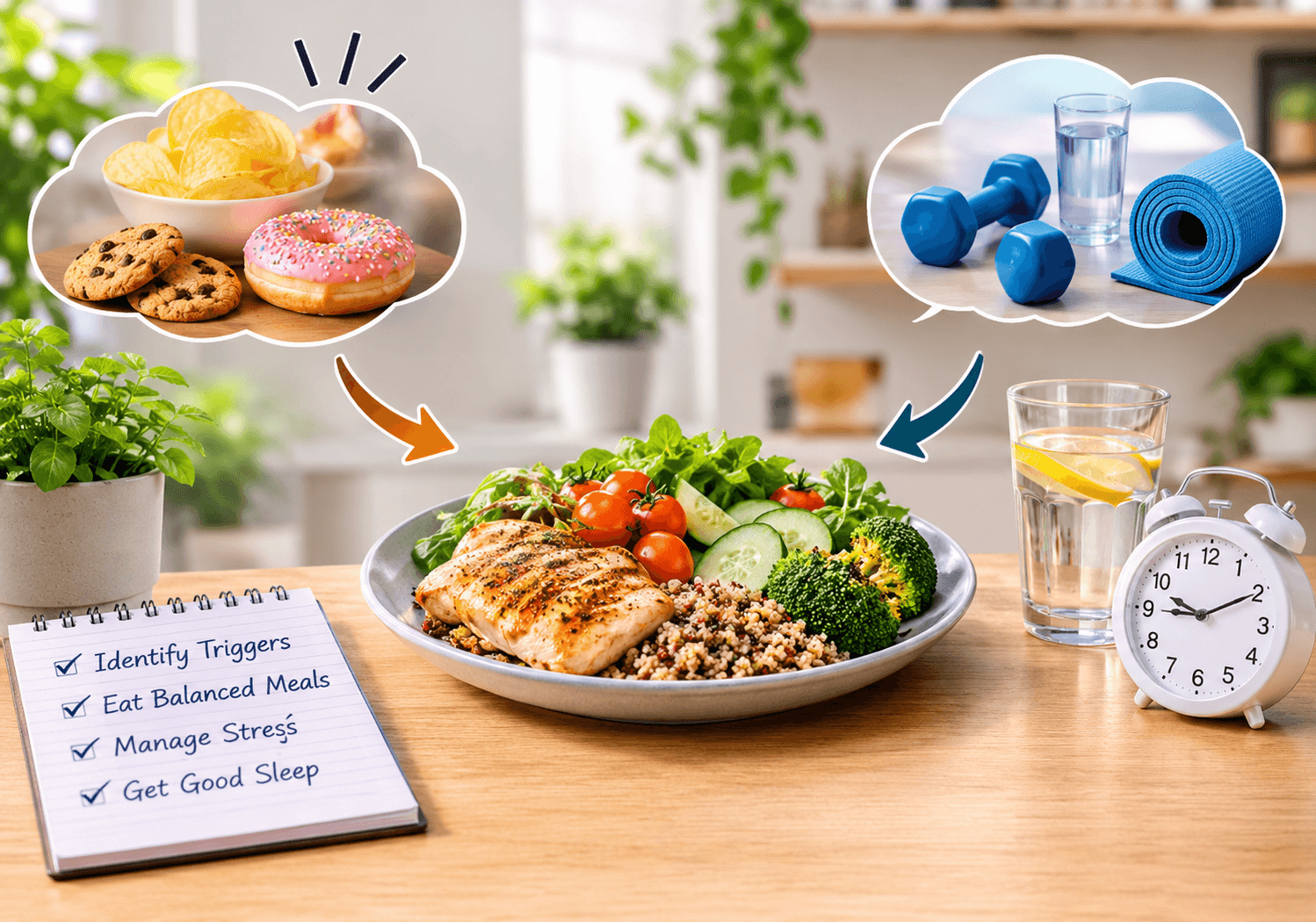
Trying to shed extra weight often feels like a constant battle against your own appetite. You stick to a routine, eat clean during the day, and then stress from work or home hits. Before you know it, you are at the bottom of a bag of chips or looking into the freezer for ice cream.
If this sounds familiar, you are not alone. Restrictive meal plans usually make this cycle worse. When you cut calories too low or ban your favorite foods, your body responds with intense cravings and stress. Learning how can you manage emotional eating during weight loss without strict dieting comes down to understanding your body’s signals, regulating stress hormones, and building habits that support long-term success.
Quick Answer Box
To manage emotional eating during weight loss without strict dieting, focus on identifying emotional triggers, eating balanced meals rich in protein and fiber to manage hunger hormones, and practicing mindfulness. Swapping food rewards for healthy coping mechanisms like walking or resistance training helps regulate cortisol and break the emotional eating loop naturally.
Understanding Emotional Eating vs. Physical Hunger
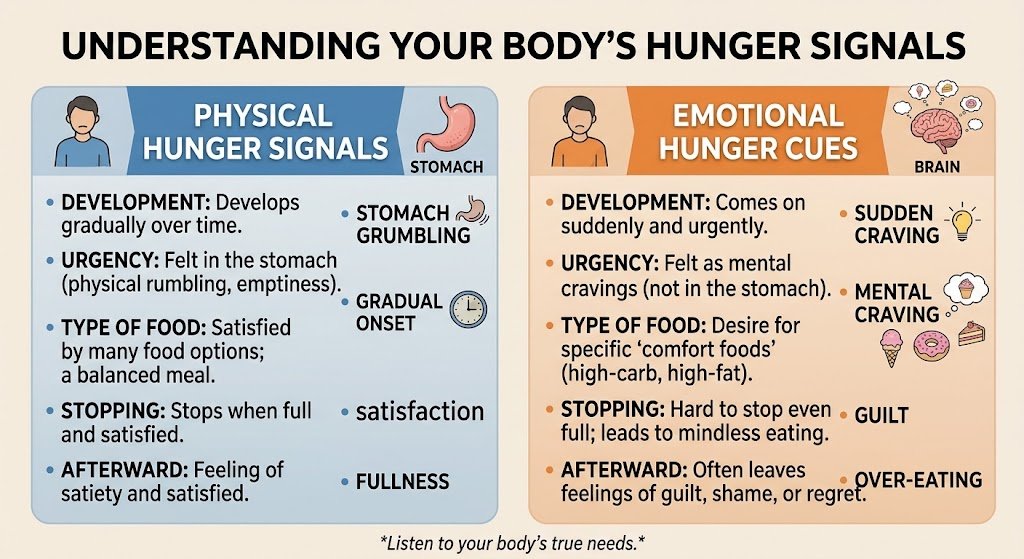
Before you can break the habit of turning to snacks for comfort, you need to know what kind of hunger you are dealing with. Your body communicates through two distinct channels: physiological (physical) hunger and psychological (emotional) hunger.
Physical hunger comes on gradually. Your stomach might growl, or you might feel a mild dip in energy. Crucially, physical hunger is flexible—you are open to eating different foods to fuel your body, and you stop when you feel full.
Emotional hunger hits like a sudden wall. It demands immediate satisfaction and usually targets specific comfort foods high in sugar, fat, or salt. Emotional hunger does not start in your stomach; it starts in your mind. Even after your stomach is full, emotional hunger pushes you to keep eating.
| Feature | Physical Hunger | Emotional Hunger |
| Onset | Gradual, develops over hours | Sudden, demands immediate food |
| Cravings | Open to different food options | Specific (sugar, fat, salty snacks) |
| Sensation | Stomach growling, low energy | Head-driven, emotional void |
| Satiety | Stops when comfortably full | Hard to stop, leads to overeating |
| Post-Meal Feeling | Satisfied and energized | Guilty, ashamed, or overly full |
Why Strict Dieting Makes Emotional Eating Worse
When people decide to lose weight, their first instinct is often to cut calories drastically or cut out entire food groups. However, extreme restriction creates a bio-psychological trap.
When you drastically reduce your energy intake, your brain perceives a potential famine. This activates your body’s stress response system, increasing the stress hormone cortisol. High cortisol levels drive cravings for fast-digesting carbohydrates and fats. At the same time, restriction lowers your levels of leptin (the fullness hormone) and increases ghrelin (the hunger hormone).
Strict diets also create a mental dynamic called the “all-or-nothing” mindset. If you tell yourself a food is completely off-limits, it becomes all you can think about. When you eventually eat that food, feelings of guilt take over. You think, “I already ruined my diet, so I might as well eat everything.”
Removing strict rules eliminates the rebellion-and-guilt cycle. Focusing on sustainable habits lets you work with your physiology instead of fighting it.
Step 1: Identify Your Emotional Triggers
You cannot address an emotional eating episode if you do not know what starts it. Triggers fall into five main categories:
- Stress: Work deadlines, financial strain, or family conflicts elevate cortisol, driving cravings for comfort food.
- Emotions: Boredom, sadness, loneliness, anxiety, or even celebration can prompt a desire to eat.
- Social Cues: Overeating at parties, meals with friends, or eating simply because others around you are eating.
- Environmental Triggers: Seeing snacks on the kitchen counter, smelling food, or watching TV commercials.
- Physiological Fatigue: Poor sleep disrupts your brain’s decision-making centers, making high-calorie foods harder to resist.
The Trigger-Tracking Log
For one week, keep a simple journal or note on your phone. Every time you reach for a snack outside your regular meals, write down:
- What time is it?
- What am I feeling right now? (Bored, stressed, sad, tired?)
- How hungry am I on a scale of 1 to 10?
- What did I choose to eat?
Tracking these details reveals patterns without judgment. You might notice you always reach for sweet snacks around 3:00 PM at work due to boredom, or that you eat salty foods late at night when watching television.
Step 2: Use Mindful Eating Techniques
Mindful eating means bringing full awareness to your food choices and the experience of eating. It helps rebuild the connection between your brain and your stomach’s fullness signals.
[Pause] ──> [Check Hunger Scale (1-10)] ──> [Breathe & Remove Distractions] ──> [Eat Slowly]
The 5-Minute Pause Rule
When you feel a sudden urge to eat a snack, commit to pausing for just five minutes. Do not tell yourself you cannot have the food. Simply tell yourself, “I can have this snack, but I am going to wait five minutes first.”
During those five minutes, step away from the kitchen. Take five deep breaths, lowering your heart rate and calming your nervous system. Ask yourself: “Am I physically hungry, or am I trying to soothe an emotion?” If you are still hungry after five minutes, eat the food mindfully. Often, the initial emotional urge will drop significantly in intensity.
Put Your Utensils Down
Speed-eating prevents your brain from registering fullness. It takes about 20 minutes for your stomach to signal your brain that you are full.
- Take a bite of food.
- Set your fork or spoon down on the plate.
- Chew thoroughly and savor the flavors and textures.
- Swallow completely before picking up your fork again.
Coach’s Tip
Avoid eating while staring at screens. When you eat while watching TV, scrolling on your phone, or working at your desk, your brain misses the sensory signals of eating. Eat off a real plate, sit at a table, and focus entirely on your food for at least 10–15 minutes.
Step 3: Fuel Your Body to Prevent Biological Hunger
Emotional eating is much harder to control when you are genuinely starving. Skipping meals or relying on small salad lunches sets you up for evening overeating. Maintaining steady blood sugar prevents physiological dips that look like emotional cravings.
Build Meals Around Protein and Fiber
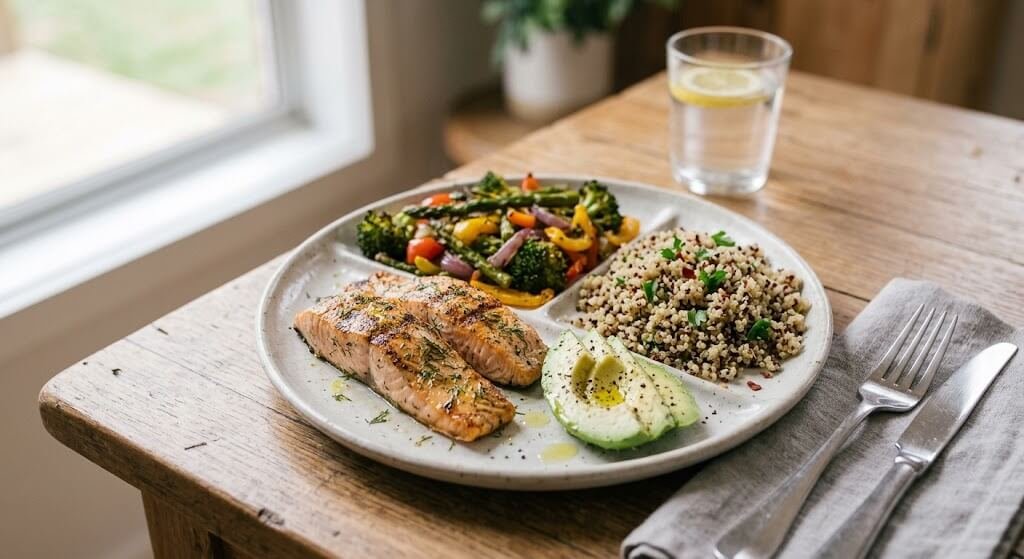
Protein and dietary fiber are your two best tools for staying full. Protein boosts satiety hormones like peptide YY while keeping ghrelin levels low. Fiber slows down digestion, steadying blood sugar spikes and preventing energy crashes. Research shows that how protein helps control hunger during weight loss plays a direct role in minimizing spontaneous snacking throughout the day.
When you build balanced meals, aim for:
- Lean Protein: 25–40 grams per meal (chicken breast, turkey, eggs, tofu, Greek yogurt, salmon).
- High-Fiber Carbohydrates: 8–10 grams of fiber per meal (oats, berries, beans, lentils, broccoli, quinoa).
- Healthy Fats: Small portions to slow digestion (avocado, nuts, seeds, olive oil).
Knowing how dietary fiber helps with appetite and weight management makes it easier to design meals that satisfy your physical hunger, leaving less room for stress-driven eating.
Step 4: Build a Non-Food Coping Toolkit
Food is a reliable, fast way to release dopamine and soothe stress. If food is your only coping tool, you will rely on it whenever life gets tough. To manage emotional eating, you need a collection of non-food activities that calm your mind and bring genuine comfort.

Physical Movement for Stress Relief
Exercise is a great way to process stress without eating extra calories. When you feel an emotional craving triggered by stress or frustration, try replacing food with movement:
- A 10-Minute Walk: A quick walk outdoors lowers cortisol levels, clears your head, and gets you away from food triggers.
- Resistance Training: Lifting weights or doing bodyweight exercises gives your brain a structured focus, burning off nervous energy.
- Gentle Stretching or Yoga: Light movement stimulates your parasympathetic nervous system, easing physical tension.
Non-Physical Distractions
If physical movement is not an option, choose an activity that engages your hands and brain:
- Call or text a supportive friend.
- Herbal tea (chambomile, peppermint) gives you a comforting ritual without added calories.
- Read a chapter of a book or work on a puzzle.
- Journal about what is stressing you out.
Common Mistake
Trying to fight an emotional craving with pure willpower rarely works. Willpower is a limited resource that drains as your day goes on. Instead of fighting the urge directly, alter your environment or switch your activity to reset your mind.
Step 5: Protect Your Sleep and Manage Stress
Sleep deprivation wreaks havoc on your metabolism and appetite signals. When you sleep fewer than 7 hours a night, your body produces more ghrelin and less leptin. You end up feeling hungrier the next day, and your brain craves high-calorie, sugary foods.
Understanding how sleep affects metabolism and weight management makes it clear why restful nights are essential for curbing emotional urges.
Sleep Deprivation ──> Higher Ghrelin + Lower Leptin ──> Increased Cravings ──> Emotional Overeating
Sleep Hygiene Checklist
- Keep a Consistent Schedule: Go to bed and wake up at the same time every day, even on weekends.
- Limit Evening Screen Time: Turn off phones, tablets, and TVs 60 minutes before bed to support natural melatonin production.
- Keep Your Room Cool and Dark: Aim for a bedroom temperature around 65–68°F (18–20°C).
- Avoid Late Caffeine: Stop consuming caffeine at least 6 to 8 hours before your planned bedtime.
Additionally, checking how sleep affects metabolism through the hormonal connection highlights how night-time rest keeps stress hormones like cortisol in check, protecting you from mid-afternoon sugar cravings.
Step 6: Sample Strength Routine for Stress Regulation
Physical exercise helps regulate stress and maintain lean muscle while losing weight. You do not need hours in the gym to see these benefits. A short full-body strength routine 3 times per week can boost your mood, improve insulin sensitivity, and build momentum.
3-Day Full-Body Resistance Routine
Perform this routine on non-consecutive days (e.g., Monday, Wednesday, Friday). Rest 60–90 seconds between sets.
| Exercise | Target Muscles | Sets | Reps | Tempo | Rest |
| Goblet Squat | Quads, Glutes, Core | 3 | 8–12 | 2-0-2-0 | 90 sec |
| Dumbbell Romanian Deadlift | Hamstrings, Glutes, Lower Back | 3 | 10–12 | 3-0-1-0 | 90 sec |
| Dumbbell Bench Press or Push-Up | Chest, Shoulders, Triceps | 3 | 8–10 | 2-0-1-0 | 60 sec |
| One-Arm Dumbbell Row | Upper Back, Lats, Biceps | 3 | 10–12 | 2-0-1-1 | 60 sec |
| Plank Hold | Core, Abdominals | 3 | 30–45 sec | Hold | 60 sec |

Exercise Cues & Modifications
1. Goblet Squat
- Form Cue: Hold a dumbbell or kettlebell close to your chest. Stand with feet shoulder-width apart, toes turned slightly out. Sit back into your hips while keeping your chest high and your knees tracking over your toes. Push through your whole foot to stand up.
- Regression (Easier): Bodyweight Box Squat (squat down to a chair or bench).
- Progression (Harder): Increase weight or add a 3-second pause at the bottom of the squat.
2. Dumbbell Romanian Deadlift (RDL)
- Form Cue: Hold dumbbells at your thighs. Maintain a soft bend in your knees and push your hips backward as if touching a wall behind you. Slide the weights down your legs until you feel a stretch in your hamstrings. Squeeze your glutes to drive your hips forward to stand.
- Regression (Easier): Single-leg supported RDL using a wall for balance.
- Progression (Harder): Increase weight or use a 3-second lowering tempo.
3. One-Arm Dumbbell Row
- Form Cue: Place your left knee and left hand on a bench, keeping your back flat. Pull the dumbbell in your right hand toward your hip joint, squeezing your shoulder blade back. Lower the weight under control.
- Regression (Easier): Standing supported cable row.
- Progression (Harder): Pause for 2 seconds at the top of each repetition.
Troubleshooting Common Emotional Eating Scenarios
Even with a solid plan, specific situations can tempt you to turn to food for comfort. Here is how to handle three common scenarios:
Scenario 1: Nighttime Kitchen Scavenging
The Setup: It is 9:30 PM. You finished dinner hours ago, but you are pacing the kitchen looking for sweet snacks.
- The Fix: Close the kitchen down after dinner. Brush your teeth, turn off the kitchen lights, and move into another room. If you are genuinely hungry, prepare a small, protein-rich snack like 1/2 cup of Greek yogurt or a boiled egg. If you only want sweets, drink a warm cup of herbal tea instead.
Scenario 2: High-Stress Workday Overeating
The Setup: A stressful afternoon project leaves you reaching for candy or chips at your desk.
- The Fix: Step away from your workspace. Walk outside for 5 minutes or do 2 minutes of box breathing (inhale 4 sec, hold 4 sec, exhale 4 sec, hold 4 sec). Keep single-serve snacks like almonds or edamame on hand so you do not default to vending machine food.
The Setup: You stay on track all week, but social events on the weekend lead to overeating and feelings of guilt.
- The Fix: Shift away from an “all-or-nothing” mindset. Eat a protein-rich meal before heading out so you do not arrive starving. Enjoy your favorite treats in moderation without guilt, knowing one social meal will not ruin your overall progress.
How to Measure Progress Without Using the Scale
When you stop strict dieting and focus on managing emotional eating, scale weight is not the only metric that matters. Water fluctuations can mask actual body composition changes. Track these non-scale victories to measure real progress:
- Reduced Craving Frequency: You go from emotional eating every night to once or twice a week.
- Better Energy and Sleep: Eating balanced, full meals gives you steady energy throughout the day and helps you sleep deeply.
- Improved Strength and Stamina: You are lifting heavier weights or walking farther without getting winded.
- A Healthier Relationship with Food: You can enjoy a treat without feeling guilty or needing to “earn” it through extra exercise.
Frequently Asked Questions
Can you stop emotional eating completely?
No, and that is not the goal. Eating is naturally tied to emotions and social events. The goal is to prevent emotional eating from being your only way to handle stress, sadness, or boredom.
How do I know if I am emotionally hungry or physically hungry?
Physical hunger develops slowly over time and leaves you open to eating balanced options. Emotional hunger comes on suddenly, demands specific comfort foods, and persists even after your stomach is full.
Will managing emotional eating help me lose weight without counting calories?
Yes. Emotional eating often introduces hundreds of extra calories from high-fat, high-sugar snacks. By addressing emotional triggers and eating balanced meals, you reduce overall calorie intake naturally.
Is it okay to eat comfort foods when I am stressed?
Yes. The goal is to eat comfort foods mindfully and by choice, rather than as an automatic, stress-driven reaction. Enjoying a treat without guilt keeps strict dieting patterns from taking over.
How long does it take to break emotional eating habits?
Building new coping habits usually takes 4 to 8 weeks of consistent practice. Be patient with yourself, focus on steady progress, and celebrate your non-scale victories along the way.
Conclusion
Learning how can you manage emotional eating during weight loss without strict dieting is not about willpower or cutting out foods you love. It comes down to understanding your body’s signals, managing your stress levels, and nourishing yourself with balanced meals rich in protein and fiber.
By identifying your emotional triggers, building a toolkit of non-food coping activities, prioritizing sleep, and keeping up with regular movement, you break the cycle of emotional eating for good. Be patient with yourself—building a healthy relationship with food is a long-term process that leads to lasting physical and mental health.