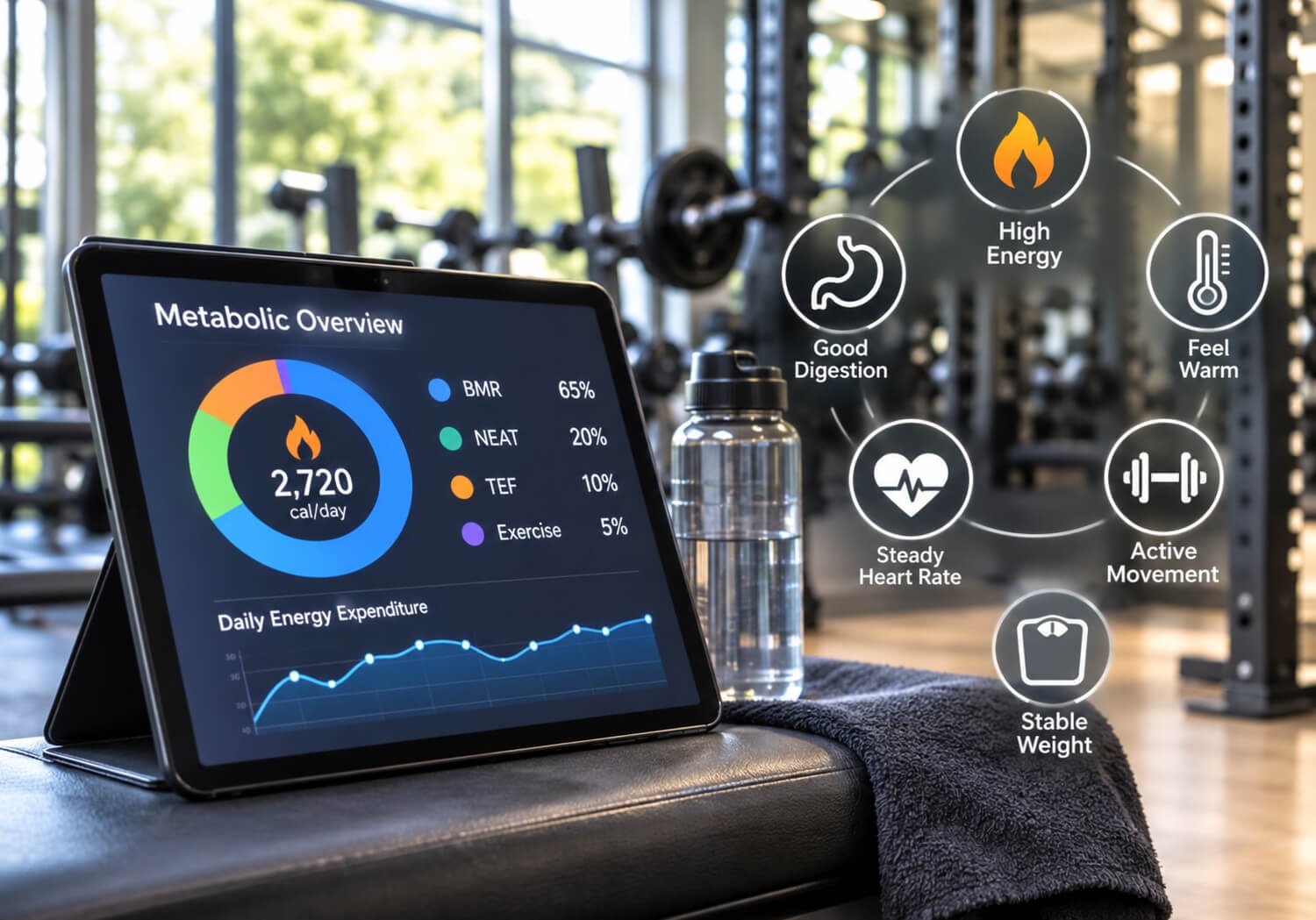
Have you ever wondered why some people eat large meals without gaining weight, feel warm in a chilly room, or bounce their leg constantly under a desk? Those everyday quirks are often the real-world signs of high metabolism at work. Your metabolism is not a single switch inside your body; it is the total sum of every chemical reaction that turns food into usable energy. When that engine runs hot, your body burns through calories faster at rest, during digestion, and throughout daily movement, leaving clear physical and behavioral clues you can learn to spot.
Quick Answer
The most reliable signs of high metabolism include feeling hungry within two to three hours of eating, running warm or sweating easily, maintaining a stable weight despite a higher calorie intake, having steady daytime energy, and naturally fidgeting throughout the day. A high metabolic rate reflects greater lean muscle mass, active non-exercise movement, and efficient cellular energy turnover.

Understanding the True Signs of High Metabolism
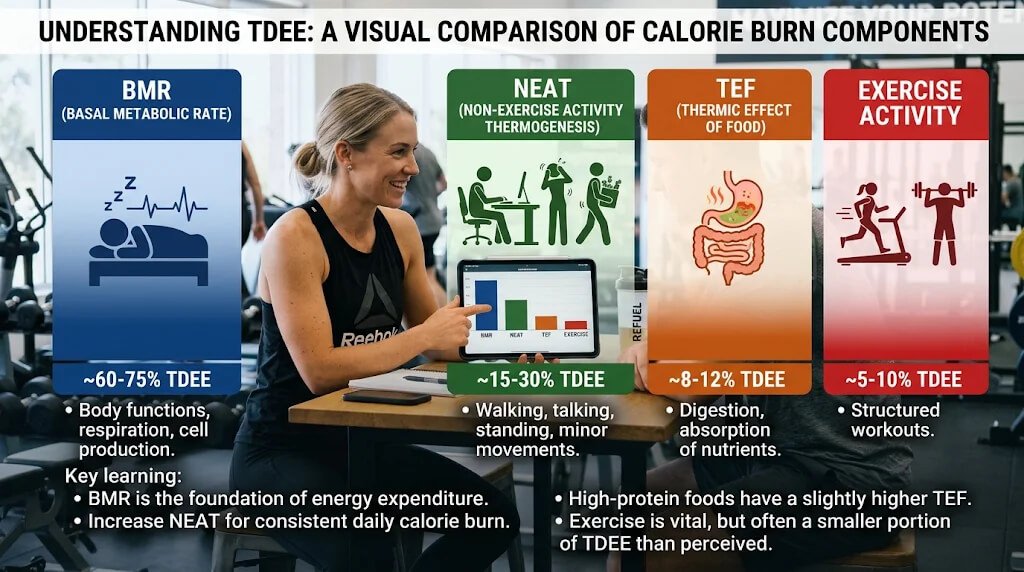
To recognize the signs of high metabolism, it helps to understand what actually drives your daily calorie burn. Scientists break your Total Daily Energy Expenditure (TDEE) down into four distinct components, according to research indexed on PubMed Central.
- Basal Metabolic Rate (BMR): The energy your organs, brain, and muscles require just to keep you alive at complete rest, accounting for roughly 60% to 70% of daily burn.
- Non-Exercise Activity Thermogenesis (NEAT): The calories burned through spontaneous daily movement like walking, standing, gesturing, and fidgeting.
- Thermic Effect of Food (TEF): The energy your digestive system spends breaking down, absorbing, and storing nutrients, which makes up about 10% of total intake.
- Exercise Activity Thermogenesis (EAT): The calories burned during intentional workouts like lifting weights or running.
People who exhibit classic fast metabolism symptoms typically have an elevated baseline across two or three of these categories. Understanding what affects metabolism and body weight reveals that genetics play a role, yet muscle tissue, hormone output, and daily movement habits carry far more weight than most people realize.
12 Physical and Behavioral Signs of High Metabolism
If you suspect your internal engine burns fuel rapidly, look for patterns across your appetite, body temperature, recovery, and daily habits rather than relying on a single symptom.
1. You Get Hungry Again Within Two to Three Hours
Frequent, predictable hunger is one of the earliest high metabolic rate indicators you will notice. When your cells process glucose and fatty acids quickly, blood sugar returns to baseline faster after a meal, signaling your brain that it is time to refuel.
Unlike emotional cravings for sugary snacks, metabolic hunger feels like a genuine physical emptiness in your stomach. You will typically feel satisfied after eating a balanced meal rich in protein and complex carbohydrates, only to feel legitimately ready for another full meal three hours later.
2. You Feel Warm Most of the Time
Every chemical reaction inside your cells generates heat as a byproduct. When your basal metabolic rate is elevated, your body produces more thermal energy even while you sit completely still at your desk.
People with a high metabolic rate often prefer cooler room temperatures around 65 to 68°F (18 to 20°C) while coworkers reach for sweaters. You might also notice your hands and feet stay warm in winter, or that you kick off heavy blankets halfway through the night.
3. You Sweat Easily During Light Activity
Because your internal temperature already sits near the upper end of your normal range, it takes very little extra exertion to trigger your body’s cooling system. A brisk 0.5-mile (0.8 km) walk or carrying groceries up two flights of stairs can quickly bring a light sheen of sweat to your forehead and back.
During structured workouts, your sweat rate ramps up early in the warm-up rather than waiting until the hardest sets. While hydration needs increase with higher sweat output, rapid cooling is a sign that your cardiovascular and metabolic systems respond quickly to energy demand.
4. You Maintain Your Weight Without Strict Calorie Tracking
One of the most sought-after fast calorie burn signs is effortless weight stability across months and years. If you eat until comfortably full at meals, enjoy occasional treats, and rarely see the scale move more than 2 to 3 lb (0.9 to 1.4 kg) in either direction, your energy output naturally matches your intake.
Many clients with high energy expenditure actually struggle to gain weight when they try to bulk up. They often discover they need to eat 3,000 to 3,500 calories per day just to add 0.5 lb (0.23 kg) of body mass per week.
5. You Have Steady Daytime Energy Without Mid-Afternoon Crashes
Efficient cellular energy production relies heavily on healthy mitochondria—the microscopic power plants inside your muscle and organ cells. When your metabolic flexibility is high, your body smoothly switches between burning carbohydrates after meals and tapping into stored body fat between meals.
As a result, you wake up alert within 15 to 20 minutes of your alarm and maintain steady mental focus through the afternoon. Instead of relying on multiple cups of coffee to survive 3:00 PM, your energy curve stays relatively flat until bedtime.
Coach’s Tip: Track your natural energy and hunger rhythms for five consecutive days without changing your diet. Write down the exact times you feel hungry, warm, or restless. Seeing those timestamps on paper gives you a much clearer picture of your true resting metabolic rate than guessing based on body weight alone.
6. You Fidget and Move Constantly Without Thinking
Researchers studying non-exercise activity thermogenesis have found that spontaneous movement can vary by up to 2,000 calories per day between two adults of similar size. High-metabolism individuals rarely sit completely motionless for long stretches.
Look for these unconscious NEAT habits in your daily routine:
- Tapping your foot or bouncing your knee while working at a computer.
- Pacing around the room while talking on the phone.
- Using hand gestures frequently during conversations.
- Standing up to stretch, grab water, or walk short laps every 30 minutes.
7. You Have a Slightly Higher Resting Heart Rate (Within Normal Range)
Your heart delivers oxygen and nutrients to fuel every metabolic reaction in your tissues. While endurance athletes often have resting heart rates in the 40s or 50s due to enlarged heart chambers, individuals with naturally high resting metabolic rates often sit comfortably between 70 and 85 beats per minute.
As long as your resting pulse stays below 100 beats per minute—the upper limit of normal noted by the Mayo Clinic—a brisker baseline pulse simply reflects higher ongoing oxygen demand. Pairing a reliable wearable like a Garmin chest strap or optical watch with morning check-ins helps you spot your true baseline.
8. Your Digestion Moves at a Consistent, Brisk Pace
A fast metabolism requires an efficient digestive tract to break down food, absorb amino acids and glucose, and clear waste promptly. People with higher metabolic turnover rarely complain of sluggish digestion, heavy bloating after normal meals, or irregular bowel habits.
Typically, having one to two well-formed bowel movements daily indicates healthy gut motility. Because the thermic effect of food burns calories during digestion, processing meals efficiently keeps your internal energy pipeline moving smoothly.
9. You Recover Quickly Between Strength Sets and Workouts
Metabolic rate is closely tied to protein synthesis and cellular repair. When your body processes nutrients rapidly, it clears metabolic byproducts like lactate faster between hard sets of barbell back squats or deadlifts.
You may notice your breathing settles within 60 to 90 seconds after a heavy set of 8 to 10 reps, and muscle soreness fades within 24 to 36 hours after training. Faster tissue repair allows you to train major muscle groups—such as the quadriceps, gluteus maximus, and latissimus dorsi—with higher weekly frequency.
10. You Carry a Higher Ratio of Lean Muscle Mass
Muscle tissue is far more metabolically active than stored body fat. According to data published by the National Institutes of Health (NIH), a pound of skeletal muscle burns roughly three times more calories at rest than a pound of adipose tissue, and requires significant energy just to maintain.
Even if you do not look like a competitive bodybuilder, carrying solid muscle density across your back, legs, and core elevates your daily calorie floor. Every time you move a heavier frame through space, you burn additional fuel.
11. You Notice Rapid Fingernail and Hair Growth
Cellular turnover is not limited to muscle fibers and digestive cells. When your thyroid hormones and metabolic enzymes operate at an brisk pace, keratin production in your hair follicles and nail beds speeds up as well.
If you find yourself trimming your fingernails every five to seven days or scheduling haircuts more frequently than friends, your body is consistently channeling amino acids and micronutrients into tissue growth.
12. You Sleep Deeply and Wake Up Feeling Warm
During deep slow-wave sleep, your body releases growth hormone and carries out peak cellular repair. People with high energy expenditure often fall asleep quickly because their bodies have genuinely burned through their daily fuel reserves.
You may also notice you wake up feeling slightly warm or hungry first thing in the morning. That morning appetite signals that your liver glycogen stores were actively used overnight to fuel brain function and tissue maintenance.

Fast Metabolism vs. Medical Conditions: Know the Difference
While having a brisk metabolism is generally healthy, an abnormally rapid metabolic rate can sometimes point to an underlying medical issue. Understanding the boundary between normal resting metabolic rate signs and clinical symptoms protects your long-term health.
| Indicator | Healthy High Metabolism | Potential Hyperthyroidism / Medical Issue |
| Weight Pattern | Stable weight despite higher calorie intake | Unexplained, rapid weight loss despite eating more |
| Heart Rate | 65–85 bpm at rest; steady rhythm | Consistently above 100 bpm at rest or heart palpitations |
| Energy & Mood | Steady alertness and calm focus | Persistent jitteriness, anxiety, or hand tremors |
| Body Temperature | Comfortably warm; sweats during activity | Severe heat intolerance and drenching night sweats |
| Sleep Quality | Falls asleep easily; wakes refreshed | Racing thoughts and chronic difficulty staying asleep |
| Digestion | Regular, healthy daily bowel movements | Frequent diarrhea or urgent digestive distress |
If you experience sudden, unexplained weight loss alongside a racing pulse, hand tremors, or extreme anxiety, schedule a blood panel with your doctor to check your thyroid-stimulating hormone (TSH), free T3, and free T4 levels. High metabolic output should make you feel strong and energized, never shaky or depleted.
How to Measure Your Metabolic Rate Accurately
Guessing based on symptoms is helpful, but objective tracking lets you verify how to tell if you have a fast metabolism with real numbers. You can combine clinical testing with practical at-home tracking over two weeks.
- Indirect Calorimetry (RMR Test): Many sports performance labs, universities, and medical clinics offer Resting Metabolic Rate testing. You sit reclined for 15 to 20 minutes breathing into a mask that measures oxygen consumption and carbon dioxide output, giving you an exact daily resting calorie number.
- DEXA Scan for Lean Mass: A Dual-Energy X-ray Absorptiometry scan measures your exact pounds (kg) of skeletal muscle, bone mineral density, and body fat. Because lean mass is the strongest predictor of resting calorie burn, knowing your muscle total anchors your nutrition math.
- The 14-Day Calorie & Scale Audit: Track every food and drink you consume for 14 days while weighing yourself each morning after using the bathroom. If your average weekly weight stays flat while eating 16 to 18 calories per pound (35 to 40 calories per kg) of body weight, your metabolic rate sits well above average.
Common Mistake: Relying solely on fitness watch “calories burned” estimates to judge your metabolism. Wrist-based optical sensors can overestimate exercise calorie burn by 20% to 40%, according to validation studies from Stanford Medicine. Use wearables for step counts and heart rate trends, not exact calorie math.

How to Support and Build a Higher Metabolism Naturally
Even if you were not born with naturally rapid genetics, your metabolic rate is highly adaptable. Strength coaches routinely help clients elevate their daily energy burn through targeted training and nutrition habits rather than crash diets or stimulant pills.
Prioritize Compound Strength Training
Lifting weights is the most reliable way to raise your resting metabolic rate over the long term. Compound movements recruit multiple large muscle groups simultaneously, triggering muscle protein synthesis that keeps oxygen consumption elevated for up to 24 to 48 hours post-workout.
Focus your sessions around foundational exercises using free weights like Rogue Fitness barbells or Bowflex adjustable dumbbells:
- Lower Body: Barbell back squats, Romanian deadlifts, and walking lunges targeting the quadriceps, hamstrings, and gluteus maximus.
- Upper Body: Pull-ups, bent-over rows, overhead presses, and bench presses targeting the latissimus dorsi, pectoralis major, and deltoids.
- Full-Body Conditioning: Kettlebell swings and Concept2 RowErg intervals to challenge cardiovascular and muscular endurance together.
If you are looking for structured ways to increase metabolism naturally for weight loss, aim for three to four 45-minute resistance workouts per week, resting 90 to 120 seconds between heavy sets of 6 to 10 reps.
Eat Enough Protein to Maximize the Thermic Effect of Food
Not all calories require the same energy to digest. Protein has the highest thermic effect of any macronutrient—your body burns 20% to 30% of protein calories just breaking amino acids down, compared to 5% to 10% for carbohydrates and 0% to 3% for dietary fats, as documented in the Journal of the International Society of Sports Nutrition.
Consuming 0.7 to 1.0 grams of protein per pound (1.6 to 2.2 grams per kg) of body weight daily protects your lean muscle tissue and boosts post-meal calorie burn. Understanding what thermogenesis is and how it affects metabolism shows why spreading 30 to 40 grams of protein across three or four meals keeps your metabolic engine humming all day.
Protect Your Daily Step Count and NEAT
When people cut calories to lose weight, their bodies subconsciously reduce NEAT—they fidget less, sit longer, and move more slowly without realizing it. Setting a non-negotiable daily movement floor prevents this metabolic slowdown.
Aim for 8,000 to 10,000 steps per day, broken up into short 10-minute walks after meals. Post-meal walking also improves insulin sensitivity, helping your muscles absorb blood glucose efficiently without relying on heavy insulin spikes.
Sleep 7 to 9 Hours Per Night
Chronic sleep deprivation disrupts leptin and ghrelin—the two primary hormones regulating hunger and energy expenditure—while raising cortisol levels. Research from the National Heart, Lung, and Blood Institute (NHLBI) links insufficient sleep to reduced glucose tolerance and lower resting metabolic efficiency.
Keeping a consistent bedtime and cooling your bedroom to 65°F (18°C) supports deep recovery so your muscles repair properly and your daytime energy stays high. For a deeper look at this hormonal link, explore how sleep affects metabolism and weight management.
Avoid Extreme Crash Dieting
Slashing your calorie intake by 40% or 50% triggers adaptive thermogenesis—a survival mechanism where your body intentionally slows down thyroid hormone conversion, lowers heart rate, and sheds metabolically expensive muscle tissue to conserve fuel.
If your goal is fat loss, stick to a moderate deficit of 300 to 500 calories below your maintenance intake, or roughly 10% to 15% below your daily burn. Pairing smart nutrition with how to boost metabolic flexibility without crash dieting allows you to lose body fat while keeping your resting metabolic rate intact.

Sample 3-Day Strength & Metabolic Conditioning Routine
Use this coach-designed training split to build lean muscle mass and elevate your post-exercise oxygen consumption. Select weights that leave you feeling like you could perform 2 more reps with solid form at the end of each set.
| Day | Exercise | Sets | Reps / Duration | Rest | Tempo / Cue |
| Day 1: Lower & Push | Barbell Back Squat | 4 | 6–8 reps | 120 sec | 3-sec descent, drive hard through mid-foot |
| Dumbbell Bench Press | 3 | 8–10 reps | 90 sec | Lower bells to chest level, press smoothly | |
| Romanian Deadlift | 3 | 8–10 reps | 90 sec | Push hips back, feel stretch in hamstrings | |
| Overhead Dumbbell Press | 3 | 10–12 reps | 60 sec | Brace core, avoid arching lower back | |
| Concept2 RowErg Intervals | 6 | 30 sec hard / 60 sec easy | — | Drive with legs first, keep stroke rate 28–32 spm | |
| Day 2: Pull & Hinge | Conventional Deadlift | 4 | 5–6 reps | 150 sec | Keep bar close to shins, lock hips at top |
| Pull-Ups or Lat Pulldowns | 3 | 8–10 reps | 90 sec | Pull elbows down toward ribs, pause at bottom | |
| Dumbbell Walking Lunges | 3 | 10 reps per leg | 90 sec | Keep torso upright, step 24–30 in (60–75 cm) | |
| Chest-Supported Row | 3 | 10–12 reps | 60 sec | Squeeze shoulder blades together for 1 sec | |
| Kettlebell Swings | 5 | 20 reps | 60 sec | Snap hips explosively, float bell to chest height | |
| Day 3: Full Body | Goblet Squat | 3 | 10–12 reps | 75 sec | Hold 35–55 lb (16–25 kg) bell tight to sternum |
| Incline Push-Ups or Dips | 3 | 10–15 reps | 60 sec | Full range of motion, control the bottom | |
| Single-Arm Dumbbell Row | 3 | 10 reps per side | 60 sec | Pull dumbbell toward hip pocket | |
| Farmer’s Carries | 4 | 40 yards (36 m) | 60 sec | Carry heavy dumbbells at sides, tall posture | |
| Zone 2 Brisk Walk / Bike | 1 | 20–25 minutes | — | Maintain conversational pace (120–135 bpm) |
Easier Version (Regression): Replace barbell squats and deadlifts with bodyweight box squats and dumbbell Romanian deadlifts using 15 to 25 lb (7 to 11 kg) weights. Reduce intervals to 4 rounds of 20 seconds on, 70 seconds off.- Harder Version (Progression): Add 5 lb (2.3 kg) to lower-body barbell lifts and 2.5 lb (1.1 kg) to upper-body lifts once you hit the top of the rep range for all sets, and shorten rest intervals by 15 seconds.
Safety Notes and When to Consult a Doctor
Everyone’s metabolic baseline differs based on age, sex, genetics, hormone balance, and body composition. Before starting a high-intensity strength program or significantly changing your calorie intake, check with a doctor or physical therapist first—especially if you are managing thyroid conditions, pregnancy, postpartum recovery, menopause, or joint pain.
Pay close attention to warning signs that go beyond normal athletic exertion:
- Rapid, unintentional weight loss exceeding 5% of your body weight over six months.
- Persistent heart palpitations, dizziness, or shortness of breath during mild daily tasks.
- Chronic fatigue paired with extreme hunger and frequent urination, which can signal blood sugar regulation issues.
Frequently Asked Questions
What are the most obvious signs of a high metabolism?
The clearest indicators include feeling physically hungry within two to three hours of eating, running warm in cool environments, sweating easily during light movement, maintaining a stable weight without strict dieting, and naturally fidgeting or pacing throughout the day.
Why am I always hungry if I have a fast metabolism?
When your cells burn glucose and fatty acids rapidly, your blood sugar and liver glycogen dip sooner after meals. Your stomach empties faster and releases ghrelin—your primary hunger hormone—signaling your brain that your body needs fresh fuel and amino acids to sustain energy output.
Does sweating a lot mean you have a fast metabolism?
Sweating easily can reflect higher internal heat production from an elevated basal metabolic rate, since every cellular reaction generates warmth. However, sweat rate is also heavily influenced by genetics, fitness level, hydration, and local humidity, so sweating alone does not confirm a fast metabolism.
Can you have a high metabolism and still gain weight?
Yes. Weight change always comes down to energy balance over time. Even if your body burns 2,800 calories daily, consistently eating 3,300 calories from calorie-dense foods or liquid sugars will still create a surplus that your body stores as fat or muscle.
How does muscle mass affect your resting metabolic rate?
Skeletal muscle is dense, active tissue that requires continuous energy for protein turnover and cellular maintenance even while you sleep. Adding 5 to 10 lb (2.3 to 4.5 kg) of lean muscle through resistance training raises your daily resting calorie burn and improves blood sugar disposal.
What is the difference between a fast metabolism and hyperthyroidism?
A healthy fast metabolism produces steady energy, normal daily bowel habits, restful sleep, and weight stability. Hyperthyroidism is a medical condition where an overactive thyroid gland floods the body with excess hormones, causing rapid unexplained weight loss, a racing resting heart rate over 100 bpm, tremors, and anxiety.
Conclusion
Spotting the signs of high metabolism comes down to observing how your body handles fuel, heat, and movement across an entire week. Frequent genuine hunger, a warm body temperature, steady afternoon energy, active daily fidgeting, and solid lean muscle mass all point toward an efficient internal engine. Even if your natural baseline runs slower, lifting weights consistently, eating enough protein, staying active outside the gym, and sleeping deeply can steadily raise your daily calorie burn for years to come.