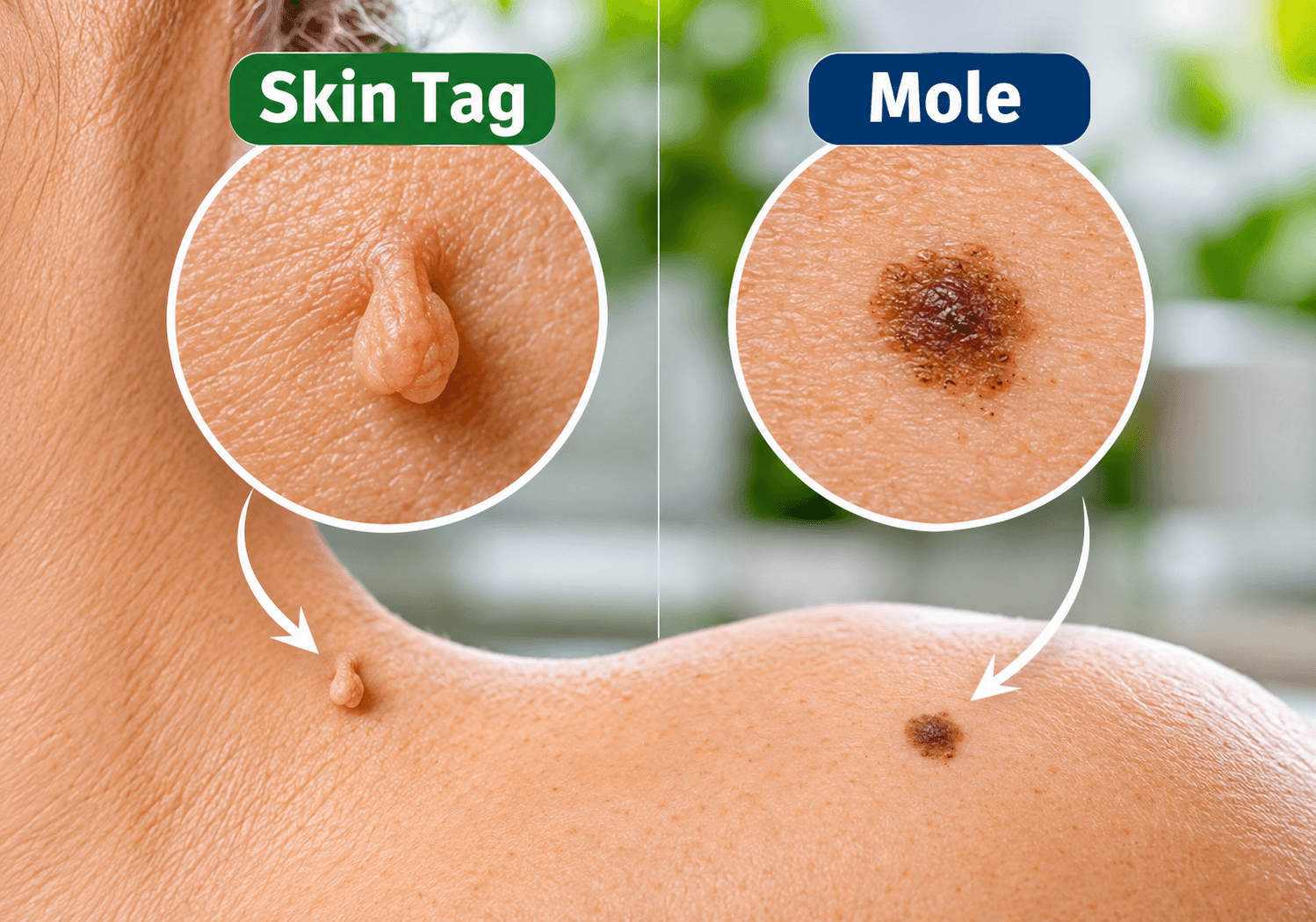
As a strength and conditioning coach, I often remind my clients that true fitness includes overall health and wellness. This means paying close attention to your body’s signals, including changes to your skin. One common question I hear from gym-goers and health-conscious individuals is about new bumps on the skin. Understanding the skin tag vs mole: how to tell the difference is a vital skill for anyone serious about their long-term health. Whether you notice a new growth after months of consistent training or a change in an existing spot, knowing what to look for can give you peace of mind. This guide will walk you through the exact visual cues, locations, and warning signs so you can make informed decisions about your skin health.
Quick Answer: A skin tag is a soft, flesh-colored, hanging piece of skin often found in friction areas like the neck or armpits. A mole is typically a flat or raised, pigmented (brown or black) spot that can appear anywhere. While skin tags are harmless and linked to friction or metabolic factors, moles require monitoring using the ABCDE rule to rule out skin cancer. When in doubt, always consult a dermatologist for a professional evaluation.
Skin Tag vs Mole: How to Tell the Difference at a Glance
Before diving into the microscopic details, it helps to have a high-level overview. The quickest way to distinguish between these two common skin growths is by observing their color, texture, and location.
| Feature | Skin Tag (Acrochordon) | Mole (Melanocytic Nevus) |
| Appearance | Soft, hanging, pedunculated (on a stalk) | Flat or raised, smooth or rough |
| Color | Flesh-colored, light brown, or pink | Brown, black, tan, or sometimes blue/red |
| Texture | Wrinkled, soft, easily movable | Firm, uniform, fixed to the skin |
| Common Locations | Neck, armpits, groin, under breasts, eyelids | Anywhere, but often on sun-exposed areas |
| Primary Cause | Friction, genetics, metabolic factors | Sun exposure, genetics, melanocyte clustering |
| Cancer Risk | Virtually zero (benign) | Low for common moles; requires monitoring |
This table provides a foundational understanding, but real-world application requires a deeper look at the underlying biology and environmental triggers.
Key Differences: A Deep Dive
To truly master how to identify these growths, we must break down the specific characteristics that set them apart.
Appearance and Texture
A skin tag, medically known as an acrochordon, is essentially a small, benign tumor made of loose collagen fibers and blood vessels surrounded by skin. They often look like a tiny, deflated balloon attached to your body by a narrow stalk. They are typically soft to the touch and can be easily wiggled or moved.
In contrast, a mole (melanocytic nevus) is a cluster of pigment-producing cells called melanocytes. Moles are generally flat or slightly raised, but they are firmly attached to the skin. They do not hang from a stalk. While most moles are uniform in color and texture, they can vary significantly from person to person.
Common Locations on the Body
Location is one of the most reliable indicators when evaluating the skin tag vs mole: how to tell the difference. Skin tags thrive in areas of chronic friction. If you lift weights, you might notice them on the back of your neck where a barbell rests, or in your armpits due to the repetitive motion of rowing or pressing movements. They are also common in skin folds, such as the groin, under the breasts, and on the eyelids.
Moles, however, can appear absolutely anywhere on the body. They are most frequently found on areas that receive regular sun exposure, such as the face, arms, back, and legs. While a mole can technically grow in a skin fold, it is far less common than a friction-induced skin tag.
Underlying Causes and Metabolic Connections
While friction is a primary mechanical cause of skin tags, internal biology plays a massive role. Research indicates a strong association between the presence of multiple skin tags and insulin resistance, irrespective of other risk factors. Understanding what affects metabolism and body weight can provide clues about why these growths appear.
When the body becomes resistant to insulin, it produces higher levels of this hormone. Elevated insulin can act as a growth factor, stimulating the proliferation of skin cells and fibroblasts, which leads to skin tag formation. Carrying extra weight, even just 10 to 20 lb (4.5 to 9 kg), can increase skin folds and friction, compounding the issue. If you notice a sudden outbreak of skin tags, it may be worth discussing your metabolic health with a physician. Learning can supplements improve insulin sensitivity might be a relevant conversation to have with your doctor to address the root cause.
The ABCDEs of Mole Monitoring
Because moles carry a small risk of developing into melanoma, the most serious type of skin cancer, regular monitoring is non-negotiable. Dermatologists universally recommend the ABCDE rule to help patients identify concerning changes.
- A – Asymmetry: One half of the mole does not match the other half in shape or color.
- B – Border: The edges are irregular, ragged, notched, or blurred.
- C – Color: The color is not uniform. It may include varying shades of brown, black, tan, red, white, or blue.
- D – Diameter: The spot is larger than 6 millimeters (about 1/4 inch) across, though melanomas can sometimes be smaller.
- E – Evolving: The mole is changing in size, shape, color, or elevation, or it begins to itch, bleed, or crust over.
If you notice any of these warning signs, do not wait. Schedule an appointment with a dermatologist immediately for a professional skin biopsy.
When It’s Likely a Skin Tag
You can be fairly confident a growth is a skin tag if it meets the following criteria: it is soft, flesh-colored or slightly darker than your surrounding skin, hangs from a narrow stalk, and is located in a high-friction zone. They are incredibly common, with studies suggesting that up to half of all adults will develop at least one skin tag in their lifetime.
Coach’s Tip: As a coach, I always tell my clients: if a growth is in a high-friction area like your neck from a barbell or your armpits from rowing movements, it’s highly likely to be a skin tag. Keep the area clean and dry to prevent irritation, and consider wearing moisture-wicking fabrics to reduce sweat and rubbing during your workouts.
When It’s Likely a Mole
A growth is likely a mole if it is flat or dome-shaped, firmly attached to the skin, and contains pigment (brown, black, or tan). Common moles are usually smaller than 6 millimeters (1/4 inch) and have smooth, distinct borders. They may have hair growing out of them, which is a normal characteristic of benign moles.
Common Mistake: Assuming all dark spots are moles. Sometimes, a skin tag can become “thrombosed,” meaning its blood supply is cut off (often from twisting or friction). When this happens, the skin tag can turn dark purple or black, perfectly mimicking a mole. Never assume a newly darkened spot is harmless without a professional check.
Step-by-Step Skin Self-Exam for Active Individuals
Treat your skin check like your workout log: be consistent, thorough, and track changes over time. Performing a monthly self-exam takes less than 10 minutes and can be lifesaving.

Step 1: Set the Environment Perform your exam in a well-lit room with a full-length mirror and a handheld mirror. The best time is immediately after a warm shower, as your pores are open and your skin is clean.
Step 2: Check High-Friction Zones First Examine your neck, armpits, under your breasts, and your groin area. These are the prime locations for skin tags. Note any new flesh-colored bumps.
Step 3: Evaluate Arms and Legs Check your arms, forearms, palms, and the spaces between your fingers. Move down to your legs, shins, and the soles of your feet. Moles frequently appear on sun-exposed limbs.
Step 4: Inspect the Torso and Back Use the handheld mirror to examine your chest, abdomen, and back. This is a critical area for melanoma detection, especially for men.
Step 5: Document and Compare If you have a mole that is borderline in size, take a clear, well-lit photograph of it next to a ruler. Compare it month-to-month to check for the “E” (Evolving) in the ABCDE rule.
Regression (Easier Version): If a full-body exam feels overwhelming, start by focusing only on high-friction areas you can easily see, like your neck and armpits, using a handheld mirror. Build the habit first. Progression (Harder Version): Perform a comprehensive head-to-toe mapping. Document the exact location and size of every pigmented lesion with a partner’s help or by using a smartphone camera to create a visual baseline.
Professional Removal vs. The Dangers of DIY
It is incredibly tempting to try and remove a bothersome skin tag or mole at home, especially if it catches on your gym clothes or jewelry. However, medical professionals strongly advise against this.
At-home treatments, such as cutting with scissors, tying with dental floss, or using over-the-counter freezing kits, carry a high risk of complications. These complications include excessive bleeding, severe scarring, and localized infection. Furthermore, if you mistakenly attempt to remove a mole at home, you risk destroying the tissue that a pathologist needs to evaluate for cancer.
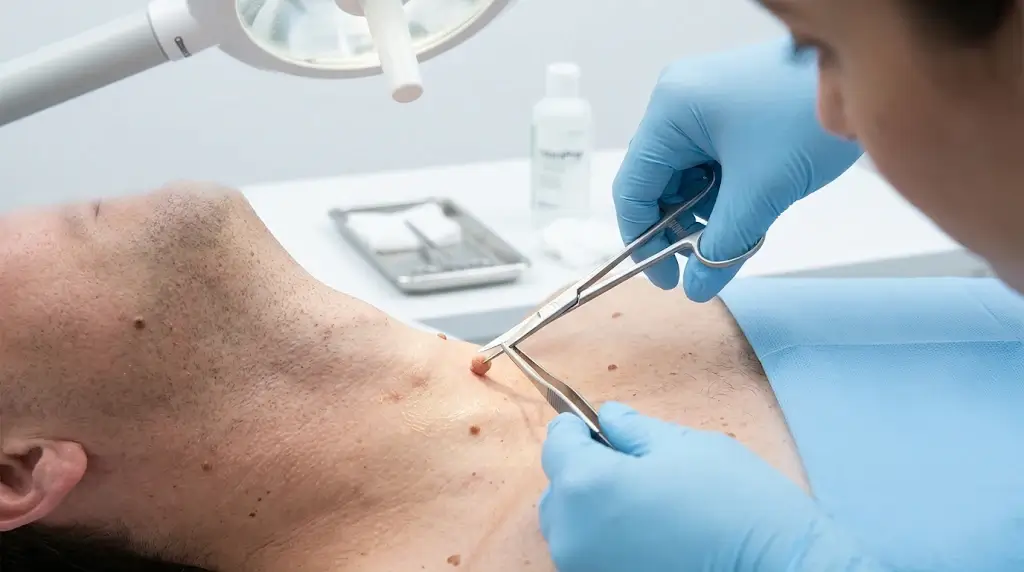
If a growth is bothersome, see a professional. Dermatologists can safely remove skin tags in a brief office visit using sterile surgical scissors, cryotherapy (freezing with liquid nitrogen), or electrocautery (burning). For moles, a doctor will perform a surgical excision, numbing the area and cutting out the mole along with a small margin of healthy skin to ensure complete removal and allow for biopsy if necessary.
Supporting Skin Health from the Inside Out
As a coach, I believe in addressing health from the inside out. Your skin is your body’s largest organ, and its resilience is tied to your overall metabolic and nutritional status.
If you are working on weight management to reduce skin friction and improve metabolic markers, read our guide on how to support metabolism naturally for weight management. Supporting your skin’s structural integrity is also key. Discovering the best time to take collagen powder for skin absorption can help maintain healthy, resilient skin that is less prone to irritation.
Additionally, managing systemic inflammation is crucial for overall wellness. Learn how omega-3 fatty acids support skin hydration and reduce inflammation. For those interested in advanced skin health and anti-aging benefits, many athletes explore whether an astaxanthin supplement can improve skin glow and anti-aging.
Finally, ensuring you have the right micronutrients is vital; check out which vitamins support metabolism when you’re deficient. If you are managing your weight to reduce skin folds, managing hunger is critical. As detailed in our guide, can protein and fiber supplements reduce hunger between meals is a highly effective strategy for sustainable progress.
Cost Comparison of Professional Evaluation and Removal
Understanding the financial aspect of skin care helps you plan appropriately. Costs can vary widely based on your location, the provider, and whether the procedure is deemed medically necessary or purely cosmetic.
| Procedure | Estimated Cost Range | Insurance Coverage |
| Routine Skin Exam | $100 – $250 [VERIFY] | Often covered if medically necessary (e.g., checking a suspicious mole). |
| Skin Tag Removal (per tag) | $100 – $500 [VERIFY] | Rarely covered, as it is typically considered a cosmetic procedure. |
| Mole Excision & Biopsy | $200 – $1,000+ [VERIFY] | Usually covered if the mole is suspicious or symptomatic (itching/bleeding). |
Frequently Asked Questions (FAQ)
1. Can a skin tag turn into a mole? No, a skin tag cannot turn into a mole. They are entirely different types of skin growths with different cellular structures. A skin tag is made of loose collagen fibers and blood vessels, while a mole is a cluster of pigmented melanocyte cells. However, a thrombosed skin tag can turn dark, mimicking a mole.
2. Are skin tags a sign of poor metabolism or weight gain? Not necessarily “poor” metabolism, but multiple skin tags are strongly associated with insulin resistance and metabolic syndrome. Carrying excess weight can also increase skin folds, creating friction that triggers skin tag formation. Addressing underlying metabolic health and managing weight can help reduce the development of new growths.
3. What is the ABCDE rule for moles? The ABCDE rule helps identify potentially cancerous moles. A stands for Asymmetry, B for irregular Borders, C for varied Color, D for Diameter larger than 6mm (1/4 inch), and E for Evolving changes in size, shape, or color. Any mole showing these signs requires immediate evaluation by a dermatologist.
4. Can friction from workout clothes cause skin tags? Yes, chronic friction is a primary mechanical cause of skin tags. Tight workout gear, barbells resting on the neck, or repetitive arm movements can cause skin to rub together. This friction stimulates the overgrowth of skin cells, leading to these harmless, flesh-colored bumps in areas like the armpits, neck, and groin.
5. Should I remove a skin tag or mole at home? No, you should never attempt to remove a skin tag or mole at home. DIY methods like cutting, tying, or using over-the-counter lasers carry high risks of infection, excessive bleeding, and severe scarring. Furthermore, removing a mole at home can destroy tissue needed for a crucial cancer biopsy.
6. Do skin tags mean I have insulin resistance? Having one or two skin tags is common and does not automatically mean you have insulin resistance. However, developing multiple skin tags, especially around the neck and armpits, is a recognized clinical marker for insulin resistance. It is wise to discuss this with your primary care physician.
Conclusion
Knowing the skin tag vs mole: how to tell the difference empowers you to take control of your health without unnecessary panic. Remember the core distinctions: skin tags are soft, flesh-colored, and hang from friction zones, while moles are pigmented, firmly attached, and require vigilant ABCDE monitoring. As a coach, I encourage you to incorporate a monthly skin self-exam into your wellness routine, just as you would track your workouts or nutrition.
If you ever feel uncertain about a new growth, a change in an existing spot, or if you have a cluster of skin tags that concern you, do not guess. Schedule an appointment with a board-certified dermatologist. Your health is your most valuable asset, and professional guidance is always the safest path forward.