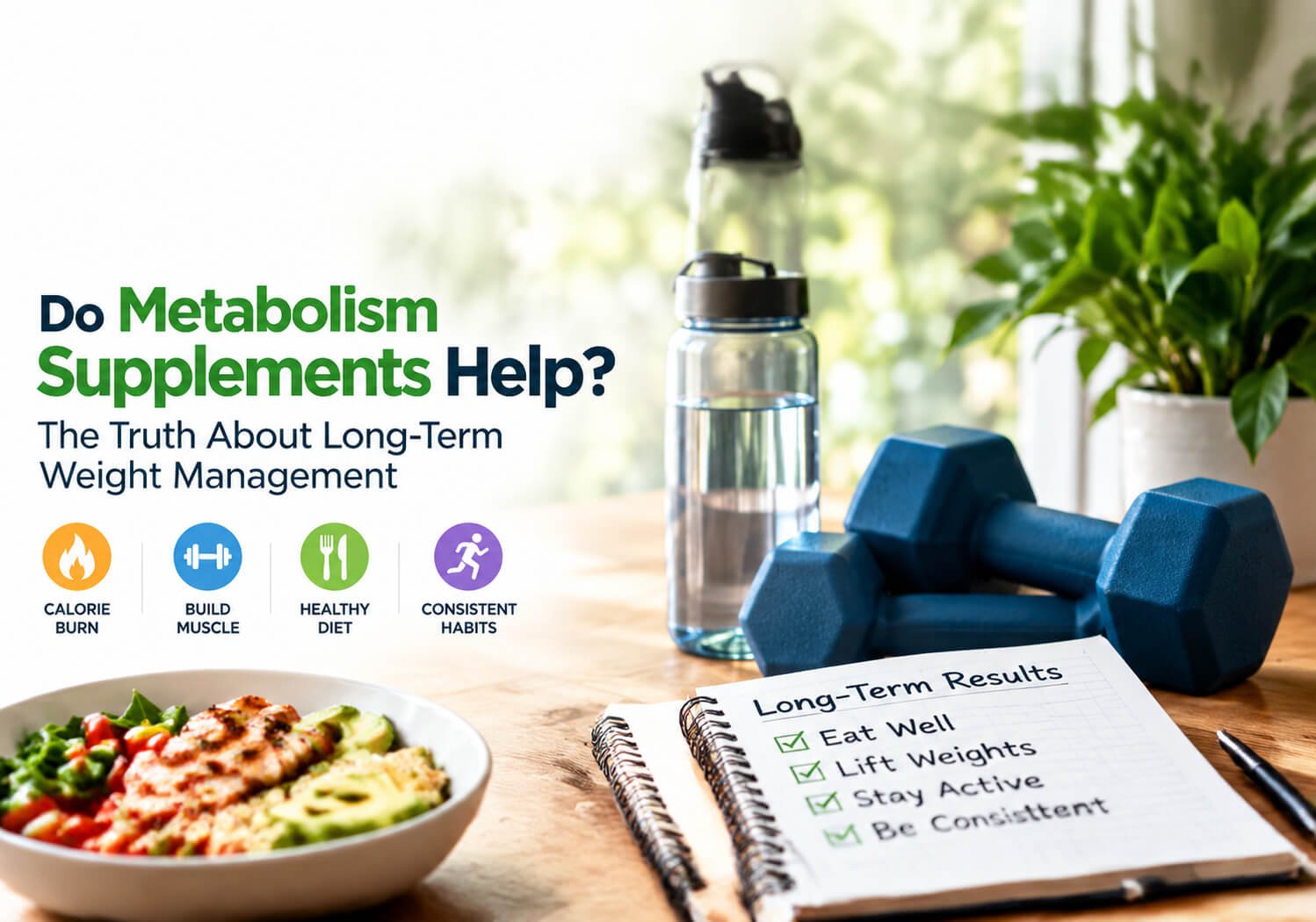
If you have ever scrolled through fitness social media or walked down the supplement aisle, you have likely seen bold claims about pills that melt fat and rev up your metabolism. It is a tempting promise. We all want a simple solution to achieve sustainable weight loss. But when we look at the actual science, a critical question arises: Do metabolism supplements help with long-term weight management? The short answer is that while certain ingredients may offer a minor, temporary boost, they are not a magic bullet. True, long-term weight management relies on building muscle, maintaining a slight caloric deficit, and adopting consistent lifestyle habits.
Supplements should be viewed as the final five percent of your fitness puzzle, not the foundation. In this guide, we will break down exactly what the clinical research says about popular metabolism boosters. We will also provide a practical, evidence-based strength training routine that actually moves the needle on your metabolic rate.
Quick Answer
Do metabolism supplements help with long-term weight management? Research shows they provide only a minor, temporary increase in calorie burn (typically 50–100 calories per day). They cannot replace a caloric deficit, adequate protein intake, and resistance training. For sustainable results, focus on building muscle mass and consistent daily movement, using supplements only as a minor, optional support tool after consulting your doctor.
What the Research Says About Metabolism Supplements
To understand if these products work, we first need to define what “metabolism” actually means. Your total daily energy expenditure (TDEE) is made up of four parts:
- Basal Metabolic Rate (BMR): The calories your body burns at rest to keep your heart beating and lungs breathing (about 60-70% of TDEE).
- Thermic Effect of Food (TEF): The energy used to digest and absorb nutrients (about 10% of TDEE). Protein has the highest TEF.
- Non-Exercise Activity Thermogenesis (NEAT): Calories burned through fidgeting, walking, and daily chores (highly variable, 15-30% of TDEE).
- Exercise Activity Thermogenesis (EAT): Calories burned during structured workouts (about 5% of TDEE).
Metabolism supplements primarily attempt to target BMR or TEF through thermogenesis (heat production) or appetite suppression. Let us look at the most common ingredients and what peer-reviewed science actually says about them.
Caffeine and Green Tea Extract
Caffeine is a well-documented central nervous system stimulant. It can temporarily increase resting metabolic rate by 3–11% and enhance fat oxidation. Green tea extract contains epigallocatechin gallate (EGCG), which may work synergistically with caffeine to promote mild thermogenesis. However, a comprehensive review by the National Institutes of Health (NIH) concluded that while green tea extract can lead to a small, statistically significant weight loss (around 2–3 pounds over 12 weeks), the effect is clinically modest. Furthermore, the body builds a tolerance to caffeine, meaning the metabolic boost diminishes over time with continuous use.
L-Carnitine
L-carnitine is an amino acid derivative that transports fatty acids into the mitochondria to be burned for energy. In theory, this sounds like a perfect fat burner. In practice, oral L-carnitine supplementation has shown mixed results. A meta-analysis published in the Journal of the International Society of Sports Nutrition found that L-carnitine supplementation resulted in an average weight loss of only 1.3 kg (2.8 lbs) more than placebo over several months. It may be slightly more effective in older adults or those with a documented deficiency, but it is not a powerful driver of long-term weight management for the general population.
Chromium Picolinate
Chromium is an essential trace mineral that plays a role in macronutrient metabolism. Some marketers claim it drastically reduces cravings and boosts metabolic rate. The reality is more nuanced. Research indicates that chromium picolinate support glucose metabolism by improving insulin sensitivity, which can help stabilize blood sugar levels. Stable blood sugar may indirectly reduce sugar cravings, making it easier to stick to a caloric deficit. However, it does not directly “burn” fat or significantly increase BMR on its own.
Yohimbine and Synephrine (Bitter Orange)
These are potent stimulants often found in “hardcore” fat burners. Yohimbine may help mobilize stubborn fat stores, particularly in fasted states. However, the side effect profile is concerning. The NIH warns that yohimbine can cause elevated heart rate, high blood pressure, anxiety, and gastrointestinal distress. Synephrine carries similar cardiovascular risks. These ingredients are not recommended for long-term use, especially for individuals with any underlying health conditions.
Metabolic Optimizers and Blood Flow
Some modern supplements focus on improving cellular energy and blood flow rather than just stimulating the nervous system. For example, understanding how L-citrulline helps produce nitric oxide is key for athletes. Better blood flow means more efficient delivery of oxygen and nutrients to working muscles during exercise. When you can train harder and recover faster, you build more muscle. Since muscle tissue is metabolically active, this indirectly supports long-term weight management. Similarly, exploring nitric oxide benefits for blood flow highlights how vascular health supports overall exercise performance and metabolic efficiency.
Comparison of Common Metabolism Supplement Ingredients
| Ingredient | Claimed Benefit | What the Science Says | Long-Term Weight Management Value |
| Caffeine | Increases calorie burn and energy. | Temporarily boosts metabolic rate by 3-11%. Tolerance builds quickly. | Low to Moderate (short-term only) |
| Green Tea Extract (EGCG) | Promotes fat oxidation. | May aid in losing 2-3 lbs over 12 weeks. Effect is modest. | Low |
| L-Carnitine | Transports fat to be burned for energy. | Minimal weight loss benefit in healthy, active individuals. | Very Low |
| Chromium Picolinate | Reduces cravings, boosts metabolism. | May improve insulin sensitivity, indirectly aiding diet adherence. | Moderate (for craving control) |
| Yohimbine | Burns stubborn fat. | High risk of side effects (anxiety, high BP). Not for long-term use. | Not Recommended |
| Protein Powder | Increases TEF and preserves muscle. | High TEF (20-30%). Proven to preserve lean mass during a deficit. | High (as a food, not a “pill”) |
How to Apply It: The Real “Metabolism Supplements”
As a strength and conditioning coach, I tell my clients the truth: the most powerful metabolism booster is not in a pill bottle. It is the skeletal muscle you build through resistance training. Every pound of muscle you add increases your resting metabolic rate, meaning you burn more calories 24 hours a day, even while sleeping.
If you want long-term weight management, you must prioritize metabolic resistance training. Below is a practical, evidence-based 3-day full-body workout routine designed to build muscle, elevate your heart rate, and improve your body composition.
The Metabolic Resistance Training Routine
Perform this routine 3 days per week (e.g., Monday, Wednesday, Friday), with at least one rest day between sessions.
1. Goblet Squat
- Target Muscles: Quadriceps, glutes, core.
- Sets/Reps: 3 sets of 8–10 reps.
- Rest: 60–90 seconds.
- Tempo: 3 seconds down, 1-second pause, 1 second up.
- Form Cue: Hold a dumbbell or kettlebell (15–35 lb / 7–16 kg) close to your chest. Keep your chest up and sit back like you are aiming for a chair. Drive through your mid-foot to stand.
- Regression: Box squat (sit onto a bench or chair to learn the hip hinge).
- Progression: Barbell front squat or adding a 2-second pause at the bottom.
2. Dumbbell Romanian Deadlift (RDL)
- Target Muscles: Hamstrings, glutes, lower back.
- Sets/Reps: 3 sets of 10–12 reps.
- Rest: 60 seconds.
- Tempo: 3 seconds down, 1-second pause, 1 second up.
- Form Cue: Hold two dumbbells (20–40 lb / 9–18 kg each) in front of your thighs. Keep a slight bend in your knees. Push your hips straight back until you feel a deep stretch in your hamstrings. Keep your spine perfectly neutral. Squeeze your glutes to return to the start.
- Regression: Bodyweight hip hinge against a wall.
- Progression: Barbell RDL with heavier loads.
3. Incline or Standard Push-Up
- Target Muscles: Chest, shoulders, triceps, core.
- Sets/Reps: 3 sets of 8–15 reps.
- Rest: 60 seconds.
- Tempo: 2 seconds down, 1-second pause, 1 second up.
- Form Cue: Keep your body in a straight line from your head to your heels. Do not let your hips sag. Lower your chest until it is about 2 inches (5 cm) from the floor or bench.
- Regression: Incline push-up with hands on a sturdy bench or countertop.
- Progression: Deficit push-up (hands on two dumbbells) for a deeper range of motion.
4. Single-Arm Dumbbell Row
- Target Muscles: Latissimus dorsi, rhomboids, biceps.
- Sets/Reps: 3 sets of 10–12 reps per side.
- Rest: 60 seconds.
- Tempo: 2 seconds up, 1-second squeeze, 2 seconds down.
- Form Cue: Place one knee and one hand on a flat bench. Hold a dumbbell (15–30 lb / 7–14 kg) in the free hand. Pull the weight toward your hip pocket, keeping your elbow tucked close to your body.
- Regression: Seated cable row with light weight.
- Progression: Heavy single-arm row with a 3-second eccentric (lowering) phase.
5. Farmer’s Carry
- Target Muscles: Core, grip, traps, full-body stability.
- Sets/Reps: 3 sets of 40 yards (36 meters).
- Rest: 60 seconds.
- Form Cue: Hold heavy dumbbells or kettlebells (30–50 lb / 14–23 kg each hand) at your sides. Stand tall, brace your core as if you are about to be punched in the stomach, and walk with controlled, deliberate steps. Do not let the weights swing.
- Regression: Lighter weights over a shorter distance (20 yards / 18 meters).
- Progression: Suitcase carry (weight in only one hand) to challenge anti-lateral core stability.

Coach’s Tip:
Do not rush the eccentric (lowering) phase of these exercises. Controlling the weight for 2–3 seconds on the way down creates more muscle tension, which is the primary driver of muscle growth. More muscle equals a higher resting metabolic rate.
Common Mistake:
Sacrificing form for heavier weight. If your lower back rounds during an RDL or your hips sag during a push-up, the weight is too heavy. Drop the weight by 20%, reset your posture, and focus on the mind-muscle connection.
Weekly Schedule and Progression Plan
- Weeks 1–4: Focus on mastering the form cues. Use weights that feel challenging but allow you to complete all reps with perfect technique.
- Weeks 5–8: Apply progressive overload. Add 2.5–5 lb (1–2 kg) to your lifts, or add 1–2 reps per set.
- Nutrition Synergy: To support this training, aim for 0.7–1.0 grams of protein per pound of body weight (1.5–2.2 g per kg) daily. This maximizes the Thermic Effect of Food (TEF) and protects your muscle mass while you lose fat.

Safety Notes and Who Should Be Careful
While building muscle and eating whole foods is safe for almost everyone, the supplement industry is largely unregulated by the FDA. Before starting any new metabolism supplement, consider the following safety guidelines:
- Cardiovascular Conditions: Stimulant-based fat burners (caffeine, yohimbine, synephrine) can elevate heart rate and blood pressure. If you have hypertension, arrhythmias, or a history of heart disease, avoid these entirely. Understanding the causes of poor blood circulation is important, as stimulants can exacerbate vascular stress.
- Pregnancy and Postpartum: Most metabolism supplements are not tested for safety during pregnancy or breastfeeding. Avoid them completely during these periods.
- Medication Interactions: Supplements like chromium or green tea extract can interact with diabetes medications, blood thinners, or antidepressants.
- Thyroid Disorders: Some “thyroid-boosting” supplements contain unlisted amounts of actual thyroid hormone, which can be dangerous for individuals with hyperthyroidism or Hashimoto’s disease.
Related Tips for Long-Term Weight Management
Supplements and workouts are only part of the equation. To truly manage your weight long-term, you must optimize your daily habits.
Prioritize Sleep Hygiene
Poor sleep disrupts the hormones that regulate hunger. A lack of sleep increases ghrelin (the hunger hormone) and decreases leptin (the fullness hormone). Aim for 7–9 hours of quality sleep per night. Keep your bedroom cool, dark, and free of screens at least 30 minutes before bed.
Optimize Hydration
Sometimes, the body masks thirst as hunger. Drinking 16 ounces (about 500 ml) of water before meals has been shown in some studies to promote a feeling of fullness, leading to a natural reduction in calorie intake. Furthermore, proper hydration is essential for optimal cellular metabolism and nutrient transport.
Manage Stress Levels
Chronic stress elevates cortisol, a hormone that can promote fat storage, particularly around the abdominal area. Incorporate 10 minutes of daily stress-reduction practices, such as deep breathing, walking in nature, or light stretching.
Improve Vascular and Metabolic Health
Long-term metabolic health is deeply tied to vascular health. Supporting nitric oxide and healthy blood vessel function through a diet rich in leafy greens, beets, and regular cardiovascular exercise ensures your body can efficiently deliver nutrients and clear metabolic waste. For those exploring specific amino acid profiles, comparing L-arginine vs L-citrulline for blood flow can provide insights into optimizing workout performance and recovery, which indirectly supports metabolic goals. Additionally, emerging research on compounds like inositol highlights its role in metabolic health, as seen in various inositol and insulin sensitivity studies, offering a non-stimulant avenue for supporting balanced blood sugar.

Frequently Asked Questions (FAQ)
1. Are metabolism supplements safe for long-term use?
Most stimulant-based metabolism supplements are not recommended for long-term, continuous use. The body builds a tolerance to ingredients like caffeine, diminishing their effects. Long-term use of harsh stimulants can also lead to adrenal fatigue, elevated blood pressure, and sleep disruption. Cycle them or avoid them entirely in favor of whole foods.
2. What is the best natural way to boost metabolism for weight loss?
The most effective, scientifically proven way to boost your metabolism naturally is to build skeletal muscle through resistance training. Muscle tissue is metabolically active and burns more calories at rest than fat tissue. Combine this with a high-protein diet to maximize the thermic effect of food (TEF).
3. Do fat burners work for sustainable weight management?
No. Fat burners may cause a temporary drop in water weight or a slight increase in daily calorie burn (around 50–100 calories). However, they do not teach sustainable nutritional habits. Once you stop taking them, the weight often returns if your diet and exercise routines have not fundamentally changed.
4. How much weight can you lose with metabolism pills?
Clinical studies show that over-the-counter metabolism pills typically result in an additional weight loss of only 2 to 4 pounds (0.9 to 1.8 kg) over a 12-week period compared to a placebo. This is not a significant or sustainable amount for long-term health transformation.
5. Can supplements replace diet and exercise for weight loss?
Absolutely not. Supplements are meant to supplement an already solid foundation of nutrition and physical activity. There is no pill that can out-work a poor diet or a sedentary lifestyle. A caloric deficit and regular movement are non-negotiable for weight loss.
6. Do metabolism boosters work for women over 40?
Women over 40 experience natural hormonal shifts, including a decline in estrogen and a loss of muscle mass, which slows the metabolic rate. While supplements will not reverse this, prioritizing heavy strength training, adequate protein (1.0g per lb of body weight), and stress management will effectively counteract metabolic slowdown.
Conclusion
So, do metabolism supplements help with long-term weight management? The evidence is clear: they offer, at best, a marginal and temporary advantage. They are not a substitute for the foundational pillars of health. If you want to manage your weight sustainably, shift your focus away from the supplement aisle and toward the weight room.
Invest your time and money into learning proper strength training form, eating nutrient-dense whole foods, prioritizing protein, and getting quality sleep. These habits compound over time, building a resilient, metabolically healthy body that lasts a lifetime. Use supplements only as a minor, carefully researched tool, and always prioritize your long-term health over quick fixes.