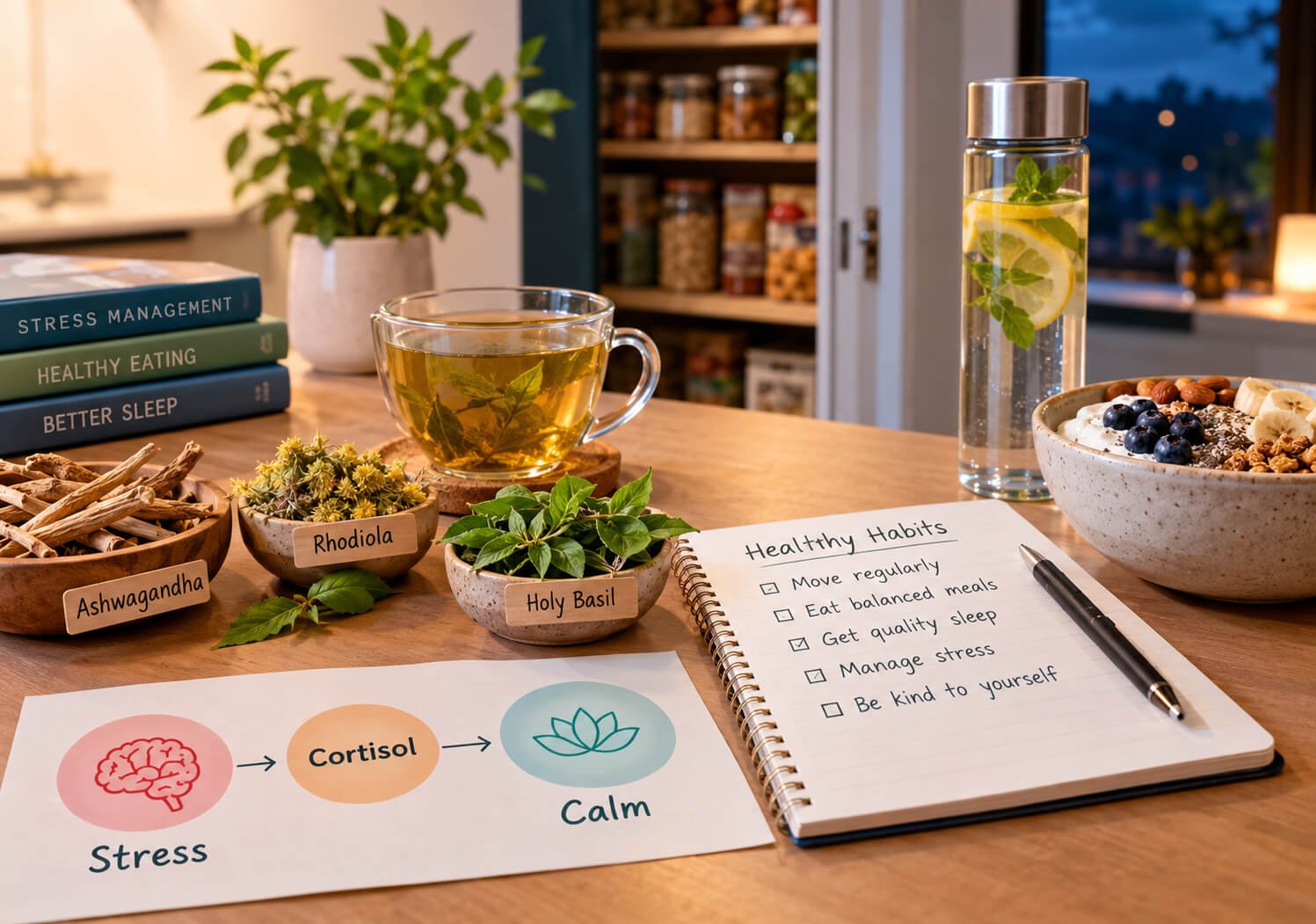
Adaptogens for stress eating and cortisol management are everywhere right now, from capsules and powders to “calming” lattes. The pitch is simple: take an herb, calm your stress hormone, and stop raiding the pantry at 9 p.m. The research is more modest than the marketing, but it is not empty. A handful of trials, mostly on ashwagandha, suggest measurable effects on cortisol in stressed adults.
Whether that turns into fewer cravings and less emotional eating is still an open question. This guide covers what the studies found, where the evidence runs thin, how to use these herbs more safely, and which free habits can do a lot of the heavy lifting.
Stress eating is a common roadblock for anyone trying to stay consistent with training and nutrition. Understanding the biology helps you pick tools that fit, instead of chasing a single pill.
Quick Answer: Adaptogens for stress eating and cortisol management have limited but promising support, mostly for ashwagandha. Trials link it to lower cortisol, and one small eight-week trial reported fewer food cravings in stressed adults. Evidence for rhodiola and holy basil is thinner. Liver-safety reports mean you should talk to a doctor first.
Why Stress Eating Happens (and Why Cortisol Gets the Blame)
Stress eating means eating in response to pressure or emotion rather than physical hunger. It often leans toward high-fat, high-sugar comfort foods, and it tends to feel automatic. You may not notice you are doing it until the bag is empty.
Harvard Health explains that when stress sticks around, the adrenal glands release cortisol, which increases appetite and may raise the motivation to eat. Cortisol should fall once a stressful episode ends. If stress never lets up, or the stress response gets stuck in the “on” position, cortisol may stay elevated.
Individual differences matter too. The same Harvard summary describes a 2007 British study in which people who made more cortisol during a lab stress test were more likely to snack during everyday hassles than low-cortisol responders. It also notes that stress seems to shift food preferences, and that high cortisol combined with high insulin may play a part.
Here is the coaching takeaway: cortisol is one piece of the puzzle, not the whole puzzle. Sleep, meal timing, habits, environment, and emotions all shape what you reach for. That is why any tool aimed only at the HPA axis (the brain-to-adrenal stress system), including an herb, will have limits.
What Are Adaptogens?
“Adaptogen” is a term from herbal medicine for plants said to help the body adapt to stress. It is not a diagnosis or an official drug class, and products vary widely in extract type, strength, and quality. [VERIFY: confirm there is no formal regulatory definition of “adaptogen” before publishing this line.]
Three herbs show up most often in stress and cravings products:
- Ashwagandha (Withania somnifera), a root used in Ayurvedic medicine.
- Rhodiola (Rhodiola rosea), a plant grown at high altitudes and northern latitudes.
- Holy basil (Ocimum tenuiflorum, also called tulsi), an aromatic plant used in Indian traditional medicine.
Each has a different evidence base. Ashwagandha has the most human trials aimed at cortisol. Rhodiola is studied mostly for fatigue. Holy basil has fewer trials that are hard to compare. Let’s take them one at a time.
What the Research Says About Adaptogens for Stress Eating and Cortisol Management
Cortisol can be measured in blood (serum) or saliva, and most adaptogen trials track it alongside questionnaires such as the Perceived Stress Scale. Those two kinds of measures do not always move together, as you will see below.
Ashwagandha and Cortisol
Several reviews have pooled the trial data. A 2023 systematic review in Nutrients analyzed nine clinical trials of ashwagandha in stressed people, with treatment lasting 30 to 112 days. It concluded that supplementation decreased cortisol with no significant adverse effects. The authors also noted that none of the trials checked how lowering cortisol affects adrenal function or long-term outcomes.
A 2025 meta-analysis in Nutrition & Health pooled seven randomized trials with 488 participants. Doses ranged from 240 to 600 mg a day, and trials lasted 14 to 90 days. Cortisol dropped significantly, but perceived stress scores did not change by a statistically significant amount. All seven studies were conducted in India.
Another 2025 systematic review and meta-analysis reported significant reductions in cortisol, perceived stress, and anxiety after eight weeks of ashwagandha compared with placebo. [VERIFY: journal name (reported elsewhere as BJPsych Open) and final publication year.]
Put together, lower cortisol shows up fairly often in short trials, while the effect on how stressed people say they feel is less consistent. The studies are also small, short, and geographically narrow.
Ashwagandha and Stress Eating
The study closest to this article’s topic is a double-blind, randomized, placebo-controlled trial of 52 adults under chronic stress. Participants took 300 mg of a standardized root extract or a placebo twice daily for eight weeks. The main outcomes were perceived stress and food cravings. Researchers also tracked eating behavior, serum cortisol, body weight, and body mass index.
The authors reported significant improvements in the primary and secondary measures and described the extract as safe and tolerable. That is encouraging, but keep it in perspective. It is one small trial that lasted eight weeks, and a search for an independent replication turned up no confirming trial [VERIFY before publishing].
A result in 52 people is a reason to study something further, not proof that an herb will fix emotional eating. Body-weight changes in a short trial also cannot tell us what happens over a year.
Rhodiola for Stress
Rhodiola is studied mainly for fatigue, not eating behavior. A 2012 systematic review of 11 trials found that two of six studies on physical fatigue and three of five on mental fatigue reported benefits. The reviewers called the evidence contradictory, and every included study had either a high risk of bias or reporting flaws.
That means rhodiola may be worth discussing if your stress shows up mostly as tiredness. No trial in the research I reviewed tested it for food cravings or stress eating [VERIFY], so any claim that it curbs emotional eating goes beyond the evidence.
Holy Basil (Tulsi)
Holy basil has a long history in Ayurveda, but the human research is harder to interpret. A 2017 review of human clinical trials found that only two studies specified which type of tulsi they used. The rest simply said Ocimum sanctum, which makes it hard to compare products or doses.
I found no strong trial that tested holy basil specifically for stress eating [VERIFY]. Treat it as a promising tea or supplement for general stress support, not a proven cravings fix.
Evidence at a Glance
| Adaptogen | Best-studied use | Evidence on cortisol | Evidence on stress eating or cravings | Main limits |
| Ashwagandha | Stress and cortisol | Several short trials and reviews report lower cortisol | One small eight-week trial (52 adults) | Short, small studies; rare liver-injury reports |
| Rhodiola | Fatigue | Not the focus of the reviews cited here | None found [VERIFY] | Contradictory results; high or unclear bias |
| Holy basil | General stress support | Limited; not established in the review cited here [VERIFY] | None found [VERIFY] | Product types rarely specified; few comparable trials |
What the Evidence Cannot Tell Us
A few gaps are worth keeping in mind before you spend money:
- Long-term effects. NCCIH states there is not enough information to reach conclusions about ashwagandha’s long-term safety.
- The cortisol-to-cravings link. Trials measured cortisol and cravings, but they did not prove that lowering cortisol is what reduced eating.
- Who benefits. Most trials enrolled people with stress. Effects in people with low stress are unclear.
- Product differences. Extract type, withanolide content, and manufacturing quality vary from brand to brand.
Coach’s Tip: Before buying anything, track one week of eating triggers. Write down the time, what you ate, your stress (1–10), and your hunger (1–10). If most “stress eating” happens at 9 p.m. after a skipped lunch, you may need a better meal pattern before you need an herb.
Are Adaptogens for Stress Eating and Cortisol Management Safe?
“Natural” does not mean risk-free. The NIH’s LiverTox database says ashwagandha has been linked to rare cases of clinically apparent liver injury. Cases typically appeared two to 12 weeks after starting a product, often with jaundice and itching. Most improved within one to four months of stopping.
The same entry notes that rare fatal cases have been reported, especially in people with existing liver disease. It advises avoiding ashwagandha in people with cirrhosis or advanced chronic liver disease.
Supplement quality is another concern. NCCIH notes that manufacturers and distributors are responsible for evaluating the safety and labeling of their products before marketing, which means you are relying on the brand’s diligence.
Talk to your doctor or pharmacist first if you:
- Are pregnant, breastfeeding, or trying to conceive.
- Have liver disease, a thyroid condition, or an autoimmune condition.
- Take prescription medications, especially for diabetes, thyroid problems, or sleep and anxiety.
- Have surgery scheduled.
- Have a history of an eating disorder, since supplements aimed at appetite or cravings can complicate recovery.
[VERIFY: check each item above against the current NCCIH and LiverTox pages and add citations where they state it directly.]
Stop the product and contact a health professional promptly if you notice yellowing of the skin or eyes, or persistent itching.
Common Mistake: Stacking several “calming” products at once, such as ashwagandha plus rhodiola plus a stress blend. If you feel better or worse, you will not know why, and you may double up on ingredients without realizing it.
How to Apply Adaptogens for Stress Eating and Cortisol Management Wisely
If you and your doctor decide a trial makes sense, treat it like a small experiment rather than a lifestyle. Here is a practical process:
- Get medical sign-off. Share the exact product and your medication list with a doctor or pharmacist.
- Pick one target you can measure. For example, count evening snacking episodes per week, or rate craving intensity from 0 to 10 each day.
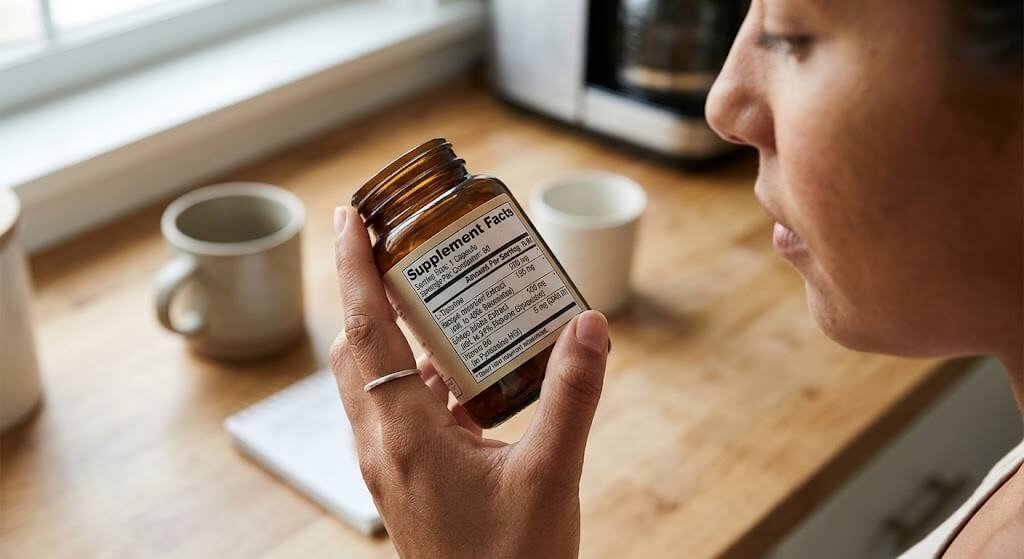
- Choose one product. Look for a clear label that lists the plant part, extract type, and standardized withanolide content. Our guides to evaluate supplement ingredients and what to look for in a metabolism support supplement walk through label basics. Prefer products with third-party testing [VERIFY: name an acceptable testing seal].
- Stay in the studied range. The ashwagandha trials above used 240 to 600 mg a day. Follow the label and your clinician’s guidance, and do not go higher.
- Run an eight-week test. Track your target weekly. Several trials checked outcomes at around eight weeks, so that is a reasonable window to judge.
- Stop if anything feels off. Side effects mean stop and call your clinician.
- Reassess. If you see no change in your tracking, do not just keep taking it. Stop and revisit the habits below.
If you want to avoid caffeine while experimenting, our list of supplements without stimulants covers other options and their evidence.
Habits That Often Matter More for Cortisol Management
Herbs are optional. Daily habits are not. These are the levers I would pull first, because they cost little and carry far less risk.
Move Most Days
The CDC recommends that adults get at least 150 minutes of moderate-intensity activity a week, plus muscle-strengthening activity on two or more days that works all major muscle groups. Harvard Health adds that exercise can blunt some of the negative effects of stress, although cortisol itself varies with the intensity and length of a session.
Here is a stress-friendly weekly layout. Start where you are, and build toward the 150-minute target over several weeks.
| Day | Session | Details |
| Mon | Strength A | Goblet squat, one-arm row, farmer’s carry (below) |
| Tue | Easy walk | 20–30 minutes at a pace where you can talk but not sing |
| Wed | Rest or mobility | 10–15 minutes of stretching plus box breathing |
| Thu | Strength B | Repeat Strength A; add a set or a little weight only if form stays solid |
| Fri | Easy walk | 20–30 minutes |
| Sat | Longer walk or fun activity | 45–60 minutes, such as a 2–3 mile (3.2–4.8 km) walk, a bike ride, or a hike |
| Sun | Rest | Plan meals and snacks for the week |
The 30-Minute Strength Session
Keep the weights moderate. The goal is to finish feeling capable, not wrecked.
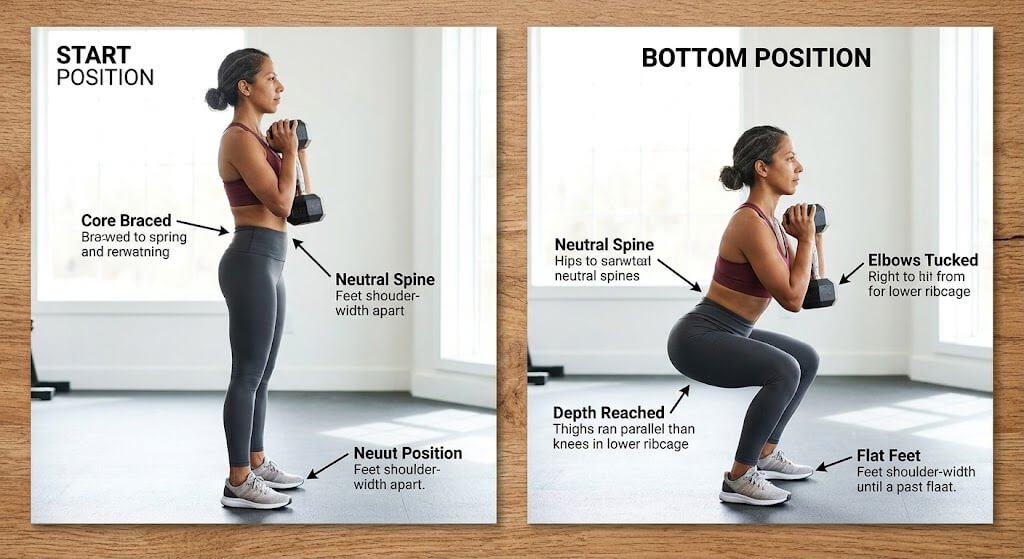
1. Goblet squat: 3 sets of 8–10 reps, rest 60–90 seconds. Hold one dumbbell at your chest. Start with 10–20 lb (4.5–9 kg). Lower for a slow count of three, keep your chest tall, and let your knees track over your toes. You should feel your thighs and glutes working, not your knees or lower back.
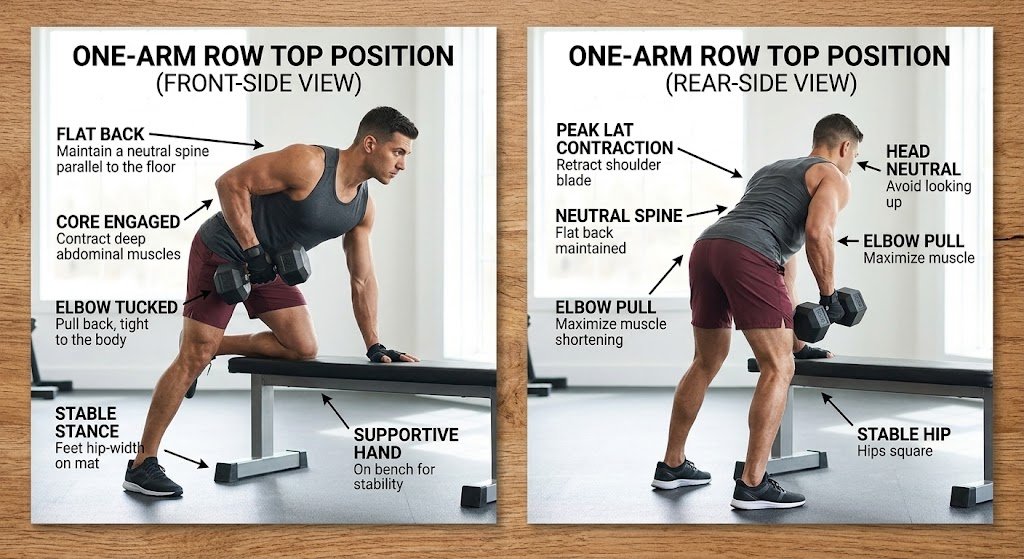
2. One-arm dumbbell row: 3 sets of 8–10 reps per side, rest 60 seconds. Place one hand and one knee on a bench, and keep your back flat. Use 10–25 lb (4.5–11 kg). Pull your elbow toward your back pocket, pause for one second, and lower under control. Think “slide the shoulder blade,” not “yank the weight.”
3. Farmer’s carry: 3 rounds of 30–40 seconds, rest 60 seconds. Hold a dumbbell in each hand, 10–25 lb (4.5–11 kg) each. Keep your ribs down, stand tall, and take short, steady steps. Your forearms and upper back should work hard.
| Exercise | Easier version (regression) | Harder version (progression) |
| Goblet squat | Sit back to a bench about 17 inches (43 cm) high, or use bodyweight only | 25–35 lb (11–16 kg) dumbbell, 3-second lowering, 1-second pause at the bottom |
| One-arm row | Use a lighter 8–10 lb (3.5–4.5 kg) dumbbell, or a resistance band | Heavier dumbbell with a 2-second pause at the top |
| Farmer’s carry | 5–10 lb (2.3–4.5 kg) per hand, 20 seconds | 25–35 lb (11–16 kg) per hand, 40–45 seconds |
Common Mistake: Using punishing workouts to “make up for” stress eating. Very hard sessions on top of poor sleep and high stress may leave you more run down, and the guilt can feed the next round of stress eating. On high-stress days, choose a moderate session or an easy walk.
Protect Your Sleep
Poor sleep and high stress often travel together. Our guide on sleep and hormones explains how short sleep may change appetite-related signals, which can make evening cravings harder to manage.
Build Meals That Keep You Full
Regular meals with protein and fiber may help you feel satisfied between meals, which makes late-night grazing easier to handle. If you want the research, read how protein helps control hunger and what studies say about dietary fiber and appetite.
Add Calm and Connection
Harvard Health notes that meditation may help people become more mindful of food choices, and that social support has a buffering effect on stress. You do not need an hour of silence. Try box breathing before you open the pantry: inhale for 4 seconds, hold for 4, exhale for 4, hold for 4, and repeat for two to three minutes.
A Simple Stress-Eating Toolkit for Tonight
These are small, low-risk habits you can start today, with or without a supplement:
- Check the hunger type. Ask whether the urge came on slowly with physical hunger, or suddenly with a specific craving and a specific feeling.
- Use a 10-minute pause. Set a timer, drink water, and do box breathing. If you still want the food afterward, eat it on purpose.
- Plate it. Put a portion on a plate and sit down. Eating from the bag makes it hard to notice fullness.
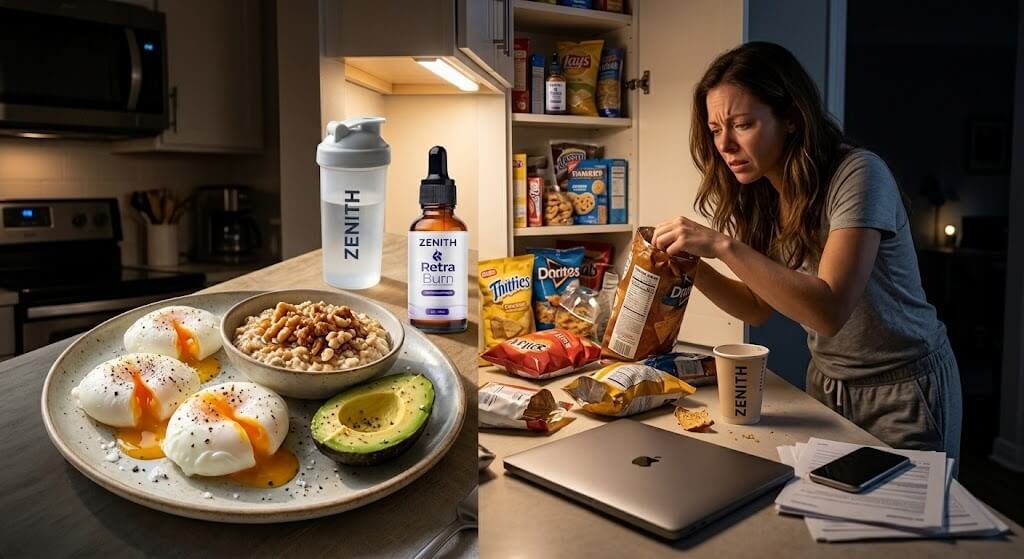
- Keep an easy protein-and-fiber option visible. Greek yogurt with fruit, or hummus with vegetables, takes the same effort as chips.
- Plan for your trigger window. If 9 p.m. is your danger zone, schedule a satisfying snack at 8:30 instead of fighting willpower.
- Tell someone. A short text to a friend counts as social support.
People also ask about other supplements for cravings. Our review of chromium picolinate and cravings and our guide to green tea extract look at those claims. The same rule applies: modest evidence means habits come first.
If stress eating feels out of control, causes distress, or involves binge episodes, talk with a doctor or licensed mental health professional. That is a different problem from a habit, and it deserves real support rather than a supplement.
Frequently Asked Questions
Do adaptogens lower cortisol?
Some do, in short trials. Reviews of ashwagandha report lower cortisol over roughly one to three months in stressed adults, though results on perceived stress are less consistent. Evidence for rhodiola and holy basil is thinner. Most studies are small and short, so long-term effects are unknown. Talk to a doctor before trying one.
Does ashwagandha help with stress eating?
It may help some stressed adults. One eight-week, placebo-controlled trial of 52 people reported lower food cravings and improved eating behavior alongside lower stress and cortisol. It is a single small study, though, so it is not proof. Sleep, movement, and regular meals are still worth prioritizing.
What is the best adaptogen for emotional eating?
No adaptogen has been proven best. Ashwagandha has the only trial found that measured cravings and eating behavior, so it has the most direct support. Rhodiola is studied mainly for fatigue, and holy basil data are limited. Choose based on safety, your health history, and your doctor’s input, not hype.
How long does ashwagandha take to lower cortisol?
Trials in reviews ran from about two weeks to three months, with several reporting changes at around eight weeks. Timing varies by product, dose, and person. If you try it with your doctor’s approval, track cravings and stress for eight weeks, then reassess instead of continuing indefinitely.
Are adaptogens safe to take every day?
Long-term safety is not well established. The NIH’s NCCIH says there is not enough information to reach conclusions about ashwagandha’s long-term safety, and NIH’s LiverTox links it to rare liver injury. Ask a doctor first, especially if you have liver, thyroid, or autoimmune conditions, are pregnant, or take medications.
What are natural ways to lower cortisol besides supplements?
Regular movement, enough sleep, consistent meals, and stress-reduction habits are the foundation. The CDC recommends 150 minutes of moderate activity weekly plus two strength days, and Harvard Health notes exercise, meditation, and social support can buffer stress. These habits also support better eating decisions.
Conclusion: A Realistic Plan for Adaptogens for Stress Eating and Cortisol Management
The honest summary of adaptogens for stress eating and cortisol management is this: ashwagandha has the best evidence for lowering cortisol in stressed adults, one small trial points to fewer cravings, and rhodiola and holy basil have far less support for stress eating. None of them replace sleep, movement, and regular meals.
If you want to try an herb, get medical sign-off first, pick one well-labeled product, set a measurable goal, and judge it after about eight weeks. Pay attention to the liver-safety warnings, and stop at the first sign of trouble. Build the habits first, and let any supplement play a small supporting role.