
If you have been wondering, does creatine help with brain fog, you are not alone. Many athletes and everyday individuals experience mental exhaustion, lack of focus, and that cloudy feeling we call brain fog. While creatine is famous for building muscle and improving gym performance, emerging research shows it plays a vital role in brain health. Your brain demands a massive amount of energy to function properly. When that energy dips, your cognitive performance drops.
Creatine monohydrate helps replenish cellular energy stores, not just in your muscles, but in your brain as well. This guide breaks down the science, practical dosing strategies, and safety considerations so you can make an informed decision about adding this supplement to your routine.
Quick Answer
Yes, research suggests creatine may help reduce brain fog. By increasing phosphocreatine stores in the brain, it supports ATP (adenosine triphosphate) production. This can improve mental clarity, reduce mental fatigue, and enhance cognitive performance, especially during sleep deprivation or in individuals with low baseline creatine levels, such as vegetarians.
How Creatine Affects the Brain and Mental Fatigue
To understand how creatine works for your mind, we must look at cellular energy. Your brain represents only about 2% of your body weight, but it consumes roughly 20% of your body’s daily energy. This energy comes primarily from ATP.
When you think, solve problems, or focus on a complex task, your brain burns through ATP rapidly. Creatine acts as a rapid-response energy buffer. It donates a phosphate group to ADP (adenosine diphosphate), recycling it back into ATP. This process happens in milliseconds, providing immediate fuel for your neurons.

The Role of ATP in Cerebral Energy Metabolism
Cerebral energy metabolism relies heavily on the phosphocreatine system. When mental demands are high, ATP stores deplete quickly. Without adequate phosphocreatine, the brain struggles to maintain optimal firing rates. This energy deficit manifests as brain fog, slow reaction times, and poor working memory.
Supplementing with creatine monohydrate increases the total creatine pool in the brain. Studies indicate that oral creatine supplementation can elevate brain creatine levels by 5% to 15%, depending on the individual’s baseline. This extra reserve ensures that ATP production remains stable during periods of high cognitive demand or stress.
What the Research Says About Creatine and Cognitive Function
The scientific community has extensively studied creatine’s cognitive effects. A landmark study published in the Proceedings of the Royal Society B found that creatine supplementation significantly improved working memory and intelligence test scores in healthy individuals. The effects were most pronounced in tasks requiring speed and complex processing.
Furthermore, research highlights creatine’s role in mitigating mental fatigue. A study in Psychopharmacology demonstrated that creatine helped maintain cognitive performance during sleep deprivation. Participants who took creatine showed less decline in mood and executive function after 24 hours without sleep compared to the placebo group.
A comprehensive systematic review in Experimental Gerontology concluded that creatine supplementation has a positive effect on short-term memory and reasoning, particularly in older adults and those under metabolic stress. These findings strongly support the idea that creatine is a viable tool for combating mental exhaustion.
Who Benefits Most From Creatine for Mental Clarity?
Not everyone will experience the same dramatic shift in mental clarity. The degree to which creatine helps with brain fog depends largely on your starting point.
Vegetarians and Vegans
Since creatine is found naturally in red meat and fish, plant-based eaters typically have lower baseline levels of muscle and brain creatine. Research consistently shows that vegetarians experience the most significant cognitive improvements from creatine supplementation. Their brains have more “room” to absorb and utilize the extra creatine.
Individuals Experiencing Sleep Deprivation
If you are a new parent, a shift worker, or a student pulling all-nighters, your brain is operating at an energy deficit. Creatine acts as a neuroprotective buffer during these times. It will not replace sleep, but it can help you maintain baseline cognitive function when you are running on fumes.
Older Adults
As we age, natural brain creatine levels can decline, and mitochondrial function becomes less efficient. Supplementing may help support cognitive resilience and protect against age-related mental fatigue. The National Institutes of Health (NIH) notes that maintaining cellular energy is critical for healthy aging.
High-Stress Professionals and Students
People who engage in prolonged, demanding cognitive tasks often report brain fog by mid-afternoon. Creatine can help sustain mental stamina throughout the workday, preventing that familiar 3:00 PM crash.
Creatine Dosing Protocols: Cognitive vs. Physical Goals
To get the most out of this supplement, you need to dose it correctly. The dosing strategy for brain health is similar to that for muscle building, but consistency matters more than rapid loading.
| Protocol Type | Daily Dosage | Duration to See Effects | Best For |
| Standard Maintenance | 3–5 grams (0.11–0.18 oz) per day | 3 to 4 weeks | Long-term brain health, steady mental clarity, and general fitness. |
| Loading Phase | 20 grams (0.7 oz) per day (split into 4 doses) for 5–7 days, then 3–5 grams daily | 1 week | Rapid saturation for athletes or those needing immediate cognitive support during acute stress. |
| Weight-Based Dosing | 0.03 grams per lb (0.066 grams per kg) of body weight daily | 3 to 4 weeks | Larger individuals or those seeking precise, personalized dosing for both physical and mental goals. |
Note: Always mix creatine with at least 8 to 12 fluid ounces (240 to 350 ml) of water to ensure proper dissolution and hydration.

How to Use Creatine for Cognitive Benefits and Mental Focus
Adding creatine to your daily routine is straightforward, but a few practical details can maximize its effectiveness and minimize side effects. Follow these steps to build a sustainable habit.
Step 1: Choose the Right Form
Stick to creatine monohydrate. It is the most researched, most effective, and most affordable form. Other forms, like creatine HCL or ethyl ester, lack the robust clinical backing for cognitive benefits and are often more expensive. Look for products with the “Creapure” label or third-party testing (like NSF or Informed Choice) to guarantee purity.
Step 2: Determine Your Dosing Strategy
If you are not in a rush, skip the loading phase. Taking 3 to 5 grams daily will fully saturate your brain and muscle stores within 3 to 4 weeks. This approach is gentler on the digestive system and reduces the risk of bloating. If you need rapid results, load with 20 grams per day (split into four 5-gram doses) for 5 to 7 days, then drop to the maintenance dose.
Step 3: Time Your Intake
Timing is not strictly critical for cognitive benefits, as brain creatine levels build up over time. However, taking it with a meal containing carbohydrates and protein can slightly enhance uptake due to the insulin response. Many people find it easiest to mix it into their morning coffee, post-workout shake, or breakfast smoothie.
Step 4: Prioritize Hydration
Creatine pulls water into your cells. If you do not drink enough water, you may experience mild headaches or worsened brain fog. Aim for at least half your body weight in pounds (lbs) in fluid ounces of water daily. For example, a 160 lb (72.5 kg) person should drink a minimum of 80 fluid ounces (about 2.3 liters) of water per day.
Coach’s Tip:
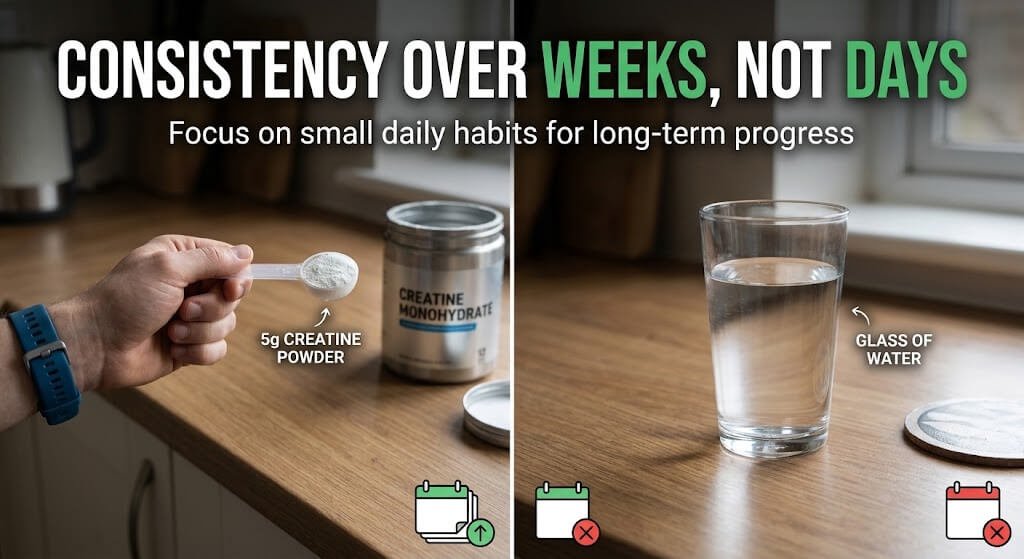
Keep your creatine container next to your coffee maker or water bottle. Habit stacking is the easiest way to ensure you never miss a dose. Consistency over weeks and months is what drives the cognitive benefits, not a single large dose.
Common Mistake:
Expecting overnight results. Creatine is not a stimulant like caffeine. It does not provide an immediate “buzz.” It works by gradually saturating your tissues. If you stop taking it after three days because you “don’t feel anything,” you will never reach the threshold needed to clear brain fog. Give it at least 3 to 4 weeks of daily use.
Safety Notes and Who Should Be Careful
Creatine monohydrate is one of the most extensively studied dietary supplements in the world. Organizations like the International Society of Sports Nutrition (ISSN) and the American College of Sports Medicine (ACSM) consider it safe for long-term use in healthy individuals. However, there are important safety considerations to keep in mind.
Hydration is Non-Negotiable
Because creatine increases intracellular water retention, dehydration is a risk if your fluid intake is low. Dehydration itself is a primary cause of brain fog. Ensure you are drinking adequate water throughout the day.
Kidney Health Myths
Extensive research has debunked the myth that creatine damages healthy kidneys. A long-term study published in Molecular and Cellular Biochemistry found no adverse effects on renal function in healthy athletes taking creatine for up to five years. However, if you have pre-existing kidney disease, you must consult a physician before use.
Digestive Discomfort
Taking too much creatine at once (especially during a loading phase) can cause stomach cramping, nausea, or diarrhea. If this happens, reduce your dose to 3 grams per day, take it with food, and ensure it is fully dissolved in liquid.
Who Should Consult a Doctor First
- Individuals with pre-existing kidney or liver conditions.
- Pregnant or breastfeeding women (due to a lack of specific safety data).
- Anyone taking medications that affect kidney function or water balance (like diuretics).
This article is for general information and is not a substitute for advice from a doctor or physical therapist. Always consult a healthcare professional before starting any new supplement regimen.
Related Lifestyle Tips to Combat Brain Fog
While creatine is a powerful tool, it works best as part of a holistic approach to brain health. Relying on a supplement while ignoring foundational lifestyle habits will limit your results. Here is how to support your cognitive function from multiple angles.
Optimize Your Sleep Hygiene
Sleep is when your brain clears out metabolic waste products and replenishes energy stores. Chronic poor sleep will override any benefits you get from supplementation. Understanding how sleep affects metabolism and weight management can also highlight the deep connection between rest, hormonal balance, and mental clarity. Aim for 7 to 9 hours of quality sleep per night in a cool, dark room.
Support Your Energy Metabolism with Nutrition
Your brain needs a steady supply of micronutrients to convert food into ATP. Ensuring you get nutrients that support normal energy metabolism, such as B vitamins, magnesium, and iron, is crucial. Deficiencies in these areas can directly cause fatigue and brain fog.
Prioritize Adequate Protein Intake
Protein provides the amino acids necessary for neurotransmitter synthesis, including dopamine and serotonin, which regulate focus and mood. Maintaining adequate protein intake throughout the day helps stabilize blood sugar levels, preventing the energy crashes that often mimic or worsen brain fog.
Incorporate Dietary Fiber
Gut health is increasingly linked to brain health via the gut-brain axis. A healthy microbiome supports reduced inflammation, which is a known contributor to cognitive fatigue. Research shows that dietary fiber helps with overall metabolic health and can promote a stable energy release from your meals, keeping your mind sharp.
Manage Stress and Cravings
High cortisol levels from chronic stress can impair memory and focus. Furthermore, reaching for sugary snacks for a quick energy boost leads to a blood sugar spike and subsequent crash, worsening brain fog. Learning to manage food cravings without supplements through whole foods and stress-reduction techniques like walking or meditation will protect your mental stamina.
Enhance Metabolic Flexibility
Metabolic flexibility is your body’s ability to efficiently switch between burning carbohydrates and fats for fuel. When your brain can efficiently utilize ketones or fatty acids during low-carb periods, mental clarity often improves. Learning how to boost metabolic flexibility without crash dieting can provide a stable, long-term foundation for cognitive endurance.

Frequently Asked Questions (FAQ)
1. How long does it take for creatine to help with brain fog?
It typically takes 3 to 4 weeks of consistent daily supplementation (3–5 grams) to fully saturate brain creatine stores and notice a reduction in brain fog. If you use a loading phase, you may see effects within 1 week, but the standard daily dose is gentler on the stomach.
2. What is the best creatine dosage for cognitive benefits?
The most evidence-backed dosage for both physical and cognitive benefits is 3 to 5 grams of creatine monohydrate per day. This amount is sufficient to elevate brain phosphocreatine levels without causing unnecessary digestive discomfort.
3. Can creatine improve mental focus during workouts?
Yes. By maintaining ATP levels in the brain, creatine can help you stay focused, maintain proper form, and push through mental fatigue during the later, more grueling sets of a workout. This mind-muscle connection can improve overall training quality.
4. Does creatine monohydrate help with memory and concentration?
Research suggests it does, particularly for short-term memory and tasks requiring rapid information processing. The benefits are most noticeable in individuals with low baseline creatine levels, such as vegetarians, or those under cognitive stress, like sleep deprivation.
5. Is creatine safe for long-term brain health?
Yes. Long-term studies spanning several years have shown that creatine monohydrate is safe for healthy individuals. It may even offer neuroprotective benefits, helping to support brain health and cognitive resilience as you age.
6. Can vegetarians benefit more from creatine for brain fog?
Absolutely. Because vegetarians and vegans do not consume dietary creatine from meat or fish, their baseline levels are naturally lower. Studies consistently show that plant-based individuals experience the most significant cognitive and physical improvements from supplementation.
Conclusion
So, does creatine help with brain fog? The evidence strongly points to yes. By acting as a rapid energy buffer in the brain, creatine monohydrate supports ATP production, reduces mental fatigue, and enhances cognitive performance. It is especially effective for vegetarians, older adults, and anyone dealing with sleep deprivation or high mental stress.
To get the best results, commit to a daily dose of 3 to 5 grams of high-quality creatine monohydrate, stay well-hydrated, and pair it with a brain-healthy lifestyle that includes quality sleep and balanced nutrition. Remember that consistency is key; this is a long-term investment in your mental and physical resilience.