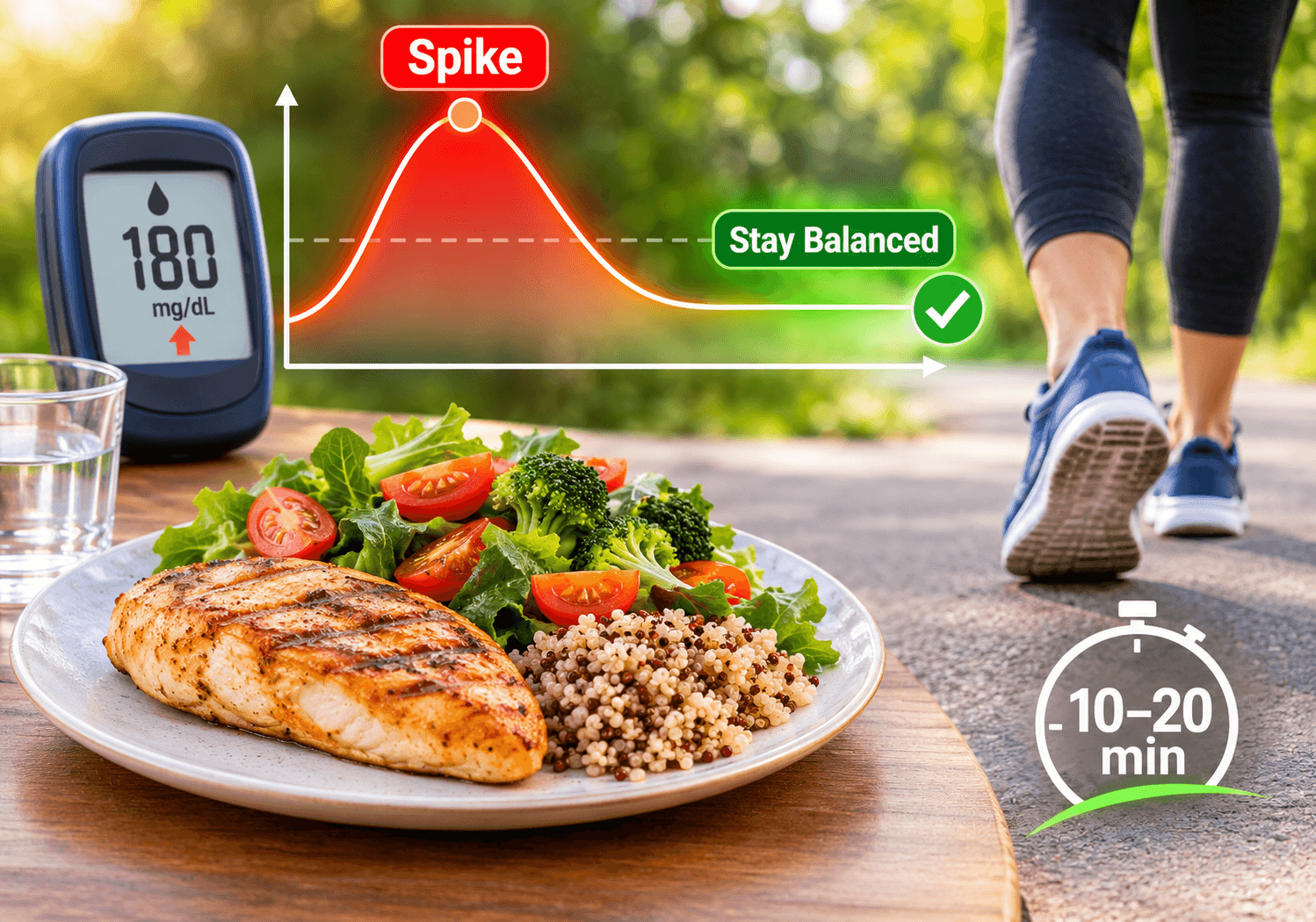
You finish a balanced meal, sit down at your desk to answer emails, and an hour later you feel an overwhelming wave of fatigue wash over you. Your brain feels foggy, your energy plunges, and suddenly you find yourself reaching for a sweet snack or another cup of coffee. If this routine feels familiar, you are likely experiencing a rapid postprandial glycemic surge—more commonly known as a post-meal blood sugar spike.
Understanding what causes blood sugar spikes after eating is one of the most powerful steps you can take toward optimizing your daily energy, improving metabolic flexibility, and supporting long-term health. While nutrition plays an obvious role, your physical activity level—specifically what you do in the 30 to 60 minutes after you eat—is the key master switch that determines how your body handles that incoming glucose.
In this guide, we will break down the underlying biological mechanisms behind post-meal glucose spikes, examine the surprising non-food triggers that elevate your numbers, and outline practical, exercise-based strategies to blunt these spikes naturally.
Quick Answer
What causes blood sugar spikes after eating? Post-meal glucose spikes occur when carbohydrates break down into simple sugars faster than your cells can absorb them. A lack of immediate physical activity, high-glycemic foods, stress, poor sleep, and low insulin sensitivity cause glucose to pool in the bloodstream rather than being shuttled into skeletal muscle tissue for fuel.
The Physiology of Postprandial Glucose: What Happens When You Eat
To understand why blood glucose surges after dining, it helps to examine the normal digestive process. When you consume food containing carbohydrates—whether it is an apple, a bowl of oatmeal, or a slice of pizza—your digestive tract breaks those complex molecules down into monosaccharides, primarily glucose.
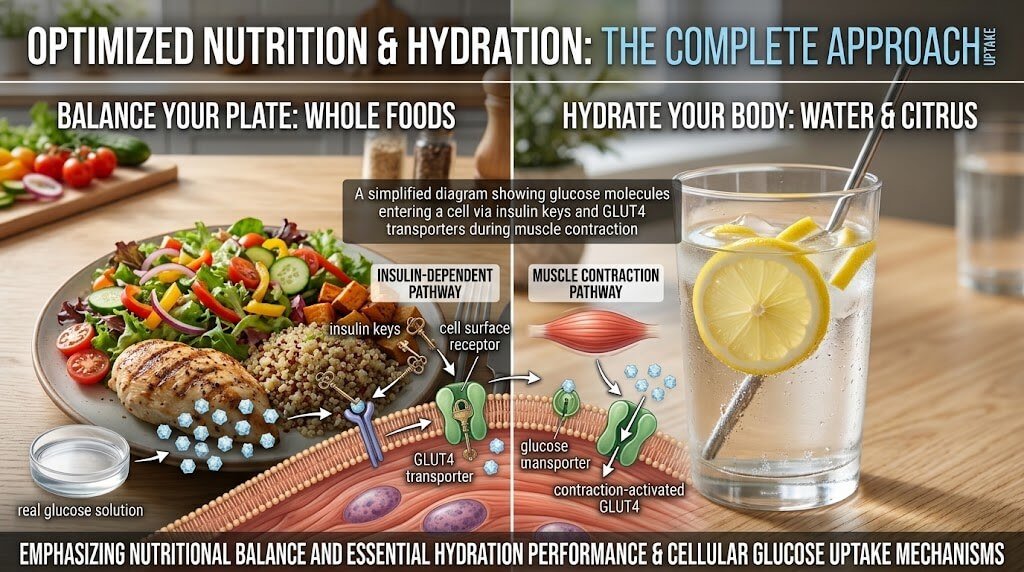
This glucose is absorbed through the intestinal wall directly into your bloodstream. As circulating blood glucose levels rise, your pancreas responds by releasing the hormone insulin from its beta cells. Insulin acts like a key, unlocking cellular doors so glucose can exit the bloodstream and enter your liver, fat cells, and skeletal muscle tissue to be stored or used immediately for energy.
Under normal metabolic conditions, this system operates smoothly. However, when glucose enters the bloodstream faster than insulin can shuttle it into cells, or when your cells are resistant to insulin’s signal, glucose builds up in the vascular system. This concentration peak is what clinicians refer to as postprandial hyperglycemia.
7 Primary Causes of Blood Sugar Spikes After Eating
While high-carbohydrate foods are the most frequent culprit, several distinct biological and lifestyle factors contribute to post-meal glycemic spikes.
1. High Glycemic Index and High Glycemic Load Foods
Refined carbohydrates like white bread, sugary beverages, white rice, and processed pastries break down rapidly in the stomach. Because they lack structural fiber, they pass quickly into the small intestine, causing a sudden flood of glucose into the blood.
2. Sitting Still Immediately After Meals
When you remain seated after eating, your large skeletal muscle groups remain flaccid and inactive. Muscle tissue is responsible for clear-cutting roughly 80% of post-meal glucose from circulation. Without muscle contractions to pull glucose out of your vessels, sugar remains trapped in the blood for extended periods.
If you frequently experience digestive slumps or intense hunger swings shortly after eating, evaluating how to manage food cravings without supplements can help stabilize your daily dietary habits.
3. Eating Carbohydrates in Isolation
Consuming “naked carbs”—such as eating a plain bag of pretzels or drinking fruit juice alone—leads to rapid gastric emptying. Without dietary protein, healthy fats, or soluble fiber present to slow down stomach emptying, your digestive tract processes the carbohydrates at maximum speed.
4. Low Skeletal Muscle Mass (Sarcopenia)
Your skeletal muscles act as a massive “glucose sink,” storing sugar as glycogen for later physical work. If you have lower muscle mass—whether due to aging, lack of resistance training, or prolonged inactivity—your body has a smaller storage reservoir for incoming glucose, leading to higher blood sugar concentration spikes.
5. Sleep Deprivation and Disrupted Circadian Rhythms
A single night of partial sleep restriction can induce acute insulin resistance. When you are sleep-deprived, elevated morning cortisol levels reduce your body’s ability to clear glucose effectively. Research demonstrates a clear link between poor sleep architecture and compromised metabolic health; you can read more about how sleep affects metabolism and weight management in our deep-dive review.
6. Acute Stress and Elevated Cortisol
Physical or emotional stress triggers the release of stress hormones, including cortisol and epinephrine. These hormones signal the liver to release stored glycogen into the bloodstream to provide quick energy for a perceived “fight-or-flight” scenario. If you eat a meal while highly stressed, this liver-derived glucose combines with meal-derived glucose, creating a compounded spike.
7. Eating Late in the Evening
Human insulin sensitivity naturally naturally follows a circadian rhythm, peaking in the early morning and hitting its lowest point late at night. Eating a heavy, carbohydrate-dense meal late in the evening frequently results in a significantly larger postprandial glucose spike compared to eating the exact same meal at breakfast or lunch.

How Exercise Acts as a Natural Glucose Buffer
As a strength coach, I often tell clients that exercise is the most potent non-pharmaceutical tool available for regulating blood sugar. When you contract your muscles during movement, your body bypasses the standard insulin pathway altogether.
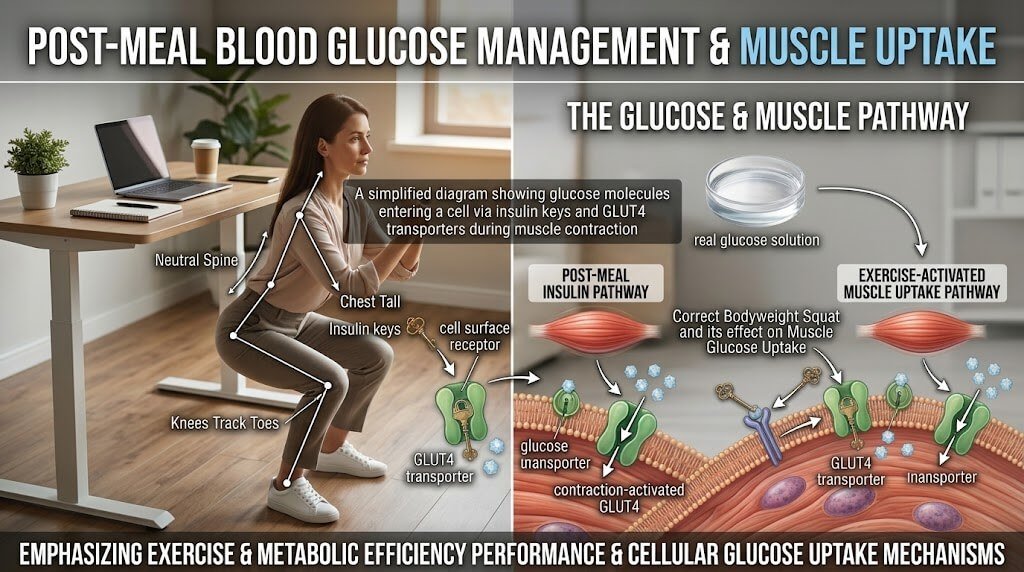
Under resting conditions, glucose requires insulin to signal specialized transport proteins called GLUT4 to move from inside the cell to the cell membrane to draw glucose inside.
However, during active muscle contraction, mechanical force and calcium release stimulate GLUT4 transporters to migrate to the cell membrane independently of insulin.
This means that doing light exercise after a meal literally opens up your cellular doors, letting your muscles burn circulating blood sugar directly without putting extra demands on your pancreas.
Furthermore, long-term exercise improves baseline metabolic flexibility—the body’s capacity to switch efficiently between burning carbohydrates and burning fat. For those working on long-term weight management and glycemic control, learning how to boost metabolic flexibility without crash dieting provides a sustainable roadmap for healthy energy balance.
The Best Post-Meal Exercises to Prevent Spikes
You do not need to perform an exhausting high-intensity workout after every meal to keep blood sugar steady. In fact, low-to-moderate-intensity movements are often far more effective at clearing glucose without spiking stress hormones.
1. The Post-Meal Walk
- Target Muscles: Quadriceps, hamstrings, gluteals, calves.
- Duration: 10 to 20 minutes.
- Intensity: Brisk pace (RPE 3–4 out of 10). You should be able to hold a conversation easily.
- Why it Works: Simple walking engages the body’s largest muscle groups continuously, draining glucose out of circulation without inducing systemic fatigue.
2. Soleus Pushups (Seated Calf Raises)
- Target Muscles: Soleus (deep calf muscle).
- Duration: 15 to 30 minutes continuously while seated at a desk.
- Intensity: Low (RPE 1–2 out of 10).
- Why it Works: Pioneered by researchers at the University of Houston, soleus contractions can double or triple normal local oxidative metabolism, consuming circulating blood glucose for long periods without causing fatigue.
3. Bodyweight Squats & Lunge Matrix
- Target Muscles: Quadriceps, gluteus maximus, core.
- Duration: 3 to 5 minutes (sets of 10–15 reps).
- Intensity: Moderate (RPE 4–5 out of 10).
- Why it Works: Deep hip and knee flexion activates large motor units in the glutes and quads, pulling in glucose at a rapid rate.
Exercise Regimen & Timing Matrix for Glucose Control
Timing is essential when using physical activity to blunt a postprandial glucose peak. Blood sugar typically reaches its peak between 30 and 60 minutes after the last bite of food. Therefore, initiating movement within 15 to 30 minutes post-meal offers optimal protection against a spike.
| Goal / Context | Best Exercise Type | Intensity | Duration | Ideal Timing |
| Desk Worker / Office | Soleus Pushups or Desk Squats | Low (RPE 2–3) | 10–15 mins | Starts 15 mins post-meal |
| General Health & Fat Loss | Brisk Outdoor Walking | Moderate (RPE 3–4) | 15–30 mins | Starts 20 mins post-meal |
| Metabolic Health / Seniors | Resistance Band Circuits | Low-Mod (RPE 3–5) | 10–15 mins | Starts 30 mins post-meal |
| Athletes / Gym Goers | Zone 2 Cardio (Bike/Treadmill) | Moderate (RPE 4–5) | 20–30 mins | Starts 40 mins post-meal |
Coach’s Tip
Do not wait until you start feeling sleepy after lunch to start moving. The post-meal brain fog means your blood sugar has likely already peaked. Set a timer on your phone for 15 minutes after finishing your last bite, stand up immediately, and complete 10 to 15 minutes of light movement.
Common Post-Meal Movement Mistakes to Avoid
Even well-intentioned fitness routines can backfire if executed improperly right after dining. Avoid these three common pitfalls:
Mistake 1: Performing High-Intensity Interval Training (HIIT) Immediately After Meals
- The Problem: Sprinting, heavy powerlifting, or intense CrossFit workouts right after eating forces your body into a sympathetic (“fight-or-flight”) state. This triggers a massive surge of adrenaline, causing the liver to dump glucose into the blood. This can actually raise blood sugar levels temporarily rather than lower them.
- The Fix: Reserve high-intensity training for times when you are fully digested (2 to 3 hours after a meal). Keep post-meal activity strictly in the low-to-moderate intensity zone (Zone 1 or Zone 2).
Mistake 2: Delaying Movement for More Than 90 Minutes
- The Problem: Waiting two hours after eating to go for a walk means the glucose spike has already hit its peak and damaging oxidative stress may have already occurred in your blood vessels.
- The Fix: Prioritize brief, early movement (even just 5 minutes of walking) over long, delayed workouts.
Mistake 3: Exercising on an Ultra-Full Stomach Without a Warm-Up
- The Problem: Engaging in rapid movement right after a heavy, high-fat meal can pull blood flow away from the stomach into the limbs too abruptly, resulting in cramping, nausea, or severe acid reflux.
- The Fix: Start with 2 to 3 minutes of very slow pacing before ramping up to a brisk walk to allow your cardiovascular and digestive systems to adapt.
Common Mistake
Thinking exercise completely undoes a poor diet. While a 15-minute walk significantly blunts a spike, it cannot fully absorb a 1,200-calorie ultra-processed, sugar-heavy meal. Always combine movement with smart nutrition principles like pairing carbohydrates with lean protein and soluble fiber.
Exercise Regressions and Progressions for Blood Sugar Management
Adjusting movement to match your current fitness capacity ensures safety while maintaining metabolic benefits.
- Movement: Seated Soleus Calf Raises & Wall Pushes.
- Execution: Sit upright in a chair with feet flat on the floor. Raise your heels as high as possible while keeping the toes grounded, then lower them under control. Repeat at a steady rhythm for 10 to 15 minutes while watching TV or reading.
Baseline Standard (For Most Individuals)
- Movement: Continuous Brisk Walking.
- Execution: Step outside or hop on a home treadmill set to a 1.0–2.0% incline at 2.5 to 3.2 mph [4.0 to 5.1 km/h]. Walk steadily for 15 to 20 minutes.
Progression (For Conditioned Individuals Seeking Higher Caloric Burn)
- Movement: Post-Meal Bodyweight Mini-Circuit.
- Execution: Perform 3 rounds of the following with zero rest between exercises:
- Air Squats: 15 reps
- Standing Calf Raises: 20 reps
- Reverse Lunges: 10 reps per leg
- Standing Wall Push-ups: 15 reps Total duration: ~10–12 minutes.
Non-Exercise Strategies to Flatten the Post-Meal Curve
While physical activity acts as the primary mechanical driver for clearing blood sugar, combining movement with targeted dietary tactics creates a synergistic effect that keeps your energy stable all day.
1. Meal Sequencing: Eat Fiber and Protein First
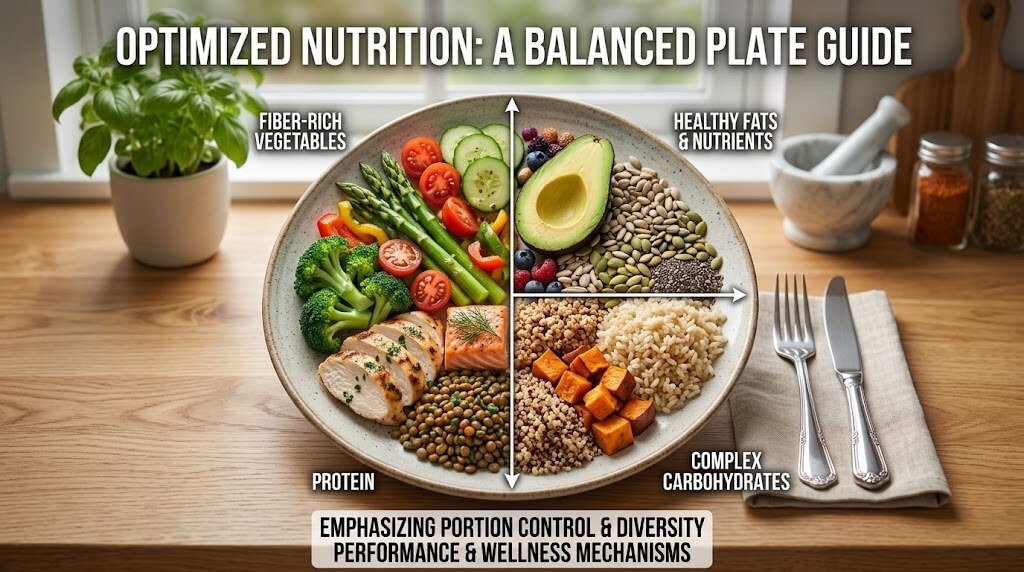
The order in which you eat your food alters how fast it leaves your stomach. Eating fiber-rich vegetables and protein sources before touching refined carbohydrates coats the intestinal lining and delays gastric emptying, flattening your glucose curve significantly.
If hunger management is a challenge during calorie deficits, evaluating how protein intake affects hunger and fullness hormones can help you structure meals that improve both satiety and metabolic response.
2. Prioritize Soluble Fiber
Soluble fiber forms a gel-like matrix in the digestive tract, slowing down carbohydrate digestion and glucose absorption. Incorporating dietary fiber or supplements like psyllium husk can offer significant support; research shows that taking fiber before meals helps flatten postprandial surges. For an in-depth breakdown, read about how soluble fiber helps control appetite for weight loss.
3. Consider Targeted Nutritional Support
Certain botanical compounds and micro-nutrients can support normal glucose uptake and insulin signaling pathways when paired with healthy lifestyle habits. For instance, studies on plant extracts show potential benefits for glucose homeostasis; you can explore the evidence in our review on whether berberine supports metabolic health.
Additionally, minerals like chromium play an active role in carbohydrate metabolism. Read more about how chromium picolinate helps reduce sugar cravings to see if it aligns with your health goals.
Sample Daily Routine for Optimal Blood Sugar Control
Here is how a complete daily schedule looks when integrating smart movement patterns with evidence-based nutrition:
[07:30 AM] ─── Breakfast: Protein, Fiber & Healthy Fats (Eggs, Avocado, Spinach)
[07:50 AM] ─── Movement: 10-Minute Morning Walk or Soleus Pushups
[12:30 PM] ─── Lunch: Mixed Greens Salad, Grilled Chicken, Sweet Potato (Sequenced)
[12:55 PM] ─── Movement: 15-Minute Brisk Walking Outside
[03:30 PM] ─── Mid-Day Reset: 5 Minutes of Bodyweight Squats & Wall Pushes
[06:30 PM] ─── Dinner: Salmon, Roasted Broccoli, Quinoa
[06:55 PM] ─── Movement: 15-Minute Evening Neighborhood Stroll
[10:00 PM] ─── Wind-Down: Screen-Free Mobility & Restful Sleep (7-8 hours)
By embedding brief bouts of activity into your post-meal habits, you transform your skeletal muscles into active sponges that absorb blood glucose naturally, preventing energy crashes and protecting your metabolic health.
Frequently Asked Questions
Why does my blood sugar spike after eating even when I cut out sugar?
Refined carbohydrates like white flour, white rice, and starchy vegetables rapidly break down into glucose during digestion, raising blood sugar just like table sugar does. Additionally, high stress levels, lack of sleep, or dehydration can trigger blood sugar spikes even when you eat low-sugar or low-carb meals.
How fast does blood sugar rise after a meal?
For most healthy adults, blood sugar levels begin to rise within 15 to 20 minutes after eating and reach their peak peak between 30 and 60 minutes. Levels typically return to baseline within two hours, depending on meal composition, digestive speed, and your post-meal activity level.
Can a short 10-minute walk really lower blood sugar spikes?
Yes. Studies show that engaging in just 10 to 15 minutes of light-to-moderate walking shortly after a meal significantly reduces peak postprandial glucose levels compared to sitting down. Muscle contractions pull glucose out of circulation without requiring additional insulin production.
Why do high-protein or high-fat meals sometimes cause delayed spikes?
While protein and fat do not convert into glucose quickly, large amounts of dietary fat delay stomach emptying. This can cause the carbohydrates eaten alongside them to be absorbed much later, resulting in a delayed blood sugar peak 3 to 5 hours after dining.
Is it normal to feel tired after a blood sugar spike?
Yes. A steep spike in blood sugar is often followed by a rapid release of insulin, which can cause circulating glucose levels to plunge quickly. This rapid drop—sometimes called reactive hypoglycemia—triggers brain fog, fatigue, and intense carbohydrate cravings.
Conclusion
Understanding what causes blood sugar spikes after eating gives you the knowledge to take back control of your energy levels, focus, and long-term health. While nutrition forms the foundation of glucose management, physical movement acts as the ultimate amplifier. By engaging your skeletal muscles for just 10 to 20 minutes after dining—whether through a simple neighborhood walk, desk squats, or continuous calf raises—you activate non-insulin-dependent glucose transport, blunting spikes before they start.
Start small: pick one meal today—lunch or dinner—and commit to taking a brief 15-minute walk as soon as you finish eating. Track how your energy feels over the next week, and build this powerful post-meal habit into your daily routine.