
Starting a fat-loss journey often comes with an unwelcome side effect: exhaustion. Many people assume that feeling drained is just the price of admission for shedding pounds. However, learning how to maintain energy during calorie deficit is entirely possible with the right strategy. As a strength and conditioning coach, I see clients successfully lose fat while still crushing their workouts, playing weekend pickleball, and keeping up with their daily lives.
The secret is not pushing harder, but training and eating smarter. A well-structured approach protects your muscle mass, stabilizes your blood sugar, and supports your body’s natural energy production systems. This guide provides a complete, evidence-based framework. We will cover the physiology of dieting fatigue, the four core pillars of sustained energy, and a practical workout plan designed specifically for fat loss without burnout.
Quick Answer
How to maintain energy during calorie deficit: Prioritize high protein intake (0.8–1g per lb of body weight), time complex carbohydrates around your workouts, and limit your deficit to 300–500 calories per day. Focus on heavy, compound resistance training 3 days a week, prioritize 7–9 hours of sleep, and stay consistently hydrated to prevent fatigue and muscle loss.
Who This Energy-Maintenance Program Is For
This guide is designed for active adults who want to lose body fat without sacrificing their performance or daily vitality. It is especially beneficial for:
- Gym beginners who want to build healthy habits without feeling overwhelmed or exhausted.
- Women over 40 who need to manage hormonal shifts, protect bone density, and avoid the metabolic slowdown often associated with aggressive dieting.
- Home gym owners looking for efficient, equipment-light routines that deliver maximum results.
- Recreational athletes, such as pickleball players or weekend cyclists, who need functional energy for their sports while managing their body composition.
If you have been experiencing afternoon crashes, sluggish workouts, or intense cravings, this program will help you reset your approach.
The Physiology of Dieting Fatigue
To fix low energy, you must first understand why it happens. When you eat fewer calories than you burn, your body experiences an energy shortfall. In response, several physiological changes occur.
First, your muscle and liver glycogen stores (stored carbohydrates) decrease. Glycogen is the primary fuel source for high-intensity exercise. Lower glycogen means you may feel “flat” or weak during workouts. Second, your body may downregulate Non-Exercise Activity Thermogenesis (NEAT). This is the subconscious energy you burn through fidgeting, walking, and daily movement. You might literally feel too tired to move.
Finally, aggressive calorie restriction can elevate cortisol, the body’s primary stress hormone. Chronically high cortisol disrupts sleep quality and promotes muscle breakdown, creating a vicious cycle of fatigue and stalled progress. According to the American College of Sports Medicine (ACSM), moderate calorie deficits combined with resistance training are the most effective way to preserve lean mass and metabolic rate during weight loss.
Core Pillars of Sustaining Energy While Dieting
You cannot out-train a poorly managed deficit. To learn how to maintain energy during calorie deficit, you must address four core pillars: nutrition, training, recovery, and targeted support.
Pillar 1: Strategic Nutrition and Nutrient Timing
The size of your deficit matters. A moderate deficit of 300 to 500 calories per day is sustainable and minimizes fatigue. Drastic cuts often lead to rapid energy depletion.
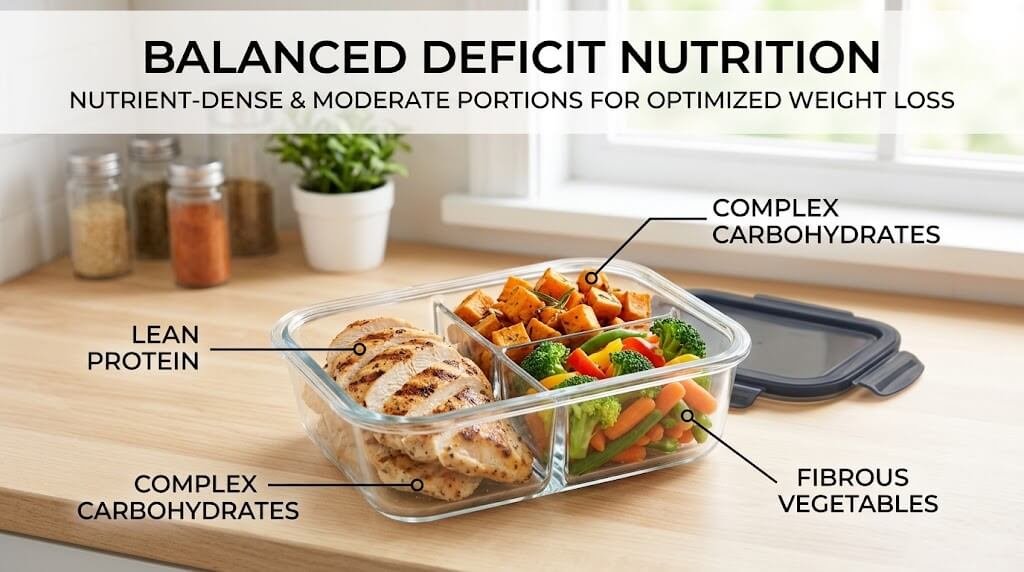
Protein is your most critical macronutrient right now. It has a high thermic effect, meaning your body burns more calories digesting it. More importantly, it preserves lean muscle mass, which keeps your resting metabolic rate elevated. Research supports consuming between 0.8 to 1.0 grams of protein per pound of body weight (1.8 to 2.2 g/kg) when in a deficit. You can read more about how protein intake affects metabolism and weight loss.
Carbohydrates are not the enemy; they are your primary energy source. Instead of cutting carbs to zero, time them strategically. Consume the majority of your daily carbohydrates in the meal preceding your workout and the meal following it. This ensures you have glycogen available for training and aids in post-workout recovery.
Pillar 2: Intelligent Training Selection
Cardio is a tool, but excessive steady-state cardio in a deficit is a primary driver of fatigue. It burns additional calories but also increases recovery demands.
Resistance training should be your priority. Lifting weights sends a powerful signal to your body to hold onto muscle tissue. Focus on compound movements that work multiple muscle groups simultaneously. This yields a higher metabolic return for less total time spent in the gym. Learning how to boost metabolic flexibility without crash dieting can also help your body switch between fuel sources more efficiently, preserving your stamina.
Pillar 3: Sleep and Cortisol Management
Sleep is when your body repairs tissue and replenishes energy stores. Skimping on sleep while in a calorie deficit is a recipe for disaster. Poor sleep increases ghrelin (the hunger hormone) and decreases leptin (the fullness hormone), making your deficit much harder to maintain.
Aim for 7 to 9 hours of quality sleep per night. Understand how sleep affects metabolism and weight management to optimize your nightly routine. Keep your bedroom cool, dark, and screen-free for at least an hour before bed.
Pillar 4: Hydration and Targeted Support
Even mild dehydration can manifest as fatigue, brain fog, and decreased physical performance. Aim for at least half your body weight in ounces of water daily, adding electrolytes if you sweat heavily during workouts.
Sometimes, whole foods are not enough to cover micronutrient gaps during a deficit. Ensuring adequate intake of B-vitamins is crucial, as they play a direct role in cellular energy production. If you are feeling consistently drained, exploring the best vitamins for energy while dieting may be a practical step. Additionally, certain amino acids like L-tyrosine have been shown to help support energy during a calorie deficit by supporting neurotransmitter production under stress.
The Energy-Sustaining Workout Plan
This workout is designed to stimulate muscle retention and boost metabolism without draining your central nervous system. It requires minimal equipment and can be done at home or in a commercial gym.
Format: Full-Body Resistance Training
Frequency: 3 days per week (e.g., Monday, Wednesday, Friday)
Rest Between Sets: 60–90 seconds
Tempo: 3-1-1 (3 seconds lowering, 1 second pause, 1 second lifting)
| Exercise | Sets | Reps | Rest | Primary Muscles Worked |
| Goblet Squat | 3 | 8–10 | 90 sec | Quadriceps, Glutes, Core |
| Dumbbell Romanian Deadlift (RDL) | 3 | 10–12 | 90 sec | Hamstrings, Glutes, Lower Back |
| Incline Push-Up (or Standard) | 3 | 8–12 | 60 sec | Chest, Shoulders, Triceps |
| Single-Arm Dumbbell Row | 3 | 10–12 / arm | 60 sec | Latissimus Dorsi, Rhomboids, Biceps |
| Forearm Plank | 3 | 30–45 sec | 60 sec | Core, Shoulders |
How to Do Each Exercise: Form Cues and Coaching Points
Proper form ensures you get the maximum benefit from each repetition while minimizing injury risk. Follow these detailed instructions for every movement.
1. Goblet Squat
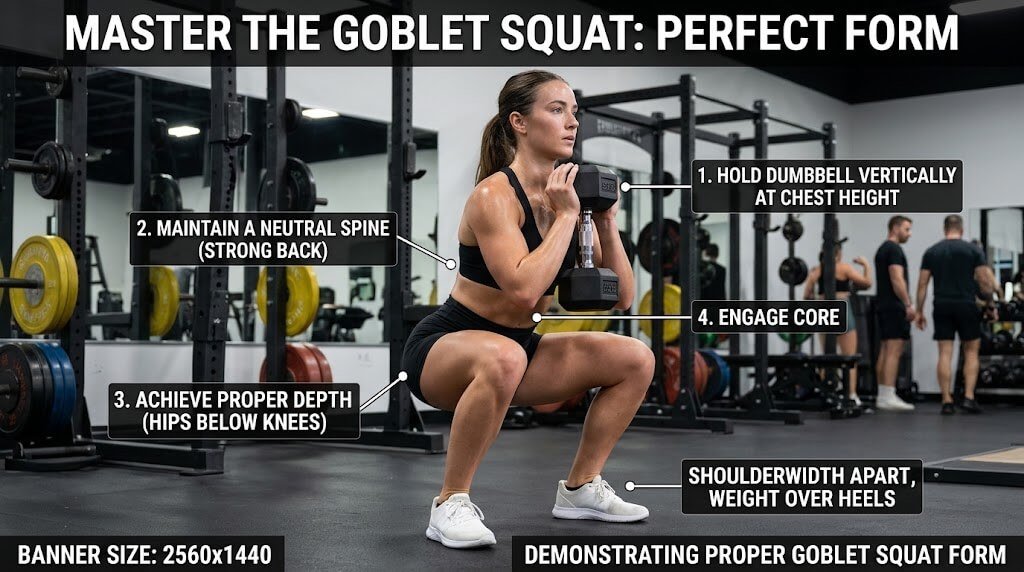
- Setup: Hold a single dumbbell or kettlebell vertically against your chest, cupping the top end with both hands. Stand with feet shoulder-width apart, toes slightly pointed out.
- Execution: Brace your core as if preparing for a punch. Push your hips back and bend your knees, lowering your body until your thighs are at least parallel to the floor. Keep your chest up and elbows tucked inside your knees. Drive through your mid-foot to return to the starting position.
- Regression: Sit down onto a chair or bench and stand back up. This teaches proper hip hinge mechanics.
- Progression: Hold the bottom position for a 2-second pause, or switch to a barbell back squat.
- Coach’s Tip: Imagine you are trying to spread the floor apart with your feet as you stand up. This activates the glutes and protects the knees.
- Common Mistake: Letting the heels lift off the ground. Keep your weight distributed evenly across your entire foot.
2. Dumbbell Romanian Deadlift (RDL)
- Setup: Hold a dumbbell in each hand in front of your thighs, palms facing your body. Stand with feet hip-width apart, knees slightly bent (soft, not locked).
- Execution: Hinge at your hips, pushing them straight back toward the wall behind you. Keep the dumbbells sliding down the front of your legs. Lower the weights until you feel a deep stretch in your hamstrings, typically just below the knees. Keep your back completely flat. Squeeze your glutes to pull your hips forward and return to standing.
- Regression: Perform the movement without weights, focusing solely on the hip hinge motion.
- Progression: Increase the weight or perform the exercise on one leg (single-leg RDL).
- Coach’s Tip: Think about “closing a car door with your butt.” This mental cue ensures you are using your hips, not your lower back, to initiate the movement.
- Common Mistake: Rounding the lower back. This places dangerous stress on the spinal discs. Maintain a rigid, neutral spine throughout.

3. Incline Push-Up
- Setup: Place your hands on a sturdy elevated surface, such as a bench, countertop, or wall. Your hands should be slightly wider than shoulder-width. Your body should form a straight line from your head to your heels.
- Execution: Lower your chest toward the surface by bending your elbows, keeping them tucked at a 45-degree angle to your torso. Lower until your chest is 2 inches (5 cm) from the surface. Push back up to the starting position, fully extending your arms without locking your elbows.
- Regression: Perform the push-up against a wall. The more vertical you are, the easier the exercise.
- Progression: Move to the floor for a standard push-up, or elevate your feet on a bench for a decline push-up.
- Coach’s Tip: Squeeze your glutes and brace your abs tightly. A sagging lower back is a sign of core disengagement.
- Common Mistake: Flaring the elbows out to 90 degrees. This places unnecessary strain on the shoulder joints.
4. Single-Arm Dumbbell Row

- Setup: Place one knee and the same-side hand on a flat bench. Your back should be parallel to the floor. Hold a dumbbell in the free hand, letting it hang straight down toward the floor.
- Execution: Pull the dumbbell up toward your hip, leading with your elbow. Squeeze your shoulder blade toward your spine at the top of the movement. Lower the weight slowly back to the starting position. Complete all reps on one side before switching.
- Regression: Use a lighter weight or perform a seated cable row with both arms for added stability.
- Progression: Increase the weight, or perform the row standing with a resistance band anchored low.
- Coach’s Tip: Imagine you are trying to put the dumbbell into your back pocket. This ensures you are engaging the latissimus dorsi rather than just the biceps.
- Common Mistake: Rotating the torso to heave the weight up. Keep your hips square to the floor.
5. Forearm Plank
- Setup: Lie face down. Prop yourself up on your forearms, with your elbows directly beneath your shoulders. Extend your legs behind you, resting on your toes.
- Execution: Engage your core, glutes, and quadriceps to form a rigid, straight line from your head to your heels. Hold this position without letting your hips sag or pike upward. Breathe steadily.
- Regression: Drop to your knees while maintaining the forearm position.
- Progression: Lift one foot an inch (2.5 cm) off the ground, hold for 5 seconds, and switch sides.
- Coach’s Tip: Actively pull your elbows toward your toes and your toes toward your elbows (without actually moving). This creates immense core tension.
- Common Mistake: Holding your breath. Continuous, controlled breathing is essential for maintaining intra-abdominal pressure and endurance.
Weekly Schedule and Progression Plan
Consistency beats intensity. Trying to do too much too soon is the fastest way to burn out in a calorie deficit. Follow this weekly template to balance training stimulus with adequate recovery.
- Monday: Full-Body Workout A (as outlined above)
- Tuesday: Active Recovery (30-minute brisk walk, approximately 2 miles or 3.2 km, or light cycling)
- Wednesday: Full-Body Workout A
- Thursday: Active Recovery or Mobility Work (15–20 minutes of stretching or yoga)
- Friday: Full-Body Workout A
- Saturday: Recreational Activity (e.g., 60 minutes of pickleball, hiking, or swimming)
- Sunday: Complete Rest and Meal Preparation
Progression Plan:
Do not increase the weight every week. In a calorie deficit, your goal is to maintain strength, not necessarily set personal records. If you can complete the top end of the rep range (e.g., 12 reps) with good form for all three sets, increase the weight by the smallest increment possible (e.g., 5 lb or 2.5 kg) the following week. If you cannot, maintain the current weight and focus on improving your tempo and control.
Beginner and Advanced Versions
For Beginners:
If you are new to exercise, start with just two full-body sessions per week. Reduce the sets from 3 to 2. Focus entirely on mastering the movement patterns listed in the regression sections. Do not worry about the weight on the bar; worry about the quality of the repetition.
For Advanced Trainees:
If you have a solid training base, you can increase the volume slightly. Add a fourth set to the compound movements (Squats and RDLs). You can also incorporate a “finisher” at the end of two sessions per week, such as 3 rounds of a 40-yard (36-meter) farmer’s carry with moderate dumbbells to build work capacity without excessive systemic fatigue.
Cool-Down and Recovery
A proper cool-down transitions your nervous system from a state of high alert to a state of rest and digest, which is critical for recovery in a deficit.
Spend 5 to 10 minutes after each workout performing static stretching. Focus on the muscles you just trained. Hold each stretch for 30 to 60 seconds. Good options include a standing quad stretch, a seated hamstring stretch, and a doorway chest stretch.
Following the workout, consume a meal or snack containing both protein and carbohydrates within 1 to 2 hours. This replenishes glycogen stores and initiates muscle protein synthesis. If you struggle with post-workout hunger, learning how to manage cravings during a calorie deficit can help you make choices that support recovery without blowing your daily energy budget.
Tips for Results: Avoiding the Energy Traps
Even with a perfect plan, small daily habits can make or break your energy levels. Keep these practical coaching points in mind.
Coach’s Tip: Track your morning resting heart rate. If it spikes by more than 5–10 beats per minute above your normal baseline for several consecutive days, it is a strong indicator that your body is not recovering adequately. Take an extra rest day or increase your calorie intake slightly.
Common Mistake: Drinking your calories in the form of sugary coffee drinks or sodas, then wondering why you crash an hour later. Stick to water, black coffee, or unsweetened tea. Caffeine is a useful tool for energy, but relying on it to mask chronic sleep deprivation will eventually lead to adrenal fatigue and worsened diet quality.
Another frequent error is ignoring micronutrients. When you eat less food, you get fewer vitamins and minerals. Ensuring you get enough vitamins that support metabolism is a simple, evidence-based way to prevent the sluggishness associated with restrictive eating.
Frequently Asked Questions (FAQ)
1. Why am I so tired in a calorie deficit?
Fatigue in a deficit is usually caused by a combination of reduced glycogen stores, inadequate protein intake, poor sleep quality, or a deficit that is too aggressive. Scaling back your calorie cut to 300–500 calories and prioritizing sleep typically resolves this issue within a week or two.
2. How many calories should I cut to avoid fatigue?
A moderate deficit of 300 to 500 calories per day below your Total Daily Energy Expenditure (TDEE) is the sweet spot. This promotes a steady fat loss of about 0.5 to 1 pound per week without triggering severe metabolic adaptation or energy crashes.
3. Can you build muscle and maintain energy in a deficit?
Yes, particularly if you are a beginner, returning from a layoff, or have a higher body fat percentage. By consuming high protein (0.8–1g per lb of body weight) and following a progressive resistance training program, you can signal muscle growth while slowly losing fat.
4. How does sleep affect energy during weight loss?
Sleep is when your body regulates hunger hormones (ghrelin and leptin) and repairs muscle tissue. Chronic sleep deprivation elevates cortisol, which promotes fat storage, increases cravings, and severely blunts your daytime energy and workout performance.
5. What supplements help with energy during a calorie deficit?
While whole foods are best, certain supplements can help. Caffeine (in moderation) improves workout performance. B-vitamins support cellular energy production. Amino acids like L-tyrosine may help maintain cognitive focus and energy under the stress of dieting. Always consult a doctor before starting new supplements.
6. Does cardio drain energy more than weightlifting when dieting?
Excessive steady-state cardio can drain energy and increase hunger more than weightlifting. Resistance training is more time-efficient, preserves metabolically active muscle mass, and creates a favorable hormonal environment for fat loss without the same level of systemic fatigue.
Conclusion
Learning how to maintain energy during calorie deficit is not about suffering through exhaustion; it is about strategic management. By keeping your calorie deficit moderate, prioritizing protein and nutrient timing, focusing on efficient resistance training, and respecting your body’s need for sleep, you can lose fat while feeling strong and capable.
Remember that consistency over weeks and months yields far better results than perfection for a single week. Listen to your body, adjust your plan as needed, and trust the process. If you implement the workout and nutrition strategies outlined in this guide, you will protect your muscle, sustain your daily vitality, and achieve your body composition goals safely.