Does Vitamin D3 Help Rebuild Tooth Enamel? An Evidence-Based Guide
When you notice increased tooth sensitivity or visible white spots on your teeth, you might wonder: does vitamin D3 help rebuild tooth enamel? The short answer is nuanced but highly encouraging. While vitamin D3 cannot magically regrow enamel that has been physically lost or cavitated, it plays a critical, scientifically proven role in the remineralization of weakened enamel. By enhancing your body’s ability to absorb calcium and phosphorus, vitamin D3 provides the essential building blocks your teeth need to stay strong and resist decay. As a health and wellness coach, I often see clients focus solely on topical toothpaste while ignoring the systemic nutrients that protect their smile from the inside out. This guide breaks down exactly what the research says about vitamin D3 and dental health, how to apply it safely, and what realistic results you can expect.
Quick Answer:
No, vitamin D3 cannot physically “rebuild” or regrow tooth enamel once it is permanently lost, because mature enamel contains no living cells. However, vitamin D3 is absolutely essential for remineralizing early enamel damage. It boosts calcium and phosphorus absorption, helping to repair microscopic weaknesses and prevent further tooth decay.
Does Vitamin D3 Help Rebuild Tooth Enamel? The Scientific Reality
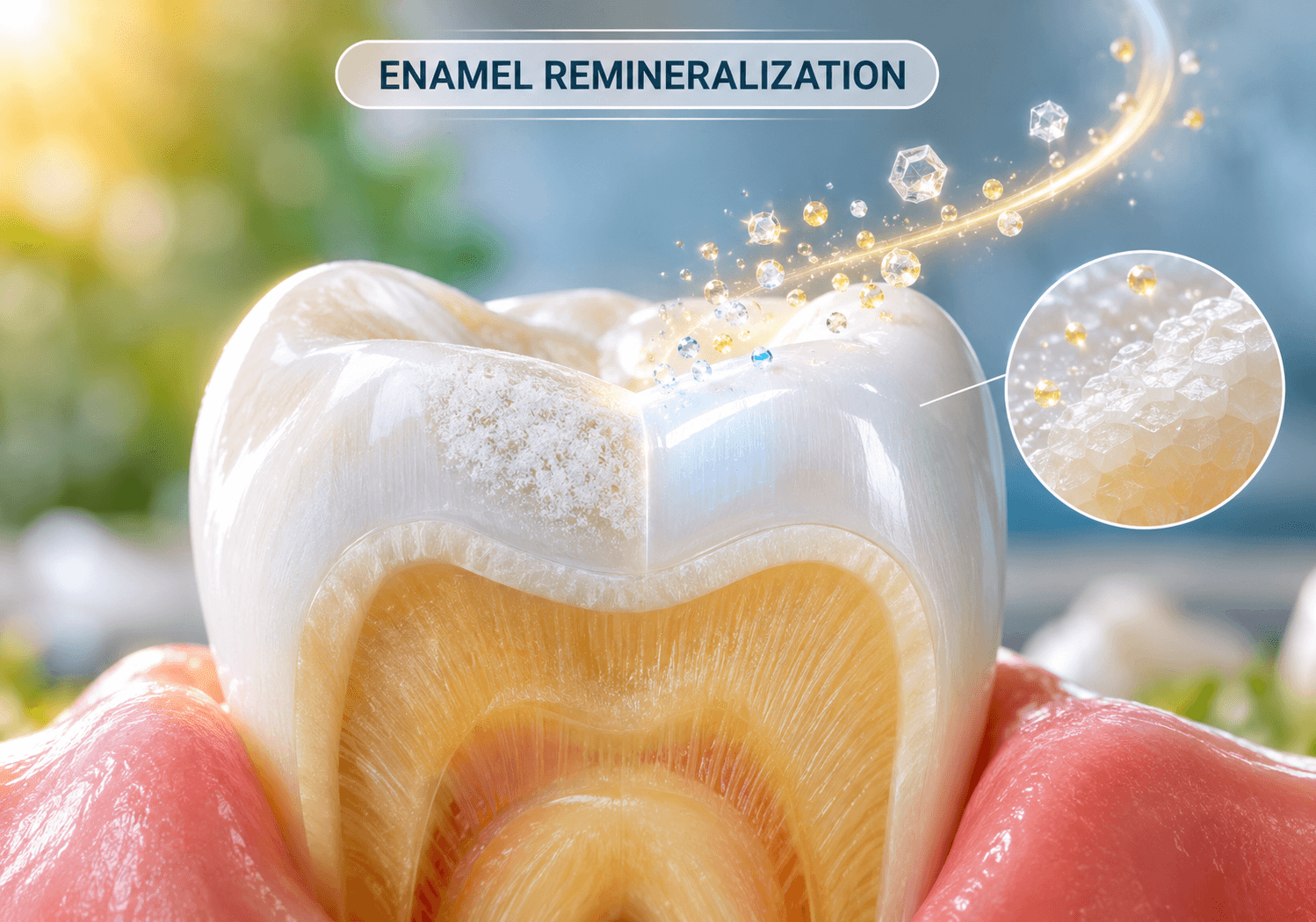
To understand if vitamin D3 helps, we first need to understand how tooth enamel works. Enamel is the hard, outermost layer of your teeth. It is the most highly mineralized substance in the human body, composed of about 96% minerals, primarily a crystalline structure called hydroxyapatite. Unlike bone, which is living tissue that can continuously remodel and heal itself, mature tooth enamel contains no living cells, blood vessels, or nerves.
Because of this biological limitation, enamel cannot “grow back” or regenerate once it is physically worn away by acid erosion, aggressive brushing, or advanced tooth decay. However, enamel does undergo a continuous, natural process of demineralization and remineralization. Demineralization occurs when acids from plaque bacteria or sugary foods strip minerals like calcium and phosphate from the enamel surface. Remineralization is the repair process where saliva, fluoride, and dietary minerals deposit these building blocks back into the enamel, strengthening it before a cavity forms.
The mouth operates on a delicate pH balance. When the pH in your mouth drops below a critical level of 5.5, the environment becomes acidic enough to dissolve the hydroxyapatite crystals in your enamel. Saliva acts as your body’s natural defense mechanism, neutralizing these acids and supplying free calcium and phosphate ions to begin the remineralization process. However, if you frequently consume sugary or acidic foods, or if your body lacks the necessary minerals due to a vitamin D3 deficiency, the demineralization process outpaces remineralization, leading to permanent structural damage.
This is where systemic nutrition becomes vital. While topical treatments like fluoride toothpaste help, your body needs adequate internal resources to supply the minerals required for this repair process.
The Role of Vitamin D3 in Remineralizing Tooth Enamel
So, does vitamin D3 help rebuild tooth enamel through this remineralization process? Yes, research strongly supports its role. Vitamin D3 (cholecalciferol) is a fat-soluble vitamin that functions more like a hormone in the body. Its primary job is to regulate the absorption of calcium and phosphorus from the digestive tract.
When you consume calcium-rich foods, your body cannot efficiently absorb that calcium without sufficient vitamin D3. The liver and kidneys convert vitamin D3 into its active form, calcitriol. Calcitriol then signals the intestines to increase calcium and phosphorus uptake into the bloodstream. These minerals are subsequently transported to the bones and teeth, where they are incorporated into the hydroxyapatite crystals of the enamel and dentin layers.
Several clinical studies highlight this connection. A comprehensive review published in the National Institutes of Health (NIH) database noted that vitamin D deficiency is directly linked to enamel hypoplasia, a condition where the enamel does not form properly, making teeth highly susceptible to decay. Furthermore, research indicates that maintaining adequate vitamin D levels has significant potential in improving the remineralization of demineralized enamel surfaces, effectively halting the progression of early dental caries.
Vitamin D3 Sources and Dosage Comparison
Getting enough vitamin D3 is not always straightforward, as few foods naturally contain it in significant amounts. The body primarily produces vitamin D3 when the skin is exposed to ultraviolet B (UVB) rays from sunlight. However, factors like geographic location, skin pigmentation, sunscreen use, and spending most of our time indoors can severely limit natural production.
Below is a comparison of common vitamin D3 sources and their approximate content to help you plan your intake.
| Source Type | Specific Example | Approximate Vitamin D3 Content | Notes |
| Sunlight | Midday sun exposure | 1,000–3,000 IU per 10–30 mins | Varies heavily by skin tone, latitude, and seasonpenndentalmedicine.org. |
| Fatty Fish | Wild-caught salmon (3.5 oz / 100 g) | 360–600 IU | Also provides anti-inflammatory omega-3 fatty acids. |
| Fortified Dairy | Cow’s milk (1 cup / 240 ml) | 115–130 IU | Check labels, as fortification levels vary by brand. |
| Egg Yolks | One large egg yolk | 40–50 IU | A modest source, but highly bioavailable. |
| Supplements | Vitamin D3 softgel | 1,000–5,000 IU per capsule | The most reliable way to correct a clinical deficiency. |
Note: The Recommended Dietary Allowance (RDA) for most adults is 600–800 IU (15–20 mcg) per day. However, many healthcare providers recommend 1,000–2,000 IU daily for optimal systemic health, including dental support. Always consult a doctor before starting high-dose supplementation.
Knowing the science is only half the battle. As a coach, I help clients translate research into daily, actionable habits. If your goal is to support enamel remineralization and overall oral health, you need a multi-faceted approach. Relying on a single supplement will not fix poor dietary or hygiene habits.
Here is a step-by-step, evidence-based routine to maximize the benefits of vitamin D3 for your teeth.
Step 1: Get Your Levels Tested
Before guessing your supplement needs, ask your healthcare provider for a 25-hydroxy vitamin D blood test. This is the only accurate way to determine if you are deficient, insufficient, or optimal. A level below 20 ng/mL is generally considered deficient, while many functional medicine practitioners aim for 40–60 ng/mL for optimal health.
Step 2: Pair Vitamin D3 with Vitamin K2 and Magnesium
Vitamin D3 increases calcium absorption, but it does not dictate where that calcium goes. Vitamin K2 acts as a traffic director, ensuring calcium is deposited into your bones and teeth rather than accumulating in your arteries or soft tissues. Magnesium is also required to convert vitamin D into its active form. Look for a supplement that combines D3 and K2, or ensure your diet is rich in magnesium (e.g., spinach, almonds, pumpkin seeds).
Step 3: Optimize Your Dietary Mineral Intake
Supplements cannot outwork a poor diet. Ensure you are consuming adequate calcium and phosphorus daily. Aim for 1,000 mg of calcium (for adults 19–50) to 1,200 mg (for women over 50 and men over 70) per day. Aim for 700 mg of phosphorus per day, which is easily achieved through protein-rich foods like poultry, fish, and dairy.
Step 4: Practice Smart Oral Hygiene
Support the remineralization process from the outside in. Brush twice daily with a fluoride or nano-hydroxyapatite toothpaste. Fluoride acts as a catalyst, speeding up the remineralization process by attracting calcium and phosphate ions from your saliva back to the tooth surface. Wait at least 30 minutes after consuming acidic foods or drinks before brushing, as brushing immediately can scrub away softened enamel. Floss daily to remove plaque biofilm that produces enamel-eroding acids.
Coach’s Tip: Think of your mouth as a construction site. Vitamin D3 is the delivery truck bringing the raw materials (calcium and phosphorus). Fluoride or hydroxyapatite toothpaste is the foreman directing those materials to the exact spots that need repair. You need both for the best results.
Common Mistake: Many people assume that taking massive doses of vitamin D3 will quickly fix their dental issues. This is false and potentially dangerous. Vitamin D is fat-soluble, meaning it accumulates in the body. Excessive intake (typically over 4,000–10,000 IU daily for extended periods without medical supervision) can lead to hypercalcemia, which causes nausea, kidney stones, and even bone loss. More is not always better.
Dietary Progression and Regression
- Easier Version (Regression): If you are new to supplementation or have a sensitive stomach, start by optimizing your dietary intake. Focus on eating two servings of vitamin D-rich foods (like fortified dairy or fatty fish) daily and getting 15 minutes of sunlight exposure on 4 to 6 inches (10 to 15 cm) of bare skin.
- Harder Version (Progression): If blood tests confirm a clinical deficiency, work with your doctor to implement a targeted supplementation protocol. This may involve a temporary, higher-dose regimen (e.g., 2,000–5,000 IU daily) paired with vitamin K2 and magnesium, followed by a retest in 3 to 4 months to verify your levels have normalized.
Safety Notes and Who Should Be Careful
While vitamin D3 is generally safe and well-tolerated at recommended doses, certain populations need to exercise caution.
- Individuals with Kidney Disease: Impaired kidney function can disrupt the activation of vitamin D and the regulation of calcium, increasing the risk of dangerous mineral imbalances.
- People Taking Certain Medications: Steroids (like prednisone), weight-loss drugs (like orlistat), and cholesterol-lowering medications can interfere with vitamin D absorption or metabolism.
- Those with Hyperparathyroidism or Sarcoidosis: These conditions can cause the body to overproduce active vitamin D, leading to elevated blood calcium levels. Adding a supplement could worsen this condition.
If you fall into any of these categories, or if you are pregnant or breastfeeding, you must consult a physician or a registered dietitian before adding vitamin D3 to your routine.
Furthermore, while evaluating your supplement choices, it is wise to learn how to evaluate ingredients in supplements to ensure you are getting a high-quality, third-party tested product without unnecessary fillers or proprietary blends that obscure actual dosages.
Your oral health is a mirror of your overall systemic health. Supporting your enamel goes beyond just vitamin D3. Here are a few interconnected strategies to consider.
1. Manage Blood Sugar and Insulin Sensitivity
High sugar intake not only feeds oral bacteria that produce enamel-eroding acids, but it also promotes systemic inflammation. Interestingly, research suggests that improving metabolic health can have downstream benefits for oral tissues. If you are working on your metabolic health, you might explore how certain nutrients can improve insulin sensitivity, which helps stabilize energy and reduces inflammatory responses throughout the body, including the gums.
2. Address Overall Vitamin Deficiencies
Vitamin D3 does not work in isolation. A deficiency in one nutrient often points to broader dietary gaps. For example, understanding what vitamins support metabolism when you have a deficiency can help you build a more robust foundation for your overall health, which indirectly supports tissue repair and immune function in the mouth.
3. Consider Your Overall Vitamin Intake
If you are actively managing your weight or adjusting your diet, you might be restricting certain food groups that naturally contain fat-soluble vitamins. It is helpful to know which vitamins support metabolism when you’re deficient to ensure your nutritional baseline remains strong, preventing issues like brittle nails, hair loss, and weakened enamel.
4. Support Energy Levels Holistically
Chronic fatigue can lead to poor lifestyle choices, including neglecting oral hygiene or reaching for sugary, acidic energy drinks that destroy enamel. Finding natural ways to boost your vitality is key. Many clients find that identifying the best vitamins for energy helps them maintain the consistency needed for healthy daily routines, including proper dental care. Similarly, ensuring adequate levels of nutrients like vitamin B12 is crucial for maintaining daily energy levels during dietary changes, which supports overall structural health.
5. Evaluate Your Supplement Strategy Broadly
If you are using supplements to manage your weight or health, ensure they are safe and effective. Knowing which supplements may support weight management safely ensures you are not inadvertently consuming ingredients that cause dry mouth. Dry mouth is a major risk factor for tooth decay, as saliva is critical for buffering acids and facilitating remineralization. Additionally, choosing whole, nutrient-dense foods over processed snacks can help you control appetite naturally, reducing the frequency of acid attacks on your teeth.

Frequently Asked Questions (FAQ)
1. Can you rebuild tooth enamel naturally with diet alone?
No, you cannot fully “rebuild” enamel that has been physically lost or cavitated, as it lacks living cells. However, a nutrient-dense diet rich in calcium, phosphorus, and vitamin D3 can naturally support the remineralization of early, microscopic enamel weaknesses before they turn into cavities.
2. How much vitamin D3 is needed for teeth?
The general RDA is 600–800 IU daily, but many dental and medical professionals suggest 1,000–2,000 IU daily for optimal calcium absorption and systemic health. The exact amount depends on your baseline blood levels, which should be determined by a healthcare provider.
3. Does vitamin D reverse cavities?
Vitamin D cannot reverse a fully formed cavity (a physical hole in the tooth). However, adequate vitamin D levels can help reverse “white spot lesions,” which are the earliest stage of tooth decay, by promoting the remineralization of the enamel surface.
4. What vitamins help strengthen teeth besides D3?
Calcium and phosphorus are the primary structural minerals of teeth. Vitamin A supports saliva production, vitamin K2 directs calcium to the teeth, and magnesium is required to activate vitamin D. Together, they create a synergistic effect for oral health.
5. Can damaged enamel be restored with supplements?
Supplements can support the remineralization process, making weakened enamel harder and more resistant to acid. However, they cannot restore enamel that has been physically worn away by grinding, acid erosion, or advanced decay. Professional dental treatments are required for that.
6. Does vitamin D3 help with tooth sensitivity?
Indirectly, yes. Tooth sensitivity is often caused by exposed dentin due to thinning enamel. By supporting the remineralization of the remaining enamel and promoting overall dentin health, adequate vitamin D3 can help reduce sensitivity over time.
Conclusion: Does Vitamin D3 Help Rebuild Tooth Enamel?
So, does vitamin D3 help rebuild tooth enamel? While it cannot act as a magical eraser for physical damage or advanced cavities, it is an absolute powerhouse for remineralizing weakened enamel and preventing future decay. By ensuring your body can properly absorb and utilize calcium and phosphorus, vitamin D3 provides the foundational support your teeth need to stay strong.
Pairing smart supplementation with excellent oral hygiene, a mineral-rich diet, and regular dental checkups is the most effective, evidence-based strategy for protecting your smile. If you suspect a deficiency, talk to your doctor about getting your levels tested and finding the right dosage for your unique needs.