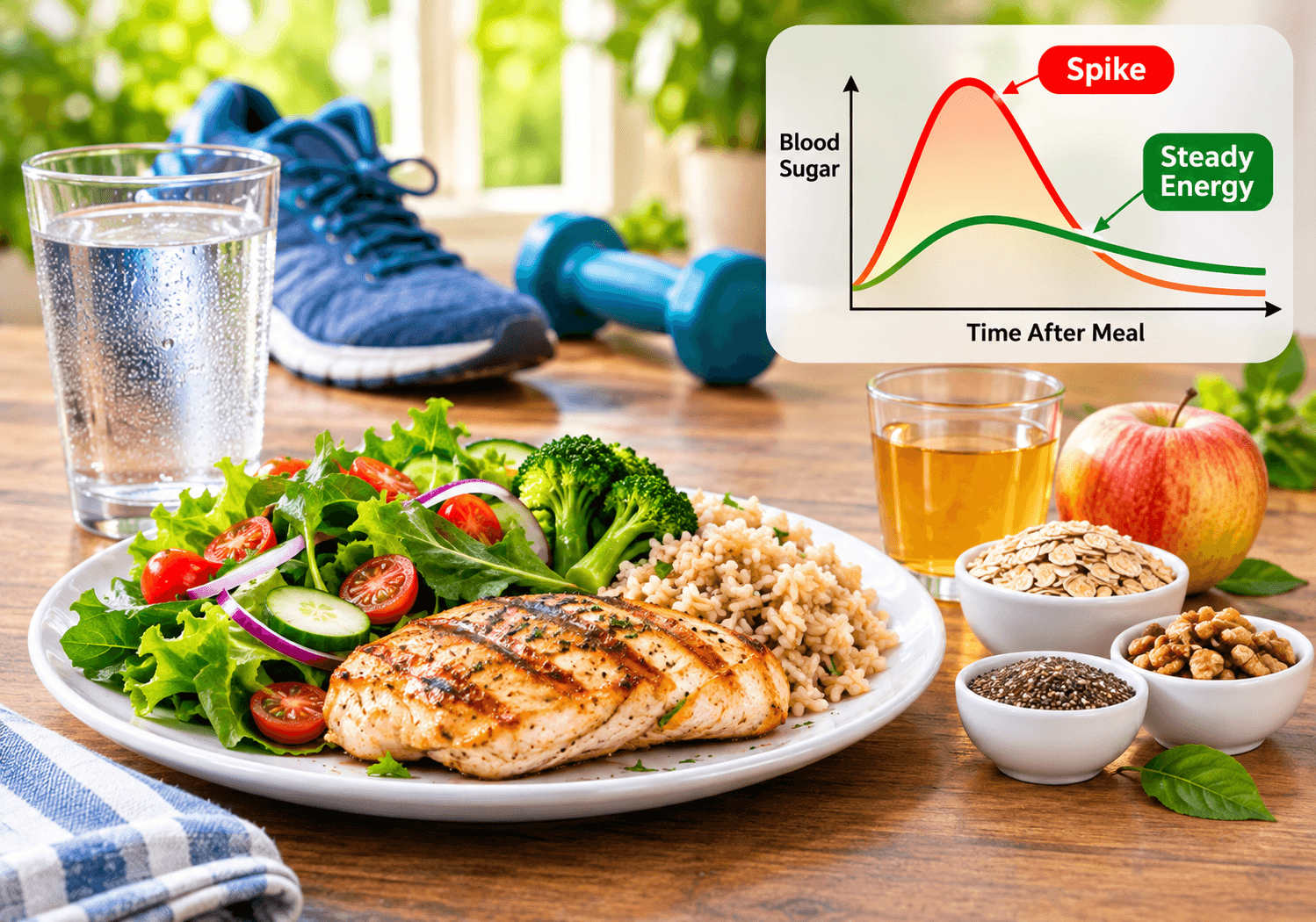
You finish a decent-sized lunch, sit back down at your desk or head toward the gym, and within ninety minutes your brain feels like it is moving through wet sand. Understanding what causes blood sugar spikes and energy crashes after meals and how to prevent them is the key to trading midday brain fog for steady, reliable stamina from morning until night.
As a strength and conditioning coach, I watch this exact cycle trip up busy professionals and active lifters every single day. When you eat a meal that hits your bloodstream too fast, your body launches an aggressive hormonal counterattack that leaves you exhausted, irritable, and hunting for snacks two hours later. By making a few smart adjustments to how you build your plate, time your movement, and support your metabolism, you can flatten that curve starting with your very next meal.
Quick Answer
What causes blood sugar spikes and energy crashes after meals and how to prevent them comes down to carbohydrate digestion speed and insulin response. Refined carbs flood the bloodstream with glucose, triggering an excess insulin surge that drops blood sugar too low—causing fatigue. Prevent this by eating fiber and protein before starches, walking 10 minutes after meals, and lifting weights regularly.
(Note: If you have diabetes, prediabetes, hypoglycemia, or take blood-sugar-lowering medications, talk with your doctor or a registered dietitian before making major changes to your diet, exercise routine, or supplement intake.)
Every time you eat food containing carbohydrates, your digestive system breaks those starches and sugars down into single glucose molecules. Glucose crosses the wall of your small intestine and enters your bloodstream, serving as the primary fuel for your brain and working muscles.
Under ideal conditions, blood glucose rises gently, and your pancreas releases a measured amount of the hormone insulin. Insulin acts like a key that unlocks muscle, liver, and fat cells so they can pull glucose out of the blood and convert it into cellular energy (ATP).
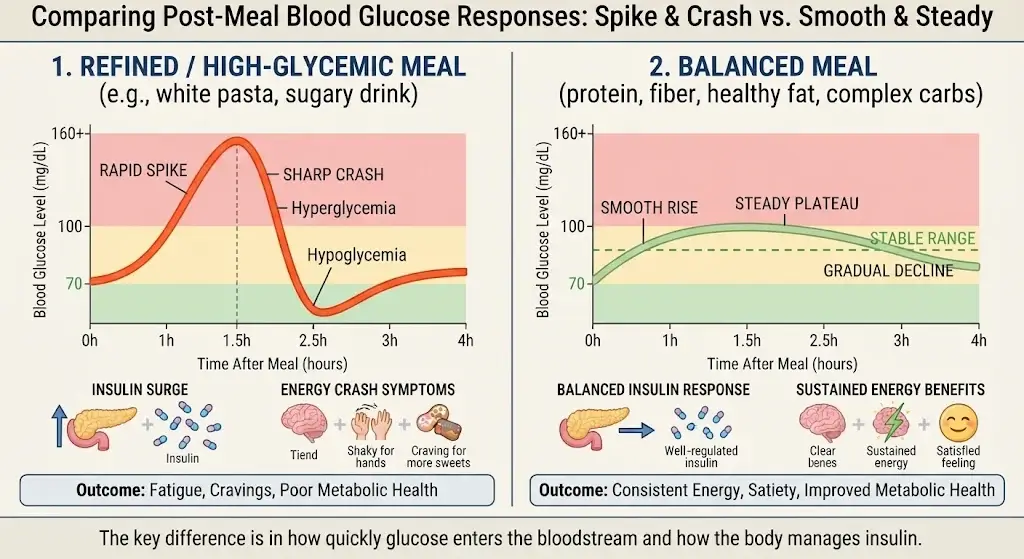
Trouble begins when a meal digests far too quickly or when your cells have become sluggish at responding to insulin. Here is the exact four-step chain reaction behind a post-meal crash:
- Rapid Glucose Flood: Eating refined starches or sugars without enough protein, fat, or fiber causes rapid gastric emptying, dumping a massive wave of glucose into your bloodstream within 15 to 30 minutes.
- Pancreatic Overcompensation: Sensing a sudden blood sugar spike, your pancreas pumps out an oversized surge of insulin to clear the excess glucose and protect your blood vessels.
- The Sharp Glucose Drop: Because insulin levels stay elevated even after the initial wave of food finishes digesting, your cells keep pulling glucose out of the blood—pushing your blood sugar below its normal baseline (a dip known as reactive hypoglycemia).
- The Stress & Fatigue Alarm: Your brain relies almost exclusively on steady blood glucose. When levels plummet 1 to 3 hours after eating, your brain triggers emergency fatigue, sluggish thinking, shakiness, and intense cravings for fast sugar to bring levels back up.
According to the CDC guide on blood sugar management, sharp upward spikes followed by steep downward drops place heavy stress on your body’s energy regulation system.
6 Hidden Triggers That Make Post-Meal Crashes Worse
Most people blame a big plate of pasta or a sugary pastry for their post-lunch slump, and refined carbs certainly play a leading role. However, several everyday habits quietly amplify the spike-and-crash cycle even when your meal looks healthy on the surface.
1. Eating “Naked” Carbohydrates
“Naked carbs” are carbohydrate-rich foods eaten all by themselves without protein, healthy fats, or fibrous vegetables. A plain bagel for breakfast, a bowl of white rice at lunch, or a handful of pretzels at 3:00 PM enters an empty stomach with zero physical speed bumps.
Without protein or viscous fiber to slow digestion, stomach enzymes convert those starches into glucose almost immediately. Pairing carbohydrates with slowing nutrients transforms how your bloodstream handles the exact same calories.
2. Poor Sleep the Night Before
Even a single night of short or fragmented sleep temporarily reduces how well your muscle cells respond to insulin the next day. Clinical research published in Diabetes via PubMed (NCBI) found that restricting sleep reduces whole-body insulin sensitivity by roughly 20% to 25%.
When your cells resist insulin due to poor sleep, your pancreas has to release significantly more insulin to clear your lunch—setting you up for a steeper afternoon crash. You can read more about how sleep affects metabolism and weight management to see how recovery drives daytime energy.
3. Sitting Immediately After You Eat
Skeletal muscle is the single largest glucose disposal site in your body, capable of absorbing roughly 80% of the glucose from a meal. When you eat lunch at your desk and stay seated for three straight hours, your leg and hip muscles remain completely dormant.
Without muscle contractions signaling cells to open their doors, glucose lingers in your bloodstream longer, forcing your pancreas to work overtime with extra insulin.
4. Chronic Stress and Elevated Cortisol
High workplace stress keeps the hormone cortisol elevated throughout the day. Cortisol’s job during a “fight-or-flight” threat is to raise blood sugar so you have quick fuel to run away—it does this by telling your liver to release stored glycogen into your bloodstream while simultaneously making muscle cells less sensitive to insulin.
Eating a carb-heavy lunch while stressed stacks dietary glucose on top of cortisol-driven glucose, creating a double spike.
5. Early-Morning Caffeine Timing
Drinking strong coffee within 15 minutes of waking blocks adenosine receptors in your brain while your natural morning cortisol wave is already peaking. Once that morning caffeine wears off around 1:30 PM or 2:30 PM, accumulated adenosine floods your brain receptors right at the exact moment your post-lunch blood sugar dips—doubling the sensation of heaviness.
Check out our breakdown on why caffeine pills cause energy crashes and how to prevent it if you rely on heavy stimulants to push through your workday.
6. Dehydration
Water makes up the majority of your blood volume. When you are even mildly dehydrated—losing just 1% to 2% of your body weight in fluids—the glucose in your bloodstream becomes more concentrated, and blood flow to working tissues slows down. Staying hydrated helps your kidneys clear excess metabolic byproducts and keeps circulation brisk.
High-Crash vs. Steady-Energy Meals: Side-by-Side Comparison
Small ingredient swaps change digestion speed dramatically without forcing you to count every gram or give up foods you enjoy. Compare how typical meals stack up against steady-energy alternatives:
| Meal Time | High-Spike / High-Crash Meal | Steady-Energy Alternative | Why the Alternative Works |
| Breakfast | Sweetened cereal with skim milk + orange juice | 3 scrambled eggs, 1 cup spinach, 1 slice sprouted toast + 1/2 avocado | 25g+ protein and healthy fats slow gastric emptying; removes liquid sugar |
| Lunch | Large white-flour chicken wrap + sweetened iced tea | Grilled chicken bowl with quinoa, black beans, mixed greens + olive oil | Soluble fiber in beans and greens creates a gel that slows carb absorption |
| Afternoon Snack | Granola bar or banana by itself | Greek yogurt (plain) with berries + 1 oz (28 g) almonds | Casein/whey protein plus monounsaturated fats blunt the fruit sugar curve |
| Dinner | White pasta with marinara sauce + garlic bread | Salmon, roasted broccoli, and a modest portion of sweet potato eaten last | Omega-3 fats, fiber, and meal sequencing keep overnight glucose flat |
How to Prevent Blood Sugar Spikes and Energy Crashes After Meals: 7 Proven Strategies
Stopping the post-meal rollercoaster does not require extreme low-carb dieting or complicated tracking apps. Apply these seven practical strategies consistently, starting with the easiest habits first.
1. Follow the “Meal Sequencing” Rule (Veggies & Protein First)
The exact order in which you eat the food already on your plate changes your post-meal blood sugar response dramatically. A clinical study by researchers at Weill Cornell Medicine (PubMed) showed that eating vegetables and protein before carbohydrates lowered post-meal blood glucose spikes by nearly 30% to 40% compared to eating carbohydrates first.
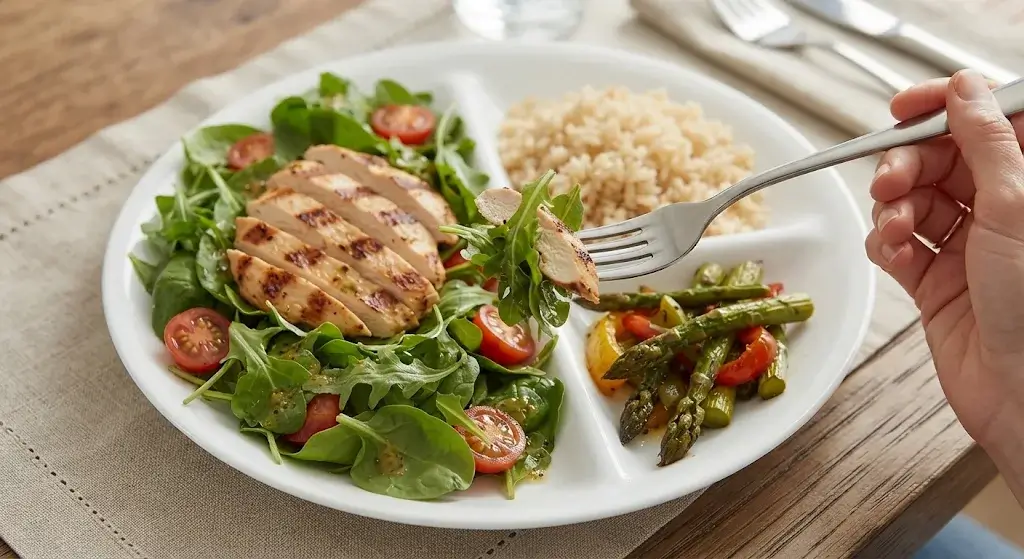
Use this simple three-step eating order at lunch and dinner:
- Eat fibrous vegetables first: Start with your side salad, broccoli, green beans, or asparagus.
- Eat protein and healthy fats second: Move on to your chicken, fish, eggs, tofu, beef, or avocado.
- Eat starches and sweets last: Finish with your rice, potatoes, bread, pasta, or fruit.
Fiber and protein coat the upper small intestine and slow the rate at which your stomach empties food into your digestive tract—acting as a natural brake on glucose absorption.
2. Take a 10-Minute Post-Meal Walk
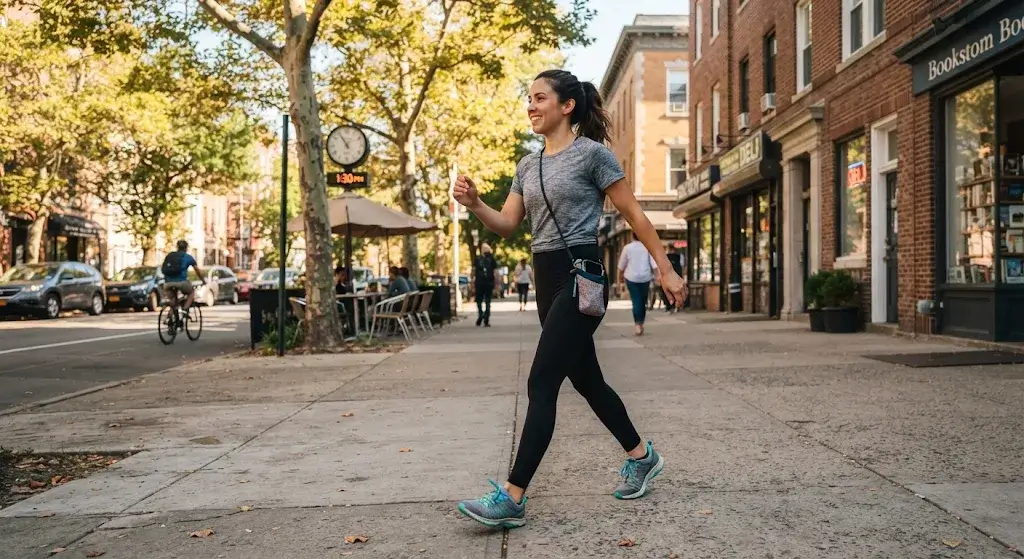
You do not need an intense gym session to clear glucose from your bloodstream after lunch. Walking at a brisk pace for just 10 to 15 minutes—covering roughly 0.5 to 0.75 miles (0.8 to 1.2 km)—immediately after eating activates your calves, quads, hamstrings, and glutes.
Contracting skeletal muscles activate specialized transport proteins called GLUT4 receptors, which rise to the surface of muscle cells and pull glucose straight out of your blood without requiring insulin. Research indexed in Sports Medicine via PubMed (NCBI) confirms that even short bouts of light-to-moderate walking right after meals significantly attenuate postprandial glucose excursions.
Coach’s Tip: Set a recurring 10-minute timer on your phone right after you take your last bite of lunch. Walk outside around the block, pace the hallways of your office building, or climb a few flights of stairs—the movement counts most within the first 30 minutes after eating.
3. Build Every Meal Around 30 to 40 Grams of Protein
Protein stimulates the release of gut satiety hormones like GLP-1 and peptide YY while slowing down how fast carbohydrates leave your stomach. Aiming for 30 to 40 grams of high-quality protein at breakfast, lunch, and dinner keeps blood sugar steady and eliminates 3:00 PM hunger pangs.
Good single-meal protein anchors include:
- 5 to 6 oz (140 to 170 g) of grilled chicken breast, turkey, or lean steak
- 6 oz (170 g) of salmon, cod, or canned tuna
- 1.5 cups of plain 2% Greek yogurt or cottage cheese
- 3 whole eggs plus 1/2 cup of liquid egg whites
- 1.5 scoops of whey or plant-based protein powder blended with chia seeds
Learn more about how protein intake affects hunger and fullness hormones if you want help dialing in your daily macro targets.

4. Prioritize Soluble Viscous Fiber
Not all fiber affects blood sugar the same way. Insoluble fiber (like wheat bran) adds bulk to stool, whereas soluble viscous fiber dissolves in water to form a thick, gel-like substance in your stomach and small intestine.
This gel physically traps carbohydrates and slows down digestive enzymes so glucose enters your bloodstream in a slow, steady trickle over three to four hours. High-viscosity food sources include oats, barley, black beans, lentils, chia seeds, flaxseeds, Brussels sprouts, and avocados.
According to the Harvard T.H. Chan School of Public Health Nutrition Source, diets rich in soluble fiber consistently support flatter post-meal blood glucose curves and healthier long-term insulin sensitivity. For practical ways to add more fiber to your routine, check out how soluble fiber helps you feel full longer.
5. Lift Weights 3 Times a Week to Expand Your “Glucose Sink”
Think of your skeletal muscles as rechargeable fuel tanks for carbohydrates. When you lift weights, you burn stored muscle glycogen and trigger cellular adaptations that increase muscle mass and GLUT4 receptor density for up to 48 hours after your workout.
The more lean muscle tissue you carry—and the more regularly you empty those glycogen tanks—the more room your body has to store carbohydrates from lunch safely inside muscle cells instead of letting them spike your blood sugar.
Use this simple 35-minute full-body strength routine three days per week (for example, Monday, Wednesday, and Friday) to maximize insulin sensitivity:
| Exercise | Sets | Reps | Rest | Tempo | Target Muscles |
| Dumbbell Goblet Squat | 3 | 10–12 | 75 sec | 3-1-1-0 | Quads, glutes, core |
| Dumbbell Romanian Deadlift | 3 | 10–12 | 75 sec | 3-1-1-0 | Hamstrings, glutes, lower back |
| Push-Up (or Incline Push-Up) | 3 | 8–15 | 60 sec | 2-1-1-0 | Chest, shoulders, triceps |
| One-Arm Dumbbell Row | 3 | 10–12 / side | 60 sec | 2-1-1-0 | Lats, rhomboids, biceps |
| Farmer’s Carry | 3 | 40 yards (36 m) | 60 sec | Brisk walk | Grip, traps, core, full body |
Weight Guidance: Choose a dumbbell load—such as a 20 lb (9 kg) to 40 lb (18 kg) dumbbell for goblet squats—where the last 2 repetitions feel challenging while maintaining crisp posture.- Easier Version (Regression): Perform bodyweight box squats to an 18-inch (46 cm) chair, elevate your hands on a 24-inch (61 cm) bench for push-ups, and use lighter 10 lb (4.5 kg) dumbbells for carries.
- Harder Version (Progression): Slow the lowering phase to 4 full seconds, add a fourth working set to squats and deadlifts, or increase dumbbell loads by 5 lb (2.3 kg) once you hit the top of the rep range cleanly.

6. Use the Diluted Vinegar Trick Before Carb-Heavy Meals
Acetic acid—the active compound in apple cider vinegar and white wine vinegar—temporarily slows down alpha-amylase, the digestive enzyme responsible for breaking starches down into simple sugars, while also encouraging muscle cells to take up glucose faster.
Clinical trials published in Diabetes Care / PubMed (NCBI) found that consuming roughly 1 to 2 tablespoons (15 to 30 ml) of vinegar diluted in water before a high-carbohydrate meal improved post-meal insulin sensitivity and blunted blood sugar spikes.
- How to do it safely: Mix 1 tablespoon (15 ml) of raw apple cider vinegar into a full 10 to 12 oz (300 to 350 ml) glass of water and drink it through a straw 10 minutes before lunch. Never drink undiluted vinegar, as the strong acid can erode tooth enamel and irritate your esophagus.
7. Consider Targeted, Evidence-Based Supplements
Once your meal order, protein intake, and post-meal movement are dialed in, a few well-researched supplements can offer extra support for stubborn post-meal energy dips:
- Psyllium Husk (5 g before lunch): A pure soluble viscous fiber that forms a thick gel in water, slowing carbohydrate absorption when taken 10 to 15 minutes before eating with at least 10 oz (300 ml) of fluid. See our guide on whether psyllium husk helps you feel full before meals.
- Berberine (500 mg before carb meals): A plant alkaloid shown in clinical research on PubMed Central (NCBI) to activate AMPK and support healthy cellular glucose uptake. Learn more about how berberine supports metabolic health.
- Magnesium Glycinate or Malate (200–400 mg daily): An essential mineral cofactor required for insulin receptor function and cellular ATP energy production, detailed in the NIH Office of Dietary Supplements Magnesium Fact Sheet.
- Chromium Picolinate (200–400 mcg with breakfast or lunch): Supports insulin signaling and may help tame late-afternoon sugar cravings; explore whether chromium picolinate helps reduce sugar cravings.
Common Mistake: Trying to fix a high-sugar lunch by taking multiple blood-sugar supplements on an empty stomach or skipping meals altogether. Taking compounds like berberine without food—or starving yourself until 2:00 PM—can drive blood sugar even lower and leave you dizzy, shaky, and exhausted.
Sample 1-Day Anti-Crash Meal & Movement Schedule
Putting all of these habits together works best when they fit seamlessly into a normal workday. Use this sample schedule as a practical blueprint:
- 7:00 AM — Wake Up & Hydrate: Drink 16 oz (475 ml) of plain water with a pinch of sea salt or electrolytes before reaching for coffee.
- 8:00 AM — First Coffee & Balanced Breakfast: Have your morning coffee alongside 3 eggs scrambled with vegetables, 1/2 avocado, and 1 slice of whole-grain sourdough toast (eaten last).
- 12:15 PM — Pre-Lunch Buffer (Optional): Drink 1 tablespoon (15 ml) of apple cider vinegar diluted in 10 oz (300 ml) of water, or 5 g of psyllium husk mixed in water.
- 12:30 PM — Protein-First Lunch: Start with a big handful of mixed greens and cucumber dressed in olive oil, follow with 6 oz (170 g) of grilled salmon or chicken, and finish with 1/2 cup of brown rice or roasted sweet potatoes.
- 12:50 PM — 10-Minute Post-Meal Walk: Walk briskly for 10 minutes—about 0.5 miles (0.8 km)—outdoors or around your workspace.
- 3:30 PM — Steady-Energy Afternoon Snack: Eat 3/4 cup of plain Greek yogurt topped with cinnamon and a small handful of walnuts instead of vending-machine snacks.
- 5:30 PM — 35-Minute Strength Workout: Complete 3 sets of full-body compound exercises to empty muscle glycogen and boost insulin sensitivity for the next 24 to 48 hours.
Safety Notes and When to See a Doctor
Occasional mild drowsiness after a large holiday meal is completely normal. However, frequent, severe crashes—especially if they happen even after balanced, moderate-sized meals—warrant a checkup with a healthcare professional.
Schedule a visit with your doctor if you experience any of these warning signs:
- Shaking, cold sweats, heart palpitations, or dizziness 1 to 3 hours after eating
- Extreme thirst, frequent urination, or unexplained blurry vision
- Sudden weakness or confusion that only improves when you eat sugar
- Unintentional weight loss despite eating normal portions
Your doctor can run simple blood panels—such as a fasting glucose test, hemoglobin A1C, and fasting insulin—to check for insulin resistance, prediabetes, or reactive hypoglycemia and guide safe, personalized care. For additional nutrition strategies, you can also explore how to boost metabolic flexibility without crash dieting and how to improve daily energy without caffeine.
Frequently Asked Questions (FAQ)
Why do I get so tired right after eating lunch?
Post-lunch tiredness usually happens when refined carbohydrates digest quickly and cause a sharp blood sugar spike. Your pancreas releases a large surge of insulin in response, which drops your blood glucose below baseline 60 to 120 minutes later—triggering brain fog, heavy eyelids, and sudden fatigue.
How long after eating does blood sugar spike?
For most healthy adults, blood sugar begins rising 10 to 15 minutes after the first bite of a meal and reaches its peak roughly 45 to 60 minutes after eating. High-sugar liquids spike faster, while meals rich in protein, healthy fats, and soluble fiber produce a gentler rise that peaks closer to 60 to 90 minutes.
Does walking after meals really stop blood sugar crashes?
Yes. Walking briskly for just 10 to 15 minutes within 30 minutes of finishing a meal activates leg and hip muscles, which pull glucose directly from your bloodstream via GLUT4 receptors without needing extra insulin. This flattens the initial blood sugar spike and prevents the steep rebound crash later.
What foods cause the biggest post-meal energy crash?
Foods high in refined flour and added sugars eaten without protein or fiber cause the sharpest spikes and crashes. Common culprits include white bread, sugary breakfast cereals, pastries, white rice eaten alone, fruit juices, sodas, and candy, because they digest rapidly and trigger oversized insulin releases.
Why do I crave sugar two hours after eating a full meal?
Craving sugar two hours after eating is a classic sign of a reactive blood sugar dip. When excess insulin clears glucose from your bloodstream too aggressively, your blood sugar drops below normal, prompting your brain to send urgent hunger and sugar-craving signals to restore fuel levels quickly.
Can strength training improve post-meal blood sugar?
Yes. Lifting weights 2 to 3 times per week depletes stored muscle glycogen and increases insulin sensitivity for up to 48 hours after each workout. Building lean muscle mass expands your body’s primary glucose storage capacity, helping clear carbohydrates from meals smoothly without dramatic energy swings.
Conclusion
Figuring out what causes blood sugar spikes and energy crashes after meals and how to prevent them puts you back in complete control of your afternoon focus, mood, and workout performance. That 3:00 PM wall is not an inevitable part of getting older or working a busy job—it is simply a predictable metabolic response to fast-digesting carbs, prolonged sitting, and oversized insulin surges.
Start with two high-impact changes tomorrow: eat your vegetables and protein before your starches at lunch, and follow your meal with a brisk 10-minute walk. Pair those daily habits with consistent strength training, smart hydration, and quality sleep, and you will replace post-meal exhaustion with smooth, dependable energy all day long.