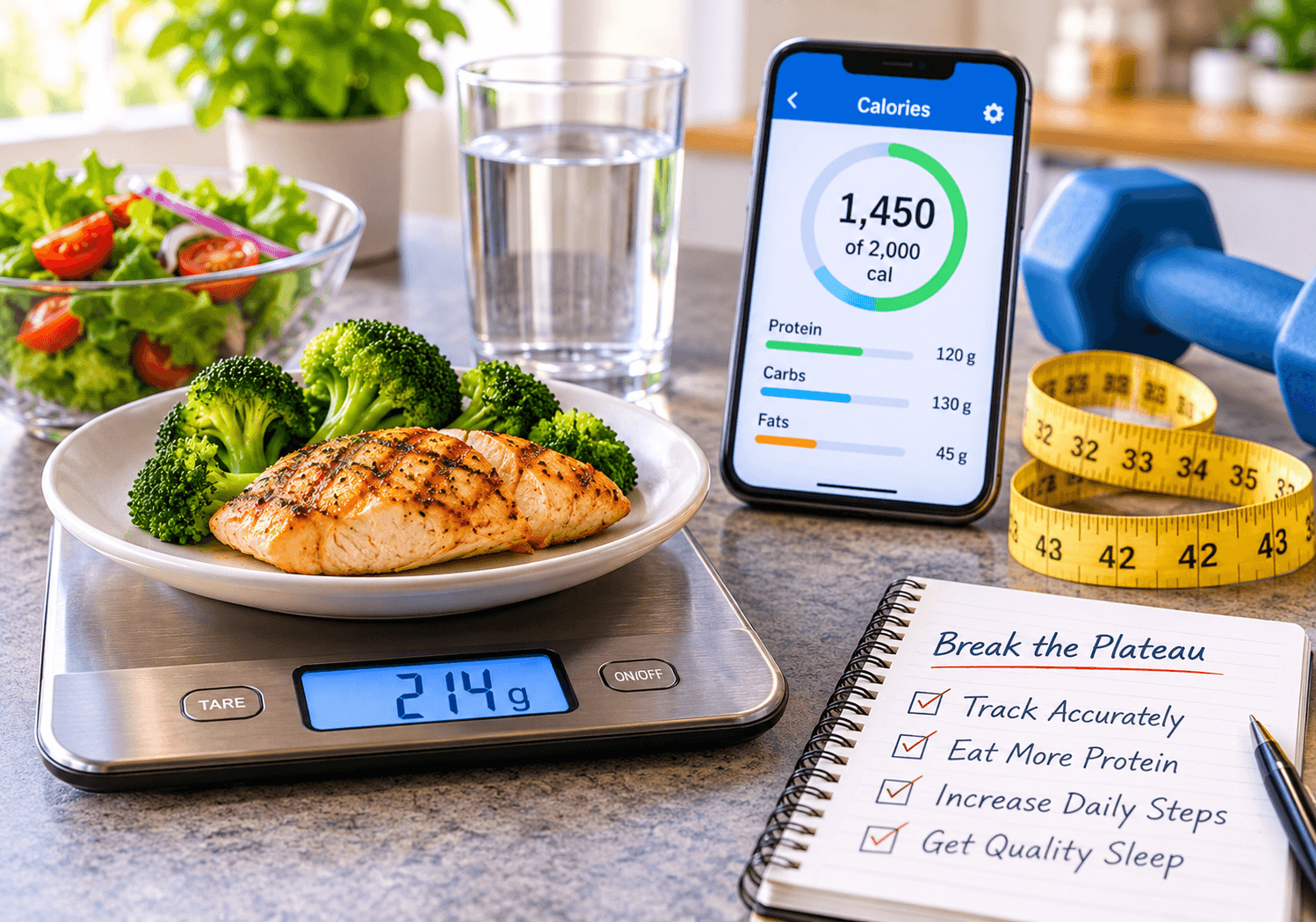
If you are tracking your food, exercising regularly, and still find yourself in a calorie deficit not losing weight, you are not alone. This frustrating scenario is one of the most common issues I see as a strength and conditioning coach. You are doing the work, but the scale refuses to budge. The truth is, human physiology is complex, and weight loss is rarely a perfectly linear process. Understanding the science behind energy balance, tracking accuracy, and metabolic adaptation is the first step to breaking through your plateau.
This guide will walk you through the evidence-based reasons why you might be experiencing a calorie deficit not losing weight, and provide actionable, practical steps to get your progress back on track.
Quick Answer
If you are in a calorie deficit not losing weight, the most common culprits are hidden calories, metabolic adaptation, water retention, or inaccurate tracking. To fix this, audit your portion sizes with a digital food scale, increase daily non-exercise activity (NEAT), prioritize protein intake, and ensure you are getting 7–9 hours of quality sleep per night.
The Science of Energy Balance and Plateaus
To understand why you might be in a calorie deficit not losing weight, we must first define what a calorie deficit actually is. A calorie deficit occurs when your total daily energy expenditure (TDEE) exceeds the calories you consume. TDEE is made up of four components:
- Basal Metabolic Rate (BMR): The calories your body burns at rest to maintain vital functions (about 60-70% of TDEE).
- Thermic Effect of Food (TEF): The energy required to digest and absorb nutrients (about 10% of TDEE).
- Exercise Activity Thermogenesis (EAT): Calories burned during structured workouts (about 5% of TDEE).
- Non-Exercise Activity Thermogenesis (NEAT): Calories burned through daily movement like walking, fidgeting, and chores (about 15-30% of TDEE).
According to the American College of Sports Medicine (ACSM), weight loss occurs when there is a sustained negative energy balance. However, the body is highly adaptive. When you restrict calories for an extended period, your body may lower your BMR and reduce spontaneous movement (NEAT) to conserve energy. This phenomenon, known as metabolic adaptation, means your actual TDEE may be lower than the online calculator estimated, making your perceived deficit smaller than you think.
Furthermore, research published in the Journal of the International Society of Sports Nutrition highlights that metabolic adaptation can reduce daily energy expenditure by 100 to 300 calories, which is enough to stall weight loss if not accounted for.
Common Reasons for a Calorie Deficit Not Losing Weight
Before overhauling your routine, it is critical to identify the specific bottleneck. Below is a table outlining the most frequent reasons individuals find themselves in a calorie deficit not losing weight.
| Reason | Description | Impact on Weight Loss |
| Tracking Errors | Underestimating portion sizes, forgetting cooking oils, sauces, or “bites, licks, and tastes.” | Can add 300–500+ hidden calories daily, erasing the deficit. |
| Metabolic Adaptation | The body becomes more efficient, lowering BMR and NEAT in response to prolonged dieting. | Reduces TDEE, meaning your previous deficit is now maintenance. |
| Water Retention | High sodium intake, carbohydrate replenishment, muscle repair from new exercise, or menstrual cycles. | Masks fat loss on the scale, causing weight to stay the same or increase temporarily. |
| Inadequate Protein/Fiber | Low satiety leading to subconscious overeating or snacking outside tracked meals. | Increases hunger hormones (ghrelin), making adherence to a deficit difficult. |
| Poor Sleep & High Stress | Elevated cortisol and disrupted hunger hormones (leptin and ghrelin). | Increases cravings, reduces NEAT, and promotes water retention. |
| Medical Factors | Hypothyroidism, PCOS, or certain medications (e.g., beta-blockers, antidepressants). | Can significantly lower BMR or alter fluid balance. Requires medical evaluation. |
Detailed Explanation: Why the Scale Isn’t Moving
1. The Illusion of the Deficit: Hidden Calories
The most common reason for a calorie deficit not losing weight is simply that the deficit does not actually exist. Studies show that both laypeople and professionals frequently underestimate portion sizes by 20% to 50%. A tablespoon of olive oil contains roughly 120 calories. If you pour freely without measuring, you can easily add 240–360 calories to a meal. Similarly, “health foods” like nuts, avocados, and protein bars are calorie-dense. If you are not weighing your food, your tracking app is likely giving you false confidence.
2. Metabolic Adaptation and the “Starvation Mode” Myth
“Starvation mode” is a heavily misunderstood term. Your metabolism does not “break” or stop working. Instead, it adapts. As you lose weight, you have less body mass to carry, which inherently lowers your BMR. Additionally, the body downregulates non-essential energy expenditure. You might subconsciously sit more, fidget less, and take the elevator instead of the stairs. This drop in NEAT can be substantial. If your TDEE was 2,200 calories at the start of your diet, it might be 1,900 calories after a 15 lb (6.8 kg) weight loss, even if your activity level appears unchanged.
3. Water Retention Masking Fat Loss
Fat loss and weight loss are not the same thing. You can lose body fat while the scale remains stationary due to water retention. When you begin a new strength training program, muscle fibers experience micro-tears. The body repairs this damage through inflammation, which draws water into the muscle tissue. This can cause a temporary weight gain of 2 to 5 lb (0.9 to 2.3 kg). Additionally, high sodium intake, carbohydrate cycling, and the luteal phase of the menstrual cycle can cause the body to hold onto an extra 1 to 3 liters of water.
4. The Sleep and Stress Connection
Chronic stress and poor sleep are silent saboteurs of weight loss. Sleep deprivation alters the hormones that regulate hunger. Research from the National Institutes of Health (NIH) demonstrates that inadequate sleep increases ghrelin (the hunger hormone) and decreases leptin (the satiety hormone). Furthermore, elevated cortisol from chronic stress can promote visceral fat storage and increase water retention. If you are sleeping 5 hours a night and managing high stress, your body is fighting against your calorie deficit.

How to Apply It: Practical Steps to Break the Plateau
If you are in a calorie deficit not losing weight, it is time to implement a systematic, evidence-based troubleshooting plan. Follow these four steps over the next 14 to 21 days.
Step 1: Conduct a 7-Day Tracking Audit
For one full week, track everything with absolute precision.
- Use a digital food scale: Measure all solid foods in grams or ounces. Do not rely on volume measurements like “one cup” or “one handful,” as these are highly inaccurate.
- Log every ingredient: Include cooking sprays, oils, dressings, and the splash of milk in your coffee.
- Account for bites, licks, and tastes: The few almonds you grab while cooking or the leftover food you finish from your child’s plate must be logged.
- Recalculate your TDEE: Use your current body weight, not your starting weight, to recalculate your maintenance calories. Subtract 300 to 500 calories to establish a new, accurate deficit.
Step 2: Optimize Protein and Fiber Intake
Macronutrient quality matters for adherence and metabolic health. Protein has the highest thermic effect of food (TEF), meaning your body burns more calories digesting it compared to fats or carbs. It also preserves lean muscle mass during weight loss.
- Target: Aim for 0.8 to 1 gram of protein per pound of body weight (1.8 to 2.2 g per kg). For a 150 lb (68 kg) individual, this is 120 to 150 grams of protein daily. Learn more about how protein intake and metabolism interact to support your goals.
- Fiber: Consume 25 to 35 grams of fiber daily from vegetables, fruits, legumes, and whole grains. Research confirms that dietary fiber for appetite regulation is highly effective in promoting satiety and preventing subconscious overeating.

Step 3: Increase NEAT and Prioritize Strength Training
Do not just add more cardio. Excessive cardio can increase hunger and fatigue, further suppressing NEAT. Instead, focus on daily movement and resistance training.
- NEAT Goal: Aim for 8,000 to 10,000 steps per day. This can be achieved by taking a 15-minute walk (about 0.75 miles or 1.2 km) after each meal.
- Strength Training: Lift weights 3 to 4 days per week. Building or maintaining muscle mass is critical because muscle tissue is metabolically active and helps mitigate metabolic adaptation. If you want to learn how to increase metabolism naturally after 40, resistance training is the foundational pillar.
Regression (Easier Version): If you are new to exercise or managing joint pain, start with 2 days per week of full-body machine-based strength training and aim for 5,000 steps daily. Focus on controlled movements, such as a seated leg press or chest press, performing 2 sets of 10–12 repetitions at a moderate weight where the last 2 reps feel challenging but maintainable with good form.
Progression (Harder Version): If you are already active, add 1 to 2 days of high-intensity interval training (HIIT) or increase your daily step goal to 12,000. For strength, utilize progressive overload by increasing the weight by 5 lb (2.3 kg) or adding 1–2 reps per set each week, ensuring you train close to muscular failure (1–2 reps in reserve).
Step 4: Manage Stress and Sleep Hygiene
You cannot out-diet poor recovery. Prioritize 7 to 9 hours of sleep per night. Understand how sleep affects metabolism and hormone regulation.
- Establish a consistent sleep schedule, going to bed and waking up at the same time daily.
- Keep your bedroom cool (around 65°F or 18°C) and dark.
- Implement a 10-minute stress-reduction routine before bed, such as deep breathing, light stretching, or reading a physical book.

Coach’s Tip: The “Two-Week Rule”
Coach’s Tip: Do not panic and drop your calories further if the scale does not move for 3 to 4 days. Weight fluctuates daily due to hydration, sodium, and digestion. Look at the average weekly weight. If your 7-day average weight has not decreased over a continuous 14-day period, then it is time to adjust your calories downward by 100 to 150 calories or increase your daily steps by 1,000. Patience and data beat emotional reactions.
Common Mistake: Overestimating Exercise Calories
Common Mistake: Many people eat back the calories their fitness tracker says they burned during a workout. Wearable devices can overestimate calorie expenditure by 20% to 90%. If your watch says you burned 600 calories cycling, do not add a 600-calorie meal to your daily allowance. Treat exercise calories as a bonus, not a license to eat more. Stick to your baseline TDEE target for consistency.
Safety Notes and Medical Considerations
While troubleshooting a plateau is generally safe, certain medical conditions can mimic or cause a calorie deficit not losing weight. Hypothyroidism, polycystic ovary syndrome (PCOS), and insulin resistance can significantly alter metabolic rate and fluid balance. Certain medications, including beta-blockers, corticosteroids, and some antidepressants, can also promote weight retention.
If you have diligently audited your tracking, optimized your sleep, and maintained a consistent routine for 4 to 6 weeks with zero change in body measurements or scale weight, it is highly recommended to consult a physician. Blood work can rule out underlying hormonal or metabolic issues.
Disclaimer: This article is for general information and is not a substitute for advice from a doctor or physical therapist. Always consult with a healthcare professional before making significant changes to your diet, exercise routine, or if you suspect an underlying medical condition.
Related Tips for Long-Term Success
- Focus on Body Composition, Not Just Weight: Take progress photos every 2 weeks in the same lighting and clothing. Measure your waist, hips, and thighs with a flexible tape measure. You may be losing inches and gaining muscle even if the scale is stagnant.
- Diet Breaks: If you have been in a deficit for 3 to 4 months, consider a 1- to 2-week “diet break.” Eat at your newly calculated maintenance calories. This can help restore leptin levels, reduce psychological fatigue, and improve workout performance. Learn more about how to boost metabolic flexibility during these phases.
- Micronutrient Support: Ensure you are not deficient in key nutrients. For example, understanding what affects metabolism and body weight includes recognizing the role of micronutrients. If you are deficient, certain vitamins that support metabolism may be recommended by your healthcare provider to support normal energy production.
- Craving Management: A prolonged deficit can increase hunger. If you struggle with adherence, explore evidence-based strategies to manage cravings during a calorie deficit without resorting to extreme restriction.

FAQ: Calorie Deficit Not Losing Weight
1. Why am I in a calorie deficit but not losing weight after two weeks?
A two-week period is often too short to declare a true plateau. Daily weight fluctuations from water retention, sodium, digestion, and hormonal cycles can mask fat loss. Evaluate your 7-day average weight over a full 3 to 4 week period before making dietary changes.
2. Can stress prevent weight loss in a calorie deficit?
Yes. Chronic stress elevates cortisol, which can increase water retention and promote fat storage, particularly around the midsection. High stress also disrupts sleep and increases cravings, making it harder to maintain an accurate deficit.
3. How long does a weight loss plateau typically last?
A true physiological plateau, often driven by metabolic adaptation, can last anywhere from 2 to 6 weeks. Breaking it usually requires a slight adjustment to calories, an increase in NEAT, or a short diet break at maintenance calories.
4. Can muscle gain hide fat loss on the scale?
Yes, especially for beginners or those returning to training. Muscle tissue is denser than fat. If you are strength training and eating adequate protein, you may be losing fat and gaining muscle simultaneously (body recomposition), resulting in a stable scale weight but smaller clothing sizes.
5. Does poor sleep affect calorie deficit results?
Absolutely. Sleep deprivation disrupts the balance of ghrelin and leptin, increasing hunger and reducing satiety. It also lowers your energy levels, which subconsciously reduces your daily non-exercise activity thermogenesis (NEAT), shrinking your actual calorie deficit.
6. Are hidden calories ruining my calorie deficit?
Frequently, yes. Unmeasured cooking oils, salad dressings, beverages, and unlogged snacks can easily add 300 to 500 calories to your daily intake. Using a digital food scale and logging every single item is the most reliable way to ensure your deficit is real.
Conclusion
Finding yourself in a calorie deficit not losing weight is a frustrating but solvable problem. It is rarely a sign that your metabolism is “broken.” Instead, it is usually a signal that your tracking needs refinement, your activity levels have unconsciously dropped, or your body is holding onto water due to stress or training adaptations.
By conducting a strict 7-day tracking audit with a food scale, prioritizing protein and fiber, increasing your daily steps, and protecting your sleep, you can provide your body with the right environment to resume fat loss. Remember to look beyond the scale by taking measurements and progress photos. Stay consistent, trust the evidence-based process, and make small, data-driven adjustments rather than drastic, unsustainable cuts.