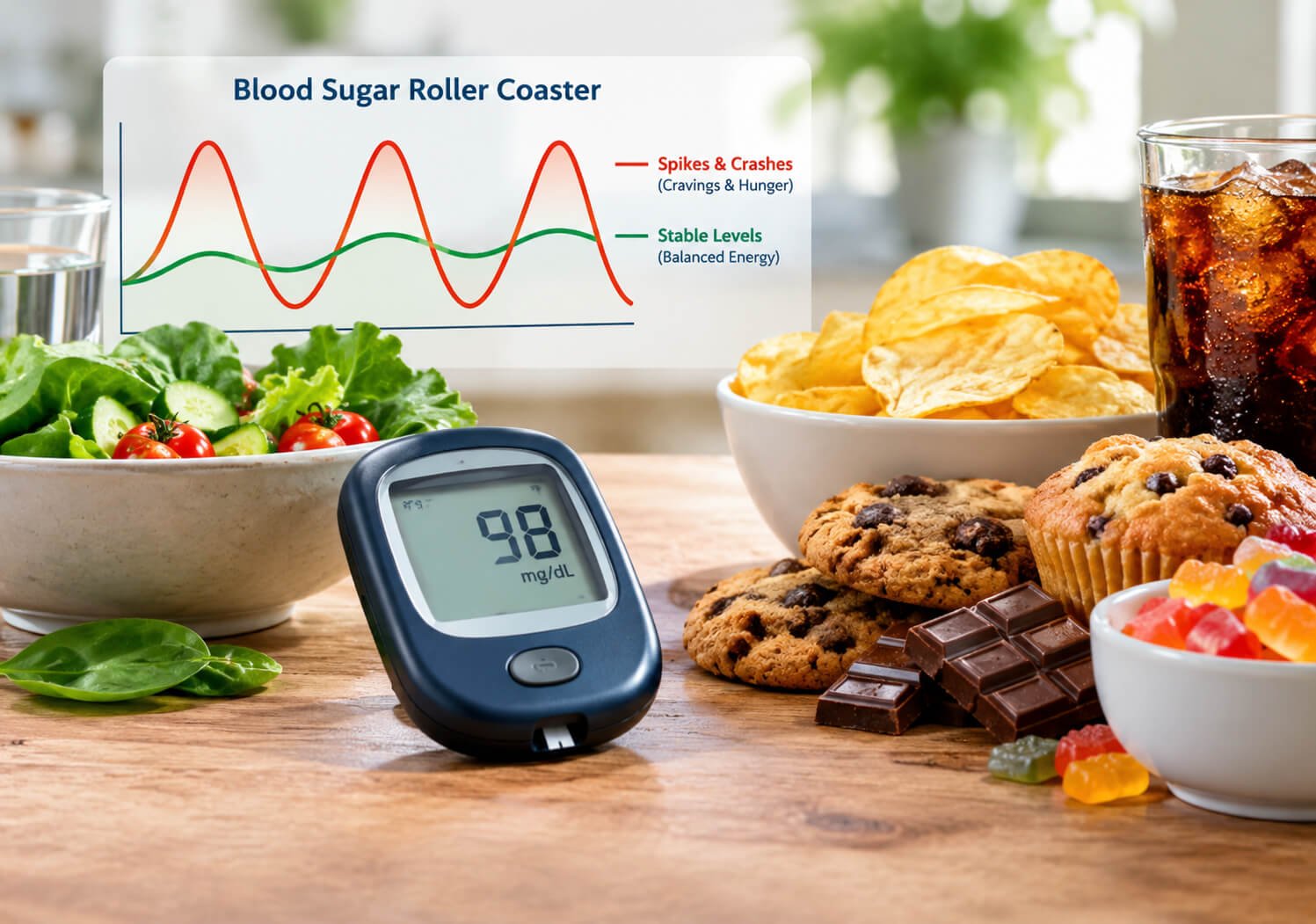
Yes, sharp blood sugar swings cause intense sugar cravings and constant hunger. When glucose spikes rapidly after high-glycemic meals, your pancreas releases surplus insulin. This rapid shift drops circulating blood sugar below baseline, triggering reactive hypoglycemia. Sensing an energy deficit, your brain signals intense hunger and carb cravings to restore quick glucose levels.
Have you ever finished a large meal, only to find yourself searching the pantry for sweet snacks an hour later? Or perhaps you experience afternoon energy slumps accompanied by an urgent, almost primal need for sugar. If this sounds familiar, you are not dealing with a lack of willpower. You are likely experiencing the physiological side effects of rapidly shifting glucose levels.
Understanding how blood sugar swings cause sugar cravings and constant hunger is the first step toward regaining control over your appetite, energy, and overall body composition. As a strength coach, I frequently see clients struggle with adherence to their fitness programs not because they lack discipline, but because their internal blood sugar dynamics are constantly fighting against them.
In this comprehensive guide, we will unpack the physiological mechanics of glucose fluctuations, examine how dietary choices and physical activity directly influence your appetite hormones, and provide practical, evidence-based strategies to stabilize your blood sugar for good.
The Physiology of Blood Sugar: How Swings Trigger Hunger
To understand why blood sugar swings cause sugar cravings and constant hunger, we must first look at how the human body processes nutrients for energy.
When you digest foods containing carbohydrates, your body breaks them down into simple sugars, primarily glucose. This glucose enters your bloodstream, causing blood sugar levels to rise. In response, your pancreas secretes the hormone insulin. Insulin acts as a cellular key, unlocking cells in your liver, fat tissue, and skeletal muscle so they can absorb glucose and use it for immediate energy or store it for later use.
[High-GI Meal] ➔ [Rapid Glucose Spike] ➔ [Large Insulin Surge] ➔ [Glucose Crash] ➔ [Brain Signals Cravings]
Under ideal circumstances, this system functions as a smooth, gentle wave. However, when meals consist heavily of fast-digesting, high-glycemic carbohydrates lacking adequate protein, fat, or fiber, blood sugar rapidly surges.
The Glucose Roller Coaster and Reactive Hypoglycemia
When blood glucose spikes too fast, the pancreas often overreacts by pumping out a large wave of insulin. This aggressive insulin response drives glucose out of the bloodstream and into storage facilities at an excessively fast rate.
The resulting drop in circulating blood sugar is known as postprandial reactive hypoglycemia or a “glucose crash.” Research published through the National Institutes of Health (NIH) indicates that rapid drops in circulating blood glucose alter neural activity in brain regions controlling appetite and reward processing, specifically the hypothalamus and limbic system.
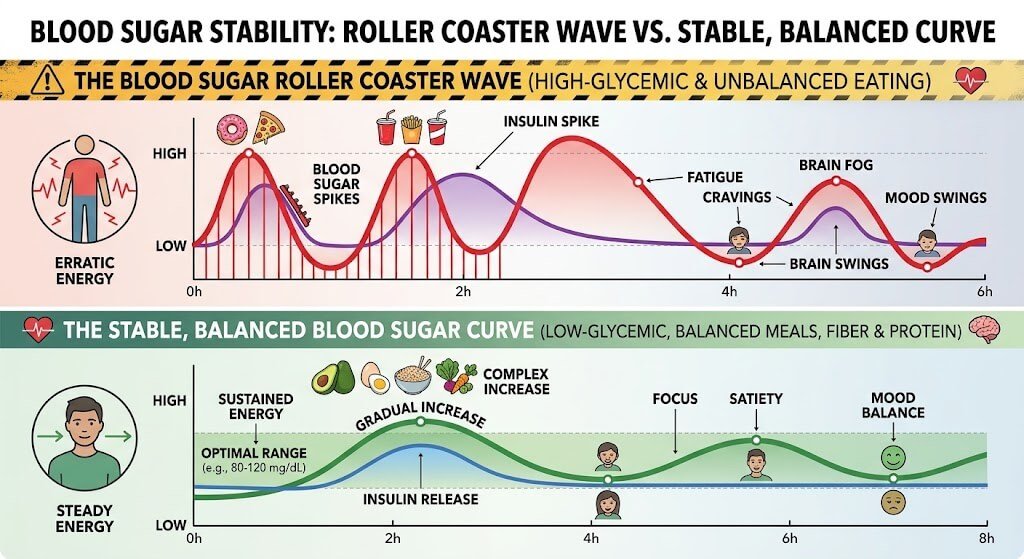
When your blood sugar drops below its baseline level, your brain perceives a impending energy crisis. Glucose is the primary fuel source for central nervous system functioning. To protect itself, the brain releases survival signals that manifest as:
- Intense, sudden cravings for fast-acting, simple carbohydrates (sweets, chips, pastries).
- Irritability, shakiness, or feeling “hangry.”
- A persistent sense of emptiness in the stomach despite having eaten recently.
Consequently, you consume another high-sugar or high-carb snack to fix the low blood sugar, which triggers yet another spike and crash. This self-perpetuating cycle is widely referred to as the glucose roller coaster.
The Hormonal Connection: Insulin, Leptin, and Ghrelin
Blood sugar fluctuations do not happen in isolation. They directly alter the secretion and sensitivity of your primary appetite-regulating hormones: ghrelin and leptin.
| Hormone | Primary Function | Impact of Blood Sugar Swings |
| Insulin | Moves glucose from blood into cells | Chronically high levels suppress fat oxidation and signal energy storage. |
| Ghrelin | Stimulates hunger (“the hunger hormone”) | Spikes rapidly during post-meal glucose crashes, triggering strong appetites. |
| Leptin | Signals fullness and satiety to the brain | High circulating insulin can impair leptin signaling at the hypothalamus (leptin resistance). |
When blood glucose crashes, ghrelin levels rise swiftly, urging you to eat immediately. Simultaneously, elevated baseline insulin levels—often caused by frequent high-carb grazing—can block leptin signals from properly reaching the brain.
When your brain fails to receive leptin’s “I am full” signal, it assumes you are starving. Understanding how protein helps control hunger during weight loss can prove invaluable here, as protein significantly slows digestion and attenuates these hormonal spikes.
The Role of Exercise in Blood Sugar Regulation
While nutrition forms the foundation of glucose management, physical activity—specifically resistance training and post-meal movement—is one of the most powerful tools available for flattening blood sugar spikes and controlling appetite.
When you perform muscle-strengthening exercises, your skeletal muscles require substantial fuel to contract. Skeletal muscle is your body’s largest sink for glucose storage.
Physical Activity / Exercise
│
▼
Skeletal Muscle Contraction
│
▼
Translocation of GLUT4 Transporters to Cell Membrane
│
▼
Direct Glucose Clearance from Bloodstream (Without Requiring Extra Insulin)
During exercise, muscle cells bring specialized protein transporters called GLUT4 directly to the cell membrane. These GLUT4 transporters pull glucose directly out of your blood and into the muscle tissue without needing extra insulin.
According to the HHS Physical Activity Guidelines for Americans, regular physical activity improves cellular insulin sensitivity, allowing your body to clear blood glucose efficiently with significantly less total insulin output.
By improving your insulin sensitivity through training, you prevent the massive insulin surges that cause post-meal glucose crashes and subsequent sugar cravings.
How to Construct Meals to Stop Blood Sugar Swings
To prevent blood sugar swings from causing sugar cravings and constant hunger, you must structure your meals around three key macronutrient pillars: protein, soluble fiber, and healthy fats.

1. Prioritize High-Quality Protein
Protein takes longer to break down than carbohydrates and does not cause significant spikes in blood glucose. Furthermore, digesting protein stimulates the release of satiety hormones like peptide YY (PYY) and glucagon-like peptide-1 (GLP-1).
If you struggle with appetite control throughout the day, exploring how protein intake affects hunger and fullness hormones will help you structure better meals. Aim for 25–40 grams of protein per main meal.
2. Increase Soluble Fiber Intake
Soluble fiber forms a gel-like substance in your digestive tract when mixed with liquid. This gel slows down gastric emptying, delaying the breakdown and absorption of carbohydrates.
Clinical research indexed in PubMed highlights that daily intake of viscous dietary fibers significantly flattens postprandial glucose curves. To learn more about this mechanism, read our guide on how soluble fiber helps control appetite. Additionally, evidence shows that psyllium husk can help you feel full before meals.
3. Incorporate Healthy Fats
Fats slow down the rate at which food leaves the stomach. Adding moderate portions of healthy fats—such as extra virgin olive oil, avocados, nuts, or seeds—to carbohydrate-containing meals lowers the overall glycemic load of that meal.
4. Practice “Food Sequencing”
The order in which you eat your food matters. Eating your protein, vegetables (fiber), and fats before consuming your starch or complex carbohydrates can reduce post-meal glucose spikes by as much as 30–70% without changing the total calories of the meal.

Exercise Protocols for Optimal Glucose Control
Integrating targeted exercise routines into your weekly schedule dramatically amplifies your metabolic resilience. Below are two evidence-backed physical movement strategies designed to stabilize blood sugar.
Strategy A: Post-Meal Walking (The Glucose Sponge)
Walking for just 10–15 minutes shortly after eating dinner or lunch utilizes active muscle contractions to absorb newly digested glucose.
Coach’s Tip: The 10-Minute Post-Meal Walk
Don’t sit on the couch immediately after your largest meal of the day. Step outside or step on a treadmill for a brisk 10-minute walk at an easy pace (around 2.5 to 3.0 mph / 4.0 to 4.8 km/h). This simple habit triggers GLUT4 translocation, flattening your postprandial blood sugar curve and eliminating late-night sweet cravings.
Strategy B: Full-Body Resistance Training
Building lean muscle mass provides a larger storage container for glycogen. The more muscle mass you carry, the higher your capacity for glucose disposal.
Here is a simple, effective full-body workout designed for glucose disposal and metabolic improvement:
| Exercise | Sets | Reps | Rest | Tempo | Guidance / Notes |
| Goblet Squat | 3 | 10–12 | 60 sec | 3-0-1-0 | Dumbbell or Kettlebell [25 lb / 11 kg] |
| Dumbbell Romanian Deadlift | 3 | 10–12 | 60 sec | 3-1-1-0 | Focus on hip hinge; keep core tight |
| Push-Up (or Incline Push-Up) | 3 | 8–12 | 60 sec | 2-0-1-0 | Maintain a rigid plank posture |
| Single-Arm Dumbbell Row | 3 | 10–12 per side | 60 sec | 2-1-1-0 | Pull elbow to hip; control down |
| Farmer’s Carry | 3 | 40 yards [36 m] | 60 sec | Walking | Hold heavy weights [30 lb / 14 kg per hand] |
Common Mistake to Avoid
Mistake: Relying solely on long, low-intensity steady-state cardio (LISS) while ignoring strength training.
Fix: While cardio is excellent for cardiovascular health, resistance training builds skeletal muscle, which acts as your primary long-term “glucose sink.” Ensure you hit all major muscle groups at least 2–3 times per week.
Lifestyle Factors: Sleep, Stress, and Targeted Nutrients
Diet and exercise are vital components, but sleep deprivation and chronic stress can quickly undo your efforts to regulate blood sugar.
The Sleep-Glucose Connection
A single night of partial sleep restriction can induce acute insulin resistance in otherwise healthy individuals. When sleep-deprived, circulating cortisol rises, making your cells less responsive to insulin.
Furthermore, sleep deprivation suppresses leptin and elevates ghrelin, creating a physiological double-whammy that drives cravings for high-carbohydrate foods. To explore these hormonal mechanisms further, read our article on how sleep affects metabolism and weight management.
Stress and Cortisol
Chronic psychological stress keeps the body in a perpetual “fight or flight” state. Your adrenal glands flood the system with cortisol and adrenaline, triggering the liver to release stored glycogen into the bloodstream to prepare for action.
If you are sitting at a desk while stressed, that released glucose is not burned off by physical activity. Blood sugar spikes, insulin rises to clear it, and a crash follows—driving emotional eating and sugar cravings.
Targeted Nutritional Support
In addition to whole foods, specific non-stimulant nutrients have been studied for their ability to support insulin function and blood sugar stability.
For instance, clinical trials demonstrate that chromium picolinate may help reduce sugar cravings by enhancing insulin action. Similarly, researchers have investigated how berberine affects appetite and weight management through the activation of AMP-activated protein kinase (AMPK), an enzyme involved in cellular energy regulation.
Frequently Asked Questions
Why do I crave sweets specifically after eating a heavy meal?
If your meal was high in refined carbohydrates and low in fiber or protein, your blood sugar rapidly spiked and then crashed. Your brain detects this sudden drop in circulating glucose as an energy shortage and signals an urgent craving for fast-acting simple sugars to raise glucose back up quickly.
How quickly does blood sugar crash after eating?
A postprandial glucose crash typically occurs within 1 to 3 hours after consuming a high-glycemic meal. The exact timing depends on individual insulin sensitivity, metabolic rate, gastric emptying speed, and whether you engaged in physical activity after eating.
Can exercise stop a sugar craving immediately?
Yes. Engaging in light to moderate physical activity, such as walking briskly for 10 to 15 minutes, causes skeletal muscle contractions that clear glucose from the blood. This helps stabilize blood sugar curves, reduces surplus insulin secretion, and effectively dampens sharp appetite spikes.
Are blood sugar swings dangerous for non-diabetics?
While non-diabetics have a functional pancreas that prevents extreme, dangerous glycemic spikes, chronic blood sugar volatility can still cause fatigue, mood swings, intense hunger, and gradual weight gain. Over years, severe glucose swings can contribute to systemic insulin resistance.
What are the best foods to quickly stabilize crashing blood sugar?
Rather than consuming pure sugar—which restarts the roller coaster—combine a small amount of fast-acting carb with a protein and fat source. An apple with almond butter, or a handful of berries with Greek yogurt, provides quick glucose while slowing digestion to prevent another sharp crash.
How does building muscle help prevent glucose fluctuations?
Skeletal muscle acts as a massive reservoir for glucose storage. When you perform resistance training, your muscles pull glucose directly out of the blood via GLUT4 transporters. Having more lean muscle mass increases your overall capacity to dispose of blood glucose safely.
Conclusion
Understanding that blood sugar swings cause sugar cravings and constant hunger shifts the paradigm from fighting willpower to addressing biological signals. When your glucose levels crash following a rapid spike, your brain’s call for quick carbohydrates is an evolutionary survival mechanism, not a personal flaw.
By structuring your meals with high-quality protein, soluble fiber, and healthy fats, staying consistent with resistance training, and taking short walks after meals, you can flatten your glucose curve, restore hormonal balance, and stop constant cravings for good.