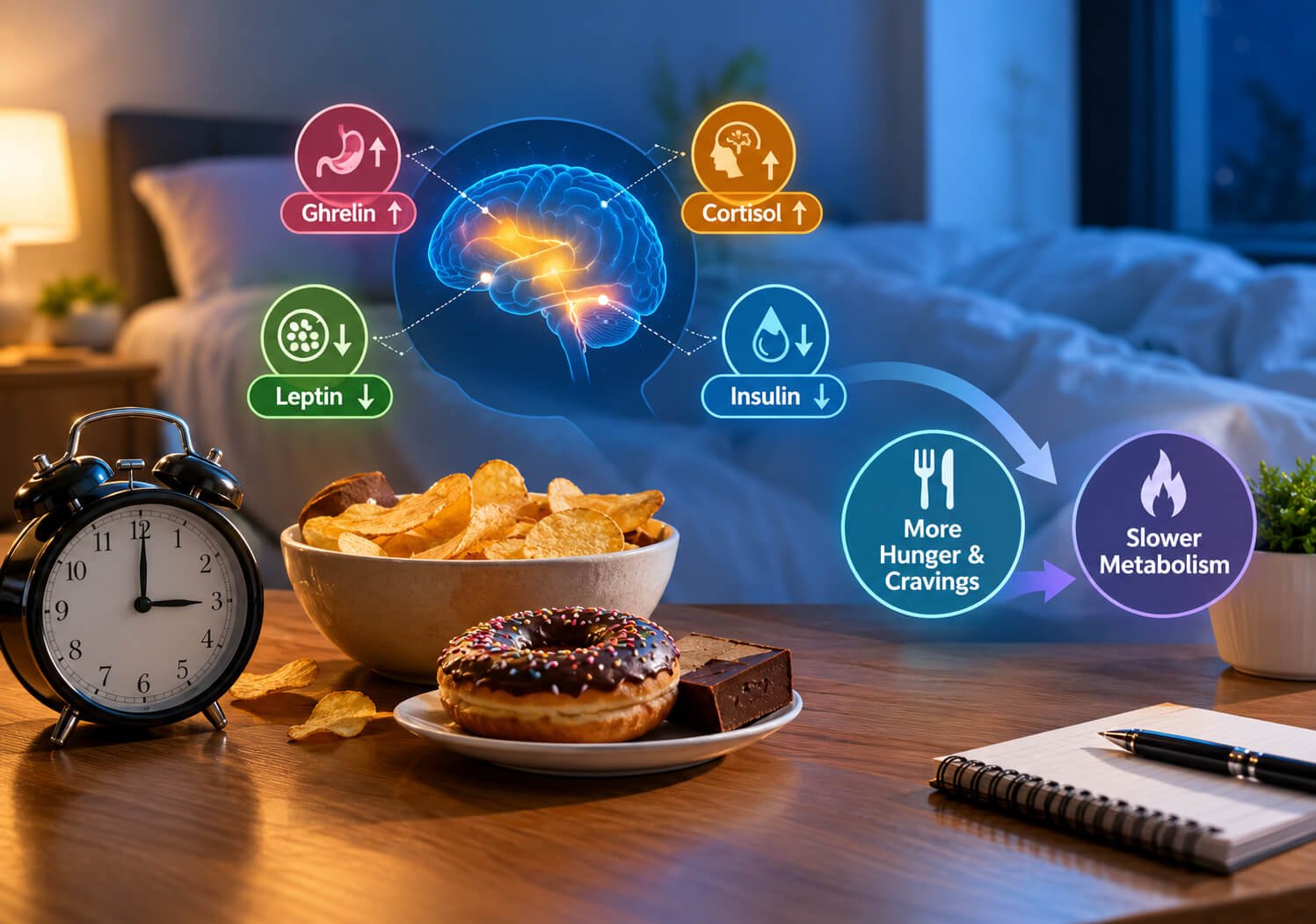
Yes, poor sleep directly increases hunger and alters metabolism. Sleep deprivation raises ghrelin (the hunger hormone), lowers leptin (the fullness hormone), and spikes cortisol. This hormonal imbalance amplifies cravings for high-calorie, sugary foods while impairing insulin sensitivity and reducing resting metabolic rate, making body composition management far more challenging.
Have you ever noticed that after a rough night of tossing and turning, your appetite becomes nearly impossible to control the next day? You find yourself reaching for pastries, extra cups of sugary coffee, or chips in the mid-afternoon, feeling like your brain is screaming for energy. As a certified strength and conditioning coach, I see this scenario constantly with clients who are eating well and hitting the gym, yet struggle to control their appetite or drop body fat.
When clients ask me, “Can poor sleep increase hunger and affect metabolism?”, my short answer is always a emphatic yes. Sleep is not merely passive downtime for your brain; it is an active recovery window during which your endocrine system, brain chemistry, and cellular repair processes reset. Skimping on quality rest throws a massive wrench into your physiological mechanisms, fundamentally altering how sleep affects metabolism and weight management.
In this guide, we will break down the exact biological mechanisms linking sleep debt to increased hunger, metabolic slowdown, and food cravings. More importantly, you will learn practical action steps to fix your sleep architecture, control your appetite, and protect your metabolic health.
The Physiology of Sleep and Hormonal Balance
To understand how sleep loss drives appetite, we must look at the endocrine system. Your body relies on a delicate balance of chemical messengers to control when you feel hungry, when you feel satisfied, and how efficiently you convert food into usable energy.
When you get 7 to 9 hours of uninterrupted sleep, your body cycles naturally through Light Sleep, Deep Sleep (slow-wave sleep), and Rapid Eye Movement (REM) sleep. During these phases, growth hormone is released, cortisol levels drop to their baseline daily low, and key appetite hormones reset.
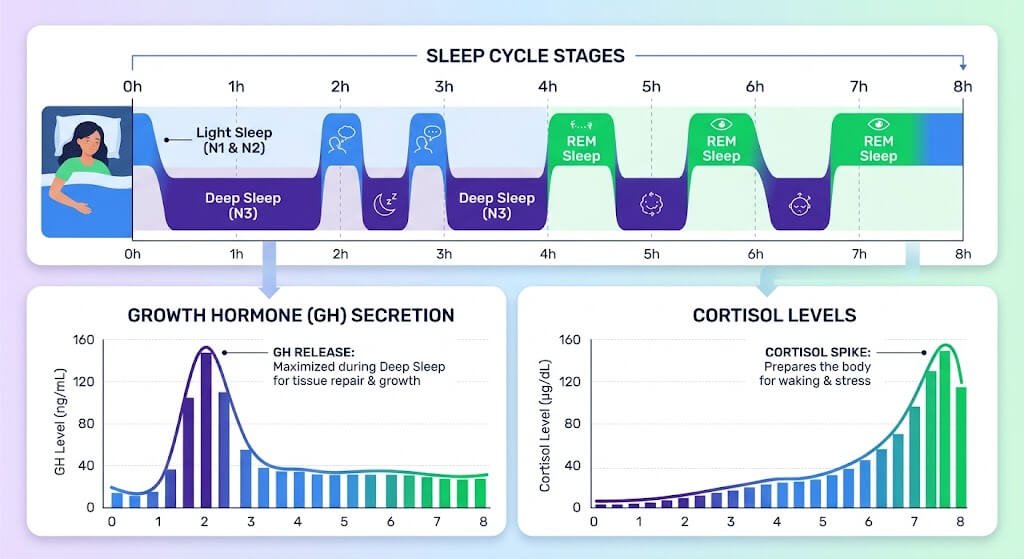
However, when sleep duration is shortened or sleep quality is disrupted by frequent awakenings, your body interprets this deficit as a state of physiological stress. This disruption affects four main hormones:
- Ghrelin: Known as the “hunger hormone,” ghrelin is produced in the stomach and signals to your brain that it is time to eat. Sleep deprivation significantly boosts ghrelin production.
- Leptin: Produced by fat cells, leptin signals satiety—telling your brain that you have enough energy stored and can stop eating. Sleep loss lowers circulating leptin levels.
- Cortisol: The primary stress hormone, cortisol elevates when you are sleep-deprived, promoting tissue breakdown and altering blood sugar handling.
- Insulin: The master storage hormone responsible for clearing glucose from your bloodstream into cells. Lack of sleep blunts insulin signaling pathways.
How Sleep Deprivation Drives Hunger: Ghrelin, Leptin, and the Brain
When asking can poor sleep increase hunger and affect metabolism?, the appetite response is often the first symptom people notice. The combination of elevated ghrelin and reduced leptin creates a powerful biological double-whammy that drives overeating.
Research published in the Annals of Internal Medicine demonstrated that restricting healthy adults to just 4 hours of sleep per night for two consecutive nights led to a 28% increase in ghrelin levels and an 18% decrease in leptin levels. This chemical shift was directly accompanied by a 24% increase in overall appetite and a strong preference for calorie-dense, high-carbohydrate foods.

The Hedonic Brain and Endocannabinoids
It is not just gut hormones that change when you are exhausted; your brain chemistry changes, too. Sleep deprivation blunts activity in the prefrontal cortex—the region responsible for high-level decision making, impulse control, and long-term planning. Simultaneously, sleep loss amplifies activity in the amygdala and reward centers of the brain.
Furthermore, sleep debt raises circulating levels of 2-arachidonoylglycerol (2-AG), an endocannabinoid that activates the same neurological pathways targeted by cannabis. This chemical reaction enhances the hedonic (pleasurable) aspect of eating. You aren’t just eating because you need energy; your brain is actively seeking out hyper-palatable combinations of sugar, fat, and salt.
The Metabolic Toll: How Sleep Debt Affects Energy Expenditure and Insulin
While increased hunger accounts for the extra calories coming in, changes in your metabolic rate change how calories are burned and stored.
1. Insulin Resistance and Glucose Handling
A single night of partial sleep loss can induce temporary insulin resistance in healthy individuals, matching levels seen in early-stage metabolic disease. According to research from the Journal of Clinical Endocrinology & Metabolism, just 4 hours of sleep in one night reduced peripheral insulin sensitivity by up to 25%.
When your cells become resistant to insulin, glucose remains elevated in the bloodstream longer. The pancreas responds by pumping out additional insulin. High circulating insulin levels inhibit lipolysis (the breakdown of stored body fat) and make it far easier to store excess glucose as adipose tissue. For individuals working on body composition, understanding how sleep affects metabolism and the hormonal connection is essential for long-term progress.
2. Resting Metabolic Rate (RMR) and Daily Energy Expenditure
Does sleep deprivation slow down your basal metabolic rate? The evidence presents a nuanced picture:
- Resting Metabolic Rate (RMR): Acute total sleep deprivation causes minor fluctuations, but chronic partial sleep deprivation (sleeping 5–6 hours per night for weeks) can lead to a slight drop in basal energy expenditure to conserve energy.
- Thermic Effect of Food (TEF): Sleep-deprived individuals experience a reduced thermic effect of food, meaning your body burns fewer calories digesting and processing meals.
- Non-Exercise Activity Thermogenesis (NEAT): This is where the biggest metabolic impact occurs. When you are tired, your subconscious movement drops sharply. You sit more, fidget less, walk with less intensity, and choose elevators over stairs. This drop in NEAT can reduce your daily calorie expenditure by 200 to 500 kcal per day, creating a sneaky metabolic slowdown without changing your formal workout routine.
Muscle Loss vs. Fat Loss: The Sleep-Deprivation Dilemma
If you are following a structured diet and lifting weights to lose body fat, poor sleep poses a direct threat to your lean muscle mass.
In a pivotal trial published by the Annals of Internal Medicine, researchers put overweight adults on a calorie-restricted diet for two separate two-week periods. In one phase, subjects slept 8.5 hours per night; in the other, they slept 5.5 hours per night.
The results were striking:
- While total weight lost was similar, participants sleeping 8.5 hours lost 50% of their weight from fat and 50% from lean body mass.
- Participants sleeping 5.5 hours lost only 25% of their weight from fat and 75% from lean mass.
8.5 Hours Sleep: [=== FAT LOSS (50%) ===] [=== LEAN LOSS (50%) ===]
5.5 Hours Sleep: [ FAT (25%) ] [====== LEAN MASS LOSS (75%) ======]
When you are short on sleep, elevated cortisol combined with suppressed growth hormone creates a catabolic environment. Your body preferentially breaks down muscle tissue for amino acids while holding onto stored adipose tissue. Maintaining muscle mass is crucial because muscle tissue is the primary driver of your baseline metabolic rate—highlighting why learning what affects metabolism and body weight requires a look far beyond dietary choices alone.
The Vicious Cycle: How Hunger, Stress, and Poor Sleep Feeding Off Each Other
Sleep loss, increased appetite, and metabolic dysfunction form a self-reinforcing cycle that can be tough to break without a clear strategy.
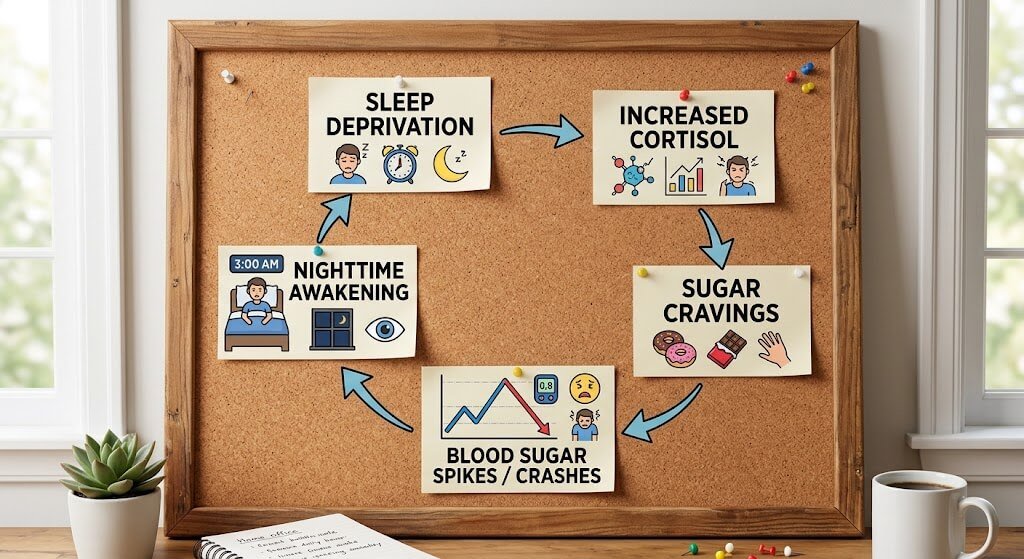
- Poor Sleep spikes morning and evening cortisol levels while blunting insulin sensitivity.
- Elevated Hunger & Cravings lead to late-night snacking, usually on foods high in sugar or simple carbohydrates.
- Blood Sugar Spikes & Crashes occur close to bedtime, causing nocturnal awakenings as adrenaline spikes to correct low blood sugar levels.
- Fragmented Sleep Architecture results in less deep, restorative sleep, resetting the cycle for the next day.
Breaking this cycle requires targeting both sleep hygiene and nutritional timing.
Coach’s Tip: The 3-2-1 Sleep Rule
To prevent late-night blood sugar swings and support deep sleep, apply the 3-2-1 rule:
- 3 Hours Before Bed: Stop eating large, heavy meals to give your digestion time to settle.
- 2 Hours Before Bed: Stop all work, high-intensity exercise, and stressful conversations.
- 1 Hour Before Bed: Turn off all bright screens (phones, TVs, laptops) to allow natural melatonin secretion.
Action Plan: 5 Steps to Reset Sleep, Control Hunger, and Support Metabolism
If you suspect that poor sleep is frustrating your fitness goals, here is an evidence-based, step-by-step action plan to regain control over your appetite and restore metabolic efficiency.
Step 1: Prioritize Protein at Every Meal
Protein is the most satiating macronutrient and helps stabilize blood sugar swings driven by sleep loss. Higher protein intake stimulates satiety hormones like peptide YY (PYY) and glucagon-like peptide-1 (GLP-1) while reducing ghrelin. Research shows that keeping protein high protects lean tissue even when sleep is compromised. To dive deeper into these mechanics, review how protein helps control hunger during weight loss.
Aim for 0.7 to 1.0 grams of protein per pound of body weight (1.5 to 2.2 g per kg). For a 160 lb (72.5 kg) individual, that equates to roughly 110–160 grams of daily protein.
Step 2: Utilize Soluble Dietary Fiber
Fiber slows down gastric emptying and blunts glycemic spikes, which is particularly helpful when insulin sensitivity is impaired by sleep debt. Foods rich in soluble fiber swell in the digestive tract, sending stretch-receptor signals to your brain that promote fullness. For more details on this mechanism, read about how dietary fiber helps with appetite and weight management.
Incorporating sources like psyllium husk, chia seeds, oats, and legumes provides steady appetite control without extra calories.
Step 3: Align Light Exposure with Circadian Rhythms
Your master biological clock (located in the suprachiasmatic nucleus of the brain) relies on natural light to calibrate circadian rhythms:
- Morning: Get 10–20 minutes of direct daylight within one hour of waking. This triggers a healthy morning cortisol surge, boosting alertness and setting a timer for evening melatonin production.
- Evening: Dim overhead lights 2 hours before sleep. Use lamps with warm tones and avoid blue-spectrum light from devices to protect your body’s natural melatonin production.
Step 4: Keep Resistance Training Consistent
Resistance exercise is one of the most effective tools to combat sleep-induced insulin resistance. Lifting weights increases GLUT4 glucose transporters in muscle cells, allowing your body to clear sugar from the blood without relying heavily on insulin.
Routine Exercise Plan:
– Frequency: 3-4 days per week
– Focus: Compound movements (squats, deadlifts, presses, rows)
– Intensity: Moderate-to-heavy (65-80% 1RM)
– Benefit: Preserves lean tissue and improves insulin sensitivity
Note: Avoid high-intensity training within 2 to 3 hours of bedtime, as the resulting catecholamine surge can interfere with falling asleep.
Step 5: Optimize the Sleep Environment
Transform your bedroom into a recovery sanctuary using the following parameters:
- Temperature: Keep room temperature between 60°F and 67°F (15.5°C to 19.4°C). Body temperature must drop by about 2°F (1°C) to initiate deep sleep.
- Sound: Use a white noise machine or earplugs to block out environmental disruptions.
- Light: Install blackout curtains or wear a contoured sleep mask to remove ambient light sources.

Exercises for Sleep Recovery & Metabolic Support
When you are short on sleep, pushing through an intense, 90-minute high-intensity workout can raise cortisol levels further, compounding fatigue. Instead, focus on efficient, compound strength movements paired with low-intensity steady-state (LISS) cardio.
Below is a low-stress, high-yield strength routine designed to maintain muscle mass and improve insulin sensitivity without overtaxing a fatigued nervous system.
Sample Metabolic & Sleep Support Routine
- Frequency: 3 days per week (e.g., Monday, Wednesday, Friday)
- Warm-up: 5 minutes of dynamic mobility (cat-cow, arm circles, bodyweight squats)
| Exercise | Target Muscles | Sets | Reps | Rest | Tempo |
| Goblet Squat | Quadriceps, Glutes, Core | 3 | 8 – 10 | 90 sec | 3-1-1-0 |
| Dumbbell Romanian Deadlift | Hamstrings, Glutes, Lower Back | 3 | 10 – 12 | 90 sec | 3-0-1-0 |
| Dumbbell Bench Press / Push-up | Chest, Anterior Deltoids, Triceps | 3 | 8 – 10 | 75 sec | 2-1-1-0 |
| One-Arm Dumbbell Row | Latissimus Dorsi, Rhomboids | 3 | 10 – 12 | 75 sec | 2-0-1-1 |
| Plank Hold | Core, Transverse Abdominis | 3 | 30-45 sec | 60 sec | Static |
Common Mistake: Chasing Fatigue Over Quality
The Mistake: Trying to “sweat out” sleep deprivation with extreme high-intensity interval training (HIIT). This elevates cortisol levels, increases joint injury risks due to impaired motor control, and drives appetite up further.
The Fix: Shift to moderate-weight compound lifting and walking when sleep quality drops. Focus on pristine form, controlled movement tempo, and leaving 2–3 reps in reserve (RIR) on every set.
Exercise Regressions and Progressions
Adjust these key exercises based on your daily energy levels and current fitness background:
1. Goblet Squat
- Regression (Easier): Box Squat / Bodyweight Chair Squat. Sit back onto a sturdy bench or chair set at 16–18 inches (40–45 cm) high, tap lightly, and stand up. Removes spinal loading and helps master hip-hinge depth safely.
- Progression (Harder): Front Rack Barbell Squat or Pause Goblet Squat. Hold a 3-second pause at the bottom of the movement to increase time under tension without having to jump up to excessive absolute weights.
2. Dumbbell Romanian Deadlift (RDL)
- Regression (Easier): Cable or Band Hip Hinge. Stand facing a cable column or anchored resistance band to practice pushing the hips back with lower load on the lumbar spine.
- Progression (Harder): Single-Leg Dumbbell RDL. Perform the movement on one leg to challenge hip stability, core engagement, and unilateral strength.
When to Seek Professional Guidance
While lifestyle modifications resolve appetite and energy issues for many, chronic sleep disturbances may point to underlying health conditions like sleep apnea, chronic insomnia, or restless leg syndrome.
Consult a physician or sleep specialist if you experience persistent symptoms such as:
- Loud, chronic snoring or waking up gasping for air.
- Persistent daytime exhaustion despite spending 8+ hours in bed.
- Inability to fall asleep within 30 minutes for more than three nights a week over a month.
Frequently Asked Questions
Can one night of bad sleep affect my metabolism?
Yes. Studies show that a single night of partial sleep restriction (3–4 hours) can temporarily reduce insulin sensitivity by 15% to 25%. This elevates circulating blood sugar and insulin levels, leading to increased hunger and sugar cravings the following day, though full recovery usually occurs after returning to normal sleep.
Why do I crave carbohydrates when I am sleep-deprived?
Sleep loss blunts activity in your brain’s prefrontal cortex while boosting activity in reward centers. Additionally, sleep debt raises ghrelin and endocannabinoid levels, causing your brain to seek fast, accessible energy sources—primarily simple carbohydrates and fats—to compensate for perceived fatigue.
Does sleep deprivation cause permanent metabolic damage?
No, metabolic disruptions caused by short-term sleep loss are generally reversible. Restoring healthy sleep habits, maintaining a protein-rich diet, and engaging in regular resistance training can quickly restore healthy insulin sensitivity, hormone balance, and metabolic function.
How many hours of sleep do I need to keep appetite hormones balanced?
Most adults require 7 to 9 hours of quality sleep per night for optimal metabolic health. Sleeping consistently under 6 hours per night disrupts ghrelin and leptin secretion, driving higher total caloric intake and increasing long-term risks of weight gain.
Can exercising fix the negative effects of poor sleep?
Exercise helps offset some effects of sleep loss by improving cellular glucose uptake and elevating mood. However, exercise cannot replace the neurological, hormonal, and tissue-repair processes that occur during deep sleep. Moderate training is helpful, but prioritize sleep recovery alongside your workouts.
Conclusion
So, can poor sleep increase hunger and affect metabolism? The scientific consensus is clear: poor sleep alters appetite-regulating hormones, increases cravings for high-calorie foods, impairs insulin sensitivity, and lowers daily energy expenditure. Sleep is not a luxury—it is a core pillar of health, fitness, and effective body composition management.
By prioritizing 7 to 9 hours of quality rest, eating high-protein and high-fiber foods, and maintaining a smart resistance training routine, you can keep appetite hormones in balance and support long-term metabolic performance. Protect your sleep with the same dedication you bring to your nutrition and training, and your body will respond accordingly.