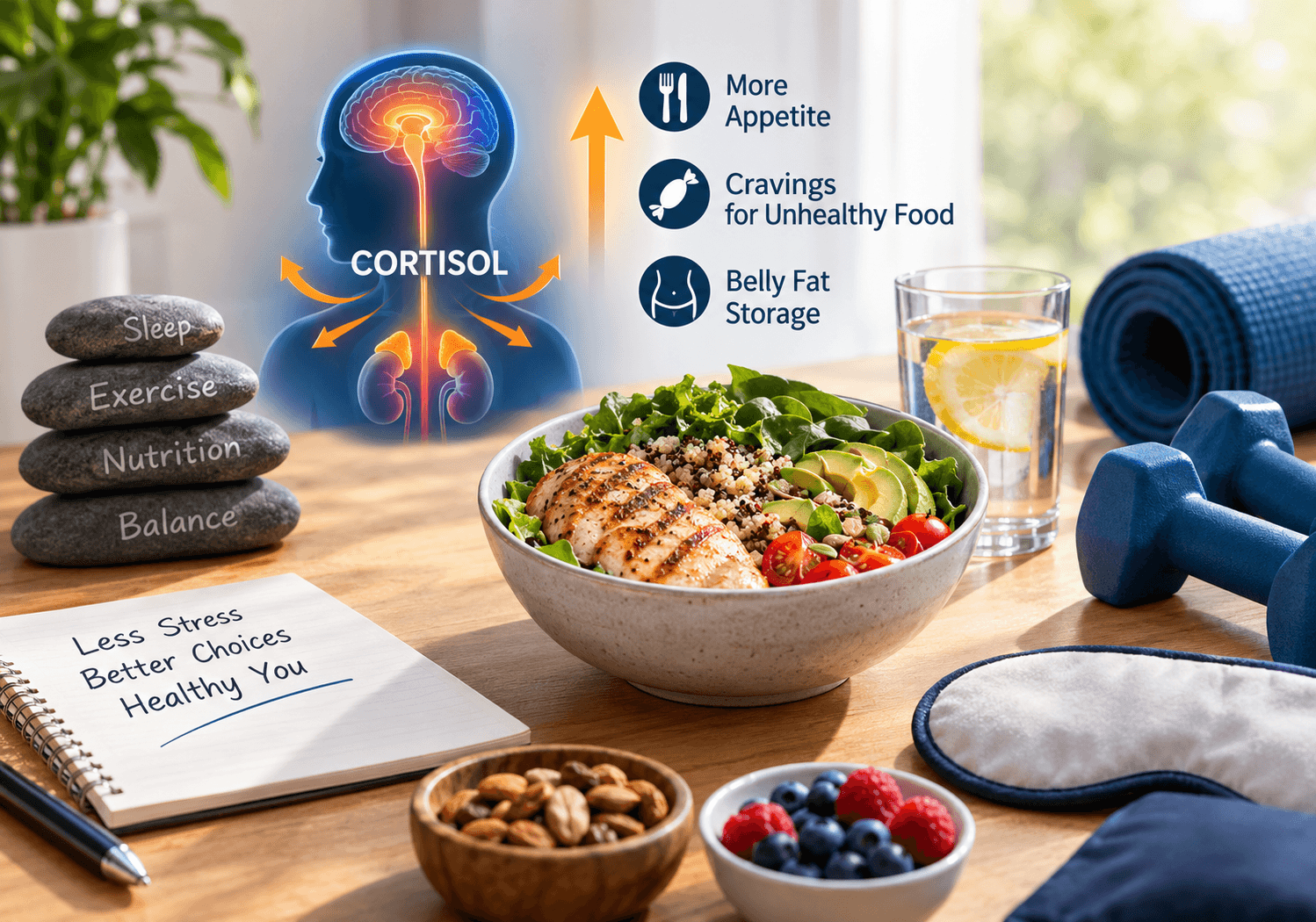
If you have been wondering, can stress and cortisol increase appetite and weight gain? the short answer is yes. Chronic stress triggers a biological cascade that directly impacts your hunger signals, food choices, and where your body stores fat. As a strength and conditioning coach, I see clients work incredibly hard in the gym, only to stall because unmanaged stress is working against their goals.
Understanding this connection is the first step toward taking back control. You do not have to accept stress-related weight gain as inevitable. By combining targeted exercise, smart nutrition, and recovery strategies, you can regulate your hormones and support your body composition goals. This guide breaks down the science and gives you a practical, evidence-based action plan.
Quick Answer
Yes, chronic stress elevates cortisol, which directly increases appetite and promotes fat storage, especially around the abdomen. Cortisol disrupts hunger hormones like ghrelin and leptin, driving cravings for high-sugar, high-fat foods. Managing this requires a mix of stress-reducing exercise, adequate protein and fiber intake, and quality sleep.
The Science: Can Stress and Cortisol Increase Appetite and Weight Gain?
To understand why this happens, we must look at the hypothalamic-pituitary-adrenal (HPA) axis. This is your body’s central stress response system. When you face a stressor, your brain signals your adrenal glands to release cortisol and adrenaline. This is the classic “fight or flight” response.
In short bursts, this is highly beneficial. It gives you the energy to handle immediate threats. Acute stress actually suppresses appetite temporarily. However, modern life rarely offers short bursts. Instead, we face chronic stress from work deadlines, financial pressure, poor sleep, and overtraining.
When stress becomes chronic, cortisol levels remain elevated. According to the Mayo Clinic, chronic stress and high cortisol are strongly linked to weight gain through several distinct mechanisms.
First, cortisol increases your appetite. It specifically drives cravings for energy-dense, highly palatable foods rich in sugar and fat. This is your body’s misguided attempt to stockpile energy for a perceived ongoing threat.
Second, cortisol changes where your body stores fat. Research published in the National Institutes of Health (NIH) PMC shows that abdominal fat cells have a higher density of glucocorticoid receptors compared to fat cells in other areas. This means elevated cortisol actively promotes the storage of visceral fat, the deep belly fat surrounding your organs. Visceral fat is metabolically active and linked to a higher risk of cardiovascular disease and type 2 diabetes.
Third, chronic stress disrupts other critical metabolic hormones. It is a key factor in understanding what affects metabolism and body weight beyond just calories in and calories out. When your HPA axis is dysregulated, your entire metabolic environment shifts toward fat storage and muscle breakdown.
Hormone Breakdown: How Stress Disrupts Your Body
To manage stress-induced weight gain, you must understand the hormonal players involved. The table below outlines how high cortisol creates a domino effect across your endocrine system.
| Hormone | Normal Function | Effect of High Cortisol | Impact on Weight |
| Cortisol | Regulates metabolism, reduces inflammation, controls sleep-wake cycle. | Remains chronically elevated, breaking down muscle tissue for energy. | Promotes visceral fat storage and increases overall appetite. |
| Ghrelin | The “hunger hormone.” Signals the brain that it is time to eat. | Cortisol stimulates ghrelin production, especially late at night. | Leads to increased calorie intake and frequent snacking. |
| Leptin | The “satiety hormone.” Signals the brain that you are full. | Chronic stress can cause leptin resistance, meaning the brain ignores fullness signals. | Results in overeating and difficulty feeling satisfied after meals. |
| Insulin | Helps cells absorb glucose from the bloodstream for energy. | High cortisol raises blood sugar, forcing the pancreas to release more insulin. | Promotes fat storage and increases the risk of insulin resistance. |
This hormonal environment makes losing weight feel like an uphill battle. You may feel hungry all the time, crave sweets, and notice fat accumulating around your midsection despite eating well. Recognizing these signs is crucial. If you suspect this is happening, learning how to support metabolism naturally for weight management is a vital next step.
Practical Steps: How to Manage Stress and Cortisol to Prevent Weight Gain
You cannot eliminate stress from your life, but you can change how your body responds to it. Managing cortisol requires a three-pronged approach: strategic exercise, targeted nutrition, and dedicated recovery.
1. The Stress-Reducing Workout Routine
Exercise is a powerful tool for regulating cortisol, but the dose matters. While high-intensity interval training (HIIT) is great for cardiovascular fitness, doing it every day keeps cortisol artificially high. For stress management, a blend of moderate resistance training and low-intensity steady-state (LISS) cardio is optimal.
Below is a sample full-body routine designed to build metabolically active muscle without overtaxing your nervous system. Perform this routine 2 to 3 times per week.
| Exercise | Sets | Reps | Rest | Primary Focus |
| Bodyweight Squats | 3 | 10–12 | 60 sec | Lower body strength, controlled breathing |
| Incline Push-Ups | 3 | 8–10 | 60 sec | Upper body pushing, core stability |
| Dumbbell Romanian Deadlift (RDL) | 3 | 10 | 60 sec | Posterior chain, hip hinge mechanics |
| Brisk Walking or Light Cycling | 1 | 10–15 min | N/A | Active recovery, parasympathetic nervous system activation |
Exercise Form Cues and Progressions
Bodyweight Squats
Stand with feet shoulder-width apart. Push your hips back as if sitting in a chair, keeping your chest up and knees tracking over your toes. Lower until your thighs are parallel to the floor, then drive through your heels to stand.
Regression: Sit-to-stand from a sturdy chair (18 inches / 45 cm high).
Progression: Hold a 15 lb (6.8 kg) dumbbell at your chest (Goblet Squat).
Incline Push-Ups
Place your hands on a stable elevated surface, like a bench or countertop, slightly wider than shoulder-width. Keep your body in a straight line from head to heels. Lower your chest to the surface, then push back up.
Regression: Perform the movement against a wall.
Progression: Perform standard push-ups on the floor.
Dumbbell Romanian Deadlift (RDL)
Hold a 15–20 lb (6.8–9 kg) dumbbell in each hand. Stand with feet hip-width apart. Keep a slight bend in your knees. Hinge at your hips, pushing them backward while sliding the weights down your legs. Stop when you feel a deep stretch in your hamstrings, then squeeze your glutes to return to standing.
Regression: Practice the hip hinge movement without weights, using a wall behind you for feedback.
Progression: Increase weight to 25–30 lb (11–13.5 kg) dumbbells while maintaining strict form.
Coach’s Tip: Focus on your tempo. Use a 3-second lowering phase (eccentric) on every repetition. This builds muscle effectively and forces you to control your breathing, which actively signals your nervous system to calm down.
Common Mistake: Overtraining. Many people respond to stress by doing more intense cardio. This is a trap. Excessive high-intensity exercise spikes cortisol further. Limit intense sessions to 1–2 times per week and prioritize walking, yoga, or moderate weightlifting on other days.

2. Nutrition Strategies to Stabilize Blood Sugar and Appetite
What you eat directly influences your cortisol response. Blood sugar spikes and crashes mimic physical stress in the body, triggering more cortisol release.
Prioritize Protein at Every Meal
Protein is the most satiating macronutrient. It blunts the ghrelin response and supports muscle retention, which is critical because muscle tissue helps regulate metabolic health. Research on protein intake metabolism weight loss consistently shows that higher protein diets improve body composition during caloric deficits. Aim for 20–30 grams of high-quality protein per meal. Understanding how protein helps control hunger can transform your approach to meal planning.
Leverage Dietary Fiber
Fiber slows digestion, preventing rapid blood sugar spikes. Soluble fiber, in particular, forms a gel-like substance in the gut that promotes prolonged fullness. Studies confirm that dietary fiber help with appetite and weight management significantly. Include sources like oats, chia seeds, beans, and apples. If you struggle with mid-day cravings, asking does soluble fiber help control appetite is a great starting point; the evidence strongly supports its use before meals to reduce overall calorie intake.

3. Recovery and Sleep Hygiene
Sleep is when your body clears cortisol and resets your hunger hormones. Poor sleep is a massive stressor. Even one night of restricted sleep can increase ghrelin and decrease leptin the following day.
To protect your metabolism, aim for 7 to 9 hours of quality sleep per night. Establish a wind-down routine: dim the lights 60 minutes before bed, avoid screens, and keep your bedroom cool (around 65°F or 18°C). If you are struggling with fatigue, learning more about how sleep affects metabolism and weight management is essential for long-term success.

Safety Notes and Precautions
While lifestyle changes are powerful, it is important to recognize when stress has crossed into a medical issue. Chronic, unmanaged stress can lead to HPA axis dysfunction, sometimes colloquially called “adrenal fatigue,” though the medical community refers to it as adrenal insufficiency or dysregulation.
When to See a Doctor:
Consult a healthcare provider if you experience severe, unexplained weight gain, persistent fatigue, muscle weakness, high blood pressure, or mood changes that do not improve with lifestyle modifications. A doctor can run a simple blood or saliva test to check your morning cortisol levels.
Pregnancy and Postpartum:
Hormonal fluctuations during pregnancy and postpartum naturally alter cortisol and appetite. Always consult your obstetrician or a physical therapist before starting any new exercise or nutrition protocol during these phases.
Injury and Pain:
If you have existing joint pain or injuries, modify the exercises provided. Pain is a physical stressor that will elevate cortisol. Never push through sharp or shooting pain.
This article is for general information and is not a substitute for advice from a doctor or physical therapist.
Related Tips for Long-Term Success
Practice Mindful Eating
Stress eating is often automatic. You reach for a snack without realizing you are not physically hungry. Practice the “pause.” Before eating, ask yourself: “Am I hungry, or am I stressed, bored, or tired?” If it is stress, try a 5-minute alternative: drink a glass of water, step outside for fresh air, or do 10 deep belly breaths.
Incorporate Daily Movement (NEAT)
Non-Exercise Activity Thermogenesis (NEAT) includes all the calories you burn outside of formal workouts. Walking, taking the stairs, and gardening are low-stress activities that improve insulin sensitivity without spiking cortisol. Aim for 7,000 to 10,000 steps per day. For those wondering how to increase metabolism naturally for weight loss, boosting daily NEAT is one of the most sustainable methods available.
Special Considerations for Aging
As we age, our hormonal baseline shifts. Women over 40, in particular, experience changes in estrogen and progesterone that can make them more sensitive to cortisol’s fat-storing effects. If you are in this demographic, focusing on how to increase metabolism naturally after 40 through consistent strength training and stress management is highly recommended.

Frequently Asked Questions (FAQ)
Does high cortisol cause belly fat?
Yes. Abdominal fat cells have more glucocorticoid receptors than fat cells in other areas. Chronically high cortisol actively directs fat storage to the visceral area around your organs, leading to the characteristic “stress belly.”
How does stress affect hunger hormones?
Stress increases the production of ghrelin, the hormone that signals hunger, and can cause leptin resistance. This means your brain receives stronger “eat” signals while ignoring the “I’m full” signals, leading to overeating.
Can lowering cortisol help you lose weight?
Yes. By lowering chronic cortisol levels through better sleep, stress management, and balanced exercise, you normalize your hunger hormones and reduce visceral fat storage, creating a metabolic environment conducive to weight loss.
What are the signs of high cortisol weight gain?
Common signs include weight gain concentrated around the midsection, persistent cravings for salty or sweet foods, difficulty losing weight despite a good diet, fatigue, and disrupted sleep patterns.
Does stress make you crave sugar?
Absolutely. Cortisol and insulin work together to regulate blood sugar. When cortisol is high, your body craves quick energy sources to cope with the perceived threat, making high-sugar, high-fat “comfort foods” highly appealing.
Conclusion
So, can stress and cortisol increase appetite and weight gain? Absolutely, but you have the power to change this cycle. Chronic stress creates a hormonal environment that promotes hunger, cravings, and belly fat storage. However, by implementing a balanced routine of moderate resistance training, prioritizing protein and fiber, and protecting your sleep, you can regulate your cortisol levels.
Remember, fitness is not just about how hard you can push in the gym. It is also about how well you allow your body to recover. Start with one small change today, whether it is adding a serving of vegetables to your dinner or taking a 10-minute walk after work. Your body will respond.