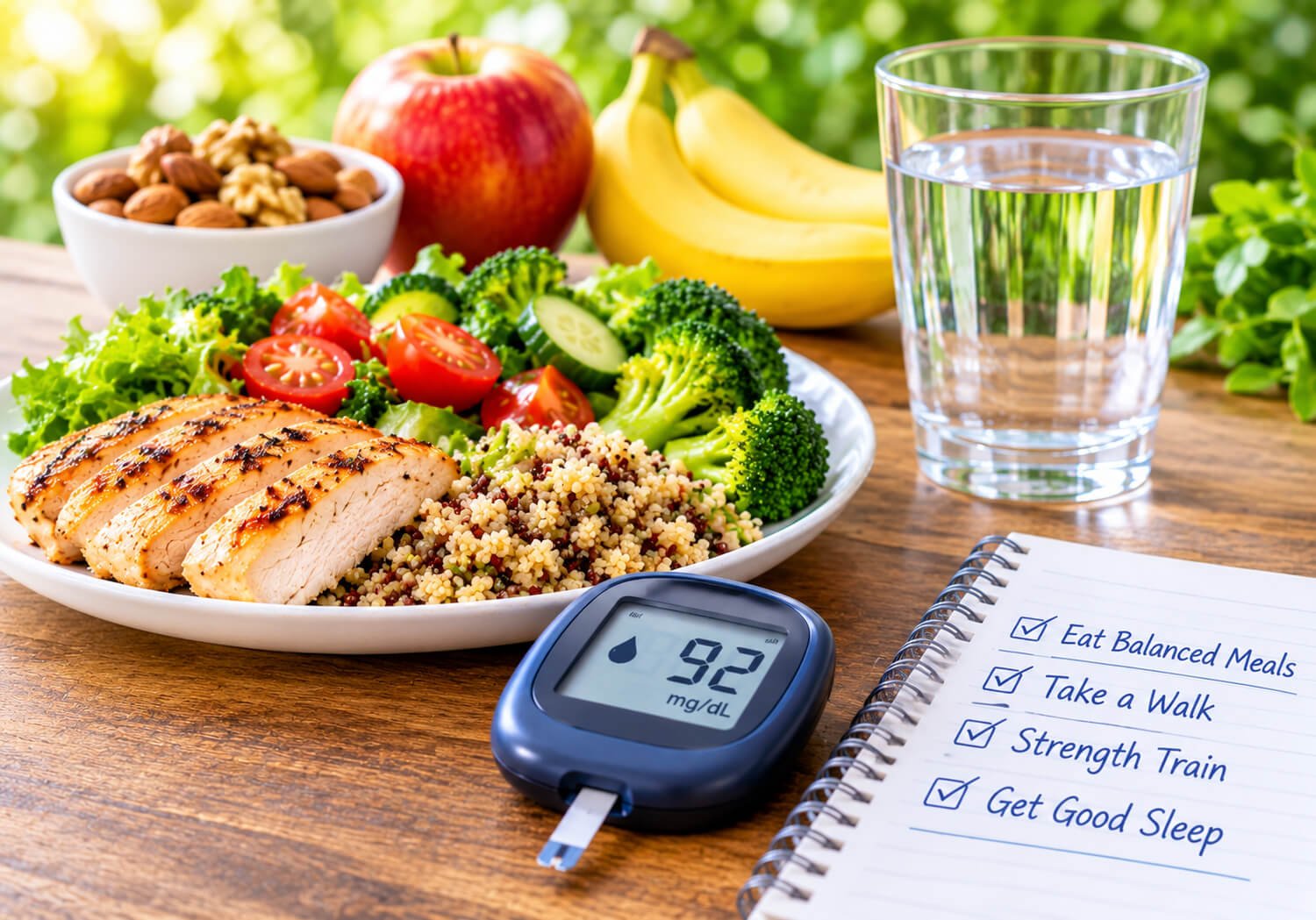
You eat lunch, feel fine for an hour, and then your energy falls off a cliff. Many people hear that a small mineral supplement might smooth that out. So how does chromium picolinate help with blood sugar balance and sustained energy, and does the research back it up?
The honest answer is more nuanced than the label on the bottle. Chromium is linked to how your body handles insulin, but the evidence for supplements is mixed. As a coach, I want you to know what is solid, what is hype, and what habits do more for your energy than any pill.
Quick Answer
Chromium picolinate may help insulin work a bit better, and some studies in people with type 2 diabetes show small blood sugar improvements. Evidence in healthy people is weak, and research doesn’t show it boosts energy directly. Food, sleep, and movement matter more. Check with your doctor first.
What Chromium Picolinate Is (and What It Isn’t)
Chromium is a trace mineral, which means your body needs only tiny amounts. The type found in food and supplements is called trivalent chromium (chromium III). A different form, hexavalent chromium, is a toxic industrial byproduct and is not what is in your supplement, according to the NIH Office of Dietary Supplements consumer fact sheet.
Chromium picolinate is chromium bound to picolinic acid. It is one of several supplement forms, along with chromium nicotinate, chromium chloride, and chromium histidinate. The NIH notes that the body absorbs the different forms in a similar way, so “picolinate” is not magic by itself (NIH health professional fact sheet).
Here is the part most labels skip. Scientists do not currently think chromium is necessary for good health, and deficiency has not been reported in healthy people, per the NIH consumer fact sheet. So chromium picolinate is not a “fix” for a missing nutrient in most readers.

Chromium Absorption Is Low
Your gut takes in only a small share of the chromium you swallow. The NIH puts dietary absorption at roughly 0.4% to 2.5% (NIH health professional fact sheet). Vitamin C and aspirin-type drugs may raise absorption, while oxalate and antacids may reduce it.
That is one reason a bigger dose does not automatically mean a bigger effect. It is also why checking with a pharmacist about what else you take is smart.
How Chromium Picolinate Helps With Blood Sugar Balance and Sustained Energy: What the Research Shows
Let’s take the two halves of the question separately. Blood sugar balance has real research behind it. “Sustained energy” is mostly a marketing phrase, and we’ll treat it that way.
The Proposed Mechanism: Helping Insulin Do Its Job
When you eat carbs, your blood sugar rises and your pancreas releases insulin. Insulin attaches to a receptor on cells, mainly in muscle, so glucose can move in and be used for fuel. One theory is that chromium helps this signal along. A review in the Journal of Nutritional Biochemistry looks at the proposed ways chromium may ease insulin resistance, including effects on insulin signaling inside the cell.
Notice the word “proposed.” The Harvard T.H. Chan School of Public Health says the exact mechanism of chromium in relation to insulin is not clearly understood (Harvard Nutrition Source). So treat the mechanism as a working theory, not a proven pathway.
If you’re curious about the bigger picture, our guide on supplements and insulin sensitivity compares several ingredients side by side.
What Trials Show in People With Type 2 Diabetes
This is where chromium looks best, and also where results disagree. A systematic review in Diabetes Care found that in people with type 2 diabetes, chromium supplementation lowered HbA1c by about 0.6 percentage points and fasting glucose by about 1.0 mmol/L. The same review noted that larger effects showed up more often in poor-quality studies (Balk et al., 2007).
A later narrative review looked at 20 randomized controlled trials in type 2 diabetes. Only a few trials hit treatment goals for fasting glucose (5 of 20) or HbA1c (3 of 14). The authors concluded that chromium has limited effectiveness and that there is little reason to recommend it for glycemic control in people who already have type 2 diabetes (Costello et al., 2016).
A 2015 meta-analysis went a step further by splitting results by chromium form. Chromium picolinate, chromium chloride, and chromium-enriched yeast showed no effect on fasting plasma glucose compared with control (Yin and Phung, 2015). Brewer’s yeast was the form that did show a drop.
Bottom line for this group: some studies say yes, others say not much, and the American Diabetes Association does not recommend chromium supplements for people with diabetes because there is no clear benefit (NIH consumer fact sheet).
What Trials Show in People Without Diabetes
If your blood sugar is already in the normal range, the research is even less encouraging. A meta-analysis of randomized trials found no link between chromium and glucose or insulin levels in people without diabetes (Althuis et al., 2002). The Diabetes Care review reached a similar conclusion: no significant effect on glucose or lipid metabolism in people without diabetes (Balk et al., 2007).
For metabolic syndrome, the NIH says the few clinical trials that exist did not show a benefit from chromium supplements. For weight loss, it reports only a very small benefit that is unlikely to change health or appearance (NIH consumer fact sheet).
What About “Sustained Energy”?
Chromium is not a stimulant. It doesn’t work like caffeine, and it won’t give you a quick lift. The NIH consumer fact sheet lists blood sugar, metabolic syndrome, PCOS, cholesterol, and body composition as areas studied, and energy is not among them (NIH consumer fact sheet).
The logic behind the energy claim is indirect. Big blood sugar swings can leave you tired, so anything that smooths glucose might help you feel steadier. But if chromium only has a small, inconsistent effect on glucose, then its effect on how you feel is likely small and inconsistent too.
If energy is your main goal, start with the basics in our guide to daily energy without caffeine and our breakdown of nutrients that support energy metabolism.
Evidence at a Glance
| Question | What research suggests | Strength of evidence |
| Lowers HbA1c in type 2 diabetes? | Small drop in some reviews; not consistent | Mixed |
| Lowers fasting glucose in type 2 diabetes? | Some benefit in older reviews; picolinate alone showed none in one 2015 analysis | Mixed |
| Helps blood sugar in people without diabetes? | No clear effect | Weak |
| Helps metabolic syndrome? | No benefit shown in the few trials | Weak |
| Raises energy directly? | Not an established benefit | Not shown |
| Causes weight loss? | Very small effect, unlikely to matter | Weak |

Who May Benefit and Who Probably Won’t
Think of chromium as a “maybe, with a doctor” tool, not a daily must-have. Some people have a better reason to talk about it than others.
People who may want to discuss it with a doctor
- Adults with type 2 diabetes or prediabetes who are already working with a care team
- People whose diet is very low in whole grains, nuts, and unprocessed foods
- Anyone curious about supplements who wants an honest risk-and-benefit talk
People who should skip it or ask first
- Anyone taking insulin or diabetes medicine, because chromium may add to the blood sugar–lowering effect and raise the risk of low blood sugar (NIH consumer fact sheet)
- People who take levothyroxine, because chromium may reduce how much of that drug the body absorbs
- People with kidney or liver disease, who should be cautious with high amounts of chromium
- Pregnant or breastfeeding women, and children, unless a doctor says otherwise
If you want a plan built around cravings, see our article on whether chromium picolinate reduces sugar cravings.
How to Apply This: Food First, Then Talk to Your Doctor
Here is the practical order I’d follow with a client. Fix the foundation, then decide whether a supplement is worth discussing.
Step 1: Get Chromium From Food
The NIH lists meats such as ham, beef, and turkey, plus grain products like bread, as sources of chromium. Fruits such as apples and bananas, certain juices, brewer’s yeast, and nuts also contain it (NIH consumer fact sheet). The Daily Value is 35 mcg for adults, and most multivitamins contain about 35 to 120 mcg (NIH health professional fact sheet).
The NIH also notes that most people in the U.S. have intakes close to the adequate intake level. That means most healthy eaters already get what the body needs from a normal diet.
Step 2: Know What Supplements Contain
Chromium-only products commonly provide 200 to 500 mcg, and some contain up to 1,000 mcg (NIH health professional fact sheet). That is many times the Daily Value. Harvard notes that no upper intake level has been set, but advises caution with high-dose trace mineral supplements (Harvard Nutrition Source).
I won’t give you a dose to take. That decision belongs with your doctor or pharmacist, who knows your medicines and lab results. Learn how to read a label with our guide on evaluating supplement ingredients.
Step 3: Take It Consistently and Track Your Results
If your doctor approves a trial, pick one product, take it as directed, and track simple things. Write down energy levels, hunger, and any symptoms. If you have diabetes, keep checking blood sugar as your care team directs.
Coach’s Tip: Change only one thing at a time. If you start chromium, a new diet, and a new workout in the same week, you will never know which one helped. Give each change two to four weeks before judging it.
Common Mistake: Taking a high-dose chromium pill and then eating a pastry-and-sweet-coffee breakfast anyway. A supplement cannot cancel out a meal that spikes blood sugar. Fix the meal first.
How Does Chromium Picolinate Help With Blood Sugar Balance and Sustained Energy in Daily Life? A Coach’s Routine
Here is the part you control. These habits support steady blood sugar and energy whether or not you ever take chromium. This is a general routine, not a treatment plan, so scale it to your health and your doctor’s advice.
Build Steadier Meals
Aim to build plates with protein, fiber, and healthy fats alongside your carbs. These slow digestion, which tends to flatten the post-meal rise in glucose. [VERIFY: add an NIH, CDC, or Harvard source for this meal-composition claim before publishing.] For more on fiber and fullness, see our article on stopping sugar cravings naturally.
Move After Meals
A short walk after your largest meal is easy to start and easy to repeat. Muscles use glucose when they contract, which is why movement and blood sugar are so closely tied. [VERIFY: add a source on post-meal walking and glucose.]

Lift Two to Three Days a Week
Skeletal muscle is the main place your body stores and uses glucose. Building and keeping muscle is one of the best long-term ways to support insulin sensitivity. The CDC recommends muscle-strengthening activity at least two days a week for adults [VERIFY: confirm CDC URL and add the link].
| Exercise | Sets | Reps | Rest | Starting load |
| Goblet squat | 3 | 8–12 | 60–90 sec | 15–25 lb (7–11 kg) dumbbell |
| Dumbbell row | 3 | 8–12 each side | 60 sec | 10–20 lb (5–9 kg) |
| Push-up (incline if needed) | 3 | 6–12 | 60 sec | Body weight |
| Romanian deadlift | 3 | 8–10 | 90 sec | 20–30 lb (9–14 kg) each hand |
| Plank | 3 | 20–40 sec hold | 45 sec | Body weight |
Tempo and feel: Lower for about three seconds, pause briefly, and stand up with control. You should feel your thighs and glutes work on squats, and your upper back on rows. You should not feel sharp joint pain.

Easier version (regression): Use body weight only, or squat to a chair. Do two sets of 8 reps and walk 10 minutes after a meal, about half a mile (0.8 km).
Harder version (progression): Add 5 lb (2 kg) when you finish all sets with good form. Walk 15 to 20 minutes after meals, about three-quarters to one mile (1.2–1.6 km), or add a fourth set.
Protect Your Sleep
Poor sleep makes cravings and low energy worse. Our guide on how sleep affects metabolism explains the hormone side. Don’t try to out-supplement a week of five-hour nights.
Be Careful With Caffeine Crashes
If you chase energy with caffeine pills or strong energy drinks, the later crash can feel like a blood sugar problem. See why this happens in our article on caffeine pills and energy crashes.
Safety Notes Before You Take Chromium Picolinate
The NIH says chromium from food and supplements does not appear to cause harm, but research is limited (NIH consumer fact sheet). Harvard notes harmful effects are rare, possibly because chromium is poorly absorbed, but a few case reports link chromium supplements to kidney and liver damage (Harvard Nutrition Source).
Harvard also lists possible interactions with corticosteroids, proton pump inhibitors, beta-blockers, insulin, and NSAIDs. The NIH adds antidiabetes drugs and levothyroxine to the list. Tell your doctor and pharmacist about every supplement you take.
Stop and call your doctor if you have shaky hands, sweating, confusion, or fast heartbeat after starting chromium while on diabetes medicine. These can be signs of low blood sugar. Check with a doctor or pharmacist before using chromium picolinate, especially if you have diabetes, kidney or liver disease, take prescription medicine, or are pregnant.
Related Tips: Other Ways to Support Steadier Energy
Chromium is only one small piece of the puzzle. If your main goal is steady blood sugar and steady energy, these habits give you more return for your effort.
- Eat on a rhythm. Long gaps followed by a huge meal tend to feel worse than regular, balanced meals. Find a pattern you can repeat on busy days.
- Hydrate early. Mild dehydration can feel a lot like tiredness. Keep water within reach during your morning.
- Watch liquid sugar. Sweet coffee drinks, juice, and soda hit your bloodstream fast. Swap one a day and see how you feel.
- Train for the long game. Consistent lifting and walking build the muscle that handles glucose. Our guide to metabolic flexibility without crash dieting shows how to build this slowly.
- Look at other ingredients with a doctor. If you’re comparing options, read our review of berberine and metabolic health. Berberine also has medicine interactions, so the same “ask first” rule applies.
None of these need a prescription or a special product. They also stack well: better sleep makes workouts easier, and workouts make meals handle better.
Frequently Asked Questions
Does chromium picolinate lower blood sugar?
It may lower blood sugar slightly in some people with type 2 diabetes, but results are mixed. Reviews found small improvements in some trials and no clear benefit in others. In people without diabetes, research shows little to no effect. Talk to your doctor before trying it.
Can chromium picolinate give you energy?
Probably not directly. Chromium is not a stimulant, and the NIH does not list energy as an established benefit. Any effect would be indirect, through smoother blood sugar, and that effect appears small. Sleep, balanced meals, and regular movement are far more reliable ways to feel steady.
How much chromium is in supplements compared with food?
The Daily Value is 35 mcg. Most multivitamins contain about 35 to 120 mcg, while chromium-only products commonly provide 200 to 500 mcg and sometimes up to 1,000 mcg. That is a large jump from food, so ask your doctor or pharmacist before choosing a product.
Does chromium picolinate interact with medications?
Yes. It may add to the effect of insulin and diabetes medicines, which could lead to low blood sugar. It may also reduce absorption of levothyroxine. Harvard lists other possible interactions too. Tell your doctor and pharmacist about every supplement you use before you start.
Can you get enough chromium from food?
For most healthy adults, yes. Chromium is found in meats, grain products, fruits, nuts, and brewer’s yeast. The NIH says deficiency has not been reported in healthy people, and most Americans’ intakes are close to the adequate intake level. A varied diet usually covers it.
Is chromium picolinate worth it if you don’t have diabetes?
The evidence says probably not. Meta-analyses found no clear effect on glucose or insulin in people without diabetes, and weight-loss effects are very small. If you want steadier energy, put your time and money into sleep, food quality, and strength training first.
Conclusion
So, how does chromium picolinate help with blood sugar balance and sustained energy? It may support insulin signaling, and some trials in people with type 2 diabetes show small improvements, but the results are inconsistent and the best reviews call the evidence limited. For sustained energy specifically, research does not show a direct boost.
If you’re curious about chromium, start with food sources and talk to your doctor or pharmacist, especially if you take any medicine. Then build the habits that do the heavy lifting: balanced meals, post-meal walks, two to three strength sessions a week, and consistent sleep. Those changes are free, safe for most people, and well supported.