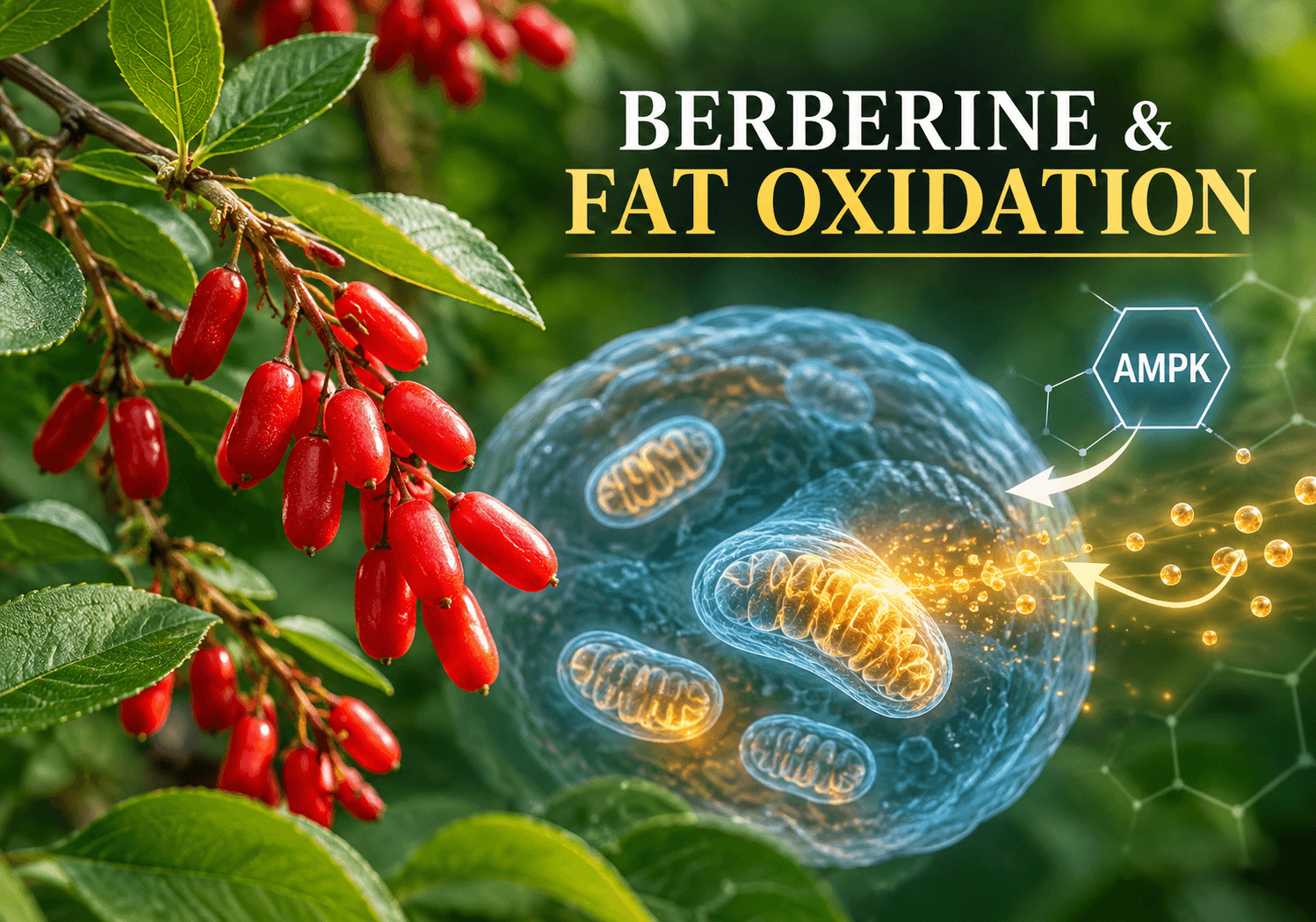
Understanding how does berberine increase fat oxidation at rest is a game-changer for anyone looking to optimize their metabolism without relying on harsh stimulants. As a strength and conditioning coach, I frequently work with clients—especially women over 40 and dedicated fitness enthusiasts—who want to support their body composition goals safely. You have likely heard that berberine is a powerful natural compound. But the real question is how it actually works at the cellular level to help your body burn fat while you are sitting, sleeping, or going about your daily life.
This guide breaks down the science of berberine in plain English. We will explore the biological mechanisms, review what the clinical research says, and provide a practical, step-by-step protocol for integrating this supplement with your training and nutrition.
Quick Answer
Berberine increases fat oxidation at rest primarily by activating an enzyme called AMPK (AMP-activated protein kinase). This enzyme acts as your body’s “master metabolic switch.” When activated, it improves insulin sensitivity, encourages your cells to pull glucose from the blood, and shifts your metabolism to burn stored fatty acids for energy, even when you are not exercising.
The Science: What the Research Says About Berberine and Fat Oxidation
To understand how does berberine increase fat oxidation at rest, we have to look at what happens inside your cells. Berberine is a bioactive compound extracted from several plants, including goldenseal, barberry, and tree turmeric. For centuries, it has been used in traditional medicine. Today, modern science validates its role in supporting metabolic health.
The AMPK Connection: Your Master Metabolic Switch
The most well-documented way berberine works is by activating AMP-activated protein kinase (AMPK). According to research published in the journal Metabolism, berberine activates AMPK in a manner similar to the prescription drug metformin, but through a distinct pathway [1].
Think of AMPK as your body’s fuel gauge. When cellular energy is low, AMPK turns on. Once activated, it does two critical things for fat loss:
- It increases glucose uptake: It signals your muscle cells to pull sugar out of your bloodstream, lowering blood glucose levels.
- It promotes fatty acid oxidation: It tells your body to stop storing fat and start breaking down stored triglycerides in your adipose (fat) tissue to be used as fuel.
By keeping this switch “on,” berberine helps maintain a higher resting metabolic rate, meaning your body burns more calories even when you are sitting at your desk or sleeping.
Mitochondrial Biogenesis and Cellular Energy
Your mitochondria are the powerhouses of your cells. They are responsible for converting nutrients into adenosine triphosphate (ATP), the energy currency of your body. A study in Frontiers in Endocrinology highlights that berberine promotes mitochondrial biogenesis, which is the creation of new, healthy mitochondria [2].
More mitochondria mean your body has a greater capacity to oxidize (burn) fatty acids at rest. When your mitochondrial function is optimized, your metabolic flexibility improves. Metabolic flexibility is your body’s ability to seamlessly switch between burning carbohydrates and burning fat for fuel. Poor metabolic flexibility is a hallmark of insulin resistance and weight gain.
Improving Insulin Sensitivity and Reducing Fat Storage
Insulin is a storage hormone. When your cells become resistant to insulin, your pancreas pumps out more of it. High insulin levels actively block lipolysis (the breakdown of fat) and promote fat storage, particularly around the abdomen.
Clinical trials show that berberine significantly improves insulin sensitivity by upregulating GLUT4 transporters, which are the proteins that allow glucose to enter your cells [3]. By keeping your baseline insulin levels lower and more stable, berberine removes the hormonal blockade that prevents fat oxidation. This creates a cellular environment where resting fat burning can occur more efficiently.
Berberine’s Impact on Resting Metabolism: A Breakdown
To visualize how this compound supports your goals, here is a summary of its primary metabolic effects based on current clinical literature.
| Metabolic Pathway | Effect of Berberine | Result for Fat Loss |
| AMPK Activation | Upregulates the master metabolic switch. | Increases baseline calorie burn and fatty acid breakdown. |
| Insulin Sensitivity | Enhances GLUT4 translocation to cell membranes. | Lowers circulating insulin, removing the blockade on fat burning. |
| Mitochondrial Function | Promotes mitochondrial biogenesis in skeletal muscle. | Improves the cell’s capacity to oxidize fat for energy at rest. |
| Lipid Metabolism | Downregulates enzymes that create new fat (lipogenesis). | Reduces the storage of new dietary fat in adipose tissue. |
| Gut Microbiome | Modulates gut bacteria diversity. | May improve short-chain fatty acid production, supporting metabolic health [4]. |

How to Apply It: A Coach’s Practical Protocol
Knowing the science is only half the battle. As a coach, my job is to translate this research into actionable steps you can use in your daily life. Supplements are not magic pills; they are tools that amplify the good work you are already doing with your diet and exercise.
Here is how to strategically use berberine to maximize resting fat oxidation.
1. Optimal Dosage and Timing
The standard clinical dose of berberine used in most successful trials is 500 mg, taken two to three times per day, totaling 1,000 to 1,500 mg daily.
- Timing matters: Take your dose 15 to 20 minutes before your largest meals, especially those containing carbohydrates. This timing allows the berberine to be in your system as the food is digested, helping to blunt the post-meal blood sugar spike and immediately shuttle those nutrients toward energy production rather than fat storage.
- Cycle it: Some coaches recommend cycling berberine (e.g., taking it for 8 weeks, then taking 2 weeks off) to prevent the body from adapting, though long-term safety data up to 2 years shows it is generally well-tolerated [5].
2. Pairing Berberine with Exercise
Berberine enhances the effects of exercise. To maximize how does berberine increase fat oxidation at rest, you must pair it with the right training stimulus.
Zone 2 Cardio (The Fat-Burning Foundation) Zone 2 cardio is exercise performed at an intensity where you can still hold a conversation (roughly 60-70% of your maximum heart rate).
- Protocol: 3 to 4 sessions per week, 30 to 45 minutes per session.
- Regression: If you are new to exercise, start with a brisk walk on a flat surface for 20 minutes.
- Progression: Use an incline treadmill (e.g., 10% incline at 3.0 mph) or a stationary bike to increase the demand on your leg muscles without spiking your heart rate too high.
- Why it works: Zone 2 cardio specifically trains your mitochondria to become more efficient at burning fat. Berberine amplifies this mitochondrial adaptation.

Resistance Training (The Metabolic Engine) Muscle tissue is metabolically active. The more lean muscle you have, the higher your resting metabolic rate.
- Protocol: 2 to 3 full-body strength sessions per week.
- Exercise Selection: Focus on compound movements like goblet squats, dumbbell Romanian deadlifts, push-ups, and seated rows.
- Sets and Reps: 3 sets of 8 to 12 repetitions per exercise. Rest 60 to 90 seconds between sets.
- Weight Guidance: Choose a weight that feels challenging by the last 2 reps. For a goblet squat, this might be a 25 lb (11 kg) dumbbell for a beginner, progressing to 40 lb (18 kg) as strength improves.

Coach’s Tip: Consistency beats intensity. Taking 500 mg of berberine before your two largest meals and hitting three 30-minute Zone 2 cardio sessions a week will yield better long-term fat oxidation results than sporadic, exhaustive workouts.
Common Mistake: Taking berberine on an empty stomach first thing in the morning without eating. While some do this, it can cause gastrointestinal distress (cramping, diarrhea) in many people. Always take it with or just before a meal to improve tolerance and target postprandial (after-meal) glucose spikes.
3. Sample Weekly Routine
Here is how a sample week looks when integrating berberine with a balanced fitness plan.
| Day | Activity | Berberine Timing |
| Monday | Full-Body Strength Training (45 mins) | 500 mg before lunch, 500 mg before dinner |
| Tuesday | Zone 2 Cardio (30 mins brisk walk or bike) | 500 mg before dinner |
| Wednesday | Active Recovery (light stretching, 20-min walk) | 500 mg before lunch, 500 mg before dinner |
| Thursday | Full-Body Strength Training (45 mins) | 500 mg before lunch, 500 mg before dinner |
| Friday | Zone 2 Cardio (30 mins incline treadmill) | 500 mg before dinner |
| Saturday | Outdoor Activity (hiking, cycling, or sports) | 500 mg before largest meal |
| Sunday | Rest and Meal Prep | 500 mg before largest meal |
Safety Notes and Who Should Be Careful
While berberine is a natural compound, “natural” does not automatically mean safe for everyone. It is a biologically active substance that affects liver enzymes and blood sugar.
Potential Side Effects
The most common side effects are gastrointestinal. Some users report stomach cramping, diarrhea, constipation, or flatulence, especially when first starting.
- Fix: Start with a lower dose (e.g., 500 mg once per day) for the first week to assess tolerance before scaling up to the full 1,000–1,500 mg daily dose.
Drug Interactions
Berberine inhibits certain cytochrome P450 enzymes in the liver (specifically CYP2D6 and CYP3A4). This means it can slow down the clearance of other medications, causing them to build up in your system.
- Blood Sugar Medications: Because berberine lowers blood glucose, combining it with prescription diabetes medications (like metformin or insulin) can increase the risk of hypoglycemia (dangerously low blood sugar).
- Blood Pressure Medications: It may have a mild blood pressure-lowering effect, which could compound with antihypertensive drugs.
- Immunosuppressants and Blood Thinners: Consult a doctor, as berberine may alter how these drugs are metabolized.
Who Should Avoid It
- Pregnant or breastfeeding women: Berberine can cross the placenta and may cause harm to the fetus, or be passed through breast milk.
- Infants and young children: It is not recommended due to the risk of kernicterus (a type of brain damage).
- Individuals with liver disease: Always consult a hepatologist or primary care physician before use.
Related Tips for Maximizing Resting Fat Oxidation
Berberine is a powerful tool, but it works best as part of a holistic lifestyle approach. To truly optimize how does berberine increase fat oxidation at rest, consider these foundational habits.
Prioritize Protein Intake
Protein has the highest thermic effect of food (TEF), meaning your body burns more calories digesting it compared to fats or carbohydrates. Furthermore, adequate protein preserves lean muscle mass during a calorie deficit. Research shows that higher protein diets significantly support resting metabolic rate and satiety [6]. Learn more about how to optimize this in our guide on protein intake metabolism weight loss.
Optimize Your Sleep
Poor sleep disrupts the hormones that regulate hunger (ghrelin and leptin) and reduces insulin sensitivity. If you are sleeping less than 7 hours a night, your body will hold onto fat more stubbornly, regardless of your supplement stack. Discover the hormonal connection in our article on how does sleep affect metabolism weight management.
Incorporate Soluble Fiber
Soluble fiber slows down digestion and the absorption of carbohydrates, leading to a more gradual rise in blood sugar. This pairs beautifully with berberine’s glucose-lowering effects. Foods like oats, chia seeds, and psyllium husk are excellent choices. Read more about how soluble fiber help control appetite for weight loss.
Manage Stress and Cravings Naturally
Chronic stress elevates cortisol, which promotes fat storage in the abdominal area and drives cravings for high-sugar foods. While berberine can help manage food cravings without supplements by stabilizing blood sugar, pairing it with stress-reduction techniques like deep breathing, walking, or meditation creates a powerful synergy for metabolic health.
Frequently Asked Questions (FAQ)
1. Does berberine burn fat while you are sleeping? Yes, indirectly. By improving insulin sensitivity and activating AMPK throughout the day, berberine helps lower baseline insulin levels. Lower insulin at night allows your body to access and oxidize stored fat for energy while you sleep, rather than remaining in a fat-storage mode.
2. How long does it take for berberine to affect fat oxidation? Most clinical studies show measurable improvements in blood sugar and lipid profiles within 4 to 8 weeks of consistent use. Fat oxidation improvements follow a similar timeline, as mitochondrial adaptations and cellular changes take time to develop.
3. Can berberine replace exercise for fat loss? No. While berberine activates some of the same metabolic pathways as exercise (like AMPK), it cannot replicate the cardiovascular, muscular, and bone-density benefits of physical activity. It is a supplement to enhance your efforts, not a replacement for them.
4. What is the best time to take berberine for fat oxidation? The best time is 15 to 20 minutes before your largest meals, particularly those containing carbohydrates. This timing maximizes its ability to blunt post-meal blood sugar spikes and shuttle nutrients into muscle cells rather than fat stores.
5. Does berberine work better with a calorie deficit? Yes. Berberine improves metabolic flexibility and insulin sensitivity, making it easier for your body to tap into stored fat for energy. However, a calorie deficit is still the fundamental requirement for overall body fat reduction. Berberine simply makes the process more efficient and helps preserve metabolic rate.
6. Are there side effects of berberine for weight management? The most common side effects are gastrointestinal, such as stomach cramping, diarrhea, or constipation. These can often be mitigated by starting with a lower dose (500 mg once daily) and taking the supplement with food. Always consult a doctor if you take other medications.
Conclusion
Understanding how does berberine increase fat oxidation at rest empowers you to make informed, evidence-based decisions about your metabolic health. By activating the AMPK enzyme, improving insulin sensitivity, and supporting mitochondrial function, berberine creates a cellular environment that is primed to burn fat for fuel, even when you are not actively working out.
However, supplements are just one piece of the puzzle. To see real, lasting results, pair your berberine supplementation with consistent Zone 2 cardio, progressive resistance training, adequate protein intake, and quality sleep. Always prioritize safety, start with a low dose to assess tolerance, and consult your healthcare provider before adding new supplements to your routine.
Take control of your metabolism with smart, sustainable habits, and let the science work in your favor.