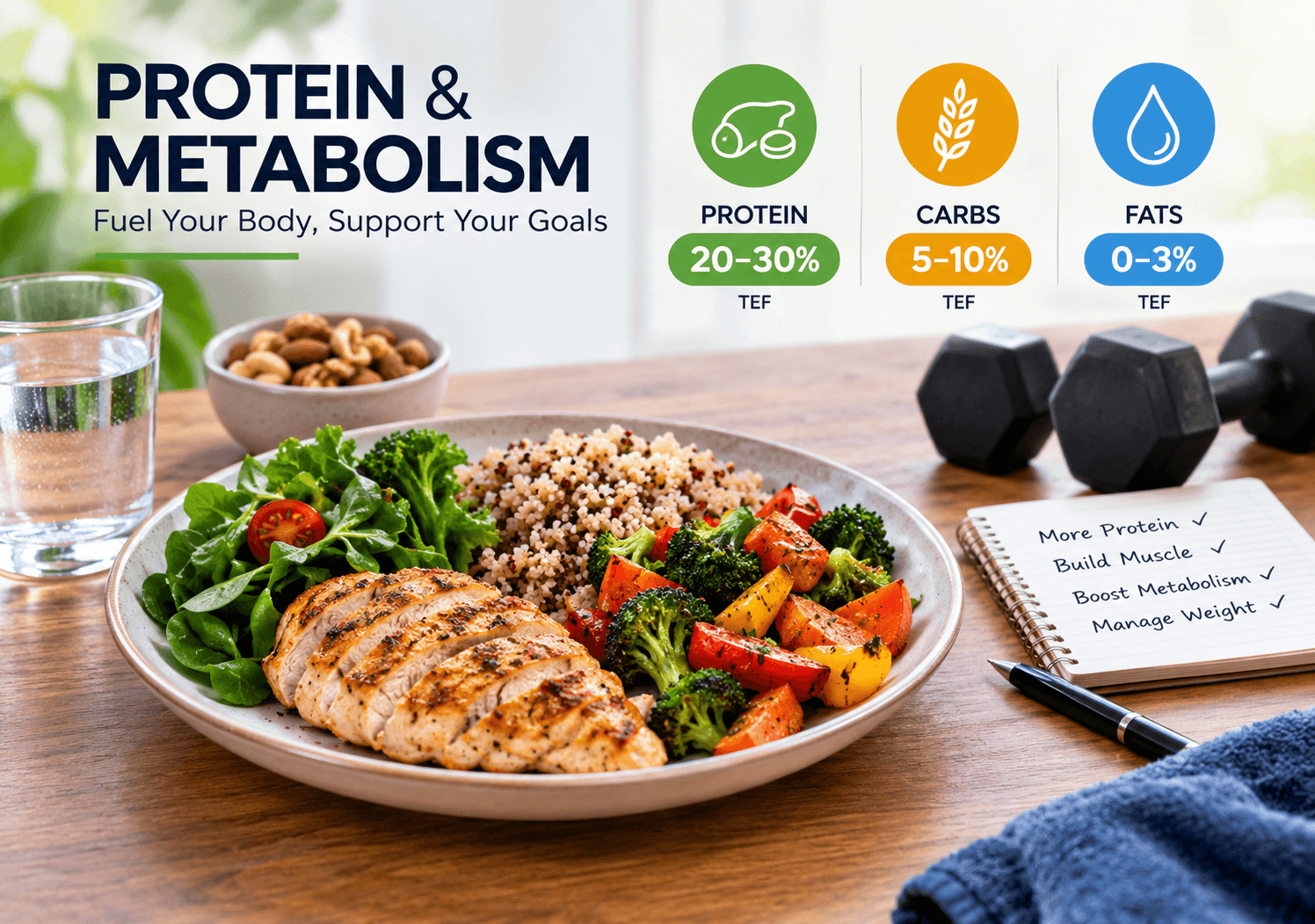
When clients sit down with me to discuss their fitness goals, one question consistently rises to the top: “How does protein intake affect metabolism and weight management?” The answer is not a simple myth or a marketing gimmick. It is rooted in well-documented human physiology. Increasing your dietary protein directly influences three core biological processes: the thermic effect of food, the preservation of lean muscle mass, and the regulation of appetite-controlling hormones. By understanding these mechanisms, you can build a sustainable, effective nutrition and training plan that supports long-term health.
This guide breaks down the exact science behind protein and metabolism. We will also cover practical, step-by-step strategies to calculate your needs, time your meals, and pair your nutrition with resistance training for optimal results.
Quick Answer
Protein intake boosts metabolism through the thermic effect of food (TEF), burning 20–30% of its calories during digestion. It also preserves lean muscle mass, which maintains your resting metabolic rate during weight loss. Finally, protein increases satiety hormones like GLP-1, reducing overall calorie intake and supporting long-term weight management.
Question: How Does Protein Intake Affect Metabolism and Weight Management?
To truly optimize your body composition, you must understand the underlying biology. Let us explore the three primary ways dietary protein influences your metabolic rate and weight management efforts, backed by peer-reviewed research.
1. The Thermic Effect of Food (TEF)
Every time you eat, your body expends energy to digest, absorb, and process nutrients. This is known as the thermic effect of food (TEF), or diet-induced thermogenesis. However, not all macronutrients require the same amount of energy to process.
Protein has the highest thermic effect of all macronutrients. Research published in Nutrition & Metabolism indicates that the body uses approximately 20% to 30% of the calories in protein just to digest it (Westerterp, 2004). In contrast, the body only uses 5% to 10% of carbohydrate calories and 0% to 3% of fat calories for digestion.
For example, if you consume a chicken breast containing 200 calories of protein, your body will burn roughly 40 to 60 calories just to process it. This metabolic boost is automatic and requires no extra effort on your part. Over weeks and months, this elevated energy expenditure compounds, making a high-protein diet a powerful tool for increasing metabolism naturally for weight loss.
2. Preserving Lean Body Mass and Resting Metabolic Rate
Your resting metabolic rate (RMR) is the number of calories your body burns at complete rest to maintain vital functions like breathing and circulation. Lean body mass, particularly skeletal muscle, is highly metabolically active tissue. The more muscle you have, the higher your RMR.
When you enter a caloric deficit to lose weight, your body naturally breaks down both fat and muscle tissue for energy. Losing muscle mass causes your RMR to drop, which is why many people experience metabolic adaptation or “plateaus” during prolonged diets.
Adequate protein intake acts as a protective shield for your muscles. A comprehensive review in The American Journal of Clinical Nutrition demonstrated that higher protein diets during weight loss significantly preserve fat-free mass compared to lower protein diets (Leidy et al., 2015). By providing a steady supply of essential amino acids, you stimulate muscle protein synthesis (MPS), signaling your body to retain muscle even when calories are low. This directly supports a higher metabolic rate throughout your weight loss journey.
3. Protein’s Impact on Satiety and Hunger Hormones
Weight management is not just about calories out; it is heavily influenced by calories in, which is dictated by hunger and satiety. Protein is the most satiating macronutrient. It directly influences several key hunger-regulating hormones in the gut and brain.
Consuming protein increases the release of satiety hormones such as peptide YY (PYY) and glucagon-like peptide-1 (GLP-1). Simultaneously, it suppresses ghrelin, the primary hormone responsible for stimulating appetite. A study highlighted by the National Institutes of Health (NIH) confirms that meals higher in protein lead to greater feelings of fullness and a spontaneous reduction in subsequent calorie intake.
If you are struggling with late-night snacking or constant cravings, evaluating how protein helps control hunger during weight loss can be a game-changer for your adherence to a healthy diet.
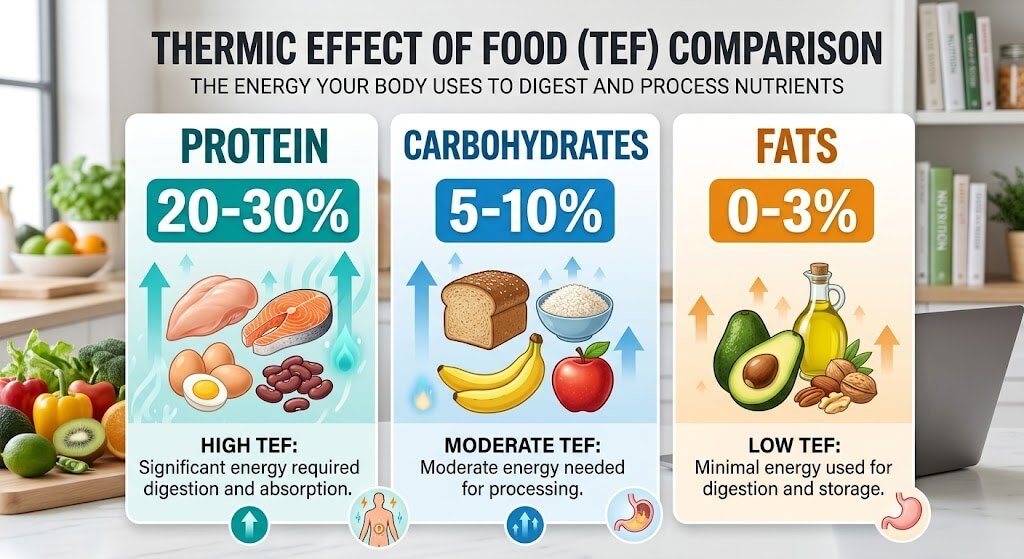
Data Comparison: Macronutrient Metabolic Impact
To visualize how protein compares to other macronutrients, review the table below. This data illustrates why prioritizing protein is a cornerstone of effective weight management.
| Macronutrient | Thermic Effect (TEF) | Satiety Rating (per calorie) | Primary Role in Weight Management |
| Protein | 20% – 30% | High | Preserves muscle, maximizes TEF, controls hunger hormones. |
| Carbohydrates | 5% – 10% | Moderate | Provides immediate energy for high-intensity training; fiber aids fullness. |
| Fats | 0% – 3% | Moderate to High | Supports hormone production and nutrient absorption; slows gastric emptying. |
Data synthesized from peer-reviewed metabolic research, including Westerterp (2004) and Halton & Hu (2004).
Applying the Science: How Does Protein Intake Affect Metabolism and Weight Management in Your Daily Routine?
Understanding the science is only half the battle. The real value comes from applying these principles to your daily life. As a coach, I guide my clients through specific, actionable steps to optimize their protein intake without making their lives overly complicated.
Step 1: Calculate Your Daily Protein Needs
A common mistake is guessing protein portions or relying on outdated, low recommendations. The Recommended Dietary Allowance (RDA) of 0.36 grams per pound (0.8 g/kg) is the minimum to prevent deficiency, not the optimal amount for weight management or muscle preservation.
For individuals engaging in regular resistance training and aiming for fat loss or weight management, the evidence supports a higher intake. The American College of Sports Medicine (ACSM) and the International Society of Sports Nutrition (ISSN) recommend 0.7 to 1.0 grams of protein per pound of body weight (1.6 to 2.2 g/kg).
Example Calculation:
If you weigh 150 lb (68 kg):
- Lower end: 150 lb × 0.7 g = 105 grams of protein per day.
- Higher end: 150 lb × 1.0 g = 150 grams of protein per day.
Aim for the middle to upper end of this range if you are in a caloric deficit, as the need for protein increases when energy intake is restricted.
Step 2: Optimize Meal Timing and Distribution
Eating 120 grams of protein in a single dinner meal is not the most effective strategy. Your body has a limit on how much protein it can utilize for muscle protein synthesis in one sitting.
Research suggests that distributing protein evenly across 3 to 4 meals maximizes the anabolic response. Aim for 25 to 40 grams of high-quality protein per meal. This consistent dosing keeps amino acids available in your bloodstream throughout the day, continuously supporting muscle maintenance and keeping hunger hormones suppressed.
Coach’s Tip
Spread your protein intake evenly across 3 to 4 meals. Hitting 30 to 40 grams of protein per meal maximizes muscle protein synthesis better than eating it all at dinner. Start your day with a high-protein breakfast to set a strong satiety baseline for the next 12 hours.
Step 3: Pair Protein with Resistance Training
Diet alone cannot optimize your metabolism. You must provide a mechanical stimulus to tell your body to keep its muscle. Resistance training is non-negotiable for long-term weight management.
Here is a foundational, full-body resistance exercise you can do at home or in the gym: the Goblet Squat. This movement targets the quadriceps, glutes, hamstrings, and core, demanding significant energy and stimulating major muscle groups.
Goblet Squat Execution:
- Setup: Hold a dumbbell or kettlebell vertically against your chest with both hands. Stand with feet shoulder-width apart (about 12 inches / 30 cm apart), toes slightly pointed outward.
- Tempo: Use a 3-1-1-0 tempo. Take 3 seconds to lower your hips, pause for 1 second at the bottom, take 1 second to drive up, and 0 seconds to rest at the top.
- Form Cue: Keep your chest up, core braced, and push your knees outward so they track over your toes. Do not let your lower back round.
- Weight Guidance: Beginners should start with a 15 lb to 20 lb (7 kg to 9 kg) dumbbell. Focus on perfect form before adding weight.
- Sets and Reps: Perform 3 sets of 8 to 12 repetitions.
- Rest: Rest for 60 to 90 seconds between sets.
- Regression (Easier): Perform a bodyweight squat, sitting back onto a chair or bench, then stand back up without using your hands to push off.
- Progression (Harder): Transition to a barbell back squat, increasing the load to 70% to 80% of your one-rep max for 4 sets of 5 to 8 repetitions.

Step 4: Implement a Sample Daily Protein Plan
To make this practical, here is what a 130-gram protein day looks like using whole foods and one convenient supplement. This is tailored for a 150 lb (68 kg) individual.
- Breakfast (35g protein): 3 whole eggs (18g) scrambled with 1 cup (240 ml) of liquid egg whites (26g), served with 1 cup of spinach. (Total: ~35g)
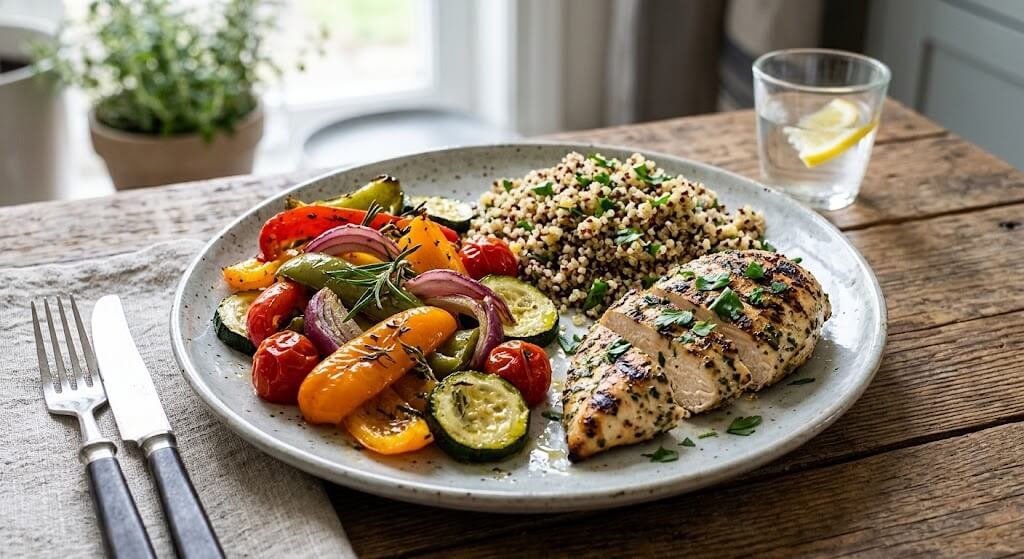
- Lunch (40g protein): 5 oz (140 g) of grilled chicken breast, 1 cup of cooked quinoa, and 1.5 cups of mixed roasted vegetables tossed in 1 tablespoon of olive oil. (Total: ~40g)
- Afternoon Snack (25g protein): 1 scoop of whey or plant-based protein powder mixed with water or unsweetened almond milk, alongside a small apple. If you are curious about can protein powder help control hunger during weight loss, this is an ideal application for curbing afternoon cravings. (Total: ~25g)
- Dinner (30g protein): 5 oz (140 g) of baked salmon, a large mixed green salad with vinaigrette, and a small sweet potato. (Total: ~30g)
Safety Notes and Medical Considerations
While high-protein diets are safe and highly effective for the vast majority of healthy individuals, there are important safety considerations to keep in mind.
First, individuals with pre-existing chronic kidney disease (CKD) should consult a nephrologist or registered dietitian before increasing protein intake, as compromised kidneys may struggle to filter the increased nitrogen waste. However, it is crucial to note that high protein intake does not cause kidney damage in healthy individuals with normal renal function, a myth thoroughly debunked by extensive clinical research.
Second, drastically increasing protein without adequate hydration can lead to mild dehydration, as the body requires more water to process and excrete urea. Aim to drink at least half your body weight in ounces of water daily (e.g., a 150 lb person should drink ~75 oz, or about 2.2 liters).
Always prioritize whole food sources. Relying solely on processed protein bars or shakes can lead to excessive intake of artificial sweeteners, sodium, and saturated fats, while missing out on vital micronutrients.
Common Mistake
Relying solely on protein shakes while neglecting whole food sources. Shakes are convenient, but whole foods like chicken, fish, eggs, and legumes provide essential micronutrients, fiber, and phytonutrients that isolated supplements lack. Use supplements to fill gaps, not as your primary foundation.
Related Lifestyle Factors for Weight Management
Protein is a powerful lever, but it does not operate in a vacuum. To fully support your metabolism and weight management goals, you must address other foundational lifestyle factors.
- Sleep Quality: Poor sleep disrupts the very hunger hormones protein tries to regulate. Sleep deprivation increases ghrelin and decreases leptin, driving cravings for high-calorie, low-nutrient foods. Learn more about how sleep affects metabolism and weight management to optimize your recovery.
- Dietary Fiber: Fiber works synergistically with protein to slow gastric emptying and promote fullness. Incorporating high-fiber foods like legumes, berries, and oats can enhance the satiety benefits of your high-protein meals. Research confirms that dietary fiber helps with appetite and weight management.
- Micronutrient Support: Your metabolic pathways require specific vitamins and minerals to function efficiently. Ensuring adequate intake of B vitamins, magnesium, and iron is critical. Discover which nutrients support normal energy metabolism to keep your cellular engines running smoothly.
- Age-Related Changes: As we age, we naturally experience anabolic resistance, meaning our muscles become less responsive to protein. Older adults may need to aim for the higher end of the protein spectrum (1.0 to 1.2 g/lb) to maintain muscle mass. Review our guide on how to increase metabolism naturally after 40 for age-specific strategies.
Frequently Asked Questions
1. Does eating more protein automatically boost your metabolism?
Yes, but within a specific context. Protein increases energy expenditure through the thermic effect of food (TEF), burning 20–30% of its calories during digestion. However, this boost is relative to the total calories consumed. It supports a higher metabolic rate primarily by preserving calorie-burning muscle mass during weight loss, not by acting as a magical fat-burning pill.
2. How much protein do I need per day to lose weight?
For optimal weight loss and muscle preservation, aim for 0.7 to 1.0 grams of protein per pound of body weight (1.6 to 2.2 g/kg). For a 150 lb (68 kg) person, this equals 105 to 150 grams daily. Distribute this evenly across 3 to 4 meals to maximize muscle protein synthesis and control hunger throughout the day.
3. Can I get enough protein on a plant-based diet for weight management?
Absolutely. Plant-based proteins like lentils, chickpeas, tofu, tempeh, and quinoa are excellent choices. While some plant proteins have a lower leucine content (an amino acid critical for muscle synthesis), you can easily meet your needs by consuming a variety of plant sources throughout the day and slightly increasing your total protein target by 10–15% to account for lower digestibility.
4. Will a high-protein diet damage my kidneys?
No, not if your kidneys are healthy. Extensive research shows that high protein intake does not cause kidney damage in individuals with normal renal function. However, if you have pre-existing chronic kidney disease (CKD), you must consult a doctor or renal dietitian before increasing your protein intake, as your kidneys may struggle to process the additional nitrogen waste.
5. Is it better to get protein from whole foods or supplements?
Whole foods should always be your primary source. Foods like chicken, fish, eggs, Greek yogurt, and legumes provide essential vitamins, minerals, and fiber that supplements lack. Protein powders (like whey or pea protein) are highly effective tools for convenience and hitting daily targets, but they should complement, not replace, a nutrient-dense whole-food diet.
6. Does the timing of protein intake matter for metabolism?
Total daily protein intake is the most critical factor. However, timing plays a supportive role. Distributing protein evenly (25–40 grams) across 3 to 4 meals optimizes muscle protein synthesis better than consuming it all in one sitting. Consuming protein within 1 to 2 hours after resistance training also helps maximize muscle repair and recovery.
Conclusion
Understanding exactly how does protein intake affect metabolism and weight management gives you a powerful, evidence-based tool for achieving your fitness goals. By leveraging the high thermic effect of protein, protecting your lean muscle mass during a caloric deficit, and naturally regulating your hunger hormones, you set your body up for sustainable success.
Remember to calculate your specific needs based on your body weight, distribute your intake evenly throughout the day, and pair your nutrition with consistent resistance training. Avoid the trap of quick fixes, and focus on building habits centered around high-quality, whole-food protein sources.