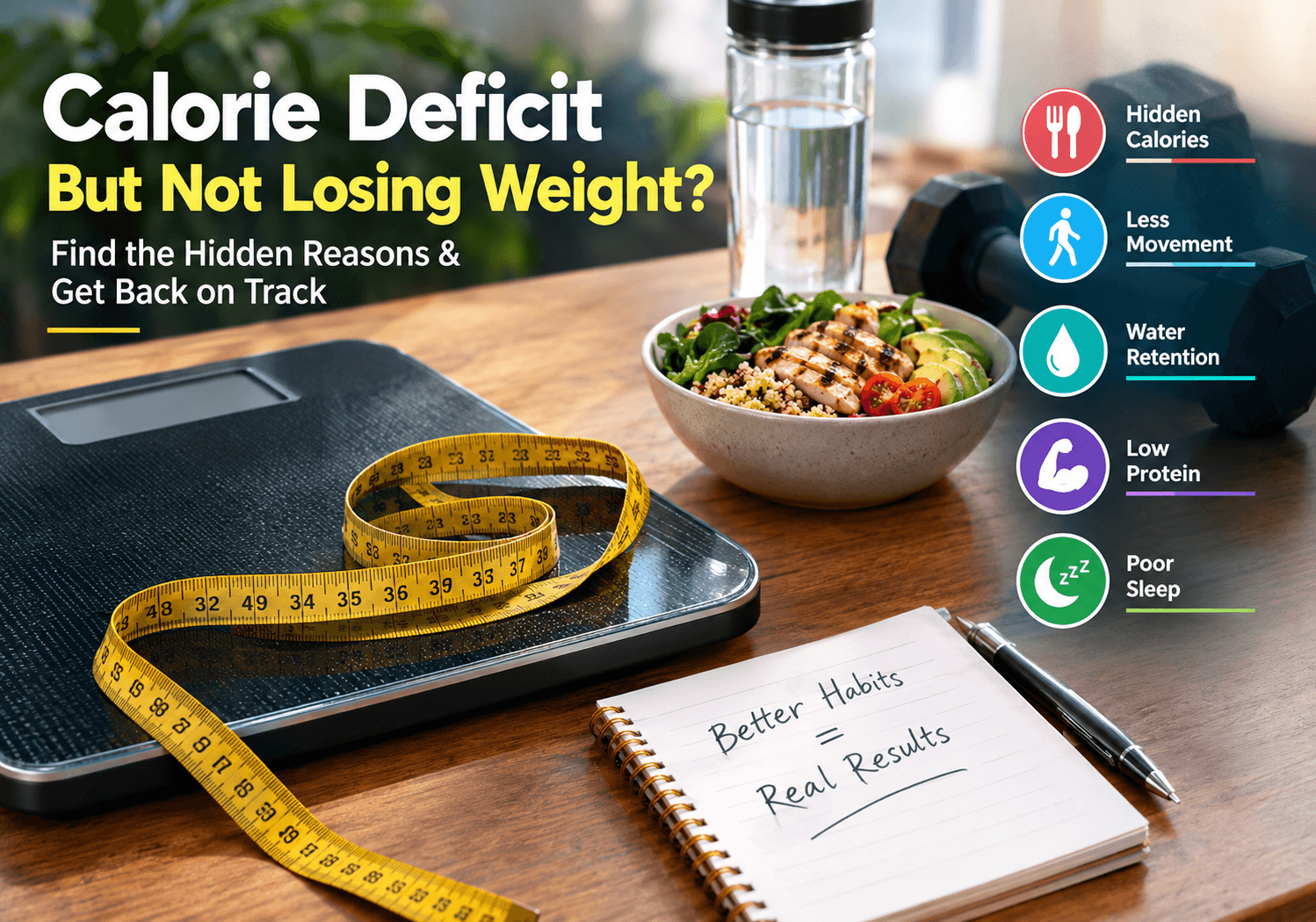
You are tracking your meals, hitting the gym, and eating in a calorie deficit but not losing weight. It is one of the most frustrating experiences in fitness. You do the math, cut your portions, and step on the scale, only to see the exact same number staring back at you for weeks.
Before you throw in the towel or slash your calories to dangerous levels, take a deep breath. This scenario is incredibly common, and it is rarely a sign that your body is “broken.” More often, it is a signal that a few hidden variables are throwing off your energy balance. As a strength and conditioning coach, I see this weekly. The solution is not to starve yourself. The solution is to audit your habits, adjust your training, and give your metabolism the right signals to burn fat.
This guide will break down the exact science behind weight loss stalls and give you a practical, step-by-step action plan to get your progress moving again.
Quick Answer
If you are in a calorie deficit but not losing weight, the most common causes are hidden calories (like cooking oils or sauces), a drop in daily movement (NEAT), water retention from new exercise routines, or inadequate protein intake. To fix it, weigh your food accurately, prioritize strength training to preserve muscle, and ensure you are sleeping 7–9 hours per night to regulate hunger hormones.
The Science Behind a Calorie Deficit But Not Losing Weight
Weight loss fundamentally comes down to energy balance: consuming fewer calories than your body expends. However, the human body is not a simple calculator. It is a highly adaptive survival machine. When you restrict calories, your body responds by trying to conserve energy. This phenomenon is known as metabolic adaptation or adaptive thermogenesis.
Research published by the National Institutes of Health (NIH) shows that as you lose weight, your resting energy expenditure decreases. This happens for two reasons. First, a smaller body requires less energy to function. Second, your body becomes more efficient, burning fewer calories during the same activities.
Additionally, the Thermic Effect of Food (TEF) plays a role. TEF is the energy your body uses to digest and process food. If your overall food volume drops significantly, the calories burned through digestion also drop.
When you combine a slightly lower metabolism with minor tracking errors or increased water retention, the scale can easily stall, even if you are technically in a deficit. Understanding this removes the blame and gives you clear, actionable variables to adjust.
5 Hidden Reasons Your Weight Loss Has Stalled
If you are experiencing a calorie deficit but not losing weight, one or more of these five factors is likely at play.
1. You Are Underestimating Caloric Intake
This is the most common culprit. Studies consistently show that people underestimate their food intake by 20% to 50%. A “tablespoon” of peanut butter poured from the jar can easily be three tablespoons. A splash of olive oil in a pan can add 120 calories before you even cook your chicken. Liquid calories from coffee creamers, juices, and alcoholic beverages are also frequently excluded from daily logs. If your deficit is supposed to be 500 calories, but you are underestimating by 400, your actual deficit is only 100 calories. This is too small to produce noticeable weekly scale changes.
2. Metabolic Adaptation and Reduced NEAT
Non-Exercise Activity Thermogenesis (NEAT) includes all the calories you burn outside of formal exercise: walking to your car, fidgeting, standing, and doing chores. When you eat less, your brain subconsciously reduces your NEAT to save energy. You might feel more fatigued, sit more often, or take the elevator instead of the stairs. A study in the American Journal of Clinical Nutrition highlights that NEAT can vary by up to 2,000 calories per day between individuals. A drop in NEAT can completely erase the calorie deficit you created through diet and gym workouts.
3. Water Retention and Muscle Inflammation
If you recently started a new workout program or increased your training intensity, your scale weight might not reflect fat loss. Strength training causes microscopic tears in muscle fibers. The body repairs this damage through an inflammatory response, which draws water into the muscle tissue. This is a good thing—it means your muscles are adapting and growing. However, water weighs about 8.3 pounds per gallon. Retaining just half a gallon of water will mask a full pound of fat loss on the scale. Furthermore, elevated cortisol from stress or poor sleep can cause systemic water retention.
4. Inadequate Protein Intake
Protein is the most satiating macronutrient and has the highest thermic effect, meaning your body burns more calories digesting it compared to fats or carbs. If your protein intake is too low, you will feel hungrier, making dietary adherence difficult. More importantly, without adequate protein, your body may break down skeletal muscle for energy during a calorie deficit. Losing muscle lowers your basal metabolic rate, making it harder to maintain a deficit. Ensuring optimal protein intake and metabolism is critical for preserving lean mass while dropping fat.
5. Poor Sleep and Elevated Stress Hormones
Sleep is not a passive state; it is an active metabolic regulator. Chronic sleep deprivation disrupts the balance of leptin (the hormone that signals fullness) and ghrelin (the hormone that signals hunger). A lack of sleep also elevates cortisol, which promotes fat storage, particularly around the midsection, and increases water retention. Understanding how sleep affects metabolism is just as important as counting your macros. If you are sleeping less than 7 hours a night, your body is fighting against your weight loss efforts.
How to Apply It: The Coach’s Action Plan to Break the Plateau
Knowing the science is only half the battle. Here is your practical, step-by-step action plan to fix a calorie deficit but not losing weight scenario.
Step 1: Audit Your Tracking for One Week
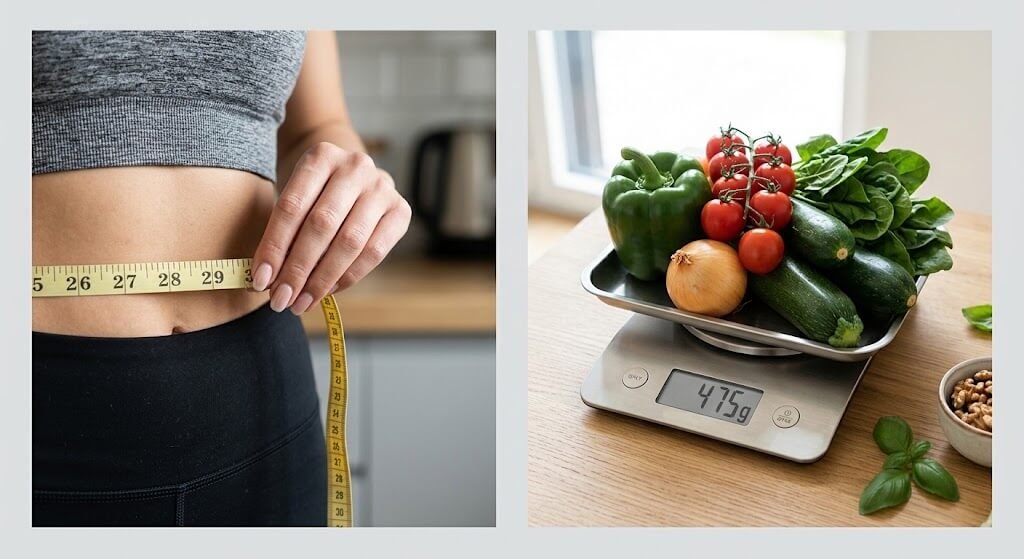
Stop guessing. For seven days, weigh every single ingredient on a digital food scale in grams or ounces. Do not use “eyeball” measurements or generic database entries for restaurant meals. Log every drop of cooking oil, every condiment, and every beverage. This single habit often reveals a 200- to 400-calorie discrepancy that immediately restarts fat loss.
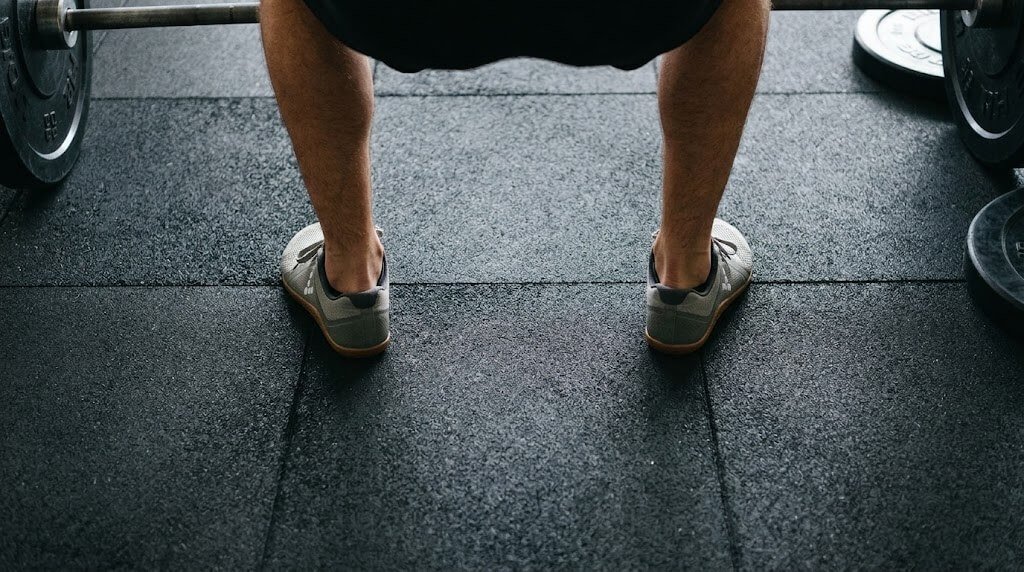
Step 2: Prioritize Strength Training to Protect Metabolism
Cardio burns calories in the moment, but strength training builds the metabolic engine that burns calories 24/7. Preserving or building muscle mass is the most effective way to combat metabolic adaptation.
Let’s look at one of the most effective, full-body metabolic builders: The Goblet Squat.
Muscles Worked
- Primary: Quadriceps, glutes, hamstrings.
- Secondary: Core (rectus abdominis, obliques), upper back (rhomboids, trapezius), and calves.
Benefits
The goblet squat teaches proper squat mechanics, builds lower-body muscle to support a healthy metabolic rate, and elevates your heart rate, providing a mild cardiovascular benefit.
Step-by-Step Form
- Setup: Hold a dumbbell or kettlebell vertically against your chest, cupping the top end with both hands. Stand with your feet shoulder-width apart, toes pointed slightly outward (about 15 degrees).
- Brace: Take a deep breath into your belly and brace your core as if you are about to be punched. Keep your chest proud and your spine neutral.
- Descent: Push your hips back and bend your knees, lowering your body as if sitting into a chair. Keep the weight close to your chest. Descend until your elbows lightly touch the inside of your knees, or until your thighs are parallel to the floor.
- Ascent: Drive through your entire foot (especially the midfoot and heel) to stand back up. Squeeze your glutes at the top without leaning backward. Exhale as you rise.

Sets, Reps, and Weight by Goal
| Goal | Sets | Reps | Rest | Tempo (Eccentric/Pause/Concentric) | Weight Guidance |
| Muscle Endurance | 3 | 12–15 | 45 sec | 3 sec down / 1 sec pause / 1 sec up | Light to Moderate (e.g., 15–25 lb / 7–11 kg) |
| Muscle Growth | 4 | 8–10 | 60–90 sec | 2 sec down / 1 sec pause / 1 sec up | Moderate to Heavy (e.g., 30–50 lb / 14–23 kg) |
| Strength | 5 | 5–6 | 2–3 min | 2 sec down / 0 sec pause / explosive up | Heavy (e.g., 50–70+ lb / 23–32+ kg) |
Coach’s Tip: Focus on the tempo. Slowing down the lowering phase (eccentric) to 2–3 seconds increases time under tension, which is a primary driver for muscle growth and metabolic demand.
Common Mistake: Letting the heels lift off the ground or the knees cave inward. Fix: Keep your weight distributed evenly across your whole foot. If your knees cave in, consciously push them outward to track over your toes as you descend.
Variations
- Regression (Easier): Box Squat. Place a bench or box behind you. Sit back until your glutes tap the box, then stand. This limits the range of motion and builds confidence.
- Progression (Harder): Barbell Front Squat. Once you can comfortably goblet squat 50 lb (23 kg) for 3 sets of 10, transition to a barbell across your front deltoids to handle heavier loads.
Alternatives
- No Equipment: Bodyweight Bulgarian Split Squats (3 sets of 10 per leg).
- Machine: Leg Press (excellent for isolating the quads without taxing the lower back).
- Cable: Cable Goblet Squat (using a rope attachment held at the chest for constant tension).
Step 3: Increase Daily Movement (NEAT)
Do not just rely on your one-hour gym session. Set a daily step goal. A practical target is 8,000 to 10,000 steps per day. If you currently average 4,000 steps, increase it by 2,000 steps each week until you hit your target. This gentle increase in activity boosts calorie expenditure without spiking hunger or requiring long recovery periods. Learning to increase metabolism naturally often starts with simply walking more.

Step 4: Adjust Macros, Not Just Total Calories
Instead of dropping your total calories further, shift your macronutrient ratio. Aim for 0.8 to 1 gram of protein per pound of your target body weight. For example, if your goal weight is 150 lb (68 kg), aim for 120–150 grams of protein daily. This supports muscle retention and leverages how protein helps control hunger during a deficit. Fill the rest of your calories with high-volume, fiber-rich vegetables and healthy fats.
Sample Weekly Strength and NEAT Plan
To put this into practice, here is a balanced weekly template designed to preserve muscle, manage fatigue, and keep NEAT high.
| Day | Focus | Workout Details | NEAT Goal |
| Monday | Lower Body Strength | Goblet Squats (4×8), Romanian Deadlifts (3×10), Walking Lunges (3×12/leg), Plank (3×45 sec) | 8,000 steps |
| Tuesday | Upper Body Strength | Dumbbell Bench Press (4×8), Bent-Over Rows (4×8), Overhead Press (3×10), Bicep Curls (3×12) | 8,000 steps |
| Wednesday | Active Recovery | 30-minute brisk walk or light cycling + full body stretching | 10,000 steps |
| Thursday | Full Body Metabolic | Goblet Squats (3×12), Push-ups (3x max), Dumbbell Step-ups (3×10/leg), Farmer’s Carry (3x 40 yards / 36 meters) | 8,000 steps |
| Friday | Upper Body Hypertrophy | Lat Pulldowns (4×10), Incline Dumbbell Press (3×10), Lateral Raises (3×15), Tricep Extensions (3×12) | 8,000 steps |
| Saturday | Outdoor Activity | Hiking, recreational sports, or a long 45-minute walk | 10,000+ steps |
| Sunday | Rest & Prep | Meal prep for the week, light stretching, review food logs | 6,000 steps (baseline) |
Note: Distances are provided in yards with meters in brackets. Always warm up for 5–10 minutes with dynamic movements like leg swings and arm circles before lifting.
Safety Notes and When to See a Professional
While a plateau is usually a matter of tweaking habits, it is important to recognize when to seek professional help. If you have been in a strict, well-tracked calorie deficit for over 4–6 weeks with zero changes in body measurements, energy levels, or scale weight, consult a healthcare provider.
Conditions such as hypothyroidism, polycystic ovary syndrome (PCOS), or certain medications can significantly impact metabolic rate and water retention. Furthermore, if you are experiencing extreme fatigue, hair loss, or disrupted menstrual cycles, your calorie deficit may be too aggressive.
This article is for general information and is not a substitute for advice from a doctor or physical therapist. Always consult a healthcare professional before starting a new diet or exercise program, especially if you have pre-existing health conditions.
Related Tips for Long-Term Success
Breaking a plateau is not just about what you do in the gym; it is about your lifestyle.
- Prioritize Fiber: Dietary fiber slows digestion and promotes satiety. Research shows that dietary fiber helps with appetite and weight management by keeping you full longer on fewer calories. Aim for 25–35 grams of fiber daily from vegetables, fruits, legumes, and whole grains.
- Stay Hydrated: Thirst is often mistaken for hunger. Drinking water before meals can also support a healthy metabolic rate. Ensure you are getting the right nutrients to support normal energy metabolism, including B-vitamins, magnesium, and adequate hydration.
- Be Wary of “Metabolism-Boosting” Supplements: The supplement industry is full of exaggerated claims. While some ingredients have mild effects, they are not magic pills. If you choose to use them, learn how to evaluate ingredients in weight management supplements to avoid wasting money on proprietary blends with underdosed, ineffective ingredients.
- Track Measurements, Not Just Weight: The scale is a flawed tool. It measures bone, water, muscle, and fat. Take progress photos every two weeks in the same lighting, and measure your waist, hips, and thighs. Often, you are losing inches of fat even when the scale is stuck.
FAQ
Why am I in a calorie deficit but not losing weight after two weeks?
Two weeks is a very short timeframe. Water retention from dietary sodium, hormonal fluctuations, or a new exercise routine can easily mask fat loss. Stick to your plan for at least 4 to 6 weeks before making major changes, and track body measurements alongside scale weight.
Can stress prevent weight loss even in a calorie deficit?
Yes. Chronic stress elevates cortisol, which can increase water retention and promote fat storage, particularly visceral fat. High stress also disrupts sleep, which negatively impacts hunger hormones like ghrelin and leptin, making adherence to a deficit much harder.
How much protein should I eat to break a weight loss plateau?
Aim for 0.8 to 1 gram of protein per pound of your target body weight (or 1.8 to 2.2 grams per kg). This high protein intake preserves lean muscle mass, keeps you full, and increases the thermic effect of food, all of which support fat loss.
Does lifting weights help break a weight loss plateau?
Absolutely. Strength training is one of the best tools to combat metabolic adaptation. By building or preserving skeletal muscle, you increase your resting metabolic rate, meaning your body burns more calories at rest, making your calorie deficit more effective.
Should I lower my calories more if the scale stops moving?
Not immediately. First, verify your tracking accuracy with a food scale and increase your daily steps (NEAT). Dropping calories too low can lead to muscle loss, severe fatigue, and a further slowdown of your metabolism. Adjust activity first, calories second.
How long does a weight loss plateau typically last?
A true physiological plateau usually resolves within 2 to 4 weeks once the correct adjustments are made (e.g., fixing tracking errors, increasing protein, or adding strength training). If it lasts longer, it is time to reassess your baseline calorie needs with a professional.
Conclusion
Finding yourself in a calorie deficit but not losing weight is a frustrating but solvable puzzle. It is rarely a sign of failure. More often, it is your body’s natural response to hidden calories, reduced daily movement, water retention, or a lack of muscle-preserving strength training.
Do not panic and slash your calories to unsustainable levels. Instead, audit your food tracking with a digital scale, prioritize compound movements like the goblet squat to protect your metabolism, and focus on getting 7–9 hours of quality sleep. By applying these evidence-based strategies, you will provide your body with the right environment to shed fat and build a stronger, healthier physique. Stay consistent, trust the process, and let the science guide your progress.