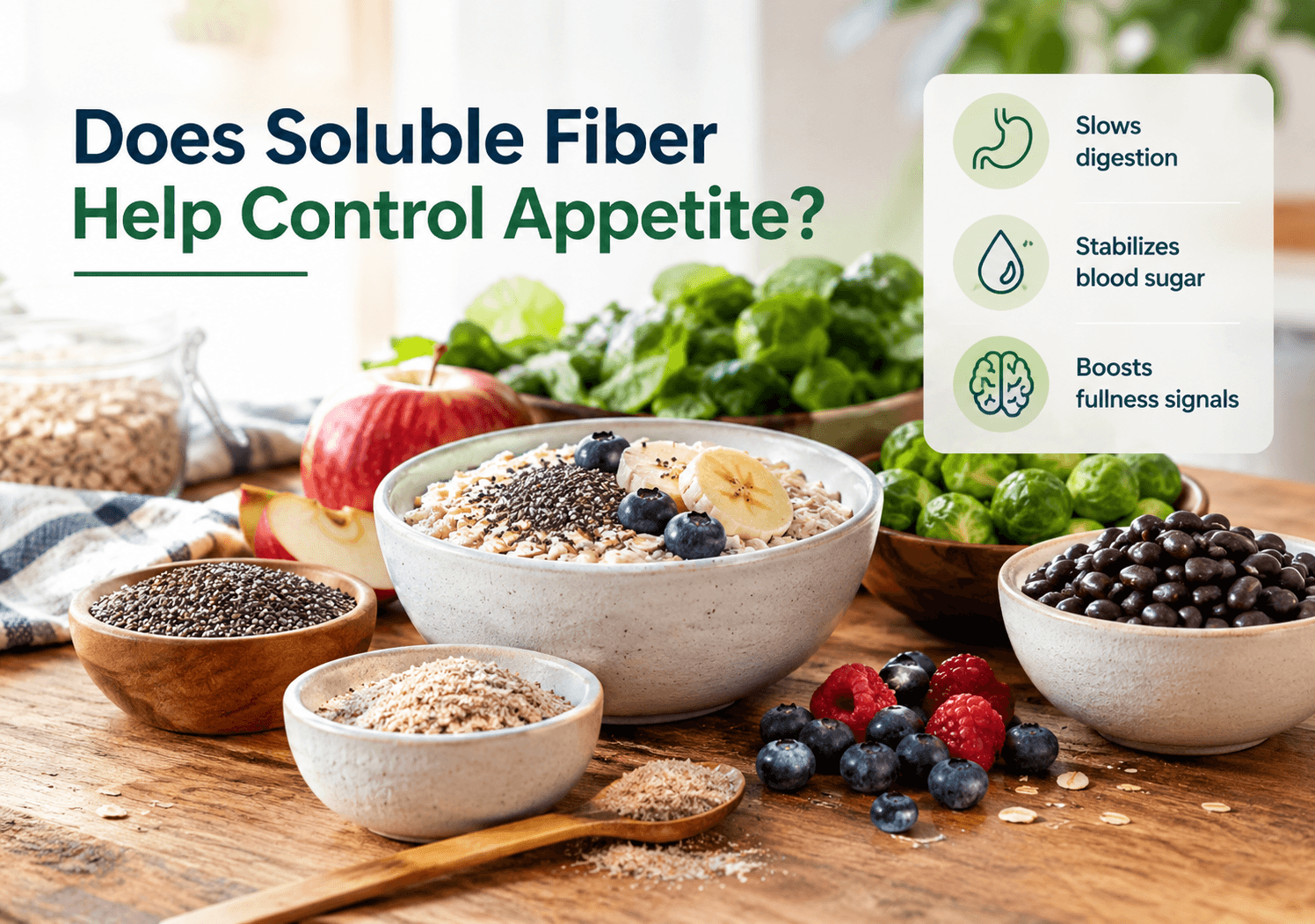
If you are trying to manage your weight or simply stop constant snacking, you might be asking: does soluble fiber help control appetite? The short answer is yes. Soluble fiber is a powerful, natural tool for managing hunger. As a strength and conditioning coach, I see clients struggle with hunger pangs that derail their fitness goals. Adding the right type of fiber to your diet changes how your stomach empties and how your brain receives fullness signals. This guide breaks down the science, the best food sources, and exactly how to use soluble fiber to stay full and focused on your health goals.
Quick Answer
Yes, soluble fiber helps control appetite by absorbing water to form a gel-like substance in your gut. This slows down gastric emptying, stabilizes blood sugar, and triggers the release of satiety hormones like GLP-1 and peptide YY. Research shows that increasing soluble fiber intake can significantly reduce daily calorie consumption and support sustainable weight management.
The Science: Does Soluble Fiber Help Control Appetite?
To understand how fiber works, we have to look at what happens inside your digestive tract. Not all fiber is created equal. Insoluble fiber adds bulk to your stool and helps food pass quickly through your stomach and intestines. Soluble fiber, on the other hand, dissolves in water.
When you eat soluble fiber, it absorbs water and forms a thick, viscous gel. This gel physically slows down the rate at which your stomach empties its contents into your small intestine. This process is known as delayed gastric emptying. Because food stays in your stomach longer, you feel physically full for a more extended period.
The Role of Gut Hormones
Your digestive system is lined with specialized cells that detect the presence of nutrients and fiber. When soluble fiber reaches the large intestine, your gut microbiome ferments it. This fermentation produces short-chain fatty acids (SCFAs), such as acetate, propionate, and butyrate.
According to a comprehensive review published in the journal Nutrients, these short-chain fatty acids play a direct role in appetite regulation [1]. They stimulate the release of satiety hormones, including glucagon-like peptide-1 (GLP-1) and peptide YY (PYY). At the same time, they help suppress ghrelin, which is widely known as the “hunger hormone.” When ghrelin levels drop, your brain receives a clear signal that you are no longer hungry.
Blood Sugar Regulation and Cravings
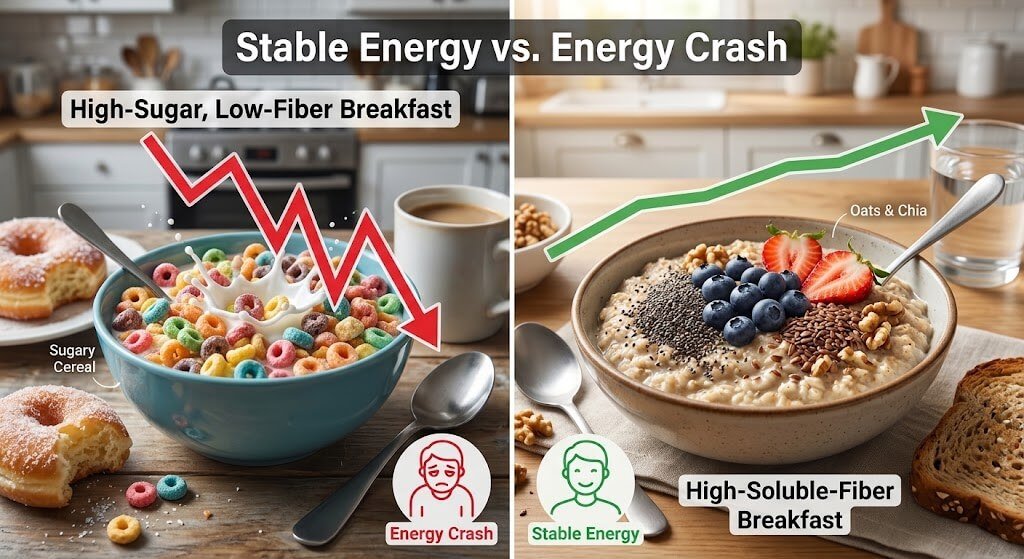
Hunger is not just about an empty stomach; it is also about blood sugar crashes. When you eat refined carbohydrates, your blood sugar spikes rapidly, followed by a sharp drop. This drop triggers intense cravings and a sudden return of hunger.
Soluble fiber slows the absorption of sugar into your bloodstream. Just as chromium picolinate may support glucose metabolism, soluble fiber acts as a physical barrier that moderates this absorption. This steady energy release improves overall insulin sensitivity, preventing the mid-afternoon energy crashes that lead to poor food choices and overeating.
A systematic review of randomized controlled trials confirmed that dietary fiber, particularly viscous soluble fiber, significantly reduces subjective appetite and energy intake [2]. The research is clear: fiber is not just a digestive aid; it is a metabolic regulator.
Top Soluble Fiber Sources and Their Satiety Impact
Not all soluble fibers have the same viscosity or appetite-suppressing power. Glucomannan and psyllium husk are among the most viscous, meaning they form the thickest gels and provide the strongest fullness signals. Below is a practical chart to help you choose the best sources for your meals.
| Food Source | Serving Size | Soluble Fiber (approx.) | Satiety Impact | Best Time to Consume |
| Psyllium Husk | 1 tbsp (5 g) | 3.5 g | Very High | 30 mins before meals |
| Chia Seeds | 1 oz (28 g) | 5.0 g | High | Morning oatmeal or smoothies |
| Oats (Beta-glucan) | 0.5 cup dry (40 g) | 2.0 g | High | Breakfast |
| Apples (with skin) | 1 medium (182 g) | 1.0 g | Moderate | Mid-morning snack |
| Black Beans | 0.5 cup cooked | 2.0 g | High | Lunch or dinner |
| Flaxseeds (ground) | 1 tbsp (7 g) | 0.6 g | Moderate | Sprinkled on yogurt or salads |
| Brussels Sprouts | 1 cup cooked | 2.0 g | Moderate | Dinner side dish |
| Glucomannan Powder | 1 tsp (3 g) | 3.0 g | Very High | 1 hour before largest meal |
Data sourced from the Harvard T.H. Chan School of Public Health Nutrition Source and USDA FoodData Central.
How to Apply It: Using Soluble Fiber to Control Appetite
Knowing the science is only half the battle. As a coach, I need you to have a practical, actionable plan. Here is a step-by-step guide to integrating soluble fiber into your daily routine to maximize appetite control without causing digestive distress.
Step 1: Calculate Your Baseline and Set a Goal
The average adult should aim for 25 to 38 grams of total fiber per day, according to the Mayo Clinic dietary guidelines. However, for appetite control, the type of fiber matters. Aim to get at least 5 to 10 grams of your daily total from highly viscous soluble fiber sources.
Step 2: Time It Right for Maximum Fullness
To blunt appetite, timing is critical. Consuming soluble fiber 30 to 60 minutes before a meal allows the gel to form in your stomach before the food arrives. This creates a physical sense of distension (stretching), which sends early fullness signals to your brain via the vagus nerve.
- Pre-Breakfast: Mix 1 tablespoon of chia seeds into water or yogurt.
- Pre-Lunch/Dinner: Take a psyllium husk supplement with a large glass of water.
Step 3: Build a High-Fiber Sample Day
Here is what a practical, appetite-controlling day of eating looks like, complete with precise measurements.
- Breakfast: 0.5 cup (40 g) of rolled oats cooked in water, topped with 1 tablespoon (7 g) of ground flaxseeds and 0.5 cup (75 g) of blueberries. This provides roughly 3.5 grams of soluble fiber to start the day.
- Mid-Morning Snack: 1 medium apple (about 7 ounces / 200 grams) with a 1-ounce (28 g) serving of almonds. The pectin in the apple works synergistically with the healthy fats to prolong fullness.
- Lunch: A large salad with 0.5 cup (85 g) of cooked black beans, mixed vegetables, and a lean protein source like 4 ounces (113 g) of grilled chicken.
- Pre-Dinner (Optional): If you struggle with evening overeating, mix 1 teaspoon (3 g) of glucomannan powder or 1 tablespoon (5 g) of psyllium husk into 12 ounces (350 ml) of water. Drink it 45 minutes before your meal.
Step 4: Hydrate Aggressively
Soluble fiber requires water to form its gel. If you eat high fiber without drinking enough water, the fiber can harden, leading to constipation and severe bloating. A good rule of thumb is to drink at least 80 to 100 ounces (2.3 to 3 liters) of water daily, adding an extra 16 ounces (500 ml) for every 5 grams of supplemental fiber you consume.
Coach’s Tip:
Start low and go slow. If you currently eat 10 grams of fiber a day, do not jump to 35 grams tomorrow. Increase your intake by 3 to 5 grams per week. This gives your gut microbiome time to adapt, minimizing gas and bloating.
Common Mistake:
Relying solely on fiber supplements while eating a highly processed diet. Supplements like psyllium are tools, not magic pills. They work best when they complement a diet rich in whole foods, lean proteins, and healthy fats. A 3-mile (5 km) walk after a high-fiber meal can also aid digestion and further stabilize blood sugar.
Safety Notes and Precautions
While soluble fiber is highly beneficial, it is not without potential side effects if misused.
- Digestive Distress: Rapidly increasing fiber intake can cause bloating, flatulence, and abdominal cramping. This is a sign of fermentation happening too quickly. Slow down your intake and ensure adequate hydration.
- Medication Interference: Because soluble fiber slows absorption, it can also bind to certain medications, reducing their effectiveness. The National Institutes of Health (NIH) advises taking medications at least 2 hours before or 2 hours after consuming high doses of soluble fiber supplements.
- Gastrointestinal Conditions: Individuals with irritable bowel syndrome (IBS), inflammatory bowel disease (IBD), or a history of bowel obstructions should consult a healthcare provider before increasing fiber, as certain fermentable fibers (FODMAPs) can trigger symptoms.
Maintaining a healthy weight through appetite control reduces stress on the many joints in the human body, preserving long-term mobility and reducing the risk of osteoarthritis. However, any major dietary shift should be cleared by a medical professional if you have pre-existing conditions.
Related Tips: Synergizing Fiber with Fitness and Metabolic Health
Diet does not exist in a vacuum. As a coach, I always look at the whole picture. Soluble fiber’s ability to stabilize blood sugar and improve metabolic health has ripple effects throughout your entire fitness journey.
- Workout Performance: Stable blood sugar means stable energy. While athletes often explore how L-citrulline helps produce nitric oxide for better pumps and endurance, foundational metabolic health starts in the gut with adequate fiber. You cannot out-train a diet that causes constant energy crashes.
- Cardiovascular Synergy: A high-fiber diet is proven to lower LDL (“bad”) cholesterol. This supports overall cardiovascular health, complementing other strategies for maintaining nitric oxide healthy blood vessel function.
- Systemic Health: Good nutrition and weight management also prevent systemic issues like poor blood circulation in men, which can be exacerbated by metabolic syndrome, high visceral fat, and insulin resistance.
- Supplement Context: Understanding the difference between L-arginine vs L-citrulline for blood flow is great for workout performance, but dietary fiber is the true foundation of daily metabolic health. No pre-workout can fix a broken metabolic baseline.
FAQ: Common Questions About Soluble Fiber and Appetite
1. How much soluble fiber do I need per day to feel full?
Aim for at least 5 to 10 grams of soluble fiber per day, as part of a total daily fiber intake of 25 to 38 grams. This amount is clinically shown to influence satiety hormones and slow gastric emptying without causing excessive digestive distress.
2. What is the best time to take soluble fiber for appetite control?
The best time is 30 to 60 minutes before your largest meals, particularly lunch or dinner. Consuming it with a large glass of water allows the fiber to expand in your stomach, creating a physical feeling of fullness before you begin eating.
3. Does soluble fiber block calorie absorption?
Soluble fiber does not “block” calories like a fat blocker, but it can slightly reduce the total number of calories your body absorbs from a meal. The viscous gel traps some nutrients, carrying them through the digestive tract unabsorbed, though this effect is modest and should not be relied upon as a primary weight-loss strategy.
4. Can soluble fiber help with binge eating?
Yes, indirectly. By stabilizing blood sugar and prolonging physical fullness, soluble fiber reduces the intense, sudden cravings that often trigger binge eating episodes. It helps you maintain a steady, controlled appetite throughout the day.
5. Which foods have the most soluble fiber for weight loss?
Psyllium husk, glucomannan (konjac root), chia seeds, flaxseeds, oats (specifically for beta-glucan), legumes (like black beans and lentils), and Brussels sprouts are among the most potent, viscous sources of soluble fiber for promoting weight loss.
6. Are there side effects of taking too much soluble fiber?
Yes. Consuming too much too quickly can cause severe bloating, gas, abdominal cramps, and constipation. In extreme cases, without adequate water, it can cause a bowel obstruction. Always increase your intake gradually and drink plenty of fluids.
Conclusion
So, does soluble fiber help control appetite? The evidence is overwhelmingly clear: yes, it does. By forming a viscous gel in your digestive tract, soluble fiber slows gastric emptying, stabilizes blood sugar, and triggers the release of powerful satiety hormones like GLP-1 and PYY.
As a coach, I recommend focusing on whole food sources like oats, chia seeds, and legumes first, using supplements like psyllium husk strategically before large meals. Remember to increase your intake slowly, prioritize hydration, and view fiber as one essential piece of a broader, sustainable health strategy. Supporting blood vessel health and erectile function also starts with systemic metabolic health, which fiber directly improves. Take control of your hunger, fuel your body intelligently, and watch your fitness goals become much easier to reach.