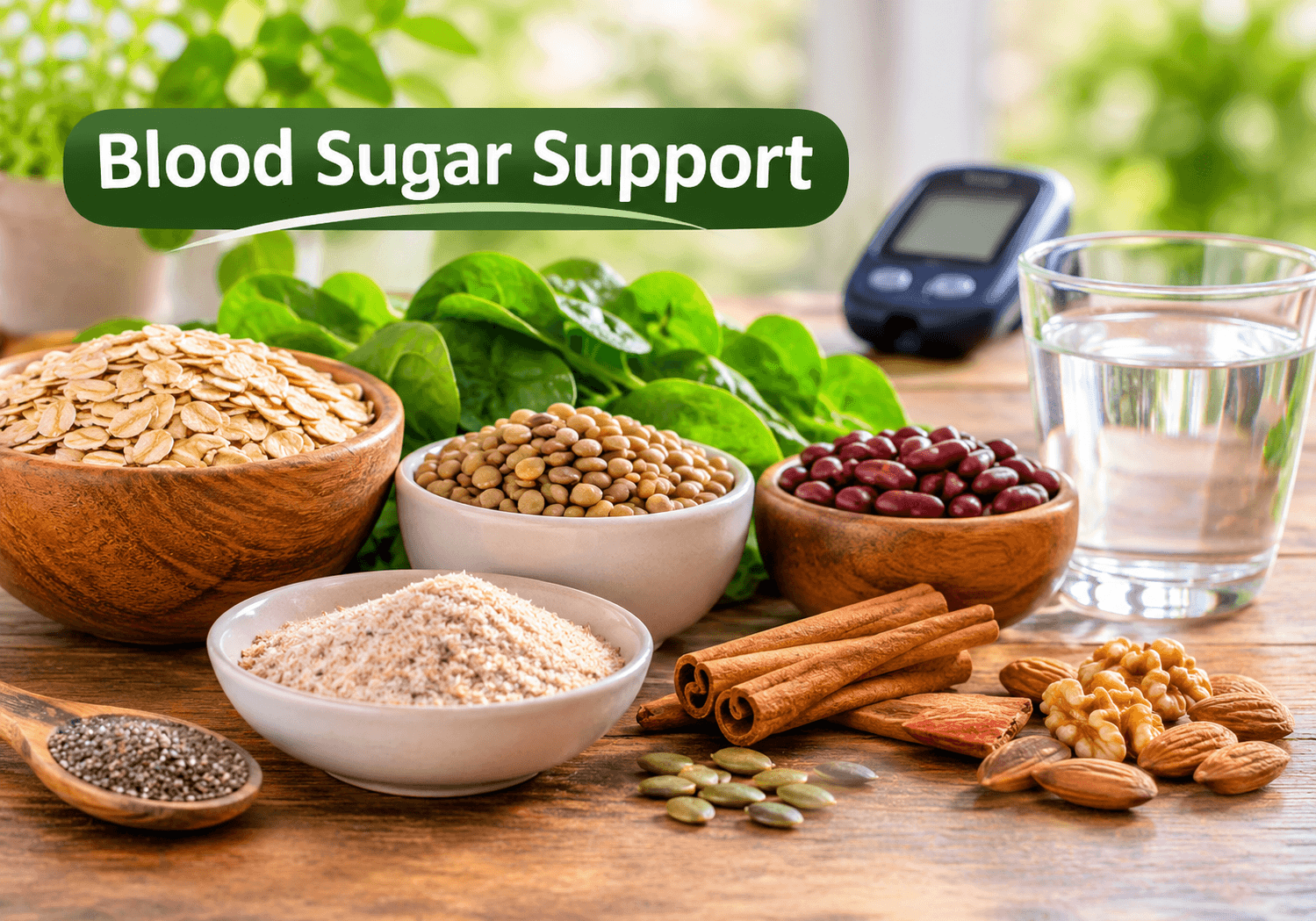
Almost every supplement aisle has a bottle promising better glucose control. Most of those promises run well ahead of the research. Some supplements to lower blood sugar do show real changes in trials, though, and a few come with real risks.
This guide ranks seven popular options by how consistent and how safe the evidence looks. It also shows how to pair them with the habits that move blood sugar the most: food, movement, and sleep.
Quick Answer: The best-supported supplements to lower blood sugar in trials are psyllium fiber, berberine, cinnamon, and magnesium (mainly if you’re low), with chromium and vitamin D weaker. Even so, the American Diabetes Association does not recommend supplements for glycemic benefit, so treat them as add-ons to diet, exercise, and medication.
Check with your doctor, pharmacist, or registered dietitian before starting any supplement, especially if you take diabetes medication, have kidney or liver disease, or are pregnant or breastfeeding.
What Supplements Can (and Can’t) Do for Blood Sugar
Start with the guideline view. The ADA’s 2026 Standards of Care say supplementation with micronutrients such as magnesium or chromium, or with herbs and spices such as cinnamon, is not recommended for glycemic benefits. The same document says that without an underlying deficiency, there is no benefit from herbal, vitamin, or mineral supplements for people with diabetes.
That doesn’t mean every study shows nothing. It means the trials are often small, short, and inconsistent. Many effects are modest compared with what eating patterns, exercise, and medication deliver.
Supplements may nudge fasting glucose or HbA1c (a three-month average of blood sugar) a little. Some may also improve insulin sensitivity in certain people. None has been shown to replace a prescribed treatment.
Coach’s Tip: Change one thing at a time. If you add three supplements in the same week, you can’t tell what helped, what upset your stomach, or what caused a low reading.
How We Ranked the Supplements to Lower Blood Sugar
Ranking supplements to lower blood sugar means weighing more than the size of an effect. We looked at five things:
- Consistency: Do several meta-analyses (studies that pool many trials) point the same way?
- Size of effect: Is the change in fasting glucose or HbA1c big enough to matter?
- Trial quality: Are the studies long enough, and do their results line up?
- Safety: Are there serious interactions or side effects?
- Guideline stance: What do the ADA and NIH say?
All figures below come from pooled trials, mostly in people with type 2 diabetes. They are averages. Your result could be larger, smaller, or zero.
| Rank | Supplement | Evidence signal | Typical change in trials | Main caution |
| 1 | Psyllium husk | Several meta-analyses, mostly consistent | HbA1c about 0.75–0.97 points lower | Needs enough dose and time; fiber side effects |
| 2 | Berberine | Many meta-analyses, wide trial differences | Fasting glucose about 15 mg/dL lower; HbA1c about 0.63 points lower | Drug interactions; stomach upset; avoid in pregnancy |
| 3 | Cinnamon | Mixed | Fasting glucose lower in some pooled trials; HbA1c often unchanged | Coumarin in cassia type; ADA doesn’t recommend |
| 4 | Magnesium | Modest | Fasting glucose about 10 mg/dL lower; HbA1c barely moves | Best case is a true deficiency |
| 5 | Vitamin D | Mixed; prevention data in prediabetes | No routine glucose-lowering benefit shown | Benefit mainly if deficient |
| 6 | Chromium | Mixed, small | Inconsistent | Can add to the effect of diabetes medicines |
| 7 | Omega-3s | No glycemic benefit found | None for glucose control | Not a blood sugar tool |
1. Psyllium Husk: Most Consistent Evidence
Psyllium is a soluble, gel-forming fiber. It slows how fast food moves through your gut, which may blunt the glucose rise after meals. It earns the top spot because the pooled results hold up across several analyses and the supplement is closest to ordinary food.
A meta-analysis of eight analyses found that in people with type 2 diabetes, multiweek psyllium dosed before meals was linked to fasting glucose about 37 mg/dL lower and HbA1c about 0.97 points lower. The effect scaled with how high glucose started. People with normal glucose saw no significant lowering, and people with prediabetes saw a modest improvement.
A 2024 meta-analysis found psyllium lowered fasting glucose, HbA1c (about 0.75 points), and insulin resistance versus placebo. The HbA1c effect was not significant below 10 grams per day, and the fasting glucose effect was not significant in trials shorter than about 50 days.
Dose and patience matter. A pinch of psyllium for a week is unlikely to do much.
How to use it:
- Build up slowly over one to two weeks. Fast jumps in fiber can cause gas and bloating [VERIFY: add NIH or Mayo Clinic source if you keep this line].
- Mix it into a full glass of water and drink it right away. Take it with a meal if your clinician agrees.
- Keep taking your prescribed medicines. Ask your pharmacist about timing.

The ADA also encourages at least 14 grams of fiber per 1,000 calories from minimally processed foods. Whole beans, lentils, oats, and vegetables come first. If you want to understand the gel effect, our guide on soluble fiber explains it, and our page on psyllium husk covers fullness and weight.
Best for: adults with elevated glucose who also need more fiber.
Pros: consistent pooled data; food-like ingredient.
Cons: needs 10+ grams a day and weeks to show an effect; texture and fullness can bother some people.
2. Berberine: Biggest Numbers, Biggest Caveats
Berberine is a plant compound sold widely as a “natural metformin.” It has the largest effect sizes in this list, but the evidence has weak spots.
A meta-analysis of 37 randomized trials involving 3,048 people with type 2 diabetes found berberine lowered fasting glucose by 0.82 mmol/L (about 15 mg/dL) and HbA1c by 0.63 points. After-meal glucose fell by 1.16 mmol/L (about 21 mg/dL). The glucose-lowering effect was linked to baseline fasting glucose and HbA1c, meaning people starting higher tended to see more change.
The authors also noted that earlier meta-analyses showed obvious differences between trials, which is why berberine’s headline numbers should be read with caution. Trials differ in dose, duration, and what else people were taking. I couldn’t find a single verified “best dose,” so follow your clinician’s guidance [VERIFY: confirm any dose range before publishing].
Safety matters more here than for any other item.
- NCCIH notes that berberine is generally well tolerated by mouth, but common effects include abdominal pain, constipation, diarrhea, nausea, and vomiting. People who are pregnant or breastfeeding should not use it, and it should not be given to infants.
- MedlinePlus lists interactions, including that berberine might increase the amount of metformin in the body. It may also change how the liver breaks down several other medicines.
For a deeper look at how it works, see our review of berberine and metabolic health.
Common Mistake: Adding berberine on top of metformin, a sulfonylurea, or insulin without telling your prescriber. Stacking glucose-lowering agents can raise the chance of low blood sugar. Tell your care team first, and ask whether your monitoring needs to change.
Best for: adults under medical supervision who want an adjunct.
Pros: largest pooled effects; many trials.
Cons: stomach upset; real drug interactions; not for pregnancy; quality varies by product.
3. Cinnamon: Mixed Results, Worth Knowing About
Cinnamon is the most popular kitchen-cabinet answer, and the data are split.
A meta-analysis of 10 trials in 543 people with type 2 diabetes found doses from 120 mg to 6 grams per day, for 4 to 18 weeks, lowered fasting glucose by about 25 mg/dL. It found no significant effect on HbA1c. The authors flagged a high degree of heterogeneity, meaning results varied a lot from trial to trial, so the preferred dose and duration are unclear.
That pattern is why cinnamon sits mid-list. A small drop in fasting glucose without a clear HbA1c change doesn’t show much long-term benefit. The ADA 2026 Standards also name cinnamon among the supplements not recommended for glycemic benefit.
Safety: NCCIH explains that cassia cinnamon (the common supermarket type) contains coumarin, which can be harmful to the liver. Prolonged use could be an issue for sensitive people, such as those with liver disease. Ceylon (“true”) cinnamon may contain only a trace of coumarin. NCCIH also says cinnamon is likely safe in the amounts used in food.
What to do with this: Using cinnamon as a spice on oatmeal or yogurt is fine for most people. Taking concentrated capsules in the gram-per-day range is where caution applies. If you try it, check the label for the species, and ask your doctor first if you have liver disease or take medicines that affect the liver.
Best for: people who want a low-risk flavor swap for sugar.
Pros: cheap; fine as a spice.
Cons: inconsistent HbA1c data; capsule safety depends on the type.
4. Magnesium: Mostly Helpful If You’re Low
Magnesium helps your cells respond to insulin, so low levels can make blood sugar harder to manage. The question is whether adding more helps people who aren’t low.
A 2025 meta-analysis of 23 trials with 1,345 people with type 2 diabetes found magnesium supplements lowered fasting glucose by about 0.58 mmol/L (roughly 10 mg/dL). The HbA1c change was small and borderline (about 0.16 points). Larger HbA1c drops showed up in people aged 65 and older and in studies with longer supplementation.
That fits the ADA view that without an underlying deficiency, there is no benefit from vitamin or mineral supplementation for people with diabetes. If your doctor finds you are low, treating that deficiency is sensible. If you aren’t low, there is little reason to expect a glucose change. Our guide to vitamins that matter when you’re deficient explains how to find out.
Best for: people with a confirmed deficiency, or older adults a clinician has flagged.
Pros: modest fasting glucose effect in pooled data; low cost.
Cons: HbA1c barely moves; trials are short and use varying doses. If you have kidney disease, ask your doctor before supplementing [VERIFY: add NIH ODS magnesium fact sheet link if kept].
5. Vitamin D: A Prevention Story, Not a Glucose-Lowering Tool
Vitamin D gets attention because low levels often show up alongside high blood sugar. Whether supplements change that is still debated.
The ADA 2026 Standards say universal vitamin D supplementation for people with diabetes without deficiency is not recommended. The document notes that post hoc analyses of a large prediabetes trial suggest potential benefit in specific groups, while other studies found no benefit or mixed results. It adds that more research is needed on who benefits and at what dose.
A pooled analysis of three trials in adults with prediabetes reported a modest reduction in progression to diabetes [VERIFY: Pittas et al., Annals of Internal Medicine, 2023, doi 10.7326/M22-3018; add the PubMed link before publishing]. That is a prevention finding. It does not show that vitamin D lowers glucose in people who already have diabetes.
Best for: people with a documented deficiency, or those with prediabetes discussing options with their clinician.
Pros: inexpensive; widely studied.
Cons: high doses can cause harm [VERIFY: add NIH ODS vitamin D source]; no routine glucose-lowering benefit.
6. Chromium: Popular, but the Weakest Case
Chromium helps the body use insulin, and low levels have been reported in people with diabetes. That is why it has such a following. The trials haven’t backed it up.
The NIH Office of Dietary Supplements says studies on chromium and high blood sugar have had mixed results, and that the ADA doesn’t recommend chromium supplements because they have no clear benefit. NIH adds that chromium from food and supplements doesn’t appear to cause harm, but research is limited, and people with kidney or liver disease should be cautious with high amounts.
There’s also an interaction angle. NIH notes that taking chromium with insulin might cause low blood sugar, and that chromium with metformin or other antidiabetes medicine might do the same. If cravings are your main reason for looking at it, our page on chromium picolinate covers what the research says.
Best for: almost no one, based on current evidence.
Pros: appears well tolerated in food-level amounts.
Cons: inconsistent data; interaction risk with diabetes medicines.

7. Omega-3s: A Heart Supplement, Not a Glucose One
Fish oil is often grouped with blood sugar supplements. The ADA 2026 Standards state that two systematic reviews of n-3 and n-6 fatty acid supplements concluded they did not improve glycemic management in type 2 diabetes. Whether they help the heart is a separate question to ask your doctor. Don’t buy fish oil to lower glucose.
How to Choose and Check Any Blood Sugar Supplement
The ADA points out that dietary supplements are not regulated like over-the-counter or prescription drugs in the U.S. That makes label reading a real skill. Use this checklist:
- Know the active ingredient and species. “Cinnamon” should say Ceylon or cassia.
- Look for independent testing. A seal from a third-party lab is better than marketing copy.
- Skip “proprietary blends” that hide doses.
- Avoid miracle language like “cures diabetes” or “replaces medication.”
- Bring the bottle to your pharmacist and ask about interactions.
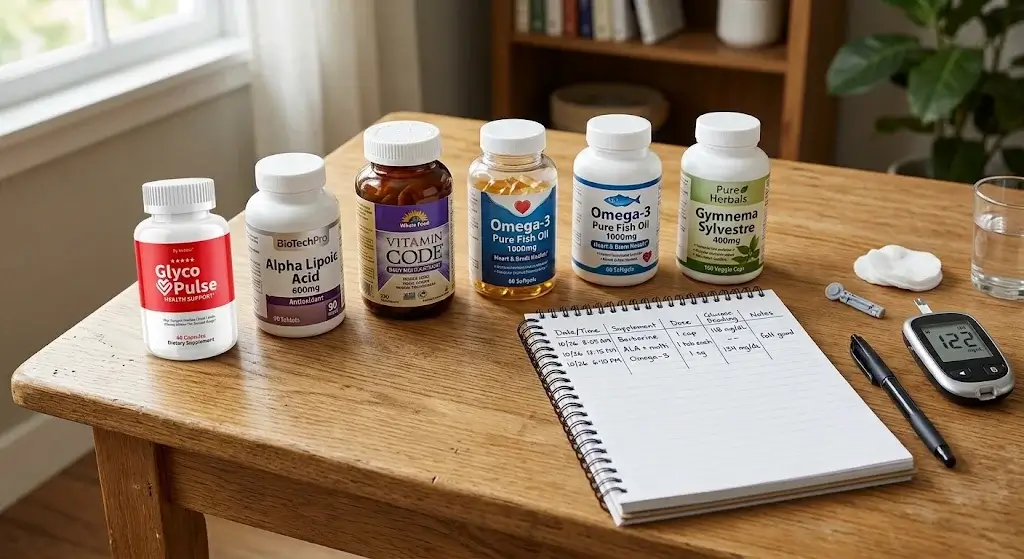
- Keep a simple log of dose, glucose readings, and side effects for 8 to 12 weeks.
Our guide on how to evaluate supplement ingredients walks through label red flags in more detail.
Putting Supplements to Lower Blood Sugar Into a Safe Daily Plan
Here’s the part supplements can’t replace. The ADA says structured exercise lasting at least eight weeks lowered A1C by about 0.66 percentage points in people with type 2 diabetes, even without a significant change in BMI. That is a bigger average effect than most supplements in this article, and it carries no interaction risk with your medicines.
The ADA’s weekly targets for most adults with type 2 diabetes:
- 150+ minutes of aerobic activity per week, spread over at least 3 days, with no more than 2 days in a row without activity.
- 2 to 3 resistance sessions on non-consecutive days.
- Break up long sitting at least every 30 minutes.
If you’re on insulin or a sulfonylurea, ask your clinician how to adjust, because exercise can add to low-blood-sugar risk. The ADA notes that medical monitoring may be indicated as exercise intensifies.
A Simple Week
| Day | Plan |
| Mon | Brisk walk, 30 minutes (about 1.5–2 miles / 2.4–3.2 km); strength session A |
| Tue | 30-minute walk or easy bike ride |
| Wed | Strength session A; two or three 10-minute walks after meals |
| Thu | 30-minute walk |
| Fri | Strength session A |
| Sat | 45 minutes of easy movement you enjoy |
| Sun | Rest or gentle stretching |
Strength Session A (about 25 minutes)
| Exercise | Sets | Reps | Rest |
| Goblet squat, 10–20 lb (4.5–9 kg) dumbbell | 2–3 | 8–12 | 60–90 sec |
| One-arm dumbbell row, 15–25 lb (7–11 kg) | 2–3 each side | 8–12 | 60–90 sec |
| Incline push-up (hands on a bench) | 2–3 | 8–12 | 60–90 sec |
Form cues: Keep your chest tall and knees tracking over your toes on the squat. On rows, keep your back flat and pull your elbow toward your hip. Lower each rep for about 2 seconds. You should feel your thighs, glutes, and upper back working and a mild muscular burn, but never sharp joint pain.

Easier version: Use a chair for sit-to-stand squats, wall push-ups, and a light resistance band for rows. Start with 1–2 sets.
Harder version: Add 5 lb (2.3 kg) once you complete every set at the top of the rep range. Slow the lowering phase to 3 seconds, or add a third set.

Common Mistake: Treating a supplement as permission to skip the walk. In the data above, movement beats most capsules.
Food and Sleep Basics
The ADA’s eating guidance centers on non-starchy vegetables, whole fruits, legumes, whole grains, nuts, and seeds, while limiting sugar-sweetened drinks, refined grains, and ultraprocessed foods. It also encourages water over other beverages and referral to a registered dietitian. If sugar cravings are what push your numbers up, our guide on how to stop sugar cravings gives practical swaps.
The ADA also lists adequate sleep among the foundations of diabetes care. For the hormone side of that link, see how sleep affects metabolism.
Who Should Be Extra Careful
Talk to a doctor or pharmacist before trying any of these if you:
- Take insulin, metformin, sulfonylureas, or other diabetes medicines.
- Have kidney disease or liver disease.
- Are pregnant, breastfeeding, or planning pregnancy. Berberine is a clear “avoid” per NCCIH.
- Are scheduled for surgery.
- Take other prescriptions, since berberine can change how some are processed.
Never stop or reduce a prescribed medicine to “try a supplement instead.” Call your clinician if you have symptoms of very low or very high blood sugar.
FAQ
What supplement lowers blood sugar the fastest?
No supplement works instantly, and none replaces medication. In trials, psyllium taken before meals and berberine showed the most consistent glucose changes, but those effects built up over weeks. For a fast, safe drop, ask your doctor about your treatment plan, and break up long sitting with light movement the ADA advises.
Does berberine really lower blood sugar?
Pooled trials suggest it can. One meta-analysis of 37 studies found lower fasting glucose and HbA1c, but earlier reviews showed wide differences between trials. Berberine can cause stomach upset, interacts with several medicines, and is not for pregnancy. Check with your doctor or pharmacist first.
Can cinnamon lower blood sugar?
Some trials show a drop in fasting glucose, but results are inconsistent and HbA1c often barely moves. Ceylon cinnamon contains only trace coumarin, while cassia can carry more, which matters for the liver. The ADA does not recommend cinnamon for blood sugar control, so treat it as a spice, not treatment.
Is it safe to take supplements with metformin or insulin?
Not without checking. Berberine may raise metformin levels, and chromium taken with insulin or metformin might cause low blood sugar. Because supplements can stack with medication, tell your doctor or pharmacist about everything you take before starting, and ask whether your glucose checks or doses need adjusting.
How much psyllium does it take to lower blood sugar?
In a 2024 meta-analysis, the HbA1c benefit was not significant below 10 grams per day, and fasting-glucose effects were not significant in trials shorter than about 50 days. Start low, drink plenty of water, and ask your clinician about timing around medicines.
Can I lower blood sugar without supplements?
Yes. The ADA highlights eating patterns rich in vegetables, legumes and whole grains, at least 150 minutes of weekly aerobic activity, and resistance training two to three days weekly. Structured exercise lasting eight weeks or more lowered A1C by about 0.66 points in type 2 diabetes studies.
Bottom Line on Supplements to Lower Blood Sugar
If you rank supplements to lower blood sugar by evidence, psyllium fiber comes first, berberine second (with the most caution), then cinnamon, magnesium, vitamin D, and chromium. Omega-3s don’t belong on the list for glucose control.
The honest takeaway is that these are add-ons at best. Walking, strength training, fiber-rich food, good sleep, and your prescribed treatment do the heavy lifting. If you try a supplement, pick one, log your numbers for 8 to 12 weeks, and review the results with your clinician.
This article is for general information and is not a substitute for advice from a doctor or physical therapist.