
Your digestive system is the engine room of your overall health, and dietary fiber is its primary fuel. When you ignore your daily fiber needs, your body sends clear warning signals. Recognizing lack of fiber symptoms early can help you avoid long-term digestive distress, energy crashes, and stalled fitness progress. As a strength and conditioning coach, I see clients struggle with unexplained hunger, bloating, and fatigue far too often. The root cause is frequently a low-fiber diet.
This guide breaks down exactly what happens when you do not eat enough fiber, how to identify the signs, and a practical, step-by-step protocol to fix your intake safely. We will cover the science, the symptoms, and the actionable solutions you need to optimize your gut health and metabolic performance.
Quick Answer
Lack of fiber symptoms include chronic constipation, constant hunger, blood sugar spikes, unexplained weight gain, elevated cholesterol, gut inflammation, and persistent fatigue. Adults should aim for 25 to 38 grams of fiber daily from whole foods like legumes, fruits, vegetables, and whole grains to support healthy digestion and metabolism.
What Is Dietary Fiber and Why Does Your Body Need It?
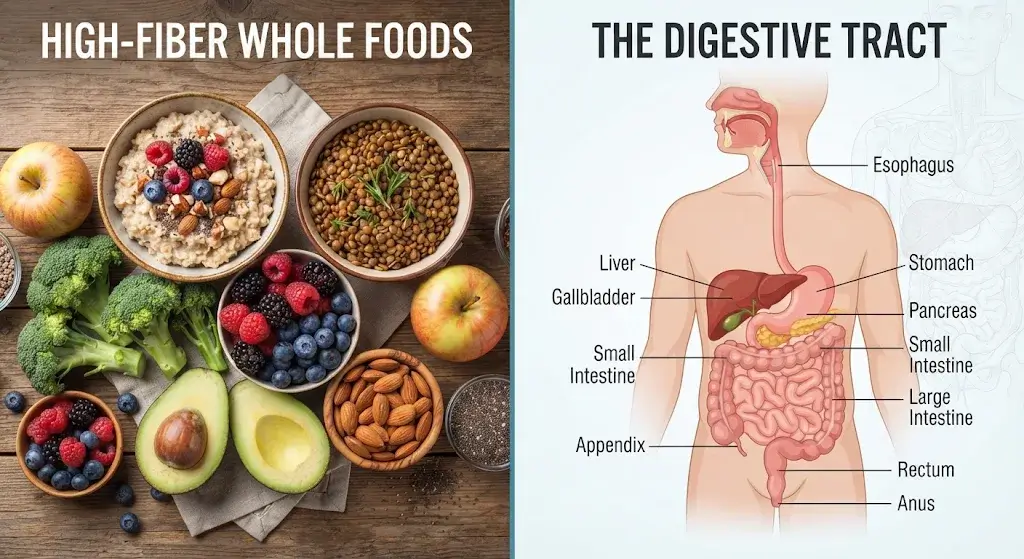
Dietary fiber is a type of carbohydrate that your body cannot digest. Unlike sugars and starches, which are broken down into glucose for energy, fiber passes relatively intact through your stomach, small intestine, and colon. This unique property is exactly why it is so vital for your health.
There are two main types of fiber, and both play distinct roles in your body:
- Soluble Fiber: This type dissolves in water to form a gel-like substance. It helps lower blood cholesterol and glucose levels. You find it in oats, peas, beans, apples, and citrus fruits.
- Insoluble Fiber: This type promotes the movement of material through your digestive system and adds bulk to the stool. It is highly effective for those who struggle with constipation. Good sources include whole wheat flour, wheat bran, nuts, beans, and vegetables like cauliflower and green beans.
When you consume adequate fiber, it acts as a prebiotic. This means it feeds the beneficial bacteria in your gut microbiome. These bacteria ferment the fiber to produce short-chain fatty acids (SCFAs), like butyrate. SCFAs reduce inflammation, strengthen the gut lining, and even signal your brain that you are full. When you experience lack of fiber symptoms, it is often because this delicate microbial ecosystem is starved of its primary food source.
Top 7 Lack of Fiber Symptoms You Should Not Ignore
If you are wondering how to know if you are lacking fiber, your body will usually tell you through a combination of digestive and systemic signs. Here are the seven most common lack of fiber symptoms and the science behind why they happen.
1. Chronic Constipation and Irregular Bowel Movements
This is the most well-known sign of a low fiber diet. Fiber, particularly insoluble fiber, adds bulk and softness to your stool. Without it, waste moves sluggishly through the colon. The colon absorbs too much water from the stool, making it hard, dry, and difficult to pass.
- The Mechanism: Normal transit time for food is 24 to 72 hours. A low-fiber diet can extend this significantly, leading to straining and discomfort.
- The Fix: Gradually increase your intake of insoluble fiber sources like wheat bran, leafy greens, and root vegetables, while drinking plenty of water.
2. Constant Hunger and Sugar Cravings

Fiber is a master regulator of satiety. Because it slows down gastric emptying (the rate at which food leaves your stomach), it keeps you feeling full for hours. If you find yourself hungry an hour after eating or constantly craving sugary snacks, you may be experiencing lack of fiber symptoms.
- The Mechanism: Without fiber to slow digestion, carbohydrates are absorbed rapidly. This triggers a quick release of insulin, followed by a rapid drop in blood sugar, which your brain interprets as an urgent need for more calories. Understanding how dietary fiber and appetite interact can completely change your approach to meal planning.
- The Fix: Pair every carbohydrate source with a fiber-rich food. For example, eat an apple with a handful of almonds instead of apple juice.
3. Blood Sugar Spikes and Energy Crashes
If you feel a sudden surge of energy after a meal followed by intense fatigue or “brain fog” an hour later, your blood sugar is likely roller-coastering.
- The Mechanism: Soluble fiber forms a viscous gel in the gut. This gel physically traps sugar molecules, slowing their absorption into the bloodstream. Without this buffer, glucose floods the bloodstream, demanding a massive insulin response. Over time, this cycle can contribute to insulin resistance.
- The Fix: Prioritize low-glycemic, high-fiber carbohydrates like lentils, quinoa, and sweet potatoes. Learn more about how to support metabolism naturally to stabilize your daily energy levels.
4. Unexplained Weight Gain or Stalled Weight Loss
Many clients come to me frustrated because their weight loss has plateaued despite being in a calorie deficit. A hidden culprit is often a lack of dietary roughage.
- The Mechanism: High-fiber foods are generally less energy-dense, meaning you can eat a larger volume of food for fewer calories. Furthermore, fiber influences hunger hormones like ghrelin and peptide YY. If you are struggling to manage food cravings without supplements, increasing your whole-food fiber intake is the most effective foundational step.
- The Fix: Fill half your plate with non-starchy vegetables at every meal. This naturally crowds out higher-calorie, low-fiber options.
5. Elevated Cholesterol Levels
During routine blood work, you might notice your LDL (“bad”) cholesterol is higher than desired. While genetics play a role, diet is a massive factor.
- The Mechanism: Soluble fiber binds to bile acids (which are made from cholesterol) in the digestive tract. Your body then excretes these bile acids in your stool. To replace them, your liver must pull LDL cholesterol from your bloodstream, effectively lowering your overall circulating cholesterol levels.
- The Fix: Consume at least 5 to 10 grams of soluble fiber daily from sources like oats, barley, psyllium husk, and beans.
6. Gut Inflammation and Bloating
It seems contradictory, but while adding fiber too quickly causes bloating, not having enough fiber can also lead to gastrointestinal distress and inflammation.
- The Mechanism: A starved gut microbiome will begin to degrade the protective mucus layer of the colon for survival. This compromises the gut barrier, potentially leading to “leaky gut” and systemic inflammation. A healthy microbiome requires consistent prebiotic fiber to thrive and produce anti-inflammatory short-chain fatty acids.
- The Fix: Introduce fermented foods (like kefir or sauerkraut) alongside a gradual increase in diverse plant fibers to rebuild your gut flora safely.
7. Fatigue and Poor Workout Recovery
Your gut health is directly linked to your energy levels and athletic performance. If your workouts feel sluggish and your muscles take longer to recover, your diet might be lacking foundational nutrients.
- The Mechanism: Chronic gut inflammation from a poor microbiome can drain your overall energy reserves. Furthermore, if your blood sugar is unstable due to low fiber, your muscles do not receive a steady stream of glycogen during training. Ensuring you get the right nutrients support normal energy metabolism is critical for sustained athletic output.
- The Fix: Focus on consistent, balanced meals that include complex carbohydrates, lean protein, and high-fiber vegetables to fuel your training sessions.

How Much Fiber Do You Actually Need?
Most adults fall drastically short of the recommended daily intake. The Academy of Nutrition and Dietetics recommends the following daily targets based on age and sex:
| Demographic | Recommended Daily Fiber Intake |
| Women aged 19–50 | 25 grams |
| Women aged 51+ | 21 grams |
| Men aged 19–50 | 38 grams |
| Men aged 51+ | 30 grams |
| 28 grams | |
| Breastfeeding Women | 29 grams |
Source: National Academies of Sciences, Engineering, and Medicine Dietary Reference Intakes.
To put this in perspective, a standard serving of white bread contains less than 1 gram of fiber, while a single cup of cooked lentils provides nearly 16 grams. Hitting your target requires intentional food choices at every meal.
The Coach’s Guide to Fixing a Low-Fiber Diet
If you recognize lack of fiber symptoms in your daily life, do not attempt to fix it overnight. Doubling your fiber intake in a single day is a guaranteed recipe for severe bloating, gas, and abdominal cramps. Your gut microbiome needs time to adapt.
Think of increasing your fiber like progressing weight in the gym. You must use a structured progression plan.
The Fiber Progression Protocol
- Week 1 (Regression): Add 5 grams of fiber per day. Focus on easily digestible sources. Swap white rice for brown rice. Add one serving of berries to your morning routine. Drink at least 80 ounces (2.3 liters) of water daily.
- Week 2: Add another 5 grams. Introduce one serving of legumes (like half a cup of black beans) into your lunch or dinner.
- Week 3: Add another 5 grams. Start incorporating raw vegetables, such as carrot sticks or a side salad, with your meals.
- Week 4 (Progression): Reach your target goal. Include a variety of high-fiber foods, such as chia seeds, whole grains, and cruciferous vegetables like broccoli or Brussels sprouts. Maintain a water intake of at least 100 ounces (3 liters) per day.
COACH’S TIP: Fiber acts like a sponge in your digestive tract. It absorbs water to create bulk. If you increase your fiber intake without simultaneously increasing your water intake, you will essentially create a concrete-like block in your colon, worsening constipation. Always pair more fiber with more water.
COMMON MISTAKE: Relying solely on fiber supplements (like powders or gummies) instead of whole foods. While supplements like psyllium husk can be useful tools, they lack the vitamins, minerals, and diverse polyphenols found in whole plant foods. Whole foods should always be your primary source. If you are curious about how protein and fiber supplements reduce hunger, use them only to bridge the gap, not replace meals.
![A coach pointing to a whiteboard that lists the 7 symptoms of low fiber, with a client taking notes in a gym setting.]](https://pillsfeed.com/wp-content/uploads/2026/11/PHOTO-A-coach-pointing-to-a-whiteboard-that-lists-the-7-symptoms-of-low-fiber-with-a-client-taking-notes-in-a-gym-setting.webp)
to a bowl of oatmeal topped with chia seeds and raspberries, illustrating the fiber-water connection.]
High-Fiber Foods to Add to Your Grocery List
To eliminate lack of fiber symptoms, you need to know which foods deliver the most impact. Here is a practical, evidence-based list of high-fiber foods, measured in standard serving sizes.
| Food Category | Food Item | Serving Size | Approximate Fiber Content |
| Legumes | Lentils (cooked) | 1 cup (198g) | 15.6 g |
| Legumes | Black beans (cooked) | 1 cup (172g) | 15.0 g |
| Whole Grains | Oats (rolled, dry) | 1 cup (81g) | 8.0 g |
| Whole Grains | Quinoa (cooked) | 1 cup (185g) | 5.2 g |
| Fruits | Raspberries | 1 cup (123g) | 8.0 g |
| Fruits | Pear (with skin) | 1 medium (178g) | 5.5 g |
| Vegetables | Broccoli (cooked) | 1 cup (156g) | 5.1 g |
| Vegetables | Brussels sprouts (cooked) | 1 cup (156g) | 4.1 g |
| Nuts/Seeds | Chia seeds | 1 oz (28g) | 9.8 g |
| Nuts/Seeds | Almonds | 1 oz (28g, ~23 nuts) | 3.5 g |
Note: Weights are provided in ounces and grams for accuracy. Always check nutrition labels, as natural variations occur.
Sample High-Fiber Meal Plan for Active Adults
This sample meal plan provides approximately 35 grams of fiber, making it an excellent template for adults looking to resolve lack of fiber symptoms while supporting muscle recovery and metabolic health.
- Breakfast:
- 1/2 cup (40g) dry rolled oats cooked in water or unsweetened almond milk.
- 1 tablespoon (15g) chia seeds stirred in.
- 1/2 cup (60g) fresh raspberries.
- Fiber total: ~14 grams
- Lunch:
- Large mixed green salad with 1 cup (150g) cooked chickpeas.
- 1/2 cup (75g) diced bell peppers and cucumbers.
- 1 tablespoon (15ml) olive oil and lemon juice dressing.
- Fiber total: ~10 grams
- Snack:
- 1 medium apple (with skin).
- 1 oz (28g) raw almonds.
- Fiber total: ~8 grams
- Dinner:
- 4 oz (113g) grilled chicken breast or baked tofu.
- 1 cup (156g) steamed broccoli.
- 1/2 cup (90g) cooked quinoa.
- Fiber total: ~8 grams
- Daily Total: ~40 grams of fiber (adjust portions down slightly if your target is 25-30g).
Pairing this approach with adequate protein intake and fullness hormones ensures you stay satisfied and energized throughout the day.
Safety Notes and When to See a Doctor
While increasing fiber is safe for most people, there are important precautions to take.
- Hydration is Non-Negotiable: As mentioned, fiber requires water to function properly. Dehydration combined with high fiber can cause severe bowel obstruction.
- Medical Conditions: If you have a history of gastrointestinal issues, such as Crohn’s disease, ulcerative colitis, or irritable bowel syndrome (IBS), a sudden increase in fiber (especially insoluble fiber) can trigger flare-ups. Individuals with IBS may benefit more from a low-FODMAP approach, guided by a professional.
- Medication Interactions: Fiber can bind to certain medications, reducing their absorption. It is generally recommended to take medications at least one hour before or two to four hours after consuming high-fiber meals or supplements.
- Red Flag Symptoms: If you experience severe abdominal pain, blood in your stool, unexplained weight loss, or chronic diarrhea alongside your digestive issues, do not just increase your fiber. Consult a physician immediately to rule out serious conditions.
If you are trying to stop sugar cravings naturally while adjusting your diet, be patient. Your taste buds and gut bacteria take about two to three weeks to adapt to a higher-fiber, lower-sugar diet.
Related Tips for Metabolic and Gut Health
Optimizing your fiber intake is just one piece of the metabolic health puzzle. To truly eliminate lack of fiber symptoms and feel your best, consider these complementary strategies:
- Prioritize Sleep: Poor sleep disrupts hunger hormones, making you crave low-fiber, high-sugar foods. Learning how sleep affects metabolism and weight management is critical for maintaining healthy dietary choices.
- Balance Your Macros: Fiber works synergistically with protein. Both slow digestion and promote satiety. If you are wondering how protein helps control hunger during weight loss, the answer lies in their combined effect on gastric emptying and hormone regulation.
- Consider Targeted Supplements Wisely: While whole foods are best, certain evidence-based ingredients can support your goals. For example, research shows that soluble fiber helps control appetite effectively when dietary intake falls short. Always choose transparent, third-party tested products.
Frequently Asked Questions (FAQ)
1. What are the first signs of fiber deficiency? The earliest lack of fiber symptoms typically include irregular bowel movements, mild constipation, and feeling hungry shortly after eating. You may also notice increased bloating or a sudden craving for sugary, refined carbohydrates as your blood sugar fluctuates.
2. Can a lack of fiber cause fatigue? Yes. A low-fiber diet can lead to rapid blood sugar spikes and subsequent crashes, which directly cause energy slumps and brain fog. Additionally, poor gut health from low fiber can increase systemic inflammation, contributing to overall feelings of fatigue.
3. How long does it take to feel better after increasing fiber? Most people notice an improvement in bowel regularity within three to five days of consistently increasing their fiber and water intake. However, it can take two to three weeks for your gut microbiome to fully adapt and for bloating to completely subside.
4. Does lack of fiber cause weight gain? Indirectly, yes. Low-fiber diets are often high in calorie-dense, processed foods that do not promote satiety. This makes it easier to overeat. Fiber helps you feel full longer, naturally regulating calorie intake and supporting healthy weight management.
5. Can I get enough fiber from supplements alone? While supplements like psyllium husk can help you reach your daily number, they should not replace whole foods. Whole plant foods provide a complex matrix of vitamins, minerals, antioxidants, and diverse fiber types that isolated supplements cannot replicate.
6. Is it possible to eat too much fiber? Yes. Consuming excessive fiber (typically over 70 grams per day) without adequate water can cause severe bloating, gas, abdominal cramps, and even nutrient malabsorption or bowel obstruction. Always increase your intake gradually.
Conclusion
Recognizing lack of fiber symptoms is the first step toward reclaiming your digestive health, stabilizing your energy, and supporting your long-term metabolic goals. From chronic constipation and constant hunger to blood sugar spikes and fatigue, your body has clear ways of telling you it needs more dietary roughage.
As your coach, my advice is simple: do not overhaul your diet overnight. Use the progression protocol outlined above, prioritize whole food sources like legumes, fruits, vegetables, and whole grains, and drink plenty of water. By making these consistent, manageable changes, you will feed your gut microbiome, improve your workout recovery, and build a foundation for lifelong health.