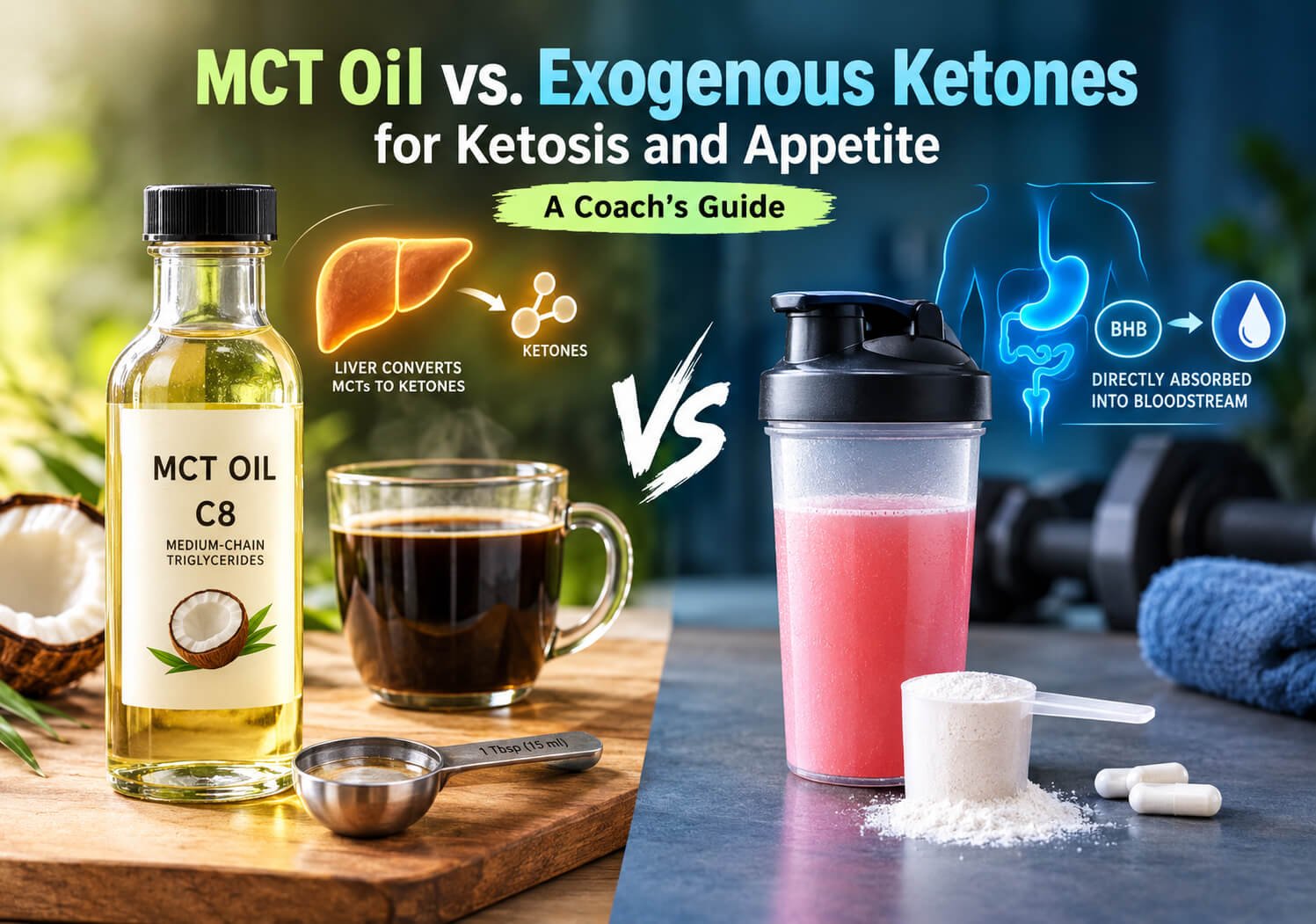
Navigating the ketogenic diet often leads to a common crossroads: choosing between MCT oil and exogenous ketones. Both are heavily marketed as shortcuts to deeper ketosis and better appetite control. However, they work in fundamentally different ways inside your body. As a strength and conditioning coach, I help clients cut through the marketing noise to find what actually supports their training, recovery, and daily energy.
Understanding the difference between MCT oil vs. exogenous ketones for ketosis and appetite is critical for your success. One provides the raw building blocks for your liver to make ketones, while the other delivers ketones directly into your bloodstream. This guide breaks down the science, practical usage, and cost of each so you can make an informed, evidence-based decision for your health and fitness goals.
Quick Answer
MCT oil provides raw materials (medium-chain triglycerides) that your liver converts into ketones, offering sustained energy and reliable appetite suppression. Exogenous ketones (like BHB salts) deliver ketones directly to your blood for an immediate, short-lived spike in ketone readings, but they do not burn body fat and have mixed effects on long-term appetite. For most people seeking sustainable ketosis and hunger control, MCT oil is the superior, more cost-effective choice.
Side-by-Side Comparison: MCT Oil vs. Exogenous Ketones
| Feature | MCT Oil (C8/C10) | Exogenous Ketones (BHB Salts) |
| Primary Mechanism | Liver converts fats to ketones (endogenous) | Delivers pre-made ketones to blood (exogenous) |
| Time to Peak Ketones | 1 to 2 hours | 30 to 60 minutes |
| Appetite Suppression | High (increases satiety hormones like PYY) | Moderate to Low (may lower ghrelin temporarily) |
| Fat Burning Impact | Supports endogenous fat oxidation | Temporarily halts body fat burning |
| Gastrointestinal Risk | Moderate (diarrhea if dosed too high) | Moderate (bloating, sodium load) |
| Cost Per Serving | $0.50 – $1.50 | $2.00 – $4.00+ |
| Best For | Daily energy, sustained appetite control, fasting | Quick keto flu relief, pre-workout mental clarity |
The Science of MCT Oil for Ketosis and Appetite
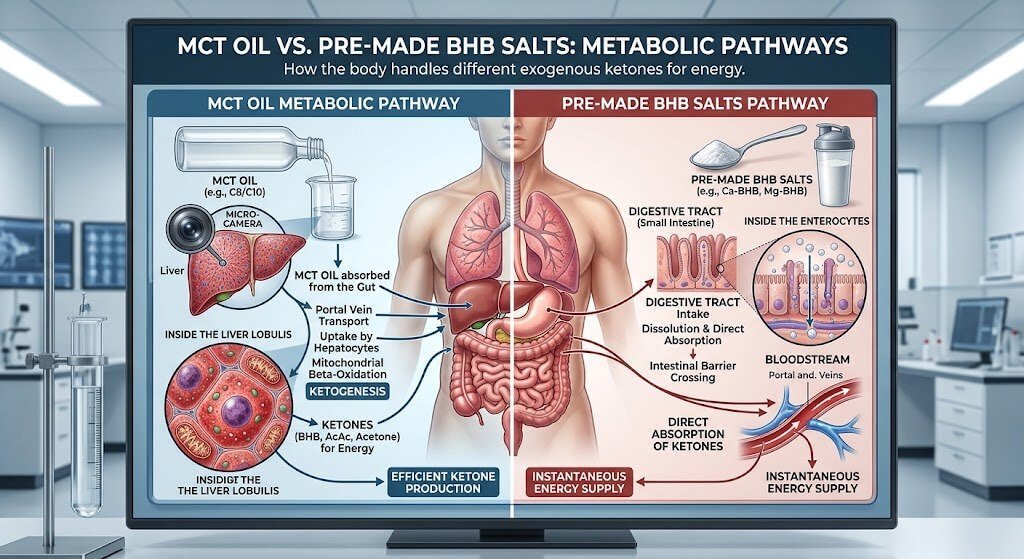
Medium-chain triglycerides (MCTs) are a type of saturated fat found naturally in coconut oil and dairy. Unlike long-chain fatty acids, MCTs bypass the normal digestive process. They travel directly from your gut to your liver via the portal vein. Once in the liver, they are rapidly oxidized and converted into ketone bodies (acetoacetate and beta-hydroxybutyrate) [1].
This process is called endogenous ketone production because your body is making the ketones itself. The most effective MCT for this is Caprylic acid (C8), followed by Capric acid (C10). C8 is converted to ketones up to three times faster than C10, making it the gold standard for ketogenic diets.
Regarding appetite, research shows that MCT oil significantly increases the release of satiety hormones. A study published in the European Journal of Clinical Nutrition found that MCT consumption increased peptide YY (PYY) and cholecystokinin (CCK), two hormones that signal fullness to the brain, while simultaneously reducing caloric intake at subsequent meals [2]. This makes MCT oil a powerful tool for managing hunger during a caloric deficit or intermittent fasting.
The Science of Exogenous Ketones for Ketosis and Appetite
Exogenous ketones are supplements that contain pre-formed ketone bodies, most commonly beta-hydroxybutyrate (BHB) bound to a mineral salt like sodium, potassium, calcium, or magnesium. When you drink a BHB salt supplement, it absorbs quickly into your bloodstream, elevating your blood ketone levels within 30 to 60 minutes [3].
While this looks great on a blood ketone meter, it is crucial to understand that exogenous ketones do not mean your body is burning more body fat. In fact, when you consume exogenous ketones, your body uses them for fuel first, temporarily down-regulating your own natural fat-burning (lipolysis) processes.
The impact of exogenous ketones on appetite is complex. A 2018 study in Obesity demonstrated that while a ketone ester drink acutely suppressed the hunger hormone ghrelin, it also caused a significant drop in blood glucose. This hypoglycemic effect often triggered a rebound increase in hunger and cravings a few hours later [4]. Therefore, while exogenous ketones might blunt hunger for a short window, they are not a reliable long-term appetite suppressant compared to MCT oil.
MCT Oil vs. Exogenous Ketones for Ketosis and Appetite: The Core Differences
To make the right choice, we must look at how these supplements affect your daily life, training, and metabolic health.
1. Impact on Blood Ketone Levels
MCT oil produces a modest, steady rise in blood ketones (typically 0.5 to 1.5 mmol/L), which reflects genuine metabolic adaptation. Exogenous ketones can spike blood readings artificially high (2.0 to 3.0+ mmol/L), but this is a transient state that fades within a few hours as the kidneys excrete the excess BHB.
2. Effects on Satiety and Caloric Intake
MCT oil is a fat. Fat slows gastric emptying, keeping you fuller for longer. When combined with its hormonal effects on PYY and CCK, it is a proven appetite suppressant. Exogenous ketones, particularly in liquid or powder form mixed with water, provide minimal caloric bulk and do not slow digestion in the same way, making them less effective for sustained hunger management.
3. Metabolic Flexibility and Blood Sugar
Supporting your body’s natural ability to switch between fuel sources is key to long-term health. Improving metabolic flexibility often goes hand-in-hand with supporting healthy insulin sensitivity. For those looking to optimize their metabolic health, nutrients like inositol and chromium picolinate are often researched alongside dietary strategies to support healthy glucose metabolism. MCT oil supports this natural flexibility by training the liver to produce ketones efficiently. Exogenous ketones bypass this training effect entirely.
When to Choose MCT Oil
You should choose MCT oil if your primary goals are:
- Sustainable Appetite Control: You want to reduce snacking and manage hunger between meals.
- Daily Energy and Focus: You need a steady, crash-free energy source for work or low-intensity training.
- Fasting Support: You are practicing intermittent fasting and want to extend your fasted state while blunting hunger (note: pure MCT oil contains calories, so it technically breaks a strict water fast, but it maintains ketosis).
- Budget-Friendly Ketosis: You want a cost-effective daily supplement without the high price tag of specialized ketone salts.
When to Choose Exogenous Ketones
Exogenous ketones have a specific, albeit narrower, set of use cases. Choose them if:
- Keto Flu Relief: You are in the first week of a ketogenic diet and need immediate relief from brain fog, fatigue, and headaches. The electrolytes (sodium, potassium, magnesium) in BHB salts are highly beneficial here.
- Pre-Workout Mental Clarity: You are about to do a demanding cognitive task or a fasted workout and want a rapid, 60-minute spike in mental focus without digestive heaviness.
- Transitioning Off Keto: You are eating a higher-carb meal but want to mitigate the blood sugar spike and maintain some level of circulating ketones (though this is an advanced and expensive strategy).
It is also worth noting that overall vascular health plays a role in how well your body delivers nutrients and oxygen during dietary transitions. Supporting healthy blood vessel function through proper hydration and foundational nutrition is always recommended when making significant metabolic shifts.

Cost Comparison and Value
Let’s break down the financial reality of these supplements, as consistency is key for any protocol.
- MCT Oil (C8): A standard 16 oz (473 ml) bottle of high-quality C8 MCT oil costs between $25 and $35. A standard serving is 1 tablespoon (15 ml). This yields roughly 31 servings per bottle, bringing the cost to approximately $0.80 to $1.15 per serving.
- Exogenous Ketones (BHB Salts): A standard tub of BHB salts (typically 200g to 300g) costs between $40 and $60. A standard serving is 1 scoop (10g to 15g). This yields roughly 15 to 20 servings per tub, bringing the cost to approximately $2.50 to $4.00 per serving.
Over a month of daily use, MCT oil costs around $30, while exogenous ketones can cost $75 to $120. For long-term appetite management and ketosis support, MCT oil offers vastly superior value.
Practical Usage Guide: Dosing, Timing, and Tolerance
Introducing new fats or ketone salts requires a strategic approach to avoid gastrointestinal distress. Here is how to implement them safely.
Regression (For Beginners or Sensitive Stomachs)
- MCT Oil: Start with 1 teaspoon (5 ml) per day. Mix it into warm (not boiling) coffee, tea, or a protein shake. Boiling liquid can cause the oil to separate and splatter. Hold this dose for 5 to 7 days to assess tolerance.
- Exogenous Ketones: Start with a half-serving (5 to 6 grams of BHB) mixed in 8 to 10 ounces (240 to 300 ml) of water. Drink it slowly over 15 minutes rather than chugging it.
Progression (For Adapted Users)
- MCT Oil: Gradually increase to 1 tablespoon (15 ml) per day. You can split this into two doses: 1 teaspoon in the morning and 2 teaspoons before your afternoon workout or longest gap between meals.
- Exogenous Ketones: Work up to a full serving (10 to 12 grams of BHB) taken 30 minutes before a demanding mental task or a fasted training session.
COACH’S TIP: Always consume MCT oil with some form of liquid or blended into a drink. Taking a straight tablespoon of MCT oil by itself is a guaranteed recipe for stomach cramps and urgent trips to the bathroom. Your digestive system needs time to upregulate the enzymes required to process medium-chain fats.
COMMON MISTAKE: Relying on exogenous ketones to “burn fat.” Drinking a BHB supplement while eating a high-carbohydrate, high-calorie diet will not induce fat loss. The body will prioritize burning the exogenous ketones and dietary carbs, storing the rest. Supplements support a diet; they do not replace it.
Sample Daily Protocol for Ketosis and Appetite Control
Here is how a 165 lb (75 kg) individual might structure their day using MCT oil for sustained energy and appetite management, while supporting overall metabolic health.
- 7:00 AM (Morning): 16 oz (473 ml) of black coffee or tea blended with 1 tablespoon (15 ml) of C8 MCT oil. This provides steady energy and blunts morning hunger.
- 10:00 AM (Hydration & Circulation): Large glass of water. For those concerned with metabolic syndrome or poor blood circulation, maintaining hydration and electrolyte balance is crucial on a keto diet.
- 12:30 PM (Lunch): Whole-food ketogenic meal (e.g., grilled chicken, avocado, leafy greens, olive oil).
- 3:30 PM (Pre-Workout / Afternoon Slump): If needed, 1 teaspoon (5 ml) of MCT oil in water or green tea. Alternatively, if facing intense brain fog, a half-serving of exogenous BHB salts can be used here for a rapid cognitive boost.
- 6:00 PM (Dinner): Balanced ketogenic meal with adequate protein and fiber to ensure overnight satiety.
For individuals also utilizing pre-workout supplements to enhance training performance, understanding the difference between L-arginine vs L-citrulline for blood flow can help optimize workout energy without disrupting ketosis, as citrulline is generally preferred for sustained nitric oxide production.
Who Should Be Careful
While generally safe for healthy adults, certain populations should exercise caution or consult a healthcare provider before using these supplements:
- Liver Conditions: Because MCT oil is processed directly by the liver, individuals with liver disease, cirrhosis, or severe fatty liver disease should avoid high doses of MCT oil without medical supervision.
- Diabetes: While ketogenic diets can improve glycemic control, exogenous ketones can alter blood glucose readings. Individuals on insulin or glucose-lowering medications should monitor their blood sugar closely to avoid hypoglycemia.
- Pregnancy and Breastfeeding: There is insufficient research on the safety of high-dose MCT oil or exogenous ketone supplements during pregnancy or lactation. Whole-food sources of fat are strongly preferred.
- Gallbladder Issues: Although MCTs require less bile for digestion than long-chain fats, individuals without a gallbladder or with a history of gallstones should still introduce MCT oil very slowly (starting at the 1-teaspoon regression).
FAQ: MCT Oil vs. Exogenous Ketones
1. Does MCT oil put you in ketosis? Yes, but indirectly. MCT oil provides the raw materials (caprylic and capric acids) that your liver converts into ketones. It supports and deepens endogenous ketosis, especially if you are already following a low-carbohydrate diet, but it will not force you into ketosis if you are eating high amounts of carbohydrates.
2. Are exogenous ketones better than MCT oil for weight loss? No. Exogenous ketones provide pre-made fuel, which temporarily pauses your body’s natural fat-burning processes. MCT oil, however, has been shown in studies to increase energy expenditure and promote satiety, making it a more effective tool for supporting a caloric deficit and long-term weight management.
3. How much MCT oil should I take for ketosis and appetite? Start with 1 teaspoon (5 ml) daily to assess tolerance. The effective dose for appetite suppression and ketone production is typically 1 to 2 tablespoons (15 to 30 ml) per day, ideally split into two doses to prevent gastrointestinal distress.
4. Do exogenous ketones suppress appetite? They can have a short-term appetite-suppressing effect by temporarily lowering ghrelin (the hunger hormone). However, research indicates this is often followed by a rebound increase in hunger as blood glucose levels drop, making them less reliable for sustained appetite control than MCT oil.
5. Can I take MCT oil and exogenous ketones together? Yes, you can. Some athletes use them synergistically: exogenous ketones for an immediate pre-workout mental boost, and MCT oil throughout the day for sustained energy and hunger management. However, this is an expensive protocol and may increase the risk of stomach upset.
6. Which is better for the “keto flu”: MCT oil or exogenous ketones? Exogenous ketones (specifically BHB salts) are generally better for acute keto flu relief. The keto flu is largely driven by electrolyte depletion and a temporary energy deficit. BHB salts deliver both ketones and essential electrolytes (sodium, potassium, magnesium) rapidly, providing faster symptom relief than MCT oil alone.
Conclusion
When evaluating MCT oil vs. exogenous ketones for ketosis and appetite, the evidence clearly points to different primary use cases. MCT oil is the superior, cost-effective choice for daily, sustainable appetite suppression, steady energy, and supporting your body’s natural ketone production. Exogenous ketones serve as a specialized, short-term tool for rapid keto flu relief or acute pre-workout mental clarity, but they are not a magic bullet for fat loss or long-term hunger control.
As a coach, I recommend mastering your whole-food ketogenic diet and hydration first. Once that foundation is solid, adding 1 to 2 tablespoons of high-quality C8 MCT oil daily is the most practical, evidence-based step you can take to manage your appetite and optimize your metabolic flexibility.