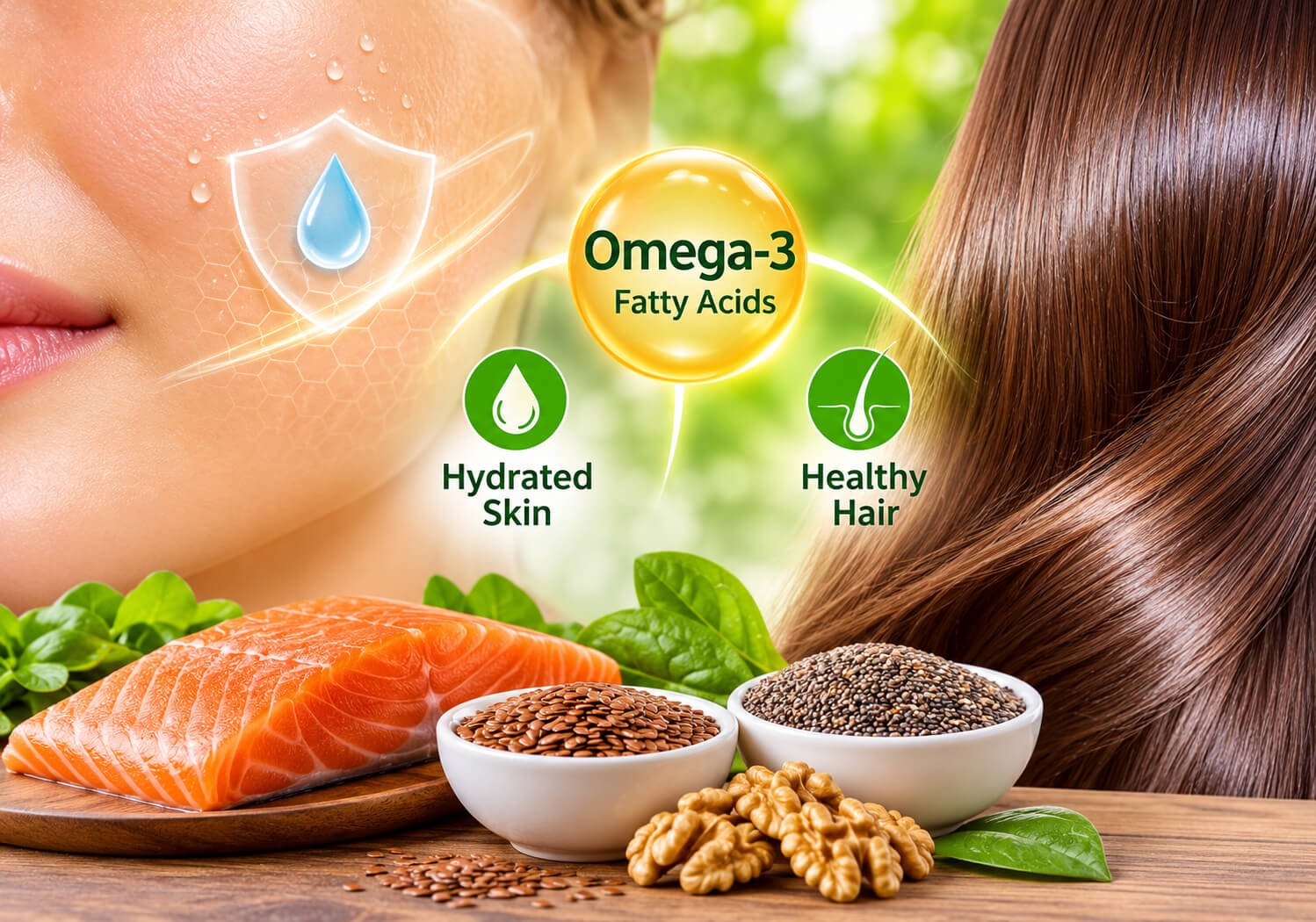
Omega 3 fatty acids for skin hydration and hair health represent one of the most well-researched nutritional interventions in modern dermatology and trichology. As a strength and conditioning coach, I frequently see clients focus heavily on their topical skincare routines and hair styling products while completely overlooking their internal nutrient intake. The truth is that your skin and hair are built from the inside out. Without the right foundational building blocks, even the most expensive serums and shampoos will fall short. Essential fatty acids are critical structural components of your cell membranes. When you consume adequate amounts, you directly support your body’s ability to retain moisture, reduce inflammation, and promote strong, resilient hair growth. This guide breaks down the science, the optimal dosing, and the practical steps you need to take to see real results.
Quick Answer
How Omega 3 Fatty Acids for Skin Hydration and Hair Health Actually Work
Omega 3 fatty acids for skin hydration and hair health work by reinforcing the skin’s lipid barrier, reducing transepidermal water loss, and nourishing hair follicles to minimize breakage. For best results, aim for 1,000 to 2,000 mg of combined EPA and DHA daily from high-quality, third-party-tested fish oil or algae supplements, consistently taken with a fat-containing meal.
To understand why these nutrients are so effective, we must look at the basic biology of your skin and hair. Omega-3s are “essential” fatty acids, meaning your body cannot produce them on its own. You must get them from your diet or supplementation. The three main types are alpha-linolenic acid (ALA), eicosapentaenoic acid (EPA), and docosahexaenoic acid (DHA).
ALA is found primarily in plant sources like flaxseeds and chia seeds. However, the human body is highly inefficient at converting ALA into the active forms, EPA and DHA. Research from the National Institutes of Health (NIH) indicates that the conversion rate is often less than 5% for EPA and less than 0.5% for DHA. Therefore, direct consumption of EPA and DHA from marine sources or algae is far more effective for dermatological and trichological benefits.
The Skin Hydration Mechanism
Your skin’s outermost layer, the stratum corneum, acts as a protective barrier. This barrier is held together by lipids, including ceramides, cholesterol, and fatty acids. When you consume adequate EPA and DHA, they are incorporated into the cell membranes of your skin. This increases membrane fluidity and helps lock in moisture. A clinical perspective published in the Journal of Clinical Medicine highlights that omega-3 supplementation significantly reduces transepidermal water loss (TEWL). Lower TEWL means your skin retains more of its natural hydration, leading to a softer, more supple appearance and a reduction in dry, flaky patches. Furthermore, EPA is a powerful anti-inflammatory agent. It helps calm conditions like mild dermatitis and redness by modulating the body’s inflammatory eicosanoid pathways.
The Hair Health Mechanism
Hair growth occurs in cycles: anagen (growth), catagen (transition), and telogen (resting/shedding). Nutrient deficiencies or chronic scalp inflammation can prematurely push hair follicles into the telogen phase, leading to excessive shedding and brittle strands. Omega 3 fatty acids for skin hydration and hair health address this by nourishing the dermal papilla, the structure at the base of the hair follicle responsible for hair growth. According to the American Academy of Dermatology (AAD), proper nutrition is vital for maintaining the hair growth cycle. DHA and EPA help reduce scalp inflammation, creating a healthier environment for follicles to thrive. Additionally, these fatty acids support the sebaceous glands, promoting balanced sebum production. Balanced sebum prevents the scalp from becoming overly dry and flaky while also coating the hair shaft to improve its elasticity and reduce breakage.
Omega 3 Sources and Nutrient Profiles
Not all omega-3 sources are created equal. Choosing the right source depends on your dietary preferences, budget, and specific health goals. Below is a breakdown of common sources and their typical nutrient profiles per standard serving.
| Source | Primary Omega-3 Type | Approx. EPA/DHA per Serving | Best For |
| Wild-Caught Salmon | EPA & DHA | 1,500 – 2,000 mg (per 3 oz) | Overall skin and hair health, high bioavailability. |
| Mackerel | EPA & DHA | 2,500 – 3,000 mg (per 3 oz) | Maximum anti-inflammatory benefits, nutrient density. |
| Algae Oil | EPA & DHA | 400 – 600 mg (per 1,000 mg oil) | Vegans, vegetarians, and those with fish allergies. |
| Krill Oil | EPA & DHA (Phospholipid form) | 150 – 250 mg (per 1,000 mg oil) | Enhanced cellular absorption, contains astaxanthin. |
| Flaxseeds (Ground) | ALA | 2,300 mg (per 1 tbsp) | Plant-based diets, general cardiovascular support. |
| Chia Seeds | ALA | 2,500 mg (per 1 oz) | Plant-based diets, added dietary fiber. |

Practical Steps: Applying Omega 3 Fatty Acids for Skin Hydration and Hair Health
Knowing the science is only half the battle. Implementing it correctly is what drives results. Here is a step-by-step guide to integrating omega-3s into your routine effectively.
1. Calculate Your Optimal Dosage
General health organizations often recommend a minimum of 250–500 mg of combined EPA and DHA per day. However, for targeted dermatological and trichological benefits, research suggests a higher therapeutic range. A practical baseline is to aim for roughly 20 mg of combined EPA and DHA per pound (44 mg per kg) of body weight. For a 150 lb (68 kg) individual, this equals about 3,000 mg. However, a standard, highly effective, and widely studied dose for skin and hair is 1,000 to 2,000 mg of combined EPA and DHA daily. Always check the supplement facts panel for the actual EPA and DHA amounts, not just the total “fish oil” amount. A standard 1,000 mg fish oil softgel is typically about 1 inch (2.5 cm) long, making it easy to swallow, but it may only contain 300 mg of actual EPA/DHA. You may need two or three softgels to hit your target.
2. Choose the Right Form
Fish oil supplements generally come in two forms: ethyl esters (EE) and re-esterified triglycerides (rTG). The rTG form is processed to mimic the natural structure of fish oil, making it significantly more bioavailable and easier for your body to absorb. While EE forms are cheaper, rTG forms provide better value for your skin and hair goals because more of the active nutrients actually reach your cells.
3. Time Your Intake Strategically
Omega-3s are fat-soluble. Taking them on an empty stomach often leads to poor absorption and the dreaded “fishy burps.”
Coach’s Tip: Always take your omega-3 supplement with your largest meal of the day that contains healthy dietary fats (like avocado, olive oil, nuts, or eggs). The presence of dietary fat stimulates bile production, which emulsifies the omega-3s and dramatically increases their absorption rate.
Common Mistake: Expecting overnight results. Skin cell turnover takes about 28 days, and the hair growth cycle operates on a scale of months. A common mistake is taking a supplement for two weeks, seeing no change in hair shedding or skin dryness, and quitting. Consistency over a 90- to 120-day period is required to see measurable improvements in skin hydration and hair strength.

4. Prioritize Third-Party Testing
The supplement industry is not strictly regulated. Low-quality fish oil can be oxidized (rancid), which not only renders it ineffective but can actually increase oxidative stress in the body, counteracting your skin and hair goals. Look for seals of approval from independent testing organizations like the International Fish Oil Standards (IFOS), USP (United States Pharmacopeia), or NSF International. These certifications guarantee the product is free from heavy metals (like mercury), PCBs, and oxidation.
Safety Notes and Precautions
While omega-3s are generally safe for most people, there are important safety considerations to keep in mind.
First, omega-3 fatty acids have a mild blood-thinning effect. If you are taking anticoagulant medications (like warfarin) or have a scheduled surgery, you must consult your physician before starting high-dose supplementation. The Cleveland Clinic advises that doses above 3,000 mg per day should only be taken under medical supervision due to the increased risk of bleeding.
Second, individuals with fish or shellfish allergies should avoid standard fish oil and krill oil. Algae oil is a safe, highly effective, and sustainable alternative that provides the exact same EPA and DHA without the allergenic risk.
Finally, always store your omega-3 supplements in a cool, dark place, or even in the refrigerator. Heat and light accelerate oxidation. If your softgels smell strongly of rancid fish or taste unusually sour, discard them immediately.
Related Tips for Maximizing Results
Supplements work best as part of a holistic health strategy. To maximize the benefits of your omega-3 intake, consider these complementary practices:
- Pair with Collagen: Omega-3s reduce inflammation and hydrate, while collagen provides the structural amino acids (glycine, proline) needed for skin elasticity and hair shaft thickness. If you are also taking collagen, research the best time to take collagen powder for skin absorption to ensure you are pairing it with vitamin C for maximum synthesis.
- Add Antioxidant Support: Oxidative stress damages both skin cells and hair follicles. Many individuals pair their omega-3 regimen with an astaxanthin supplement for skin glow and anti-aging support, as this powerful carotenoid works synergistically with omega-3s to protect cell membranes from UV and environmental damage.
- Evaluate Your Entire Stack: When building a comprehensive supplement routine, it is crucial to know how to evaluate ingredients in supplements to avoid proprietary blends that hide actual dosages of key nutrients.
- Support Overall Metabolism: Your body needs energy and co-factors to process and utilize fats efficiently. Ensuring you have adequate nutrients that support normal energy metabolism, such as B-vitamins, helps your body efficiently process these essential fatty acids. If you suspect a broader nutritional gap, identifying vitamins that support metabolism when you have a deficiency can complement your fatty acid intake.
- Manage Expectations on Timing: Patience is key. Much like wondering how long for collagen supplements to work on skin, omega-3s require consistent daily intake over several weeks to show visible, structural changes in your tissues. For a deeper dive into specific dermatological applications, reviewing the research on omega-3 fatty acids for skin hydration and inflammation provides valuable context for your routine.

1. How long does it take for omega 3 to improve skin hydration?
Most clinical studies show measurable improvements in skin hydration and a reduction in transepidermal water loss after 8 to 12 weeks of consistent daily supplementation. Because skin cell turnover takes roughly 28 days, you need to allow at least two to three full cycles for the new, healthier cells to reach the surface.
2. Can omega 3 fatty acids stop hair loss?
Omega-3s cannot stop genetic hair loss (androgenetic alopecia). However, they can significantly reduce hair shedding caused by scalp inflammation, poor nutrition, or telogen effluvium. By nourishing the hair follicle and improving scalp health, they create a better environment for hair to grow and reduce breakage.
3. What is the best omega 3 dosage for dry skin and hair?
For targeted skin and hair benefits, a daily dose of 1,000 to 2,000 mg of combined EPA and DHA is widely recommended. Always check the supplement label for the specific EPA and DHA amounts, not just the total fish oil content, to ensure you are getting an effective dose.
4. Does fish oil really help with hair growth and skin glow?
Yes. Research indicates that the anti-inflammatory properties of EPA and the cell-membrane-supporting properties of DHA help reduce scalp flakiness and improve the skin’s lipid barrier. This leads to better moisture retention (glow) and stronger, less brittle hair shafts over time.
5. Which is better for skin and hair: EPA or DHA?
Both are essential, but they serve slightly different roles. EPA is primarily responsible for reducing inflammation in the scalp and skin, which can trigger hair shedding and redness. DHA is a major structural component of skin cell membranes, directly influencing hydration and elasticity. A balanced supplement containing both is ideal.
6. Can you get enough omega 3 for skin from plant sources?
It is very difficult. Plant sources like flax and chia contain ALA, which the body must convert to EPA and DHA. This conversion rate is typically under 5%. While plant sources are healthy, achieving the high EPA/DHA levels needed for noticeable skin and hair improvements usually requires marine-based fish oil, krill oil, or algae oil supplements.
Conclusion
Achieving truly hydrated skin and strong, resilient hair requires more than just topical treatments. It requires feeding your body the right foundational nutrients. Omega 3 fatty acids for skin hydration and hair health are a scientifically backed, highly effective way to support your body’s natural lipid barrier, reduce inflammation, and nourish hair follicles from the inside out. By choosing a high-quality, third-party-tested supplement, taking it consistently with a fat-containing meal, and pairing it with a holistic approach to wellness, you can see meaningful, long-lasting improvements. Remember that consistency is your greatest tool; give your body the 90 to 120 days it needs to rebuild and rejuvenate.