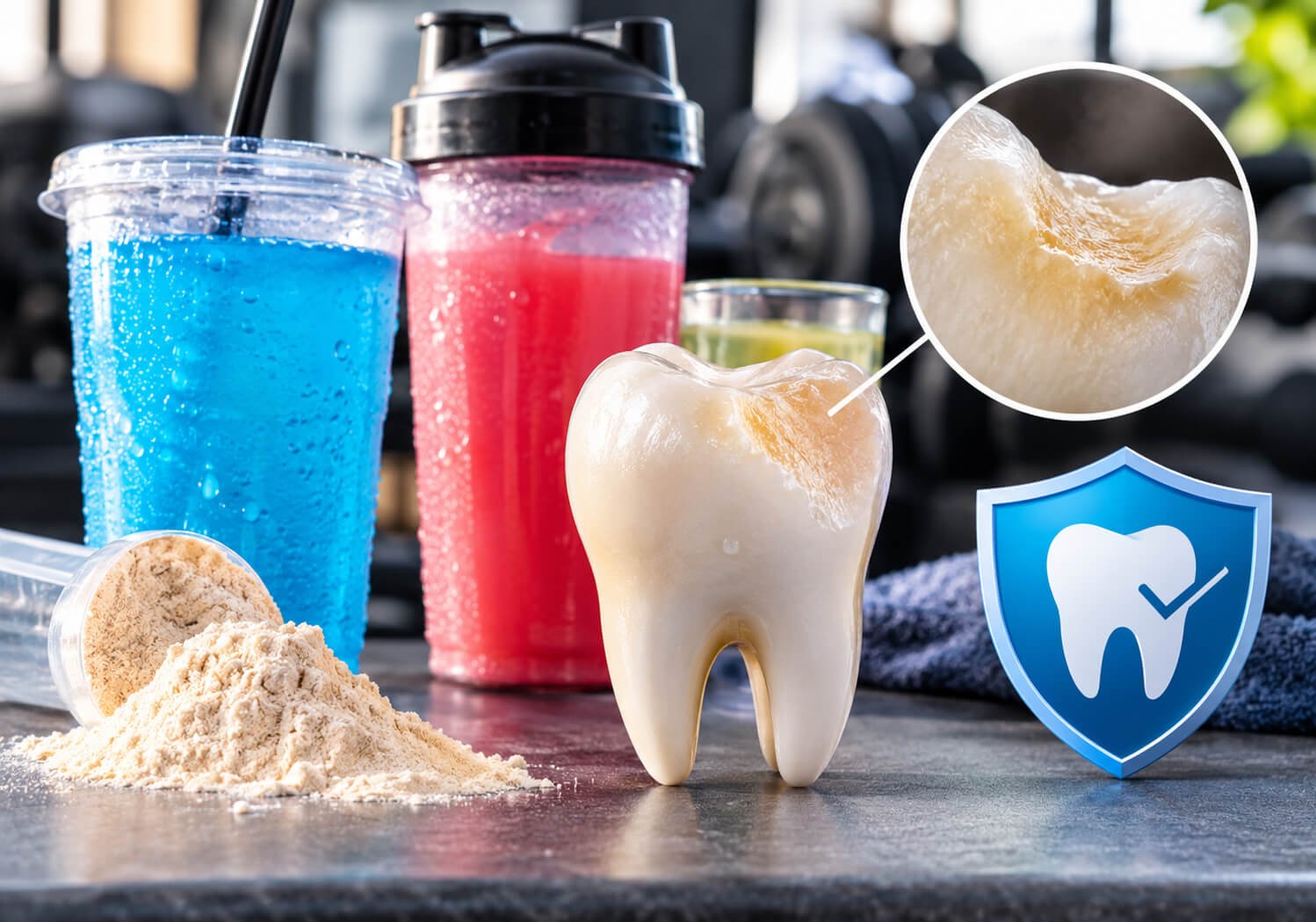
As a strength coach, I see clients crush their workouts but ignore a hidden side effect of their nutrition: tooth enamel loss. You might be drinking acidic pre-workouts, sugary sports drinks, or highly acidic ketone salts to fuel your training. Over time, these beverages drop the pH in your mouth, stripping away the protective outer layer of your teeth. Preventing tooth enamel loss is just as important as hitting your macros. This guide explains the science behind dental erosion in athletes and gives you practical, evidence-based steps to protect your smile while reaching your fitness goals.
Quick Answer
Tooth enamel loss occurs when acidic fitness drinks, pre-workouts, or sports supplements lower your mouth’s pH below 5.5, dissolving the protective hydroxyapatite layer. Prevent it by rinsing with plain water immediately after consumption, waiting 30 to 60 minutes before brushing, using a straw, and choosing less acidic hydration alternatives.
The Science Behind Tooth Enamel Loss
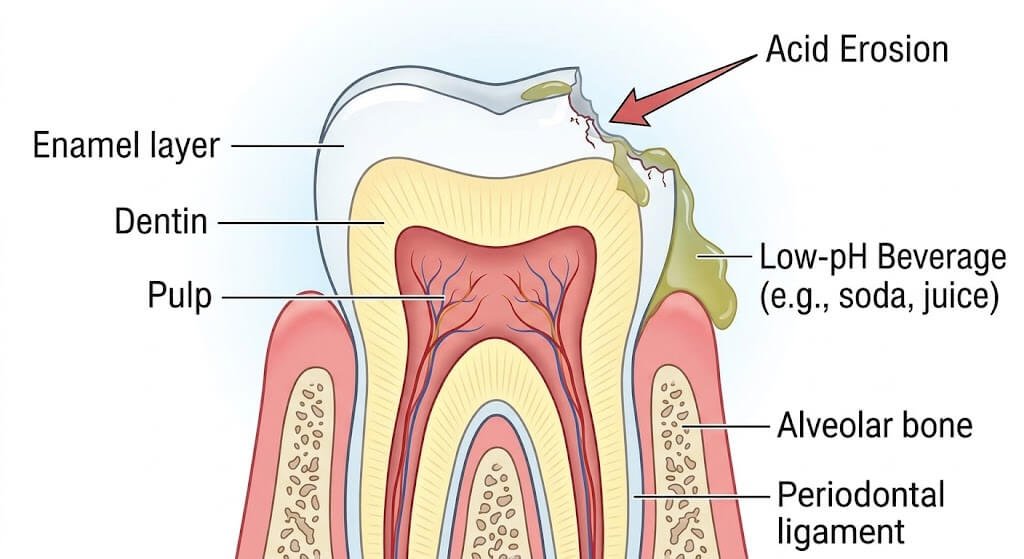
To understand how your gym habits affect your mouth, you need to know how tooth enamel works. Enamel is the hardest substance in the human body. It is made primarily of a mineral called hydroxyapatite. This mineral forms a dense, protective shield over the sensitive dentin and pulp inside your teeth.
However, hydroxyapatite is highly vulnerable to acid. The “critical pH” for tooth enamel is 5.5. When the environment in your mouth drops below this number, the acid begins to dissolve the mineral crystals in a process called demineralization. If this happens repeatedly, the enamel thins out, leading to permanent tooth enamel loss.
Your body has a natural defense mechanism: saliva. Saliva acts as a buffer. It neutralizes acids and provides calcium and phosphate ions to help rebuild the enamel in a process called remineralization. According to the National Institutes of Health (NIH), salivary flow rate and buffering capacity are the most critical factors in preventing dental erosion.
During intense exercise, you breathe heavily through your mouth. This causes rapid evaporation of saliva, leading to exercise-induced dry mouth (xerostomia). When your mouth is dry, its ability to neutralize acid drops dramatically. If you sip an acidic beverage while your salivary flow is already compromised, the risk of tooth enamel loss increases significantly.
Why Your Gym Routine Might Accelerate Tooth Enamel Loss
Many products marketed to improve performance, recovery, or body composition are highly acidic. Manufacturers add acids like citric acid, malic acid, or phosphoric acid to improve flavor, mask the taste of raw ingredients, and act as preservatives. While these ingredients are safe for consumption, they are harsh on your teeth.
1. Sports Drinks and Electrolyte Powders
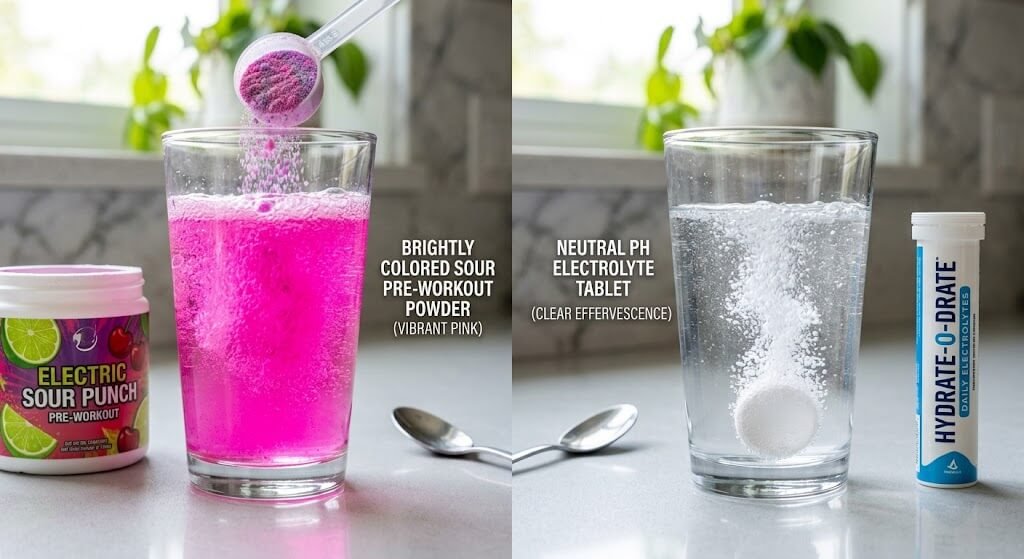
Sports drinks are designed to replenish fluids and electrolytes lost through sweat. However, many popular brands are loaded with citric acid and added sugars. The combination of sugar (which feeds acid-producing oral bacteria) and a low pH creates a perfect storm for dental erosion. Even “sugar-free” electrolyte powders rely heavily on citric or malic acid to create a tangy, refreshing flavor, keeping the pH dangerously low.
2. Pre-Workout Formulas
Pre-workout supplements are notorious for their intense, sour flavors, often labeled as “Blue Raspberry” or “Sour Grape.” To achieve this taste, manufacturers use high concentrations of citric acid. Furthermore, some pre-workouts contain ingredients like green tea extract, which, while beneficial for metabolism support, can sometimes be formulated in highly acidic matrices. Sipping a highly acidic pre-workout over a 45-minute workout bathes your teeth in acid, accelerating tooth enamel loss.
3. BHB Ketone Supplements
Exogenous ketones, particularly beta-hydroxybutyrate (BHB) salts, have gained massive popularity for energy and ketosis support. However, BHB salts are inherently acidic. To make them palatable, companies add flavorings and more acids. Studies have shown that some ketone drinks have a pH as low as 2.7 to 3.2, which is comparable to battery acid or stomach acid. Regular consumption of these beverages without proper oral hygiene is a leading cause of rapid tooth enamel loss in the fitness community.
4. Protein Powders and Meal Replacements
While whey or plant-based protein itself is not highly erosive, the flavoring systems in many protein powders are. Chocolate and vanilla flavors often contain added acids to balance the sweetness. Additionally, if you are using protein to control hunger during weight loss, you might be sipping a protein shake slowly over an hour, prolonging the acid exposure time.
pH Levels of Common Fitness Beverages
Understanding the acidity of what you consume is the first step in preventing tooth enamel loss. The pH scale runs from 0 (highly acidic) to 14 (highly alkaline), with 7 being neutral. Remember, the critical threshold for enamel demineralization is 5.5.
| Beverage / Supplement Type | Average pH Level | Erosion Risk |
| Plain Water | 7.0 | None |
| Milk (Dairy or Unsweetened Almond) | 6.5 – 6.7 | Very Low |
| Standard Whey Protein Shake (Mixed with Water) | 6.0 – 6.5 | Low |
| Sugar-Free Electrolyte Powder (Mixed) | 3.5 – 4.5 | Moderate to High |
| Traditional Sports Drink (e.g., Gatorade) | 2.9 – 3.5 | High |
| Sour Pre-Workout Supplement | 2.8 – 3.2 | Very High |
| BHB Ketone Salt Drink | 2.7 – 3.2 | Very High |
| Citrus Energy Drinks | 2.3 – 2.7 | Extreme |
Data adapted from studies published in the Journal of the American Dental Association and the British Dental Journal.
Notice that many popular fitness drinks fall well below the 5.5 critical pH mark. This does not mean you must abandon them entirely, but it does mean you must change how you consume them.
5 Practical Steps to Prevent Tooth Enamel Loss During Training
You do not have to sacrifice your performance goals to save your teeth. By adjusting your habits, you can significantly reduce the risk of dental erosion. Here is your step-by-step action plan.
Step 1: Rinse with Plain Water Immediately
After finishing your pre-workout, sports drink, or protein shake, immediately swish 8 to 10 ounces (240 to 300 ml) of plain water in your mouth and swallow or spit. This simple action physically washes away residual acids and sugars, quickly raising the pH in your mouth back toward a neutral 7.0.
Step 2: Wait 30 to 60 Minutes Before Brushing
This is the most critical rule of post-workout oral care. When your enamel is softened by acid, it is highly vulnerable to mechanical abrasion.
COMMON MISTAKE: Brushing your teeth immediately after drinking an acidic sports drink or pre-workout.
The Fix: Brushing right away acts like sandpaper on softened enamel, actively scrubbing away the demineralized layer and accelerating tooth enamel loss. Always wait at least 30 to 60 minutes. This gives your saliva enough time to neutralize the acid and reharden the hydroxyapatite crystals.
Step 3: Use a Straw
When you do consume acidic fitness beverages, use a reusable straw. Place the straw toward the back of your mouth, bypassing the front teeth. This minimizes the surface area of your teeth that comes into contact with the acidic liquid. While it will not eliminate the risk entirely, it significantly reduces the direct exposure that leads to localized tooth enamel loss.
Step 4: Stimulate Saliva Production
Since heavy breathing dries out your mouth, you need to actively promote salivary flow. Chewing sugar-free gum containing xylitol after your workout is a highly effective strategy. Xylitol is a natural sugar alcohol that not only stimulates saliva production but also inhibits the growth of cavity-causing bacteria.
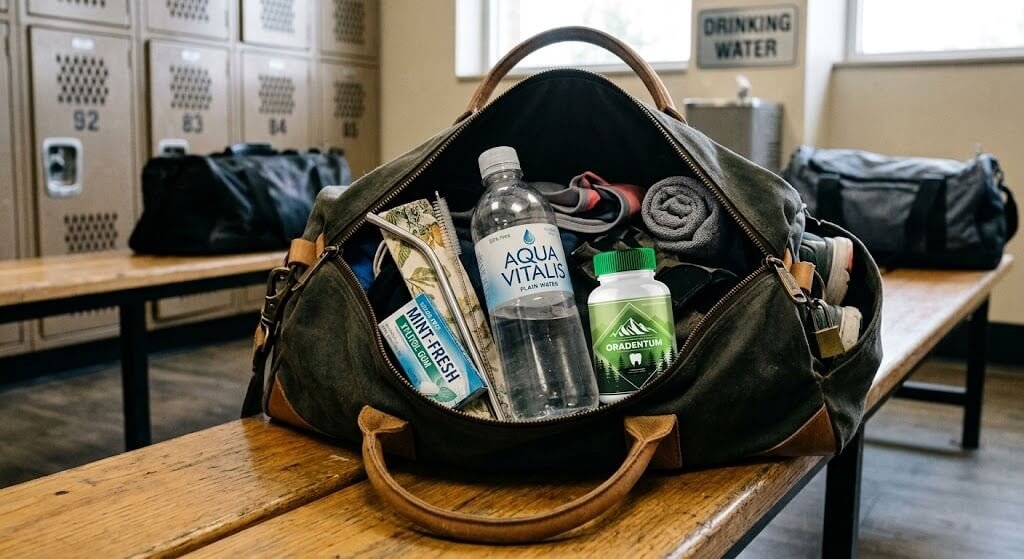
COACH’S TIP: Keep a small pack of xylitol gum in your gym bag. Chew a piece during your cool-down or while driving home. It takes only 5 minutes of chewing to dramatically increase your salivary flow rate, kickstarting your mouth’s natural remineralization process.
Step 5: Choose Enamel-Safe Alternatives
Not all hydration is created equal. If you notice tooth enamel loss or increased tooth sensitivity, it is time to audit your supplement stack.
- Swap sugary sports drinks for water paired with a balanced meal containing natural electrolytes (like bananas for potassium or a pinch of sea salt).
- Look for supplements that help control appetite or support energy that do not rely on heavy citric acid flavoring.
- If you use dietary fiber for weight management, opt for unflavored psyllium husk mixed into a smoothie rather than highly acidic, flavored fiber drinks.
How to Apply This to Your Daily Fitness Routine
Let’s put this into a practical, real-world timeline. Here is how a smart athlete structures their hydration and oral care to maximize performance and prevent tooth enamel loss.
Pre-Workout (60 Minutes Before):
- Consume your pre-workout or ketone supplement mixed with at least 16 ounces (470 ml) of water to dilute the acidity.
- Drink it relatively quickly (over 5–10 minutes) rather than sipping it slowly for an hour. Prolonged sipping keeps the mouth in a constant state of acid attack.
- Rinse your mouth with plain water immediately after finishing the drink.
During Workout:
- Stick to plain water for hydration. The American College of Sports Medicine (ACSM) recommends drinking water based on your sweat rate, typically 7 to 10 ounces (200 to 300 ml) every 10 to 20 minutes during exercise.
- If your workout exceeds 90 minutes and you require carbohydrates, choose a less acidic option or consume solid food (like a banana) which does not bathe the teeth in liquid acid.
Post-Workout (Immediately After):
- Drink 16 to 24 ounces (470 to 710 ml) of plain water to rehydrate and flush the mouth.
- Chew a piece of xylitol gum for 5 to 10 minutes to stimulate saliva.
- Consume your post-workout protein intake shake. If it is acidic, rinse with water again.
Evening Routine (60+ Minutes Post-Workout):
- Brush your teeth with a fluoridated toothpaste. Fluoride integrates into the hydroxyapatite structure, forming fluorapatite, which is significantly more resistant to acid attacks than natural enamel.
- Floss to remove any trapped particles.
If you are trying to manage food cravings without supplements, drinking a large glass of water and brushing your teeth early in the evening can also serve as a psychological cue that eating time is over, supporting your overall health goals.
Safety Notes and Professional Guidance
While the tips above are highly effective for prevention, they are not a substitute for professional care. If you are already experiencing symptoms like sharp pain when drinking cold water, visible yellowing of the teeth (which indicates the enamel has thinned, revealing the yellow dentin underneath), or translucent edges on your front teeth, you may already be suffering from tooth enamel loss.
Enamel does not grow back. Once it is gone, it is gone. However, a dentist can provide treatments like fluoride varnishes, bonding, or custom night guards (if you clench your teeth during heavy lifts, which also wears down enamel) to protect what remains and reduce sensitivity.
Frequently Asked Questions About Tooth Enamel Loss
1. Does pre-workout cause tooth enamel loss?
Yes, it can. Many pre-workout supplements contain high levels of citric or malic acid to create sour flavors. When sipped slowly during a workout, these acids lower the mouth’s pH below 5.5, softening the enamel and leading to gradual tooth enamel loss over time.
2. How long should I wait to brush my teeth after drinking a sports drink?
You should wait at least 30 to 60 minutes. Brushing immediately after consuming an acidic beverage scrubs away the temporarily softened enamel. Rinsing with plain water immediately is the safest first step to neutralize the acid.
3. Can keto supplements damage your teeth?
Yes. Exogenous ketone salts (BHB) are naturally highly acidic. Many commercial ketone drinks have a pH between 2.7 and 3.2. Frequent consumption without rinsing with water afterward can significantly accelerate tooth enamel loss and cause dentin hypersensitivity.
4. Are sugar-free fitness drinks safe for my teeth?
Not entirely. While they do not contain sugar to feed cavity-causing bacteria, they still rely heavily on citric, phosphoric, or malic acid for flavor. The acid alone is enough to cause chemical erosion and tooth enamel loss, even in the absence of sugar.
5. What is the best way to drink protein shakes to protect my teeth?
Mix your protein powder with water or milk (which has a neutral pH and contains calcium). Drink it in one or two sittings rather than sipping it over an hour. Follow it immediately with a rinse of plain water to clear any residual acids or sugars.
6. Can tooth enamel grow back after it is lost?
No. Tooth enamel is non-living tissue and cannot regenerate once it is physically worn away. However, early-stage demineralization can be reversed through remineralization using fluoride toothpaste, saliva, and calcium-rich diets, which harden the remaining enamel.
Conclusion
Your fitness journey should build you up, not break you down. While optimizing your nutrition and supplementation is crucial for performance, ignoring the acidic nature of many fitness products can lead to irreversible tooth enamel loss. By understanding the critical pH threshold, recognizing the hidden acids in your pre-workouts and sports drinks, and implementing simple habits like rinsing with water and delaying your brushing, you can protect your smile.
Remember, true health is holistic. Protect your teeth with the same dedication you apply to your lifts, and you will maintain a strong, healthy body from the inside out. If you suspect you are already experiencing tooth enamel loss, schedule a visit with your dentist to get a professional assessment and personalized care plan.